The journalist admits that he was David Foster Wallace‘s worst friend – he says so in the first sentence, so my headline isn’t just clickbait. “He would send me letters and I wouldn’t answer them. He would send works in progress with forlorn notes.”
For the most part, he discusses a central paradox in Wallace’s life: “For twenty years, his entire career, Wallace wrestled with a question: How much of myself am I willing to give away to get what I want?”
It wasn’t a choice in the end. And David … Streitfeld, that is … describes what happened:
He got what he wanted and didn’t want. One way to measure his posthumous fame is to note an interview he did with Rolling Stone, which was never published in 1996 but became the basis for a story after his suicide that won a National Magazine Award in 2009. The interview transcript became a bestselling book in 2010 and then a very unlikely movie – who ever heard of a movie about an interview with a writer? – in 2015. The Wallace estate firmly distanced itself from The End of the Tour, noting quite accurately that it would have horrified Wallace as a trivialization of everything he believed, but Wallace was dead and what he would have thought didn’t matter anymore. The movie got excellent reviews.
I wrote about the movie here. David … Streitfeld again, that is … tells how twenty-one of Wallace’s letters were auctioned at Sotheby’s five years ago. “They were, as usual with Wallace, explicit and entertaining. … Sotheby’s estimated the package would fetch as much as $15,000. Instead, it made $125,000.”
Worst friend? Perhaps not.
He continues: “Wallace in 1996 had to reveal himself to interviewers to sell copies of Infinite Jest, and seventeen years later the auction house had to reveal Wallace to sell his letters, which in this case fetched $70,000. The guy who always cringed at publicly showing himself was having his deepest secrets divulged, not only to the winning bidder but to anyone with an internet connection. He wrote in Infinite Jest about a future in which everything was for sale – the years are rented out to corporations; part of the novel takes place in the Year of the Depend Adult Undergarment – and now, as that future was relentlessly transformed into mundane reality, he himself was for sale.”
“That, perhaps, is what happens if, instead of trusting no one, you trust everyone.”
Here’s the good news: David’s piece is fully online … unlike the review for Evolution of Desire (so far). The excerpt is here. Read it, and be glad you aren’t famous.
On an impulse, I dropped in at CineArts in Palo Alto Square to see James Ponsoldt‘s The End of the Tour, the talky film on the late great author David Foster Wallace. Silly me. I hadn’t read much about the film and thought it would be a kind of documentary, made up of recorded interviews during his life. It’s not, at least not entirely. However, much of the 90 minutes of conversations is indeed Wallace’s own, since the narrator is another writer, David Lipsky, then a reporter for Rolling Stone, who interviewed Wallace on a five-day binge in 1996. The conversations were transcribed, fourteen years later, for publication in a book called Although of Course You End Up Becoming Yourself.
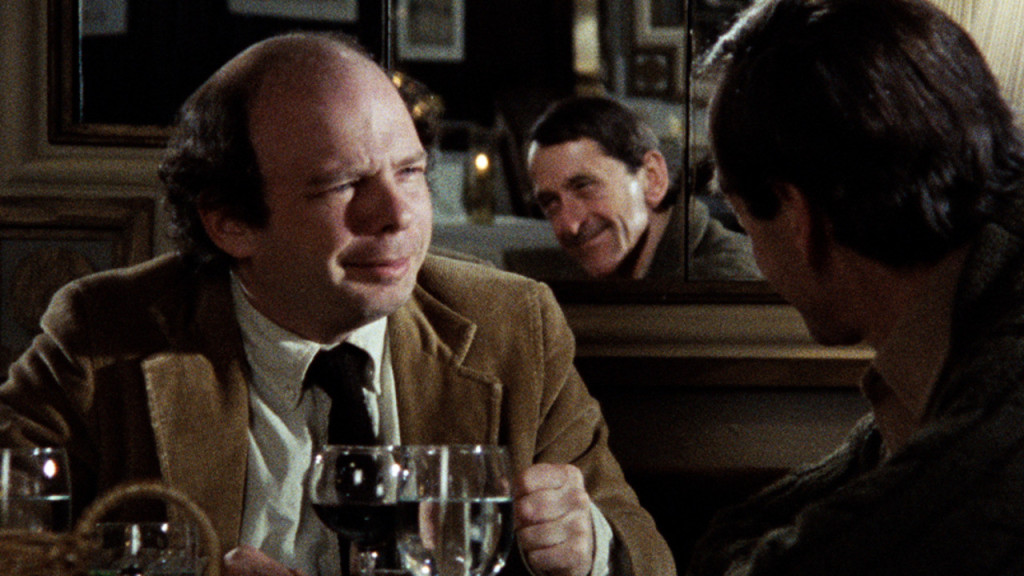
Remember 1981’s My Dinner with André? That’s another talky film recreating a long-ago conversation. How times have changed, even in three-and-a-half short decades! My Dinner with André, a restaged reunion between avant-garde director André Gregory and actor/playwright Wallace Shawn, did a deep dive into the human psyche, sure, but it was outward-facing, discussing worldwide travels and explorations and revelations. The End of the Tour is all inward and self-doubt and neuroses, shot through with insight, suffering, and light – but we never seem to leave these two men’s heads. The 1981 film never seems claustrophobic, although it is almost entirely filmed within a New York restaurant; in The End of the Tour, although it “opens out,” as they say, into Minneapolis, never seems to leave Wallace’s cluttered Illinois home in the middle of nowhere, in the overwhelming winters of the American Midwest. Well, this turn of events is what Wallace predicted would happen, isn’t it? See the film clip above.
So here I am. As one commenter put it, a writer writing about a movie about a writer writing about a writer. A few reflections:
I’m ill at ease about portrayals of “America” as a land of spiritual desert and strip malls – and I come from the same part of the world that Wallace did. If one sits in front of a TV and gets one’s food from 7/11, yes, it will be that way. But the way of the Twinkie is chosen, not inevitable. Some of us listen to Schubert and talk about Stendhal with our friends, over tapas and Cabernet. I’ve never had a poptart. Why would I?
Full disclosure: I’ve only read some of Wallace’s essays and short stories – I’ve never even tried (yet) to read Infinite Jest. So I take this warning to heart, from A.O. Scott writes in the New York Times: “Funny, intriguing and revealing as this talk may be, it does not have anything like the status of Wallace’s writing. The film not only acknowledges this distinction, but it also insists on it. In his would-be profiler’s company, occasionally glancing at the menacing red light of the predigital tape recorder, Wallace is by turns cagey and candid, witty and earnest, but he is always aware, at times painfully, that he is playing the role of a writer in someone else’s fantasy. Actually writing is something he does when no one else is around.” A minor point: Lipsky flings his tape recorder from jacket pocket to restaurant table, from his hand to Wallace’s, casually waves it around – and yet he seems to get crisp, usable recordings out of it. How does he do that? I can’t do that with today’s up-to-date recorders.
Any journalist watching this film should cringe with self-recognition. Jesse Eisenberg‘s Lipsky, a journalist who is a Wallace wannabe, conveys hunger and avidity in his every beady glance. That’s why I flinched at the tear trickling at the end – he wasn’t a tear-trickling kind of guy. This is a wolf cub. It was as phony as the magic tape recorder that never runs out of tape or drops an AA battery into his Coca Cola.
I always felt reluctant to do investigative reporting, though I know it has a vital role to play in the public square. I am always aware that I am telling the story, spinning my narrative of what I see and hear. It has to be so. Nobody wants to sit through the undigested outtakes of hours of interviewing and pages of notes. You have to assemble the mess in a way that makes sense to a broad spectrum of readers and is, above all, a compelling read – even if the reportage partakes of your own obsessions and prejudices and quirks. But what if you’re wrong – as you are wrong or unjust in a thousand relationships throughout your life? How often did you misinterpret a parent, a teacher, a lover, a child, a boss? How often did we misinterpret Wallace himself, who died by his own hand in 2008?
From the New York Times again:
In real life, David Lipsky might be a great guy, but on screen he is played by Mr. Eisenberg, which means that his genetic material is at least 25 percent weasel. Wallace at one point playfully describes himself as “pleasantly unpleasant.” Lipsky is unpleasantly pleasant, which is much worse. Twitchy and ingratiating, he wants to be a tough journalist and a pal. He desperately wants Wallace to regard him as a peer and can hardly contain his jealousy. He berates Sarah after she chats with Wallace on the phone and falls into a defensive snit after Wallace accuses him of flirting with Betsy (Mickey Sumner), a poet who had known Wallace in graduate school.
His awfulness is, to some degree, structural. A profile writer, especially in the company of another writer, is a false friend who dreams of being a secret sharer. Lipsky’s assignment is to pry, distort and betray, to use Wallace’s words and the details of his existence as material for his own dubious project. Wallace knows this and acquiesces to it — “you agreed to the interview” is Lipsky’s fallback when his subject gets prickly — and generally handles himself with grace and forbearance.
As Emily Yoshida points out in The Verge, he makes his own deal with his own devil: “in the face of Lipsky’s insatiability, the Segel can’t help but portray Wallace as constantly on the defensive, protecting nothing less than his own interiority. This, perhaps in combination with the nature of the source material, paints an even more saintly, beleaguered picture of Wallace than a conventional Oscar-bait biopic would. The film is bookended by flash forwards after Wallace’s death by suicide in 2008: we see Lipsky eulogize Wallace on NPR and at a (much better attended) reading of Although Of Course…, and these are his final acts of consumption and assumption of his subject. After his death, Lipsky becomes the foremost authority on Wallace, which is almost as good as being Wallace.”
This is said to be a life-changing role for Jason Segel, as Wallace (I wouldn’t know; I very rarely go to films). His portrayal rather overshadowed Eisenberg, but Eisenberg, too, makes a portrayal of great subtlety. We all smell Oscars in the air. But can’t two guys win?
This isn’t about the real David Foster Wallace, of course. How could it be? No wonder family and friends have resisted this film. For purposes of comparison, watch the short clip from the Charlie Rose interview below, made about the same time as the setting of The End of the Tour, and note the difference in tempo, energy, pacing. Wallace is bigger, softer, fuzzier, more self-doubting. Even the timber of the voice is radically different. Segel has created a whole new person for the cameras.
The film doesn’t end with Wallace’s death, or Lipsky’s reading of his book about Wallace. It’s much better than that. Wordless after so many words, Wallace resumes his normal life after the departure of Lipsky. As he explained to the young reporter, he is part of a dance group that relives the dances of the 1970s in the basement of a Baptist Church. And we finally leave his head: we see him in the basement, jumping and gyrating to the music with uninhibited joy. It’s a good way to leave him. The end of the tour.
Sylvia Plathreportedly went ballistic when someone marked books in any way whatsoever. I, myself, have been known to lightly pencil brackets or little stars in the margin with a very soft #2 – and sometimes a single word, such as “Phooey!” But take a look at what David Foster Wallace did toJames Joyce‘s Ulysses. (Hat tip Cal Doyle; this is making the rounds on Tumblr.)
Update: We’ve been had! The photo was posted on the respectable Housing Works Bookstore in NYC here – so we weren’t alone in thinking it was legit, even though the words aren’t readable on the page. However, several people, including Christine in the comments section below, and on a Facebook comment thread on our friend Mikhail Iossel‘s page, have identified the text as Lee Server‘s biography of Robert Mitchum, Baby I Don’t Care. The words “Robert Mitchum” are in the lefthand page header, and the chapter heading “Phantom Years” on the right. The plot thickens: why would anyone feel the need to annotate a biography of movie star so heavily? As one Facebook commenter noted, David Foster Wallace’s obsessiveness about his writing, his writing about his writing, and others’ writing about his writing is well known. But Mitchum? Said another commenter: “I’m sure many writers could confess that Robert Mitchum was a bigger influence on them than Joyce.”
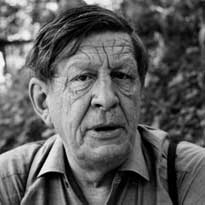
“What is this tattered sheet of paper?” you may ask. It is reproof. For somewhere in my garage, I have my very own copy of this syllabus, issued by W.H. Auden to his semester class on “Fate and the Individual in European Literature,” when he taught at my own alma mater, the University of Michigan, way back in 1941-42. I asked for it a decade or two ago, and would have been the first to put it online had I not misplaced it. Now it’s all over the internet – I knew the game was up when The Atlanticput it on tumblr a year ago. In any case, it has influenced my life in strange ways. For example, it’s the reason why Shakespeare‘s Henry V, Part 2, is the only work of literature on my Droid, besides the King James Bible. I still have some catching up to do to finish the list.
Cherce.
“What I find fascinating about the syllabus is how much it reflects Auden’sown overlappinginterests in literature across genres – drama, lyricpoetry, fiction – philosophy, and music,”Lisa Goldfarb, Associate Professor and Associate Dean at NYU’s Gallatin School, told the New York Daily News earlier this year. “He also includesso many of the figures he wrote about in his own prose and those to whom herefers in his poetry: especially “The Tempest” of Shakespeare; Kierkegaard,Baudelaire, Rimbaud, Melville, Rilke, as well as the opera libretti on thesyllabus.
“By including such texts across disciplines – classical and modern literature, philosophy, music,anthropology, criticism – Auden seems tohave aimed to educate his students deeply and broadly.He probably wouldhave enjoyed working with students on the texts he so dearly loved.”
Now it’s over at Flavorwire, along with the course instructions and syllabi for David Foster Wallace, Katie Roiphe, Lynda Barry, Lily Hoang, Susan Howe, Zadie Smith, Donald Barthelme. Check them outhere.
But for me? I’ll still take Wystan’s list. It’s cherce.
(P.S. I have a hidden motive for posting this syllabus. Now I can’t lose it.)
Here’s the best commencement address you didn’t hear last month. That’s because David Foster Wallace gave this talk, “This is Water,” at Kenyon College on May 21, 2005. It only went viral after the author’s suicide in 2008.
An excerpt:
But most days, if you’re aware enough to give yourself a choice, you can choose to look differently at this fat, dead-eyed, over-made lady who just screamed at her little child in the checkout line — maybe she’s not usually like this; maybe she’s been up three straight nights holding the hand of her husband who’s dying of bone cancer, or maybe this very lady is the low-wage clerk at the Motor Vehicles Dept. who just yesterday helped your spouse resolve a nightmarish red-tape problem through some small act of bureaucratic kindness. Of course, none of this is likely, but it’s also not impossible — it just depends on what you want to consider. If you’re automatically sure that you know what reality is and who and what is really important — if you want to operate on your default-setting — then you, like me, will not consider possibilities that aren’t pointless and annoying. But if you’ve really learned how to think, how to pay attention,then you will know you have other options. It will actually be within your power to experience a crowded, loud, slow, consumer-hell-type situation as not only meaningful but sacred, on fire with the same force that lit the stars — compassion, love, the sub-surface unity of all things. Not that that mystical stuff’s necessarily true: The only thing that’s capital-T True is that you get to decide how you’re going to try to see it. You get to consciously decide what has meaning and what doesn’t. You get to decide what to worship…
Because here’s something else that’s true. In the day-to-day trenches of adult life, there is actually no such thing as atheism. There is no such thing as not worshipping. Everybody worships. The only choice we get is what to worship. And an outstanding reason for choosing some sort of God or spiritual-type thing to worship — be it J.C. or Allah, be it Yahweh or the Wiccan mother-goddess or the Four Noble Truths or some infrangible set of ethical principles — is that pretty much anything else you worship will eat you alive. If you worship money and things — if they are where you tap real meaning in life — then you will never have enough. Never feel you have enough. It’s the truth. Worship your own body and beauty and sexual allure and you will always feel ugly, and when time and age start showing, you will die a million deaths before they finally plant you. On one level, we all know this stuff already — it’s been codified as myths, proverbs, clichés, bromides, epigrams, parables: the skeleton of every great story. The trick is keeping the truth up-front in daily consciousness. Worship power — you will feel weak and afraid, and you will need ever more power over others to keep the fear at bay. Worship your intellect, being seen as smart — you will end up feeling stupid, a fraud, always on the verge of being found out. And so on.
Here’s the good news: You don’t have to have a college diploma to do all this.
A downloadable pdf of the talk here. Youtube video below:
I drove over to visit Marguerite Frank at her Stanford apartment one night last week. She was sorting through mountains of photos and papers of her husband, the late and wonderful Dostoevsky scholar Joseph Frank.
Among the pile, she handed me this, from the Village Voice Literary Supplement: a 1996 review of the first four volumes of Joe’s mammoth Dostoevsky biography. Here’s the kicker: they were reviewed by David Foster Wallace, the late great writer who killed himself in 2008.
I hadn’t had the chance to read the edgy author before. I have to say it was, initially, a bit of a slog. Wallace intersperses his review with italicized, existential questions between asterisks (sample: “What does ‘faith’ mean?” “Is it possible really to love somebody?”), and the determinedly rambling and offhand style began to grate early on. Wallace’s long, digressive footnotes are a precursor to Junot Diaz’s running, footnoted commentary on the history of the Dominican Republic in The Brief Wondrous Life of Oscar Wao, but Diaz is compelling; Wallace just goes on a bit.
It gets better: Wallace picks up considerable steam – both on Fyodor Dostoevsky(a.k.a. FMD) and Joe Frank. It’s well worth the wait. Here’s a long excerpt:
“The thing about Dostoevsky’s characters is that they live. And by this I don’t mean just that they’re successfully realized and believable and ’round.’ The best of them live inside us, forever, once we’ve met them. …
Are we “under a nihilistic spell”?
FMD’s concern was always what it is to be a human being – i.e., how a person, in the particular social and philosophical circumstances of 19th-century Russia, could be a real human being, a person whose life was informed by love and values and principles, instead of being just a very shrewd species of self-preserving animal. …
So, for me anyway, what makes Dostoevsky invaluable is that he possessed a passion, conviction, and engagement with deep moral issues that we, here, today, cannot or do not allow ourselves. And on finishing Frank’s books, I think any serious American reader/writer will find himself driven to think hard about what exactly it is that makes so many of the novelists of our own time look so thematically shallow and lightweight, so impoverished in comparison to Gogol, Dostoevsky, even lesser lights like Lermontov and Turgenev. To inquire of ourselves why we – under our own nihilistic spell – seem to require of our writers an ironic distance from deep convictions or desperate questions, so that contemporary writers have to either make jokes of profound issues or else try somehow to work them in under cover of some formal trick like intertextual quotation or juxtaposition, sticking them inside asterisks as part of some surreal, defamiliarization-of-the-reading-experience flourish.
Part of the answer to questions about our own art’s thematic poverty obviously involves our own era’s postindustrial condition and postmodern culture. The Modernists, among other accomplishments, elevated aesthetics to the level of metaphysics, and ‘Great Novels’ since Joyce tend to be judged largely on their formal ingenuity; we presume as a matter of course that serious literature will be aesthetically distanced from real lived life. Add to this the requirement of textual self-consciousness imposed by postmodernism, and it’s fair to say that Dostoevsky et al. were free from certain cultural expectations that constrain our own novelists’ freedom to be ‘serious.’
But it’s just as fair to observe that Dostoevsky operated under some serious cultural constraints of his own: a repressive government, state censorship, and above all the popularity of post-Enlightenment European thought, much of which went directly against beliefs he held dear and wanted to write about. The thing is that Dostoevsky wasn’t just a genius – he was, finally, brave. … who is to blame for the philosophical passionlessness of our own Dostoevskys? The culture, the laughers? But they wouldn’t – could not – laugh if a piece of passionately serious ideological contemporary fiction was also ingenious and radiantly transcendent fiction. But how to do that – how even, for a writer, even a very talented writer, to get up the guts to even try? There are no formulae or guarantees. But there are models. Frank’s books present a hologram of one of them.”


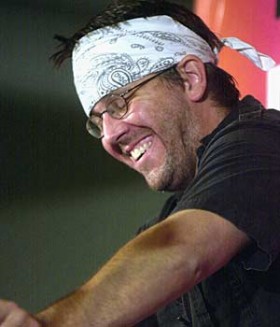
 He got what he wanted and didn’t want. One way to measure his posthumous fame is to note an interview he did with Rolling Stone, which was never published in 1996 but became the basis for a story after his suicide that won a National Magazine Award in 2009. The interview transcript became a bestselling book in 2010 and then a very unlikely movie – who ever heard of a movie about an interview with a writer? – in 2015. The Wallace estate firmly distanced itself from The End of the Tour, noting quite accurately that it would have horrified Wallace as a trivialization of everything he believed, but Wallace was dead and what he would have thought didn’t matter anymore. The movie got excellent reviews.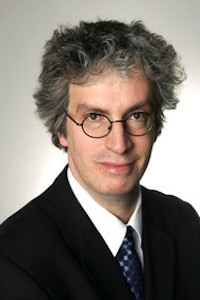
 I’m ill at ease about portrayals of “America” as a land of spiritual desert and strip malls – and I come from the same part of the world that Wallace did. If one sits in front of a TV and gets one’s food from 7/11, yes, it will be that way. But the way of the Twinkie is chosen, not inevitable. Some of us listen to Schubert and talk about Stendhal with our friends, over tapas and Cabernet. I’ve never had a poptart. Why would I?
 Any journalist watching this film should cringe with self-recognition. Jesse Eisenberg‘s Lipsky, a journalist who is a Wallace wannabe, conveys hunger and avidity in his every beady glance. That’s why I flinched at the tear trickling at the end – he wasn’t a tear-trickling kind of guy. This is a wolf cub. It was as phony as the magic tape recorder that never runs out of tape or drops an AA battery into his Coca Cola.
 As
As