Archive for August, 2011

Newspapers, advertisers, and book reviews – cont.

Wednesday, August 31st, 2011

Share

A few days ago, I posted about “The future of book reviewing and one cranky man.”

I wrote about the absurdity of newspapers expecting book review sections to be supported by advertising from the strapped book industry:  “Of course, sports sections aren’t asked to support themselves by the advertisements of sports stores or the manufacturers of catcher’s mitts, so this standard has always been unevenly applied.”

In the comments section, medievalist Jeff Sypeck asked:

Is there a reason newspaper executives have behaved as if the ads in a book-review section could only be for books and publishers and similar literary/cultural products? Is it a lack of demographic info about book buyers for the ad sales people to tout? The unwillingness of, say, tire manufacturers to advertise alongside reviews of novels? A belief that the book section ought to be free of commercialism? Mere tradition or habit?

Good question.

Frank Wilson at Books Inq. explained the simple demographics of newspaper advertising succinctly: “the point is that a book section would attract more readers to a newspaper – even a lot of people who watch baseball read – and the more readers you have, the more advertisers you get.”

Not a reader anyway

Literary people read lots of things besides great literature and book reviews – they’re more likely to read newspapers in general.  As Jeff has pointed out before, that’s a much better bet than trying to get stoners to read.  Said Frank:

Newspapers flap their wings hoping to attract young readers by reviewing pop music, but those (theoretical) young reader don’t care what newspapers think about what they’re listening to. I certainly didn’t care that the local pop music reviewers thought little of Elvis when I was in high school. I also wouldn’t have cared if they’d thought the world of him.

But the experience of listening to music is fundamentally different from the experience of reading. Readers want to know what others have to say about what they have read. It’s an extension of the reading experience. Reading about the music you have heard is not an extension of the listening experience.

Maybe if more newspaper executives did some reading of their own, they would understand.

More comments followed. Jeff again:

Your last point reminds me of how for more than 15 years, the Washington Post has been trying to lure young people with reviews of video games and hip-hop concerts, apparently misunderstanding how many outlets are already devoted to discussing those subjects with greater affection and thoroughness. Time has shown them to be unlikely and unsuccessful ways to lure new readers to old media.

More comments at Books, Inq. here.
.

Maxine Hong Kingston: Not scared of poetry

Tuesday, August 30th, 2011
Share

But does she understand men? (Photo: David Shankbone)

Maxine Hong Kingston decided a few years back that she preferred writing poetry to prose.  “No more big, full dramatic scenes,” she explained to a Middlebrook Salon gathering on Sunday in Palo Alto.

The most recent result is “a book-length book about me” – I Love a Broad Margin to My Life, published in March.  There are downsides to doing poetry, she said.  Publishers don’t like it.

“They’re scared of poetry.  Poetry doesn’t sell.”

“They insisted on calling it a memoir,” she said.  “But I don’t think that’s right.  A memoir remembers the past. I am remembering the future.”  Her book discusses “how we accumulate and lose time.”

The silver-haired author was competing with sunlight.  The conversation and reading took place on Marilyn and Irv Yalom‘s lawn, a lush green setting for the drone of the hummingbirds and the plashing of an unseen fountain on the beautiful August late afternoon.  (I wrote about the dedication of the Diane Middlebrook Memorial Residence here.)

Clearly, times have changed. Maxine recalled the days when finishing a manuscript meant hopping on a plane to New York, and meeting her publisher face-to-face to hand it over.  After some time he would finish reading it.  She would hope on a plane back to New York.  The publisher would have marked the manuscript with scores of post-its.  They would go through the manuscript page by page.

Then there was the terrible day in 1979 when her publisher met her and said, “Well, my dear, I’m afraid this book is a failure.”

“You don’t understand men,” he told her.

By bus, she returned back to the friends’ apartment where she was staying. They had arranged a party to celebrate the new book with champagne.  Instead, she sat down to her IBM Selectric as the others partied.  She wrote a new scene for her revised book.

One of the people at that party – an actor named Earl – was on hand to read the chapter with her that night.

The book, China Men, was published in 1980.

Maxine said the New York Times called it a “virtually perfect book.”

Happy birthday to Martin Luther King’s dream

Sunday, August 28th, 2011
Share

August 28, 1963 (Photo: Martin Luther King, Jr., Research and Education Institute)

Today should have been the day that the Martin Luther King Jr. National Memorial was dedicated on the National Mall in Washington, D.C.

Then a bad-ass lady named Irene rolled into town.

The celebration has been postponed.  Nonetheless, a quieter memorial has been overlooked in the weather warnings: it’s the 48th anniversary of King’s “I Have a Dream” speech.

I reread the speech for the occasion – it’s no surprise that it’s considered one of the top speeches of the century.  It marked the height of the non-violent movement, and the beginning of its fall.

However, this surprised me too:  “I think one of the misconceptions people have about King was that all of his material was spontaneous and did not repeat,” said Stacey Zwald-Costello, assistant editor at the King Papers Project at Stanford University’s Martin Luther King, Jr. Research and Education Institute.

“However, the opposite is true – he spent a lot of time preparing his speeches and often recycled material, using it in different places and ways in order to get his point across.”

So I also read the speech that served as a sort of rough draft – his June speech in Cobo Hall, Detroit.  I think I liked this passage the best (and I enjoy the italicized audience interjections!), which wasn’t included in the August 28 speech:

For nonviolence not only calls upon its adherents to avoid external physical violence, but it calls upon them to avoid internal violence of spirit. It calls on them to engage in that something called love. And I know it is difficult sometimes. When I say “love” at this point, I’m not talking about an affectionate emotion. (All right) It’s nonsense to urge people, oppressed people, to love their oppressors in an affectionate sense. I’m talking about something much deeper. I’m talking about a sort of understanding, creative, redemptive goodwill for all men. [applause]

We are coming to see now, the psychiatrists are saying to us, that many of the strange things that happen in the subconscious, many of the inner conflicts, are rooted in hate. And so they are saying, “Love or perish.” But Jesus told us this long time ago. And I can still hear that voice crying through the vista of time, saying, “Love your enemies, (Love them), bless them that curse you, (Yes) pray for them that despitefully use you.” (Yes) There is still a voice saying to every potential Peter, “Put up your sword.” (Yes, Put up your sword) History is replete with the bleached bones of nations; history is cluttered with the wreckage of communities that failed to follow this command. And isn’t it marvelous to have a method of struggle where it is possible to stand up against an unjust system, fight it with all of your might, never accept it, and yet not stoop to violence and hatred in the process? [applause] This is what we have. [applause]

More here.

Voilà! Diane Middlebrook Memorial Writers’ Residence

Saturday, August 27th, 2011
Share

Voilà!  The Diane Middlebrook Memorial Writers’ Residence has been launched.  I attended the dedication ceremony this afternoon, way up in  forested hills around LaHonda, Skyline, and Woodside.  (I wrote about the venture earlier, here.)  Got mightily lost, too.

"Above all, radiant" (Photo: Amanda Lane)

Renowned chemist, novelist, and playwright Carl Djerassi, Diane Middlebrook‘s husband, assured the 50 or 60 gathered in the brilliant August day about the “green” nature of the four new domiciles built in memory of the gifted and groundbreaking biographer, who died in 2007.  The Djerassi Resident Artists Program currently hosts about 60 artists a year.  The spare new residences, overlooking the hills, will add a few more.

The 87-year-old Djerassi read a poem written by the person who had been the second oldest resident ever – Janet Lewis, the wife (and by then widow) of legendary Yvor Winters.  She was 90 at the time – two years younger than the composer who holds the record in the program. The poem Carl read,  “Landscape near Bear Gulch Road,” had been written during her residency.

Carl recalled his wife worked only on ambitious projects.  When her cancer diagnosis gave her only months to live, she turned to her personal brand of therapy, he said – that is, “to immerse yourself totally in intellectual work.”  Middlebrook tackled a biography of Ovid,  which, “though unfinished, has been published posthumously in portions as ‘A Roman in his Prime’ in the Norton Critical edition of Ovid’s Metamorphoses; and as ‘Ovid Is Born,’ in Feminist Studies,” according to the program’s website. I had wondered what happened to it.

Until today, I wasn’t aware that Dana Gioia, Diane’s student, had published the author’s only collection of poems, Gin Considered as a Demon, in 1983, when he was editing a series of chapbooks for Elysian Press.  He waved the volume at the gathering.  He also waved the battered paperback of Wallace Stevens‘s poems that he had studied with Diane way back in 1971.

He described Diane Middlebrook as “above all, radiant.”  Such people are rare, he said: “in the warmth, enlightenment, and clarity of their presence we discover ourselves.”

Dana read Stevens’s “Final Soliloquy.”  But Diane’s daughter, Leah Middlebrook, read a rapt and haunting poem that Dana had composed at the Djerassi home-in-the-hills, “Becoming a Redwood.”  It concludes:

Something moves nearby. Coyotes hunt
these hills and packs of feral dogs.
But standing here at night accepts all that.

You are your own pale shadow in the quarter moon,
moving more slowly than the crippled stars,
part of the moonlight as the moonlight falls,

Part of the grass that answers the wind,
part of the midnight’s watchfulness that knows
there is no silence but when danger comes.

Bei Dao on literary black holes and cultural vulgarity

Friday, August 26th, 2011
Share

Reading in Kraków (Photo: Droid)

Protesters once shouted his poems in Tiananmen Square. Now the 62-year-old poet lives quietly in Hong Kong with his wife and six-year-old son.

I wrote about Bei Dao at May’s Czesław Miłosz Festival in Kraków. According to an article in the China Daily, he returned to mainland China this month, for the second time in 20 years. The first time was the occasion of his father’s death in 2001.

The occasion this time was the opening ceremony of the festival in Xining, capital of northwest Qinghai province.  The poet, whose real name is Zhao Zhenkai, wore a brick-red jacket and grey pants as he made a short speech.  Although he was quickly surrounded by fans clamoring for his autograph and hoping to be photographed with him, he seemed to retreat to the inner solitude I observed in Poland.

At Stanford over a decade ago, he described himself as “a man to whom the whole world has become a foreign country.” In Kraków, he said, “Materialism and consumption destroyed Chinese culture.”  His visit to mainland China continued those themes:

In his eyes, compared to the prosperity in the 1970s and 1980s, today’s Chinese literature is uninspired. “It’s true not only in China but also across the world, and it’s related to many factors, like materialism oriented by consumption, the nationwide trend of seeking entertainment, information dissemination brought by new technologies. All these things are making bubbles in language and literature,” he said.

He pointed out that previously a clear-cut division existed between “vulgar” culture and “serious” culture, but today vulgar culture is swallowing serious culture like a black hole, and unfortunately, many writers are forced to lower their writing standards to cater to vulgarity in today’s society.

There are other reasons for the devolution of Chinese poetry, Bei Dao said, such as the absence of a system of construction.

In 1999 at Stanford (Photo: L.A. Cicero)

“Poetry needs good guides, and a good critic is a good guide who can lead or shape a group of well-educated readers through unscrambling and analyzing poets.”

He said that college students and scholars who used to read poetry have lost their enthusiasm for it amid China’s social transformation, and now poetry only evokes nostalgia for them.

Meanwhile, the poet noted, the young generation of readers who grew up in the era of commercialization could not escape the impact of the times on them.

Mary Skinner: A life changed by 9/11

Thursday, August 25th, 2011
Share

Mary Skinner (right) with Elzbieta Ficowska, one of Sendler's rescued children

Mary Skinner was hunkered down on the West Coast, reconsidering her 20-year career in New York, when she watched her colleagues in Two World Trade Center die on 911.

According to an article in More magazine:

But as the catastrophe unfolded, Skinner’s hesitation disappeared.  “I knew friends were caught on certain floors and didn’t make it,” she says. I felt: I need to be there right now. I’ve got to go back. I had devoted my talent, heart and brain cells to helping somebody make a little more money on currency arbitrage.  In the face of what was going on in the world, I felt like, that’s a sin.”

Two months later, Skinner boarded a plane for New York – without a job or a place to live, and for the first time in her professional life, without a plan.

She found temp office work, reconnected with old friends and took writing classes. She enrolled in a documentary filmmaking class at the New School, wanting to make a film about her Polish-born, Catholic mother, Klotylda, who was orphaned and imprisoned during World War II and cared for by strangers afterwards. Klotylda wouldn’t agree to be her subject. Haunted by her mother’s experiences, Skinner continued with her research, uncovering more stories of children saved by heroic strangers.

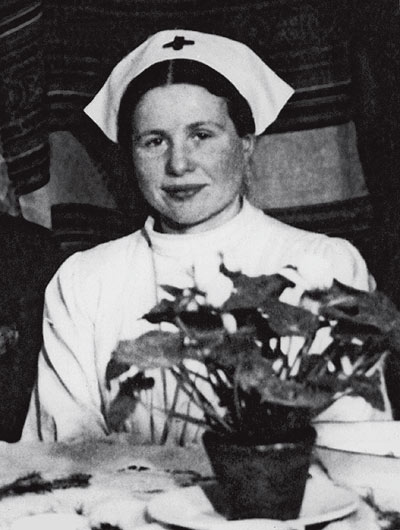
I interviewed Mary here and here and here and here. She eventually went to make a movie about Holocaust heroine Irena Sendler, the PBS film In the Name of Their Mothers. The article gets it wrong: Sendler didn’t save hundreds of children; she saved thousands.

Skinner’s story has a happy ending:

The film’s reception was “beyond anything I could have imagined,” Skinner says. “But I didn’t feel elated. I was frayed, out of money and scared to death.” In the US, the film was rejected from film festival competitions (a DVD release in Poland broke conventional festival rules), but won multiple European prizes.  Skinner started showing her film at churches, schools and libraries. The philanthropist Tad Taube, a major PBS donor, happened to attend one of the screenings and was so moved that he arranged for Skinner to meet with the head of programming at the local PBS affiliate. That day, Skinner came with a PowerPoint presentation, prepared to make the most important pitch of her life, but as she sat down with the station chief at a polished table surrounded by staffers, he said, “This is a powerful film.  We want to ask you if you will allow us to take it national.” In the Name of Their Mothers had its U.S. debut on Sunday May 1, 2011, Holocaust Remembrance Day.

Now that’s a story we tell here.