


A marvelous little church with a story to tell. (Photo: Nichole Robertson)
It’s Christmas Eve. The world awaits in joyful expectation the coming of… Les Misérables in a theater near you.
But please, do me a big favor, in the spirit of the season. Please don’t say this film is about the French Revolution. Many of us have repeatedly corrected the media, Huffington Post included, for this oft-repeated gaffe. No surprise, perhaps, since even Director Tom Hooper seems a little dim about French history.

Evocations of the 16th century (Photo: Nichole Robertson)
So let me help everyone sort this out. The French Revolution began with the storming of the Bastille in 1789. The principal events of Les Misérables take place in 1832. Different century. The July Revolution two years earlier had put the Orléanist monarchy on the throne, under the popular “Citizen King” Louis-Philippe. Popular for awhile, that is. Despite his unpretentious manners and a character that Les Miz author Victor Hugo commended as “good” and “admirable,” the income gap widened and the conditions of the working class deteriorated. By the spring of 1832, a deadly cholera epidemic had exacerbated a severe economic crisis.
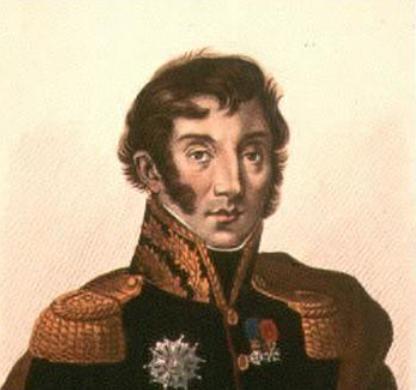
His death pulled the trigger.
In the early morning hours of June 5, crowds of workers, students, and others gathered in the streets of Paris. The immediate trigger was the death of General Jean Maximilien Lamarque, who had been a friend to the poor and downtrodden. The crowd had hoped to accompany Lamarque’s hearse before it took the general home to his native district in the southwest of France. Those mourning and those with a political agenda merged into a mob that numbered in the tens of thousands – some witnesses claimed it eventually grew to 100,000.
The 30-year-old Victor Hugo was nearby, in the Tuileries Gardens, writing a play. Then he heard gunfire from the direction of Les Halles. Instead of going home to safety, he followed the sounds of gunfire through the deserted streets. He was unaware that the mob had taken half of Paris, and the barricades were everywhere in Les Halles. According to Wikipedia, Hugo headed north up the Rue Montmartre, then turned right onto the Passage du Saumon, finally turning before the Rue du Bout du Monde (if this street still exists, it has a different name now): “Halfway down the alley, the grilles at either end were slammed shut. Hugo was surrounded by barricades and flung himself against a wall, as all the shops and stores had been closed for some time. He found shelter between some columns. For a quarter of an hour, bullets flew both ways.” Three decades later, he would write about the unforgettable experience in Les Misérables.
 I had hoped to visit some of the route during my recent visit to France. Alas, my trip was too brief, and I couldn’t quite figure out what had happened, and where, on my Paris map. I had to make the journey vicariously, later, through Mark Traugott‘s The Insurgent Barricade (University of California Press).
No wonder I was confused. Traugott’s map of the insurrection shows that Lamarque’s funerary procession made a wide arc around the city’s right bank. The insurrection affected both sides of the Seine, but the flash points were here, on the right bank.
Dragoons had been under orders to refrain from the use of deadly force, but when a shot rang out from somewhere, the crowd began to throw stones at the military. The cry “To the barricades!” resounded through the streets. But what, exactly, did that mean?
According to Traugott:
 “Insurgents began uprooting the saplings planted to replace the larger trees cut down during the July Days. They also scavenged planks and beams from nearby construction sites and improvised tools for prying up paving stones. These classic raw materials were natural choices because they added mass, helped knit the structure together, and were usually found in abundance right at the site of the barricade construction. Between 5 p.m., when the first sporadic gunfire was exchanged, and 6:30, when pitched battles were initially reported, dozens of barricades had been completed on both the right and left side of the Seine. Individual structures took as little as fifteen minutes to erect.
“Even as the first barricades were going up, a frantic search for arms began. Some rebels had to be content with sabers, staffs, or scythes, but rifles were the weapons of choice, and bands of insurgents boldly seized them from small patrols of soldiers encountered in the streets. Others joined in pillaging the premises of Lepage frères, the largest of several Paris gunsmiths whose establishments were looted.”
Why, you may ask, have I chosen to illustrate this post about a doomed revolt with the elegant photos of Nichole Robertson over at Little Brown Pen?
This little gem of a 16th-century church is Église Saint-Merri. The insurgents staged a desperate last stand in and around this church, at the heart of the district where the fiercest fighting took place.

Empty chairs at empty tables. (Photo: Nichole Robertson)
The insurgents pleaded for help, but no help came. The citizens of Paris were not as quick to join the revolution as they were to join the unruly funeral procession. In the theatrical production of Les Miz, the army officer warns the insurgents via a loud-bailer:
You at the barricade listen to this!
No one is coming to help you to fight
You’re on your own
You have no friends
Give up your guns – or die!
And it was true. According to Traugott, “The casualty toll among the insurgents, mounting as high as 800 dead and wounded, was particularly heavy because the people of Paris withheld their support, leaving most of the committed insurgents of June 1832 to pay for their rebellion with their lives.”
If nothing else, please remember is that the whole point of the French Revolution is that the revolutionaries won. Remember the beheading of Louis XVI and Marie Antoinette, Robespierre et al.? This was different. In 1832, writes Traugott, “The last guns were silenced a barely twenty-four hours after hostilities had begun.”

Gustave Brion’s illustration for the novel in 1865
Postscript on 27 July, 2013: Comments are continuing to trickle in for this post. Today, Reader Karen wrote to ask: “Have enjoyed reading all the comments, but am still searching for an answer to the elephant in the movie. Did that actually occur? Was there an elephant structure in the area during that period? If so – why? Will it help if I actually finish reading the novel?”
I couldn’t resist the educational opportunity. From Wikipedia:
The Elephant of the Bastille was a monument in Paris which existed between 1813 and 1846. Originally conceived in 1808 by Napoleon, the colossal statue was intended to be created out of bronze and placed in the Place de la Bastille, but only a plaster full-scale model was built. At 24 m (78 ft) in height the model itself became a recognisable construction and was immortalised by Victor Hugo in his novel Les Misérables (1862) in which it is used as a shelter by the street urchin Gavroche. …
The elephant itself was described negatively by Victor Hugo in Les Misérables; little other account of contemporary public perception is available.
It was falling into ruins; every season the plaster which detached itself from its sides formed hideous wounds upon it. “The aediles,” as the expression ran in elegant dialect, had forgotten it ever since 1814. There it stood in its corner, melancholy, sick, crumbling, surrounded by a rotten palisade, soiled continually by drunken coachmen; cracks meandered athwart its belly, a lath projected from its tail, tall grass flourished between its legs; and, as the level of the place had been rising all around it for a space of thirty years, by that slow and continuous movement which insensibly elevates the soil of large towns, it stood in a hollow, and it looked as though the ground were giving way beneath it. It was unclean, despised, repulsive, and superb, ugly in the eyes of the bourgeois, melancholy in the eyes of the thinker. —Victor Hugo, Les Misérables, 1862
Update on April 29, 2019: The new production of Les Misérables on the BBC has generated a lot of fresh interest in this 2012 post. Due to spam attacks in recent years, we’ve had to turn off comments for older posts, but if you have something to say, please email me at cynthia dot haven at gmail.com and I’ll post your thoughts below. Be sure to put Les Misérables in the subject header!
Tags: General Jean Maximilien Lamarque, Mark Traugott, Nichole Robertson, Tom Hooper, Victor Hugo
August 7th, 2013 at 4:23 pm
I suppose he represents the equivalent class in Paris … but then of course, so would his sister Eponine. And all the other Thenardiers.
August 8th, 2013 at 6:11 pm
I think you have the number of dead wrong. From what I’ve read, there were about 166 who died. Of those, about 93 were the rebels, and the rest from the other side. The number of wounded from both sides might have totaled around 800.
August 8th, 2013 at 6:39 pm
You may be right, Beth. I’m citing Mark Traugott’s book.
August 9th, 2013 at 5:41 pm
Great discussion, everyone! I needed some ammo to explain the dates and
WHY this was NOT the French Revolution. Thanks so much for all of your expertise.
September 3rd, 2013 at 1:14 pm
We the insurgents in Les Mis communists, either in name or philosophy? I wondered about the solid red flag, and the talk of bourgeoisie.
September 3rd, 2013 at 1:53 pm
Karl Marx was a teenager at the time. I think they were generally outraged at the economic conditions and the widespread poverty.
September 5th, 2013 at 3:06 am
[…] information about the history around Les […]
September 5th, 2013 at 5:34 pm
People have to pay closer attention to the lyrics it seems. Gavroche states that they got rid of the king….and it was replaced by worse. Of course-most people don’t know the history of their own country so knowing the difference between the French Revolution and Madame Guilottine and the Insurection of 1832 is a bit too much!!! Most importantly-while based on real events-we all need to remember that this is a musical and a whole lot of poetic license was used(just as in “Sound of Music” and “King & I”-based on real events, but not history!!!!). Still one of my favorite musicals and I loved the book
September 8th, 2013 at 10:56 pm
The elephant also appears in the musical Moulin Rouge. Clearly historic license was used because the scenes which prominantly feature the structure supposedly take place in 1899. Also, the elephant is practically bedazzled! I can understand why filmakers would want to use it or take liberties with it. It’s such an great visual oddity.
September 10th, 2013 at 7:54 pm
This was a very useful article, thank you. The movie was my very first exposure to Les Mis. I agree, the opening scroll told us it was post-Revolution, as did some dialogue and lyrics. Maybe people were still out in the lobby buying popcorn?
September 10th, 2013 at 8:23 pm
I suppose so, Laura. Welcome!
September 25th, 2013 at 2:48 pm
Was reading a synopsis last week of Les Miserables and learnt Gavroche is the son of the Thenardiers. Doesn’t affect the plot in any way, of course, but I never twigged that one before.
September 27th, 2013 at 12:16 pm
[…] say the complexity of the characters as well as the storyline in general is what made me hold fantasy books back. Other fantasy novels typically explain the line between good and evil really clearly. […]
October 2nd, 2013 at 3:52 pm
we learned all this in 10th grade History class. AP History. I say “learned” because I studied for the exams, wrote my essay & then promptly forgot all but the bare bones. Thanks for the Details!
October 10th, 2013 at 4:34 pm
Thank you for this clarification. I confess that I declined to talk about the history of the movie because I was totally confused about the conflict in dates and daren’t expose my stupidity.
October 30th, 2013 at 5:42 am
[…] information about the history around Les […]
November 14th, 2013 at 1:36 pm
Thanks for this explanation. I saw the play years ago and hated it, because I did not know the plot and the singing was difficult to understand. I knew I must have missed something, because everyone I knew was ga-ga over it. So when the movie came out I watched it, and fell in love! Later I got to see a live community theater production, which was excellent, and then another which was superb! Now I have the sound track blasting in my car all the time, and the tunes rotate through my head day and night! I can’t wait for it to come back to the San Diego Civic Theatre, where I first saw it.
I was stunned to learn that Victor Hugo had actually been there at the time of the revolution! Can’t wait to share my new knowledge with everyone. It adds such depth to the telling of the story. Also, a couple of years ago I was in Paris and visited Montmartre, so had that connection to your explanation as well.
I did know that this was not the French Revolution, but I am glad to have more historical context from which to love this magnificent production.
November 14th, 2013 at 1:53 pm
Glad it was helpful, Donna.
November 19th, 2013 at 1:52 pm
Thank you for the clarification. I was aware of the time difference and the timeline, but it was nice to have it all in type in a consistent manner. I showed this to a friend when she was unwilling to believe me that Les Mis was not set during the Revolution, and she said that it was very informative. If I may ask, do you know if any of the characters (specifically the Amis) in Les Mis were based on living people?
November 29th, 2013 at 7:38 am
Thanks for article and discussion. Read book over 20 years ago eventually saw musical twice numerous films now this film of the musical. Always loved it Nd knew it wasn’t the French revolution . But I always felt confused about what revolution it WAS about – why had I heard so
Little about this one? What finally happened? You explain this plus give sources on how to find out more . I do appreciate this as gavrotte with his cockney accent is hard to understand as he reviews French history! A transcendent tale – and a sorrowful one about the costs of doomed revolutions.
November 30th, 2013 at 9:55 am
Thank you so much Cynthia! I love the musical and film, but wanted to know the connections. Spent a useful hour reading Wikipedia but your explanation far more helpful!
November 30th, 2013 at 10:43 am
You’re welcome, Caro!
January 1st, 2014 at 1:12 pm
Get over yourselves. Get history right you say?? Rofl who cares?! It’s a damn movie NOT a history lesson in a classroom. If you want Hollywood to be historically accurate then shut the hell up and make your own damn movie.
It was ALWAYS a musical since it was written! NEVER a historically accurate depiction.
January 1st, 2014 at 3:44 pm
I don’t think you read my post carefully, James, since you have misconstrued everything I wrote within it. Given your attitudes towards history and learning, it doesn’t surprise me that you are not an attentive or thoughtful reader. Sad.
January 11th, 2014 at 8:47 pm
Thanks for the great info! I was watching Les Mis, and Googled French Revolution, and the dates didn’t match- had to solve that mystery!
January 13th, 2014 at 1:05 pm
To get the history straight please have a look to both authors :
Bouchet (Thomas).- Les barricades des 5-6 juin 1832 In Histoire des mouvements sociaux en France de 1814 à nos jours ; ss la dir. de Michel Pigenet et Danielle Tartakowsky.- Paris : La Découverte, 2012, pp. 113-120. ISBN 978-2-7071-6985-3
Baudrier (Pierre).- Insurgés et forces de l’ordre en 1832. Alexandre Deschapelles et Robert Richard O’Reilly, Bulletin de l’Association d’Histoire et d’Archéologie du XXe arrondissement de Paris, Numéro 50, 4e trimestre 2011, pp. 7-27
P B
January 14th, 2014 at 6:57 am
Dear Cynthia, Thank you for all your posts. I got involved by wondering whether to show my dvd of Les Mis to my 15 year old Granddaughter who I am home-schooling, her topic being the French Revolution. Had to get the dates right, so have now decided to show it to her after we have looked at the Revolution not during. So love the book and the staged version, but thought the film was excellent. Any ideas how I can introduce the Revolution in an interesting way?
January 14th, 2014 at 8:31 am
You could try Dickens’s Tale of Two Cities, for a start. I think kids generally like the French Revolution. They’re gory little creatures and there are plenty of executions to ponder.
January 20th, 2014 at 4:16 pm
[…] in fact has nothing to do with Les Misérables which is set in Paris – you can find out more here.(Yeah…..okay I read blogs on the Stanford website for kicks – get over it! […]
January 26th, 2014 at 1:16 pm
If you’re willing to take the time (4 hours), & can handle B&W/subtitles, the 1934 French film of “Les Miz” will answer most if not any questions you may have about the June Rebellion & the many characters in the story. The definitive adaptation of Hugo’s novel has no singing, but it’s excellent!
January 26th, 2014 at 3:34 pm
What a challenge! I may take you up on it, David.
February 11th, 2014 at 6:27 am
I would sort of like to give this article to quite a few people in my life, including my history teachers! As a high school student and general theatre nut, it took very minimal reading up for me to discover that Les Mis was about the June Rebellion, as the French revolution as taught in all of my classes took place forty plus years before the events of Les Mis.
Either way, this was a wonderful article, and I’ll most certainly be sharing this with people.
February 11th, 2014 at 9:08 am
Thanks, and pass along a linkback to the Book Haven, please!
February 25th, 2014 at 8:40 pm
[…] in case you’re still confused about the historical setting this article helps explain it pretty […]
February 26th, 2014 at 10:07 am
Well this clears up a lot for me, I have yet to read the book but I have watched the movies and plays over and over again, and love the music and story. It kinda makes me feel better to know that after they all died for France that later there actually was the real French Revolution and they won. I know they are just fictional, but as as for the real people who died as well.
February 26th, 2014 at 10:19 am
You still have it wrong, Shirley. The “real” French Revolution was decades before the squashing of this comparatively minor revolt.
April 11th, 2014 at 3:26 am
I have watched the current movie version and though I appreciate it but I feel it is lacking. Still a good try to adopt the masterpiece.
May 9th, 2014 at 2:11 pm
obat kuat murah
Enjoy Les Misérables. But please get the history straight. | The Book Haven
June 3rd, 2014 at 9:55 am
I wonder if my question is relevant to this site?
Many years ago, my husband took me to London to see Les Miserables. I know there was a guillotine scene in it. Music was playing and heads were being chopped off and thrown to the man with the basket; I had the distinct feeling (from the music) that this was going to turn into a game of football and commented on this to my husband. It did.
Recently, my son took is family to London to see Les Miserables. Guess what, no guillotine scene. He says I must have imagined it which makes me jump up and down with irritation.
Please, please someone, tell me that there was such a scene and that they have since removed it from the performance.
June 3rd, 2014 at 10:09 am
Sorry, Sylvia. I’ve seen several productions – no guillotine scene. However, there’s no accounting for what an inventive (and historically inaccurate) director might have done.
June 4th, 2014 at 9:35 am
Cynthia, thank you so much for taking the time to reply. It is much appreciated. I am so puzzled about this. Who could I ask please.
June 4th, 2014 at 6:23 pm
To my knowledge, no one was guillotined after the 1832 uprising. It was an uprising that was squashed in the streets. I have never heard of any production of “Les Miserables” that includes a guillotine. It seems highly unlikely, because I don’t know where a director would inject such a scene. Or why. Could you be confusing it with “Tale of Two Cities”? Poulenc’s “Dialogue of the Carmelites”?
June 5th, 2014 at 1:39 am
Good morning Cynthia. I don’t think Tale of Two Cities was a musical?
Never mind, I shall just have to agree with my son, that I am imagining this very clear memory!!! Thanks for replying.
June 5th, 2014 at 7:25 am
Nope. A novel. I thought it might have a onstage version – it was made into several movies. And Poulenc’s work is of course an opera, which is kind of a musical.
June 15th, 2014 at 10:18 pm
actually, the incident of 1832 was precipitated when a section of bonaparte’s elephant trunk collapsed, fell and crushed the mistress of a popular maison close of the time. “a bas l’elephant blanche!” was the battlecry used. hugo himself stood briefly upon a barricade, to observe, and then retired to a tavern to get drunk. beware of the revisionist historian, and never more so than when he is a hollywood producer! as, gladiator; commodus was real (who did enter the arena to pursue lions with a bow, and occasionally slew actual gladiators, as amusements, and no doubt closely defended by his pretorians), as was aurelius; however, they had absolutely nothing to do with another in history; also, never was there a general maximus. even historians find it difficult to write history (montaigne, not being one, was often incorrect); hollywood scriptwriters simply run amok.
June 16th, 2014 at 8:29 am
RE: Kerley/Haven and Les Mis, A Tale of Two Cities and guillotines. I, too, am unaware of a guillotine ever being in the musical Les Mis. A Tale of Two Cities has been made into three (that I know of) musicals. One, with book, music and lyrics by Jill Santoriello, and a guillotine, ran on Broadway from Sep 18 – Nov 9, 2008. It never played in London. The novel is also a musical by David Pomeranz, Stephen David Horwich and David Soames that ran in London in 2012 and features a guillotine. And there is a 1968 version titled Two Cities, The Spectacular New Musical, written by Jeff Wayne. A guillotine is in the musical The Scarlet Pimpernel with music by Frank Wildhorn and book and lyrics by Nan Knighton. It ran on Broadway at various times and in various versions known as SP 1.0, SP 2.0, SP 3.0 and SP 4.0 from 1997 – 2000. It has played in the UK, but I don’t know if specifically in London.
July 13th, 2014 at 11:14 am
Let’s all celebrate Bastille Day tomorrow. Play French music or eat French food or make a French “connection”.
July 30th, 2014 at 4:11 pm
I recently finished Les Miserables, and found this article while searching for information and photos. Now, I am an avid reader of your blog, Cynthia ! Thanks so much for great writing on such interesting subjects !
August 19th, 2014 at 6:02 am
I get the time frame of Les Mis but if the revolutionaries won the French Revolution why were the conditions for the people still crap for years and continued to get worse up to and beyond the barricades defeat? Who did the revolutionaries who won represent?
August 19th, 2014 at 8:37 am
That’s what happens after most revolutions. The revolutionaries who win wind up representing … themselves. The tyrants who follow usually bring blood (Robespierre), or totalitarianism (Lenin, Stalin) – at the very least, decades of instability. Can you think of many exceptions? The American Revolution really was exceptional in this regard – but it was more a colonial revolt rather than a true revolution, wasn’t it?