
Melissa Green and the long climb back from darkness
Sunday, April 30th, 2017
 Poet Melissa Green has wrestled with mental illness all her life (we’ve written about her here and here). As a child, she knew she wanted to write poetry, but every two years she was felled by depression. Four years ago, the Massachusetts writer had a dozen shock treatments. The result was catastrophic: the woman whose poetry had entranced Nobel poets Joseph Brodsky and Derek Walcott could no longer read. She had no memory of having written anything, and said her “ziggurats of books meant no more to me than a pile of two-by-fours.” This is the story of her long climb back. She’s since published Magpiety: New and Selected Poems (2015), and last December a critical volume called Soundings: On the Poetry of Melissa Green was published about her (and Humble Moi has a short piece in it, too).
Melissa’s friend, Melissa Shook, a Boston artist and documentary videographer, made a short video about what she described as “my battle to find language again after a series of shock treatments destroyed my attachment to it, how as artists we try to negotiate Keats’ ‘negative capability’ when the press to be a maker is so strong.”
Conversation with Melissa Green is below. She added: “I thank you from the bottom of my heart, for your caring friendships, and for taking the time to watch this, so important to me.” She’s not the only one suffering from mental illness. I think a lot of writers, poets, and ordinary people who have walked along the same difficult path will welcome this kindred spirit, and her courageous journey.
Conversation with Melissa Green from Melissa Shook on Vimeo.


 At one shattering moment in his life, however, he rejected his vocation: on February 1, 1951, Miłosz, in Paris as a cultural attaché for the Stalinist government of Poland, stepped into a waiting taxi that took him to Maisons-Laffitte in the suburbs. The thirty-nine-year-old defector spent three and a half months in hiding at the offices of Kultura, an important émigré journal of politics and literature. He wrote: “my decision marks the end of my literary career”. He had walked out on more than five years of service to the Communist government, most recently in the grim, barricaded Paris embassy where insubordinate employees were drugged and delivered to the airport, and where others never left the building for fear of being dismissed. He had longed for “a place on earth where I could wear a face and not a mask”, but still believed he had turned his back on the future by defecting.
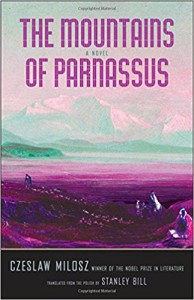 Miłosz was the first writer and intellectual of such distinction to defect from the Soviet bloc, and the first to give his reasons publicly, saying that a lie is the source of all crime and that “the paramount duty of a poet is to tell the truth”. For this, he was subjected to vicious slander and attacks from old friends in Poland, the left-wing Parisian intelligentsia, and even other émigrés. Miłosz became an Orwellian un-person in his native land, and would not see his wife and two sons again for more than two years.
 For most of the nation, if not world, this Saturday, April 22, is Earth Day. But a hundred or so people will be fêting a different sort of pleasure this weekend, when “A Company of Authors” celebrates books and those who write them for the fourteenth consecutive year. The gathering will take place from 1 to 5 p.m. on Earth Day, in Levinthall Hall at the Stanford Humanities Center at 424 Santa Teresa Street on the Stanford campus.


