
Gustaw Herling: “I never stopped thinking about the evil I had seen.”
December 10th, 2016
 Polish writer Gustaw Herling is too little known in the West, although Nobel poet Czeslaw Milosz (a longtime Berkeley resident) called him “one of the most important witnesses of the twentieth century, a heroic man and truly worthy writer.”
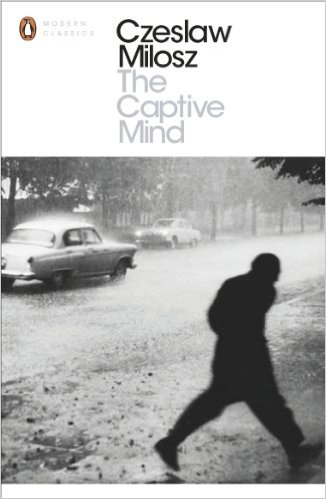
It was a generous appraisal. Although Herling always recognized Milosz as a great poet, the younger writer took issue with Captive Mind, Milosz’s landmark analysis of what happens to the creative mind under totalitarianism, through four case studies. “Our friendly relations were not affected by his negative opinion of my book, The Captive Mind, though I was never able to grasp his argument,” Milosz wrote. “He seemed to reproach me for ascribing ideological motives to intellectuals who had collaborated with communism. According to him they acted mostly out of fear or a desire for a career.
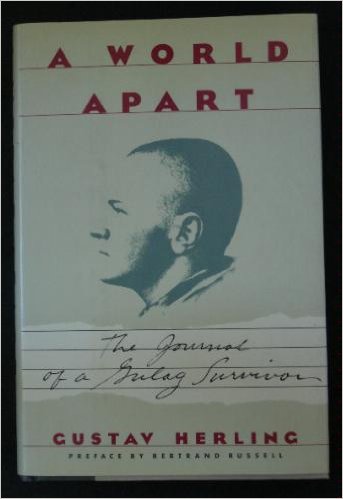
“Herling had valid reasons to judge severely the intellectuals of the twentieth century. Those in the West closed their ears to his report on Soviet Gulags. In Italy, where he lived for many years, the intellectual establishment, which was controlled by Communists, changed him into a nonperson only to discover him suddenly after the fall of the Soviet empire. My Captive Mind had hardly fared better with leftist readers than his World Apart.
He experienced some of the worst the last century had to offer, beginning with World War II in Poland. He established Poland’s first anti-Nazi resistance cell, fled east to join the Free Polish Army, was arrested by the NKVD (precursor to the KGB) in Soviet-occupied Poland, and was imprisoned in a labor camp on the White Sea. After his release in 1942, he was wounded in the Battle of Monte Cassino. He co-founded the influential literary journal Kultura in Maisons Laffitte with Jerzy Giedroyc (well, we told that story here). His books include A World Apart: The Journal of a Gulag Survivor, Volcano and Miracle, The Island, and others.
A few excerpts from Kelly Zinkowski’s excellent Paris Review Q&A from 2000 – first, on Captive Mind, a book that was very influential for me, describing not only life under Communism, but anywhere the mind is “bent”:
 Herling: The behavior of the intellectuals before the war, during the war and after the war with respect to fascism, communism, and other forms of totalitarianism of various descriptions was not very respectable. So they were happy to have Milosz’s book, to have their behavior absolved, if not validated. Because to have something like Ketman or the New Faith is certainly preferable to listening to me telling them that they had betrayed themselves for career and family. Not that the Poles were alone in this. The behavior of writers and intellectuals in Italy during the Fascist reign was the same thing. They should be ashamed of what they wrote, especially because they weren’t writing out of any genuine conviction of fascism’s merits. They were merely trying to advance their respective careers. To some extent it was the same with German writers under the Nazis. Thomas Mann wasn’t sure about what choice to make.
Interviewer: Unlike Robert Musil, who in his exile liked to say that he was merely following his readers.
Herling: Yes. Mann was in a way negotiating with the Nazis. He wanted to know if the Nazis would publish his books, if they would guarantee the safety of his great library in Munich, and so on. We have to be extremely conscious of this problem. I remember the great Italian writer, my friend Ignazio Silone; his intransigence against Italian Fascism was very badly looked upon by his colleagues. They called him a fanatic, which is a terrible word—
Interviewer: Implying that he’d lost his reason.
Herling: And so on. I don’t mean to reopen this discussion with Milosz. He’s a great writer. I recognize his greatness, in his poetry especially, his beautiful novel The Issa Valley, and in other things. I was very pleased by, and contributed to his getting—because they’re not so easy to get!—the Nobel Prize. But I remain adamant where our dispute is concerned.
***
 Interviewer: Could you talk a bit more about your position vis-à-vis those who compromised, either with communism or fascism?
Herling: Let us divide these intellectuals, as far as Poland is concerned, into two categories, the first being single-minded Communist careerists who didn’t want to allow any anti-Communist voices. I remember a very well-known writer who visited me during the time of Poland’s Communist regime. I told him, You’re writing trash, absolute trash. He reached into his jacket pocket, took out a photograph of his wife and family and said, This is my answer. So just stop with all your anti-Communist moralizing.
Interviewer: A difficult point to argue, under the circumstances.
Herling: But we are marked by what we do. This is the first category. The second category is much more dignified, that of writers and intellectuals in totalitarian regimes, like fascism or Nazism, good writers with Nazi sympathies . . . If you could interrogate Heidegger, for example, you would get all of his explanations for why he did what he did, why he accepted the position of university rector, why he wrote all that trash. There was always a reason—he wasn’t stupid. So the second category is this: those who tried to invent good and intelligent reasons. When Milosz says they are using the technique of —claiming to believe everything they were supposed to believe, just to live, to work—it was a kind of lie.
Interviewer: Albeit a historically sanctioned lie—a flamboyantly erudite example of Emerson’s maxim that once a particular point of view is taken, all of history can be made to prove it.
Herling: Yes.
***

On Alexander Solzhenitsyn:
Herling: Take the three volumes of Solzhenitsyn’s The Gulag Archipelago. Although it goes under his name, he is not the only one who wrote it. It was compiled from the memoirs of some two hundred Gulag veterans to whom he had written and asked to recount their experiences. So it’s not really his book; it’s a kind of encyclopedia of the camps. It is true, it is good, it is interesting, it made a profound impression in the West. In my opinion it utterly transformed the position of the French intelligentsia vis-à-vis the Soviet Union; it eradicated communism as a viable position among the intellectual classes there. But it is not Solzhenitsyn’s book in the same way that One Day in the Life of Ivan Denisovich is. I didn’t plan to write the story of my two years in Kargopol near the White Sea. But, as I’ve said, it was there that I was awakened as a writer, so I approached my subject as a writer, not as a rapporteur. In some respects it is a book of fiction, but not as conventionally understood.
***
On evil:
Herling: During my two years in the concentration camp, I saw an accumulation of evil that left a very deep trace. Even after I was released and reacquired some sense of normality, I never stopped thinking about the evil I had seen. Then, observing the world, reading the papers, listening to stories, it became absolutely apparent that evil exists and is spreading every day. This became my obsession, and it is a constant theme in my stories. My idea of evil differs from the one shared by the church, Plotinus, and Thomas Aquinas, which maintains that evil is merely the absence of goodness. This is the official theory, and I don’t believe it. I think evil is utterly autonomous. What I see every day, in this terrible procession of events, disgusts me and confirms me in my belief; I am almost desperate. And the germ of this notion was formed in the camps. I saw a lot of things there, some of which I wrote about, some of which I didn’t. For a man of my age then, it was a terrible experience to see how the world really is. And this is the reason I decided to abandon my plans for a university career and to become a writer.
Read the whole thing here.


 The balaclavas and Kalashnikovs and the culture of gangsters are connected to bottomless corruption. The word, or rather one of the words, for corruption in Russian is prodazhnost’ (in Ukrainian, prodazhnist’); it means “saleability” and refers to the understanding that everything and everyone can be bought. A peculiar relationship between prodazhnost’, “saleability,” and chestnost’, “honesty,” belongs to the essence of the Donbas. Where there is no trust in the system, trust in one’s friends is essential. Where there is no law, personal solidarity is paramount. And so what is important is not for whom one votes but how one treats one’s friends. Chestnost’ is related both etymologically and conceptually to chest’, “honor.” What is so striking about Herman’s experiences amid the savagery of the Donbas is the absence of duplicity. Voroshilovgrad is an unsentimental novel about human relationships in conditions of brutality in which there is not a single act of betrayal.


 Elena Ferrante, author of Neopolitan Novels, guards her privacy zealously – in our intrusive age, who can blame her? She has claimed that “books, once they are written, have no need of their authors.” That hasn’t stopped repeated attempts to identify her. A few months ago, she was unmasked as the Rome-based translator Anita Raja. An earlier attempt this year tagged her as Neapolitan professor Marcella Marmo. Her website, anyway, is
