Stanford acquires an important collection of Nobel poet Joseph Brodsky’s papers

November 2nd, 2016

Share
brodsky_news

From a postcard in the new collection. Brodsky ties a shoelace on the morning of his departure from Leningrad in 1972. (Copyright: Lev Poliakov)

When the Soviet Union expelled the Russian poet Joseph Brodsky in 1972, he already had a few friends waiting for him in the West. One of them, Diana Myers, would remain a confidante until the Nobel laureate’s death in 1996. The London home she shared with her husband, the translator Alan Myers, became his English pied-à-terre.

The Hoover Institution Library & Archives at Stanford has recently acquired Diana Myers’ collection of Brodsky’s papers, including letters, photos, drafts, manuscripts, artwork and published and unpublished poems.

“We were keenly interested in adding the Joseph Brodsky papers collected by his friend Diana Myers to our vast archives on Russia and making them accessible right away,” said Eric Wakin, the Robert H. Malott Director of the Hoover Library & Archives.

“With Hoover’s significant holdings on the poet in its Irwin T. and Shirley Holtzman Collection, and the recently acquired Joseph Brodsky papers from the Katilius Family Archive at the Green Library, we’re honored that Stanford has become a notable center for Brodsky studies in the United States.”

The new acquisition documents Brodsky’s enormous capacity for friendship and his long love affair with the English language.

“I am a patriot, but I must say that English poetry is the richest in the world,” he once told an American student visiting Leningrad in 1970 – strong words for the man who would become one of the preeminent Russian poets of the last century.

Brodsky, who settled in the United States, was fascinated by the metaphysical poets of the 17th century. His landmark poem “Elegy to John Donne” was written in 1962, when he knew very little of Donne’s work. It brought him international attention. He began translating and writing English poetry during his 1964-65 internal exile in Norenskaya, near the Arctic Circle.

When the newlywed Myers arrived in London from the Soviet Union in 1967, she was carrying an armful of flowers to lay at the feet of John Donne’s effigy in St. Paul’s Cathedral. The specific request from Brodsky was her first stop in her new homeland.

In a letter Brodsky wrote to Alan Myers a few months before his exile, he requested more information about George Herbert, Richard Crashaw and Henry Vaughn. He sought guidance in finding the best editions of Ben Jonson, Henry King, Walter Raleigh and John Wilmot. An undated and unpublished poem in the collection seems to be an experiment written under their sway.

On another page in the collection, he adds his own illustrations to a few passages from Shakespeare, who anticipated the metaphysical poets.

Fifteen pages of holograph poems in the collection document the slow progression from an idea to a finished poem, with notations, corrections and amendments – all likely of interest to Brodsky scholars. “You can see how it worked, to the final version,” said archivist Lora Soroka. “It’s something that gives insight into his work.”

“It’s everyday life – everyday life when he was there, in England,” she said. “This is definitely our star collection – not big, but stellar.”

The collection also includes 70 letters from Brodsky, as well as correspondence to him from such figures as Russian poet Yevgeny Yevtushenko, Swedish translator and author Bengt Jangfeldt, Australian poet Les Murray and others; 25 pages of notes and drafts; five self-portraits, a landscape, and a still life, all in black chalk; an elaborate wedding card he created and illustrated for the couple; a transcript of his 1964 Soviet trial for “parasitism;” and other records.

Brodsky1988

Brodsky in 1988.

Friendship and hospitality

Myers, who died of cancer in 2013, was born Diana Abaeva, ethnically an Ossetian, whose prominent father had been politically purged and shot under Stalin’s regime in the 1930s. She grew up in Moscow and Tblisi, in the Caucasus Mountains – Brodsky once traveled to Tblisi to visit when he was impatient for her return to Leningrad.

Friends recalled that she was small and slender, with straight dark hair, an aquiline nose, and a radiant smile that was slightly dimmed by nicotine stains, for she smoked almost as ferociously as Brodsky did.

Like Brodsky, she lived for literature and was impractical, even unworldly. One friend recalled she had a slightly languid “Eastern” air. On one page in the collection Brodsky calls her “queen of the couch.”

She was “very intelligent and thoughtful and idiosyncratic,” said University College London’s Faith Wigzell, who had been a close friend of Brodsky’s as well as a colleague of Myers.

Her great gift was for hospitality as well as intellectual conversation: “She was the most relaxed and welcoming hostess. Her home was an international hall of residence. People came to just sit around. She was an excellent cook,” said Wigzell.

For Brodsky, Myers was a means to continue the literary and cultural conversations that had started in Leningrad. In exile, he would continue to consult her, phoning from around the world to read his latest poem and get her opinion. He said she had insights unlike anyone else’s.

Alan Myers, who died in 2010, became an important early translator for Brodsky’s poetry and prose, publishing in the New York Review of Books, The New Yorker and the Times Literary Supplement. In one letter, Brodsky told Myers that he would be paid “substantially, I think” for his New Yorker work, and he reminded his translator that he was looking after his interests.

Brodsky’s “In England” cycle is dedicated to the couple. In the “East Finchley” section, both make an appearance in their London home. In addition, the sections “York: In Memoriam W.H. Auden” and “Stone Villages,” recall trips the three took to W.H. Auden’s birthplace in the northern city of York, an ancient Roman stronghold. (Auden had been Brodsky’s mentor, protector, and friend – and another vital link to England.)

“Joseph found our sleepy residence very relaxing,” Alan Myers recalled in an interview from 2003-04. He remembered him as “a radiant source of wit, generosity of soul and exaltation.”

“No one who knew him well thought it other than a privilege to share the planet with him,” he said.

***
A selection from the Joseph Brodsky papers is included in the current exhibition Unpacking History: New Collections at the Hoover Institution Library & Archives, at the Herbert Hoover Memorial Exhibition Pavilion until February 25, 2017. For more information about hours and access to the collections, visit the Hoover Library & Archives website.


Robert Browning is the first poet ever to be recorded – and he muffs the lines of his own poem.

November 1st, 2016
Share

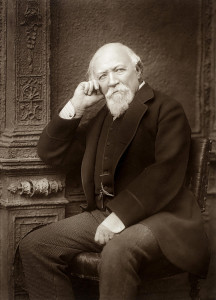
robert-browningThis is the first time ever a poet’s voice was recorded. And he muffed the lines of his own poem. The recording contains the voice of the eminent poet Robert Browning (1812 – 1889), recorded in a dinner party given by Browning’s friend the artist Rudolf Lehmann, on May 6th, 1889. (Browning died the following December.)

Colonel Gouraud, the sales manager of Edison Talking machine, had brought with him a phonograph and each of the guests was invited to speak into it. Browning was reluctant, then relents. Eventually he praises this “wonderful invention” – but perhaps he’s just covering his embarrassment at forgetting the lines of his own damn poem.

He’s reading his poem “How They Brought the Good News from Ghent to Aix,” though you may not quite catch the words (the video has subtitles to help). It’s only 50 seconds long.

(Merci to the Interesting Literature website.)

The last days of Tom Hayden: “I am wide awake in the unforgettable present moment.”

October 28th, 2016
Share
hayden-copy

Tim Schick and Rob Meachum review back issues of the Michigan Daily with Tom Hayden in the 1970s. (Photo: Ken Fink)

 .
On the West Coast, I was quick to get the news of activist, author, and legislator Tom Hayden from the Los Angeles Times. The obituary briefly mentions that he was editor of the Michigan Daily circa 1960 – before Jane Fonda, before the Port Huron Statement, about the time of the Students for a Democratic Society was founded.   
 .
I met him briefly in 1976, at the offices of the Michigan Daily on 420 Maynard. He was there as part of his Indochina Peace Campaign effort – he had objected to a position The Daily had taken, as I recall – but I knew that Steve Wasserman, my former editor at the Los Angeles Times Book Review (and now consulting editor at large for Yale University Press and publisher of Berkeley’s Heyday Books), would know him perhaps as well as anyone. I was right. He published this week in The Nation:
 .

A week before he died, I went to say farewell to Tom Hayden. I’d known him ever since we met in Berkeley in 1969 during the tumult of People’s Park, when he was 29 and I was 16. I knew he was gravely ill, debilitated by the stroke he’d suffered the year before, just three weeks after he’d agreed to write a book I’d been urging him to undertake for Yale University Press. For the next 18 months, we would work closely together on a modest book-length essay about the legacy of the Vietnam protest movement. I had suggested he write it as a natural outgrowth of the conference he and other antiwar veterans had organized in Washington, DC, to protest the Pentagon’s plan to sanitize an official commemoration of America’s Vietnam veterans. That plan had conveniently omitted to mention those courageous vets who protested the war, the brave young men who resisted the draft, or the many millions of patriotic citizens who had come together in an unprecedented movement of opposition.

hell-no

Out next May, his last book.

Tom was appalled that our legacy of protest was in danger of being forgotten. As he wrote: “One can only guess why so many elites want to forget the Vietnam peace movement by history cleansing, why public memories have atrophied, and why there are few if any memorials to peace.” We talked about how efforts to end an unjust war had been whitewashed and stricken from mainstream memories, and what to do about it. He felt that “the steady denial of our impact, the persistent caricatures of who we really were, the constant questioning of our patriotism, the snide suggestions that we offered no alternative but surrender to the Communist threat have cast a pall of illegitimacy over our memory and had a chilling effect on many journalists, peace dissenters, and the current generation of students today. Of course, one reason for this forgetting is that the Vietnam War was lost, a historical fact that representatives of a self-proclaimed superpower can never acknowledge. Accepting defeat is simply not permissible.” We agreed that if truth is famously war’s first casualty, memory is its second. Tom’s book would be a necessary intervention in the on-going conflict between empire and democracy.

That the book got written at all is something of a miracle. I was shocked to receive an e-mail from him just days after he’d signed the contract with Yale, telling me he’d suffered a serious stroke. “I am the victim of my own reckless character,” he wrote. “I was photographing a toxic pit of fracking wastewater out in the land of the devil, Kern County. It was hot, the air full of dust, the black ooze sinking into the aquifer below and evaporating into the air above. I threw myself into the cave of the devil and the devil blew back into my heaving lungs. It was something like Ginsberg staring into the eye of Moloch. And so in the course of an exhausting day and night my breathing worsened and I eventually fell into a stroke and was rushed twice to emergency rooms, doctors and nurses, and the MRI machine where I experienced life and loved ones passing before my eyes. The man at the MRI was named Jesus. When it was over and I asked him how his day was going, he said with an upbeat shout, ‘You survived, everybody’s gonna survive in this place today.’” Tom went on to say that while he would “need therapy to help recover my brain over the next little while,” he assured me that “if you call me, and I hope you will, it will seem that I am my old self, slicing and chopping words into sentences and arguments, living again in the immanent world that I nearly left behind.” …

He closed his missive, which he’d written from his hospital bed at 5 in the morning, “I am wide awake in the unforgettable present moment, and now I must try to sleep.”

Tom always did live in the unforgettable present moment, and he refused to be hostage to an easy, self-aggrandizing nostalgia for the “good old days” of the 1960s. As much as he had a profound respect for the ways that history, as was once so famously observed, weighs upon the brain of the living like a nightmare, he spent his life trying to write it by making it in the here and now.  …

Read the whole thing here


A glorious evening with Zora Neale Hurston’s Their Eyes Were Watching God!

October 26th, 2016
Share

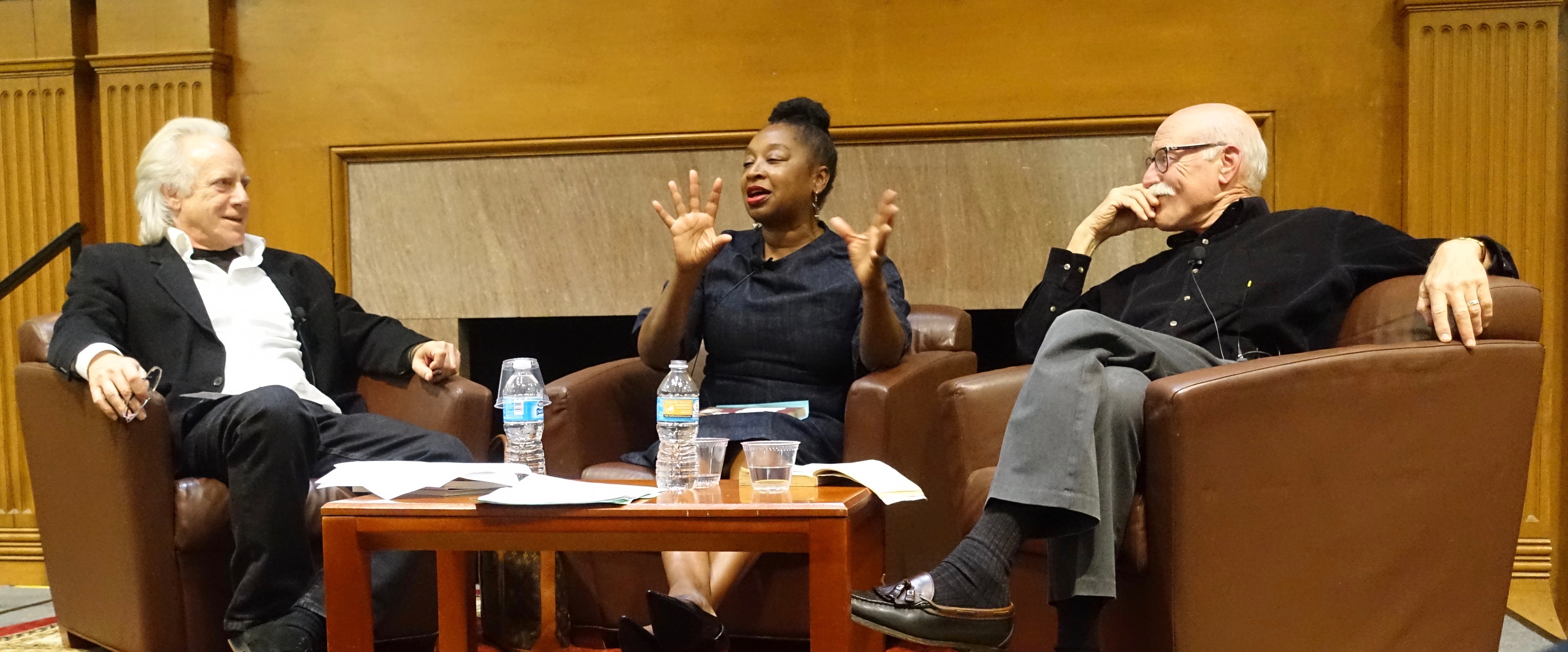
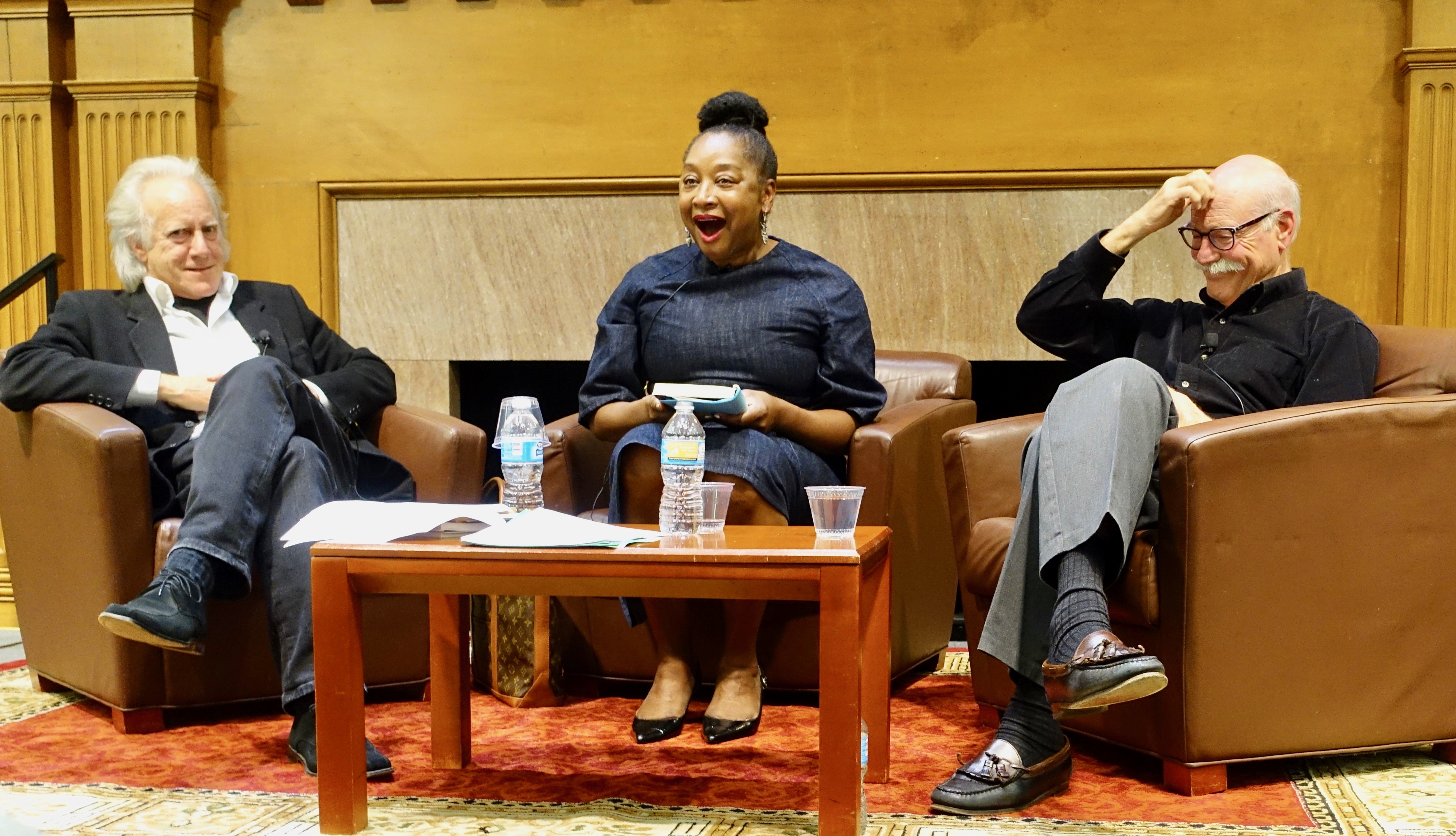
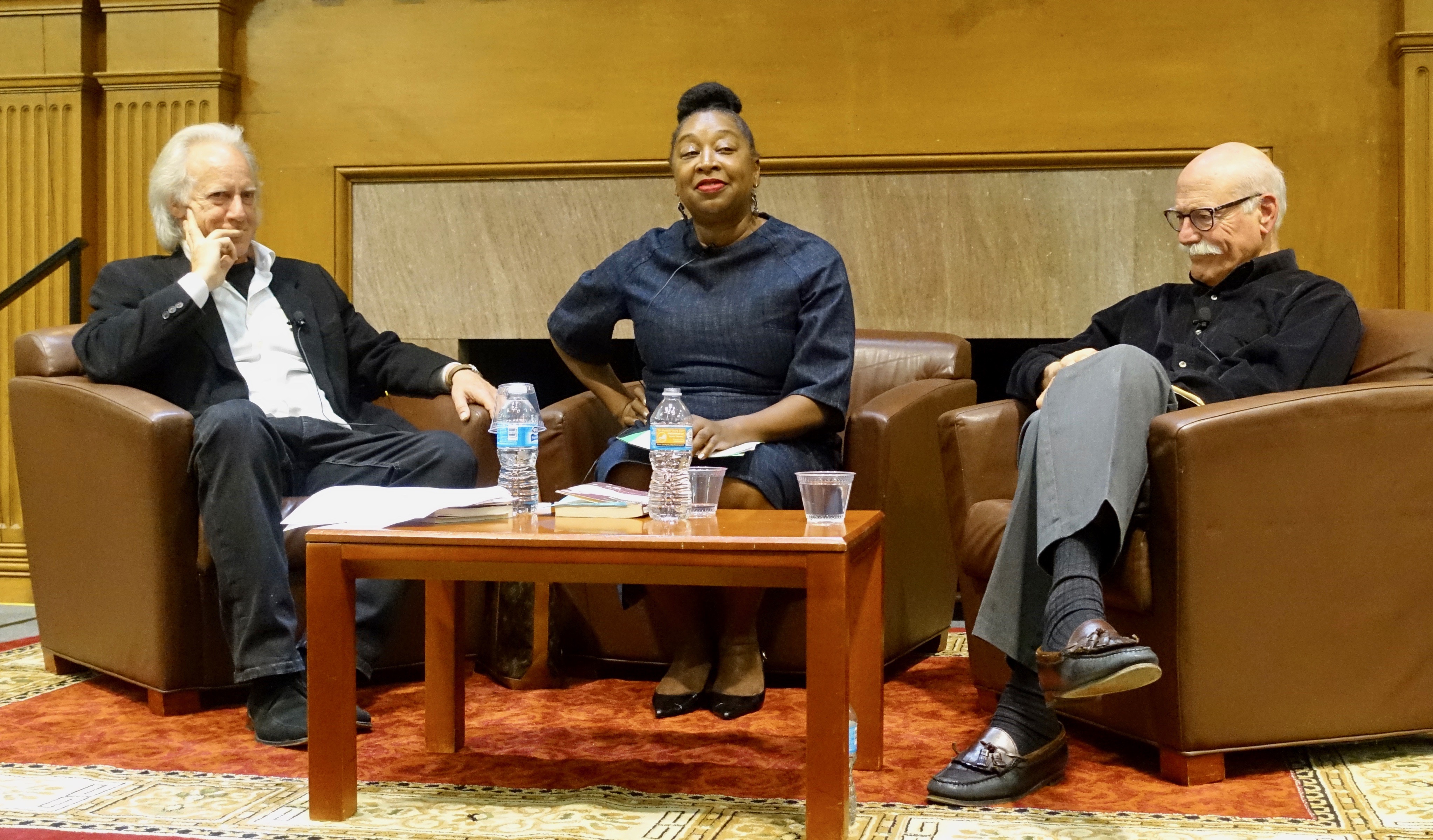
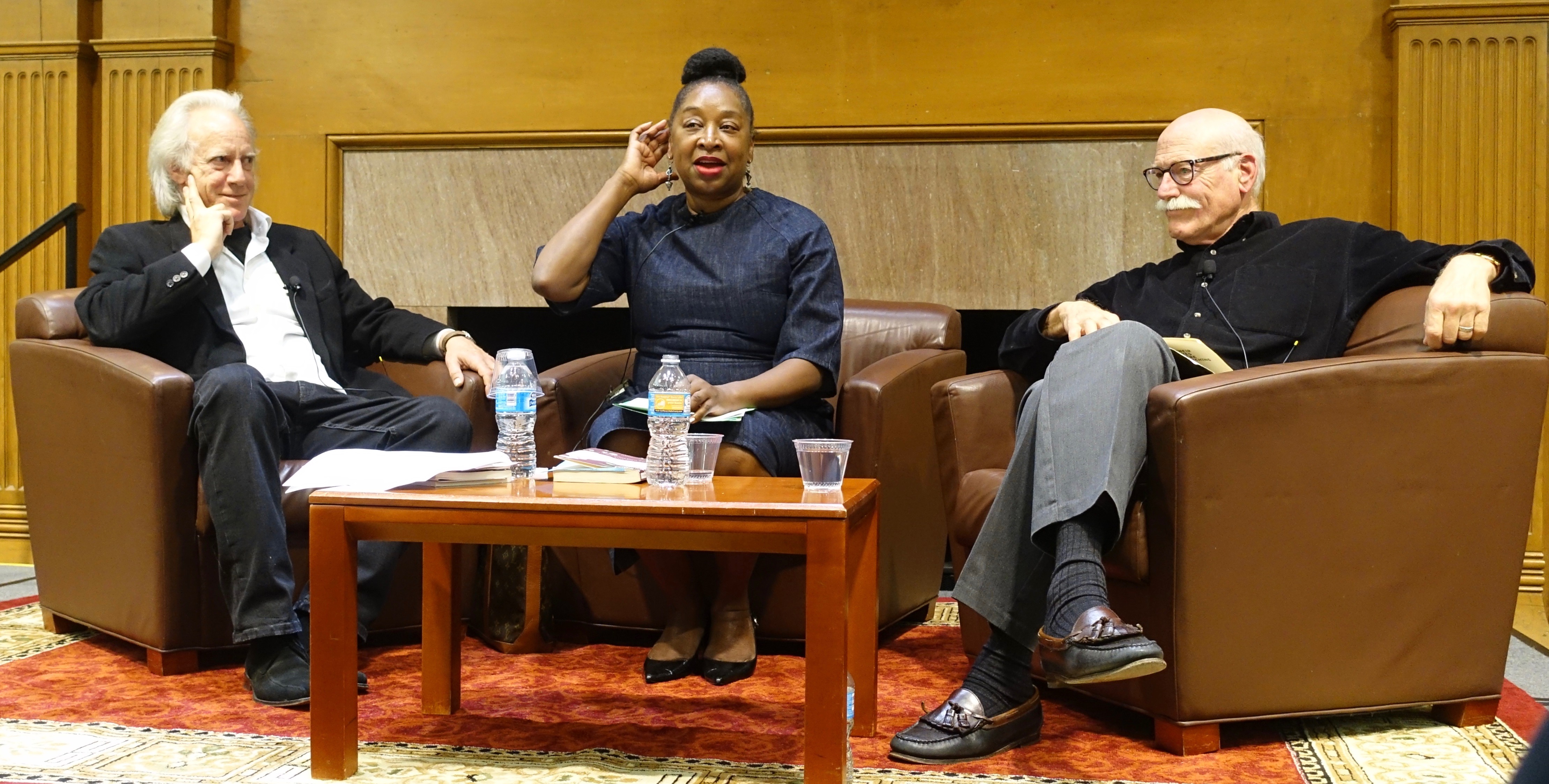
dsc09023Zora Neale Hurston‘s Their Eyes Were Watching God made for an exuberant and provocative discussion on the evening of Monday, October 24 – and a record-breaking amount of audience participation. It was a full house, and it rocked. Couldn’t make it? The podcast is already available here.

Another Look’s director Robert Pogue Harrison moderated the lively discussion as best he could. Harrison is an acclaimed author and professor of Italian literature who writes regularly for the New York Review of Books and hosts the popular talk show, “Entitled Opinions.”

theireyeswatchinggod-pb-cHe was joined by Aleta Hayes, Stanford dance lecturer and founder of the dance troupe Chocolate Heads, and Tobias Wolff, National Medal of Arts winner, who is one of America’s foremost writers, as well as an English professor emeritus at Stanford. And perhaps the spirit of Hurston as well. (Among the podcast highlights: Aleta sings the spiritual that’s in the book.)

Another Look is a seasonal book club that draws together Stanford’s top writers and scholars with distinguished figures from the Bay Area and beyond. The books selected have been Stanford’s picks for short masterpieces you may not have read before.

Loyal Another Look fan and photographer David Schwartz recorded the caught the flavor of the discussion in the photos below.


dsc09100

dsc09087

dsc09086

dsc09077

dsc09075

dsc09051

dsc09050

dsc09038

dsc09035

dsc09034

dsc09033

dsc09032

Trading up: Kim Kardashian for Shakespeare’s Cleopatra

October 23rd, 2016
Share
cleopatra1

Maggie Smith as Cleopatra in Stratford, Ontario.

Some news a few days ago from The Guardian about a school program in Wimbledon:

Girls are to be taught to see Shakespearean heroines such as Cleopatra as positive role models to supplant social media superstars such as Kim Kardashian, in a programme being launched at a London secondary school.

Jane Lunnon, headteacher of Wimbledon High School, said she devised the programme after discovering that many pupils at the £17,000-a-year independent school named Kardashian and singer Taylor Swift as their role models. …

“It’s well documented that there is a paucity of female role models who are speaking to girls at the moment, certainly in western society. It made me think, where else can we look for them?” Lunnon told the annual meeting of the Headmasters’ and Headmistresses’ Conference (HMC) of leading independent schools, taking place in Stratford-upon-Avon.

The article touts the “glamorous” Rosalind of As You Like It. I guess I hadn’t thought of her that way. She’s a girl willing to go and piss in the woods rather than be separated from a beloved friend. Not sure I’d do it. I’m fairly certain Kim Kardashian wouldn’t.

I hope the class makes them memorize scores of lines from the soliloquies, till the iambic pentameter flows over them in times of fear or loneliness, echoing, as it does, the double rhythm of the heartbeat. I hope they explore the cadences of the English language at its most vigorous.

The article called to mind my own trips to Stratford, Ontario, where I spent season after season taking in Shakespeare. I saw Maggie Smith as an magnificent Cleopatra. I saw a less-touted Measure for Measure that changed my understanding of the play (and human nature) ever since.

Magnificent Maggie.

Magnificent Maggie.

I especially remember the last summer I went to Stratford – or perhaps it was the fall. My last chance for the season. I hadn’t planned beforehand or ordered tickets or made arrangements; I made a spur-of-the-moment decision to drive up in my trusty old black Dodge. I slept in it that night, after taking in the first day’s plays, with a coat over my head, parked way out in the woods. Yes, it was autumn, I remember mountains and mountains of golden and red leaves.

The article continues:

“Look at Rosalind, look at Beatrice, look at Viola. Their capacity, in their challenges and dilemmas, to laugh, to be vivacious, to be resourceful, to be resilient, they embody it so beautifully. And that is a really powerful message.

“It’s not that terrible things didn’t happen to them. It’s the way they respond. I think that is a really important message: to know what matters. Getting kids to laugh at themselves – it’s very important. And Shakespeare does that.”

Of course, I don’t think they go far enough. “What matters” is a lot more than getting kids to laugh at themselves. I think the program ought to be expanded to include Portia with all the moral quandaries of The Merchant of Venice, the ambiguous character (I find her ambiguous, anyway) Isabella of Measure for Measure, or the questionable Helena of All’s Well That Ends Well. 

They’ll have their work cut out for them for the rest of their lives. If they’re lucky.

Join us on Monday, Oct. 24, for Zora Neale Hurston’s Their Eyes Were Watching God, an American masterpiece!

October 18th, 2016
Share

“There are years that ask questions and years that answer.”
.

hurston-zora-neale-loc

Almost forgotten, now a classic

Zora Neale Hurston was a leading figure in the Harlem Renaissance. Then she all but disappeared, finally working in obscurity as a substitute teacher and a maid before her 1960 death in a county welfare home. The folklorist, anthropologist, and writer left behind four novels as well as short stories, plays, and essays. Foremost among them is Their Eyes Were Watching God, the passionate, exuberant tale of a woman’s journey to reclaim herself. The book will be Another Look’s fall offering.

For thirty years after its 1937 publication, Their Eyes was out of print and attacked for its portrayal of black people, when it was remembered at all. By the 1970s, however, it had been rediscovered as a masterpiece. Pulitzer prizewinning author Alice Walker wrote, “There is no book more important to me than this one.”

aleta

Aleta, a Stanford star

Join us for a discussion of this short, mesmerizing American classic at 7:30 p.m. on Monday, October 24, at Encina Hall’s Bechtel Conference Center on the Stanford campus.

Another Look’s director Robert Pogue Harrison will moderate the discussion. Harrison is an acclaimed author and professor of Italian literature who writes regularly for the New York Review of Books and hosts the popular talk show, “Entitled Opinions.” He will be joined by Aleta Hayes, Stanford dance lecturer and founder of the dance troupe Chocolate Heads, and Tobias Wolff, National Medal of Arts winner, who is one of America’s foremost writers, as well as an English professor emeritus at Stanford.

Another Look is a seasonal book club that draws together Stanford’s top writers and scholars with distinguished figures from the Bay Area and beyond. The books selected have been Stanford’s picks for short masterpieces you may not have read before.

The event is free and open to the public. Come early for best seats. Books are available at the Stanford Bookstore on the Stanford campus, Kepler’s in Menlo Park, and Bell’s Books in Palo Alto.

hurston-poster-email


<<< Previous Series of PostssepNext Series of Posts >>>