David Sanders: “And the moment? Well, moments are always disappearing.”

September 15th, 2016

Share
sanders-2010

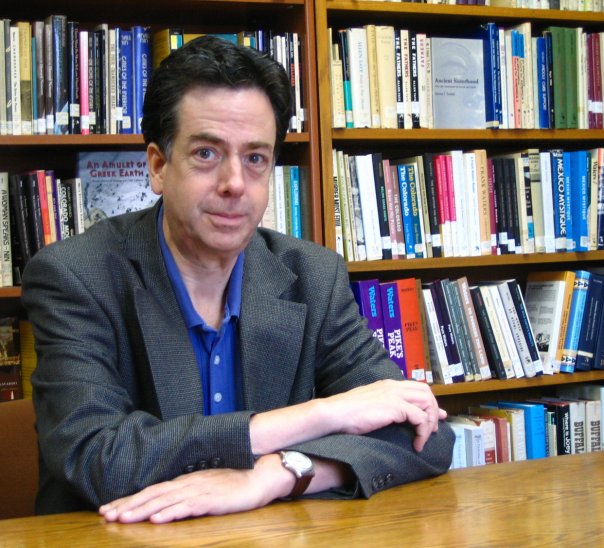
The poet, editor, publisher David Sanders

I met David Sanders many years ago. The occasion was the West Chester Poetry Conference – but circa when? The year 2000, I think, at an evening celebration at the home of the conference’s co-founder, Michael Peich. I don’t remember what the two of us were discussing so earnestly. I simply remember standing on the back porch with David, his cigarette embers glowing in the dark, a sea of crickets somewhere in the distance, and the orange tip of light making circles as he gestured. He was the director of Ohio University Press/Swallow Press then, and I thought of him as publisher, not a poet. Later, he became the founding editor Poetry News in Review at The Prairie Schooner – the Book Haven has discussed it here.

Recently, however, I was pleased to see the more personal side of the poet emerge, with the publication of his collection Compass & Clock. (The title does not refer to a poem in the collection – why the title then? Perhaps because one measures space, the other time.)

Poet, actor, and editor David Yezzi called the collection “the strongest new book of poems I have read in quite some time.” Poet Joshua Mehigan noted that the poet’s “kind, observant clarity can lull you into a sense of ease, even as he lays open the poignancy and diverse fascinations of existing on earth.” According to poet Andrew Hudgins, “Sanders knows well it is love itself that makes us miss and mourn the things we’ve lost.”

Here’s one on a topic we’re all too familiar with, the quotidian effects of death on the living – written, curiously, in first person, from the p.o.v. of the dead:

sanders-bookHousekeeping

The living pack us up.
Now that we have gone and died
it’s comforting to them
to know what’s left is tucked inside

a box, an urn, or closet
where memories, like dreams, abound.
They tend to the mess
our dying first has left around.

(Letters dried to mica,
clothes gone further out of style,
souvenirs of us
in storage, kept a little while.)

They allow themselves sadness,
drifting near this windy border.
But grief has raked out its embers,
which cool and die among the order.

His poem “Lascaux” naturally caught my eye – I recognized immediately which poem he honors when he writes “after Miłosz.” The Nobel poet’s very early 1936 poem, “Encounter” is the first in his Collected Poems. You can read it here to see the Polish maestro’s earlier treatment of the same idea. One poet answers another through time. Here’s David’s unusual take:

Lascaux

Jacques Marsal, who as a boy discovered the prehistoric paintings of the Lascaux cave with three friends and became the cave’s guardian for life, died Saturday after a long illness.

lascaux_megaloceros– (AP) July 17, 1989

The first day, his dog disappeared in the forest,
lost down a hole. The next, exploring with friends,
he found the cave – leaping stags, buffalo,
prehistoric horses.
.                         Alone a moment, one French boy lived
a dream boys dream: to stand at the place
where for thousands of years no one has been.

That was 1940. Boy and dog are dead.
And the moment? Well, moments are always disappearing.

.                         after Miłosz

Paris, Rilke – what’s not to like?

September 12th, 2016
Share

Busy day today, so we thought we’d share this invitation with you in lieu of a post. It’s an indication of some of the glamorous events we get invited to, but can’t attend. We like the poster. Details (in French) below. Who is Barbara? We don’t know, either. But we’re not going to quibble. The venue sounds magnificent, and Rainer Maria Rilke, Paris – what’s not to like?

rilke-modif


prospectus-rilke

Arendt: “Refugees driven from country to country represent the vanguard of their peoples.”

September 9th, 2016
Share

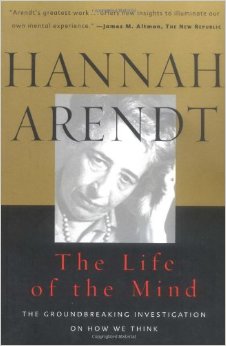
Immigration is much in the news, and will be for some time to come. Hence, philosopher Hannah Arendt‘s important and apparently little-known 1943 essay, “We Refugees” is very timely. The Book Haven has occasionally posted about one of the last century’s most famous immigrants: Arendt left Germany for Czechoslovakia and then Geneva and then France, where she was placed in an internment camp. She finally made a home in the U.S. in 1941. Although, of course, she was writing with the Jews and the Holocaust in mind, the reader may substitute the term “Islamic refugees” or “Christian minorities in the Middle East” for up-to-date applications. Her conclusion is all the more stunning for that reason. The piece in its entirety is too good for excerpting, really – you can read the whole thing here – but I’ll do my best:

Hannah_Arendt1

“A new kind of human beings…”

Our optimism, indeed, is admirable, even if we say so ourselves. The story of our struggle has finally become known. We lost our home, which means the familiarity of daily life. We lost our occupation, which means the confidence that we are of some use in this world. We lost our language, which means the naturalness of reactions, the simplicity of gestures, the unaffected expression of feelings. We left our relatives in the Polish ghettos and our best friends have been killed in concentration camps, and that means the rupture of our private lives.

Nevertheless, as soon as we were saved – and most of us had to be saved several times – we started our new lives and tried to follow as closely as possible all the good advice our saviors passed on to us. We were told to forget; and we forgot quicker than anybody ever could imagine. In a friendly way we were reminded that the new country would become a new home; and after four weeks in France or six weeks in America, we pretended to be Frenchmen or Americans. The more optimistic among us would even add that their whole former life had been passed in a kind of unconscious exile and only their new country now taught them what a home really looks like. …

In order to forget more efficiently we rather avoid any allusion to concentration or internment camps we experienced in nearly all European countries – it might be interpreted as pessimism or lack of confidence in the new homeland. Besides, how often have we been told that nobody likes to listen to all that; hell is no longer a religious belief or a fantasy, but something as real as houses and stones and trees. Apparently nobody wants to know that contemporary history has created a new kind of human beings – the kind that are put in concentration camps by their foes and internment camps by their friends. …

I don’t know which memories and which thoughts nightly dwell in our dreams. I dare not ask for information, since I, too, had rather be an optimist. But sometimes I imagine that at least nightly we think of our dead or we remember the poems we once loved. I could even understand how our friends of the West coast, during the curfew, should have had such curious notions as to believe that we are not only ‘prospective citizens’ but present ‘enemy aliens.’ In daylight, of course, we become only ‘technically’ enemy aliens – all refugees know this. But when technical reasons prevented you from leaving your home during the dark hours, it certainly was not easy to avoid some dark speculations about the relation between technicality and reality.

arendt3No, there is something wrong with our optimism. There are those odd optimists among us who, having made a lot of optimistic speeches, go home and turn on the gas or make use of a skyscraper in quite an unexpected way. They seem to prove that our proclaimed cheerfulness is based on a dangerous readiness for death. … Instead of fighting – or thinking about how to become able to fight back – refugees have got used to wishing death to friends or relatives; if somebody dies, we cheerfully imagine all the trouble he has been saved. Finally many of us end by wishing that we, too, could be saved some trouble, and act accordingly.
She concludes that, for the Jews:

…history is no longer a closed book to them and politics is no longer the privilege of the Gentiles. They know the outlawing of the Jewish people in Europe has been followed closely by the outlawing of most European nations. Refugees driven from country to country represent the vanguard of their peoples – if they keep their identity. For the first time Jewish history is not separate but tied up with that of all other nations. The comity of European peoples went to pieces when, and because, it allowed its weakest member to be excluded and persecuted.

Again, read the whole thing here.

The PLOTUS as anthropologist: Juan Felipe Herrera recalls his time with the Lacandón Mayas

September 6th, 2016
Share
herrera

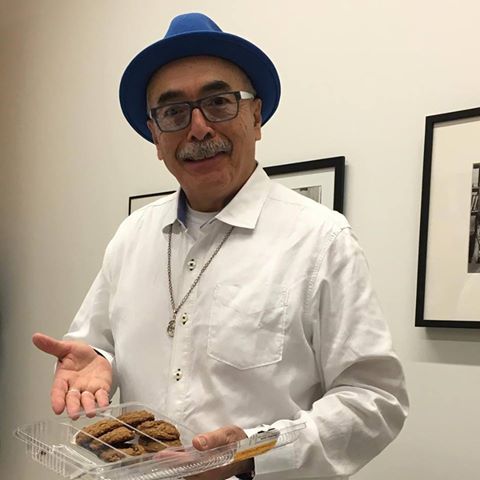
The poet offering cookies at the Poetry Foundation. (Photo: Don Share)

On February 29 this year, I made the trip to Fresno to interview U.S. Poet Laureate Juan Felipe Herrera. The results of that occasion, as well as the phone calls that followed (not to mention a trip to Oakland to hear him talk at the University of California headquarters on Cesar Chavez Day), were published this month in a Stanford Magazine article here

There have been many articles on the popular PLOTUS who is the Chicano son of migrant workers. But to my knowledge, none have included much about his background as an anthropologist, the focus of his Stanford master’s degree… until now. An excerpt:

With the help of an educational opportunity program, he went to UCLA; as a 21-year-old anthropology major, he heard about a nearly extinct ethnic group in southeastern Chiapas. Although the remote community was known to a few anthropologists and archaeologists, no Chicano had been there, Herrera says.  “I immediately had an awakening—‘I have to go.’ It was a deep, soulful response to do something for 250 Lacandón Mayas, who are part of who I am.”

Chicano studies and cultural centers were new at the time, Herrera notes. He wanted to “do something original”—with interviews, photographs, artifacts—“to bring about some kind of awareness in the United States.” At the same time, he was trying to find “a new way of doing political theater and a new way of doing poetry.” He thought, “Wait a minute. Let me get back to my cultural roots and see what poetry is like there.”

mayandrifterWith funding from UCLA’s Mexican American Center, he set off to the Mexican lowlands with a classmate, an experienced videographer. They packed old Army fatigues, machetes, mosquito nets, anti-viper first aid kits, Vietnam tropical combat boots, plenty of 16mm Ilford film and top-notch camera equipment. “It was a great idea, a timely idea, a perfect idea. Conceptually, a triple A-plus. Did we know how to go about it? C-minus,” he says.

In Mexico, “we hired a Harrison Ford kind of guy—a piloto,” says Herrera. It was straight out of a 1940s film: a man in khakis and a crumpled shirt writing with a half-pencil on a tiny desk, in a dark office that had his name in black letters on the door’s frosted-glass window. He agreed to make the trip for 100,000 pesos.

The Cessna landed in the rain forest and tore off a wheel. The piloto patched it back together, and then the small plane disappeared into the sky, as Herrera watched. He found himself in the jungle, among little huts and local elders who were willing to talk. He listened to their stories of “eco-piracy”—slash-and-burn farming, deforestation by loggers and “chicleros,” who stripped the forests to make Chiclets gum from the sap of the chicle trees. They told him of the destruction of the wildlife and the rape of the local women.

“The situation was immense, immeasurable,” Herrera recalls. Until his visit, “No one had really gotten on the ground and said, ‘Hello, I’m Johnny Bananas. I’d like to share a tortilla with you.’” Later, he wrote: “To read about their ‘way of life’ and spew Chicano ‘azteca’ poetry jive was blasphemy, and to assign the oppressed Maya the honorable position of ancestors was a cultural crime—if I did not take action.”

He continued his studies in social anthropology when he came to Stanford in 1977, though the lure of poetry and performance was already beginning to exert a powerful counterpull. Stanford Libraries now has the poet’s archives, which include the documentation for his life-changing trip to Chiapas—reel-to-reel tapes, audiocassettes of interviews and about 45 minutes of the rush prints of the film.

Read the whole thing here

Farewell to Sigtuna! A few last glimpses as I leave Sweden….

September 4th, 2016
Share

We’ve written about last week’s Sigtuna Literary Festival outside Stockholm. We’ve written about Syrian writer-in-residence Iman Al Ghafari and Danish poet Ulrikka Gernes and the Swedish poet (although he lives in Oslo) Håkan Sandell. Now it’s time – alas! – to say goodbye to the Sigtuna, where we were delighted to be a guest for a few days. What a better way than with a few random photos from the mansion where it all took place? Top to bottom (first photo provided by the festival; the rest by Humble Moi and cellphone).

1) I joined a panel on Eastern European poets and the poetry of exile with Swedish poet and novelist Malte Persson (left) and Prague-based Ukrainian poet and journalist Igor Pomerantsev (right). The lively and witty Ukrainian stole the show – a good thing, too; he had a lot to say. Please note the statuary on the bookshelves: on the left, a relief of the Russian poet Regina Derieva, who is greatly honored in Sweden, the place where she made her home after many peregrinations. And on the right bookshelf, Dante Alighieri, of course.

2), 3), 4), 5) The charming literary mansion that hosts the festival is a delightful place to roam and get lost in. Every room has delightful nooks and crannies where you want to curl up with a book – and there are plenty of those to peruse, too.

6) A memorial corner for Regina Derieva, with some of the seashells she loved and collected.

7) Last day in Stockholm, with award-winning Swedish writer Bengt Jangfeldt, author of acclaimed biographies on Vladimir Mayakovsky and Raoul Wallenberg, with Alexander Deriev and Igor Pomerantsev at right.

sigtuna7

img_20160827_165427

sigtuna3

sigtuna2

sigtuna4

sigtuna1

Bengt


Oslo poet Håkan Sandell: “Poetry rejoices even if the culture dies.”

September 1st, 2016
Share
hakan_sandell2

Sweden’s suave poet. (Photo: Dagfinn Hobæk)

Earlier this week, I discussed the Danish poet Ulrikka Gernes. I met her at the same time I met a very different Scandinavian spirit – breezy, debonair, ever so slightly sardonic, as we chatted at the reception for the gala dinner at Sigtuna’s literary festival. Håkan Sandell is one of Sweden’s leading poets … or is it Norway’s? He writes in Swedish, but lives in Oslo. But really, most of the words are the same, he explained to me; the pronunciation is a bit different, that’s all.

The Irish poet Nuala Ní Dhomhnaill calls him “a stunning poet.” A mutual friend, the Welsh poet Gwyneth Lewis, said, “He’s a modern metaphysical poet, a lover of the world who, while praising it, never stops probing it with his formidable poetic intelligence.”

We met again at the panel discussion he shared with Ulrikka. Afterwards, he gave me a copy of his newest book – as I waited, he scribbled a quick inscription in what appears to be crayon, but what I recall as a very worn pale blue felt-tip (he appears to have signed a lot of books). We corresponded later about the translations in Dog Star Notations: Selected Poems, 1999-2016 (Carcanet, 2016).

“You must remember that the Scandinavian languages are a bit different from English – very musical but also harsher. We tend to flatten out just a little bit in English,” he explained.

Håkan is “one of the chief agents of the renewal of metrical poetry in Swedish,” according to his translator, Bill Coyle. “His most common criticisms of the drafts I have shown him was not that they were inaccurate, but that I hadn’t captured enough of the original’s verse music, that they didn’t sufficiently swing. I hope that the translations included in the present volume do, when all is said, swing.”

The slightly skeptical Swede is optimistic about poetry. As he put it, “Poetry rejoices even if the culture dies.”

Rejoices over the rain on the Faroe Islands,
over rendezvous on the Champs-Elysees at evening.
It rejoices over Japan, over Korea,
over arts refined over a thousand years –
the art of swordsmanship, or of drinking tea.
Rejoices over the poet, that his heart still beats.

Most of his poems are longish, and I looked for a short one to include for the Book Haven. I was sold on his Stanzas to the Spirit of the Age when he told me that he composed each 12-line section (three stanzas, four lines each) during his long walks. Twelve lines is as much as he could remember at a time. That’s an intriguing notion in an era when hardly anyone memorizes anything at all.

I also thought it struck a very different note from Ulrikka’s contemplative poem about an open book in the dark. He added a crisp Nordic bite to a damp Swedish week:

from Stanzas to the Spirit of the Age

xix.

I prefer after raucous Saturday nights
to stroll and at the most nudge with my shoe
the shattered glass and blood left after fights,
rather than joining in the party too.

It’s early June but feels like fall to me.
I cried on the street, I miss my daughter so.
Autumn wind stirs the leaves, and from a tree
a flock of black birds glares down, sated, slow.

This happy, fjord-side, ice cream-licking scene
could I decide, would be dark, arctic cold.
Expansive life, a new beginning’s green,
like this, for these, proved more than I could hold.

– Håkan Sandell, trans. Bill Coyle


<<< Previous Series of PostssepNext Series of Posts >>>