
Janet Lewis in poems and novels: “at last, a self drives through modesty.”

August 13th, 2016

Share
Janet Lewis-2

The young Janet Lewis

The Book Haven wrote about novelist and poet Janet Lewis (1899-1998) for Stanford’s 2013 Another Look book club event on her novel, The Wife of Martin Guerre. I had met the writer years before at her home in Los Altos.

Author Richard Stern, writing in a 1993 Virginia Quarterly Review, made the same trek I had once ventured to the modest home with the big loquat tree, where Janet Lewis had lived with her husband, the poet-critic Yvor Winters (1900-68), for decades. Since it’s a few days before Lewis’s August 17 birthday it’s time to share an excerpt from Stern’s essay:

Almost half a century before the silicon chip, Janet Lewis had written about ecological disaster, “the incoherent civilization emerging from the physical wilderness.” (Against a Darkening Sky. )

I took the El Monte turnoff, then drove along San Antonio Road to West Portola, near El Camino Real. A couple of hundred yards up the east side of the road were a mailbox, a garage, a grape gate and, behind that, the small, tree-shaded cottage to which Janet Lewis and Yvor Winters moved in 1934, seven years after they’d come to California. The door was opened by a tallish, straight-backed, white-haired woman wearing glasses on her strong, straight nose; the face was amiable, thoughtful, alert. The initial shock was, “This woman can’t be ninety-one years old.” In a minute, you forgot age, though Janet Lewis does move and talk with that special economy which is the product of an exceptionally long, therefore successful intercourse with the world. Perhaps because I’d read her Indian poems, I thought that there was an American Indian quality to its grace.

On Yvor Winters and her novels…

They’d married in 1926, but Janet was too ill to go with him to Moscow [Idaho]. She did accompany him to Stanford, where he went for his doctorate. “We lived on the outskirts of Palo Alto. I felt marooned up there, and wrote a story about some neighbors. The Bookman accepted it, and I felt I was a writer again.”

janet-lewis

The older Janet Lewis

I said she wasn’t the only writer born in 1899 who grew up in Oak Park.

“Yes, Hemingway. I didn’t really know him. He was around, but he dropped out for a year to do newspaper work, then graduated the year after I did. I was in class with his sister Marcelline for three years.”

I thought of pursuing the comparison of their short stories about northern Michigan—hers are low key and a bit rambling next to his—but she took that up in another way. “I became a writer in the country, during summer vacations on Neebish and St. Joseph’s Islands. I had a close friend, Molly Johnston, who was part Indian. Her brother Howard was a wonderful storyteller. I wanted to preserve his stories about the family. I went at it in the wrong way, embroidering a sketch about Molly. It didn’t make sense unless you went back and told the stories in back of the stories. These went back to the 18th century, to their Ojibway grandmother Neengay and her Irish husband John Johnston.” Out of research came The Invasion: A Narrative of Events concerning the Johnston family of St. Mary’s (New York: HarcourtBrace, 1932), her first important prose book.

lewis_wife-of-martin-guerre-fcOf Janet Lewis’s four other novels, three, like The Invasion, spring from actual events. “I have this affinity for the circumstantial case. I like to get at the intimate obliquely. Perhaps I’d have been more successful if I’d been more personal. Though my contemporary book, which is more personal, is rather shapeless.” This is Against a Darkening Sky (Doubleday: 1943), the story of the violent accidents and unhappy love affairs which pound the quiet life of a house-wife living in a Santa Clara County orchard. “Some of these accidents happened to our neighbors.”

It’s Janet Lewis’s historical fiction which has been highly praised, especially her second novel, The Wife of Martin Guerre (1941). Albert Guerard Jr., the teacher under whom I read it in 1948, called it “one of the greatest short novels in American literature.” Like the others, The Trial of Soren Qvist (1947) and The Ghost of Monsieur Scarron (1959), the book revolves around the misinterpretation of evidence. The critic Donald Stanford relates this theme to the murder conviction of a friend of the Winters, David Lamson, sales manager of the Stanford University Press, who was accused, indicted, tried, and sentenced for the murder of his wife. The Winters were active in his exoneration; Yvor Winters helped with the defense brief and co-authored a book on the case.

birthday cakeLewis’s reliance on circumstantiated cases as the basis of fiction may be related to her poetic reliance on meter and rhyme: the need for an unwavering, authoritative center. In her later poetry, written when she’d stopped writing fiction, meter gives way to free verse, and the pure imagistic presentation is mixed with commentary and exclamation, as if, at last, a self drives through modesty.

Read the whole thing online here.

Poet Anna Frajlich’s long journey from Warsaw to New York

August 10th, 2016
Share
frajlich

Anna, photographed by Krzysztof Dubiel.

Poet Anna Frajlich-Zajac (she uses Frajlich as her pen name) is retiring from Columbia University, where she taught Polish language and literature for decades. The Harriman Institute’s Ronald Meyer has written a tribute to the Polish poet. Here’s how she came to New York City, in a wave of Jewish emigration too little known in the West:

Anna and her family were part of the mass emigration of some 13,000 Poles of Jewish descent who had fallen victim to a virulent anti-Semitic campaign and political crisis known as March 1968. Emigration required renunciation of one’s Polish citizenship, which Anna had to perform on behalf of her two-year-old son. Like her fellow émigrés, Anna believed that she would never see her native land again. Officially they were bound for Israel, but her husband argued that if they were to leave Poland, they should go as far as possible from Europe; thus they informed the authorities in Vienna that they wished to make the United States their home. They traveled to Rome under the care of the gendarmerie due to their statelessness. As they awaited travel documents for the United States, they were charged only with refraining from any demonstrations, which left them free to explore the Eternal City and begin adapting to life in the West. Many years later Anna’s Roman ramblings would provide the background for her dissertation and monograph, The Legacy of Ancient Rome in the Russian Silver Age.

I couldn’t agree more with Anna’s assertion that “language is a key to literature, to history, to understanding progress of any sort.” I had the good fortune to meet Anna in connection with An Invisible Rope: Portraits of Czesław Miłosz:

Anna worked as a freelance cultural correspondent with Radio Free Europe (RFE) as a writer and interviewer, which culminated in her interview with Czesław Miłosz upon his receiving the Nobel Prize. She first met Miłosz at a lecture at the Guggenheim on October 17, 1978; he inscribed the date in his book about Stanisław Brzozowski, which Anna had purchased in a local Polish bookstore and brought for him to autograph. When writing her thesis on “one of the most original Polish thinkers of the twentieth century,” to cite Miłosz’s formulation, Anna had to travel across Warsaw to read this same book in the restricted section of the library, after producing a document from her thesis adviser. Now she had her own copy, with the author’s inscription. They continued to meet sporadically at readings and conferences.

invisibleThe Nobel interview, which has been published in English translation [that would be in An Invisible Rope: Portraits of Czesław Miłosz], almost did not come about. Miłosz had not been treated well by RFE in the early days of his emigration, and he did not feel obliged in the least to give them an interview. But he had been persuaded that since he had given an interview to Trybuna Ludu, the Polish Communist daily, he should give one to RFE. He agreed, but insisted that Anna conduct the interview. The interview took place at Miłosz’s home in Berkeley. The piece, which very much represents a poet interviewing a poet, was a resounding success; it was broadcast four times and published. In 1993, Anna was conducting interviews for the column “What Other People Read,” which was appearing in the cultural supplement to the Polish Daily News. She conducted a telephone interview with Miłosz for the column, realizing only after hanging up that she had forgotten to hit the record button. She immediately called him back and explained the situation. He “graciously” suggested that they conduct the interview again the next morning. You can read about Anna’s relationship with Miłosz, including how he introduced her to Scotch after they concluded the Nobel interview and that she taught his granddaughter Polish at Columbia, in her essay, “He Also Knew How to Be Gracious.”

Anna earned her master’s degree in Polish philology at Warsaw University, writing her dissertation on the philosopher and critic Stanisław Brzozowski and the Polish positivists. She began her graduate studies under the guidance of Zoya Yurieff, a professor of Slavic literatures and cultures at New York University who was an early inspiration and encouraged her graduate education in the first place. Yurieff also suggested the topic of ancient Rome in the poetry of the Russian symbolists.

What future for Anna? She plans to write a memoir called Women in My Life, which will include portraits of her mother and a Warsaw University professor, among others, and, of course, Zoya Yurieff.

Read the whole retrospective here. Meanwhile, a poem dedicated to her wonderful husband, reprinted with her permission:

Manhattan Panorama

to Władek 

The bridges overhang the city
like diamonds in a diadem
reflected lights are burning
in the Hudson and the Harlem Rivers
in the East River in the bay
and in puddles on the road
the bridges overhang the city
that shone in flight
between a setting star
and the rising moon
walls pinned into heaven
pressed by granite to the ground
wind in its stone sails
out to sea
it moves at dawn

(Translated by Ross Ufberg)

Albert Camus: his childhood, poverty, and “the solar side of his work”

August 6th, 2016
Share
camus

A morality made from very concrete things.

I was poised midway between poverty and sunshine,” wrote Albert Camus, describing his impoverished childhood in French Algeria. “Poverty prevented me from judging that all was well in the world and in history, the sun taught me that history is not everything.”

The Nobel author was much on our mind last year – when Another Look featured Camus’s masterpiece, L’EtrangerIn my reading for that project, I managed to miss his daughter Catherine Camus’s 1997 interview, when she and her partner Robert Gallimard were interviewed in London by Spike Magazine‘s Russell Wilkinson. Much of the of the conversation was about the author’s last unfinished work, First Man, which had been published in English in 1995.

Much of it reminds me of these words from his Nobel banquet speech: “Art … obliges the artist not to keep himself apart; it subjects him to the most humble and the most universal truth. And often he who has chosen the fate of the artist because he felt himself to be different soon realizes that he can maintain neither his art nor his difference unless he admits that he is like the others.”

A few excerpts:

R: Will we get a clearer notion of his ideas through The First Man?

…I think he wanted to write something to explain who he was, and how he was different from the age that had been conferred upon him. He was viewed by many as an austere moralist, but it was on the football pitch and in the theatre that he learnt his ‘morality’. It’s something sensed, it won’t pass uniquely through thought. It couldn’t possibly. He started thinking through sensation. He could never think with artifacts or with cultural models because there were none. So it’s true to say that his morality was extremely ‘lived’, made from very concrete things. It never passed by means of abstractions. It’s his own experience, his way of thinking. There are those who will find his notions about absurdity appealing, and others who will be drawn by the solar side of his work, about Algeria, the heat and so on.

R: Since The First Man deals with Camus’ birth and childhood in Algeria, it seems strange that Camus’ deep personal involvement with the Algerian nationalist crisis tends to get overlooked in the traditional portrayal of him as a French writer. Do you think The First Man will re-emphasise the importance of Algeria in our consideration of Camus?

CC: I hope so. Camus’ was born in Algeria of French nationality, and was assimilated into the French colony, although the French colonists rejected him absolutely because of his poverty. Politically, he was in favour of a federation, and effectively he considered that like South Africa today (or as they are trying to do), there should be a mixed population with equal rights, the same rights for the Arab and the French populations, as well as all the other races living there.

***

stranger

Lots of the solar side here.

R: So Camus tried to live the paradox of being both “solitaire et solidaire”?

CC: I think Camus felt very solitary. You can see it in all his books. The Outsider isn’t Camus, but in The Outsider there are parts of Camus. There’s this impression of exile. But where he is in exile isn’t especially in Paris or elsewhere, but from the intellectual world, because of his origins. And that’s a complete exile. Just because of his way of sensing before thinking. He’s in a field that he often feels like escaping from. In any case, you have to learn what blood is. It all has to be rationalised. In that he feels exiled, solitary…

***

And love is very important in The First Man, in that Camus loves these things he never chose, he loves his childhood experience in a very real way. Their poverty meant that there was nothing else they could think about but what they would eat, how they would clothe themselves. There’s just no room for other things in his family. It’s difficult for others to imagine the position in which he found himself. There is no imaginary existence in their lives.

French intellectuals are mostly petit bourgeois, and it’s hard to say whether that makes Camus’ work more valuable. I’d rather say that it’s different. Necessarily. His positions are sensed. So, naturally, those intellectuals who don’t have that experience have difficulty in comprehending it. But I think it made Camus more tolerant because he had already seen both sides of things when the others had only ever seen one. They imagine poverty, but they don’t know what it is. In fact they’ve got a sort of bad conscience about the working classes. It’s the perspective they could never adopt, not in the way Sartre wants to, because they weren’t familiar with them. They could never address themselves to the working classes. They don’t know what it means, and that gives them a bad conscience about it. Camus has a greater proximity to those in poverty.

R: And does this proximity result from his humility, which can been seen in the letters at the end of The First Man to Monsieur Germain, his old schoolteacher?

CC: It’s because his teacher in The First Man has a primary place. Camus shows us this teacher exactly how he was. The First Man is completely autobiographical. The mother he describes is the woman I knew, and she was exactly as he describes her. And this teacher really existed. But it’s also to show that people attach so much importance to celebrity, and Camus writes his acceptance speech for the Nobel Prize in thanks to his teacher. … It’s to show that this is what has come from what his teacher did for him. And also throughout the world there are Monsieur Germains everywhere. That’s why I published the letters, so that he could have a place in the work. But I couldn’t ever act or think on behalf of what my father would have said or done. He’s an artist, he considers himself an artist, and so he takes on the responsibility of speaking for those who are not given the means or the opportunity.

Read the whole thing here

Zbigniew Herbert, Vasily Grossman, and “a small kernel of human kindness”

August 3rd, 2016
Share
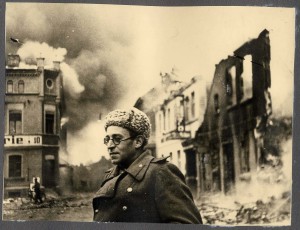
grossman

Grossman saw it all firsthand in the Red Army.

Many of you may remember my post some weeks ago on Vasily GrossmanLife and Fate (here). If you read the whole excerpt, you may wonder what becomes of Ikonnikov, the Tolstoyan Russian prisoner in a German concentration camp, who refuses to pour cement for a gas chamber.

He dies, of course. But in his last scribblings, he maintains that “Kindness is powerful only while it is powerless. If Man tries to give it power, it dims, fades away, loses itself, vanishes.” He explains:

“My faith has been tempered in Hell. My faith has emerged from the flames of the crematoria, from the concrete of the gas chamber. I have seen that it is not man who is impotent in the struggle against evil, but the power of evil that is impotent in the struggle against man. The powerlessness of kindness, of senseless kindness, is the secret of its immortality. It can never be conquered. The more stupid, the more senseless, the more helpless it may seem, the vaster it is. Evil is impotent before it. The prophets, religious teachers, reformers, social and political leaders are impotent before it. This dumb, blind love is man’s meaning.

herbert

Shouldering a lot.

“Human history is not the battle of good struggling to overcome evil. It is a battle fought by a great evil struggling to crush a small kernel of human kindness. But if what is human in human beings has not been destroyed even now, then evil will never conquer.”

As I was reading those words, I remembered something very similar from Warsaw poet Zbigniew Herbert – a writer who, as Seamus Heaney said, “shoulders the whole sky and scope of human dignity and responsibility.” In his essay, “The Mercy of the Executioner,” Herbert describes the execution of the statesman Johan Van Oldenbarnevelt, who had “defended his honor rather than his life” at trial:

When they brought in the condemned man, the crowd fell silent. Van Oldenbarnevelt was hurrying toward death: ‘What you must do, do it fast,’ he urged the executors of the verdict.

Van Oldenbarnevelt

A crumb of helpless goodness for him.

The something happened that went far beyond the ritual of execution, beyond the procedure of any known execution. The executioner led the condemned man to a spot where the sunlight was falling and said, ‘Here, Your Honour, you will have sun on your face.’ …

Van Oldenbarnevelt’s executioner broke the rules of the game, left his role, and, what is more, violated the principles of professional ethics. Why did he do it? Certainly it was an impulse of the heart. But didn’t the condemned man, who was stripped of all earthly glory, perceive derision in it? After all, it is indifferent to those who are leaving for ever whether they die in the sun, in shadow, or the darkness of night. The executioner, artisan of death, became an ambiguous figure filled with potential meaning when to the condemned man – in his last moment – he threw a crumb of helpless goodness.

Feminist voices in Sweden’s crime fiction

August 2nd, 2016
Share
johnsen

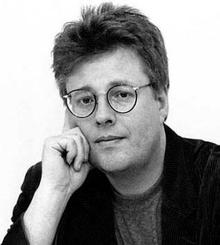
Crime fiction scholar Rosemary Erickson Johnsen

There’s more to Swedish crime fiction than internationally best-selling author Stieg Larsson, but the casual visitor browsing the bookstores might not know it. He seems to dominate the cover blurbs, even a dozen years after his death:

If you’re a fan of Stieg Larsson, you’ll LOVE this,” blares a red circle on one cover, while another volume claims to have “a dangerous edge to gladden fans of Lisbeth Salander.” Åsa Larsson, whose series is set in the far north of Sweden, was crudely hailed as “the new Larsson” on one cover. When “translated by Stieg Larsson’s and Henning Mankell’s Steven T. Murray” is printed on a book cover as a selling point, readers may begin to suspect that a shared language is all these writers have in common. Crime fiction readers are alert to distinctions among subgenres, but the massive influx of Nordic noir — a term that itself eclipses any number of meaningful distinctions — has blurred important boundaries in marketing these titles in English translation. Comparisons are a practical device for signaling subgenre to potential readers, of course, but the Stieg Larsson effect has overwhelmed normally observed distinctions.

treacherousSo begins an article by Rosemary Erickson Johnsen, a crime fiction scholar, in the Los Angeles Review of Books, “Hej, Men Nej, to ‘The Girl’ and ‘Girl’s Books’: Three Swedish Women Crime Novelists.”  She considers three new Swedish authors – and all three have books in English, too: Liza Marklund, Camilla Läckberg, and Helene Tursten:
Each author has her own brand of feminism, authentic yet inflected by different strands within feminism and crime fiction. One fundamental marker of their difference from the putative feminism of the Larsson books is the presence of fairly ordinary families in the sleuths’ lives and the integration of their central characters’ personal and professional autonomy. Marklund’s Annika Bengtzon, Läckberg’s Erica Falck, and Tursten’s Irene Huss are presented as characters balancing motherhood, personal life, and career, all while being involved in criminal investigation. Their developing characterizations are central to their respective series, and are interwoven with the crime-fiction plots and tied to social commentary. All three writers are blending genres, borrowing from other genres including romance, suspense, and thriller, and those borrowings shape their female investigators in ways that impact reader experience and probably contributed to the backlash they inspired.

She concludes:

Larsson

Not the only party on the block.

Some of the more romance-novel elements might be distracting to crime-fiction purists, but even the silliest of the main characters’ struggles reflect something real, and not all women are feminists. The detectives in most other police procedurals may not worry about their children’s homework or reflect on their long-time marriage, but there’s no reason why such ordinary features cannot be included. As I have already suggested, the genre blending that includes these elements calls for a different relation of reader to text; perhaps this, as much as anything, contributes to the annoyed dismissal by both the male traditionalists and Maj Sjöwall. Marklund, Läckberg, and Tursten are not Stieg Larsson; nor are they sisters of “the Girl” or writing “girls’ books.” Instead, these authors suggest there are many ways to inhabit a feminist worldview, many ways to situate oneself as an independent woman, whether that’s in Sweden or anywhere else.

Read the whole thing here.

Nine ways to end lies. From Solzhenitsyn with love.

July 30th, 2016
Share
Aleksandr_Solzhenitsyn

Nyet.

A few days ago we wrote about lies and totalitarianism. Then I revisited Nobel writer Alexander Solzhenitsyn‘s essay on the subject in The Washington Post. It was dated February 12, 1974, the day he was arrested and deported. It was published nearly a week later on February 18. The article a useful reminder that sometimes the Soviet society had a lot in common with our own – perhaps because both are predicated on human nature, which is pretty much the same anywhere.

“At one time we dared not even to whisper. Now we write and read samizdat, and sometimes when we gather in the smoking room at the Science Institute we complain frankly to one another: What kind of tricks are they playing on us, and where are they dragging us? Gratuitous boasting of cosmic achievements while there is poverty and destruction at home. Propping up remote, uncivilized regimes. Fanning up civil war. And we recklessly fostered Mao Tse-tung at our expense – and it will be we who are sent to war against him, and will have to go. Is there any way out? And they put on trial anybody they want, and they put sane people in asylums – always they, and we are powerless.”

Well, we’ve fanned wars, too. And propped up remote regimes. And we’ve sponsored monsters and then turned against them. This election year has convinced me that lies are a bi-partisan, non-partisan, international issue, throughout all ages.

Solzhenitsyn declared war – the only war within his power: the personal non-participation in lies. “This opens a breach in the imaginary encirclement caused by our inaction. It is the easiest thing to do for us, but the most devastating for the lies,” he wrote. “Because when people renounce lies it simply cuts short their existence. Like an infection, they can exist only in a living organism.”

Solzhenitsyn2

Solzhenitsyn in Cologne, 1974

It will be dangerous. “For young people who want to live with truth, this will, in the beginning, complicate their young lives very much, because the required recitations are stuffed with lies, and it is necessary to make a choice. But there are no loopholes for anybody who wants to be honest: On any given day any one of us will be confronted with at least one of the above-mentioned choices [actually, below-mentioned here – ED] even in the most secure of the technical sciences.”

“Either truth or falsehood: Toward spiritual independence, or toward spiritual servitude.”

You say it is still not easy? It is easier than self-immolation or a hunger strike, he writes. “And he who is not sufficiently courageous even to defend his soul – don’t let him be proud of his ‘progressive’ views, and don’t let him boast that he is an academician or a people’s artist, a merited figure, or a general – let him say to himself: I am in the herd, and a coward. It’s all the same to me as long as I’m fed and warm.”

His 9-point pledge, that he invites everyone to join, wherein you:

  • Will not henceforth write, sign, or print in any way a single phrase which in his opinion distorts the truth.
  • Will utter such a phrase neither in private conversation nor in the presence of many people, neither on his own behalf nor at the prompting of someone else, neither in the role of agitator, teacher, educator, nor in a theatrical role.
  • Will not depict, foster or broadcast a single idea which he can see is false or a distortion of the truth, whether it be in painting, sculpture, photography, technical science or music.
  • Will not cite out of context, either orally or written, a single quotation so as to please someone, to feather his own nest, to achieve success in his work, if he does not share completely the idea which is quoted, or if it does not accurately reflect the matter at issue.
  • Will not allow himself to be compelled to attend demonstrations or meetings if they are contrary to his desire or will, will neither take into hand nor raise into the air a poster or slogan which he does not completely accept.
  • Will not raise his hand to vote for a proposal with which he does not sincerely sympathize, will vote neither openly nor secretly for a person whom he considers unworthy or of doubtful abilities.
  • Will not allow himself to be dragged to a meeting where there can be expected a forced or distorted discussion of a question.
  • Will immediately walk out of a meeting, session, lecture, performance or film showing if he hears a speaker tell lies, or purvey ideological nonsense or shameless propaganda.
  • Will not subscribe to or buy a newspaper or magazine in which information is distorted and primary facts are concealed.

<<< Previous Series of PostssepNext Series of Posts >>>