Dana Gioia on little-known poet Dunstan Thompson: “ambitious, original, mercurial, uneven”

May 22nd, 2015

Share

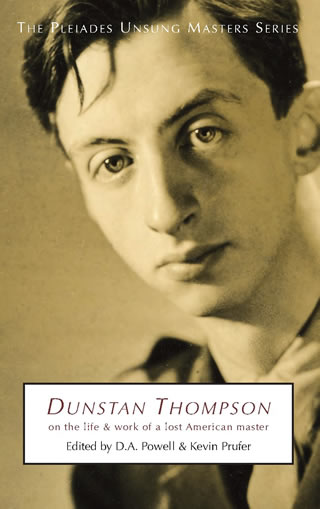
Dunstan Thompson photoPoet Dana Gioia, former chairman of the National Endowment for the Arts, has performed many good deeds for literature; here’s one that has generally gone unnoticed: he has promoted the work of many little-known poets and writers, both living and dead, who have received fame, acclaim, and wider circulation soon afterwards. In many cases, I think his imprimatur has been decisive. He was one of the early champions for Kay Ryan, the Marin community college teacher who went on to win a Pulitzer and just about every other major poetry award, as well as being named U.S. poet laureate. We can add Kim Addonizio, Weldon Kees, and even Robinson Jeffers to the list.

That observation alone would make it worthwhile to pay attention to his article in the current Hudson Review, “Two Poets Named Dunstan Thompson.” Thompson’s not entirely forgotten … at least not anymore. D.A. Powell and Kevin Prufer compiled a tribute volume, Dustan Thompson: On the Life and Work of a Lost American Master in 2010. Later this year, Thompson’s Selected Poems, edited by Gregory Wolfe, will bring his work (we hope) to a wider audience.

The Connecticut-born Thompson (1918-1975) was educated at Harvard and enlisted in the U.S. Army in World War II. Borges translated some of his work after Thompson’s Poems (Simon & Schuster) was published in 1943. His second poetry collection, Lament for the Sleepwalker, appeared in 1946. A 1954 novel, The Dove with the Bough of Olive was not well received. A travel book The Phoenix in the Desert was published in London in 1951. He had published in The New Yorker and The Paris Review, but his next three manuscripts remained unpublished. What happened in the final decades is most interesting.

Dana’s essay is highly recommended; it’s one of his finest. And you get two poets for the price of one. Here’s why:

Two contradictory views of Thompson and his poetry have emerged, which seem to reflect an irreconcilable dichotomy inherent in both his life and work. Each faction has made exclu­sive claim to his legacy. For one group, Thompson stands as a pioneering poet of gay experience and sensibility. He was one of the first poets—and certainly the best of the World War II era—to write openly about homosexual experience. Although his language remained slightly coded—even straight sex could not be depicted literally at that time without censorship or prosecution—there was little ambiguity about the hidden world of casual sexual encounters he describes so powerfully in his neo-Romantic and rhapsodic poems. An heir to Walt Whitman and Hart Crane, Thompson stood, to quote Jim Elledge, as “a kindred soul” to contemporary gay poets.

To the second group, Thompson ranks as one of the important English-language Catholic poets of the twentieth century. A neo-classical writer of cosmopolitan sensibility, he cultivated an austere and formal style to explore themes of history, culture, and religion. In ways that seem more European than American, the mature Thompson also used the long perspectives of Christian and Classical history to understand the modern world after the devastations, dislocations, and atrocities of a troubled century.

There is no question that Thompson’s poetry falls into two parts—the early work published during the 1940s and the later work gathered posthumously in 1984.

The “vast and insistent threnody” of the first era “transcends its own sentimentality mostly bit its sheer feverish persistence. All of the wrong notes seem small in comparison to its large, symphonic sweep.” The highly musical poems (“The boy that brought me beauty brought me death”) reflect a poet who “reveled in the hypnotic quality of formal rhythms. His mode is essentially rhapsodic – an attempt to cast an emotional spell over the listener.” The second period occurred after he had settled in the obscure Norfolk village of Cley, initially for financial reasons, but then he and his partner, the journalist Philip Trower, stayed and stayed, far away from the mainstream literary world. “If Thompson’s early verse is flamboyantly neb-romantic, the later work is calmly neoclassical. … His style cooled becoming more austere and controlled. The tone shifted from vatic to conversational.” He adopted free verse as another tool in his repertoire, and wrote dramatic monologues, narratives, hymns, satires, epigrams, epistles, devotions, discursive meditations. “The older Thompson obsessively ponders the past as window into the human condition.”

Dana concludes: “Dustan Thompson is not a major poet, but he is also not a minor writer in the conventional sense of doing a few things exquisitely well. He is ambitious, original, mercurial, and uneven in equal measures. His central themes – love, sex, desire, faith, war, and history – are not minor subjects.” Read about both poets – Dunstan Thompson I and Dustan Thompson II – over at The Hudson Review, here.

cley

Refuge: Cley on the River Glaven (Photo: John Beniston)


Remember the Lusitania! Five-day Stanford exhibition commemorates the centenary of a shipwreck.

May 19th, 2015
Share

lusitania_postcard_final“In 1982, Gregg Bemis made the cheapest and most expensive financial transaction of his career: For one dollar he acquired full ownership of the RMS Lusitania, the British transatlantic passenger liner struck by a German torpedo in 1915. Given the legal battles he’s fought and millions of dollars he’s spent since then to verify his ownership and access the wreck that lies 300 feet below the waves in the North Atlantic, Bemis concedes the venture was ‘a personality failure on my part. I like to stick to things, I like to see them through to the end.’ No end is in sight, though, because what started as a business interest has become a personal mission. Bemis wants to finally settle a long running controversy: Why did the ship sink so fast, and was there a cover-up?”

Poster Collection, UK 524, Hoover Institution Archives.So begins Joshua Alvarez‘s article in the current Stanford Magazineabout Bemis, a Stanford alum. The article is a preview for a five-day exhibition at the Hoover Tower Rotunda.

Quick! Hurry! The exhibition begins Wednesday, May 20, and ends Sunday, May 24. It showcases artifacts recovered from the wreck of the Lusitania on loan from Bemis and Oceaneering International (such as the porthole pictured above), together with photographs, posters, documents, newspapers, medals, maps, and other artifacts permanently housed at the Hoover Institution Library & Archives. The event commemorates the centenary of the sinking of the Lusitania.

Below, two photos of then 76-year-old Bemis as he makes his own dive to the wreck in 2004. He was a lot older than the Lusitania itself, which was launched in 1907 and destroyed in 1915. Bert Patenaude wrote an introduction to the Hoover exhibition; we wrote about Bert and his own book in “Forgotten Tale of How America Saved a Starving Russia,” here – this is what he had to say about the Lusitania:

.

Poster Collection, UK 198, Hoover Institution Archives.“On the afternoon of May 7, 1915, the British ocean liner RMS Lusitania was torpedoed by a German submarine about a dozen miles off the southern coast of Ireland. The ship rapidly began listing heavily to starboard and sank by the bow in only eighteen minutes. Nearly 1,200 of the 1,959 men, women, and children on board perished that afternoon, 128 of them Americans.

“When the Lusitania sailed from New York on May 1, 1915, the ship faced dangers that the British government and Cunard, the ship’s owner, fully understood. Three months earlier, the Imperial German government had declared the seas around the British Isles a war zone and gave notice that Allied ships entering the area would be sunk on sight. The day of the Lusitania’s departure, the German embassy in Washington published an advertisement in US newspapers warning passengers of the risks involved in a transatlantic voyage aboard a British passenger ship.

“Today, one hundred years after the disaster, people learning about the fate of the Lusitania and the furious reaction it triggered will likely be surprised that the United States somehow managed to maintain its neutrality and stay out of the European conflict for another two years. In retrospect, however, it seems the incident ignited a long coiling fuse that would lead, in April 1917, to America’s entry into the First World War.”

Read more about the exhibition here. Or read Alvarez’s article here. But most of all hurry and go see the exhibition before the weekend is over.

Bemis dive to wreck 6-25-04

Above and below, Bemis dives 300 feet to the wreck. (Photos courtesy Gregg Bemis)

Bemis - after diving to Lusitania

Translator, poet Matthew Ward and his “immense intellectual hunger.”

May 15th, 2015
Share
Gary Ward

A fierce poem from a feverish bed. (Photo courtesy the Ward family)

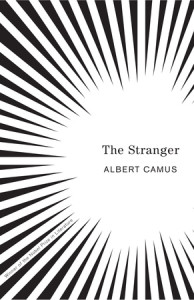
In his brief life, Matthew Ward translated works by Colette, Jean Giraudoux, and Roland Barthes into English – but his favorite project was Albert Camus’s The Stranger. His celebrated “American” translation of the classic earned him a PEN award in 1989, as well as critical acclaim.

In a sense, the translation was born at Stanford, where Ward learned French and fell in love with France during his stay in Tours as part of Stanford’s Overseas Studies program in 1971 (he earned his B.A. From Stanford in 1973). Clearly, Ward’s translation of The Stranger is a perfect choice for the “Another Look” book club discussion at 7:30 p.m., Monday, June 1, at the Stanford Humanities Center – and not only for aesthetic reasons. It represents a sort of homecoming.

If Ward’s Stanford roots are not widely recognized, part of the reason may be that he was known in those days as “Gary,” an energetic, gregarious presence who was very, very smart. “He had an immense intellectual hunger,” recalled Stanford English Prof. John Bender, who was the faculty advisor in Tours the year Ward attended, and recalled the poet and translator’s “eagerness and sparkle.”

“He wanted to know everything, whatever he could know.” Most of all, recalled Bender, “he was passionately interested in French.”

During the six-month sojourn in Tours, Ward also forged an important friendship with Monika Greenleaf, now an associate professor of Slavic literature at Stanford, but then a “scholarship kid” as he was. “I have an intense memory of his face and body when he became enthused about something:  his big brown eyes would glow, then a huge mocking grin and demonic chuckle, and a flurry of gestures. It was always a manifesto about literary style, freedom, religion, young men’s conquests of their world, and above all, Joyce” – and, she quickly added, Kerouac, Hemingway, Ginzburg, Camus, and Proust, too.

“He and I bonded above all in our mutual and rivalrous pursuit of le mot juste,” she said. “Being Irish, he had the scintillating verbal gift that comes with the territory.”

Irish was only half the story. He grew up as one of nine children in a Spanish-speaking, working-class family in Denver. ”I internalized Romance languages listening to my mother,” he told The New York Times. ”Our family goes back to 1598 in old New Mexico, with a governor as an ancestor. And I really do have a mother named Carmen.”

Greenleaf remembers the Stanford students taking a night train to Spain during the running of the bulls at Pamplona, “standing the whole way talking – about Hemingway, of course – and drinking.”

“We were so hung over the next morning that we climbed trees to watch the spectacle and ended up falling asleep among the branches.” Ward and a friend, however, “took off down the street in front of the bulls.” The kids had little money, and lived on potato omelettes, wine, and cioccolate calliente. Traveling to the Basque city of San Sebastián, “we got off the train and ran straight into the ocean waves to wash off.  That town and its churches perched on the edge of the ocean seemed like a paradise to us.”

When the sun went down, Ward would entertain them with his stories and his poems: “He always had a diary with him and filled it with extravagant Joycean sketches, which he would read to us at night.  We all liked to catch glimpses of ourselves in the textures he created.  He was constantly practicing to become a writer,” she said.

At the party to celebrate the end of their stay in Tours, Ann Bender recalls swing-dancing with Ward. He was the only student who knew the dance steps of the ’20s, ’30s, ’40s, and ’50s. “He was very much a people person,” she said, despite the usual writer’s life of solitude and thought.

Back in Palo Alto, Ward rented a cottage behind the home of English Prof. William Chace, who remembers him fondly as a great conversationalist and immensely smart. Ward received an acknowledgement in Chace’s The Political Identities of Ezra Pound and T. S. Eliot. “I think he helped me just talking about the topics,” he recalled. “What did Gary contribute? Friendship and good humor.”

After Stanford, Ward went for advanced degrees in Anglo-Irish literature at University College in Dublin and at Columbia University; Chace left Stanford to become president of Wesleyan and later Emory University. “He wrote us to say he had become involved in the atelier of Richard Howard, translator of great things,” recalled Chace, and that he had taken a pen name, too. Ward told his mother he was dropping “Gary” for his confirmation name,“Matthew.” It had more of an authorial ring to it, he told her.

Hardscrabble life of a translator

The breakthrough moment came when Judith Jones, the legendary editor at Knopf who had worked with John Updike, Anne Tyler, John Hersey, Elizabeth Bowen, and William Maxwell, felt that a new translation of Camus was needed, one that was closer to the spirit of the author than the 1946 translation by the highly respected translator Stuart Gilbert, which was faulted for its British flavor. (One example: “You’ve knocked around the world a bit, and I daresay you can help me.”)

”I jumped at the chance and worked with Judith on it for nearly three years,” said Ward. “It gave me an opportunity to push my one grain of sand up the beach of culture.”

stranger

“I jumped at the chance.”

The dramatically new translation was praised by The New York Times, The New York Review of Books, and others. Ward told The New York Times, “what I’ve done is closer to the author’s intent, and that’s what counts.”

“Camus admitted using an ‘American method,’ particularly in the first half of the book,” Ward said. “He mentioned Hemingway, Dos Passos, Faulkner and James M. Cain as influences. My feeling is that The Stranger is more like Cain’s The Postman Always Rings Twice than Camus cared to admit.”

By that time, Ward was living in a fourth floor walk-up in Manhattan. Bender recalls his visit to Stanford, where they talked about translation and the hardscrabble life of a translator. “He had lived a life without a lot of material rewards in it, and yet he did extraordinary translations,” said Bender. “All this acclaim, but it paid almost nothing.”

Greenleaf, by then at Stanford, also remembered a reunion about the same time in the 1980s. “We talked our heads off, as of old, and toward the end he read me excerpts of a narrative poem in progress, called, I believe, ‘The North.’ It was thrilling to recognize his mature talent.  He sent me a paper copy, but I lost it during one of my moves, and I don’t know if it was published.

“He let me know when his translation of The Stranger won its prize, and we were sure that this was the beginning of his writerly renown. I found out about his infection with AIDS through a fierce poem he sent me from his feverish, sore-ridden body and still incandescent mind, not at all resigned.  I cried hot tears reading it.”

Ward died on June 23, 1990, at the age of 39. A memorial evening to celebrate his life was organized in Greenwich Village. Chace and his wife drove to the event from their Connecticut home, with plans to return afterwards. As the clock was moving closer to midnight, Chace asked the playwright and gay rights activist Larry Kramer when the formal remarks would begin. Kramer looked back at him with surprise. “What do you mean? I go to these every night,” he replied. As the AIDS crisis swept through the city, formal memorials had been abandoned – the strain would have been unbearable, he explained. No one had the energy anymore.

Twenty-five years’ distance makes any strain bearable, but it doesn’t fill the missing chair or put the subtracted voice back into the conversation. Ward left his traces in many of the pitch-perfect intuitions that informed his translation of The Stranger, fulfilling his wish that his work “would bring a new generation to the great Camus novel.”


More honored than read? Albert Camus’s The Stranger reconsidered

May 13th, 2015
Share

FRANCE. Paris. French writer Albert CAMUS. 1944.

Henri Cartier-Bresson’s iconic 1944 photo in Paris. (Courtesy Magnum/Cartier-Bresson)


I was poised midway between poverty and sunshine,” wrote Albert Camus, describing his impoverished childhood in French Algeria. “Poverty prevented me from judging that all was well in the world and in history, the sun taught me that history is not everything.”

Albert Camus’ The Stranger is drenched in the North African sun, but heat and light take an ominous turn. The Nobel Prize-winning author’s tale of a senseless murder on the hot Mediterranean beach has been a staple of high-school classes for decades, ever since it was published by the up-and-coming writer in 1942. But does it carry a new meaning for our time?

Acclaimed novelist Tobias Wolff has chosen The Stranger for the Another Look book club event at 7:30 p.m. on Monday, June 1 at the Stanford Humanities Center.  With Tobias Wolff’s retirement at the end of this academic year, the spring event on Camus’ The Stranger will be the last in the popular three-year series.

Gary Ward

Translator Matthew Ward (Courtesy Ward family)

Wolff, professor of English and the founding director of Another Look, will moderate the final event. He will be joined by cultural and intellectual historian Caroline Winterer, director of the Stanford Humanities Center; and Stanford lecturer Marie-Pierre Ulloa, a scholar of French intellectual life in 20th-century Algeria who has received France’s Chevalier de l’Ordre des Arts et des Lettres, one of the nation’s highest cultural honors. The event is free and open to the public.

According to Wolff, “The Stranger is not an overlooked book. But I believe that among adult readers it is more honored than read. We usually encounter it in our student days, and I doubt that many of us read it again later on.

“Yet it’s very much worth our renewed attention in this moment for the questions it raises about our attempts to find meaning in our lives, about the often violent encounters of different cultures, about the way we create consoling, even heroic, narratives to explain and absolve ourselves while remaining willfully blind to the personal and social forces that actually drive us, about the question of free will – do we have it? –  and about the problematic nature of institutional justice and punishment, indeed of all human judgment.

The event will spotlight the translation of Matthew Ward, who learned French at Stanford. He died of AIDS in 1990, two years after his translation was published, and a year after it received a PEN award. In a New York Times article, Ward said he used an “American method” to translate Camus.

“He mentioned Hemingway, Dos Passos, Faulkner and James M. Cain as influences,” said Ward, who earned his bachelor’s degree at Stanford in 1973. “My feeling is that The Stranger is more like Cain’s The Postman Always Rings Twice than Camus cared to admit.”

According to the New York Review of Books, Ward’s highly respected version rendered the idiom of the novel more contemporary and more American, and an examination of his choices reveals considerable thoughtfulness and intuition.”

Camus was born in 1913. His father died less than a year later in the Battle of the Marne. His illiterate mother moved with her two sons into a cramped family apartment without electricity or running water. Camus wrote that poverty “was never a misfortune for me: it was always counterbalanced by the richness of light. And, because it was free from bitterness, I found mainly reasons for love and compassion in it. Even my rebellions at the time were illuminated by this light. They were essentially – and I think I can say it without misrepresentation – rebellions in favor of others. It is not certain that my heart was inclined to this kind of love.”

strangerWith the publication of The Stranger and The Myth of Sisyphus in the same year, Camus became a public figure and an existential legend, though he eschewed the link with Jean-Paul Sartre‘s philosophy. Within a few years, he would also become a hero of the Résistance in occupied France. During the war years, he formed an important friendship with Sartre, and also a rivalry with the man who called him “the street urchin from Algiers.” Their break, over Camus’ refusal to justify or excuse the atrocities of Stalin as they became known, would be as famous as their camaraderie.

The 1957 Nobel Committee hailed Camus “for his important literary production, which with clear-sighted earnestness illuminates the problems of the human conscience in our times.” Camus was killed in a car accident in 1960 – some claimed it was a Soviet secret police job, although proof has been elusive.

He left behind a range of novels, plays, essays and short stories, but perhaps none as enduring and popular as The Stranger, with its anti-hero Meursault, who is condemned, not so much for murder, as for “not weeping at his mother’s funeral,” according to the author. Camus, an avowed atheist, said enigmatically, “Meursault is the only Christ that we deserve.”

The books will be available at Kepler’s in Menlo Park, Stanford Bookstore on campus and Bell’s Books in Palo Alto.

***

The Another Look book club focuses on short masterpieces that have been forgotten, neglected or overlooked – or may simply not have received the attention they merit. The selected works are short to encourage the involvement of the Bay Area readers whose time may be limited. Registration at the website anotherlook.stanford.edu is encouraged for regular updates and details on the selected books and events.

Are literature and evil inseparable?

May 11th, 2015
Share

250px-GeorgesBatailleAre literature and evil inseparable? “Yes!” says Georges Bataille. Otherwise it would be boring. The French theorist discusses his book, La littérature et le Mal, in the only television interview that exists with him, filmed in 1958. His interlocutor is Pierre Dumayet. I find his concept of evil a little naïve, but see what you think. (With a hat tip to Morgan Meis and 3quarksdaily for this one.)

Geoffrey Hill bids farewell to Oxford: “The craft of poetry is not a spillage but an in-gathering.”

May 8th, 2015
Share
Asked if he liked a particularly severe photograph of himself, he replied: "It terrifies me."

Characteristically vital, vexing, and invigorating.

Over at Forms of Loving: Readings in Poetry, poetry critic Maria Johnston noted maestro Geoffrey Hill‘s final lecture as Oxford Professor of Poetry (it’s a four-year appointment), which the social media suggested was “a characteristically vital, vexing and invigorating critical event,” she wrote.

You can judge for yourself: a link to the May 5 talk is here, and a link to his previous lectures is  here.

Johnston celebrated the event with some of his “greatest hit” remarks from his inaugural lecture, “How Ill White Hairs Become a Fool and Jester,” delivered on 30 November 2010. We’ll share some of them, too:

“Do poets approach language as the neutral instrument for confessional themes – on occasion, themes of perjury – or do they, in the very act of writing, manifestly reveal language itself, particularly language twisted into poetic shapes, as a substance of imagination radically perjured?”

“I am a traumatised old man, and my opinions on the matter of poetry in English, particularly contemporary poetry, are decidedly peculiar. I do not have any great desire to encourage the presence of contemporary writing in the university because I believe that contemporary poetry already receives far more encouragement than is good for it.

Blackmur wrote in 1935, and I regard it as one of the great modern, or Modernist, formulations of what poetry is: ‘The art of poetry,’ he says, ‘is amply distinguished from the manufacture of verse by the animating presence of a fresh idiom. Language so twisted and posed in a form that it not only expresses the matter in hand, but adds to the stock of available reality.’ My God, if only I could have written that!

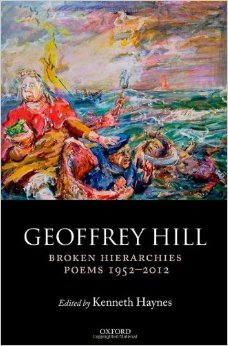
brokenhierarchies“If I were to offer anything to the conventional young poet (apart from the proverbial revolver and a bottle of brandy) I would say: Don’t try to be sincere, don’t try to express your inmost feelings, but do try to be inventive.”

“The craft of poetry is not a spillage but an in-gathering; relevance and accessibility strike me as words of very slight value. I have written elsewhere that accessibility is a perfectly good word if the matter under discussion concerns supermarket aisles, library stacks or public lavatories, but has no proper place in discussion of poetry or poetics. Poetry of the new millennium is as it is because of what English poetry has been during preceding centuries and a degree of humility when faced with that fact would not come amiss from our latest celebrities.”

“What is needed from a contemporary critical mind that has both depth and reach of a capacity that few have at any given time but which Ricks has demonstrated super-abundantly, is an analysis of how the skim of contemporary culture relates to, is inextricably part of, the gigantic scam of our times: the bankers’ scam, the Blair-Brown scam, the coalition scam, the big society scam, the education scam, the national happiness scam.”

Stay tuned for Johnston’s review of Hill’s Broken Hierarchies: Poems 1952 – 2012, to appear in Poetry Ireland Review later this month.


<<< Previous Series of PostssepNext Series of Posts >>>