“Learning is as natural as walking.” The world loses a terrific educator: Robert Calfee, 1933-2014

November 20th, 2014

Share
calfee3

“Why teach them to march, when they can learn to fly?” Bob reading to an Escondido Elementary kindergarten class in 1985 (Photos: Ed Souza)

I traveled with Robert Calfee to schools in New York City, Pittsburgh, and around the Bay Area, when we were conducting research for the 1995 book we co-authored, Teach Our Children Well (Portable Stanford Series). The second chapter of the text was published as a Washington Post op-ed, and won a national award.

That was back in my days as the news director for Stanford’s School of Education – and before that, I had worked with a project called “Stanford and the Schools.” Bob was my first boss at Stanford, and I coauthored (with Stanford University President Donald Kennedy and Education Dean Myron Atkin) the book that came out of the project, Inside Schools. Then Bob and I tackled this second book together.  He was an amazing educator and an easygoing travel chum. I was greatly saddened to hear of his death by cancer on October 24 – I hadn’t even known he was ill.  You can read more about it here and at the UC-Riverside website, where he was dean, here.

Bob was a passionate champion for ‘the rhetoric,’ the formal use of language to reason, persuade, and argue – whether its getting kids to talk the administration into getting new lockers for the school, or whether they think the novel they’re reading is a good one. He believed in writing. He said students can read a book without comprehending it, but it’s hard to compose an essay passively.

calfee1He emphasized “critical literacy” – that is, learning to use all forms of language for thinking, for problem-solving, and for communications. He said it was the way he had been taught in Kentucky, during a rather hardscrabble childhood, partly spent in an orphanage.

To that end, Bob created Project REA/Inquiring School, an educational endeavor that emphasized making schools “communities of inquiry.” As I recall, Project READ was for the classroom, Inquiring School was for the school as a whole. Rather than focusing on students who were branded as ‘defective,’ he focused on professional development for teachers. He wanted to steer instructors away from teachers’ guides that, he said, read like the IRS tax manuals. He tried to wean them away from follow-the-recipe teaching. He was undaunted by low-achieving, multilingual classrooms in poor neighborhoods with histories of low achievement. Those were the ones he was looking for.

This is from our book together: “We have repeatedly found that most students, including those identified as low-achieving, have sharper academic value and pedagogical potential, but they don’t know what they know. They cannot recognize and use their background experience until someone – a teacher – offers the cognitive tools for expressing themselves and participating in group problem-solving.” Our conclusion? “Children walking into their first classrooms vary widely in experience and temperament; but for virtually each one of them, learning is as natural as walking. Why teach them to march, when they can learn to fly?”

calfee2It wasn’t just talk; I watched him to it. For example, he walked into a boisterous classroom of elementary students within minutes – coming in cold, with no preparation, he’d have them in his hand within minutes. He’d start with a question – how would they explain where they lived to a man from Mars? – and follow up their suggestions with ‘Tell me more’ or ‘Why?’ And from that he would teach. Not only did he learn a great deal about the students that way, but he engaged them where they were right then, right there, instead of beginning with abstractions far away from their daily lives.

I recall him talking about a student whose difficult family background was such that he had a better working knowledge of how government works than many adults do – but that knowledge didn’t get tapped in the classroom.

He wanted to see classrooms brimming with life, and walls covered with students’ writing, webs and weaves and story graphs. Silent classrooms bothered him more than noisy ones.

We were often on a tight schedule, and after visiting one school, a teacher said she wanted to discuss matters with him as we waited for our taxi. It was a frigid winter morning – I think it was in the Bronx. He turned up his collar against the wind, and said gently, “Let’s talk here.” And they did. That was sooooo Bob.

***

FROM TEACH OUR CHILDREN WELL: Robert Calfee was a guest teacher for a lunch-hour economics class in Yerba Buena High School east of San Jose, in a poor neighborhood and a port of entry for new arrivals from around the world. Here’s his impromptu instruction:

calfee

In recent years (Photo: Smart Ants, Inc.)

Calfee: What do you guys think economics is all about? What words come to your mind when I say ‘economics’?

Students: Money. Scarcity. Products. Profit. Services.

Calfee: Why do you think we need to know about economics? What’s the value? [Silence. Teachers frown.] Have you got an economic system at home? Is your family an economic system? [More silence.]

Brendan: Yeah, I think so.

Calfee: Say more. [Silence.] How do you handle money? Do you guys have anything do with money at home? [Someone mumbles about money and “decision-makers.”]

Calfee: Who decides?

Ngo: Parents.

Calfee: Do you have a job?

Ngo: No.

Calfee: Ever had a job?

Ngo: No.

Calfee: You get an allowance?

Ngo: No. I just ask.

Calfee: Tell me a little more about how that happens.

Read the rest of this entry »

Oxford does it right: The Merton Record arrives on our doorstep

November 17th, 2014
Share

IMG_20141111_145704We shouldn’t have been surprised. When we were contacted by the Merton College at Oxford about republishing our obituary on the late great Milton scholar, Martin Evans in The Merton Record, we offered our enthusiastic  support. The Welshman was an amazing man and an amazing Miltonist, and it was a privilege to study Paradise Lost with him.

We made Editor Helen Morley promise to send the finished product.

When the envelope arrived from Oxford, we were pleased to find a model of this kind of academic publishing: 200 perfect-bound pages with writing that matches high production values  – and it was delightful to be a small part of it. (Also noted: it has a review of Stuart D. Lee‘s A Companion to J.R.R. Tolkien, who was a professor at Merton for many years.)

From my republished piece on Martin:

Evans coined the phrase “Miltonic moment” to describe the point of crisis just before the action changes dramatically, looking at once backward to a past that is about to be transcended or repudiated, and forward to a future that immediately begins to unfold.

His first reading of Milton marked a Miltonic moment of his own: “I fell hopelessly in love with the poetry. It was the most exciting thing I’d ever read,” Evans said.

Yet Evans is remembered for being a powerful mentor as well as a revered scholar.

IMG_20141111_145734The poet and scholar Linda Gregerson of the University of Michigan, his student in the late 1970s, recalled, “He was immensely generous, both personally and intellectually, able to convey deep learning with extraordinary clarity. He always took a deep delight in ideas, and was just opinionated enough to make things fun.” She recalled him as “impish, with a brilliant, irreverent sense of humor.”

“He converted many of us to a lifelong inhabitation in the world of Milton studies. It’s a formidable world in many respects, not nearly so genial as the world of Shakespeare studies, for example. But Martin imbued it, and us, with a durable sense of joy.”

You can read an earlier Book Haven post on Martin here – or about his 400th birthday party for Milton here. Or here’s a treat: go here and you can listen the the Milton scholar himself, at Milton’s birthday party (which was also a celebration of his own anniversary at Stanford). Hearing him read the last words of Paradise Lost is absolutely delicious.

(See? “Lycidas” is evidently still on my mind after my post yesterday about Derek Walcott.)

lovesongsPostscript on 9/19: Martin Evans’s influence was wide indeed. I just received this note from music scholar and author Ted Gioia: “I spent a lot of time with Martin Evans, both inside and outside the classroom, and learned a tremendous amount from him. My next book (on the history of love songs) is a better book because of what Martin taught me about Petrarch, Dante, Boccaccio, Castiglione, etc. Because of him, I read The Art of Courtly Love by Andreas Capellanus, The Allegory of Love by C.S. Lewis and a number of other books that prepared me (in ways I never could have anticipated at the time) to write a study of the evolution of the love song.”

evans1

“It was the most exciting thing I’d ever read.” (Photo: L.A. Cicero)


Poet Melissa Green: Virgil would still be proud

November 16th, 2014
Share

Father, I’m drowsy in April’s humming sun and think
A girl the color of autumn kneels at the Squanicook’s bank,
Who is the river’s daughter, dressed in driven skins,
Who knows a cedar wind at Nissequassick brings
The school of alewife, herring, yellow perch ashore.

– from the Squanicook Eclogues

mgreen

Then…

In 1991, Nobel laureate Joseph Brodsky was asked what American poets he admired. Of the two or three he shortlisted, he mentioned Melissa Green for “tremendous intensity and tremendous intelligence.” He continued: “In the case of Ms. Green, I think it’s a tremendous facility. She’s a tremendous rhymer. There’s a collection of hers called Squanicook Eclogues, wonderful eclogues, I think. Virgil would be proud of those. Tremendous rhyming, tremendous texture.”

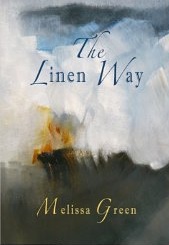
Then she disappeared. Her 1987 Squanicook Eclogues, which received awards from the Poetry Society of America and the Academy of American Poets, looked to be a solo product of a brilliant woman. Then, a decade later, a memoir of mental illness, Color Is the Suffering of Light, then, a decade after that, another collection of poems, Fifty-Two (try finding it anywhere, just try), and now, the next installment of her memoirs, The Linen Way, excerpted in the current Parnassus.

green-melissa

… and now.

For my money, my favorite passage is a description of her Boston University class with Nobel poet Derek Walcott, which, in fact, brings back memories of his Russian friend’s classes. Walcott made his students memorize “Lycidas” – a suggestion that was met with “tittering and mumbled derision – most of the students seemed to resent having to memorize such a long, boring poem.” Here’s a sample of Walcott’s classroom style:

“His first class was held at 236 Bay State Road, in a shabby second-floor room with an unvarnished floor, empty bookshelves, and a dozen wooden armchairs crowded into it. Though bleak, this was also the room where Robert Lowell had taught Sylvia Plath, Anne Sexton, and George Starbuck. Walcott walked in wearing a casual sport coat, without books or papers, and sat down. Cordially, he spoke about how the workshop was going to be run. He wanted us to read a lot, and we would look at our own poems only part of the time. He then gave us five minutes to write down the names of ten of our favorite poems. I quickly made a list: the Iliad, the Odyssey, ‘The Seafarer,’ DanteInferno [why not the Purgatorio? or Paradiso? – ED.], Paradise Lost, all of Shakespeare‘s sonnets, all of Donne, Herbert, Keats, John Clare, and Robert Browning. Finally, I added ‘The Schooner Flight.'”

linenway“When I lifted my head, the other students were looking puzzled, chewing the ends of their pens in some combination of aggravation and disbelief. Walcott went around the room and asked us to read our lists aloud. Most of the students said nothing – it seemed they couldn’t call to mind a single poem. When Walcott came to me, my heart sank into my shoes. By naming ‘The Schooner Flight’ among my favorite poems, I would look like the biggest kiss-up ever born. I read my list, and when I looked up I saw that a line had been drawn in the sand between me and the other students.

“On the occasion of our first student-teacher conference, Walcott sat behind a large, empty desk. When I entered the room he looked me up and down with an exaggerated leer, which seemed more of a friendly joke than an insult. I sat and handed him my poems, my heart thumping so loudly I thought he could surely hear it. He set the poems aside and smiled at me, his sea-green eyes bright and congenial.

‘What can I do for you?’ he asked.

I cleared my throat and blurted out, surprising myself, ‘I want you to teach me everything you know.’

His eyes widened, and he grinned. ‘You’re hungry, aren’t you, Emily?” he said. “Or should I call you Sylvia?'”

squanicook“Illness married me,” she later wrote. Soon after the publication of her first collection – “I could say ‘my head spun,’ but the world also spun around me; my sense of self became frangible, and I felt my mind and body crumble. I spent the next eleven months in the locked ward of a psychiatric hospital, shattered and suicidal. I remember the sound of the long key chains the staff all wore, clinking and turning locks.”

Her memories of her friendship with Joseph Brodsky, who befriended her during the difficult years, shows a more tender, caring side of the exiled poet: “As a lifelong insomniac, I am often awake in the middle of the night, and Joseph sometimes called at an ungodly hour to read an English-language poem he’d just written. … At other times, he called just to talk. He would ask what I was doing or reading or working on, and I would find myself sitting on the kitchen floor, twisting the telephone cord, chain-smoking, and talking into the wee hours. He never said goodbye, but rather, ‘Tender kisses on both your cheeks.’ I’d sign off just as Jimmy Durante did, but substituting the name of Joseph’s lovely cat for Mrs. Calabash: ‘Good night, Mississippi, wherever you are!'”

An interview with her at Rosa Mira Books here. Hear her read her poems at the Ottoman Estate here. And about twenty of her poems over at Agni here.

I’ve already ordered a copy of Squanicook Eclogues. And if anyone knows where I can find a copy of Fifty-Two, please drop a line. Meanwhile, I’ve a sudden urge to memorize “Lycidas.” All of it.

“A writer of extremes”: Dan Gunn on Marguerite Duras in the TLS

November 15th, 2014
Share

Busy man in Paris.

I met Dan Gunn several years ago. He’s a professor of comp lit at the American University in Paris, and one of the editors of Samuel Beckett‘s letters – an excellent mind and an excellent scholar; I wrote about him here. (He’s also editor of the superb Cahiers Series – which I’ve written about here and here, so he’s a very busy man). Fortunately, he’s been able to pull away from the Irish maestro long enough to write a masterful retrospective on Marguerite Duras in the current Times Literary Supplement, in time (but barely) for the French writer’s centenary. Dan Gunn takes on the question on every reader’s  mind as she explored the genre of “autofiction”: “But … but… but…did it really happen?” (As you may recall, Duras was the featured author at one of last year’s “Another Look” events – here.

He concludes:”Duras was a writer of extremes: extreme tensions, extreme conflicts, extreme non-resolutions; extremely fine texts, and some – fortunately much rarer – extremely embarrassing ones.” Astonishing technique, rather than truth, is why we turn to her novels: “Duras’s works often operate by way of incantation, by repetition of key terms, names, phrases, gestures,” he writes. Besides the centenary as an occasion for writing, Open Letter Books are republishing Duras for a new generation of readers, and Gunn points out some of the pitfalls of translation.

A few excerpts, the first on the novel featured last year at Stanford, The Lover:

lover

Iconic self-portrait

“Few Duras enthusiasts would place L’Amant quite at the centre of the canon. Yet it is hard to imagine the degree of attention Duras is currently commanding in France, or the fascination with every detail of her biography, without it. Three pages into L’Amant, the narrator announces: ‘L’histoire de ma vie n’existe pas. Ça n’existe pas’. The remaining pages serve to qualify this assertion, establishing a life recollected not as a continuum but as a series of pulsations, with crucial moments vividly returning, almost like the snapshots which Duras claims were the novel’s instigation. The intervals between the moments disappear, as does continuity, allowing the early experience to spurt back into the present. By 1984, when L’Amant was published, the elements of that life were already well known, not least through the first of Duras’s great autobiographical fictions, Un Barrage contre le Pacifique (1950): the colonial childhood in French Indochina; the early death of the father with the consequent indigence of his wife and children; the hopeless attempt to revive the family fortunes through purchase of a disastrously infertile piece of land; the two brothers, the elder of whom was violent and criminal, the younger of whom needed protecting; above all the stark emotional unavailability of the mother, wrapped up as she was in her financial woes, her loss of social status, her infatuation with her abusive first-born son.”

***

“Also included is a hitherto unpublished piece in which Duras writes of the intoxication of believing herself to be watched by so many. ‘On a su’, she writes, ‘que ça écoutait bien, les millions.’ Duras seems to have become entranced by her fantasy of the ‘millions’. … It is the autobiographical impulse, when combined with successive blurrings of the autobiographical lines, that has stimulated an insatiable public appetite for ostensibly objective corroborations of the life.”

***

Lamour-front“Yet she too, opening the first of her five biographical sketches, admits, ‘Je ne sais plus qui est Marguerite Duras’. … In an article reprinted in La Vie matérielle (1987) and included in the Pléiade Volume IV, Duras alludes to her own loquacity – a loquacity henceforth enshrined by the thoroughness of her editors and biographers: ‘Dans le train’, she writes, ‘je parle pour parler avec des inconnus, je parle de ce qu’on voit, du paysage, du temps. J’ai souvent un désir de parler, très vif, très fort’. Though we are much more familiar today than we were thirty years ago with the way that celebrity sanctions surfeit, there remains a sense, for this reader at least, of disappointment that so wonderful a writer could have been encouraged to talk so much and to commit to print so much tosh; writing so embarrassingly pretentious that it justified Patrick Rambaud’s cruel parody, Virginie Q (1988), which contains, for example, a hilarious interview between “Marguerite Duraille” and an imaginary middleweight boxer.”

Read the whole essay here.


Botero’s visit in NYC: and here’s how he got away!

November 13th, 2014
Share
Fernando Botero's Rolls, NYC 10/16/2014

Book Haven’s photographer caught his chauffeur-driven car. (Photo: Zygmunt Malinowski)

Yesterday, we wrote about Colombian artist Fernando Botero‘s book launch in New York City – here. However, our roving reporter-photographer Zygmunt Malinowski forgot to send a photo of this part of the event: the getaway car. “His chauffeured car, which looked like an antique Rolls Royce, was parked in front  of the Americas Society,” he wrote. Then he added, “Well isn’t that Rolls really nice?” We think so, and are ready for a spin whenever Mr. Botero is. (Who says there’s no money in art?)

.

Colombian artist Fernando Botero launches book in NYC

November 12th, 2014
Share
2Foto © Zygmunt Malinowski.JPG

Adriana LaRota and Fernando Botero in NYC (Photo: Zygmunt Malinowski)

A report from our roving photographer in New York City, Zygmunt Malinowski:

Does an art book sell well in a digital age? Yes, if you are Colombian artist Fernando Botero.

A month ago I received an intriguing email for a book launch of Bullfight: Paintings and Works on Paper (Glitterati, $125) by Fernando Botero, one of the most recognized living artists of Latin America. The event included a press conference followed by a book-signing. The artist is best known for his voluptuous sculptures and paintings.botero1

I recalled that in the 1990s his large generous sculptures standing in the median of Park Avenue caused a sensation. Since the artist is known mostly for his sculpture and paintings, not books, I didn’t know when an opportunity to meet him face-to-face would occur again, so I decided to attend.

The launch took place on October 16 at the Americas Society. Waiting in the light wood-paneled Mexican Room with other journalists for the beginning of the press conference, I was startled to hear a greeting in Spanish. I turned around and was facing the man himself, a well-dressed, good-natured gentleman accompanied by media director Adriana LaRota. With his black round horn-rimmed glasses, he could have passed for a distinguished professor, a scholar, or an eminent doctor. He looked exceptionally well for his 82 years. Botero calmly answered questions and smiled from time to time. The press conference was in Spanish with optional English, but the following session for the general audience was to be in English.

The artist later spoke about studying in Medellin, Paris, Spain, and Italy. He explained that one of his influences was the Quattrocento,  along with 15th century art and Latin colonial paintings. He established a style of his own – Boterisimo – and  answered questions about his characteristically exaggerated proportions and powerful, rotund people and figures.

3Foto © Zygmunt Malinowski.JPG

Botero’s “Gato” – a small version. (Photo: Zygmunt Malinowski)

Maya Jimenez, an art history scholar, told us that Botero painted the spectacle of the bullring rather than the fight itself – that is, he portrayed the ceremony of dressed-up colorful matadors, picadors, and the audience. Botero was fascinated with bullfighting ever since he was a young boy and even attended a bullfighting school for a few months. She also discussed individual works of art – how the backward-looking figure on one of his drawings drew us into the painting, or how, in another painting, the composition with a few figures was circular and animated, and that “the scale and proportion, his trademark, is relevant to importance.”

The public’s interest in book signing was not surprising given the stature of the artist – like having Picasso visit for a day. There was a long line of well-heeled fans that stretched through the Mexican room and the entire corridor leading into the room, each person holding the large, newly purchased book and waiting to have it signed by the famous artist.

I passed the only known outdoor sculpture by Botero in New York City, a monumental and amusing cat, “Gato,” several times in the past but alas, when I went to see it again this time it was gone, sold to a client in Germany. However a statuette remains in a nearby apartment building, which I was able to photograph. It’s above right.

botero2


<<< Previous Series of PostssepNext Series of Posts >>>