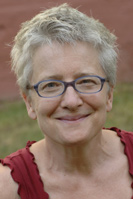
Adam Johnson, the Pulitzer, NYC … and a young girl’s photo op

June 3rd, 2013
Share

jupiter

It was a big weekend in the Big Apple for one San Franciscan.  Adam Johnson, the newest recipient of the Pulitzer Prize for fiction, accepted his award from Lee Bolinger, President of Columbia University, at a May 30 luncheon.  (We’ve written about Adam’s most recent honors this year, the Pulitzer and Guggenheim,  here and here.)

jupiter2

The attractive photographer.

Clearly talent runs in the family.  The photo above was taken by his 9-year-old daughter Jupiter Johnson.  The pretty prize is pictured below.  I’d never seen the sparkly bauble before.

The day before, the San Francisco Weekly ran a Q&A with the author of The Orphan Master’s Son (we’ve written about the book here and here and here), and admitted it was smitten by the 6’4 linebacker-sized  author.  A sample from his comments about North Korea:  “This is a nation without any voice at all. It’s unthinkable. We have no evidence of a literary underground. No book or poem has made it out in 60 years. As I wrote the book, I thought, who am I to write this? But the truth is, they can’t write, they can’t express themselves, and until they can, we need to do this. We won’t know if it’s true until they can tell their own story.”

Speaking of Jupiter, the interview has an interesting admission about his work habits: “I can’t write with the Internet, so I go to the UCSF library as a guest; I get more work done there. When I’m home and I hear my three kids’ voices outside the door, all under 10, I think, why am I spending time with imaginary people?”

pulitzer

Pablo Neruda: Too little, too late? The long-delayed investigation into the death of the poet.

June 2nd, 2013
Share
neruda

Happier days: Neruda with his wife Matilde Urrutia against our own Golden Gate

We’re going to get to the bottom of this … forty years too late.  Why do I have a feeling the killer has escaped?  Or else died of old age?

Much is puzzling about the claims that preeminent poet Pablo Neruda was murdered by Pinochet’s forces in Chile on Sept. 23, 1973.  Apparently, there was a mysterious “Dr. Price” on the scene, never seen before or since, who ordered the final injection, the doctor at the scene,  Sergio Draper, now claims.  Dr. Price is not in any of the hospital records.  The authorities are now organizing a portrait of the suspected killer, based on people’s memories of nearly half-a-century before … does anyone remember this guy at all except Draper?

What motive?  According to a story last year in the Associated Press:

Pablo Neruda, Chile’s Nobel Prize-winning poet, would have been a powerful voice in exile against the dictatorship of Gen. Augusto Pinochet. But that all changed just 24 hours before Neruda was to flee the country in the chaos following the 1973 military coup.

He was 69 years old and suffering from prostate cancer when he died, exactly 12 days after the brutal coup that ended the life of his close friend, socialist President Salvador Allende.

The official version was that he died of natural causes brought on by the trauma of witnessing the coup and the lethal persecution of many of his friends.

Some Chileans have questioned that official telling of Neruda’s death and instead suspected foul play at the hands of Pinochet’s regime.

mission

Ask them. They knew everything.

Draper’s description of a “blond, blue eyed, tall man” is a pretty good match for  Michael Townley, the CIA double agent who worked with Chilean secret police under Pinochet.  Neruda’s body was exhumed on April 8, and is being analyzed by Chilean and international forensic specialists.  Nearly two months… nuthin’ yet?  Mmmm-kay.

According to the AP piece in Huffington Post:  “Townley was taken into the U.S. witness protection program after acknowledging having killed prominent Pinochet critics in Washington and Buenos Aires.”  Wait a minute.  I thought witness protection programs were for victims, not perps?  So they’re going to “investigate” to find a man being hidden and protected by the U.S. government?  Good luck with that.

It reminds one of all those top-level investigations that are being ordered to address scandals in Washington.  Why do we have to spend millions of dollars “investigating” what our senior public officials have done?  Can’t they just tell us?   It’s not like we don’t know who he is or where to find him.  If he’s one of our guys… didn’t we ask him before we hid him?  On the other hand, why is Draper suddenly remembering this doctor forty years later?

Neruda’s widow and the foundation rejected the claims of murder last year, but Chile’s Communist Party pressed for an exhumation.  The idea of a CIA double-agent appearing in a doctor’s uniform in a hospital, ordering a fatal injection and then disappearing seems impossibly  like an old Mission Impossible rerun.  Is Townley being safely pinned for one murder he did not do?

According to Manuel Araya, Neruda’s driver, bodyguard and assistant in the year before his death:

Talking to The Associated Press, Araya described the day of Neruda’s death at the clinic, where the poet was being treated for his cancer, phlebitis and a hip problem. Araya had accompanied him as his bodyguard to protect him ahead of his departure from Chile. He himself wasn’t there, and says the story was told to him by a nurse whose name he has forgotten.

“Coincidentally,” Araya said in sarcastic manner, Dr. Sergio Draper “was passing by in the hallway when a nurse called to him and said that Neruda was in a lot of pain, and this doctor, very considerately, goes and gives him a Dipirona (analgesic), and the Dipirona… killed him.”

Adding to the conspiracy theories, it was at the same Santa Maria clinic where another prominent Pinochet critic, former President Eduardo Frei, was allegedly poisoned while recovering from hernia surgery in 1982. A judge in Chile has accused four doctors and two of the dictator’s agents in Frei’s death. The case is ongoing, and Frei’s body has been exhumed. One of the doctors questioned in the case, though not accused: Sergio Draper.

The AP was unable to reach the doctor for comment, after contacting the clinic where Neruda was treated and one of Chile’s main medical schools.

However, in an interview published in the Argentine newspaper Clarin in September, Draper strongly denied the allegation. he said he was only following the instructions of Neruda’s physician, Vargas Salazar, to help relieve the patient’s pain by giving him what he remembers was the drug Dipirona.

“I ordered that he be given an injection prescribed by his physician,” Draper said. “I was nothing more than a messenger. It’s outrageous that we are constantly under suspicion.”

I don’t know about you, but I’m confused.  Stay tuned.

Postscript on 6/3:  Over at Books Inq., Rus Bowden offers a little enlightenment with this article today from the Santiago Times:  The death of Pablo Neruda: looking for answers in the wrong place. The upshot:  it’s not Townley.  The article says:

“With the new focus on the mystery doctor, theories have circulated in the local Chilean press and been picked up by the international media linking this mysterious man to Michael Townley, a United States citizen who worked for Pinochet’s secret police (DINA) and was involved in the famous assassination of Orlando Letelier in Washington, D.C.”However, Peter Kornbluh, author of the Pinochet File which is being revised and released for the 40th anniversary of the coup and an expert on dictatorship-era Chile, told The Santiago Times that Townley could not have been involved in Neruda’s death, and speculation to the contrary is hurting the case.”

“He was in Florida, a fugitive from justice in Chile where he had been part of an anti-Allende operation March 1972 that left a man dead. Only after Pinochet was well consolidated did he return and join DINA,” Kornbluh said.

He explained that officials in the U.S. undertook an extensive investigation into Townley and can verify his whereabouts for the time in question.

“Michael Townley was a prolific international terrorist who committed an act of terror and murder in the [U.S.] capital. As the target of a massive FBI investigation, the FBI retraced his movements in the years he was associated with violence in Chile,” said Kornbluh.

What to do with all those books?

June 1st, 2013
Share
tower

Not for San Franciscans…

A busy weekend, looking for drafts and manuscripts that are strewn around my house. I know they’re here somewhere, scattered among the piles of papers and … books.

Over at Buzzfeed, you can check out 35 ways to store all those books piled about  your home.  Usually, I don’t go too much for these kinds of photo essays – but in this case, there are some practical suggestions among the silly ones.

As fireplaces get outlawed in more and more places (woodsmoke, pollution, etc.) … well, why not?  See example below.

Or how about trompe l’oeil doorways?

Shelving “as high as you can go” makes no sense for the acrophobic and the accident-prone, but converting closet space into book nooks or book cupboards makes sense … if only my closets weren’t already stuffed…

Among the sillier suggestions are Tower of Babel stacks of books, which invite disaster in earthquake country.  Moreover, books would be almost impossible to find and retrieve this way … and isn’t that where this post started?

Have a look at the other 29 suggestions over here – and thanks for the heads-up, Joyce Mitchell.


The closet-turned-booknook…

closet

Books as a hidden doorway…

doors

Go creative…

mobile

Or give “an evening by the fireplace” new meaning…

fireplace

A day in the life of Stanford: onstage, in half-an-hour

May 30th, 2013
Share

photo 2How often do you see volleyball team chatting with deans, Taiko drummers mingling with landscape gardiners, medical researchers in a tête-à-tête with major donors?  “It was what a university community should be.  That, to me, was moving,” said dancer Aleta Hayes, one of the performers for last night’s The Symphonic Body (we wrote about the event here.) And she was right.

When a live mic was stuck in front of my face two days ago, I asked the performers what they got out of the experience.  During and after the performance last night, I found out, without any explanation needed.  The sense of Stanford community was joyously evident, at the Bing Concert Hall event, and at the reception afterwards.  Although about 75 “performers” were onstage, choreographer Ann Carlson  worked through about 1,000 recommendations to get to the final cast – a lot declined or dropped out.  So even more people were involved in the experience than might have been  apparent last night.

chocolateheads

Hayes with her dance troupe, Chocolate Heads (Photo: L.A. Cicero)

Here’s how Carlson worked:  she followed the chosen performers around for a day, watching their gestures, listening to their phrases –  “then telling us how to act like ourselves,” said Matthew Tiews, Executive Director of Arts Programs.  Onstage, landscape workers pruned invisible trees, Continuing Studies dean Charlie Junkerman removed and cleaned his glasses over and over again, Philippe Cohen, executive director of the Jasper Ridge Biological Preserve, stood up repeatedly and pointed to something on the invisible horizon.

“It touches my bone-deep and dead serious belief that all movement is dance movement,” said dancer Diane Frank.  “It means that every moment of movement might be transformative, might refresh our senses, if we attend to it wholeheartedly, alert to its qualities in the doing.  Real dancing is an embodied attitude toward movement, not a training regimen.”

Philippe Cohen with project manager Laura Goldstein

Cohen on the job. (Photo: L.A. Cicero)

She added, “Besides, I like to connect with other people and to laugh a lot – both were large parts of the rehearsal process.”

During the question-and-answer period with the audience afterwards, one viewer noted the ephemeral nature of the project – nearly a year of work for a single, one-night performance.  Was the ephemerality part of the nature of the night?

“Definitely.  Absolutely.  I’m not doing this for a career,” said Cohen. “It was incredibly meditative.  At the end of the day, we had to put everything out of our mind.  That was absolutely wonderful.”

TonyDid anything surprise the cast about the performance?  “I was surprised that I was in it,” admitted Associate Dean Debra Satz, to laughter.

As usual, Mary Nolan had the last word.  When someone asked the performers “What comes next?”  Her reply was instant:  “the Tony awards.”

“Artistry in the everyday”: Ann Carlson’s The Symphonic Body – tonight!

May 29th, 2013
Share
photo 1

“A kind of post-modernism that allows chance and randomness to play a part.”

The theory is that choreographer Ann Carlson‘s The Symphonic Body, which will be performed tonight at 8 p.m. in the Bing Concert Hall, is entirely self-explanatory.  You should be able to walk in cold and appreciate what you see onstage.

I don’t buy it, at least not entirely.  But then, I’m not a “hang loose in the moment” kind of guy.  I like to have a little background about the artist’s intentions.  So consider this a public service for others, like me, who are high-information art-lovers.

Here’s a start, from the Stanford website:

carlson

Carlson

The Symphonic Body is a performance made entirely from gestures. It is a movement based orchestral work performed by people from across the Stanford University campus. Instead of instruments, individuals in this orchestra perform gestural portraits based on the motions of their workday.  These portraits are individual dances, custom made for each person, choreographed from the movements they already do. The particular choreographed gestures themselves become part of a larger movement tapestry within each performer and within the piece as a whole.  By engaging with this performance practice members of the Stanford community come together in concert to expand, renew and re-experience the artistry embedded in the everyday.

A visit to the Bing Concert Hall rehearsal yesterday brought its surprises.  Scattered among the 50 or 60 performers were some very familiar faces: Debra Satz, associate dean for the humanities and arts; dancer Aleta Hayes, a lecturer in the Drama Department; Charlie Junkerman, dean of Continuing Studies, and  Philippe Cohen, executive director of the Jasper Ridge Biological Preserve.

According to Peggy Phelan, professor in the arts:

The body that Ann has orchestrated in tonight’s performance is composed of students, researchers, staff, faculty, deans. Some are athletes; some are musicians; some are tree cutters; one is a Classicist; some are administrators, some are continuing education students. Some are seasoned performers; some have never been to a symphony or performed in one before. All of them rehearsed and entered into an act of collective creation. They are unlikely to have met before this occasion and they are unlikely to work together again. They created this body through a network of recom- mendations. They were named as people others found inspiring. Ann approached them and invited them to join. The members of this symphony are united by the gesture of saying Yes, the most vital word in Stanford’s vocabulary. To be the auditors of this Yes requires patience, attention, and relaxation. Strum your fingers, tap your toes and hear those everyday sounds as your own symphony. Use their music as a way to enter your own. Carlson’s makes Yes the chorus of an expanded soundscape; watch closely and you’re sure to hear it.

photo 2

Ann Carlson conducts

Ann’s visit coincides with Anne Carsons residency at Stanford, where she is a Mohr Visiting Poet – the two Annes are friends.  Unfortunately both visits occurred during a very busy month for me. The whole shebang would have blown by me entirely, had it not been for Florentina Mocanu-Schendels persistent beseeching, telling me that both Annes are people I absolutely must meet. Florentina, assistant director for The Symphonic Body,  was, as always, right.

I went cold into the rehearsal and meeting with Ann, at the Bing Concert Hall.  She was small, bright, energetic, wearing incongruous, brand-new sneakers – at least they looked brand new – and carrying a heavy-looking bag. I look forward to meeting the second Anne tonight, at the performance.

The poet Anne’s credentials are stunning: she’s received the Lannan Award, the Pushcart Prize, the Griffin Trust Award for Excellence in Poetry, a Guggenheim fellowship, and the MacArthur “Genius” Award.

This from the Poetry Foundation website:

carson3

Poet

Anne Carson is a professor of Classics as well as a poet, essayist and translator. “In the small world of people who keep up with contemporary poetry,” wrote Daphne Merkin in theNew York Times Book Review, “Anne Carson, a Canadian professor of classics, has been cutting a large swath, inciting both envy and admiration.”Carson has gained both critical accolades and a wide readership over the course of her “unclassifiable” publishing career. In addition to her many highly-regarded translations of classical writers such as Sappho and Euripides, and her triptych rendering of An Oresteia (2009), Carson has published poems, essays, libretti, prose criticism and verse novels that often cross genres. Known for her supreme erudition—Merkin called her “one of the great pasticheurs”—Carson’s poetry can also be heart-breaking and she regularly writes on love, desire, sexual longing and despair. Always an ambitious poet whatever her topic or genre, Merkin wrote of Carson’s The Beauty of the Husband, “I don’t think there has been a book since Robert LowellLife Studies that has advanced the art of poetry quite as radically as Anne Carson is in the process of doing.”

Sudden fame. (Photo: L.A. Cicero)

As for performance artist Ann, she’s been keeping the 50 or 60 Stanford students, faculty, and staff on its feet. What’s in it for the performers?  “It’s fun, there are no lines to learn, some one else is directing/conducting, all I have to do is sit there and follow the program, no pressure, and it looks like it’s cool to watch,” said drama professor Rush Rehm.  “Art with little effort, using personal gestures and movement, and shaping the ‘commonplace’ by playing with time, groupings.  Sound like he’s taking it easy?  Give him a break.  He’s been rehearsing Beckett’s Happy Days, “which is the just about most demanding, meticulous play ever written, diabolical in its specificity.

“The Symphonic Body is like recess for me!” he said.  “It’s part of a kind of post-modernism that allows chance and randomness to play a part.”

During the rehearsal, one of performers, Matthew Tiews, Executive Director of Arts Programs, obeyed the impromptu spirit of the moment and handed me a live mic to address the performers with a question. I was caught offguard.  “What do you get out of this experience?” I asked.

Mary Nolan, Stanford grounds supervisor, responded in a beat: “Notoriety.”

A long-delayed homecoming: The Golden Gate returns to Stanford

May 28th, 2013
Share

Golden gate

I’ve always loved Vikram Seth’s novel-in-verse The Golden Gate, ever since it first came out in 1986.  A dozen years later, I interviewed Seth in London – article here. Now the book is coming to Stanford, in its operatic incarnation.  Here’s what I wrote for the Stanford News Service:

The homecoming is long overdue: The Golden GateVikram Seth’s 1986 novel-in-verse, was born among Stanford’s sandstone buildings and palm trees. Now the Bay Area will have a chance to hear highlights of composer Conrad Cummings’ opera of the novel.
4 Park Scene

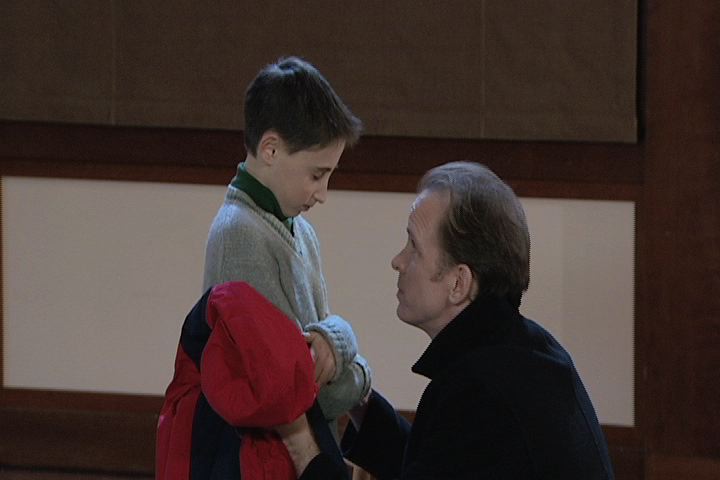
Phil (Kevin Burdette) reassures his son Paul (Elliot Kahn) in “The Golden Gate”

A multimedia presentation at the new Bing Concert Hall Studio at 8 p.m. Thursday, May 30, will include readings of Seth’s verse by current Stegner Fellows and Stanford students, a video of a 2010 staged workshop of the opera at Lincoln Center and a discussion with Cummings. John Henry Davis, who directed the Lincoln Center workshop production, is also directing the Stanford program. Seth will provide a video welcome.

“It’s beautiful, compelling, powerful – and it’s a production that deserves to be seen in the Bay Area,” said English Professor Shelley Fisher Fishkin, producer of the program, “From Lyric Novel to Lyric Stage.”

The event is sponsored by the Department English and its Creative Writing Program, the American Studies Program and the Stanford Arts Institute. The event is sold out, but unfilled seats will be released at 7:45 p.m. before the program begins.

The ‘Great Californian Novel’

San Francisco native Cummings, who teaches at Juilliard, discovered The Golden Gate soon after it was published and was hooked by “that special magical nostalgia I feel for my hometown San Francisco: the magic of the vistas, the feeling of the air, the presence of the ocean, the sense of space, and a certain sense of grandeur and personal emotion.”

In his book, Seth deprecated his foray in formal sonnets as “this whole passé extravaganza,” but he received rare accolades. The late Gore Vidal, who could be notoriously stinting of praise, wrote, “Although we have been spared, so far, the Great American Novel, it is good to know that the Great Californian Novel has been written, in verse (and why not?): The Golden Gate gives great joy.”

Conrad_Cummings

Conrad Cummings

Here’s how it began. In the 1980s, the graduate student from Calcutta, working on his doctorate in economics, was crunching data on Chinese villages. He crawled out one dawn from the basement of the Center for Educational Research at Stanford, where computer time was cheapest.

It was usual for Seth to unlock his bike as the raccoons were emerging from sewer gratings, but this time it was so late – or so early – that the Stanford Bookstore was just opening its doors at 7 a.m. Seth ducked in for a break and emerged with the book that would change his life: Charles Johnston’s new verse translation of Pushkin’s Eugene Onegin.

What followed was a miracle: For more than a year, Seth feverishly wrote about 600 lines of verse a month of Pushkin-style sonnets. Seth, who had been a Stegner Fellow in 1977-78, used the Russian bard’s swift tetrameter, not pentameter, lines, along with a complicated rhyme scheme involving masculine and feminine endings, and also including Pushkin’s characteristic first-person digressions.

Seth wrote of harvesting olives on Campus Drive, lingering in the old Printers Inc bookshop café on California Avenue in Palo Alto and attending a concert at Stanford’s Dinkelspiel Auditorium. He wrote of San Francisco’s Coit Tower and Caffe Trieste – and, of course, the landmark Golden Gate Bridge, described in the libretto:


High-built, red-gold, with their long span
– The most majestic spun by man –
Whose threads of steel through mists and showers,
Wind, spray, and the momentous roar
Of ocean storms, link shore to shore.

Not all of the local events and places made it to Cummings’ opera, which the composer said “needed to be intimate and concentrated … to focus on the intense way lives interlaced with each other.” The opera follows the tightly bound fates of five Bay Area professionals, whose loves and lives sing through Seth’s inventive verse.

“Conrad loves the novel, and it shows – you can hear it,” said Chiyuma Elliott, the Stegner Fellow who coordinated the readings for the event. “It’s risky working with contemporary authors – it’s so easy to offend someone with the way you’ve reimagined their work. I think it says a lot that Seth is participating in this opera project and is excited about the ways his book is being recreated on stage.”

But how to turn Seth’s verbal music into sound?

The birth of an opera

vikram_seth

Vikram Seth

Speaking from his New York City home, Cummings described how the opera was born. In the mid-1980s, Cummings was an artist at the Djerassi Foundation in the wooded hills above Woodside, Calif. Charles Martin, a poet and fellow resident who had just received Seth’s novel in manuscript, advised Cummings to keep an eye out for its publication. Cummings found the book a year or so later in New York and couldn’t put it down.

Cummings told his Russian mother in San Francisco about the book “because she’s a fan of Pushkin.”

“She told me she knew all about it,” Cummings said. “That she’d met Vikram at a reading of Golden Gate at City Lights Bookstore a few days before, and that he was coming to her house to hear her readEugene Onegin in Russian.” It was as good as an introduction.

Seth gave Cummings permission to use lines from The Golden Gate in a concert piece commissioned by the San Francisco Opera Center for the Schwabacher Debut Recital Series. Called “Fragments from The Golden Gate,” the piece was favorably reviewed in the San Francisco Chronicle when it premiered in December 1986, only half a year after the novel was published.

But Seth still hadn’t heard it. That part of the story picks up again in 1987 at the Djerassi Foundation, where this time Seth was in residence.

Cummings drove up the treacherous, twisty roads and fog-shrouded hills above Woodside to meet his collaborator at last. Cummings recalled the two of them, crouched over the cassette player in Cummings’ parked car at the foundation, listening to “Fragments.” Seth was pleased.

The opera was born two decades later. Opera News named it one of the best operas of the new century, and Stephen Smith of the New York Times praised it.

But it was still far from the place that gave it birth. Enter Fishkin, who championed its arrival at Stanford. “The story of my interest isn’t complicated,” she said. “Ever since I saw it at Lincoln Center, I wanted to bring it here. The Stanford connections made it perfect for the first year of the Bing Concert Hall.”

The “uncomplicated” part was born of friendship: Fishkin has been friends with Cummings since they were in the same residential college at Yale, decades ago. Now Fishkin lives in Cummings’ native land, and Cummings is the returning son. And Golden Gate has come home at last.


<<< Previous Series of PostssepNext Series of Posts >>>