Gombrowicz, Argentina, and a restroom on Callao Street, 1955

February 19th, 2013
Share

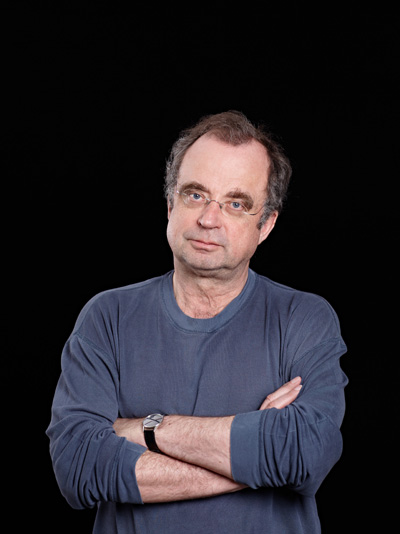
Do it, do it, do it. (Photo: B. Paczowski)

If there had not been a seminar at Stanford a few weeks ago, in preparation for The Collected Works’ production of Witold Gombrowicz’s Princess Ivona, had not Lillian Vallee come to speak … well, I might never have found out about the Yale University Press’ new 783-page edition of Gombrowicz’s Diary, translated by Lillian.  (The New Yorker, last summer, called the translation “heroic” – how did I miss all this?) Now I have it.  I opened it at random.  Here’s Gombrowicz in Argentina, 1955:

Should I tell or not? A year ago, more or less, the following happened to me. I stopped in a café on Callao Street to use the bathroom. … All kinds of drawings and scribblings were on the walls.  Yet the unconscious urge would never have assailed me, like a poisonous dart, if I hadn’t accidentally fumbled across a pencil in my pocket. The pencil turned out to be an ink pen.

Enclosure, isolation, the certainty that nobody would see, some sort of stillness … and the murmur of water whispered: do it, do it, do it. I took out the pencil. I wet the tip.  I wrote on the wall, high up so it would be hard to erase.  I wrote something quite vulgar in Spanish like:

“Ladies and gentlemen, please comply …
S–– not on the toilet seat but straight in its eye!”

I hid the pen. Opened the door. I walked through the whole café and mingled with the crowd on the street. And the graffito remained.

From that time on, I exist with the awareness that my graffito is still there.

I hesitated to disclose this.  I hesitated not for reasons of prestige but because the written word should not serve to spread certain … manias.  But I won’t hide the fact that never would I have dreamed that such things could be this … electrifying … and I can hardly refrain from reproaching myself. I wasted so many years without tasting this inexpensive and risk-free delight.  There is something in this … something strange and intoxicating … resulting most likely from the horrible openness of the graffito, which is there on the wall, in union with the absolute secrecy of the perpetrator who cannot be found out. And also because this is not at all on the level of my work. …


He’s a winner! Michel Serres gets the Dan David Prize

February 17th, 2013
Share

Relaxing at Stanford (Photo: L.A. Cicero)

Michel Serres is a winner.  But then, we knew that already.  We’ve written about him here and here and here.

Here’s the latest evidence:  He’s one of the five winners of this year’s Dan David Prize, which was announced last week by the Dan David Foundation and Tel Aviv University. The other winners include Leon Wieseltier, literary editor of The New Republic, and Esther Duflo, a French economist who studies poverty in the Third World and has been active in the fight against malaria, and epidemiologist Alfred Sommer, and Sir Geoffrey Lloyd, a Cambridge historian of the philosophy of ancient Greece.

Haaretz described Michel Serres as “a French scholar whose work on the atrocities  of war has helped seal his reputation as one of the greatest French philosophers living today.”

Each year, three $3 million awards are made in three dimensions: past, present and future. Serres was recognized in the present dimension under “Ideas, Public Intellectuals and Contemporary Philosophers” Wieseltier represented “the present,” too – so they’ll split the million.

Here’s what the David Prize people had to say:

Michel Serres is a French master thinker of the old school, with an intimate knowledge of the western tradition in philosophy and science, from its origins to the present, a passionate curiosity about the present and the willingness—and the ability—to enter productively into discussion of a vast range of current questions. His career began with an enormous and penetrating investigation of Leibniz’s use of mathematical models, which continues to be a standard work, and rapidly developed into a series of inquiries: into the history and nature of mathematics, epistemology, moral philosophy and humanity’s relations with the natural world.

In the great tradition of French intellectuals, Serres has analyzed scientific, philosophical and fictional texts, deftly and reaching original conclusions.  He has led more recent efforts to preserve a French tradition in philosophy, concerned for moral and social questions. …

Serres is an eloquent, even seductive writer. Both in France and in the United States, where he has taught for many years at Stanford, he has been a compelling and charismatic teacher, and his lectures and publications have reached large audiences around the world. His combination of deep learning and profound thought with the desire and ability to address the public has become rare.

The award ceremony will be held at Tel Aviv University on June 9.  I’m proud that I appear to have the only video interview with him in English:

“A durable sense of joy”: Master Miltonist Martin Evans (1935-2013)

February 15th, 2013
Share

A great scholar, perhaps an even greater man. (Photo: L.A. Cicero)

Martin Evans died Monday morning at his home.  It’s a great loss for Stanford, and a great loss for Milton studies.  My obituary is here.

One of the intellectual highpoints of recent years at Stanford (and there has no shortage of them) was the 400th birthday celebration for John Milton, including the 10-hour marathon reading of Paradise Lost.  The event became a very intense baptism into the brilliant world of Milton studies – a world whose most eminent scholars include Charles Williams, C.S. Lewis, Stanley Fish, and others.  And, of course, Martin Evans, too.

Stanford’s Jennifer Summit, Canada’s Liz Pentland looking on. (Photo: L.A. Cicero)

Martin, my genial host for the event, insisted that John Milton was the most learned poet in the English language, bar none.  No surprise that  I was so inspired by the caliber of minds I met at the event – and by Martin, most especially – that I attended his classes for a quarter to hear the master-teacher firsthand.  I was not disappointed.

From the obituary:

Evans coined the phrase “Miltonic moment” to describe the point of crisis just before the action changes dramatically, looking at once backward to a past that is about to be transcended or repudiated, and forward to a future that immediately begins to unfold.

His first reading of Milton marked a Miltonic moment of his own: “I fell hopelessly in love with the poetry. It was the most exciting thing I’d ever read,” Evans said.

Yet Evans is remembered for being a powerful mentor as well as a revered scholar.

The poet and scholar Linda Gregerson of the University of Michigan, his student in the late 1970s, recalled, “He was immensely generous, both personally and intellectually, able to convey deep learning with extraordinary clarity. He always took a deep delight in ideas, and was just opinionated enough to make things fun.”

Poet and Miltonist Gregerson

She recalled him as “impish, with a brilliant, irreverent sense of humor.”

“He converted many of us to a lifelong inhabitation in the world of Milton studies. It’s a formidable world in many respects, not nearly so genial as the world of Shakespeare studies, for example. But Martin imbued it, and us, with a durable sense of joy.”

It made me almost regret not being a Roundhead, and left me wishing I did not feel quite so strongly for Charles I.

Back to the 400th birthday party, when I wrote (you can read about the whole thing here, with Humble Moi at half off the lefthand side of the screen at the tale-end of this video, here, to prove I did, really attend the event):

Canadian Miltonist John Leonard made a convincing Satan. (Photo: L.A. Cicero)

“Although those attending the event were invited to wear costumes, none did. And there was no prelapsarian nudity. ‘Everyone will be wearing clothes,’ promised English lecturer Alice Staveley, another organizer of the event. ‘We’re all fallen readers.’

“It’s another decision Milton would have approved. He was, after all, a Puritan. In America, however, the word ‘Puritan’ carries a lot of cargo. Evans insisted that English Puritans bear little resemblance to their dour American counterparts. For one thing, Milton ‘loved music, loved wine,’ Evans said. ‘Puritanism,’ in the American sense, is one of Milton’s many bum raps.

“The influential novelist, poet and critic Charles Williams ticked off the charges leveled at the purportedly proud and scornful Milton, rebutting his foes who maintained ‘the pride of his Satan was his own pride, and he approved it.

‘They argued over his Arianism or his Calvinism. They confined his instrument to the organ. They denied him cheerfulness and laughter (he who, it is said, used to sing while he had the gout!). They gloomed over him, as (they supposed) he, in his arrogant self-respect, gloomed over the world,’ Williams wrote in The English Poems of John Milton (1940).

“But in today’s world, so far from Bread Street and the blind prophet, Milton has few champions as unflagging as the redoubtable Evans.”

A half-century Milton legacy. (Photo: L.A. Cicero)

While speaking with his former students in the last few days, one story impressed me, in particular.  I met Angelica Duran at the event several years ago, but I didn’t know her backstory until I spoke with her several days ago.  She was a first-generation Chicana graduate student when she was at Stanford, from 1994-2000, and also a single mom of two very young children.  At one point, she was going to drop out for a quarter because she was in a tailspin over her conflicting duties and overwhelming workload.  Martin told her if she took time off, she most probably wouldn’t be coming back.  “Let’s look at your schedule,” he told her.  He inspired her with his own stories about growing up in hardship as a child in Wales. She went on to become director of religious studies and associate professor of English at Purdue University and editor of the Concise Companion to Milton. Oh, and she’s still a mom, too.

Well, as his former student Dennis Danielson of the University of British Columbia, who is editor of the Cambridge Companion to Milton, Martin Evans was “not ashamed of his affections.”  Here’s part of the talk Danielson gave when the Milton Society of America named Martin as a prestigious “honored scholar” for lifetime achievement – part tribute, part roast, “that’s the way he liked it,” said Danielson.

Near the end of the quarter, after we had all got our sea legs, we had some excellent discussions, and there was a moment at which Martin expressed a magisterially-delivered opinion about the beginning of Book 11 of Paradise Lost—with which I found myself in serious disagreement. What could I do? I decided to take a big risk, and what I did was to write my final paper on the very issue about which we disagreed, explaining why I disagreed—in the form of irrefragable scholarly argument, of course.

A week later as I walked out of the quad on my way home I waved a cheerful, slightly nervous hello to Martin, who was riding by in the opposite direction on his bicycle and had no I idea how anxious I was about having stated my disagreement with him. He sailed past me, but then he turned his bike around and rode back to where I was. As usual, he wasted no words, but told me that he appreciated my paper very much, thought I should publish it, and also thought it would form the basis of a good PhD thesis. Then he turned again and without further ceremony pedaled off into the quad. It was a moment I’ll never forget, and I see it as typifying the man’s forthrightness, unselfishness, and magnanimity. What I don’t remember is whether I carried on back to my apartment on the ground or through the air.

He will be missed.  He is already.

Happy Valentine’s Day, book lovers!

February 14th, 2013
Share

Janet Lewis’s Wife of Martin Guerre and the cold, cold face of justice

February 13th, 2013
Share

He got around.

The second event in the “Another Look” book club (I’ve written about it here and here and here) is drawing nigh:  The event will take place next Wednesday, on the 20th of February.  The book is Janet Lewis‘s The Wife of Martin Guerre – well, I’ve written about that here.  (And did you know that Michel de Montaigne attended Martin Guerre‘s trial?)

I’d welcome some of your thoughts on the book before the event – or even afterward.  Meanwhile, here are a few of my own about the calculated lie that sets the plot in motion and the cold, cold face of justice.  The rest is on the “Another Look” website here.

The movie version

A calculated lie is at the center of Janet Lewis’ The Wife of Martin Guerre, and the lie explodes the life of everyone around it.  The novel is a brutal tour de force, defying reader expectations.

“Another Look” seeks out short masterpieces forgotten, neglected or overlooked.  In the case of The Wife of Martin Guerre, we didn’t have to look farther than home.  The 1941 book was born at Stanford, and the author taught in its English Department.  Hailed as one of the top books of the last century, it’s too little-known today. The story has become famous, but the book has not.

The short novel, about a 16th-century case of imposture in southwestern France, has been made into a play, an opera, several musicals, and most notably The Return of Martin Guerre, a 1982 movie with Gérard Depardieu in the title role.

The story is a tragedy, and like all great tragedies, has a lie at its core.  Oedipus is not a stranger who rolled into town; he’s the son of the city’s murdered king.  Claudius is not the unexpected beneficiary of a throne and wife, he’s guilty of regicide and fratricide.  King Lear’s eldest daughters do not love him, despite their protestations.  But these lies are quickly overwhelmed by their effects; in Lewis’s novel, the lie is the hard, unbudgeable kernel of destruction that no one wants to examine.

The judge’s version

Like Agamemnon, Macbeth, and so many tragic heroes, the “new Martin” resolves, “If only I can keep this, all will be well, I’ll make everything else right in the end.” But the lie he wishes to keep eventually damns any possibility of a future or peace.

The heroine, Bertrande de Rols, is initially the passive prisoner of the thing she most wishes to be true, but doubts in her heart.  In the world Lewis creates, the greatest enemy is not a person or a judicial decision: it is in the thing we do not wish to be fact – the unbearable truth just around the corner, the truth seen with peripheral vision, just by the tail as it goes down a hole.  The lie at the core of the book gives rise to a welter of smaller daily lies, which, in turn, buttresses the great one.

The characters move seamlessly from victim to perp, from perp to victim, and back again.  As poet Tim Steele, a friend of Lewis, writes in Numbers (1989-90), the book is a psychological study of “people who betray others or who are themselves betrayed in the course of the interpretation of evidence.”  When Bertrande finally turns to the truth, it turns her to stone; Lewis hints it may even lead to her death. … Read the rest here

Au revoir, Krzysztof Michalski (June 8,1948 – Feb. 11, 2013)

February 11th, 2013
Share

“…the shadow of death falls on my knowledge…”

“Somewhere out beyond all my concepts lies the unfamiliar, dark side of life. It is from there that the shadow of death falls on my knowledge … this is where despair and the longing that time entails originate,” wrote Krzysztof Michalski in last year’s The Flame of Eternity (Princeton University Press).

The death would not have shocked me quite so much had I not, curiously enough, written him yesterday afternoon – about midnight, Vienna time.  He was dying when I pressed the “send” button, and I had no idea.

I did not communicate with him often, but I have exchanged a few letters since my stint as a Milena Jesenská Fellow at Vienna’s Institut für die Wissenschaften vom Menschen, which he founded in 1982, and where he served as rector.

I was studying Cold War Poland, contemporary Polish writers, particularly Czesław Miłosz, and he, of course, has been called Poland’s foremost living philosopher.  So I stopped into his office for a long chat over coffee, and learned he had also been a friend of another Nobel laureate, Joseph Brodsky.  There were a number of points of connection, then, but he was a bigshot and I am a very, very littleshot, so I can’t say I was entirely at ease, despite his courtesy.

Among his other numerous awards and honors, was decorated with the Officer’s Cross of the Order of Merit of the Republic of Poland, with the Officer’s Cross of L’Ordre National du Mérite of the Republic of France as well as with the European Cultural Prize (1998).  When he was awarded the Theodor Heuss Prize in 2004, the jury statement read:

“Since the 1980s, the Polish philosopher Krzysztof Michalski has played an important role in the deepening of the political and cultural dialogue between East and West. Before 1989 he contributed to the liberation from Communism, and in the 1990s he supported the development of a democratic civil society in the countries of Central and Eastern Europe. Michalski and his Vienna Institute combine the highest intellectual standards with policy-oriented approaches and the promotion of young researchers.”

His newest book was a reexamination and new interpretation of Nietzsche’s philosophy and the central role that the concepts of eternity and time.  Time had been an ongoing preoccupation for him: his earlier books include Logic and Time: An Essay on Husserl’s Theory of Meaning.  In 2010, he published Zrozumiec przemijanie (To Understand Time) in Poland.

Today I’ve been trying to glean the news from the foreign newspapers, mostly Polish and German.  It appears he died of cancer.  There’s nothing in English yet.

Nothing, except the last note I got from him was in May 2011, “Good to hear from you. A pity we missed each other in Cracow. Hopefully we will not do it again, next time.”

Au revoir, then, Krzysztof.

Postscript on 2/14:  Finally. Something appeared in the U.S. yesterday.  This from Boston University’s Daily Free Press, where K.M. taught:  Provost Jean Morrison said “Dr. Michalski’s contribution to cultural exchange and to the teaching and study of philosophy — both here and throughout central and eastern Europe — was substantial.”  David Roochnik, philosophy department chair and professor of philosophy, said Michalski’s legacy extends beyond Boston, as The Institute for Human Sciences was an extremely important institution and played a small role in the fall of communism in Europe.  More here.

Postscript on 3/6:   The memorial service and funeral took place on February 22,  in Warsaw at the Church of the Holy Cross (Bazylika Świętego Krzyża w Warszawie), with the burial following at the Cemetery Cmentarz Bródnowski.  I remember that church well during my walks through Warsaw, with it’s looming, impressive “Sursum Corda” by Pius Weloński.  Alas, I could not attend, except in spirit, nor will I be able to attend the commemoration for Krzysztof Michalski on April 5 in Vienna.  American Philosopher Michael Sandel, member of the Instiutut’s Academic Advisory Board and dear friend of Krzysztof Michalski, will give a lecture in his memory. I’ll post what I can.


<<< Previous Series of PostssepNext Series of Posts >>>