When interviewing author Adam Johnson, one always leaves with one’s notebook full of great stories and great quotes that didn’t make it to the final cut – this was true even before he wrote the celebrated Orphan Master’s Son, “a place where living meaningfully and survival are at odds constantly – and as a literary fiction writer, I was completely drawn to that territory.” (I’ve written about him here and here and here and here.)
While talking to him about his newest novel in his home in the Cole Valley neighborhood of San Francisco, he recalled his sole, and heavily chaperoned, trip to Pyongyang. He was so floored by the disconnect with reality, that he asked his young female chaperone, “You know, I think my next trip is going to be to either Mogadishu or Paris. What do you think?”
Adam (Photo: L.A. Cicero)
She looked at him blankly. “It depends on what your travel plans are,” she replied.
“She didn’t ask, ‘Do you like cheese?’ ‘Can you handle an AK-47?'” It was apparent that Mogadishu and Paris were no more than dots on a map, absolutely free of associations.
You’ll get your own chance to hear of his North Korean adventures in the New York Times today here, as he reflects on the new Google maps of the mysterious totalitarian state. As he explains, during his visit, the only guide he could find at the time wore red lipstick:
My minder was smart and appraising, with something regal about her. And driving around Pyongyang, I couldn’t stop pestering her with questions:
“I don’t see any trash cans,” I said. “Where are the trash cans?”
We’re a society without waste, she said.
Later, I wondered where the mailboxes were.
We have the world’s most efficient mail system was her answer.
I hadn’t seen a fire station. “Where do you keep your fire trucks?” I asked her.
We haven’t had a fire in the capital in 12 years.
Later, when I finally popped the big question — “Oh, can we stop someplace that sells maps?” — she swept her hand to include the driver, the state-supplied videographer and her assistant, and said: We are your map. We’re all you need to find your way.
North Korea, he said, is a place where “everyone there makes an impossible choice to survive.”
Then he wondered, “Does your soul, if you don’t exercise it, just crumple up like a tin can inside of you, unable to find its form again?”
Marilyn Yalom in The New Yorker! Okay, okay, it was in “Briefly Noted.” Still, although I wouldn’t exactly kill for the spot, I’d do a great deal for it. It’s great news for Marilyn and her book, How the French Invented Love. According to the review:
“This amiable tour through changing French attitudes toward love during the past millennium begins in the twelfth century, when – according to Yalom, a former professor of French – troubadours granted the female objects of their songs an unprecedented power and status. Various manifestations of courtly love followed, and then a centuries-long oscillation between romanticism and cynicism, as exemplified in the first case by Rousseau and George Sand, and in the second by Molière and Flaubert.”
The world will be talking about Richard III for awhile – and so was Michael Krasny yesterday on his radio program “Forum.” You can hear the whole thing on San Francisco’s KQED here.
He was joined by Stanford’s Roland Greene, a professor of English and comparative literature and Rosemary Joyce, an anthropologist from UC-Berkeley.
Joyce pointed out the sheer improbability of it all: the tiny plot of land being explored had a small probability of being the vanished Greyfriars priory – the fact that the researchers found the Franciscan monastery, which had been destroyed by Henry VIII, alone would have been a significant achievement. When the University of Leicester set out its goals, “the least likely was being able to recover and identify the remains of Richard III,” she said. “With ground-penetrating radar, they were able to find the images that suggested where the walls were.” Then the grand slam: the scientists found the remains of Richard III “on the first day, the first hour.”
The English prof
A few snippets from the conversation with Roland:
MK: What can we learn now that we have his skeleton intact?
RG: I think it’s a commemoration and an affective event more than a historical event. In the sense, commemorative, because it takes us back to that moment in 1485 that’s really the end of Middle Ages in England beginning of Renaissance. Affective because feel for that mortal body that’s under a parking lot.
MK: Mortal, but regal, too. There’s a difference between those two bodies, isn’t there?
RG: As you know, in the later Middle Ages and the Renaissance there was a doctrine of the king’s two bodies – which conceptualizes the difference between physical body, which gets sick and gets old, and the regal body, the body politic, that is the body in which the kingship resides. Any time you see the mortal body of a king, whether dead or alive – and you could say the same about the present day Queen of England – one is always struck by the mortal aspect and the frailty of a physical body. At some time, people always want to look for the lineaments of kingship in such a body. …
The anthropologist
MK: There’s still a lot of facts we don’t know … there were a lot of things he did – innocent until proven guilty, bail as we know it today, helping the poor, easing book publishing – he made some real contributions.”
RG: He was a very complex figure for that time. The difficulty of sorting out his historical veracity from the legend is that it’s clouded by Thomas More and Shakespeare, who wrote very powerful propaganda that gets between us and the historical reality. He only reigned for a couple of years.
Bare ruinèd choirs … post-dissolution Glastonbury Abbey
What will we learn? According to Joyce, the bones have “already begun to tell us things we didn’t know. He ate so much marine fish that radiocarbon was affected. His diet was high in meat and fish. Also, the kind of scoliosis we now know he had would have started when he was about ten, and was progressive.”
That finding alone has somewhat demystified the Richard III legend already, said Roland. “There’s something very prosaic in what amounts to scoliosis in real life. It reminds you of the imaginative distance spun by More and Shakespeare.” In an earlier era where disfiguring disease could be seen as a curse, however, “his physical suffering may have made people look askance at him in his lifetime.”
The first question that everyone seems to ask is: Why was he buried in a parking lot?
Few people, apparently, have heard of the dissolution of the monasteries and the destruction of churches under Henry VIII and his heirs, one of the great legacies of the Tudors. Remember Shakespeare‘s “Bare ruinèd choirs, where late the sweet birds sang”? Some of the churches were merely stripped of anything valuable, others, such as the Franciscan monastery of Leicester, were leveled to the ground. According to Wikipedia, “The church foundations, floor levels, and demolition layer were found under some 30 centimetres (12 in) of garden soil, itself capped by a further 45 centimetres (18 in) of mill waste used to create a base for the car parking area of recent years.”
When the experts announced today that they had definitively identified the bones of Richard III (the curvature of the spine was so pronounced that breathing would have been difficult and the pain agonizing), what astonished me most was the savagery of the attack that killed the king in the Battle of Bosworth Field, 1485, which put the first Tudor, Henry VII, on the throne. According to the Guardian:
The hands lay by his side, but as found suggested that he was buried with arms still bound, just as he was lugged from the battlefield. The skull lay with the largely undamaged face up – itself a significant and sinister point, according to the experts, hiding the savage blow to the base from a halberd, a fearsome medieval pike-like weapon, which sliced through bone and into the brain and would have killed him in seconds. …
There was another sword slash to the skull, which would also have penetrated to the brain and proved fatal in moments, but the others came after death, and were described – in an image still resonant from many battlegrounds today – as “humiliation injuries”. They could not have happened to a man protected by armour, and are consistent with the accounts of his body being stripped on the battlefield, and brought back to Leicester naked, slung over the pommel of a horse. That, almost certainly, was when the thrusting injury through the right buttock and into the pelvis happened.
Professor Lin Foxhall, head of the university’s archaeology department, and Bob Savage, an expert on medieval weapons from the Royal Armouries, pointed out that Richard’s face was relatively undamaged.
The winner, so to speak. (Musee Calvet, Avignon)
“They’d killed the king and they needed to keep him recognisable,” Savage said. “To me, the injuries are fully consistent with the accounts of his dying in a melee, and [being] unhorsed – I believe he was dead within minutes of coming off his horse. But they took care not to bash the face about too much.”
“It’s the Gaddafi effect,” Foxhall said. “We saw just this in the horrible mobile-phone footage of Gaddafi being found, and you can hear the voices shouting ‘not the face, don’t touch the face’. It’s one of those dreadful lessons from history which we never learn.”
In Winter King: The Dawn of the Tudor England, Thomas Penn describes the battle this way:
“This day,” soldiers heard Richard’s shout, “I will die as a king or win.” He was swept away, battered to death so viciously his helmet was driven into his skull. … After the battle, the dead king’s wrecked body had been slung over a horse, its long hair tied under its chin, then set on display at Leicester’s Franciscan friary, naked except for a piece of cheap black cloth preserving its modesty, before a perfunctory burial – “like a dog in a ditch,” some said.
And Greyfriars in Leicester is where he remained for these last five centuries or so. According to the New York Times: “Friars fearful of the men who slew him in battle buried the man in haste, naked and anonymous, without a winding sheet, rings or personal adornments of any kind, in a space so cramped his cloven skull was jammed upright and askew against the head of his shallow grave.”
Now this is the reason I’m telling the story. I don’t know much about the War of the Roses, I don’t know who killed the Princes in the Tower, but I do know something about the Tudors, and Henry VII was a calculating, greedy extortionist in a grasping, avaricious family with slight claims to the throne.
So cut away to Easter Sunday, 8 April, 1509:
Unable to eat and struggling for breath, Henry’s mind was fixated on the hereafter. … emaciated and in intense pain, he staggered into his privy closet, where he dropped to his knees and crawled to receive the sacrament. … Pervading the carefully worded penitential formulas, [Bishop] Fisher later noted, was a sense that the king acknowledged and truly repented the depradations of his regime. As Henry lay amid mounds of pillows, cushions and bolsters, throat rattling, gasmping for breath, he mumbled again and again to the clerics, doctors and secret servants around him – indeed, “freely,” to anyone within the close confines of the privy chamber – that “if it pleased God to send him life they should find him a changed man.”
When I read this passage last year, I remember other accounts of people who wished they’d done it differently, wished they could get another crack at it. Irena Sendler, after saving 2,500 Jewish children from the Warsaw Ghetto, was troubled at the end of her life, and slept restlessly, wondering … was there something more she could have done? If Steven Spielberg is to be believed, Oskar Schindler wished the same, at war’s end – he regretted the sacrifices he could have made and didn’t. Shakespeare’s Desdemona dies asking simply for one … more … moment…
Richard III’s end was violent and merciless, Henry VII’s was anguished. Sooner or later we’ll all hit the end of the road. And there are worse places to find oneself than a car park.
Forgive the schmaltzy music, but here’s the last scene from Schindler’s List.
Postscript on 2/6: We got some nice pick-up from 3quarksdaily on this – thanks Morgan Meis!
A few days ago, all the social media were atwitter with a newly published 1987 interview with Joseph Brodsky. The piece opened with a comment on his leaving the American Academy and Institute of Arts and Letters in 1972, to protest of the organization’s induction of the Soviet poet Yevgeni Yevtushenko as an honorary member. Hmmmm???
Nyet! Something was wrong. A Soviet poet who had already endured KGB interrogations and arrests, a famous trial, and a long stretch to cool his heels in the far North was not going to be joining elite American literary organizations – not in 1972. His departure from the organization was in fact in 1987. I wrote a comment. I got an emailed reply from the beleaguered blogger and journalist, Marcia DeSanctis. She’s a very experienced and knowledgeable reporter of all things Russian, and suffered a mortifying slip of the pen in the course of tweeking a phrase. Well, who among us bloggers could not confess to one or two of those? In fact, I consoled her with the story of a monstrous gaffe of my own that happened the same way, which I’ll save for another time. Unless Richard Kaluzynski outs me first.
A poet, too?
But I gave a closer look to Marcia’s online oeuvre as a result – and I was impressed.
MD: Then who do you consider the most significant writers in the Russian language?
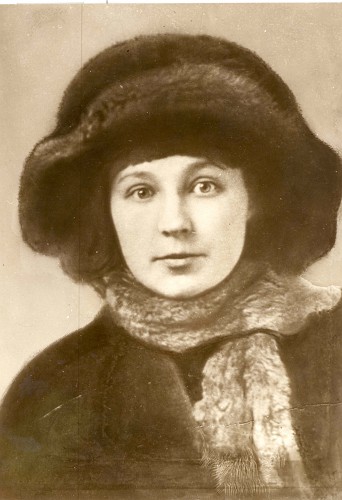
JB: The Possessedby Dostoevsky is still the best and most accurate example of the Russian psyche in literature. Platonov is one of the greatest Russian poet, absolutely singular. And Tsvetaeva. These are huge and significant writers. For Russians, Tsvetaeva might be the most important of all. In general, the tenor of Russian literature is consolation – the justification of the existential order on the highest plane of regard. Justification for the Russian nation. Tsvetaeva is a departure from that – her voice doesn’t offer that. She was a writer who regarded reality as unjustifiable – controlled, in a sense, by arbitrary force – the philosophy of discomfort in negative human potential. Her spirit and the spirit of her writing is totally non-orthodox, Calvinist, provides you with discomfort. What distinguishes a writer is the spiritual information the writer offers. Nabokov doesn’t offer that. For all his elegance and precision, he’s a soothing author but Tsvetaeva is of more consequence.
Who knew the author of The Foundation Pit was a poet, too, let alone a great one? I didn’t. Either Brodsky misspoke and meant to say prose, or else somebody better get busy with translations.
MD: How important is it to you whether or not you are published in the USSR?
Reality is unjustifiable.
JB: I have no principles, I have only nerves. I’ve never cared very much about what’s happening with my work. I was lucky to have people in Russia interested in me, without having been published. I don’t give a damn whether I am or am not published there. I know that one day, I’ll die and will be published.
I write little poems when I feel like it. Over the years it became my profession. What started out as a deviation became my occupation, and from there came discipline and routine. I trust inertia more than the creative impulse. Stravinsky said, “I do it for myself and my probable alter ego.” I think that every writing career starts as a personal quest for personal betterment. To achieve some kind of sainthood, to make yourself better than you are. You quickly notice that the pen operates more efficiently than the soul. More success as a writer means the loss, somewhat, of the soul. You get on a collision course, and away from your original goal. This results in a terrific personal crisis. Take Gogol, who threw the manuscript of Dead Souls into the fireplace. To bring the work together with the soul as much as possible takes extraordinary effort. It’s no different today than when I was 24.
MD: You speak English quite well but you write in Russian. Is it problematic as a writer to be exiled from your mother tongue?
JB: The only problem with writing in Russian is that it matters to hear speech on the streetcar. Those things set you up to find the words in your gut. Elsewhere, you’re bound to become idiosyncratic, hermetic, self-sufficient. You derive pride from being self-reliant. You become an autonomous system, a spacecraft, and it depends on how strong your batteries are. But in the long run, you’re an autonomous entity anyway, one way or another. The less you deceive yourself, the better. Otherwise, the result is a tragic worldview.
Czesław Miłoszwrote, as he recalled the familiar cry of a bird during a stroll through an oak forest:
What is magpiety? I shall never achieve
A magpie heart, a hairy nostril over the beak, a flight
That always renews just when coming down,
And so I shall never comprehend magpiety.
I have since heard scholars and poets discourse learnedly on this particular poem (which is here).
In a binge of self-improvement a year or two ago, I signed on for the Oxford English Dictionary’s “Word for a Day.” The binge ended long before the avalanche of words stopped – they were either already familiar, easy to figure out, or otherwise not the etymological treat I was expecting.
But look what arrived in my inbox today:
magpiety, n. Pronunciation: Brit. /maɡˈpʌɪəti/ , U.S. /mæɡˈpaɪədi/
Forms: 18 mag-piety, 18– magpiety.
Etymology: Humorous blend of magpie n. and piety n. Compare also mag n.3, mag v.2
Talkativeness, garrulity (esp. on religious or moral topics); affected piety.
1832 T. Hood Jarvis & Mrs. Cope in New Sporting Mag. Mar. 323 Not pious in its proper sense, But chattring like a bird, Of sin and grace—in such a case Mag-piety’s the word.
1841 T. Hood Let. in Memorials (1860) II. iii. 118 Such solemn questions as..whether your extreme devotion has been affected or sincere..in short, Piety or Mag-piety?
1891 Blackwood’s Edinb. Mag. 150 400/2 Conceive the agony of suppressed speech when a man is as garrulous as a magpie by nature; and my friend is that, though his magpiety is of an elevated sort.
1987 M. Daly Websters’ First New Intergalactic Wickedary Eng. Lang. 145 Magpiety, the impious impropriety of Prudes; irreverence for sir-reverence; Nagpiety’s Hagpiety.
Who knew? The usage of the word does not begin with Milosz, as I had assumed. In fact, it goes all the way back to 1832, and has a life of its own.
You can hear the poet read the poem here. He says: “There is a very short poem, which when we translated with Peter Dale Scott – quite a trouble to find an equivalent for a notion of magpieishness … if there is a bird magpie, there should be magpieishness. We hit on the idea of translating that magpiety.”
Postscript on 2/3: Poet and translator Peter Dale Scott has made an appearance in the comment section below. He wrote: “’Magpiety’ was my suggestion. Later I was ambivalent about it, but Michael Palmer assured me it was not such a bad idea after all. Apparently not, if it occurred to others before me.”


 When interviewing author Adam Johnson, one always leaves with one’s notebook full of great stories and great quotes that didn’t make it to the final cut – this was true even before he wrote the celebrated Orphan Master’s Son, “a place where living meaningfully and survival are at odds constantly – and as a literary fiction writer, I was completely drawn to that territory.” (I’ve written about him here and here and here and here.)
 Later, I wondered where the mailboxes were.