
Shocking! Auden on Austen. (And why is Darcy such a jerk, anyway?)

January 20th, 2013

Share

“…everything most profligate and shocking in the way of dancing and sitting down together…”

You could not shock her more than she shocks me,
Beside her, Joyce seems innocent as grass.
It makes me most uncomfortable to see
An English spinster of the middle class
Describe the amorous effects of ‘brass’,
Reveal so frankly and with such sobriety
The economic basis of society.


Shocked, shocked I tell you.

That’s W.H. Auden writing about Jane Austen, the poet one small consonant away from sharing her surname.  The poem is his 1937 “Letter to Lord Byron.”

In this weekend’s Independent, John Walsh explores the eternal question:  “Why is Mr. Darcy such an asshole?”  Actually, I’d never thought of it quite that way before, but Walsh points out that the character who is seen as noble and heroic acts like a complete jerk for the most of the novel:

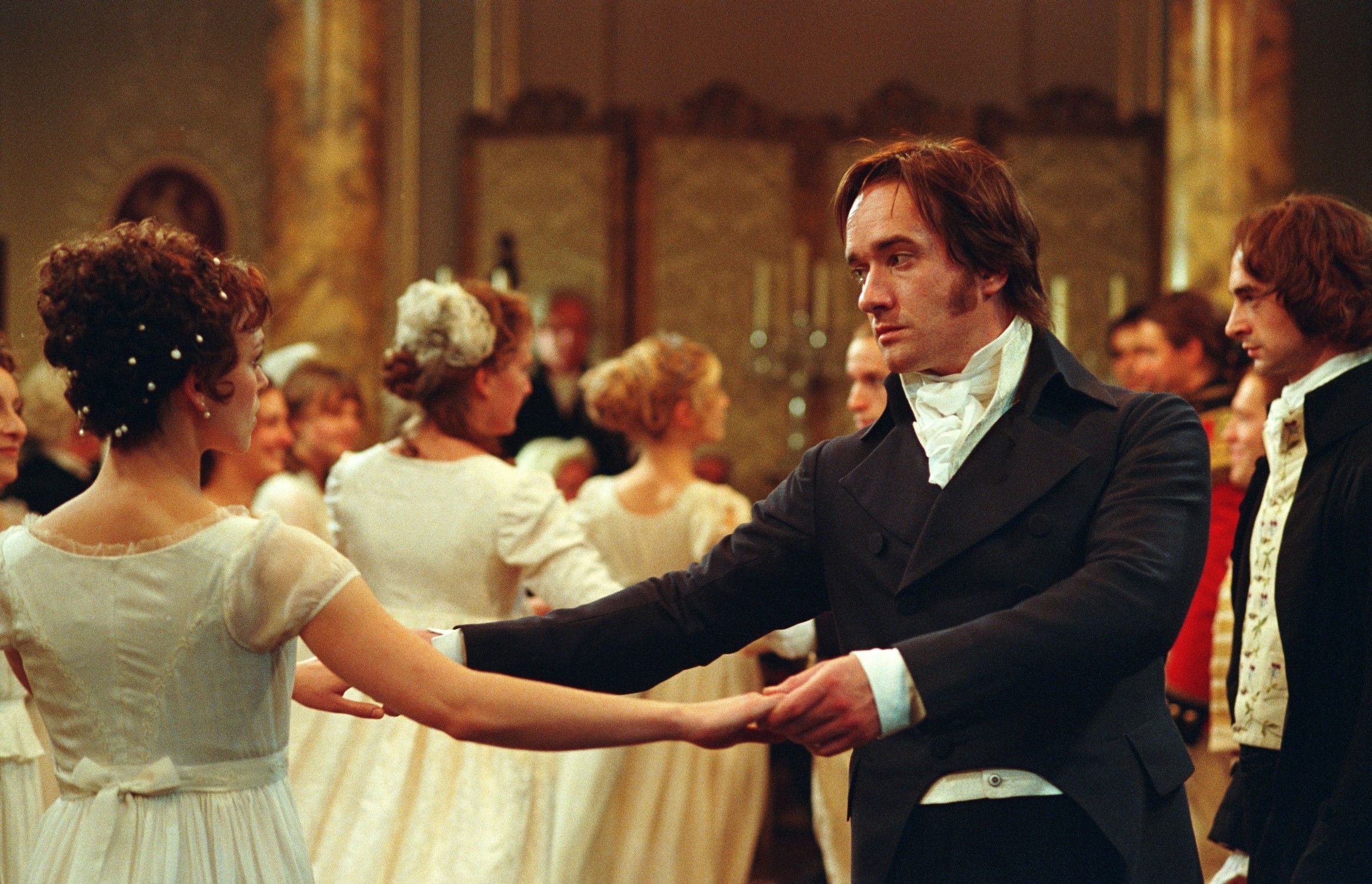
“Has a supposedly romantic hero ever seemed less agreeable, less attractive or less charming? At a dance, he tells Bingley, in everyone’s hearing, that it would be a punishment for him to dance with any of the ladies present. What, Bingham asks, about Lizzie Bennet? Darcy regards our lively, clever, witty heroine and says, “She is tolerable, but not handsome enough to tempt me.”

This is not ‘pride’. It’s rudeness, bad manners, the words of (let us not mince words here) a stuck-up fool. We know he is ‘well-bred’ – can breeding make one so socially maladroit? He is hopeless at conversation. He is rude to Miss Bingley. He is awkwardly icy with Lizzie. Even when he finally proposes to her, he’s unforgiveably rude about her mother’s vulgarity, her own ‘inferiority’ and how degrading it would be for him to marry her. He admits, without apology, trying to derail the romance between Lizzie’s sister Jane and Bingley. The reader may be forgiven for wondering when any recognisably heroic virtues will appear.”
On the shelf…

Yet, in the second half of the book: “He’s discovered at his mansion, Pemberley, being charming, attentive and kind. We hear about his man-of-action heroics in persuading Wickham to marry Lydia. What has brought about this transformation?”  May I suggest that Lizzie is a mere 20 years old, and Darcy 28?  Who is not a jerk at such ages?  Who does not have scores of memories of behaving poorly at such an age?

Walsh theorizes instead that Darcy reconsiders Lizzie after he three-mile walk through the mud to visit her sister who has taken ill at Bingley’s home.  According to Andrew Davies, who adapted the book for the BBC, “She happens to bump into Mr Darcy just as he’s coming out of the house, and he finds that he responds very well to her looks. So I wrote in a stage direction: ‘Darcy is surprised to find that he has an instant erection’. I felt obliged to add, ‘I don’t mean we need to focus on his trousers, just that it’s what should be going through the actor’s mind’. Darcy’s obviously turned on by this heart-throbbing, muddy, warm girl.”

Well, that’s one interpretation. May I suggest a less obvious one in our modern times?  Lizzie, up to that point in the novel, has appeared to Mr. Darcy as little more than a smart-ass who excels at pertness.  In this incident, she displays loyalty, tenacity, and character – and it evokes the same in response.  Not as sexy, admittedly, but a more enduring reaction.

Worthy.

Walsh explores Jane Austen’s brief Christmas romance with the charming Tom Lefroy in 1795.  “I am almost afraid to tell you how my Irish friend and I behaved. Imagine to yourself everything most profligate and shocking in the way of dancing and sitting down together,” she teased her sister in a letter.  The gentleman’s family was alarmed, and whisked him back to the bar (no, not that kind of a bar – the legal profession).  He was expected to become a barrister and pull the family’s economic sled, otherwise others might have to get off their duffs and work.

Austen did not rebound from the Christmas romance quickly.

But Walsh doesn’t say what happens next.  Austen’s romantic hero was worthy of her: he became as MP for the constituency of Dublin University, Privy Councillor of Ireland, and eventually Lord Chief Justice of Ireland.  When Austen died in 1817, he traveled from Ireland to England to pay his respects.  A “Tom Lefroy” even bought at auction one of the early rejection letters she received for her novel, already a valuable record of poor literary judgment.

At the end of his life, he admitted to having loved Austen. His nephew wrote: ” My late venerable uncle … said in so many words that he was in love with her, although he qualified his confession by saying it was a boyish love. As this occurred in a friendly & private conversation, I feel some doubt whether I ought to make it public.” Probably a wise move.  Lafroy’s eldest daughter, born June 24, 1802, was named  Jane Christmas Lefroy.

About the time of Lefroy’s visit, Jane was penning the novel that would become Pride and Prejudice.  Some speculate that Lefroy is the model for Darcy.  Others claim that the author herself is the reserved Mr. Darcy, and that Lefroy is the teasing, lively Lizzie.  I’ll make a third suggestion.  Lefroy is the model for the lively, amiable Bingley, who appears casual in his affections even when he is deeply engaged.  And perhaps Jane saw herself in Lizzie’s sister, also named Jane, whose quiet love persisted long after the romance was over.

Postscript: Jane Austen’s best marriage proposals are the ones that end up in a fistfight. In fact, the successful proposals happen offstage or through paraphrase, anyway. This one is much better on the page than onscreen, but still…

Postscript on 1/28:  And we got some nice pick-up on this from our old friend Andrew Sullivan over at the Daily Beast.  His piece, “The Cost of Love,”  is here. What fun!

The voice of Virginia Woolf: “Do we write better? Do we read better? … Where are we to lay the blame?”

January 18th, 2013
Share

We have only one recording of Virginia Woolf – an April 1937 program for the BBC.  I discovered these short youtube tube recordings this morning – and what a gorgeous thing they are.  A highly recommended way to start the day, especially for all those who work in words.  Which is to say … everyone.

The talk was called “Craftsmanship,” and the remarks were part of a series called “Words Fail Me.”  What does Woolf have to say about words?  “They hate being useful, they hate making money, they hate being lectured about in public.”  The third video below incorporates the first two, and more.  But I’ll include the first two in case you only have time for a snippet before starting your workday.  A transcript of the recording is at the blog “At This Now” here (and now).

I wrote about Woolf a few days ago, but I’d never heard her voice until today.  Not at all what I thought it would be.  See if you agree.

George Kline: scholar, translator, and chronicler of Soviet bugaboos

January 16th, 2013
Share

In 1974…

George L. Kline is someone you’ve likely never heard of, unless you have an interest in Russian philosophy,” writes Michael McIntyre over at “Extravagant Creation.”

Well, that’s not quite true.  Those of us who know Russian poetry will know his translations of Joseph Brodsky, and perhaps also of Boris Pasternak, Marina Tsvetaeva, and others.  The Eric Voegelin scholar Paul Caringella alerted me to McIntyre’s 2010 post, which celebrates my Bryn Mawr friend and correspondent:

What’s so great about reading Kline is that you are not only learning at the hands of someone who has thoroughly mastered his field, you are doing so via writing that is at once scholarly and accessible, that doesn’t take ten pages to explain what only needs one page.  Kline’s monographs are few in number – he seems to prefer writing articles and book chapters – and relatively brief in length.

In the academic world of publish-or-perish overproduction, that comes as a splash of sanity.  McIntyre is attuned to a side of my scholarly  friend that I had overlooked – for example, his 1968 book Religious and Anti-Religious Thought in Russia (University of Chicago Press).  To my shame, I didn’t know George had written such a book, but I immediately made amends by ordering it for $5.60 on Abebooks.

A “chamber of horrors”?

The history George describes is a fascinating one:

Some former churches – notably the former Kazan Cathedral in Leningrad – were turned into anti-religious museums that included “chambers of horrors” exhibits that graphically portrayed torture practices used during the Spanish Inquisition.  In 1960 alone, half a million people visited the anti-religious museum in Leningrad; many groups of children were sent there by their schools and they were treated to guided tours by museum staff who provided them with extensive anti-religious commentary.  Religious instruction for children was restricted to private homes only, in groups of three or less.  Since 1962, children could be baptized only if both parents applied for it, and both parents supplied a certificate from their workplace or place of residence (the issuers of these certificates were expected to do all they could to try to dissuade the “misguided” parents).

From the posts of some of my more virulently anti-religious Facebook friends, one would think that the “chamber of horrors” is overdue for revival.  In any case, one could see why Joseph Brodsky’s “Elegy to John Donne” was such a knock-out punch in the U.S.S.R., and why George was so swept away by it, as the Book Haven explained yesterday.  Take, for example, the concluding lines of the poem:

Man’s garment gapes with holes. It can be torn,
… And only the far sky,
in darkness, brings the healing needle home.
Sleep, John Donne, sleep. Sleep soundly, do not fret
your soul. As for your coat, it’s torn; all limp
it hangs.  But see, there from the clouds will shine
that Star which made your world endure till now.

I’ve benefited greatly over the years from George’s tireless generosity, scholarly precision, and remarkable experiences.  So have others.  From “George L. Kline: An Appreciation,” included in the 1994 book Russian Thought After Communism : The Recovery of a Philosophical Heritage (edited by James P. Scanlan):

In many ways as important as Kline’s formal teaching is the informal help he has provided to a multitude of students and colleagues in the field, not only in the United States but throughout the world.  Anyone who has sought George Kline’s advice or assistance on some matter relating to Russian philosophy is fully aware of his remarkable readiness to share information from his vast store of knowledge, go over a translation, review a paper, or comment on a research project – all with the most careful and patient attention, the highest scholarly standards, and the most humane sensitivity to the needs and interests of others.

It’s a joy to discover people like George L. Kline!

Couldn’t agree more.

Brodsky and Donne in the Arctic: “the image of a body in space.”

January 15th, 2013
Share

At the University of Michigan, Ann Arbor, in 1972.

In the mid-1960s, a colleague asked George Kline  what he thought of the young, little-known poet Joseph Brodsky.  George replied that hadn’t seen enough of his work, only the odd bit of verse here and there in translation.  Then the colleague pulled out the samizdat “Elegy for John Donne from mid-way through a large stack of papers on his desk.  The poem, written when the Leningrad poet was 23, was unlike anything else coming out of Russia.

Roommates.

At least, this is the story that George told me in a recent conversation. George, of course, went on to play a pivotal role in the poet’s life, and he in his.  He translated the poems that made the future Nobel laureate’s reputation in the West with the Penguin Selected.

I was thinking of his anecdote today.  Then I ran across this article on the Radio Free Europe/Radio Liberty website. I had saved the link in my electronic bookmarks for future readings – but then never returned to it.  How did I miss it, probably for a couple years?  The fascinating 1981 interview with Igor Pomeranzev suffered from multiple layers of neglect – mine the most recent.  The radio interview aired only recently, because Pomeranzev hadn’t yet learned the joys of sound editing.

Here are a few excerpts:

Igor Pomerantsev: Your poem “Great Elegy to John Donne” began circulating in samizdat in the Soviet Union in the mid-1960s. Donne was virtually unknown in the Soviet Union at that time. How did you discover him?

Joseph Brodsky: I stumbled across him the same way most people did: in the epigraph of the [Hemingway] novel For Whom The Bell Tolls. [The epigraph is taken from Donne’s “Devotions Upon Emergent Occasions” – Eds]. For some reason I felt this came from a line of verse and so I tried to find a translation of Donne. It was futile. Only later did I guess it was a fragment from a sermon. In some sense, Donne began for me the same way as he did for his English contemporaries. He was much better known in his day as a preacher than a poet.

The most interesting aspect was how I obtained a book of his. I had searched through the anthologies. In 1964 I was given five years [sentence for social parasitism], arrested, and sent to Arkhangelsk Oblast [near the Arctic Circle – CH], and for my birthday Lidiya Korneyevna Chukovskaya sent me, probably from her father’s library, a “Modern Library” edition of Donne. This was when I first read all of Donne’s poetry, read it seriously. …  I wrote it, I think, in ’62, when I knew remarkably little about Donne — in other words practically nothing, except a few fragments from his sermons and poems that I had found in anthologies. The main circumstance that moved me to undertake this poem was the possibility that it seemed to me existed at that period, the possibility of the centrifugal movement of a poem…well, not so much centrifugal… like a stone falling into a pond… and the gradual ripple outwards… a device more from cinematography, yes, when the camera moves back from the center.

So, in answer to your question, I would say it was more the image of the poet. Not so much the image even as the image of a body in space. Donne is English, he lives on an island. And starting with his bedroom, the perspective steadily widens. First the room, then his neighborhood, then London, the whole island, the sea, then his place in the world. At that time, this didn’t so much, I would say, interest me as gripped me at the moment when I was composing it.

Pomerantsev: My next question is more to you as a translator than a poet. You’ve translated several of Donne’s poems. They say a translator is always in competition with the author he translates. How did you feel translating Donne — like a competitor, ally, pupil, or colleague?

Brodsky:  Well, absolutely not as a competitor. Competition with Donne is absolutely out of the question thanks to Donne’s qualities as a poet. He is one of the greatest figures in world literature…A translator, simply a translator, not an ally…Perhaps more of an ally, since a translator is always to some extent an ally. A pupil, yes, because I learned an awful lot by translating him.

The thing is that Russian poetry is overwhelmingly strophic; that is, it operates through extraordinarily simple strophic units – four-line stanzas. While in Donne’s verse I encountered a much more interesting and thrilling structure. He creates extraordinarily complex strophic constructions. I found it very interesting, and very instructive. So, consciously or unconsciously, I began doing the same but not as a competitor – as a pupil. That was probably the main lesson. And then again, when you read or translate Donne you learn from his view of things. What I really liked about Donne was the translation of the heavenly to the earthly – i.e., the translation of the eternal to the transient… Is this too long?

Pomerantsev: No.

Brodsky:  It’s quite interesting, because there’s an awful lot to be said about this. In fact, it’s like Tsvetaeva said: “The voice of heavenly truth against earthly truth.” Except it isn’t so much “against” as the translation of heavenly truth into the language of earthly truth, i.e. of eternal phenomena into transient language. And both win as a result. It is merely the bringing nearer…how to put it…the expression of the seraphic order. Once it is spoken of, the seraphic order becomes more real. And this wonderful interaction is actually the essence, the bread of poetry. …

 And for him there was no such thing as antagonism. I mean that antagonism for him existed as an expression of antagonism generally, in the world, in nature, but not as a specific antagonism…There’s so much that could be said about him. As a poet, he was fairly uneven stylistically. Coleridge said something remarkable about him. He said that when you read Donne’s successors, the poets of around a century later, Dryden, Pope and so on, everything comes down to counting syllables and feet, while reading Donne you measure not the number of syllables but time. That’s exactly what Donne was doing in his verse. It’s akin to Mandelstam’s drawing out the caesura, yes, holding back an instant, stopping…for something which seems wonderful to the poet for one or another reason. Or the other way around, like in his Voronezh Notebooks, there you have unevenness, jumps, and truncated feet, truncated meter, feverish haste – so as to hasten or eliminate the instant which seems terrible. …

Pomerantsev: And yet the poets of the ’20s and ’30s, like Eliot, managed to see in Donne…

Brodsky:  Yes?

Pomerantsev: … the spirit of their time.

Brodsky:  Certainly. Because Donne, with the themes that he raised, with his uncertainty, with the fragmentation or duality of his consciousness is, of course, a poet of our times. The problems he raises are those of mankind as a whole, and especially of man living at a time of excess information, population…

Read the rest here.  It’s never too late, apparently.


“And finally time runs out”: Evan Connell dies at 88

January 13th, 2013
Share

“I was sitting in a saloon wondering what to write next.”

Evan Connell has died, “of old age,” according to a relative.  He was 88 at the time of his death last week in  Santa Fe.

I didn’t know Evan Connell’s work, except from Ken Fields, who recently mentioned Mrs. Bridge as a masterpiece.  Apparently Wallace Stegner thought so, too.  He called it “a hell of a portrait…She’s as real and as pathetic and as sad as any character I have read in a long time.”

Connell, the author of 18 books, was a student of Stegner’s during his time at Stanford in the 1940s.  And Stegner was his first publisher:  Stanford Short Stories: Nineteen Forty-Nine (Stanford University Press), edited by Stegner from submissions by Stanford students, contains the first book appearance of a work by Connell.

Connell was in the first class of Stegner Fellows at Stanford, 1947-48, in the illustrious company of Donald Davie and Donald Justice.

The road to Stanford was not an easy one.  Connell was the son and grandson of physicians, and his father did not take easily to the idea that his only son would not follow in his footsteps. According to the Los Angeles Times:

He was a pre-med student at Dartmouth, which he attended from 1941 to 1943, but ultimately decided against following in his elders’ footsteps. This did not please his father, whom Connell described as “a rather severe man.”

“He was concerned that I would never be able to make a living at this kind of thing,” Connell, in a 2000 interview with the Associated Press, said of writing. “It was a justifiable concern, I think. I grew up in a home where there was no music, no interest in any of the arts.”

He dropped out of Dartmouth and joined the Navy, training as an aviator at a base near Albuquerque, where he fell in love with the vastness of the West. After completing his military service, he studied painting on the GI Bill and traveled, living in France during the 1950s and writing for the Paris Review.

Usually, Connell’s first published work is credited as the critically acclaimed The Anatomy Lesson and Other Stories (1957). His first novel, Mrs. Bridge (1959), according to the Man Booker Prize website, “dissects the life of a conventional upper-middle-class Kansas City matron who lacks a sense of purpose and conforms blindly to what is expected of her.”  Connell published Mr. Bridge a decade later, retelling the same story from the husband’s p.o.v.

According to the Los Angeles Times obituary:

He initially wrote Mrs. Bridge rather conventionally, with about 15 chapters, but it was rejected by numerous publishers in part because it lacked a climax. That was his intention, Connell said, because “our lives do not reach a dramatic climax in the way that books usually do. Most of us just go on day to day through major and minor trials and defeats. And finally time runs out.”

He restructured the novel as a series of 117 vignettes, which paint a devastating portrait of a woman puzzled by the emptiness of the small world she inhabits. The novel was “one of the very few written since World War II that clearly deserves to be called, as it has been, a masterpiece,” William H. Nolte wrote in the Dictionary of Literary Biography.

Connell followed the same theme and structure a decade later in the companion novel, Mr. Bridge. Some critics found it darker and more satirical than the first novel because the main character, Mrs. Bridge’s joyless lawyer husband, was far less likable than his wife.

Both novels became the 1990 film Mr. and Mrs. Bridge with the husband-and-wife team of Paul Newman and Joanne Woodward.

Success didn’t spoil him.  Again according to the L.A. Times: “Despite the success of the Bridge novels, Connell held a number of odd jobs to get by. He delivered mail, read gas meters and was a counselor at an unemployment office. In his exceedingly dark 1966 novel The Diary of a Rapist, the main character is working in an unemployment office when he goes crazy.”

Connell’s bestselling 1984 biography of Custer, Son of the Morning Star also earned praise and became a 1991 mini-series.  Larry McMurtry, writing in the New York Review of Books, said the book was “one of the few masterpieces to concern itself with the American West” and particularly noteworthy for its portrayals of the Native Americans.  Michiko Kakutani of The New York Times also called it a masterpiece with a “lasting visceral resonance.”

Connell told the New York Times: “‘ There are two explanations for writing the book. Just about all the kids in this country grew up on cowboys and Indians. Maybe now it’s ‘Star Wars,’ but when I grew up in Kansas City, you could send in box tops — from Quaker Oats, I think — and get something like a color picture of Sitting Bull.

“As far as this project goes,” he continued, “a few years ago I was sitting in a saloon wondering what to write next. I didn’t have any ideas for a novel, and for years whenever I couldn’t manufacture something successful, I simply worked on a subject that interested me. And the Old West came to mind.”

Connell won the $100,000 Lannan Literary Award in 2000 and a Los Angeles Times Book Prize in 2010. He was nominated for a Man Booker lifetime achievement award in 2009.  But I can find nothing else online about his time at Stanford.

Postscript on 1/16:  D.G. Myers has an excellent piece on Evan Connell’s oeuvre over at The Commonplace Blog.  “Connell’s message is that superficial lives are superficial not by accident but by intention…”  Check it out here.

Seamus Heaney talks of “my hero,” the late Dennis O’Driscoll

January 10th, 2013
Share

“Selfless” and “companionable”

Dennis O’Driscoll is dead.  I did not know him, but apparently many of my friends did, from the Facebook postings and Twitter chatter. The Guardian praised him as “selfless” and “companionable”:

In an age when poets tend to hover near schools and universities, Dennis O’Driscoll, who has died suddenly aged 58, was an exception. Having become a civil servant in Dublin at the age of 16 (starting with death duties), he remained one for almost 40 years. “In the civil service you are assigned a grade. You know your status,” he told the Irish Times. “Whereas with poetry, you never retire and you never really know your grade – it will be assigned posthumously.”

O’Driscoll had always known he wanted to be a poet, even before he heard a school recitation of Shakespeare‘s “When icicles hang by the wall” and nearly fainted. He was born in Thurles, Co Tipperary, where he was educated by the Christian Brothers. Both of his parents had died by the time he was 20 and he was left in charge of his five siblings. Unsurprisingly, mortality and work would become two of his preoccupations.

I have his Stepping Stones: Interviews with Seamus Heaney on my bookshelf. One of those books I’m saving for a rainy day that never comes – even in a long California winter. “He devoted years to collaborating with me on a book I needed to write but one that, without Dennis as interviewer, might never have got written.”

The elder Irish poet said, “He devoted years to collaborating with me on a book I needed to write but one that, without Dennis as interviewer, might never have got written.” He called O’Driscoll “my hero,” and said of his colleague and friend:

Not only was he constant in his dedication to his own work, he also acted as mentor and sounding board to beginners and established figures alike. Modest to a fault, he would have shrugged off the hero word.Yet there was heroic virtue in the man, in the way he answered the demands of his day job as a civil servant and then devoted what ought to have been free time for his own work to responding to the work of others. He was like Yeats‘s “man of a passionate serving kind”, never self-promoting or seeking the limelight but constantly being sought.

All these ruminations began on a pensive Thursday night, when I ran across O’Driscoll’s Lannan interview with Seamus Heaney, front-loaded with a few minutes of Heaney reading poems. I know, I know … Heaney is the entrée here to O’Driscoll’s postprandial.  That’s how it goes when you’ve bagged a Nobel.  Somehow I think O’Driscoll wouldn’t mind.  As O’Driscoll says in the clip, quoting Mrs. Heaney, “There’s no such thing as a short poetry reading.”  He continued, “I’ve held that there’s no such thing as a long Seamus Heaney reading.”

And as for the second clip:  Well, you can’t top “The Wolf,” can you?  Or get too much of it…


<<< Previous Series of PostssepNext Series of Posts >>>