Elif Batuman: “I feel like I’m living in the country of squirrels”

April 13th, 2011

Share

Elif Batuman, author of the acclaimed The Possessed: Adventures with Russian Books and the People Who Read Them, is serving a sentence as writer-in-residence at Koç University, on the outskirts of Istanbul.  Here’s the way she describes it: “I don’t really feel like I’m living in Istanbul because I’m in this office all the time, and then I work here until late, and miss the bus that goes home, and then I walk home through this forest for 25 minutes.”

“I feel more like I’m living in the country of squirrels than the country of Turkish people.”

What’s she thinking about?

“Well, I have been thinking about how a lot of the writers that I know are incredibly good email writers and a lot of the time I find their emails more compelling than the things they are writing at the time. It is connected to this thing that I quoted from Chekhov in The Possessed, about how everyone has two lives and one is the open one that is known to everyone and one is the unknown one, running its course in secret. The email is kind of the unknown life, and the published writings are the known life.”

No squirrels in sight

Helen Stuhr-Rommereim got a chance to interview her over at Full Stop (the interview is here). Book Haven offers a few excerpts:

On writing:

For me, [writing] is about turning off the censor that says you are writing something bad, so stop writing. It’s like going to the gym. Once you go to the gym you never regret that you went to the gym. Once you sit down and write, even if you can tell that what you’re writing is bad and isn’t leading anywhere, the cognitive act of moving sentences around is making you a better writer. You just have to remember that and not censor yourself. And in writing non-fiction there were a lot of times that I was imagining the various annoying voices in my head of people who would be offended that I’d written that or annoyed that I’d written that. Learning to turn that off was useful in a broader sense. You have to make sure that it is just you and the computer screen and other people aren’t going to come into it until later.

On the ideal reader (warning! opposite p.o.v. from statement above):

I’ve been trying to think about that more. It’s something my editor told me when I was working on The Possessed. He said, “I think you should be writing this for my mother. My mother already loves this book, but she doesn’t know that she loves it. If you keep using words like ‘over-determined’ she is never going to know that she loves it.” It was about taking out the jargon without dumbing it down or removing the theory. That was actually really useful.

She hears "annoying voices" in her head

On funny academics:

… they are all pretty funny. They are all kind of marginalized from real life, and they are all aware of that. They are very self-reflective, and where there is self-reflectiveness and breadth of reading there tends to be humor. It isn’t a hard and fast rule. You meet plenty of humorless academics, especially in older generations and in other countries. But American academics have a pretty good sense of humor, and they aren’t that inhibited. If they want to do something crazy they will just go ahead and do it.

Will she ever burn out on Russian lit?

Absolutely! I absolutely think I will. When you write a book and promote a book, you really aren’t an expert on anything except having written that book. In my case it was very small and idiosyncratic book that did not have an encyclopedic knowledge of very much of anything, but they have to make you an expert on something. You find yourself on this cycle of festivals, and I was on all of these panels about Russia with Sheila Fitzpatrick and Pavel Basinski and these great guns of Slavic studies. So I imagine that my next book is not going to have very much to do with Russian literature, and then there will be another slot to put me in. I don’t think I will go down as an expert on Russian literature for very much longer.

Virtual ink for An Invisible Rope at Words Without Borders

April 12th, 2011
Share

Words Without Borders has included a nice summary of the Czesław Miłosz centenary events by Iza Wojciechowska – just when we thought we were the only ones keeping track of the celebrations (with articles here and  here and here and here).  But nicest of all, WWB gave price of pride to An Invisible Rope, and particularly to the Columbia University launch for the book.

The piece concludes:

The title of the book, An Invisible Rope, comes also from “A Magic Mountain,” a refutation of defeat, perhaps apt for a poet who dealt with political tensions, who was banned in his own country, and yet who became Poland’s best-known poet:

Until it passed. What passed? Life.
Now I am not ashamed of my defeat.
One murky island with its barking seals
Or a parched desert is enough
To make us say: yes, oui, si.
“Even asleep we partake in the becoming of the world.”
Endurance comes only from enduring.
With a flick of the wrist I fashioned an invisible rope,
And climbed it and it held me.

Anna Frajlich, one of the contributors to An Invisible Rope and a panelist, recalled running after Miłosz the first time she met him with a copy of his Man Among Scorpions to tell him, “I want to thank you for writing this book.” In a way, An Invisible Rope—and the entire year-long celebration of the poet’s life—is a means for both the people who knew Miłosz and for those who simply admire him, to thank him for writing his books, which contributed much to the canon of Polish and worldwide literature.

Read more here. Hat tip to Tess Lewis for the tip. And now, as the clock strokes twelve, bed.
.

Youtube immortality — Adam Zagajewski, Anna Frajlich, and me in Brooklyn

April 11th, 2011
Share

Everyone asks about the Brooklyn Central Library launch for An Invisible Rope: Portraits of Czesław Miłosz. How did it go?

You can see for yourself here and here — or click on the links below to hear poets Anna Frajlich (at top) and Adam Zagajewski (at bottom) share their memories of Miłosz for a few minutes. (By the by, the woman to Adam’s left is art historian Elisabeth Kridl Valkenier, who knew  Miłosz in the 1930s. And the man to Elisabeth’s left is photographer Zygmunt Malinowski, who kindly provided photos, including the cover art, for An Invisible Rope.

Thanks to Grzegorz Worwa for providing the clips.

Forgotten tale of how America saved a starving Russia

April 10th, 2011
Share

American Relief Administration transport column on the frozen Volga. (Photo: Hoover Institution Archives)

Every so often, a journalist stumbles upon a great, untold story during routine research or interviews.  And other times, a mammoth TV organization, such as PBS, stuffs a press release and DVD into your hand and urges you to cover it.

The latter case is how I found out about the terrible Russian famine of 1921-23 – and the American charity that alleviated it, marking perhaps the first time a large-scale relief was extended to an enemy. Historian Bertrand Patenaude tells how Herbert Hoover saved more lives than any person who has ever lived. Yes, I know, hard to believe, but apparently true.  (I wrote about it here.)

It’s at once a grim, inspiring, and astonishing story – the American Experience broadcast, The Great Famine, airs nationwide on Monday, April 11, on PBS.

The world barely remembers the terrible famine in the Soviet Russia – why?

Author, author!

Bert Patenaude, author of The Big Show in Bololand: The American Relief Expedition to Soviet Russia in the Famine of 1921, told me that he was a Stanford graduate student writing the last chapters on his dissertation about early Bolshevik food policy when, as he explains it, “I’m seeing what wasn’t such a simple story from the communist side.”

“This was a huge famine could have brought the whole country down.  And Americans were bringing in food supplies and relief,” he said.  “I couldn’t figure out why nobody talked about it – I resolved at that point to write a book.”  (The Stanford University Press book received the 2003 Marshall Shulman Book Prize.)

Of course, a decade later there would be a Stalin-engineered Ukrainian famine that is now considered genocide.  That famine, which killed 5 million Ukrainians, has become well known – perhaps, as Bert suggests, because it is “associated with the evil figure of Stalin.” Nevertheless, “this earlier famine was out right out there in the open.”

Orphaned and abandoned children

Author Maxim Gorky wrote to Hoover on behalf of the Soviet government to praise the relief efforts in 1922:  “Your help will enter history as a unique, gigantic achievement, worthy of the greatest glory, which will long remain in the memory of millions of Russians whom you have saved from death,” he wrote.

It didn’t happen. The Soviet government had a strong interest in forgetting.  In any case, 1921 was a pivotal year for the new market economy, said Bert.  That new economic policy (NEP) received the thunder – and the death of perhaps 10 million helpless Russians was quietly erased from the history books.

“As students in history in the 1970s, we did the same thing,” said Bert. “We would never talk about this famine.  We would talk about NEP.”

When I was writing the story about his research and the PBS show, I hesitated … I couldn’t say that Bert had actually rescued the tale from oblivion.  I was sure to get at least five angry scholars writing to me to complain that they had known about it.  Yet Bert admits that the reaction to the story, typically, is “Why didn’t I know anything about this?”

Bert had the perfect Solomonic suggestion:  he has retrieved the tale from archival oblivion.  With the PBS film, it will no longer be something buried in the Hoover Archives, or a footnote at scholarly conferences – but it will enter the public consciousness, where it deserves to be.  Even Gorky said so.

(Preview below.)

Watch the full episode. See more American Experience.

Burning issue of the day: Messy desk, messy mind?

April 10th, 2011
Share

Media Jobs Daily shameless swiped from TV Newser, and now we swipe from both for the burning question of the day:  Can a journalist’s desk be neat?

Charlie Gasparino of Fox Business Network says no:  in the clip below, spotlighting his in chaotic workspace, he claims that “any reporter that has a neat desk isn’t a reporter.”

Mike Janssen offers this thought:

What do you think? My desk is tidy, and I am a reporter, dammit. But as we move to using less paper and more pixels, maybe it’s not the desk that matters, but the Desktop. And I won’t vouch for the state of that.

I find this conversation personally reassuring.  I take the view that someone once explained to me, “If a messy desk signals a messy mind — what does an empty desk show?”

Postscript: Dave Lull writes with this link, “Neatness doesn’t count after all – tidy vs. untidy desks” to reassure me.

But as if to tweak my guilt again, Patrick Kurp of Anecdotal Evidence writes: ‘I’m a fastidious desk-keeper, by the way. A newspaper editor once purposely seated me beside another reporter whose desk was a landfill, just to bug me.”

Orwell Watch #8: “I know you’re disinterested in this, but…”

April 8th, 2011
Share

Our eighth Orwell Watch entry comes to us courtesy of Ben Yagoda at Slate:

Suppose a friend said to you, “I know you’re disinterested, so I want to ask you a question presently.” Then he didn’t say anything. Would you be momentarily nonplussed? Quite likely, yes. The above paragraph contains four words whose primary definitions have changed or are currently changing. Disinterested traditionally meant “impartial,” and now is generally used to mean “uninterested.” Presently has gone from “shortly” to “currently”; momentarily from “for a moment” to “in a moment”; and nonplussed from perplexed to unimpressed, or fazed to unfazed.

There’s not much for me to add to his column – others have done that already. The article concludes with three corrections in two days. On the third one, Yagoda gave up and called it an “update” to prevent further humiliation.

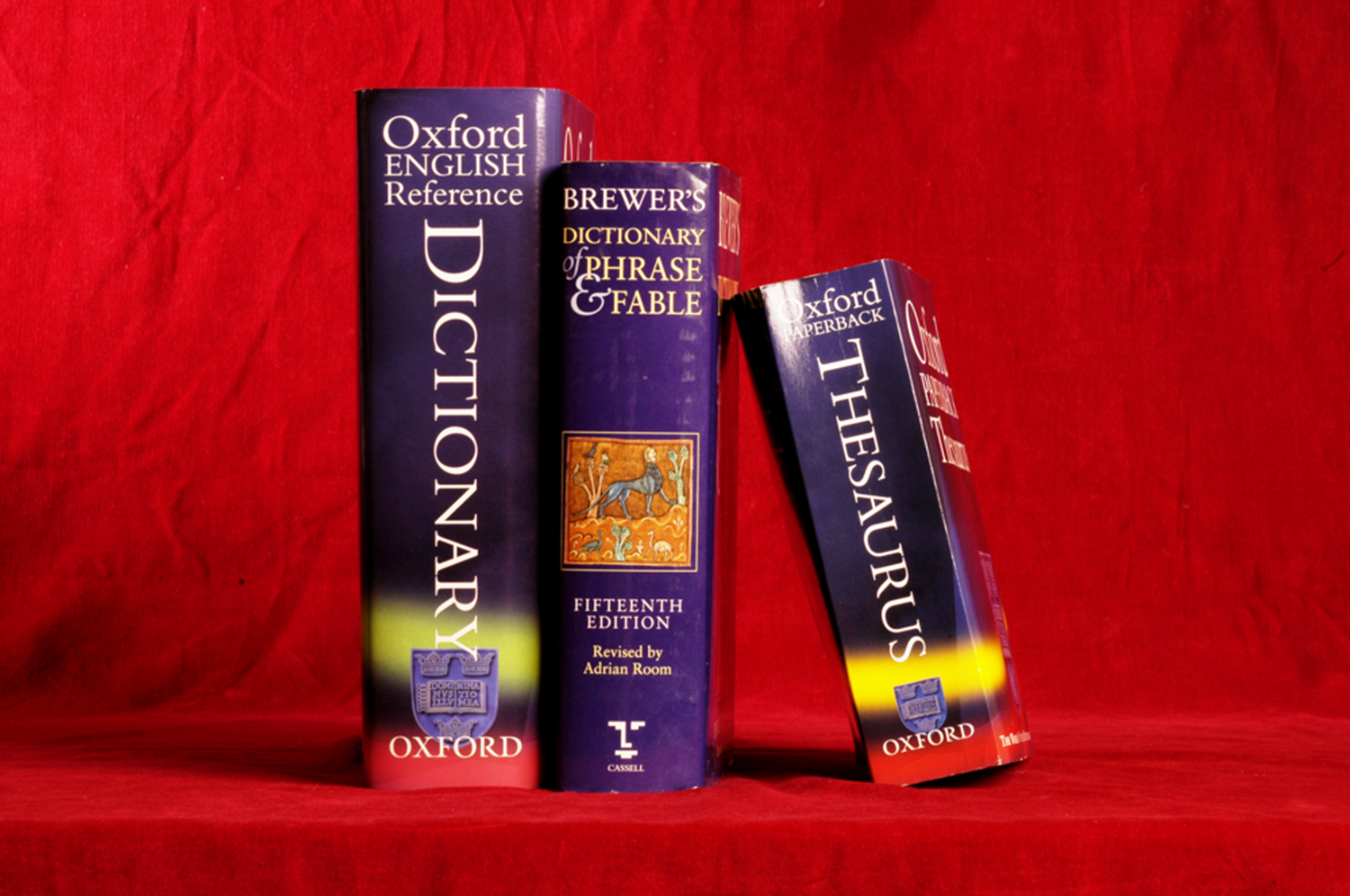
As he notes, words change meanings all the time. But there’s an ethical issue here – people using words they don’t fully understand to sound clever or give what is imagined to be a gloss of education on a banal idea.  Two counts for dishonesty of intent. However, Yagoda raises a different ethical issue, noting that words change meaning all the time, however glacially – that’s why we have OEDs:

This is a subset of the larger issue—an ethical one, really—of how we should deploy our language knowledge. Some people—often children of English teachers or Anglophiles—proudly wear their knowledge on their sleeve, and adopt hypercorrect linguistic behavior. Take Ray Magliozzi, the less laughter-prone of NPR’s Car Talk guys, who turns his sentences into pretzels so as to avoid ending them with prepositions: a “rule” that has been out of favor for roughly half a century. (Ray consequently favors the phrase “with which.”) I actually heard him use the word “shall” on last week’s show. A subclass of this group favors ur-renditions of common expressions. Adopting the diction of George Gissing or Walter Pater, they will choose stamping (instead of stomping) grounds, champing (instead of chomping) at the bit, pompons (instead of pompoms), or titbits (instead of tidbits).* Such archaism seems designed to attract attention, and nothing more.

What’s wrong with shall?  I lament that we are losing whole tenses – the useful subjunctive tense is disappearing in my own lifetime.  (See Correction #1 below.)

The comments section brings up a cornucopia of irritations:

Maggie Norris:  Sometimes when a word meaning morphs, we lose a good, useful word. Example: for several years now, scientists in all disciples have been using “methodology” when they mean “method.” Five syllables is always more important sounding than two, of course and lends credibility that a simple two-syllable word never could. But it leaves us without a word to use when we want to discuss the study or development of methods in science. Any suggestions? Scientists?

Pat Myers: “Nice” used to mean precise, as in “a nice distinction” — not long ago, it was considered incredibly sloppy to use it to mean pleasant. I bet you’d have a very high “wrong definition” result on “bemused” to mean wryly amused instead of befuddled. “Spoke warmly” in 19th-century books means what we’d now term “spoke heatedly.” “Amazed” used to mean totally confused — as if you were caught in a maze. As hard as it is for those of us editorial types who used to be paid real cash money to keep words’ meanings static, we sometimes have to accept that words’ meanings change — logically or il- — and have always changed.

Vville222: Does anyone else still understand the use of “me” in conjunction with another name or pronoun? It seems that there are fewer and fewer people willing to use the word me as object, substituting “I” in all cases where two or more individuals are referenced. It grates on my ear to hear such constructions as “They invited my wife and I to dinner.”

John Moore:  Let me quickly vent on this one: when did “could care less” start to mean “couldn’t care less”, as in “My girlfriend left me and I could care less?” Are we so lazy that we need to drop one of the syllables? I don’t have any additional insight into this, but I just want the world to know it ticks me off.

Vaughn Marlowe:  How did “issue” burst on the scene? It didn’t sneak up on us—it mugged us! A neighbor told me he had a flat tire “Issue.” I said it wasn’t an issue unless it was debatable. He was not amused.

And finally, lest you begin to feel self-righteous, a comment on the sort of people that get twisted up about these issues, from a 2001 interview with John McWhorter:

Q. You said that the most important fact about language is that it is undergoing constant change. Given that, how do you feel about language purists?

A. They labor under the misimpression that language only changes for the worse. They don’t understand that the language we are speaking now arose from the same kinds of changes that they today condemn as mistakes.

Q. Do you think there’s a psychological component to the positions of language purists?

A. I think language purists tend to be people who have a natural bent for order. I have some sympathy for them. In another universe, I could be one. If you’re a linguist, however, you see how ultimately illogical and hopeless this orientation is. Language never has followed the rules of logic.

Correction #1: See?  There’s something about this topic – you can’t write about it without making your own mistake.  Here’s the first, courtesy of Jeff Sypeck:  “Hi, Cynthia!  In your most recent blog post, you wrote: ‘I lament that we are losing whole tenses – the useful subjunctive tense is disappearing in my own lifetime.’  The problem is, the subjective isn’t a tense; it’s a mood.  Somewhere, my Latin teacher is beaming. Meanwhile, I’m wondering if you put that in there as correction-bait in the first place. :)” I didn’t. Leave it to a Latinist.  Mlle. Vance, bless her soul,  didn’t wedge this tidbit of knowledge in between teaching the imparfait and passé simple.


<<< Previous Series of PostssepNext Series of Posts >>>