“Literature does not die because nobody writes, but when everybody writes” — Nicolás Gómez Dávila

September 7th, 2010

Share

In his library ... where else?

This is too much fun to pass up.  Ever hear of Nicolás Gómez Dávila (a.k.a. “Don Colacho“)?  I hadn’t, either. So thanks be to Anecdotal Evidence and Patrick Kurp for bringing him to my attention.  (There’s a super-duper website on Gómez Dávila here.)

The Columbian writer (1913-1994) led a life of leisure:

“Gómez Dávila generally only visited the office once a week at midday for about ten minutes, in order to tell the business manager to increase profits, before going out to lunch with friends at the Bogotá Jockey Club, where he was an active member, playing polo and even serving as an officer for a while. (He had to give up polo, though, after injuring himself on his horse—he was thrown off while trying to light a cigar.)”

He is known mostly for his aphorisms:

“Literature does not die because nobody writes, but when everybody writes.”

“Why do people write when they have nothing worthwhile to say and are unable to say it? The same reason we sing in the shower, when at least we have the courtesy to keep the door closed.”

“Clarity is courtesy. Muddle is ill-mannered.”

“The soul grows inwards.”

“Modern man deafens himself with music in order not to hear himself.”

“Journalism is writing exclusively for others.”

“Among the inventions of human pride, one will finally slip in which will destroy them all.”

“A genuine vocation leads the writer to write only for himself: first out of pride, then out of humility.”

“Whoever says that he ‘belongs to his time’ is only saying that he agrees with the largest number of fools at that moment.”

“The criterion of ‘progress’ between two cultures or two eras consists of a greater capacity to kill.”

“The word ‘modern’ no longer has an automatic prestige except among fools.”

“Individualism is the cradle of vulgarity.”

“Our last hope lies in the injustice of God.”

Patrick ends with a quote from Yvor Winters,  from his introduction to The Quest for Reality: An Anthology of Short Poems in English (1969), which he edited with Kenneth Fields:

“Our best writers live fully in the knowledge that language is at once personal and public; they know that only by precisely controlling the public medium of language can they realize private experience. For each of us language is the essential intermediary between the isolated self and the world of others; rather than trammeling the mind and affections, it sets them free, giving them proper objects.”

Let me end with a final aphorism that intrigued me:

The artist does not compete with his fellow artists; he does battle with his angel.

It reminded me of a similar thought Robert Hass told me a decade ago:

You know, to write a book of poems is to wrestle with an angel, and the first part of the task is to figure out what angel you are wrestling.

More on Gómez Dávila here.  And more from my Hass interview in my forthcoming book, An Invisible Rope: Portraits of Czesław Miłosz.
.
.

Tony Judt’s mixed legacy

September 6th, 2010
Share

“I must condemn a terrorism operating blindly on the streets of Algiers … and which one day might strike at my mother, or my family. I believe in defending justice, but first I will defend my mother.”

— Albert Camus

Influential political historian Tony Judt highlights this passage in his 1998  The Burden of Responsibility (University of Chicago Press) “as a moment of consummate, intuitive brilliance.”

Zipperstein takes on Judt (Photo: L.A. Cicero)

But a writer in The Chronicle of Higher Education notes:  “Why this same argument should be deemed brilliant in mid-20th-century Paris and mere cant in 21st-century Tel Aviv, Tony never, ever sought to explain.”

In a piece that’s bound to create controversy, Steve Zipperstein has taken on Judt, one month after his death at 62 from Lou Gehrig’s disease. Steve is the author of of last year’s acclaimed Rosenfeld’s Lives: Fame, Oblivion, and the Furies of Writing and a man of great personal generosity and kindness.

Judt shot to fame after his 2003 article, “Israel: The Alternative” in The New York Review of Books.  I was impressed instead a year-and-a-half earlier with his less-touted “Road to Nowhere,” an article whose “icy clarity” (a term Judt uses to describe Raymond Aron’s assessment of France’s Algerian conflict) makes it a provocative must-read for those who broker peace.  His overarching theme:  At some point, all sides have to recognize that “the point was no longer to analyze the origins of the tragedy, nor assign blame for it. The point was to do what had to be done.”  (I’m not sure his political radar is as precise as his pragmatism. Aron again:  “It is a denial of the experience of our century to suppose that men will sacrifice their passions for their interests.”)

Zipperstein’s article is not skimpy on praise: He notes that Judt “stood out for his capacity to absorb vats of knowledge and analyze them with uncommon, if acidic, clarity, and his mind combined, in more or less equal measure, rhetorical radicalism and common sense.” He added that Judt’s new book, Ill Fares the Land: a Treatise on Our Present Discontents (Penguin Press, 2010), “was dictated over the course of a couple months as his illness progressed; it is a call to social austerity, to self-effacing, moderate, social-democratic principles—in short, a document of the conservative left.”

The two met in the 1980s, and broke after “Israel: The Alternative”: “The piece, a stark reversal from Tony’s previous stance on Israel (when young he spent some time there as a socialist activist), stated flatly that Israel was an ‘anachronism’ constructed out of an unholy amalgam of ethnic essentialism and bogus democracy. The only solution was the creation of one single unified state of Palestinians and Jews. The Jewish Daily Forward likened Judt’s article to an atomic explosion.”

Zipperstein is unpersuaded by Judt’s later insistence that he had been misunderstood, because “Tony contributed mightily to this by insisting, time and again, that he didn’t quite say what he so clearly did say.” Moreover,  “Tony increasingly spoke of Israel in ever-darker terms.”  Steve concludes:

“Tony Judt was an outstanding historian, a superb political journalist, and a man whose capacity for concision and analysis ensures that his books will be read and celebrated for years to come. It would be a shame if he is remembered primarily as one of the best and brightest of America’s anti-Zionists.”

The curious and complicated history of Lenin’s brain

September 5th, 2010
Share

Joseph Stalin slaughtered millions, but even genocidal totalitarian despots need to catch a break.

After all, everyone needs a hobby.  And he had one.  Lenin’s brain.

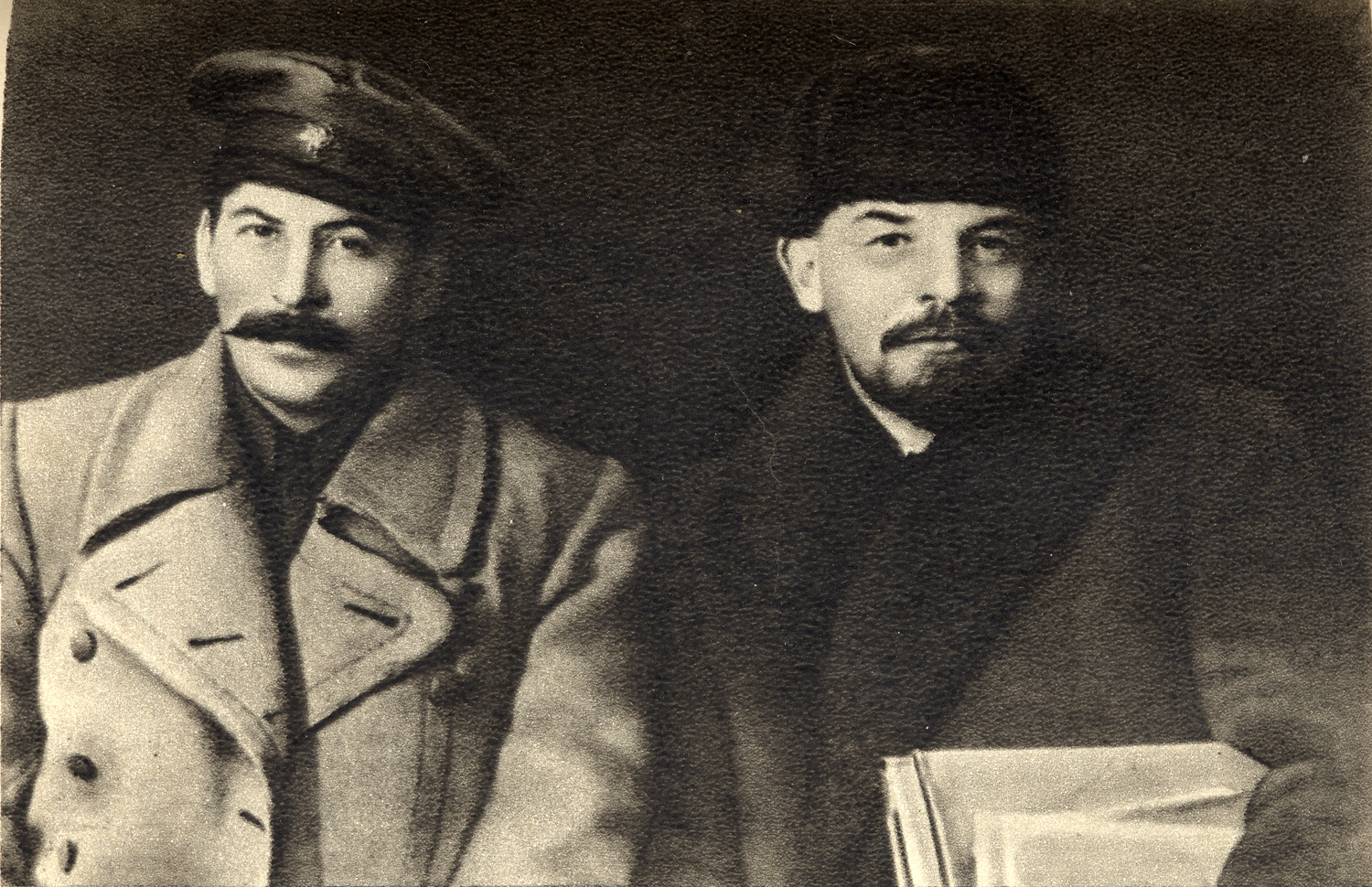
It’s not like the two leaders had been the best of buddies.  The friction between the two men had become so toxic that Vladimir Lenin, dying from his fourth stroke (possibly complicated by syphilis) in 1924, warned on his deathbed that Stalin should be jettisoned as the party’s General Secretary.

Too late.  And Stalin got his brain instead.

Not exactly buddies

This riveting story is told in 2008’s  Lenin’s Brain and Other Tales from the Secret Soviet Archives.  On his way back to Houston, author Paul Gregory had pressed it into my hands as a thankee after my article on his current book, Politics, Murder and Love in Stalin’s Kremlin: The Story of Nikolai Bukharin and Anna Larina.  One thing I learned after listening to Paul speaking about the book last summer: He’s a great storyteller.  He summarizes the Soviet situation:

The Institute of Lenin served as a repository for Lenin’s writings and for other Lenin memorabilia.  Among its most unusual items was Lenin’s brain, preserved in a formaldehyde solution in a glass jar.  This is the story of the study of Lenin’s brain from early 1925 to 1936 as told by the sixty-three-page secret collection of documents from the Central Committee’s special files.  It is not necessarily a tale about Stalin, although Stalin’s guiding hand can be seen throughout. … Throughout the story Stalin was either acutely aware of what was going on or was guiding events.

The display of Lenin’s embalmed body and the publication of this writings was a PR move to raise the fallen hero to the Immortals — but a team of physicians insisted that his brain receive scientific study.  Not surprisingly, Russians needed scientific proof that Lenin was a genius. This was decided while the body was still warm.

A specimen of the brain was sent to a leading neurologist, Oskar Vogt, at the Kaiser Wilhelm Institute in Berlin.

Embalming: A kind of immortality

Their bad:  “Whether Lenin was a genius or dullard would be decided by a foreigner!” Gregory exclaimed.  Their worst fears were realized.  In 1932, one party hack wrote that the fragment of Lenin’s brain was being kept under intolerable security conditions, without guards, and that no work was being done on the brain in Berlin.

Moreover, “Vogt’s presentations are of a questionable nature; he compares Lenin’s brain with those of criminals and assorted other persons.”  One of the “indices” associated the structure of Lenin’s brain with mental retardation.

Voices were raised against Vogt, bearing the hallmarks of Stalin’s operations. But how to get rid of Vogt without creating an international scandal?

Enter Adolf Hitler.

The Russians had been holding out for their own “Institute of the Brain” — and they got one.   A delegation was sent to Berlin, ostensibly to beg Vogt to lead the new institute – but actually, to put the kibosh on him, while blaming Hitler.

It really does look like a walnut

Vogt had already fallen into disfavor with the the Führer, and his apartment had been searched, his telephone bugged, and any visa to Moscow out of the question (not that he’d been to Russia much in the last few years).  Mission accomplished!  But don’t cry:  Vogt, too, had kind of a happy ending, as much as could be expected in the circumstances.  The German government punished him by drafting him into the army (although he was in his 60s), but he was discharged after six weeks.

Meanwhile, the Moscow Institute of the Brain had not been sitting idly on its hands.  It had managed to collect better brains from better people.  No more would Lenin’s brain be compared with the man in the street, but instead he would be ranked alongside poet Vladimir Mayakovsky, Alexander Bogdanov, and even Nobel laureate I.V. Pavlov, who had died in February 1936 and whose brain could now be added to the collection.

The Institute built the case it needed to:  “Its report cites the indices proving the extraordinary nature of Lenin’s brain, while pointing out that the Institute could provide even more convincing evidence if the Politburo awarded it new funds and new premises.”  Just like academics everywhere.

Meanwhile, the 1936 report concluded with a resounding recommendation:  “The final point is an order to the Central Executive Committee to organize a specialized equipment for the the preservation of the brains of leading personalities.”

A happy ending for everyone, really.

The mixed luck of Mary Webb

September 4th, 2010
Share

I was lucky that the Green Library’s exhibition of Mary Webb lingered into the early days of September (it was supposed to wind up August 29).  Having spent most of the summer in wheelchair, on crutches, or in a moonboot,  I was finally fleet-footed and free, and took advantage of my first opportunity while picking up the catalogue for the museum’s upcoming exhibition on Mexico to take a look at the departing show I had previewed way back in January.  (Digital archives are online here.)

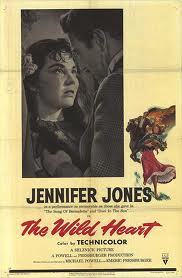
The bookcases were filled with Webb’s tidy, well-regulated handwriting in her correspondence and manuscripts, and photos of the Shropshire countryside she loved.  There were of course inclusions of her her books, her poetry, the reviews that mentioned her, and … Jennifer Jones in cheesy Selznick movie posters?

That’s right.  Webb’s novel Gone to Earth was made into Selznick’s The Wild Heart. It flopped.

Webb’s story of an English gypsy girl, steeped in superstition and magic, is apparently being “reassessed.” One website reads: “The cinematography is some of the best I have ever seen and the outdoor colors will make you swoon – and if that doesn’t Jennifer Jones will. I was so wrapped up in this film that I am prepared to continue to make sweeping and superlative statements about it – enough to fill this page. I will, for everyone’s sake, stop here. In short, THIS is MY type of film.”

In a sense, the story of the film illustrates the kind of luck Mary Webb (1881-1927) attracted as a writer.

For example, think you need a sugar daddy?  British Prime Minister Stanley Baldwin‘s praise (“absolutely first-class quality,” “neglected genius”) proved to be both helpful and harmful after her death — he managed to get her books reissued, but then she was snubbed by the literati and the academics, precisely because she had been endorsed by the prime minister-cum-litcritic.

She was therefore immortalized as the inspiration behind Stella Gibbons‘s 1932 parody, Cold Comfort Farm, an honor she shares with more illustrious D.H. Lawrence and Thomas Hardy, and even the Brontës.

In all the hoopla, it’s hard to recognize the woman who died in loneliness, poverty, and obscurity — and also in reckless generosity, giving her money to war veterans, and to those even more destitute than she was.  A 1928 edition of Bookman praised “her knowledge of human nature profound, unfathomable.”

“I never knew her to be mistaken in her diagnosis of the real character of anyone,” it continued, “a more generous, modest spirit I have not met. To the end she never realized how great a genius she was.”

Bookstore with schtick: David Kipen’s new gig

September 2nd, 2010
Share

Libros Schmibros books in Boyle Heights from 89.3 KPCC on Vimeo.

Over a decade ago, David Kipen shepherded me into the book pages of the San Francisco Chronicle Book Review, when he was its editor and columnist.  And I’m proud that he was proud enough to brag about it to Dana Gioia, who eventually lured him to Washington D.C. to be Director of the Literature Program at the National Endowment for the Arts.  In particular, David championed the National Reading Initiatives and the popular Big Read program.

I didn’t actually meet David until some years later (our relationship had been purely electronic and epistolary) at an National Book Critics Circle gig where he was speaking.  I saw immediately why Dana had chosen him — he pulled people into his orbit, and moved through the room like the sun.

People will have another chance to be drawn into his orbit in Boyle Heights, in L.A.  It’s good to see a chunk of his post-NEA life at Libros Schmibros, featured on KPCC, Southern California Public Radio.

He told the L.A. Times when asked about his plans: “I wouldn’t mind another nine months of government work, to get me across the five-year pension finish line, but California will always be home. Then again, the beauty part is a) that I left home a Californian, but I’m coming home an American, and b) that I’m coming home.”

The books in Libros Schmibros are culled from Kipen’s sizeable personal library, and “curated” by David’s even more sizeable personality.

Good luck, David!  Nice to see you back in these parts.

Berlin bombed again

September 1st, 2010
Share

Berlin was bombed again on Saturday night — but this time the weapon was poetry.  100,000 bookmarks printed with poems by 80 poets from Germany and Chile were dropped from a helicopter, which circled the city for half an hour.

Poets included in the project were Ann Cotten, Karin Fellner, Nora Gomringer, Andrea Heuser, Orsolya Kalász, Björn Kuhligk, Marion Poschmann, Arne Rautenberg, Monika Rinck, Hendrik Rost, Ulrike Almut Sandig, Tom Schulz, Thien Tran, Anja Utler, Jan Wagner, Ron Winkler, and Uljana Wolf.

The initiative was intended as a protest against war and a message of peace, as well as a celebration of the 200th anniversary of Chilean independence.

Organizers say that just as wartime bombings were intended to “break the morale” of the inhabitants of a city, so the poetry bombing “‘builds a new city by giving new meaning to events of her tragic past and therefore presenting the city in a whole new original way,” according to an article in The Guardian.

Don’t know what the German reaction to the bombing was — but the response from my Facebook friends was immediate:

Person B:  Did the city attempt to defend itself with prose?

Person A:  No, they rolled out the critical theorists.

Person B:  Ah, the “big guns.”

You are challenged to watch the defiantly unwatchable youtube film of the event here.


<<< Previous Series of PostssepNext Series of Posts >>>