Elizabeth Bishop’s class at Harvard: “She wanted us to see poems, not ideas,” says Dana Gioia

December 1st, 2020

Share

Harvard’s Kirkland House: they studied in the basement, among unwanted couches and broken bikes.  (Photo: Wikipedia)

A university student should have at least one unforgettable teacher during his or her formative years. So it was with poet Dana Gioia. In 1975, he began his last year as a graduate student in English at Harvard. He faced a choice: taking Robert Lowell‘s class on 19th century poets, or a relatively unknown Elizabeth Bishop teaching “Studies in Modern Poetry.” She rarely attracted more than a dozen students – but she attracted this one, who would go on to be chairman of the NEA. The class dwindled down to five, four of them undergraduates by the second meeting. But the friendship of the poet and the poet-to-be endured. After each class, he walked with “Miss Bishop” to their respective quarters, since they lived in the same direction from Harvard’s Kirkland House.

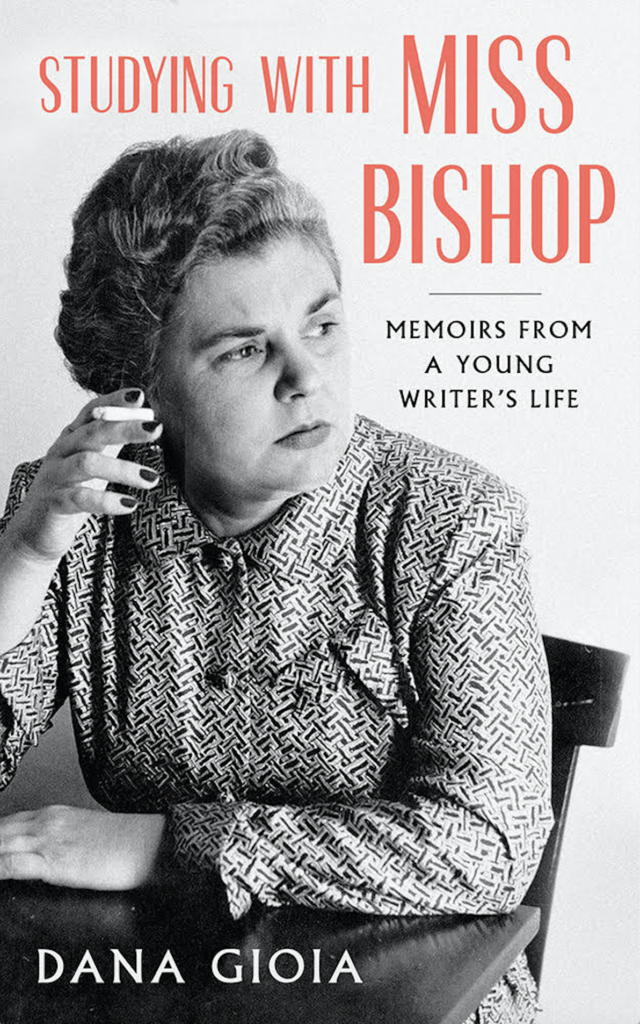
The story is one of several told in Dana Gioia’s new book Studying with Miss Bishop: Memoirs from a Young Writer’s Lifeout in January with Paul Dry Books. Also included in the collection are accounts of John Cheever, Robert Fitzgerald, James Dickey, and more. The publisher, too, has a story: he was a stock options trader, and a successful one, but the Harvard grad had a secret yen to be a publisher (read that story here). The Stanford Publishing Course convinced him to have a go.

Back to the class in the basement of Kirkland House: Elizabeth Bishop was new to teaching and it showed. “I’m not a very good teacher,” she began. “So to make sure you learn something in this class I am going to ask each of you to memorize at least ten lines a week from one of the poets we are reading.”
“Memorize poems?” one of the dismayed students asked. “But why?” Miss Bishop’s reply was modest and sincere. “So that you’ll learn something in spite of me.”

The class final at the end of the term, in Dana’s own words: “Our final examination surprised even me. A take-home test, it ran a full typed page (covered with the hand-scrawled corrections that by now were her trademark) and posed us four tasks unlike any we had ever seen on a college English exam. Furthermore, we were given exact word lengths and citation requirements, as well as this admonition as a headline: ‘Use only your books of poems and a dictionary; please do not consult each other.'”

The final hurdle of the test was this, in Bishop’s words:

Now, please try your hand at 24 lines of original verse; three poems of eight lines each, in imitation of the three poets studied, in their styles and typical of them. (In the case of Lowell, the style of Lord Weary’s Castle.) I don’t expect these pastiches to be great poetry! – but try to imitate (or parody if you prefer) the characteristic subject-matter, meter, imagery, and rhyme (if appropriate).

We may not have consulted each other about the answers to this test, but, walking out of Kirkland after the last class with the final in our hands, we could not help talking about the questions. Miss Bishop had gone off to her office, and we were alone.

“I can’t believe it,” one of the undergraduates moaned. “We have to write poems.”

Someone else offered the consolation that at least everything else on the exam was easy.

“Yeah, but we still have to write poems.”

***

His conclusion: “By this time, I had realized that, for all her fumbling disorganization, Miss Bishop had devised – or perhaps merely improvised – a way of teaching poetry which was fundamentally different from the manner conventionally professed in American universities. She never articulated her philosophy in class, but she practiced it so consistently that it is easy – especially now, looking back – to see what she was doing. She wanted us to see poems, not ideas. Poetry was the particular way the world could be talked about only in verse, and here, as one of her fellow Canadians once said, the medium was the message. One did not interpret poetry; one experienced it. Showing us how to experience it clearly, intensely, and, above all, directly was the substance of her teaching. One did not need a sophisticated theory. One needed only intelligence, intuition, and a good dictionary. There was no subtext, only the text. A painter among Platonists, she preferred observation to analysis, and poems to poetry.”

Steve Wasserman on the Penguin Random House acquisition of Simon & Schuster (hint: it’s not the Four Horsemen of the Apocalypse)

November 25th, 2020
Share

Not this.

Yesterday the Book Haven posted man-of-letters Steve Wasserman‘s COVID reading (the list has proved quite popular!) – but he was posting as a connoisseur, not in his role as publisher of Berkeley’s Heyday Books. He arrived from East Coast in 2016 to head that small, adventurous California-themed publisher, and it’s been on the rise ever since. He had most recently served as editor-at-large for Yale University Press. Before that, he was my editor at the Los Angeles Times Book Review when it was the best, most adventurous book section in the country, bar none.

Below, his thoughts about the major book event in today’s news.

Department of My Two Cents: The news today that Bertelsmann, the German owner of the publishing empire Penguin Random House, has made an all-cash offer of $2 billion to acquire Simon & Schuster, continues the relentless conglomeration that has marked global publishing for the past forty-plus years. If approved, the deal will leave only four gigantic publishing enterprises dominating the landscape of American publishing. The prospect is thought by some to pose a threat to the nation’s delicate ecology of literary and cultural life. Considerable alarm over the fate of the so-called mid-list book and a further contracting of diversity in the marketplace is widespread. How real are these fears?

Berkeley’s natty man of letters

The predicament facing us is best understood against the longstanding backdrop of at least two overlapping and contending crises: the first is the profound structural transformation that has for some decades been roiling the entire book-publishing and book-selling industry in an age of conglomeration and digitization; the second is the sea change in the culture of literacy itself, the degree to which our overwhelmingly fast and visually furious culture renders serious reading increasingly irrelevant, hollowing out the habits of attention indispensable for absorbing long-form narrative and the following of sustained and serious argument. These crises, taken together, have profound implications, not least for the effort to create an informed citizenry so necessary for a thriving democracy. The moral and cultural imperative is plain, but there may also be a much-overlooked commercial opportunity for the plethora of smaller, independent publishers who will likely be a chief beneficiary.

The struggle for market dominance, impelled by the continuing threat posed by Amazon, is, for many smaller publishers, akin to the internecine battles mounted by the gods on Mt. Olympus. If past experience is a useful guide to the future, we need not overly fear such imperial mergers and acquisitions. Indeed, even a cursory glance at the landscape of contemporary American bookselling and publishing makes it hard not to believe we are living at the apotheosis of our culture. Never before in the whole of human history has more good literature, attractively presented, sold for still reasonable low prices, been available to so many people. Diversity, in all realms, is increasingly the watchword guiding publishing decisions as the readership expands and demands to be heard. In a word, all publishers understand that profits are to be had by appealing to an insurgent millennial culture even as the old habits die. Today, you would need several lifetimes over doing nothing but lying prone in a semi-darkened room with only a lamp for illumination just to make your way through the good books that are on offer. There is money to be made in culture and victory will go to those publishers, whether large or small, who are nimble and imaginative enough to take advantage of the opportunities that lie all around them.

But I am no Cassandra. It would be a mistake to regard the quartet of publishing behemoths that will remain after the likely approval of the Bertelsmann acquisition of Simon & Schuster, as synonymous with the Four Horsemen of the Apocalypse. Opportunities abound. It’s almost enough to give one hope.

38 books I bet you didn’t read during COVID! Steve Wasserman’s reading list will shame us all…

November 23rd, 2020
Share


So what have you been doing during COVID, you bunch of wastrels? Huh? Huh?? Huh??? Eating a lot, drinking too much, complaining of ennui, watching TV, not working on the neglected novel you intended to finish, posting cat pictures and videos, oversleeping, baiting and snarling at each other on Twitter? At least that’s what I gather from my visits online.

The Hero of Heyday, Steve Wasserman

Behold and weep! Heyday publisher Steve Wasserman has given us his list of COVID reading (in no particular order) since the shelter-in-place edict was issued eight months ago, way back in mid-March 2020. It will shame us all. Here what he’s been reading as he hunkers down in Berkeley:

The War for Gaul by Julius Caesar, translated by James J. O’Donnell
The Ruins Lessons: Meaning and Material in Western Culture by Susan Stewart
The Last Assassin: The Hunt for the Killers of Julius Caesar by Peter Stothard
God’s Shadow: Sultan Selim, His Ottoman Empire, and the Making of the Modern World by Alan Mikhail
Caste: The Origins of Our Discontents by Isabel Wilkerson
A Fistful of Shells: West Africa from the Rise of the Slave Trade to the Age of Revolution by Toby Green
The Man in the Red Coat by Julian Barnes
Inside Story by Martin Amis
Posthumous Memoirs of Brás Cubas by Machado de Assis
Rambling On: An Apprentice’s Guide to the Gift of Gab by Bohumil Hrabal
Memoirs of a Dutiful Daughter; The Prime of Life; Force of Circumstance; All Said and Done; Adieux: A Farewell to Sartre – all by Simone de Beauvoir
The Words by Jean-Paul Sartre
Tête-à-tête: Simone de Beauvoir and Jean-Paul Sartre by Hazel Rowley
Left Bank: Art, Passion, and the Rebirth of Paris, 1940-50 by Agnès Poirier
Wagnerism: Art and Politics in the Shadow of Music by Alex Ross
The Great Black Way: L.A. in the 1940s and the Last African American Renaissance by RJ Smith
Set the Night on Fire: LA in the Sixties by Mike Davis and Jon Wiener
Music: A Subversive History by Ted Gioia.
The Big Goodbye: Chinatown and the Last Years of Hollywood by Sam Wasson
Murder in the Movies by David Thomson
Epidemics and Society by Frank M. Snowden
The Decameron by Boccaccio
A Journal of the Plague Year by Daniel Defoe
Inky Fingers: The Making of Books in Early Modern Europe by Anthony Grafton
Abe: Abraham Lincoln in His Times by David S. Reynolds
Tacky’s Revolt: The Story of an Atlantic Slave War by Vincent Brown
Black Spartacus: The Epic Life of Toussaint Louverture by Sudhir Hazareesingh
My Life in 100 Objects by Margaret Randall
Gambling with Armageddon: Nuclear Roulette from Hiroshima to the Cuban Missile Crisis by Martin J. Sherwin
Mayday 1971: A White House at War, a Revolt in the Streets, and the Untold History of America’s Biggest Mass Arrest by Lawrence Roberts
Garner’s Quotations by Dwight Garner
Notebooks: 1936-1947 by Victor Serge
The Habsburgs: To Rule the World by Martyn Rady
Men on Horseback: The Power of Charisma in the Age of Revolution by David A. Bell

(Original watercolor by Wendy Ruebman)

Robert Conquest a British poet? Not so fast… he had American roots, too.

November 18th, 2020
Share

Conquest at work (Photo: L.A. Cicero)

“Nothing human is alien to Conquest, who died in 2015 at age 98,” writes the inestimable Patrick Kurp in the Los Angeles Review of Books, describing the poet and Soviet historian Robert Conquest. Then Patrick makes a rare misstep when he states: “Let’s remember that he was English by birth but American by choice.”

Actually, Conquest was not only American by choice – his father, Robert Folger Wescott Conquest, was American, a Virginian – so the long residence at Stanford’s Hoover Institution was something of a homecoming for his British-born son Robert Conquest, who also spent some time in Virginia as a child. [Note: Not so fast – the record on Virginia is corrected in a postscript below.] His American roots were further reinforced by his long happy marriage with an American wife, Elizabeth Conquest, who is the editor of his Collected Poems and soon a volume of letters.

He had a poetic homecoming, too, in what Patrick Kurp calls “One of Conquest’s richest, most satisfying poems.”

An excerpt from the article:

“The Idea of Virginia,” 34 four-line stanzas that encapsulate the history of the state and, by implication, the United States. “It lay in the minds of poets,” the poem begins, which Conquest characteristically clarifies: “But the land was also real: rivers, meads, mountains.” Conquest has no pretensions to being a nature poet, but he starts with an Edenic natural world: “Deer and pumas ranged its high plains. Beavers / Toiled in its streams. Bluebird and mocking-bird, / Blue jay, redbird and quail filled branches and air.” He retells the familiar story of John Smith, Powhatan, and Pocahontas without pontificating. The idea of Virginia grows naturally out of English thought:

Haydn, prose, elections, deism, architecture,
Bred the leaders of battle, governance, law.
Washington, Marshall, Madison, Jefferson, Henry
Defended a heightened England from an England lapsed.

He is at home in the world, as poets seldom are. He writes poems for intelligent readers who enjoy formal verse and humor that ranges from the ribald to the wittily rarefied, and who share his interest in particulars. Conquest will be remembered principally as the man who, even before Aleksandr Solzhenitsyn, exposed the Soviet Union as a murderous tyranny in such volumes as The Great Terror: Stalin’s Purge of the Thirties (1968) and The Harvest of Sorrow: Soviet Collectivization and the Terror-Famine (1986). Politics and history, of course, show up with some regularity in his poetry, often in a form that resembles light verse. Here is a stanza from “Garland for a Propagandist”:

When Yezhov got it in the neck
(In highly literal fashion)
Beria came at Stalin’s beck
To lay a lesser lash on;
I swore our labour camps were few,
And places folk grew fat in;
I guessed that Trotsky died of flu
And colic raged at Katyn.

When Conquest reviewed the 1974 appearance in English of Solzhenitsyn’s Gulag Archipelago (1973), he judged it “a truly exceptional work: for in it literature transcends history, without distorting it.” Conquest does something similar.

Another excerpt:

Patrick Kurp

One of the pleasures of his verse is its range of form and subject. Some poets harvest a very narrow field, too often the fenced-in self. Conquest’s poems resemble the late Turner Cassity’s in their appetite for the world and all it contains, pleasurable and otherwise, and in their satirical bite. His poems know things. In 1956, Conquest edited the influential poetry anthology New Lines, informally aligning the poets who came to be called The Movement: Philip Larkin, Kingsley Amis, D. J. Enright, Thom Gunn, Elizabeth Jennings, and himself. In his introduction, Conquest dismisses the “diffuse and sentimental verbiage or hollow technical pirouettes” of the era’s “New Apocalypse” poets in the United Kingdom, such as J. F. Hendry and Vernon Watkins, and endorses a “refusal to abandon a rational structure.” In “Whenever,” Conquest endorses Wyndham Lewis’s call for “a tongue that naked goes / Without more fuss than Dryden’s or Defoe’s.”

Read the whole article here.

Postscript on April 12 from Elizabeth Conquest:

In point of fact, Bob did not spend time in Virginia as a child.  In Two Muses [the poet’s unpublished memoir], he makes this point:

Elizabeth Conquest corrects the record.

Treated as a normal F.O. member, in 1950 I was sent—as First Secretary—to the UK delegation to the United Nations in New York, attending the minuscule meetings of the Security Council, and the vast swarm of the General Assembly.  This was my first trip to America.  I was there only a month or two.  But I managed to go down for a weekend with my cousin Pleasanton Conquest and his wife Julie in Baltimore—and for a few hours round Washington, including a walk across the Arlington Bridge to stand for the first time on Virginian soil.

All the same, he and his sisters felt themselves to be Virginian: 

We (my parents, my two sisters—Charmian and Lutie—and I) lived in England and France over my childhood. We had American passports and always thought of ourselves as American, though in most ways completely Anglicised.

Not that we thought of it, let alone spoke of it much, but we children were very taken with our Virginian origin.  To us it sounded—and felt—not more aristocratic or anything like that, but somehow all the same superior and exotic.  The only effects of this were inheriting the feeling ‘give-me-the-luxuries-and-I’ll-do-without-the-necessities’, early immersion in ragtime, etc. My father was not, on the whole, interested in the Virginian side of things—born there, but his upbringing in France and later education in Pennsylvania having been entirely from the Westcott side.   We had no contact with our Virginian relatives until my mother started writing to my great aunt Margaret—I suppose in the 1930s—after which they’d come over to Europe and vice versa.

“Exact and expansive”: Stanford’s Robert Harrison speaks as friend, fan of Australian novelist Shirley Hazzard at NYC’s McNally Jackson – November 12 on zoom!

November 10th, 2020
Share

“Relentless.” (Photo: Christopher Peterson)

Australian novelist Shirley Hazzard is considered one of the finest fiction writers of the postwar generation. She died in 2016.

Stanford’s Robert Pogue Harrisona friend as well as fan, will be a featured speaker at a Zoom event to celebrate her just-published Collected Stories. The event happens on Thursday, November 12, at 7 p.m. EST (4 p.m. PST) hosted by New York City’s McNally Jackson bookstore. The McNally Jackson website is HERE with an RSVP link is at the top of the page.

From the McNally Jackson website:

“Shirley Hazzard’s Collected Stories is a work of staggering breadth and accomplishment. Taken together, these twenty-eight short stories are masterworks in telescoping focus, ranging from quotidian struggles between beauty and pragmatism to satirical send-ups of international bureaucracy, from the Italian countryside to suburban Connecticut. Hazzard’s heroes are high-minded romantics who attempt to fit their feelings into the twentieth-century world of office jobs and dreary marriages. After all, as she writes in ‘The Picnic,’ ‘It was tempting to confine oneself to what one could cope with. And one couldn’t cope with love.’ And yet it is the comedy, the tragedy, and the splendor of love, the pursuit and the absence of it, that animates Hazzard’s stories and provides the truth and beauty that her protagonists seek.”

Her friend at Stanford.

“Hazzard once said, ‘The idea that somebody has expressed something, in a supreme way, that it can be expressed; this is, I think, an enormous feature of literature.’ Her stories themselves are a supreme evocation of writing at its very best: probing, uncompromising, and deeply felt.”

According to Harrison, “Conrad once said that the written work of art must justify itself word by word, sentence by sentence. That justification is always at work in her prose. Her use of English is at once exact and expansive. She inhabits the language as only someone who was nourished on its very best literature at an early age could inhabit it.”

“She has a unique stylistic signature, one that combines extreme narrative discretion with probing psychological insight; a masterfully terse yet complex prose that always looks for and finds le mot juste; the most astonishing and expressive metaphors of any writer of her generation known to me.” (Robert Harrison also interviewed Hazzard in 2006 for Entitled Opinions here.) He adds that ” the commitment to description in her books is relentless.”

Hazzard’s biographer Brigitta Olubas and Australian novelist Michelle de Kretser will also be on hand to discuss the author’s legacy.

Postscript on 11/11 from Dana Gioia, former NEA chair and California poet laureate: How good to see Shirley Hazzard remembered! I second Robert Harrison’s praise of her style. She had an amazing ability to present the emotional reality of her characters and a genius for vividly depicting the most diverse settings. “The Transit of Venus” and “The Great Fire” are among my favorite contemporary novels–two very different books similar only in their elegant prose and deep humanity.

I wonder if part of her obscurity is that, like the equally superb Sibylle Bedford, Hazzard was so international. She lived in Australia, New Zealand, Italy, and the U.S. She doesn’t fall neatly into either Australian or American literature. Thanks for featuring her work.

Do Nina Kossman’s new translations of Tsvetaeva capture her “doom-eager splendor”? See what you think.

November 7th, 2020
Share

Kossman at the Tsvetaeva Museum in Moscow.

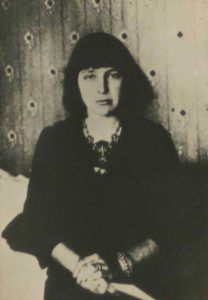
Twenty years ago, critic Harold Bloom wrote to the young poet Nina Kossman to tell her that her “intensely eloquent” translations of the poet Marina Tsvetaeva manage to “capture the doom-eager splendor of a superbly gifted poet.” W.S. Merwin wrote that these are “direct, strong, audible translations,” adding, “I hear Tsvetaeva’s voice, more of it, and in a new pitch, which makes something clear in her poems that I had only guessed at before.”

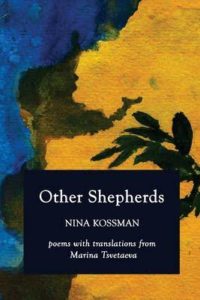
Her most recent collection, Other Shepherdswas published earlier this year by Poets & Traitors Press. Kossman’s collection pairs about a hundred poems, half by Tsvetaeva and half by her fellow Muscovite translator. Kossman pairs them “not in competition but with humility,” making of this doubling a new kind of conversation. As she writes in the Preface, “The aim is not to emulate her but to create a dialogue between her poem and mine, a resonance possible not only between two poets but between two eras. My goal is not to aspire to her heights, which are unscalable, as they are hers and no one else’s, but to approach her and to speak.”

As for the title, she writes: “Other Shepherds comes from my translation of Tsvetaeva’s poem which ends with, “There is an island—thank God!— / Where I don’t need a tambourine, / Where black wool/ Hangs from every fence. Yes / —There are in the world black flocks, / Other shepherds.” (1920).”

“Although the poem’s protagonist is addressing a lover, I took the last line slightly out of its amorous context and used it in a broader sense, in a kind of social, or rather, existential sense,” she explains. “I don’t believe that I have sinned against the poet by looking at her poem this way; in fact, I think the poem is quite amenable to this interpretation, especially if we look at the ending of the penultimate stanza. ‘In your flock there was no / Sheep blacker than I’ which resonates far beyond the personal context of a rejected woman speaking to her lover.”

A “black sheep,” for sure.

Nina Kossman was born in “the same Communist dystopia that, a few decades before my birth, led Marina Tsvetaeva to commit suicide by hanging.” She writes that it was a place where “‘being different,’ an uncomfortable feeling in any society at any time, led to much more than the usual social ostracism; where comrades were clearly divided into ‘white sheep’ and ‘black sheep,’ and where the black sheep didn’t end up very well.”

“Since I left the Soviet Union as a child, my experience of ‘black-sheep-ness’ was somewhat limited, but I have been very aware of my parents’ experience, particularly that of my mother—a Jew, a daughter of an ‘enemy of the people,’ a student of genetics in the era of Lysenko (the official Soviet biologist who rejected genetics), and thus thrice an outsider in the society that didn’t tolerate outsiders,” she explains.

“The title has another meaning too. Having lived in two so- called ‘superpowers,’ i.e. having spent my childhood in the Soviet Union, where personal freedoms were curtailed, and my youth and adulthood in ‘something of its opposite’ (my way of referring to the US as a teenager) with its seemingly unlimited personal freedoms, I found both wanting. Being a ‘black sheep’ in the Soviet Union was not only painful psychologically. It pushed you to the edge of a very real abyss, since a threat of physical extermination was real. In the US, being a black sheep in a herd, a society where outsiders are accepted, yields only psychological pain. And so an immigrant from the former Soviet Union swings between these two. These are two very different kinds of ‘black-sheep-ness,’ one hard core and the other soft. The black sheep consciousness continues in the so-called free world, attenuated, without the attendant fear of physical extermination.”

Do her poem pairings do the job? See a sample of the pairings below:


<<< Previous Series of PostssepNext Series of Posts >>>