
Posts Tagged ‘Chloe Edmondson’

“I was happy when I walked the streets of Paris by myself.”

Sunday, February 1st, 2026

Share

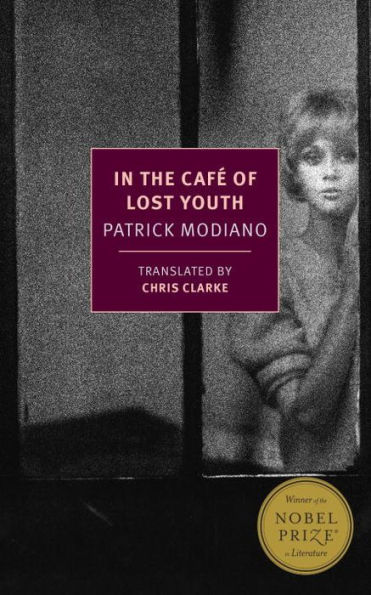
On Wednesday, 18 February, 2026, Another Look will present Nobel prizewinning Patrick Modiano’s 2007 novella, In the Café of Lost Youth (New York Review Books). The event will take place, as always, at 7 p.m. at Levinthal Hall, 424 Santa Teresa Street on the Stanford campus.

Panelists will include Stanford Prof. Robert Pogue Harrison, author, director of Another Look, host of the radio talk show and podcast series Entitled Opinions, and a regular contributor to The New York Review of Books, and Stanford Prof. Tobias Wolff, one of America’s leading writers and the founding director of Another Look, as well as a recipient of the National Medal of Arts. 

They will be joined by Chloe Edmondson, a lecturer in Stanford’s Department of French and Italian. She is the France-Stanford Center Fellow for the Roxane Debuisson Collection on Paris History. You will remember her from our event Madame de LaFayette’s The Princesse de Clèves in 2019. We have invited Stanford actor, director, and drama professor and Rush Rehm to round out the panel. (You will remember Rush from our 2016 event on Joseph Conrad’s The Shadow-Line: A Confession.)

The Nobel announcement recognized Modiano’s “consistent exploration of memory and the elusive nature of personal history, often set against the backdrop of occupied Paris.”

He has been praised for his “subtle, clear style and his ability to bring anonymous lives to light, making him a modern-day Proust in the eyes of some.”
According to World Literature Today, “Modiano’s fictional world is not postapocalyptic, like the fictional worlds of Beckett, but postrelational . . . a world where familiar patterns, whether placed in memory, neighborhoods, or situations, are dispersed and left to languish on the wind.”

Panelists include Another Look director Robert Pogue Harrison and Another Look founding director Tobias Wolff

Meanwhile, Another Look has done a Q&A interview with Modiano’s translator, Chris Clarke. You can read: “No one saw the Nobel coming”: A Q&A with Modiano’s translator on the Another Look website.

You can register for the event on the link below – and please share the link (and the poster and event square we’ve attached) with your friends:
https://stanford.zoom.us/webinar/register/WN_-03yUMbsSWWwJdijPIQg3w#/registration

https://stanford.zoom.us/webinar/register/WN_-03yUMbsSWWwJdijPIQg3w#/registration

Nobel lecture:
https://www.nobelprize.org/prizes/literature/2014/modiano/lecture/

Nobel Award speech:
https://www.nobelprize.org/prizes/literature/2014/ceremony-speech/

Patrick Modiano: is he a modern-day Proust?

Tuesday, December 30th, 2025
Share

Winter is a great time for reading. Here’s our suggestion for 2026. The next “Another Look” book club event at Stanford will feature a Nobel prizewinner. You won’t want to miss it. (Did we mention that “Another Look” is the biggest book club in the world?)

On Wednesday, 18 February, 2026, Another Look will present Nobel prizewinning Patrick Modiano’s 2007 novella, In the Café of Lost Youth (New York Review Books). The event will take place, as always, at 7 p.m. at Levinthal Hall, 424 Santa Teresa Street on the Stanford campus.

Panelists will include Stanford Prof. Robert Pogue Harrison, author, director of Another Look, host of the radio talk show and podcast series Entitled Opinions, and a regular contributor to The New York Review of Books, and Stanford Prof. Tobias Wolff, one of America’s leading writers and the founding director of Another Look, as well as a recipient of the National Medal of Arts. 

They will be joined by Chloe Edmondson, a lecturer in Stanford’s Department of French and Italian. She is the France-Stanford Center Fellow for the Roxane Debuisson Collection on Paris History. You will remember her from our event Madame de LaFayette’s The Princesse de Clèves in 2019. Valerie Kinsey, a Stanford lecturer in Writing and Rhetoric Studies, will round out the panel.

The Nobel announcement recognized Modiano’s “consistent exploration of memory and the elusive nature of personal history, often set against the backdrop of occupied Paris.”

He has been praised for his “subtle, clear style and his ability to bring anonymous lives to light, making him a modern-day Proust in the eyes of some.”

Register on the link below:

https://stanford.zoom.us/webinar/register/WN_-03yUMbsSWWwJdijPIQg3w

Walk-ins are welcome, but we encourage registration. Hope to see you soon!

Do the French take their literature seriously? The furor over “La Princesse de Clèves”!

Friday, May 31st, 2019
Share

Another Look turned its attention to an earlier century on May 1, with Madame de LaFayette’s landmark 1678 novella, The Princesse de Clèves. The Another Look director, Robert Pogue Harrison, led the panel, joined by Chloe Edmondson, a Stanford PhD candidate studying French literary and cultural history, and very special guest, Yale’s Prof. Pierre Saint-Amand, the author of The Pursuit of Laziness: An Idle Interpretation of the Enlightenment. Mostly the participants spoke off-the-cuff, but Edmondson’s opening remarks were an excellent introduction to this short and compelling work:

“Many of you may be familiar with French classics like Flaubert’s Madame Bovary or Proust’s In Search of Lost Time, yet you may not have ever heard of Madame de Lafayette, not to mention the book she wrote in 1678. To the French though, it is as much of a national treasure and classic, as Mark Twain’s Adventures of Huckleberry Finn. The book in fact had a huge resurgence of popularity in 2009 after President Sarkozy publicly disparaged the book.

He said, “Non”!

He was talking about the entrance exam for public sector workers and how it included questions about Lafayette’s work. He suggested it would be absurd to ask a metro ticket clerk what he or she thought about the Princesse de Clèves, that it was useless that candidates must have a knowledge of the Princesse de Clèves.  He added, too, that he “suffered greatly by the princess” in school.

These comments triggered a full-blown scandal, and the French people took to defending the work as a pillar of their national and cultural heritage, a work they felt should be read and appreciated by everyone, not mocked as irrelevant. University strikes that year gave rise to marathon public readings throughout the country of La Princesse de Clèves as a form of protest. Publishers saw sales of the book double within a year. Even a book fair in Paris that year sold, in mere hours, more than 2,000 pins that said “I read The Princess of Clèves” and “This year, the Princess will vote!”

Edmondson also retraced the history of the book for the audience:  “Born 18 March 1634 to a family of minor but wealthy nobility, Marie-Madeleine Pioche de La Vergne, became a maid of honor to Queen Anne of Austria in 1651, which initiated her entrée into the world of high society. It is during this time that she first became a part of the literary world of 17th-century France, frequenting the salons of Madame de Rambouillet and Madame de Scudéry, as well as becoming friends with Madame de Sévigné.

But the people said, “Oui!”  Vive la France!

“She married François Motier, Comte de LaFayette in 1655, and with him had two sons. She lived with him in the countryside until her return to Paris in 1660, when she started her own literary salon, regularly receiving in her home some of the most important men of letters of her time, like the Duc de La Rochefoucauld who introduced her to the great playwright Racine. Perhaps unsurprisingly, she starts to write as well.

“In 1678, La Princesse de Clèves was published anonymously, though it is quickly attributed to Lafayette. At the time of its publication, it was the source of literary scandal. It was a question of genre – people weren’t sure how to categorize what seemed to be a unique text, combining elements of two of the most popular genres at the time – the romance and the historical novella.

“Romances were generally set in a time and place distant from the author’s, with implausible heroic plots and fantastical events, whereas novellas – short novels – were generally set in recent history, with historical characters behaving according to social conventions. La Princesse de Clèves, set in the court of Henri II in the mid-16th century would seem to favor realism, but readers believed that the characters did not conform to the ways that people “really” would behave, because of what seemed to be exceptionally strange behavior of the heroine, such as the Princess’ confession to her husband of her feelings for another man.

“Today, one of the big scholarly debates surrounding the book also has to do with genre – namely whether or not it really did mark the birth of the modern novel. Regardless, I think we can appreciate that it holds qualities that will become characteristic of the types of books we consider novels, works that give readers access to the inner thoughts and emotions of the main characters over an extended period of time.

“Indeed, if we look at the history of the work’s reception, what no one seems to contest, even in the 17th century, is that it captured – to quote her contemporary critic Jean-Baptiste Valincour – the expression of “what happens in the depths of our hearts,” the “expression” of things that all have experienced.”