Posts Tagged ‘Joyce Carol Oates’

Message to writers everywhere: STFU!

Saturday, June 11th, 2022

Share

Talking is not writing. Different skills, different purposes. So I wonder: why are writers everywhere being asked to talk, talk, talk?

Not very good at it.

Becca Rothfeld asks the same question over at The Gawker: “When do writers find the time to do any actual writing? It sometimes seems as though they are always speaking — delivering lectures, pontificating in bookshops, opining on talk shows. If they are lucky enough to win awards, they clear their throats and make grateful remarks; when the books they have somehow secreted between their speaking engagements are at last released, they discuss their ‘inspirations’ and their ‘process’ on podcasts or radio shows. More and more, the life of a professional author involves not writing but talking.” They should not be encouraged, she insists.

Rothfeld continues: “Who in their right mind would want to talk, much less listen, to a person who has contrived to spend as much of her life as possible crouched over her computer in isolation, deleting unsatisfactory variants of a single sentence for upwards of an hour? Nothing in my daily practice has prepared me for the gauntlet of a tête-à-tête. Writing is an antidote to the immediacy and inexactitude of speech, and I resent any attempt to drag me back into the sludge of dialogue.”

Talked for an hour. (Photo: Aspen Institute)

Moreover, writers aren’t very good at actual talking, she adds. “For one thing, authors are often poor orators, inept at the most basic mechanics of verbalization. They hum and halt and hesitate, interrupting themselves, appending caveats to their caveats, thrumming a chorus of tentative ‘ums.’ They are drafters and amenders, if not by vocation than by profession, and in conversation, their strongest pronouncements tend to be timid, as if they were editing in real time. Even when a writer musters a declaration or masters the rhythm of a spoken sentence, her voice often betrays her. I once made the mistake of watching a video of a distinguished philosopher at a conference — and thereby discovering that he emits squawks as discordant as his papers are crisp and crystalline. And then there is the perennial challenge of pacing. Accustomed to laboring at length in seclusion, many writers speak glacially, as if they are lowering themselves into cool water, venturing one word and adjusting to its temperature before cautiously proceeding to the next.
 
“At least as embarrassing as all these failures of delivery are the things that writers actually say. Books and essays are the product of long bouts of thinking, which makes writers fantastically ill-suited to summoning opinions instantaneously. In spoken interviews, Jonathan Franzen has confessed, among other things, that he considered adopting an Iraqi war orphan as a means of understanding the younger generation — an admission that he surely would have found occasion to excise from an essay. Indeed, it was his New Yorker editor who later talked him out of the idea.”

The worst thing Joyce Carol Oates ever did was join Twitter, she writes. And Vladimir Nabokov?
Great conversation. But today?

“Nabokov, who famously insisted on preparing answers to interviewers in writing and then reading them aloud, was averse to talking precisely because he had the good sense to worry that utterances excreted on the spot would be graceless or inane. When one journalist accused him of trying to cultivate a more exciting persona by eliminating ‘dull patches’ from his public appearances, he explained, in characteristically polished prose, ‘I’m not a dull speaker. I’m a bad speaker, I’m a wretched speaker. The tape of my unprepared speech differs from my written prose as much as the worm differs from the perfect insect—or, as I once put it, I think like a genius, I write like a distinguished author, and I speak like a child.'”
 
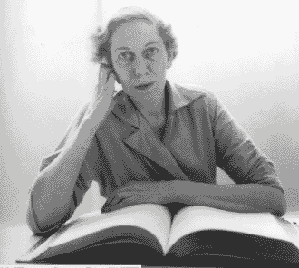
She allows that we may have become worse listeners. “William F. Buckley talked to Eudora Welty and Walker Percy for an hour on ‘the Southern imagination.’ It is a great conversation, but it likely wouldn’t be broadcast today. It is too slow and too complicated, which isn’t the writer’s problem. It’s ours.”

Read the whole thing here.

Poet Eavan Boland bags PEN prize

Thursday, August 23rd, 2012
Share

A winner

I’m on the PEN mailing list, so I got this one hot off the presses last week: Eavan Boland, director of Stanford’s Creative Writing program and one of Ireland’s leading poets, has won a 2012 PEN award for creative nonfiction with her acclaimed collection of essays, A Journey with Two Maps: Becoming a Woman Poet, published last year by W.W. Norton.

PEN Center USA will fete three honorees and give 11 awards in particular genres at its annual awards festival on Oct. 22 in Beverly Hills. Grove/Atlantic Press publisher (and Stanford alum) Morgan Entrekin will receive the Award of Honor; Joyce Carol Oates will receive the Lifetime Achievement Award and CBS correspondent Lara Logan will receive the Freedom to Write Award.

In addition to Boland’s award for creative nonfiction, the other genre awards are given for poetry, fiction, research nonfiction, children’s literature, graphic literature, journalism, translation, drama, teleplay and screenplay.

“I’m really honored to get the award. And especially from PEN, which is an institution that does so much to advocate for writers,” said Boland.

Boland has published 10 volumes of poetry – most recently New Collected Poems (2008) and Domestic Violence (2007) and an earlier collected volume, An Origin Like Water: Collected Poems 1967-87 (1996). She has received the Lannan Award for Poetry and an American Ireland Fund Literary Award. She has published a previous volume of prose, Object Lessons: The Life of the Woman and the Poet in Our Time.

Joyce Carol Oates at Stanford, with Anne Fadiman and Tracy Kidder

A Journey with Two Maps: Becoming a Woman Poet traces Boland’s own development as a poet, and also offers insights into the work of Sylvia Plath, Gwendolyn Brooks, Adrienne Rich, Elizabeth Bishop and the German poet Elizabeth Langässer.

Irish author Colm Tóibín named it a “favorite book” in the Irish Times last year, calling it “urgent and wise.” Britain’s Poetry Review called her “one of the finest and boldest poets of the last half century.”

Boland balances two worlds: free-spirited California and Ireland, a land of historical persecution and occupation, with its “painful memory of a poetry whose archive was its audience,” she said in an Academy of American Poets interview.

“I sought out American poetry because of that powerful, inclusive diversity,” she said. “I always remember I’m an Irish poet there, but at the same time some part of my sense of poetry feels very confirmed by the American achievement.”

New feather for Arnold Rampersad’s cap

Sunday, July 15th, 2012
Share


Accepting the National Humanities Medal last year

Shelley Fisher Fishkin wrote to tell me what I’d already heard from other sources – Publishers Weekly, among them.  Arnold Rampersad, the award-winning biographer of Harlem Renaissance poet Langston Hughes, has won the 77th Annual Anisfield-Wolf Book Awards Lifetime Achievement Award, widely recognized as a highly prestigious prize.  It’s the only juried literary competition devoted to recognizing books that have made an important contribution to society’s understanding of racism and the diversity of human cultures.

Henry Louis Gates Jr. headed the jury, which included Rita Dove, Joyce Carol Oates, Steven Pinker, and Simon Schama.

It tops a very good year for the author and literary critic: President Obama awarded him a National Humanities Medal last year.

Rampersad has already won a previous award with the organization, when the first volume of The Life of Langston Hughes, published in 1986, won an Anisfield-Wolf Book Award for Nonfiction in 1987. Volume Two, published in 1988, was a finalist for the Pulitzer Prize in 1989.

His other award-winning books have profiled W.E.B. Du Bois, Jackie Robinson, and Ralph Ellison. He has also edited critical editions of the works of Richard Wright and Langston Hughes.

Shelley, who co-edited Oxford University Press’ Race and American Culture series with the prizewinner from 1993 to 2003, called the new award “really special. … a major honor that is very well-deserved.”

He’s in especially good company now.  The Lifetime Achievement award has recognized some of the most widely-respected and influential writers and artists  of our time. Past winners include poet Derek Walcott;  playwright August Wilson;  fiction writers Ernest Gaines, Dorothy West, William Melvin Kelley, Paule Marshall, and John Edgar Wideman; photographer Gordon Parks;  writer and critic Albert Murray; and historian John Hope Franklin.

Here’s what Shelley said:

An extraordinarily elegant writer, a meticulous researcher, and a scholar gifted with the ability to focus on what matters most about any subject that he tackles, Arnold Rampersad richly deserves this honor.

A winner

His biographies and his literary scholarship have had an enormous impact on our understanding of American culture, illuminating issues of race and racism in America in groundbreaking, crucial ways. He has been a role model for generations of scholars in American Studies, English, and African American Studies. I congratulate the Anisfield-Wolf jury for recognizing his important contributions to the cultural conversation with this award.

New award for Rampersad tops an exceptional year – not only for him personally, but for a number of other folks in Stanford’s English and Creative Writing Department.  I wrote about that here.

“I was as surprised as I was pleased”: Rampersad receives National Humanities Medal

Thursday, March 3rd, 2011
Share

“I was as surprised as I was pleased,” said Arnold Rampersad, who received the National Humanities Medal yesterday.  He didn’t stay in Washington long — he headed back to his native Trinidad, where he’ll be till mid-month.  I had emailed him on another matter, and my message crossed with the happy announcement he had received one of the highest awards a scholar in America can get.

Rampersad was cited for his work as a biographer and literary critic. His award-winning books have profiled W.E.B. Du Bois, Langston Hughes, Jackie Robinson, and Ralph Ellison. He has also edited critical editions of the works of Richard Wright and Langston Hughes.

“Growing up as a schoolboy in Trinidad, I received an education in literature that some people might dismiss as ‘colonial,’” he recalls. “It nevertheless served me well in dealing with the complexities of American biography.”

According to the NEH’s online profile:

Ralph Ellison [2007] was published in an era when, according to Rampersad, “the life of the African-American writer has changed dramatically. In part through holding positions at programs in creative writing and departments of English at universities, the black writer has gained a solid presence on the literary scene that has replaced the fugitive nature of expression and publication forced on blacks over the centuries, especially in the slave narratives but continuing into the twentieth century. That presence does not guarantee fine writing but it has led, in my opinion, to an assurance that bodes well for the future. Black literature was described a long time ago as a ‘literature of necessity’ rather than one of leisure. That element of necessity still exists but it does not dominate as it once did. Black American literature as a cultural phenomenon has reached a level of stability and maturity that the circumstances of American life once routinely denied it.”

He joins authors Wendell E. Berry, Joyce Carol Oates, and Philip Roth; historians Bernard Bailyn and Gordon S. Wood; literary scholars Daniel Aaron, Roberto González Echevarría, and Arnold Rampersad; cultural historian Jacques Barzun; and legal historian and higher education policy expert Stanley Nider Katz.

The National Medal of Arts was awarded the same day, to former U.S. Poet Laureate Donald Hall [yayyyyyy! — ED.] actress Meryl Streep, musicians Sonny Rollins, Quincy Jones, James Taylor and Van Cliburn, painter Mark di Suvero, theater champion Robert Brustein and an organization, Jacob’s Pillow Dance Festival.

“One of the people that we honor today, Joyce Carol Oates, has said, ‘Ours is the nation, so rare in human history, of self-determination; a theoretical experiment in newness, exploration, discovery.’ That’s what we do,” President Obama said before presenting the medals.

He also said that works of art, literature and history speak to the human condition and “affirm our desire for something more and something better.”

“Time and again, the tools of change, and of progress, of revolution, of ferment — they’re not just pickaxes and hammers and screens and software, but they’ve also been brushes and pens and cameras and guitars.”

The whole shebang below:

12 more hours to the Nobels…Cormac McCarthy now #1

Wednesday, October 6th, 2010
Share

Man of the hour ... perhaps only that

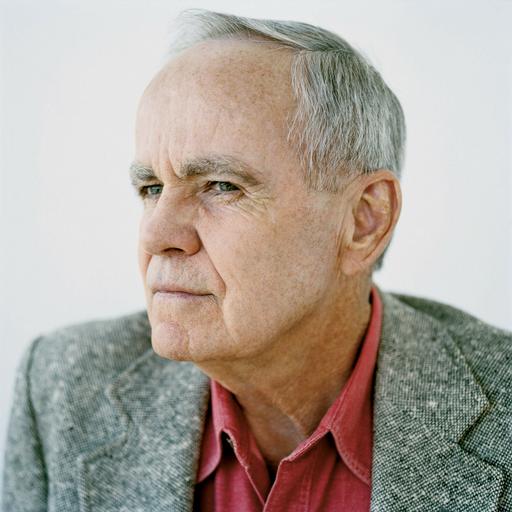
Ladbrokes’ site is up again, and the bets seem to be reshuffling in an inexpicable fashion.  Take a look for yourself.  America’s Cormac McCarthy has edged to the top spot for this year’s Nobel in literature, pushing Kenya’s Ngugi wa Thiong’o to #2.  Haruki Marukami and Swedish poet Tomas Tranströmer remain stable in the #3 and #4 slots.

But Poland’s Adam Zagajewski has now dropped way down to #20, and some of the rest is pure craziness:  Néstor Amarilla (we’ve rather taken a shine to him) is suddenly at the bottom of the list, with the notation “closed.”  What does that mean, if anyone put any money on him at all? Which someone must have done, to give him any ranking at all a few days ago…

In an alternative universe, Unibets, puts the Kenyan Ngugi wa Thiong’o at the top, with Néstor Amarilla as #2.  Huh?  As Literary Saloon points out in its excellent analysis, why wouldn’t someone bet for the Argentinian at Ladbroke’s, where the payout would be higher?  (Maybe because it’s “closed.”) 

Péter Nádas has been added to the list.  Joyce Carol Oates is #9.  Other names have moved up and down the list.  Check it out.  Only a few more hours to go.

A Swedish award for a Swede? Ladbrokes has spoken…

Wednesday, September 29th, 2010
Share

79-year-old perennial Nordic bridesmaid

Tomas Tranströmer is the odds-on favorite to win this year’s Nobel Prize for literature. Ladbrokes has spoken, putting his chances at 5 to 1.  However, Bill Coyle at the Contemporary Poetry Review states the problem this way:

Every year, as the announcement of the Nobel Prize in Literature approaches, partisans of the Swedish poet Tomas Tranströmer hold a collective breath, hoping against hope. A win for their man is unlikely for a number of reasons. One is the residual fallout from 1974 when the Swedish Academy gave the prize to two of its own members, Harry Martinson and Eyvind Johnson. Both were fine writers, but the appearance of nepotism was impossible to avoid. No Swede—no Scandinavian—has won the prize since.

Reuters observes that “Poetry dominates the bookmakers’ list” and that “American writers set to be overlooked again” — unless, of course, you consider perennial American Nobel bridesmaid Joyce Carol Oates, ranked #12, or perennial groomsman Philip Roth, at #15.  Thomas Pynchon is #16.  Note that none of the Americans are poets.  At least not primarily.

Does Bjørg-the-Cyborg pick the winners?

“Tomas Transtromer must surely be in pole position,” said David Williams of Ladbrokes. “He’s long been mentioned for the prize and we feel his work finally deserves this recognition.”  Probably an indication he won’t get it.  (You can read a few of his poems at The Owls website here.)

There’s an obscure Paraguayan playright — Nestor Amarilla — rumored to be shortlisted.  No one’s ever heard of her, which would be in keeping with recent prizewinners.  Do I sense another wicked Ted Gioia parody coming?  Read his “Shocking Revelation: Nobel Lit Prize Has Been Picked by a Robot since 1994!”  (His slightly more sober “Nobel Prize in Literature from an Alternative Universe” here.

The man in the #2 favorite spot leaves me with divided feelings — it would be nice to see Polish poet Adam Zagajewski bag the prize — but the award has a way of turning lives upside down. (Read An Invisible Rope for some firsthand stories about what it did to Czesław Miłosz in 1980.)  I remember Zagajewski kindly serving as my sherpa in literary Kraków — and, well, I’m selfish.  Which is to say, I would miss his friendship.

I reviewed his book for the San Francisco Chronicle (and no, I didn’t write the headline) — I’m chuffed that it inspired Kay Ryan to write to the newspaper:  “It was a thrill to read Cynthia Haven’s brilliant review the poet Adam Zagajewski’s book of essays, A Defense of Ardor, in this past Sunday’s Book Review. Almost never do I come across something about poetry that has the sting and bite of poetry in it.  Zagajewski comes straight through Haven’s elegant and deeply informed prose.  More of these brainy reviews please; more Cynthia Haven, please.”  I hope they published it.  I honestly can’t recall.  Oscar Villalon sent it to me.  God knows one gets enough slaps and punches.

I also profiled Adam for the Poetry Foundation magazine here — an article that still gets a lot of hits.

I remember meeting Adam for tea in Krakow’s main square, and being thrilled by the squadrons of pigeons.  Adam assured me loftily that they were very stupid creatures.  And, as a newcomer to his town, he showed me the Jagiellonian University,  as the light was fading…

"Only others save us..."

When I asked him about the future of poetry and poetry-lovers in the world of tweets and sound bites he said this (which didn’t make it into the final cut of the Poetry Foundation article):  “We’ll be living in small ghettos, far from where celebrities dwell, and yet in every generation there will be a new delivery of minds that will love long and slow thoughts and books and poetry and music, so that these rather pleasant ghettos will never perish — and one day may even stir more excitement than we’re used to now.”

I keep this on my desk:

Only others save us,
even though solitude tastes like
opium. The others are not hell,
if you see them early, with their
foreheads pure, cleansed by dreams.

— Adam Zagajewski, “In the Beauty Created by Others”