Posts Tagged ‘Martin Amis’

“Martin Amis’s 15 (or is it 16?) rules for writers: “You have to have a huge appetite for solitude.”

Friday, May 26th, 2023
Share
“Try not to write sentences that absolutely anyone could write.” Photo: Bryan Appleyard

Martin Amis’s 15 Rules For Writers (2014) was on Abbas Raza’s 3quarksdaily today. We found a 16th online. Here they all are:

1. Write in longhand: when you scratch out a word, it still exists there on the page. On the computer, when you delete a word it disappears forever. This is important because usually your first instinct is the right one.

2. Minimum number of words to write every day: no “quota.” Sometimes it will be no words. Sometimes it will be 1500.

3. Use any anxiety you have about your writing — or your life — as fuel. Ambition and anxiety: that’s the writer’s life.

4. Never say “sci-fi.” You’ll enrage purists. Call it SF.

5. Don’t dumb down: always write for your top five percent of readers.

6. Never pun your title, simpler is usually better: Lolita turns out to be a great title; couldn’t be simpler.

7. At Manchester (University, where he taught creative writing) my rule is I don’t look at their work. We read great books, and we talk about them … We look at Conrad, Dostoyevsky.

8. When is an idea is worth pursuing in novel-form? It’s got to give you a kind of glimmer.

9. Watch out for words that repeat too often.

10. Don’t start a paragraph with the same word as previous one. That goes doubly for sentences.

11. Stay in the tense.

12. Inspect your “hads” and see if you really need them.

13. Never use “amongst.” Never use “whilst.” Anyone who uses ‘whilst’ is subliterate.

14. Try not to write sentences that absolutely anyone could write.

15. You write the book you want to read. That’s my rule.

16. You have to have a huge appetite for solitude.

Remembering Martin Amis: “It’s the deaths of others that kill you in the end.”

Wednesday, May 24th, 2023
Share
Martin Amis: He didn’t smile for the camera … any camera… (Photo: Bryan Appleyard)

Never met Martin Amis in person, but I was a dozen feet away from him eleven years ago at Stanford’s Cemex auditorium – and wrote about it here. “As you get older – and this has to be faced – most writers go off,” said.  “I lay the blame at the feet of medical science.”

He cited W.B. Yeats: “Now I may wither into the truth,” he said. But although occasionally withering, he was far from withered. I wrote about him here and here and here, among other places.

In a puzzling move, he began the evening by recounting long lists of Nazi atrocities – a return to Time’s Arrow.  The subject matter is timeless, he said, and defies “that greasy little word – closure.”  (Fine.  About time someone took that cliché down.) “Rule Number One:  Nobody gets over anything.  It’s the deaths of others that kill you in the end.”

He was already thinking about death, and he died on May 19, of esophageal cancer, the same disease that claimed his friend, the author and journalist Christopher Hitchens, in 2011.

From Boyd Tonkin, writing in The Guardian, about the “writer whose acrobatic wit defied gravity and solemnity and who epitomised literary fame in an age of glitz and hype.”

“The writer Martin Amis, who has died aged 73, delighted, provoked, inspired and outraged readers of his fiction, reportage and memoirs across a literary career that set off like a rocket and went on to dazzle, streak and burn for almost 50 years. His scintillating verbal artistry, satirical audacity and sheer imaginative verve at every level from word-choice to plot-shape announced a blazing, once-in-a-generation talent.”

Read the rest here. A few words from a few who knew him. From the journalist and author Bryan Appleyard:

I saw Martin Amis in Brooklyn in 2014 and took this photo (above). I asked him to smile but he said he could not act. He had asked me to bring him a packet of rolling tobacco from London. I took him two packets. He smoked incessantly. In some interviews it looked as if his trousers were on fire. He died of esophageal cancer. He was a dazzling writer and deserves all the tributes and more. RIP

From the Hungarian poet and translator George Szirtes:

It’s oddly shocking to hear of the death of Martin Amis. A certain energy, a bullish certainty, a kind of headlong barrage of wit and Eighties street-wisdom passes with him. As a public figure he was almost more than himself. He was just a few months younger than me and he always seemed young. I met him only once when we were seated next to each other at a dinner in Manchester though I can’t remember what the occasion was. We talked a little about Thomas Hardy‘s poetry and Philip Larkin‘s too. He quoted chunks. He was friendly and mild and sad, possibly rueful. Novelists – did he say poets too? – should stop writing before they get old, he sighed. He was not joking. He had crashed out of critical adulation by then. The new wave of feminist writers had little time for him and his prestige counted against him. The £500,000 advance, the affair of the new teeth (reminds me I am back at the dentist on Monday), the book on Stalin, and the strange Booker-listing of Time’s Arrow, which – for me – was him at his brilliant but preening worst in the worst of all causes, did seem to hollow him out a little. But Money, for example, remains the work of a stunningly vivid writer. There also remains the image of the Fenton-Hitchens-Amis intellectual triumvirate with Fenton, in my view, the most princely of poets and Hitchens the most entertaining and commanding of polemicists. I imagine Clive James and John Fuller standing in the wings. And there also remains the suggestion – whose, I don’t remember – that the Eighties explosion of so-called ‘Martian’ poetry, referred to as Martianism, was so named as an anagram of Martin Amis, either that or (more likely) that it was a reference to Craig Raine‘s book of poems, A Martian Sends a Postcard Home (1979). Much remains in other words. I liked the weary, rueful man at the Manchester dinner table and I do feel a sense of shock that he is gone. A slice of historical voice is gone with him. He was not an old man but a young man grown older.

From the Polish poet, literary critic, translator, and essayist Jerzy Jarniewicz

Martin Amis, author of, among others, London Fields, The Information, and Time’s Arrow, has died; also (although he did not write poems himself) co-founder of the poetic school called the “Martian School.” There is a well-known tale about fools who wanted to see the moon, and when someone finally pointed at it, they looked at the pointing finger. I’d say that Martin Amis was looking at his finger – not because, however, like this fool, he didn’t know that it was pointing at the moon – but because he was more interested in his fingers than blue bodies suspended far away in space. Especially since the father’s generation made him look at the moon for a long time. I wrote about Amis (father and son) in the “Attendance Note,” where you can also find a conversation that we had with Peter Sommer in November 1995.

Martin Amis on the failure of the intellectuals: “The truth about Russia dawned in cloud and mist.”

Monday, July 6th, 2020
Share

Martin Amis calls it like it is.

Martin Amis goes on a rant about Lenin and the Soviet Union in the New York Times. As rants go, it’s top drawer. Enjoy for the verbal fireworks.

He begins: “It was a very bad idea from the outset, and one forced into life — or the life of the undead — with barely imaginable self-righteousness, pedantry, dynamism, and horror. The chief demerit of the Marxist program was its point-by-point defiance of human nature. Bolshevik leaders subliminally grasped the contradiction almost at once; and their rankly Procrustean answer was to leave the program untouched and change human nature. In practical terms this is what “totalitarianism” really means: On their citizens such regimes make ‘a total claim.'”

He continues:

As one historian of Russia put it, it is to the intellectuals that we turn for “real prowess of wrong-headedness.” But it wasn’t just the pundits, the writers (H. G. Wells, G. B. Shaw) and the philosophers (J.P. Sartre, A. J. Ayer) who swallowed the Moscow line; so did historians, sociologists, politicians, and even businessmen. To its supporters the allure of the Communist Party was twofold. The secondary appeal was that it gave you the (not quite delusive) impression that you were playing your part in world events; the primary appeal was that the program looked wonderful on paper, and spoke to the optimism and idealism of many of the most generous hearts and minds.

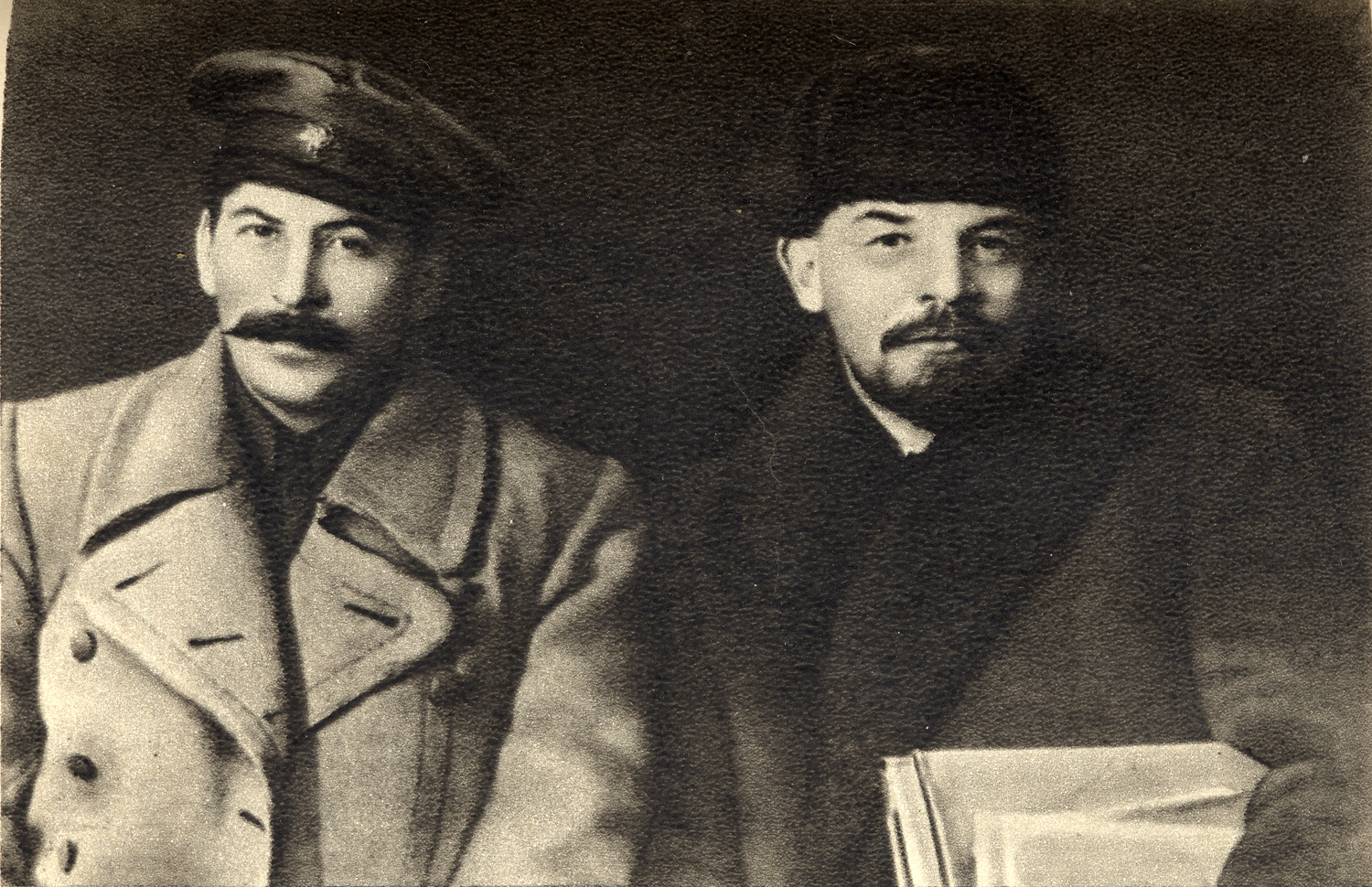
Two of a kind. Read about Lenin’s brain here.

It was vaguely understood that there had been some loss of life: the terror and famine under Lenin, the Civil War, forced collectivization (“Ten millions,” Stalin said to Churchill, holding up both palms, in the Kremlin in 1942), the burgeoning system of state slavery known as the gulag (created under Lenin), the Great Purge of 1937-38.All that could be set aside, for now, because (a) revolutions are always violent, and (b) the ends supposedly justify the means.

As for the first point, the French revolutionary terror lasted from June 1793 to July 1794, and claimed more than 16,000 victims, no more than a busy couple of weeks for the Bolsheviks (and imagine if Robespierre had kept at it until 1830). As for the second point, well, there is a counterproposition: Means shape ends, and tend to poison them. We all know, now, what we think of the Good Intentions Paving Company. Anyway, the means were all the Soviet citizen was ever going to get. Western doublethink and selective blindness on this question is a very rich field; the wisest and most stylish guide to it is Reflections on a Ravaged Century (2000), by Robert Conquest, to whom we will necessarily return.

Nabokov was the first one to see it with an “illusionless eye,”  the critic Edmund Wilson, his longtime correspondent, indulged the Bolsheviks. Amis does not indulge Wilson:

Conquest working at his Stanford home. (Photo: L.A. Cicero)

By 1972 Wilson might have found time to read the three outstanding memoirs of the period: I Chose Freedom, by Viktor Kravchenko (1946), Journey Into the Whirlwind, by Eugenia Ginzburg (1967), and Hope Against Hope, by Nadezhda Mandelstam (1970).

Kravchenko was an apparat high-up who defected immediately after the war; Ginzburg was a provincial don and journalist who was found guilty of Trotskyism; and Mandelstam was the wife, and then the widow, of the great poet Osip (1891-1938). Cumulatively, these books persuade you of a disconcerting truth: Compared with Stalin’s Russia, Hitler’s Germany was a terrestrial paradise — except for Communists and Jews (and, later, Gypsies and homosexuals).

Kravchenko, Ginzburg and Mandelstam show us a society from which the concept of trust had been completely excised — a society where the conversational meaning of the question “Do they write?” was “Do they write letters of denunciation to the secret police?” You couldn’t trust your parents; you couldn’t trust your children. In addition, everyone was terrified all the time, right up to and including Stalin, who feared assassination at every waking minute. When he flew to Tehran for the first Big Three summit, his plane was escorted by 27 fighters; when he entrained for Potsdam (the third and final summit), his bodyguards numbered 18,500. By contrast, ordinary Germans knew no panic until 1943, as the reckoning loomed, and as the cities were being bombed nightly, then daily, then daily as well as nightly.

Solzhenitsyn in a long tradition.

The truth about Russia dawned in cloud and mist. The first consciousness-shifting book was Conquest’s The Great Terror (1968). Very soon the samizdat version was circulating in Russia; and freshly enlightened parents would wonder if their growing teenagers were “ready for Conquest” and the attendant shock. Conquest had time to add The Nation Killers and Lenin, but not long enough to add Kolyma: The Arctic Death Camps (1976) — before the translation of Aleksandr Solzhenitsyn’s The Gulag Archipelago was complete in its three volumes (1973-75). This was and is a visionary nonfiction epic written by an artist in the Russian Orthodox, old-regime tradition of Gogol, Dostoyevsky and Tolstoy. Hereafter the great argument (like the original Marxist idea) had only a vampiric existence — technically dead, but still animate.

Read the whole thing here.

Martin Amis: “I think you have to be suspicious of any instant cult book.”

Monday, June 25th, 2018
Share

A talker (Photo courtesy Knopf)

My goodness. Does this man ever have a bad interview? Like him or hate him, agree with him or not, Martin Amis is always fascinating, incisive, opinionated, controversial. The current Q&A at The Los Angeles Review of Books is proof.

“Despite the variety of subjects, the guiding theme of most of these pieces is the impact of time on talent and the rarity of a long, multichaptered literary career,” said interviewer Scott Timberg.

The Book Haven was greedy and wanted to quote everything, but we calmed down and settled for two excerpts. The first discusses poet Philip Larkin‘s appeal for novelists. A timely topic, because Stanford’s Another Look book club recently featured Larkin’s little-known novel, A Girl in Winter:

Timberg: You have a great line on Larkin in one of your essays, where you say he’s not exactly a poet’s poet — he’s too widely embraced for that — but a novelist’s poet. Tell me what you mean by that.

Martin Amis: Well, it was suggested to me by the poet-novelist Nick Laird. We were talking about Zadie [Smith, Laird’s wife] loving Larkin, and Nick said, “All novelists love Larkin.” That resonated for me, and when I came to write that piece I saw just how true it was — that he belongs with the novelists rather than the other poets. “A poet’s poet” is usually very much in danger of being precious, or exquisitely technical. Larkin is technically amazing, but he doesn’t draw attention to it. It’s his character observation and phrase-making that put him in the camp of the novelists, I think.

A grasp of ordinary people

There’s something oddly visual about Larkin too, for someone who squinted his life away through thick glasses. I feel like I can see those poems, the curtains parting and the little village and the ships on the dock.

Yes — and very thickly peopled. He has a grasp of ordinary character — which is very hard to get. The strangeness of ordinary people.

That may be why people who don’t read a lot of poetry respond to Larkin, if they read him at all. It’s like Auden. You might not understand everything in those guys’ work, but you get something out of it if you try.

Yes — though Auden is a lot more difficult. And a greater poet, I think, in the end. But — yes — Larkin doesn’t need much interpretation from critics in the way other poets do.

The authors you write about in your book are mostly novelists. Do you read much poetry, contemporary or otherwise?

Yeah, I do. It’s much harder to read poetry when you’re living in a city, in the accelerated atmosphere of history moving at a new rate. Which we all experience up to a point. What poetry does is stop the clock, and examine certain epiphanies, certain revelations — and life might be moving too swiftly for that.
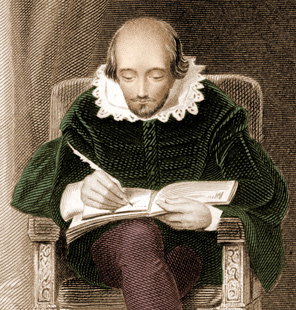
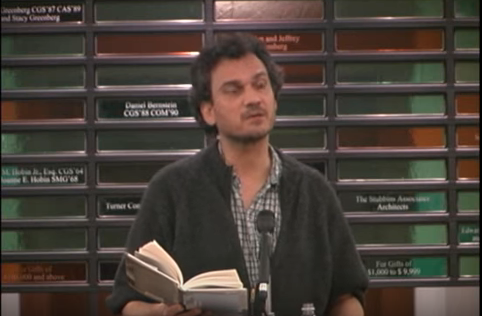
He reads “The Greats.”

But I still do read, not so much contemporaries, as the canon. I was reading Milton yesterday, and last week Shakespeare — it’s the basic greats that I read.

It’s amazing how much poetry dropped out of the literary conversation in the States over the last few decades. It’s not gone entirely, but it doesn’t show up very much. I find British and Irish people, especially those born in the 1940s and ’50s, much more engaged with verse. It’s really changed over time.

It really has, and also the huge figures are no longer there, in poetry. Lowell, Seamus Heaney was one of the last. And I’m convinced, for that reason, that we live in the age of acceleration. Novels have evolved to deal with that, as the novel is able to do — just by moving a bit faster. Not being so speculative, digressive, intellectual. But poetry moves at its own pace, I think — and you can’t speed that up.

***

Your book is about the effect of time on talent — you take the long view on Nabokov and others. Each career is different, but did you perceive any patterns in the way these things go? Bellow, Nabokov, Roth — they all had robust careers. But we could contrast those with shorter or less successful ones — Joseph Heller, maybe, or Alex Chilton. Musicians, artists, writers who seemed exciting at first, but didn’t really keep up.

Indefatigable Nabokov

You get a sense reading a novel sometimes that this novelist has a big tank. A huge reserve. And some people don’t — and they exhaust it quite quickly. You can watch that process in any artist, I think. They arrive fresh, and then they use up, sometimes, their originality, and then are reduced to rephrasing that. You only see it fully when they’re coming to the end of their careers; then you can assess the size of that tank.

But you do go from saying hi, when you arrive on the scene, to saying bye, making your exit. Medical science has given us the spectacle of the doddering novelist. As I say in the first of the Nabokov essays, all of the great novelists are dead by the time they reach my age [68]. It’s a completely new phenomenon, and it’s a dubious blessing. Novelists probably do go on longer than they ought to, now.

Philip Roth has done the dignified thing, just quit. I know others who’ve done that. It seems to me that rather than gouging out another not-very-original book, you should just step aside.

Sometimes it’s easy to tell, but sometimes it’s harder. If we were reading, back in the 1960s, Goodbye, Columbus alongside Catch-22, would we have been able to tell which of the careers would last six decades and which would peak right out of the gate?

Catch-22? Embarrassing.

It’s hard to predict. But again, you do get an idea of the size of the reserves. Writers who start late sometimes go on longer, because the tank stays full longer.

My father and I used to disagree about Catch-22. He thought it was crap. He used to say of me that I was a leaf in the wind of trend and fashion.

Every father says that about his son!

I think you have to be suspicious of any instant cult book. See how it does a couple of generations on.

I looked at Catch-22 not long ago and I was greatly embarrassed — I thought it was very labored. I asked Heller when I interviewed him if he had used a thesaurus. He said, “Oh yes, I used a thesaurus a very great deal.” And I use a thesaurus a lot too, but not looking for a fancy word for “big.” I use it so I can vary the rhythm of what I’m writing — I want a synonym that’s three syllables, or one syllable. It’s a terrific aid to euphony, and everybody has their own idea of euphony. But the idea of plucking an obscure word out of a thesaurus is frivolous, I think.

Read the whole thing here

Michael Hoffman: “I have mostly ended up translating dead people. They are more appreciative.”

Sunday, May 6th, 2018
Share

Danke, Herr Hamburger.

My work involves reading poets, essayists, novelists from all over the world, so every day I have occasion to consider how very much I owe to translators – for example, Michael Hamburger‘s translations of Friedrich Hölderlin. I know, I know … Hölderlin is impossible to translate, but the only alternative to reading translations is to give oneself over to learning every European language, and a few Asian ones, or else slide into a sort of literary parochialism.

I haven’t worked with enough German to run across Michael Hoffman, “arguably the world’s most influential translator of German into English, who can single-handedly revive an author’s reputation, as he did with Hans Fallada.” That’s according to Philip Oltermann, writing an article some time ago in The Guardian. The provocative title “English is basically a trap. It’s almost a language for spies.”

Hoffman’s reviews have a reputation for savagery, but he sees it as a form of pruning: “I have a sense of the enterprise being ecological,” he says. “There is so much excessive praise and excessive interest in the books world, and it’s all too focused on too few people. If you cut things down to scale, you do something good.”

A few excerpts:

A reputation for savagery: but “all shy eyes and nervous hands.”

… one of the 58-year-old’s trademark masterclasses in literary evisceration: a forensic demolition job on Richard Flanagan’s The Narrow Road to the Deep North in the London Review of Books, in which Hofmann had described the 2014 Man Booker winner as “ingratiating”, “gassy” and “lacking the basic dignity of prose”.

It wasn’t Hofmann’s first dismantling, and not even the most vicious. In another LRB review, he had written after reading Martin Amis’s latest, elsewhere feted as a glorious return to form: “I read The Zone of Interest straight through twice from beginning to end and it feels like I’ve read nothing at all.”

His most eminent literary compatriot, Nobel-winner Günter Grass, came under the guillotine in 2007 in this publication: Grass’s confessional memoir Peeling the Onion, he wrote, contained “two pages of failed writing that should be put in a textbook, and quarried for their multiple instances of bad faith”.

Like a Soho drunk stumbling into the National Portrait Gallery in search of a good scrap, Hofmann has battered posthumous reputations with the same glee as those of the living. “Stefan Zweig just tastes fake,” he wrote in another review, dismissing the widely revered Viennese man of letters as the “Pepsi of Austrian writing”.

The real Hofmann doesn’t quite fit with the cartoonish picture of a lit-crit Johnny Fartpants. As he sits in an incongruously rowdy Hamburg bar, all shy eyes and nervous hands, one is reminded that he is also a poet and translator: a humble servant of words, not just their sneering judge.

***

Translators need “an active sense of mischief”

One of his guiding principles for translating, he says, is to avoid the obvious word, even if it is the literal equivalent of the original. When the opening page of a [Joseph] Roth novel contained the word Baracke, he insisted on going with “tenement” rather than “barracks”. In the second paragraph of Hofmann’s version of Metamorphosis, Gregor Samsa doesn’t ask “What happened to me?” (Was ist mit mir geschehen?), but “What’s the matter with me?”. He liked the phrase, he says, because it sounds like someone having trouble getting up after a heavy night.

“Nobody will notice, but you have taken a step back from the original. You have given yourself a little bit of self-esteem, a little bit of originality, a little bit of boldness. Then the whole thing will appear automotive: look, it’s running on English rather than limping after the German.”

Without an active sense of mischief, he says, translators can easily become bitter people. “Nobody sees what you are doing, and the minute you do something, people cry ‘Mistake, mistake!’. If done in that way, it feels almost parasitic upon literature. You can begin to understand fussy authors such as Kundera, who minimise the space of translators. That’s partly why I have mostly ended up translating dead people. They are more appreciative.”

Read the whole thing here.

Vasily Grossman recalls a bleak Christmas in wartime Russia

Saturday, December 13th, 2014
Share

nyrbSara Kramer of the NYRB Classics dropped me a line yesterday to let me know that my submission for “A Different Stripe” had worked its way to the top of the “Coffee and Classics” stack (that must be some backlog; it’s been five months); see it online here. (And send your own submissions to this address.) The book I featured is Vassily Grossman‘s Life and Fate. Helen Pinkerton sent us a mini-review here, calling it “possibly the greatest novel I have ever read”. The wartime book was judged so dangerous in the Soviet Union that not only the manuscript but the ribbons on which it had been typed were confiscated by the the state. Many readers are coming to share Helen’s opinion about its greatness. Author Martin Amis, for example, said that “Vasily Grossman is the Tolstoy of the U.S.S.R.”

Meanwhile, the submission gave Sara a chance to reread the bleak Christmas scenes from the book:

The soldiers … dragged another crate up to the stove, prised open the lid with their bayonets and began taking out tiny Christmas trees wrapped in cellophane. Each tree, only a few inches long, was decorated with gold tinsel, beads and tiny fruit-drops.

The general watched as the soldiers unwrapped the cellophane, then beckoned the lieutenant towards him and mumbled a few words in his ear. The lieutenant announced in a loud voice:

“The lieutenant-general would like you to know that this Christmas present from Germany was flown in by a pilot who was mortally wounded over Stalingrad itself. The plane landed in Pitomnik and he was found dead in the cabin.”

—Vasily Grossman, Life and Fate, translated by Robert Chandler