Archive for May, 2014

Eduardo Galeano renounces his book: “Reality has changed a lot, and I have changed a lot.”

Friday, May 30th, 2014
Share
galeano2

He changed his mind. So what?

It’s never too late to change your mind.

We haven’t been following the news as we ought, so we owe a heads-up and a hat tip to Minnesota journalist (and sister-in-law) Beth Hawkins. So here’s what’s happened.

Uruguayan novelist Eduardo Galeano wrote his iconic The Open Veins of Latin America: Five Centuries of the Pillage of a Continent way back in 1971. The book, which describes how centuries of systematic plunder has left a continent in political disarray and poverty, was translated into a dozen languages and sold a million copies. It has been considered equivalent to a bible in university classrooms since its publication, taught in history, anthropology, economics, geography. It was widely embraced in Asia and Africa, as well as South America (though the economic rise of China, India, and Brazil somewhat undermined its logic). It shot to the top of amazon lists more recently, when Venezuelan president Hugo Chávez gave a copy of the book, which he had called “a monument in our Latin American history,” to President Obama at their first meeting.

That was then, this is now. Galeano has repudiated the book, “saying that he was not qualified to tackle the subject and that it was badly written.” From the New York Times:

Predictably, his remarks have set off a vigorous regional debate, with the right doing some “we told you so” gloating, and the left clinging to a dogged defensiveness.

Open Veins tried to be a book of political economy, but I didn’t yet have the necessary training or preparation,” Mr. Galeano said last month while answering questions at a book fair in Brazil, where he was being honored on the 43rd anniversary of the book’s publication. He added: “I wouldn’t be capable of reading this book again; I’d keel over. For me, this prose of the traditional left is extremely leaden, and my physique can’t tolerate it.”

galeano“I know I can be accused of sacrilege in writing about political economy in the style of a novel about love or pirates. But I confess I get a pain from reading valuable works by certain sociologists, political experts, economists and historians who write in code.” We couldn’t agree more. He told the Brazilians, “Reality has changed a lot, and I have changed a lot.”

Others are thinking about his politics, and even Isabel Allende, who wrote a new foreword for the book, is dismayed. We’re thinking about honesty. How many things has Humble Moi written that should be buried in a deep, deep hole!  Kate Bell, whoever she is, summarized our thoughts exactly in the comments section: “I expect all serious writers feel the same about early work. I choked with embarrassment upon unfurling some ancient clips of a minor column I once wrote. And formal economics was just a toddler in the world of academe then, even more so for the developing world. Any ‘told you so’s only demonstrate the immaturity of the taunter.  I’ve been trawling through old textbooks from the 70s. Economics, psychology, marketing … All so dated and dull, fit only for reading in the smallest room.”

Everyone is wondering how to teach this book, now that its author has disavowed it. Easy. Teach the book, and also teach about Galeano’s reservations about it. Teach about then, and teach about now, too. Isn’t that what teaching’s all about?

“The most wired country in the world”: Estonia’s prez at Stanford (video added!)

Tuesday, May 27th, 2014
Share
Estonia Pres. Ilves visit_24

Estonia’s dashing president … in a nerdy sort of way. (Photo: Steve Castillo)

Most of us couldn’t find Estonia on a map – even though the Ukrainian crisis has brought the Baltic states into sharper focus. It’s too bad, because there’s so much to know and like about Estonia. For one, it’s the Silicon Valley of Europe – Skype came from this tiny country of 1.3 million, and they do taxes online and vote online from their laptops.  (I’ve written about a few of its other good points  here and here and here.)

Another reason to like it is President Toomas Hendrik Ilves, who spoke at Stanford last week, wearing his signature bow tie. The New Jersey-reared and American-educated former journalist has been president of Estonia for eight years, and in public life for decades prior to that. He also had a famous Twitter spat with Nobel economist Paul Krugman two years ago; we wrote about it here. Although he learned computer programming at 13, he insists “I am not a geek.”

McFaul introduces Ilves in the Bender Room (Photo: Steve Castillo)

McFaul introduces Ilves in the Bender Room (Photo: Steve Castillo)

Ilves was at Stanford to discuss “the fundamental issue of our time” – the future of the digital world. “We are probably the most wired country in the world,” he said of his tiny homeland. By contrast, America’s record as the land of invention is outstanding – “but using IT to make the life of people better? Not so good.”

He recommended “digital ID card” that would provide a unique identity to everyone, and is legally equivalent to a signature.  “Unless you have a guaranteed ID, anything can happen,” he said. The Estonians borrowed the concept from the neighboring Finns, but took it a little farther.

He also told the story of Estonia’s remarkable post-Soviet recovery – which itself offers a perspective on current events in Eastern Europe. Estonia suffered three occupations in the 20th century: first the Soviet Union in 1939, then the Nazis in 1941, then the Soviet Union again from 1944 until 1993. (How did it end? Cf. my post on The Singing Revolution here).

At the time of their independence, Ilves said, the nation hadn’t built any new highways or overpasses in 50 years. Estonia had a 1938 phone system. Their good friends, the neighboring Finns, were upgrading in 1993, and offered the Estonians their “legacy technology” from 1979. Definitely an improvement. Ilves urged Estonia to refuse the offer, and it did.  With commitment and will, he said, they had a thoroughly up-to-date digital system within six months. Ilves explained that when he was ambassador to Washington, he had a worse phone connection to the State Department two miles away than he did to Tallinn, 5,000 miles away. By 1998, “all our kids were hooked up with computers in schools.”

rifkinIt’s easy to feel overwhelmed when you’re in a small country on the periphery, and the economies of scale are working against you. “If you don’t have scale, you get kind of suicidal,” he joked. He changed his mind about the possibilities when he read Jeremy Rifkin‘s 1995 The End of Work. He explained that story in the Wall Street Journal here.

Ilves declined to talk about the topic that was on everyone’s mind: Russian aggression in Ukraine.  As former U.S. ambassador to Russia Michael McFaul explained in his introduction, “If you want to understand Russia today, you have to follow Ilves on Twitter – and do it today. There’s no greater authoritative voice about our current crisis.”

You can do that right now, right here.  I did, about the time of the Krugman spat. Meanwhile, we’re told there will be a youtube video of the event at Stanford Libraries any moment now. We’ll post it as soon as we receive word. Promise.

UPDATE on 5/30: We promised you the YouTube video … and heeeeerrrrrreee it is!

Yes, it really exists: Poland’s vending machine for Haruki Murakami’s books

Sunday, May 25th, 2014
Share

Jazz scholar Ted Gioia alerted me to this post on Facebook, and yes, it really exists: a Polish vending machine that sells books by Haruki Murakami. I understand they’re common in Japan, but here?  Soon?  Which writer would you feature in one?  Send me an email or comment in the section below.

vending.machine

“The air of an enfant terrible”: remembering Nobel poet Joseph Brodsky on his 74th birthday

Saturday, May 24th, 2014
Share

birthday cakeToday would have been the Joseph Brodsky‘s 74th birthday. We laid the ground for the celebrations a few days ago with a post about the Nobel poet’s metaphysical experiences. Here are a few memories from two important friends.

Author Sven Birkerts of The Gutenberg Elegies, was managing a secondhand and rare bookstore in Ann Arbor when the poet befriended him. His mini-memoir matches my own recollections. Here’s what he wrote over Post Road Magazine:

SvenBirkerts2

A friend in cold climates

At this time, back in the mid-1970s, Brodsky still had the air of an enfant terrible. Impatient, aggressive, chain-smoking cigarettes, he liked creating dispute for its own sake. Suggest white and he would insist black. Admit an admiration—unless it was for one of his idols—like Auden or Lowell or Milosz—and he would overturn the opinion. “Minor,” he would say of some eminence I mentioned. Or: “The man is an idiot.” At first I did not understand the workings of this compulsion, and as we talked, drinking cup after cup of black coffee, I grew despondent. Here was my chance to meet the poet I had admired for so long, and I could say nothing right. Yet for all that, he seemed in no hurry to leave.

I would like to say that by the end of that long afternoon we had become friends, intimates, but that would not be true. I was, I think, too young and callow; I did not offer enough ground for real exchange. Instead, Brodsky assumed a fond, almost paternal role with me, teasing, chiding, offering suggestions about books. A limit was set. I did not feel that I was getting close to the turbulent soul that wrote the poems.

birkerts5From that time on, though, we did stay in contact. Brodsky would suddenly show up in the bookstore, searching for some book of poems. On several occasions, too, he handed me the typescript of some essay he was working on for the New York Review of Books, asking if I would check over his English. The task would invariably keep me at my desk for hours, for the fact is that brilliant and inflammatory as his insights were, the prose at this stage was a bramble patch—English deployed as if it were an inflected language.

Once, I remember, I stayed up much of the night, recasting sentence by sentence his discussion of the Greek poet Cavafy, finally typing the whole thing over afresh. When I handed the piece to him the next day, he quickly glanced down the page, smiled his wicked sultan smile, and put the whole bundle in an envelope to mail. I never found out what he thought of my deeply deliberated interventions.

Read the rest here.
wigzell2

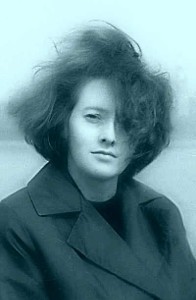
She liked his smile.

Over on a Russian site, Yuri Lepsky interviewed the Slavic scholar Faith Wigzell, who offered her first comments ever on the poet she met in the 1960s in Leningrad in “Loving, Leaving and Living.” She is the dedicatee of several poems, including “A Song to No Music” and “On Washerwoman Bridge.” According to Lepsky, “In the fifteen years since the poet’s death, she has published nothing about her friendship with him nor has she given any interviews on the subject nor published their correspondence. She has also refrained from commenting on the poems he dedicated to her.”

An excerpt:

– How did you meet Brodsky? What kind of first impression did he make on you?

– I believe it was March 1968. I had come to Leningrad for a six-week research visit, connected with my PhD at London University. … I arrived in Leningrad and straight away phoned my old friends Romas and Elia Katilius. Back in 1963-64 I was studying in Leningrad and it was then that I met the Katiliuses and Diana Abaeva, later to become Diana Myers and to work with me at London University. But that would come later.

It was back then, in the early 1960s, that we met and became friends. They were wonderful people – kind, engaging, loving poetry and art, and saw the Soviet government for what it was worth. They were scientists: Romas was a theoretical physicist at the semiconductor institute. Diana, on the other hand, was in the humanities’ field.

So, in short, I called the Katiliuses; they were very pleased and invited me over that evening. I went of course to their enormous room in a communal apartment on Tchaikovsky Street… But apart from my friends I there found a young man whom I had not previously met. He immediately attracted my attention.

reading-russian-fortunes-faith-wigzell-paperback-cover-art– Why?

– Firstly, he had this very unusual smile.

– What do you mean by unusual?

– How can I put it? It was a shy or, more precisely, a timid smile. Yes, yes, timid. And his voice…

– His voice?

– Well, it was something special… Never since then have I encountered such a voice. When he read his poetry his voice made an astonishing impression …

– And that was Brodsky?

– And that was Brodsky. It turned out that he had been friendly with the Katiliuses for a long time, and with Diana as well. The Katiliuses had a young child, so guests could not overstay their welcome. Late in the evening Joseph and I went out on Tchaikovsky Street, and he walked me back to the hotel. And so that’s how it all began.

– And you spoke about literature, of course?

– Not only, not only… (Faith laughs) As it turns out Joseph and I had another friend in common – Tolya Naiman. When I found out, I decided to give them both a present. I had brought with me from London a large bottle, a litre I think, of whisky. At that time in Russia whisky wasn’t to be found in ordinary shops. They were more than delighted to accept, but what happened next seemed to me downright horrible: the two of them proceeded to drink the entire bottle in the course of the evening. I was absolutely stunned. I asked: why did you drink the whole bottle? They just shrugged.

* * *
wigzell5When her six weeks in Leningrad had come to an end and she had to go home, to London, it turned out that in addition to new impressions, research material and attractive souvenirs, she had packed something much more serious: an offer of heart and hand from the poet Joseph Brodsky.

She returned to London and four years later married an American who lived in England. In 1972, when Brodsky was expelled from the USSR, he flew to London together with the great W.H. Auden for an international poetry festival. Faith was expecting her first child. Seeing her pregnant was a shock for Brodsky. She subsequently tried to keep their meetings to a minimum, so as not to cause him any distress.

* * *

– How do you relate to the poems which he dedicated to you: are they just Brodsky’s poems or are they poetic letters to Faith Wigzell?

– I cannot see them as simply Brodsky’s poems. I read them for myself.

wigzell2

Slavic scholar

– Above all else, I like the poems he wrote in Russia, in Leningrad and in Norenskaya. The period when he began to translate John Donne.

– Which of his essays do you like?

– What he wrote in Venice. Watermark.

– Have you seen his grave on the isle San Michele of Venice?

– No, I haven’t. Actually, I have only been to his beloved Venice once, when I was young.

– I once happened to visit San Michele when Venice was besieged by a snowstorm and Brodsky’s gravestone was covered by a big pile of snow, just like back in his beloved Leningrad…

– Yes, yes, he loved snow very much, big snowdrifts in particular…

Read the whole thing here.

Josef_Brodsky

Ann Arbor days… happy birthday, Joseph.

 

Book Haven at the opening of new Monte Cassino museum

Thursday, May 22nd, 2014
Share

kultura

Many visitors who see the Polish War Cemetery in Monte Cassino don’t know why over a thousand Polish soldiers are buried there, how they came to be at this place about 80 miles southeast of Rome, and what they fought for when they were there. Indeed, one of the most important battles of one of the fiercest campaigns of World War II is often overlooked by tourists and pilgrims, who often pass en route to the nearby 6th century Benedictine monastery. As the years go by, the memory of the Monte Cassino battle fades away, even among the people who live nearby.

Monte_Cassino

Monte Cassino after the battle

So what does that have to do with the photo above? You may recall the photo above from my post about my visit to Kultura, in Maisons-Laffitte outside Paris. Kultura was in many ways the cultural center of Poland during the Cold War years – it ran a publishing house, a literary journal, and even provided shelter to émigré writers and artists, including Polish poet and diplomat Czesław Miłosz after his defection (read about that here).

And now many more people will be seeing the photo in Italy. Six weeks ago I received an email from Piotr Markowicz at the Polish Embassy in Rome: “Since this year marks the 70th anniversary of the Battle of Monte Cassino, Polish veterans’ associations and the Embassy of Poland in Rome are preparing a permanent exhibition in newly built museum memorial situated within the premises of the Polish War Cemetery at Monte Cassino, Italy. The exhibition will be permanent and free of charge for public.” He asked if the Kultura photo could be included in the exhibition for this week’s opening of the museum memorial. We’re honored, of course.

The beautiful new building (you can see it in the video below) was designed by Pietro Rogacień – the son of a Polish soldier of the 2nd Polish Corps who fought at Monte Cassino. The rotunda-shaped building is made in local stone and situated next to the entrance of the cemetery. Such a location fits well with the surroundings and the architecture of the cemetery. It will host a permanent exhibition illustrating the history of the 2nd Polish Corps: the deportation of thousands of Poles to Siberia, the formation of General Władysław Anders’ army and its odyssey through the Middle East to Italy.  And my photo.

“Well, next thing will happen to me is I’ll be locked up.” Joseph Brodsky on his private revelations

Wednesday, May 21st, 2014
Share

brodsky2It’s a busy day, or rather I’m still trying to make it one as I labor over a rough draft. In the course of my work, I ran across this remarkable passage in a 1988 Threepenny Review interview with Joseph Brodsky. Since it’s his birthday in a few days, it seemed an appropriate way to begin the celebrations and make a quick post at the same time. The interview is with Missy Daniel, in my Joseph Brodsky: Conversations. He refers to being “22, 23” – that would have been, then, during the time of his arrest, imprisonment, trial, and internal exile. As a journalist, I admire the deft way the interviewer takes a line of conversation that’s about to shut down, and cleverly reopens it with a slantwise question:

Daniel: You’ve said that you have been given two or three revelations in your life.

Brodsky: Yeah, well, two or three, yeah. Well, it’s actually a private matter, obviously. Fancy me talking about revelations. The reason I never told about them to anyone is simply because I thought, “Well, next thing will happen to me is I’ll be locked up.” Also, they took place when I was rather young, well, I was 22, 23. And I thought, “Well, if I’m going to mention that, well, some Jeanne d’Arc deal will …”

Daniel: This is certainly an age that doesn’t put too much stock in people who claim to have revelations.

Brodsky: Stupid of them, of the age.

Daniel: What does one know after a revelation that one doesn’t know before?

Shestov_1902

He knew already.

Brodsky: Ah. Sensible question. One gets certain that one is doing right. Because affirmation comes from so far away, it’s almost like – how shall I put it? – it’s simply that somebody cares to instruct you from the bowels of the universe. You sense that somebody bothered about you out there in that great infinity. Actually, both times that I had those moments which I regard as revelations, I had some sort of astronomical illumination, yeah? And I guess I’m actually rather distressed that they cease to, that nothing of the sort has happened in quite a while. But I guess the reason for that, that they haven’t happened in quite a while, is in a sense the profession or the occupation in which I am engaged, because, one way or another, I’m deliberately fishing there, yeah? Had I not been fishing there, or poaching or whatever it is, maybe I would be issued something, yeah? That’s all I can say about it. Well, I guess up there it’s arbitrary. Or maybe there are too many of us, and now it’s someone else’s turn. … I think simply when it happens you hear it. You can’t really deny it. You try to be as rational as you can be, but, well, it doesn’t work. In fact, I think one of the prerequisites for that is – well, it normally arrives when you are indeed at the end of your rope.

There was a great Russian philosopher, Lev Shestov. He was just the cat’s pajamas, I think, in that field. He maintained there are three methods of cognition. One, by analysis, another by synthesis – that is, intuitive synthesis, so to speak, which is not parallel, for instance, to analysis, but is the one that absorbs analysis, and then adds something on top of that – and the third one is the method, if you will, that was available to the biblical prophets, that of revelation. That’s a form of cognition. And according to him a revelation normally occurs when reason fails.
