Archive for October, 2010

Dostoevsky, Coetzee, Vargas Llosa, and Paul West on evil — just in time for Halloween!

Saturday, October 30th, 2010

Share

In their book-crammed flat (Photo: L.A. Cicero)

Still thinking about evil after my post a few days ago, in keeping with Halloween.  Where better to turn than a Dostoevsky scholar?

Joseph Frank sent me his book Between Religion and Rationality some time ago.  Morgan Meis over at The Owls would have found the cover sexy.  My tastes, alas, are a little more flashy and vulgar.  I found it too sedate.  Perhaps that’s why the book remained in a pile of books I meant to read.  But I picked it up at last for his chapter on “Dostoevsky and Evil.”

I was pleased to see Joe’s essay style is lucid and unaffected — and as digressive and roundabout as he can be in conversation.  So the effect is halfway between formal essay and a conversation in Joe and Marguerite’s book-crammed campus flat.

He opens with J.M. Coetzee‘s Elizabeth Costello, discussing the title character’s revulsion at Paul West’s The Very Rich Hours of Count von Stauffenberg, which describes degrading,  obscene details of the execution of Hitler’s would-be assassins.  But the details recounted are fictional.  No one was there to say what had actually happened.

Not sexy

“What troubles her above all is that, while appalled and repelled by the book, she had not been able to push it away entirely. It had resisted her feelings of revulsion and disgust, and she feared that some of the ‘absolute evil’ it depicted had, as it were, also infected her; ‘she felt, she could have sworn, the brush of Satan’s hot, leathery wing.”

(The protagonist also shares Coetzee’s passionate vegetarianism: “If Satan is not rampant in the abattoir, casting the shadow of its wings over the beast … where is he?”)

Mario Vargas Llosa, author of The Feast of the Goat, another book that portrays evil in graphic detail, has a different take.  (And here’s where Dostoevsky comes into play.)  Joe quotes the Peruvian author:

“Perhaps we would be able to read what Mr. West wrote and learn from it, and therefore come out stronger rather than weaker. … The manner in which a poem, a novel, a play works on the sensibility or on a character varies to infinity, and much more as a result of the reader than rather than of the work.  To read Dostoevsky may, in some cases, lead to traumatic and criminal consequences, while on the other hand it is not impossible that the spermatic iniquities of the Marquis de Sade have increased the percentage of virtuous readers, vaccinating them against carnal vice.”

Sorry.  I’m with fellow vegetarians Coetzee and Elizabeth Costello on this one. I know what it is like to feel polluted even by a brilliantly written book (perhaps more so then).  But the good Prof. Frank has a different p.o.v. altogether:  “The details chosen to evoke the scene are his [West’s] own creation, and her [Costello’s] horrified response cannot simply be fobbed off as a private reader reaction.”  Recalling Dostoevsky’s murders in Crime and Punishment, he writes:

Pity, terror, and dinner soon

“One would be hard put to match such grisly details in either the European or the Russian novel of the same period, but their effect is ultimately offset by the intensity of Raskolnikov’s inner suffering and his final inability to endure his total estrangement from the rest of humanity.  …  One can find example after example in Dostoevsky’s works of the same boldness in depicting evil at work and the same effort to overcome its effects.”

He returns to Costello, Coetzee, and Paul West:

“… as author he [West] is responsible for the manner in which he depicts this episode; and there is no evidence here of pity, only terror and even horror.  It is such horror that leads Costello to level against him the charge of ‘obscenity,’ and to arrive at her extreme conclusion. ‘To save our humanity, certain things that we may want to see (may want to see because we are human!) must for ever remain off-stage.  Paul West … has shown what ought not to be shown.'”

Costello longs to argue with West, “some confrontation leading to some final word” — however, concludes Frank, “one cannot help thinking that the person Costello really wishes to meet, rather than Paul West, is an incarnation of Dostoevsky.”

And perhaps Charles Dickens, as well.  And Victor Hugo.  Maybe Lev Tolstoy, too. May I come to that dinner?  Soon?

Why is this woman smiling? Carol Shloss, a year after the James Joyce lawsuit

Friday, October 29th, 2010
Share

Why is this woman smiling? Click last year’s video to find out.

There is indeed life after lawsuit – although you may not believe it while the ordeal staggers on,  sucking the life out of everything around you.  Carol Shloss successfully slayed the notorious James Joyce Estate dragon last year.  So I had dinner with her last week to learn her latest ventures in her post-lawsuit life, and they are legion.

At the California Café, over gnocchi (for me), crab (for her), and a nice Ravenswood Zinfadel for both of us,  she told me she is negotiating a contract to edit The Collected Unpublished Letters of James Joyce for Oxford University Press. Asking for trouble?  Not likely.  The Joyce oeuvre at last lurches into public domain next year.

Carol is also busily working on Treason’s Child: Mary de Rachewiltz and the Real Estate of Ezra Pound The book will be the second volume of a projected trilogy.  (The first was the disputed 2003 Lucia Joyce: To Dance in the Wake about James Joyce’s daughter; the third will consider Anna Freud.)

Still smiling ... (Photo: L.A. Cicero)

That’s not all.  She’s also heading “The Stanford Finnegans Wake Visualization Project,” which involves computer graphing of 62 languages in the Wake.  She laid the groundwork for the project with a Modern Language Association presentation two years ago, and also spoke on “Geological Computer Tools in the Mapping of Joyce’s Texts” in Tours, France, about the same time.  With the project, she’s treating the layers of language in the book as if they were layers of the earth and its atmosphere.  I don’t quite understand  it … maybe it was the wine…

Meanwhile, at the Addison, Maine, cottage where she spent the summer and early fall, she also launched a project to teach some of the local disadvantaged kids via graphic novels.  We outline a little about how that works here. “In the university, graphic novels are trendy,” she said.  “In rural Maine, they help to overcome resistance to literacy for kids who can’t or don’t like to read.”

Worthwhile ventures, wonderful dinner. Life is good.  Especially over Zinfandel.

What next, Library of America?

Thursday, October 28th, 2010
Share

Thoughtful critics suggested Shirley Jackson‘s oeuvre was a little slender for a Library of America volume.  After all, she’s mostly famous for a single short story.

Some think the Library of America is running out of ideas.  I mean, really.  American Food Writing: An Anthology with Classic Recipes? Poems from the Women’s Movement?

Over at When Falls the Coliseum, Ricky Sprague wanted to offer a few ideas of his own. Think  Snooki, if you can. Think  William Shatner.

He also suggests a special volume for Rotten Tomatoes, including such RT selections as “Give up your career as a ‘critic’ or die!”

Check it out here.

The archaeology of sound: “This reclaims Shakespeare for us”

Wednesday, October 27th, 2010
Share

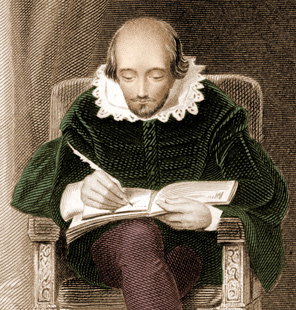
Ever wonder why Shakespeare’s rhymes don’t rhyme? You know, love/prove, eyes/qualities. For couple of language scholars, these linguistic mismatches are the keys to unlocking an archaeology of sound.

Kansas University’s Paul Meier has been collaborating with Stratford’s David Crystal, one of the greatest living authorities on original pronunciation of Shakespeare’s English.  Together, they are making what is likely to be an unforgettable production of A Midsummer Night’s Dream that will “wind the language clock back to 1595,” according to Meier.

How will it sound?

“American audiences will hear an accent and style surprisingly like their own in its informality and strong r-colored vowels,” Meier said. “The original pronunciation performance strongly contrasts with the notions of precise and polished delivery created by John Gielgud, Laurence Olivier and their colleagues from the 20th century British theater.

The audience will hear rough and surprisingly vernacular diction, they will hear echoes of Irish, New England and Cockney that survive to this day as ‘dialect fossils.’ And they will be delighted by how very understandable the language is, despite the intervening centuries.”

Actually, I think the performers sound more like the usual portrayals of, say, Audrey in As You Like It.

Passing through the Plains?  You’ll have a chance to see the show beginning November 11 at Kansas University.  It will be the first time in North America that a Shakespeare production is being performed entirely in the original pronunciation, and only the fourth time in the world.  Which is kind of cool.

(For those of you who think of Dorothy and Auntie Em when you think Kansas — Dana Gioia tells me the university, too, is kind of cool.)

The woman the Soviets kept secret: Film on Holocaust heroine Irena Sendler Thursday!

Tuesday, October 26th, 2010
Share

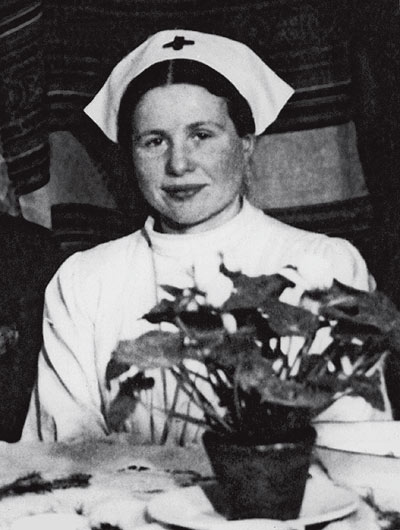
Some time ago I wrote about Mary Skinner‘s new documentary,  In the Name of Their Mothers, about Irena Sendler and the women of Żegota.

Another opportunity comes at 7 p.m., this Thursday, at the Language Corner.  Followed by a Q&A conducted by yours truly.

I really wouldn’t miss it, if you haven’t seen the film already. Tad Taube, president of the Koret Foundation and founder and advisory board chair of Stanford’s Taube Center for Jewish Studies, offered not only praise, but help, saying the film “should be seen by every Jew in the United States” when the film had a screening earlier this year at San Francisco’s Jewish Community Center.

Irena Sendler, with the women of Żegota, saved 2,500 babies and children from the Warsaw Ghetto (I also wrote about some time ago here).  The film tells you how they did it, and why.  It includes rare footage of Sendler, who died in 2008, interviewed by her friend, the fimmaker Mary Skinner.

I know, I know.   That’s more than twice as many people as Oskar Schindler saved.  So why have you never heard of her?  It’s so easy for those in the U.S. to forget that there was no happy ending after the end of World War II for half of Europe.  Poland was swallowed in the Soviet maw, and Polish patriots were on the hit list — remember Ashes and Diamonds?  Or Katyń, another Andrzej Wajda film.

Some time ago I wrote about the Auschwitz hero and martyr, the Polish priest Maximilian Kolbe.  While at Auschwitz in 2008 (a horrible place to “visit,” I know, but Adam Zagajewski convinced me that my work in Poland would not be complete without this trip), I spoke with one of the researchers there, Piotr Lipiński.  Kolbe had offered his life to save a Polish soldier and father — no one ever made such an offer in the history of the camp.  The place was designed to discourage any vestiges of humanity.

Wished she had done more..

I asked Piotr how they could be absolutely sure no one else had ever made the sacrifice.  He told me the Soviets had tried and tried to find some alternate hero — someone who was not a Polish Catholic priest.  The best they could find after years of efforts was a schoolteacher may have volunteered, though others claimed he had been pushed forward.

Such was life under the U.S.S.R.  The Fall of the Wall in 1989 is bringing many names of heroes to light. Think of Polish Army Captain Witold Pilecki.  The communist regime in Poland censored any mention of his name in the public record.

The comparisons with Schindler are limited.  One has to remember that Poles could be shot on the spot without trial for helping Jews; Schindler was a German industrialist. In any case, Sendler’s friend and my friend, Lili Pohlmann, objects strongly to any comparisons.  Quite right.

But let me make one more:  Despite this post, I’m not a big fan of movies, but I did see Schindler’s List.  I was impressed by the ending, when Schindler desperately wished he could have done more.

Apparently, Irena Sendler, too, used to wake up at night, remembering, wishing, she had done more.  She said it often to her friends.

Getting ready for Halloween: Dana Gioia’s ghost story

Monday, October 25th, 2010
Share

“I don’t believe in ghosts,” he said, “such nonsense.
But years ago I actually saw one.”
He seemed quite serious, and so I asked.

That time of year...

So opens Dana Gioia‘s new ghost story. A fitting topic as we draw closer to Halloween.  (And to All Saints’.  And to All Souls’.)

I wrote earlier about visiting Dana in Santa Rosa last August, when he read his then-unpublished poems to me, which included the “Haunted,”  a short story in verse.  It’s unpublished no more: so I was delighted  when the Hudson Review arrived in my mailbox, courtesy of Dana.  The Hudson Review comes with a CD, including an introduction, a reading, and a short interview.  Dana refrained from publishing new literary work during his six years as NEA chairman — so this publication marks a comeback after long absence.

The 200-line poem (the same length as Robert Conquest‘s “Getting On”) is in blank verse, but with so much chiming — internal rhyming, assonance, and other tricks of the trade — that there were times I would have sworn it was rhymed verse.

Dana tells a short story in verse (Photo: L.A. Cicero)

Dana is a strong advocate for narrative poetry.  “There was a time when you wanted to tell a story, you told it in verse,” said Dana.  Look at Homer.  Or Shakespeare.  Poetry is now mostly confined to short, lyric utterances.  People who want stories turn to novels and drama instead.  “When poetry lost that audience, it lost something that was absolutely essential to its vitality.”

That said, “It’s really hard to write a good narrative poem,” said Dana, adding that he has abandoned a number of efforts over the years.  “You have to have a compelling story, a narrative that moves forward,” all the while “condensing this into essentially lyric medium.” A ghost story requires even more:   Atmosphere is imperative for ghost story, said Dana, noting that Edgar Allan Poe‘s “The Raven” is composed almost entirely of atmospheric effects.  Dana said he had to “build the setting room by room.”

When a narrative poem fails, it’s because “either the story is just not good, they cannot create forward momentum” or else “the language is not good, it’s prosaic.”

Dana says “Haunted”  is somewhat “Jamesian,” and that may be something of a weakness.  His plots, like Henry James’s, consist largely of the states of mind of the characters, rather than in dialogue or a series of events.  This was true also in “Counting the Children,” one of Dana’s best-known poems from Gods of  Winter — another narrative poem.  Of the two, I prefer this new poem, certainly because it reflects (oddly enough) a more familiar range of experiences and states of mind — from the experience of evil (a more intense brush than the one Dana describes, I’m afraid), to the experiences of ghosts, to the illusion that “We thought we could/create a life made only of peak moments” (did anyone not think that at 25?)

The poem’s antagonist is Mara, launching the poem’s curious series of reversals, the equation of light with darkness:

Do you know what it’s like to be in love
with someone bad?  Not simply bad for you,
but slightly evil?  You have to decide
either to be the victim or accomplice.
I’m not the victim type. That’s what she liked.

Young Marian Seldes would have been "magnificent" as ghost, said Dana

Yet, the unnamed protagonist said, “She seemed to shine/as movie stars shine, made only of light.”

And later, of his ghost, he recalled:  “She seemed at once herself and her own reflection/shimmering on the surface of clear water/where fleeting shadows twisted in the depths.” and “Her pale skin shined like a window catching sunlight,/both bright and clear, but chilling to the touch.”

Is the poem autobiographical? “These things did not happen to me autobiographically,” he said, “a bit of this, a bit of that happened, a person I met a house I saw, all worked its way into the story” — even the ghost, though Dana said he doesn’t believe in them.

A suitable theme for Halloween.  But a day after the arrival of the Hudson Review in my mailbox, I received an American Opera Classics CD of Paul Salerni‘s Tony Caruso’s Final Broadcast — called “Opera in ten short scenes on a libretto by Dana Gioia.”  I haven’t listened to it yet.

Dana has been busy indeed.  But then, he always is.