Archive for April, 2011

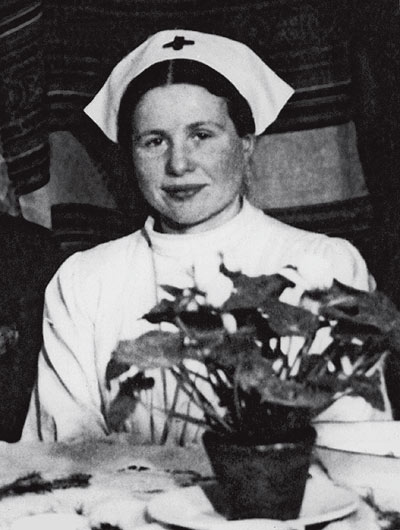
Irena Sendler’s story, “In the Name of Their Mothers” on PBS May 1: Interview with filmmaker Mary Skinner, Part 3

Saturday, April 30th, 2011

Share

May 1st is Holocaust Remembrance Day – it is also the national premiere of PBS’ In the Name of Their Mothers, a documentary film about the Polish social worker Irena Sendler, who saved 2,500 Jewish babies and children from the Warsaw Ghetto and almost certain death at Treblinka. (Check local times here, and you can buy the DVD here.)

I’ve written about Irena Sendler before, here and here.

This is the third part of a 4-part interview, which took place following a Stanford screening of the film on October 28, 2010.  Part 1, with a trailer for the film, is here.  Part 2, with a youtube video featuring an interview with Irena Sendler, is here.

Incidentally, there’s an article here this week in JWeekly, “Modesty is the M.O. for Polish heroine Irena Sendler.” An excerpt from Sendler herself:

“I could not have achieved anything were it not for that group of women I trusted who were with me in the ghetto every day and who transformed their homes into care centers for the children,” she declared. “These were exceptionally brave and noble people.”

She continued, “As for me, it was simple. I remember what my father had taught me. ‘When someone is drowning, give him your hand.’ And I simply tried to extend my hand to the Jewish people.”

CH: Why did people in the Polish resistance keep quiet about their work after the war?

The Allies basically ceded Poland to Stalin. It was his war booty in exchange for having given up 30 million Russian lives to overthrow Hitler. When Stalin took over, he installed a puppet government. People who had been participating in the Polish resistance were perceived to be enemies of the state because they were for a free and independent Poland.

Sendler's beloved Warsaw – a carefully reconstructed city

Most of the leaders of the Polish resistance were caught tortured and executed in these mock trials.  Many others were suspected of being friends with people in the resistance or part of the resistance or knowledgeable in any way or having socialized with somebody in the resistance. They could be summoned in and interrogated and their lives could be made miserable. People like Magda Rusinek – her father had been a minister in the interwar government.

It wasn’t until 1989, really, that the stories really started coming out.

CH: Is this is part of why the Irena Sendler was reluctant to speak with you? She’d been silent for so long.

MS: Definitely. After several hundred years of occupation and not being allowed to speak Polish, the Polish people had become very good at running underground universities and doing clandestine work and using codenames and keeping each other’s secrets.

Hidden Jewish children at a Polish covent, 1943 (Photo: 2B Productions

Many of these women said, “Oh, we knew this stuff from our grandmothers,” because their grandmothers had been using these techniques against the Russians before 1918, so they all knew how to do messages and swallow pieces of paper and hide things behind their ears. Or how to do secret meetings and how to tip each other off – if you’re being watched, tip the flowerpot over so that everyone else in the resistance knows, “don’t go near that house, it’s been burned.” All these techniques they had learned from their parents, from their mothers. They were using them as part of this network against the Nazis and they all used codenames.

One said, “We didn’t know, and we didn’t want to know what each others’ real name was, where each other lived, who each other’s parents were, what each other’s profession was before the war.”

This kind of code didn’t just go away after the war ended, because then they were experiencing another totalitarian regime, the Soviet one, and so people who were just good eggs like Sendler just kept trying to do social work and not get anybody in trouble.

That’s how she spent the rest of her life. So to go on TV and talk about real children and real names and tell real stories is really difficult for her – and difficult for anyone who had done this work.

Question from the audience: “I’m going to assume that most of the parents didn’t survive. What happened to the children who were being protected in these homes and orphanages after the war?”

MS: Most of the children’s biological parents did not survive, true. The Jewish committee in Warsaw was run, in the months and years immediately following the war, by Adolf Berman, who had been Irena Sendler’s colleague. He had been responsible for gathering up all of this information, not only for children, but for all Jews living in Poland.

Pawiak Prison, where Sendler was tortured

They were receiving quite a bit of humanitarian aid at that point, because people were starting to find out what actually happened to these people. Sendler and Jadwiga Piotrowska turned a lot of their information over to Adolf Berman and then he was responsible for trying to figure out ways for all remaining Jewish children in Poland to be identified and to be reunited with their families of origin, if possible, and if not possible, to be sent to Israel.

CH: One question I had from the film: She was talking about the children who didn’t speak a word of Polish, children who only spoke Yiddish. How on earth they hide the children who couldn’t speak Polish?

MS: The purpose of the safehouses was to spend a little bit of time with them before they were moved to the next place. One of Hanna’s jobs was to sit with the children and to sing Yiddish songs with them, and gradually to teach them a few words of Polish. The purpose of these emergency care centers – and it was part of this whole social work system that they had evolved before the war – was to calm the children down and to start to teach them aenough words of Polish so that they could say the right thing if they were interrogated by a German soldier.

Irena Sendler, “The Female Oskar Schindler”: Interview with filmmaker Mary Skinner, Part 2

Friday, April 29th, 2011
Share

Safety eluded her even after the war. Here in 2005.

May 1st is Holocaust Remembrance Day – it is also the national premiere of PBS’ In the Name of Their Mothers, a documentary film about the Polish social worker Irena Sendler, who saved 2,500 Jewish babies and children from the Warsaw Ghetto and almost certain death at Treblinka. (I’ve written about here and here.)

Here’s what philanthropist Tad Taube wrote about Sendler in the April 26 Los Angeles Jewish Journal:

“Sendler was a dedicated social worker before the war, and her wartime activities on behalf of the Jews were a logical extension of her early commitment to do what she felt was just. … Denounced to the Gestapo, arrested and tortured, Sendler was able to escape, only to be hunted down as a “dangerous communist” by extreme-right elements in the Polish underground.

“Safety eluded her even after the war, when she was arrested by the communist authorities for having been active in the general Polish underground rather than the communist one. Again imprisoned and tortured — she suffered a miscarriage — Sendler was eventually freed from prison but became a ‘nonperson’ in the eyes of the communist state. Yad Vashem remembered her, awarding her a listing in 1965, but she was otherwise surrounded by official silence, even after the communist government fell. …

"We were not alone."

“Midrash teaches that the children of Abraham, fleeing Egypt, were joined by other slaves, who wanted their freedom no less desperately. Even then, we were not alone. And throughout the ages, thanks to those whose love of freedom and their fellow human beings was more powerful than the shackles of prejudice and fear, we never really were. Nor shall we ever be.”

Yesterday, we published Part 1 of this interview, which took place on October 28 after the Stanford screening of the film. Here is Part 2.

CH:  Irena had many reservations about being filmed.  Your film focuses on the women of Żegota, did that perspective help gain her trust?

MS:   Yes.  She did want people outside Poland to know more about the Council to Aid the Jews, an underground organization that was comprised of Poles and Jews. It was funded by the government-in-exile.  It was the only organization of its kind.

Żegota made a dent in the numbers of people who were murdered in Poland. You might say, “Well, this clandestine network that saved a few thousand lives obviously could have done much more,” but this group of people was fighting from the very beginning to bring global awareness of what was happening.  They were sending out secret messages. They were trying to get the truth published in worldwide newspapers. They had spies who were smuggling into the Ghetto and Auschwitz to report on what was going on. In 1941 and 1942, their stories were just not believed.

But Żegota did get quite a bit of money from the formal government-in-exile that was parachuted into Poland.  They distributed it to people who were escaping these deportations. They were doing everything they possibly could to keep them alive.

It was difficult to keep moving people and hiding people. The situation in Poland was very extreme. It was unlike any other country in occupied Europe.  Even giving a glass of water to a Jewish person meant you could shot on the spot. So they really had to work very closely together.  They had to keep secrets, they had to use codenames, and they needed significant resources to try to save these people’s lives. Keeping 2,500 children alive for several years during the war was pretty phenomenal.

Reunited: William Donat had thought Magda was just a babysitter

CH:  And not one of Irena Sendler’s children was lost.

MS:  Right. At least 2,500 children were helped by the Żegota network.  We know this because the group of women who participated in the organization made an official report to a person who was writing a book about the organization, and they put together all of their numbers – the numbers they knew were protected in convents, the number of foundlings, orphan children who were protected in one orphanage in Warsaw, and the number who were with adoptive families.  About 1,500 who were with adoptive families.

CH:  How did you find these “hidden children” for this film?

MS:  These children were really deeply traumatized – like my mother.  I grew up with it, and I was sensitive to how difficult it was for them to recount things.  I interviewed many more of these hidden children that were willing to talk on camera.

CH:  There must be many children who don’t know Sendler saved them.

MS:  They often didn’t know that their caretakers were part of a resistance operation. They just thought of them as babysitters or nannies.

William Donat – the man you saw in the film who was reunited with the teenage caretaker, Magda Rusinek – always thought of Magda as his best babysitter. She was the girl who used to tell him about the stars. He didn’t know that she was working in the Underground and that she was doing counterespionage and that she had codename.  He had several caretakers, they were all part of this underground network.

CH:  The question you always get asked:  What became of the bottle with the names in it?

MS:  Okay, so we all would love for that to be true, that there was one bottle and had 2,500 names, and I’m sorry to tell you it just didn’t happen way.

Jadwiga Piotrowska, who you saw toward the end of her life in the film, was Irena’s coworker.  She was the one who was burying the identities of the children that she was protecting and their true Jewish names in little slips of paper in little soda bottles in her backyard under her apple tree.

They may have been hiding some information these bottles, but it would have been way too dangerous to have one master list of all these names.  Sendler had in her head a sense of who every child was, and who was protecting every child, and where, because she was the head of this children’s division within this underground operation. She needed to know that, because the hidden people had to get calls from the social workers, they had to get stipends, and they had to be checked to make sure everything was okay.  If one of them was in trouble, the rest of the organization had to help them.  So Sendler sort of had this sense in her head, but it was not in one bottle anywhere and it was not on one list.

Below, a somewhat rough youtube video on Irena Sendler and Żegota (including an interview of Sendler):

Irena Sendler, “The Female Oskar Schindler”: Interview with filmmaker Mary Skinner, Part 1

Thursday, April 28th, 2011
Share

She didn’t welcome the interviews.

May 1st is Holocaust Remembrance Day – it is also the national premiere of PBS’ In the Name of Their Mothers, a documentary film about the Polish social worker Irena Sendler, who saved 2,500 Jewish babies and children from the Warsaw Ghetto and almost certain death at Treblinka. Sendler’s name and reputation were suppressed by the Communist regime, and she became known in the West about the time of her death in 2008.

California filmmaker Mary Skinner graduated from UC Berkeley’s renowned theater program and, with a few other University grads, founded the acclaimed Riverside Shakespeare Company in New York.  She later worked as a corporate marketing executive in New York and San Francisco and gave it up to take on documentary filmmaking. She established her own production company in 2003.  In the Name of Their Mothers is her first feature-length documentary.

Mary, the daughter of a Polish WWII orphan, spent seven years making the film, which I’ve written about here and here.  Obviously, her interest in Poland is longstanding, and so is her appreciation for Irena Sendler, who became a personal friend.

This is the first part from an interview with Mary on October 28, in Piggott Hall, after the Stanford screening of her film.

CH:  How did your mother inform your understanding about wartime Poland?

MS: She had survived the war in Warsaw.  Everyone else in her family had been killed. She was rounded up when she was about 14 or 15 and sent to a subcamp of Buchenwald, and that’s where she spent the rest of her adolescence.  After that she was taken in by various convents and refugee centers.

I knew how devastating that experience of the war had been on the people of Warsaw and I knew how hard it was for children.

I was also very much aware of the great fondness she had for these social workers in Warsaw were who were, from the very beginning, organizing help and soup kitchens and waiting on train platforms and trying to bribe German guards who were rounding up, at that time in 1939, blonde, blue-eyed children that they were sending to Germany for Germanization.

They turned out to be the same group of women who later had formed a clandestine network to save Jewish children. I thought the whole notion of the power of this group of women, resisting outwitting the Nazis, was fascinating.  I wanted to know more about it, and I was looking for eyewitnesses and people who had survived that experience.

I came across the story of Irena Sendler, which was beginning to be publicized by the school group in Kansas [The “Life in a Jar” project – ED].  I contacted several people in the United States who helped me to get in touch with her in Poland. Then I moved to Poland for four or five months and tried to earn her trust and get her to be willing to speak on camera.

Q:  What was it like filming Irena Sendler?

It was very hard for her to talk to be filmed. She was embarrassed.  She didn’t feel extraordinarily heroic. She didn’t like to recount her memories of the war, but we eventually convinced her to give us some time on camera, mostly because we used the argument that the more women, especially young women, learned about her story and the story of these other women that were part of her network — basically teenage girls — the more people will be inspired toward that kind of moral courage. It was essential for people like her to talk and to recount what actually happened, because so many of the eyewitnesses are passing and  we can’t ever forget how devastating that experience was for the Jewish people, especially in places like Warsaw.

Children of the Warsaw Ghetto, 1942

CH: She mentioned her father toward the end of the film. Could you tell me a little about …

MS:  Through centuries of being occupied, Poland disappeared from the map until World War I, divided up between the Austro-Hungarian Empire, the Russian Empire, and Prussia. What had been Poland’s nobility was impoverished over that 200-year period, but they kept their value system.

Irena Sendler’s father and many of the women who participated in the Polish resistance came from this szlachta class, which is basically the impoverished nobility, who were leftist-leaning during this interwar period.  They were for a free and independent Poland, but they were also for socialist, humanitarian values.

This group was pioneering revolutionary techniques in social work between the end of World War I and the beginning of World War II.  They were very advanced in their thinking about personal empowerment and ways to help people, helping the disenfranchised and fighting for more rights for women.

Her father was a doctor who was treating the poor Jews in the village where they lived. Early on in her memories, Sendler remembered her father telling her how important it was to learn about other cultures and also how important it was to help people who were in trouble.

He developed typhus from treating some of these patients and he died when she was nine years old, but she never forgot his memory.

CH:  And she never forgot what he taught her about medicine.

MS:  Right.

More tomorrow… [Part 2, with a youtube video featuring an interview with Irena Sendler, is here. Part 3 is here. Part 4 is here.]

50th anniversary of René Girard’s Deceit, Desire, and the Novel gets kisses and punches

Wednesday, April 27th, 2011
Share

Josh Landy’s practical application of Girard’s “mimetic theory”

2011 marks the 50th anniversary of the publication of René Girard‘s Deceit, Desire, and the Novel – and if you don’t think that’s a big deal, try looking at the website here for scheduled celebrations at Stanford, Berlin, São Paulo, Cambridge, and Yale.  Berkeley symposium is described  here.

I can’t say I sampled many of the events, but I did drop by for a few of the Stanford talks, notably Robert Harrison‘s opening and closing remarks, and Josh Landys anti-Girard talk, “Valentine’s Day,” especially since Josh said he had written his remarks with me in mind (we had quarreled somewhat over at Arcade months ago, which is how we met).

Robert noted that René is a leading Christian thinker – “to what degree is that a stumblingblock?” he asked.  He said “René is one of the titans of the 20th century – of whom there are few.”

Yet “Girard’s standing is in doubt,” he said. “Precisely the Christian framework within which people understand Deceit, Desire, and the Novel can turn people off.”

The conference, to circumvent the perceived problem, limited its scope to the 50-year-old book  they were celebrating, considering René’s mimetic theory and “the invidious nature of human desire,” but banishing his theories about the scapegoat mechanisms and civilizations from the event.  Robert wanted to explore “to what extent one doesn’t have to buy into the whole theory,” since modern people don’t want “to submit to a totalizing theory.”

“Girard does not believe the truth of literature is confined to the text,” said Robert.  “He believes that the truth has to be wrestled from concealment.”

Hence, he is “pressing to uncover the structure of certain psychological laws … the primary site of revelation.”  He is trying to learn “the truth that applies to human religions in general.”

Noting that “very, very few anthropologists give any credence” to René’s thoughts on the anthropology of religion” because “he comes to anthropology as an amateur” (René called it “poaching” when he spoke to me), Robert compared him to  Heinrich Schliemann, the German businessman who was right about Troy, but whose successful amateur attempts to excavate destroyed important archaeological layers of the real Troy.

“Even if it’s true, they will not take him seriously.”

I did, also, attend a few of the events in Berkeley.  The two gatherings – one at Berkeley; one at Stanford – were like night and day.  The Berkeley gathering focused on the theological aspects of René’s work, as well as the literary, with presentations on Girardian connections with Simone Weil, Molière, Rousseau, and others.  The Berkeley crowd was older, and predominantly male; the Stanford crowd was younger, trendier, with more women.  But there was an more profound split in orientation, which has interesting presentiments for the thinker’s legacy.

At Berkeley, I scribbled a few of René’s sayings in my notebook, as they were related by others.  “Philosophers never include themselves in their philosophy.” “Laughter means a denial of reciprocity.” “Escaping from mimesis is something only geniuses and saints can do.” “I am really a positivist, but I’m too ashamed to admit that – it is such a peasant thing to be.” “All art is incarnation.”

Robert Hamerton Kelly, at Berkeley, trumped all with his quote, when René said of his work, “I really shouldn’t have called it a theory – but every French intellectual has to have a theory.  It’s just a few observations of human behavior.”

“That took the wind out of my sails,” he said.

Richard Wirick: “the stamp of its self shines out like a weakening lamp”

Monday, April 25th, 2011
Share

Birches outside Novosibirsk (Photo: Brian Jeffery Beggerly)

Some time ago I wrote about Aleksandr Solzhenitsyn; the title of the post was “I welcome your snowballs,” quoting a Bookslut piece by Richard Wirick.

So I was pleasantly surprised when I received an email from Rick Wirick, who is a Los Angeles lawyer, as well as author – apparently, when he was an undergraduate at Berkeley, Czesław Miłosz was the advisor for the literary quarterly he co-founded, Transformation. So, through Milosz, we have another connection.

Afterward, he sent me his 2006 book, One Hundred Siberian Postcards, literary snapshots of his journey to Siberia to adopt a baby girl with his wife.  I spent a February in Siberia once – actually, it wasn’t as bad as Detroit, but the miseries of Michigan are unsupported by a literary canon.

But Rick describes a Siberia I didn’t see in the booming town of Novosibirsk (which reminded me, rather, of the Pacific Northwest).  This revisited the Russia I described in my recent post about PBS’ Great Famine, based on the research of Bertrand Patenaude.

Rick’s description begins with a TV set, then moves to staggering portrayal of hunger everywhere:

The images become indelible as I watch new coverage of the famine and warfare in the Sudan. The images clutch around my heart like dread, like the little prongs that hold a diamond solitaire. It is hard to tell the dying from the dead. The TV camera rests on a stooped body, and you keep waiting for it to move. Then, finally, you see something like a fly lighting on the eye, and you wonder if it had taken the cameraman as long as it took you to realize what was going on.  …

States of privation, of deprivation. We see them everywhere once we’re out in the grocery store parking lots; rags and bottles of water in their hands, shopping carts, children and cardboard signs: ‘Chechnya Veteran’ and ‘Need Work.’  Scores of them rush at me from the factory entrances at twilight, clothes flapping in the wind.  Once I am out of change the last of them flits through the hole in the cyclone fence and down to the darkening mounds of the construction site.

The eyes here have grown hollower, for there are a few that we recognize. And no matter how many there are and how closely they crowd together, we never for a second confuse any two of them. The crowd of faces never merges.  These are not the masses our distance makes of the dead at Ingushetia or their neighboring cities, the ‘mountain phantoms.’ These stay differentiated. Pain and hunger individualize.  However much a face might thin and tend toward the skull, the stamp of its self shines out like a weakening lamp. It is this, this light, that makes us feel their pain, feel ourselves in their shoes.

Food as a paradise of flavor and abundance, a Garden of Earthly Delights. It is this heaven, this brimming Eden the hungry are cast from. They want a return to the furnishings of the fallen world just like we want a return to that first world, where we didn’t even have the knowledge of want. There are places where food, or the raw stuff of whatever will become it, comes at us with a richness we see nowhere else.

Rick will be at Kepler‘s soon to read from his new collection, Kicking In, though I don’t see him on the bookstore’s schedule. Frankly, as a high-powered attorney, I’m surprised he has enough energy at the end of the day to do more than go home and babble at a wall.

The day after Shakespeare’s birthday, and “the first of arts”

Sunday, April 24th, 2011
Share

Wordsworth: Yesterday's child

Yesterday was my first time attending “A Company of Authors” – a warm and friendly gathering of about 100 or so booklovers at the Stanford Humanities Center.  (Video will be added when available.)  Particularly memorable: Elena Danielson‘s breathy presentation of the ethical issues of archiving.  Don’t think that sounds exciting?  You have to hear Elena tell about it.  The author of The Ethical Archivist has been privy to billets-doux of the long-dead and recently dead, and all the burning secrets held in donated letters and memorabilia. Ian Morris, author of Why the West Rules—For Now, as always, stole the show with his story about how everything came to be in the last 15,000 or so years.

We celebrated the parade of April 23d birthdays:  William Shakespeare, Alexander Pushkin, Vladimir Nabokov, William Wordsworth, J.M.W. Turner, Shirley Temple Black, St. George, and George Steiner, too.

As promised, Peter Stansky, read George Steiner’s poem:

To choose one’s birthday is the first of arts.
Renowned birthdays mark the man of parts.
The kalends are replete with faceless days,
So why not make one’s entry in a blaze?
Alas, I failed on the first day I was born!  Steiner noted:
And honest Wordsworth  tells us in his Ode
How the Platonic soul in its abode
Must before birth make choice of room and board –
No one is born on my day, although it is St. James‘s Day.  That means I should wear a cockle shell.  Or move to Spain.  Or both.   I shall have to be my own parade.
But all such glories are but dusty ends
When set against this laurel-crown of friends. …
How could the heart do otherwise than say
How wise it was to choose St. George’s day!

Hitting the road

The Times Online wrote this for Steiner’s birthday two years ago: “The polymath Professor George Steiner  said it is rather embarrassing that birthday celebrations are taking place in Florence, Rome and Germany. There is also an event at Churchill College, Cambridge, where he has been a Fellow since 1961. He is researching a book about how great philosophy gets itself written, called The Poetry of Thought. He enjoys walks with his Old English sheepdog, known as Monsieur Ben. Professor George Steiner is 80 today.”

Meanwhile, birthdays march on:  Today Anthony Trollope was born in 1815. And Robert Penn Warren, the first U.S. poet laureate in 1905.  The Swiss poet Carl Spitteler, a 1915 Nobel winner, in 1845.

From Trollope: “As to that leisure evening of life, I must say that I do not want it. I can conceive of no contentment of which toil is not to be the immediate parent.”

Happy Easter, everyone!