Archive for March, 2016

Moscow journalist, poet Maria Stepanova to discuss Russia’s “schizoid present” – be there!

Tuesday, March 29th, 2016

Share
Stepanova-Melikhov

Powerful advocate for press freedom (Photo: Sergey Melikhov)

Maria Stepanova was already an important and innovative poet by the time of Vladimir Putin‘s accession, but the times called for a tougher, more public role.

Today, she is one of the most visible figures in post-Soviet culture – not only as a poet, but as a journalist, a publisher, and a powerful voice for press freedom.

Stepanova will be speaking on “Time Backward: Putin’s Russia in Search of Identity” at 7:30 p.m. on Wednesday, April 6, at Levinthal Hall, Stanford Humanities Center. She will also give a reading of her poetry (in Russian) at 6 p.m. on April 7 in Piggott Hall, Room 252. Both Stanford events are free and open to the public.

She is the founder of the Colta, the only independent crowd-funded source of information that exists in Russia today, with 900,000 unique visitors per month. The online publication has been called a Russian Huffington Post in format and style – and also compared to the New York Review of Books for the scope and depth of its long essays. 

Stepanova’s April 6 talk will consider Russia’s current obsession with the past, at all levels of society, and its direct effect – what she calls “hybrid archaism as a new model of statehood.”

“Putin’s Russia is never able to sell a compelling version of the future. All it is able to produce, and it’s quite creative in that aspect, is a vision of the past – or a patchwork of different pasts – as a shelter, where one has to hide from the future,” she said.

Russians, she recently wrote in Eurozine, are fearful of a dystopian future, and bound to a “schizoid present.” Hence, a tacit social contract prevails: “We are prepared to consider our imperfect state acceptable as long as things don’t get worse.”

The Muscovite is the author of 10 poetry collections and a recipient of several Russian and international literary awards, including the prestigious Andrey Bely Prize and Joseph Brodsky Fellowship. She was recently a fellow with Vienna’s highly regarded Institut für die Wissenschaften vom Menschen.

As a poet, Stepanova is credited with reviving the ballad form in Russian poetry. She has also rekindled writer Nikolai Gogol‘s skaz technique of telling a story through the scrambled speech of an unreliable narrator, using manic wordplay and what one critic called “a carnival of images.”

Stepanova relishes this kind of speech “not just for how it represents a social language but for its sonic texture,” wrote scholar and translator Catherine Ciepiela in an introduction to her poems. “She is a masterful formal poet, who subverts meter and rhyme by working them to absurdity. For her the logic of form trumps all other logics, so much so that she will re-accent or truncate words to fit rigorously observed schemes.”

The results of her verbal pyrotechnics are often hilarious – for example, one poem juxtaposes Renaissance pornography with Stalin’s Five-Year Plans.

Stepanova began the online “Openspace” in 2007. “I was thinking about a cultural daily, something that would provide the audience with modern, up-to-date, passionate view on what is going on in Russian culture and in the outer world. In a short time, it became obvious that there is no stand-alone, solitary ‘culture’ in current times, that to speak about it means being socially and politically involved,” she said.

Openspace ended in 2012 after private funders withdrew support in a political climate that had grown more hostile to independent journalism.

“If you are owned, you are always manipulated – not necessarily directly by Kremlin, sometimes all it needs is to have a cautious investor, who is interfering with the editorial policy,” Stepanova said. “The inner editor – a term from the Soviet times, meaning an entity in your head who tries to prevent you from saying the direct truth – is very active in the Russian media landscape.”

Colta was born in the ashes of “Openspace.” According to Stepanova, “As the official media, from the TV to state-controlled press, turned into an instrument of propaganda and strongly opposed to anything foreign, Colta became an important place where you still could find unfiltered info on what is going on in the outer world. That’s our mission – and that’s why we still strongly resist the idea of paywall. It could give us money we need, but the price to pay is too high: it means that our younger readers in far parts of the country – the regions most impacted by the financial crisis – would lose their only source of information.”

“So the only choice we had was to make the site 100 percent crowd-funded. That’s how we started it, and that’s how it works for almost four years – the only totally crowd-funded site in Russia.”

[Reprinted from my story on the Stanford News website here.]

Is Longfellow’s translation of Dante the best?

Monday, March 28th, 2016
Share

I have a number of translations of Dante’s The Divine Comedy in my home – among them the translations of Charles Singleton, Dorothy L. Sayers, Peter Dale, and others. 

But perhaps the most neglected one is the battered volumes I found on ebay, translated by Henry Wadsworth Longfellow. This overlooked translation finds a new champion in Joseph Luzzi, in “How to Read Dante in the 21st Century” in the online edition of The American Scholar:

dante

From one poet and scholar…

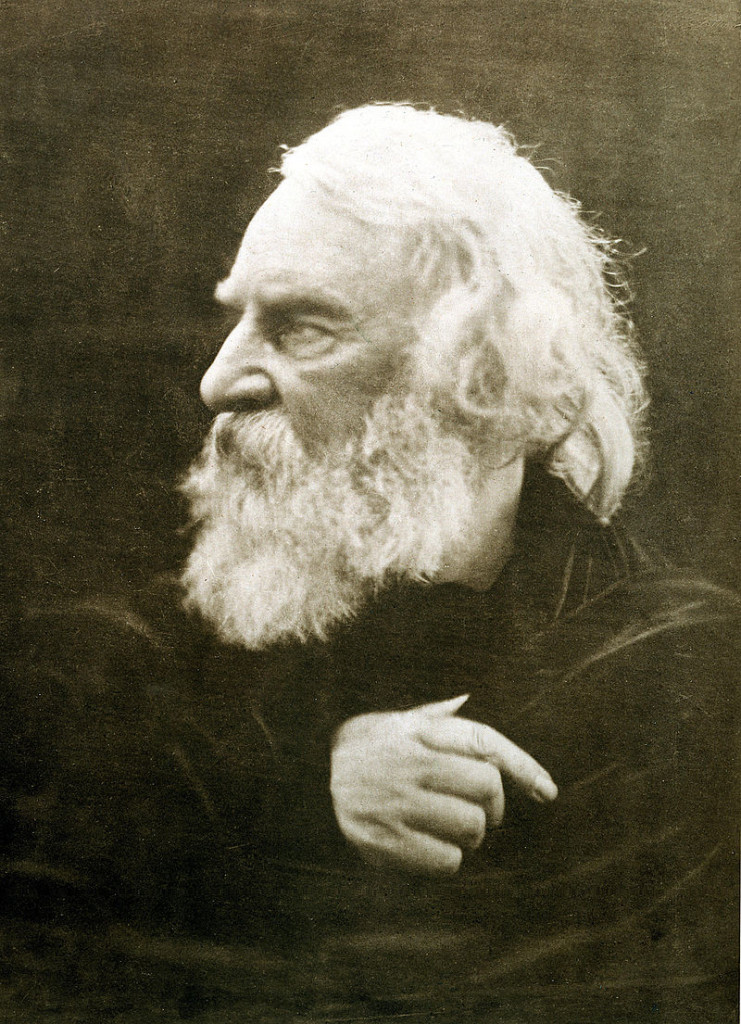
… one of the few truly successful English translations comes from Henry Wadsworth Longfellow, a professor of Italian at Harvard and an acclaimed poet. He produced one of the first complete, and in many respects still the best, English translations of The Divine Comedy in 1867. It did not hurt that Longfellow had also experienced the kind of traumatic loss—the death of his young wife after her dress caught fire—that brought him closer to the melancholy spirit of Dante’s writing, shaped by the lacerating exile from his beloved Florence in 1302. Longfellow succeeded in capturing the original brilliance of Dante’s lines with a close, sometimes awkwardly literal translation that allows the Tuscan to shine through the English, as though this “foreign” veneer were merely a protective layer added over the still-visible source. The critic Walter Benjamin wrote that a great translation calls our attention to a work’s original language even when we don’t speak that foreign tongue. Such extreme faithfulness can make the language of the translation feel unnatural—as though the source were shaping the translation into its own alien image.

Henry_Wadsworth_Longfellow

… to another.

Longfellow’s English indeed comes across as Italianate: in surrendering to the letter and spirit of Dante’s Tuscan, he loses the quirks and perks of his mother tongue. For example, he translates Dante’s beautifully compact Paradiso 2.7

L’acqua ch’io prendo già mai non si corse;

with an equally concise and evocative

The sea I sail has never yet been passed:

Emulating Dante’s talent for internal rhymes laced with hypnotic sonic patterns, Longfellow expertly repeats the s’s to give his line a sinuous, propulsive feel, which is exactly what Dante aims for in his line, as he gestures toward the originality and joy of embarking on the final leg of a divinely sanctioned journey. Thus, Longfellow demonstrates the scholarly chops necessary to convey Dante’s encyclopedic learning, and the poetic talent needed to reproduce the sound and spirit—the respiro, breath—of the original Tuscan.

Read the whole essay here – it’s fairly short and very interesting.

Joseph Brodsky: darker and brighter in Ellendea Proffer Teasley’s new memoir

Thursday, March 24th, 2016
Share
Carl, Ellendea, Brodsky copy

Carl Proffer, Ellendea Proffer Teasley, and Joseph Brodsky – freedom at last. (Photo: Casa Dana)

From my article, “Joseph Brodsky: Darker and Lighter” in The Nation today:

brodskyamongus

In Russian, but in English? Not nyet.

In June 1972, a young poet from Leningrad stepped off a plane in Detroit and into a new life. His expulsion from the Soviet Union had won him international fame; yet he didn’t know how to drive, how to open a bank account or write a check, or how to use a toaster. His English, largely self-taught, was almost incomprehensible. He had dropped out of school at 15. Nevertheless, at age 32, he would soon start his first real job, and at a world-class institution: He was the new poet in residence at the University of Michigan in Ann Arbor. Within a few years, Joseph Brodsky would be a colossus on the New York literary scene. Within 15, he would be awarded a Nobel Prize.

At the moment the plane landed, however, Brodsky became the poster boy for Soviet persecution: a “victim,” in other words, and therefore a cliché. He wasn’t the cliché, but publicity would grant him instant power and prestige in his adopted land. The American voices suddenly clamoring around him could not fathom the forces that had shaped him: KGB arrest, prison, psychiatric hospitals, a courtroom trial, and a sentence of hard labor and internal exile near the Arctic Circle. It was the stuff of legend and contributed to a barrage of media coverage. A Cold War Stations of the Cross was easier to package for mass consumption than an accounting of the musicality, metaphorical ingenuity, compression, and raw intelligence of Brodsky’s verse, which had barely appeared in English at all, and only in the most select publications.

Ellendea Proffer Teasley, in her short new memoir, Brodskij sredi nas (Brodsky Among Us), offers a different view of the poet. It’s an iconoclastic and spellbinding portrait, some of it revelatory. Teasley’s Brodsky is both darker and brighter than the one we thought we knew, and he is the stronger for it, as a poet and a person.

Brings to mind a favorite passage from the Russian poet:“For darkness restores what light cannot repair.” Read the rest here.

What does it take to be a “cultured” person? Anton Chekhov tells us (with a few qualifying words from Jane Austen).

Tuesday, March 22nd, 2016
Share

Russian author Anton Chekhov (1860-1904) was apparently free with his advice. Maria Popova over at “Brainpickings” found Chekov’s 1886 letter to his older brother Nikolai, an artist. We can only imagine how well the advice was received. After all, the letter is written to an older brother, when Anton was 26 and Nikolai 28. In any case, the older brother died three years later of tuberculosis.

As for our humble selves, we can only quote Elizabeth Bennet, in the conversation with Mr. Darcy, Mr. Bingley, and Bingley’s sister Caroline Bingley, from Jane AustenPride and Prejudice:

jane-austen

Sensible lady

“It is amazing to me,” said Bingley, “how young ladies can have patience to be so very accomplished as they all are.”

“All young ladies accomplished! My dear Charles, what do you mean?”

“Yes, all of them, I think. They all paint tables, cover screens, and net purses. I scarcely know anyone who cannot do all this, and I am sure I never heard a young lady spoken of for the first time, without being informed that she was very accomplished.”

“Your list of the common extent of accomplishments,” said Darcy, “has too much truth. The word is applied to many a woman who deserves it no otherwise than by netting a purse or covering a screen. But I am very far from agreeing with you in your estimation of ladies in general. I cannot boast of knowing more than half-a-dozen, in the whole range of my acquaintance, that are really accomplished.”

“Nor I, I am sure,” said Miss Bingley.

“Then,” observed Elizabeth, “you must comprehend a great deal in your idea of an accomplished woman.”

“Yes, I do comprehend a great deal in it.”

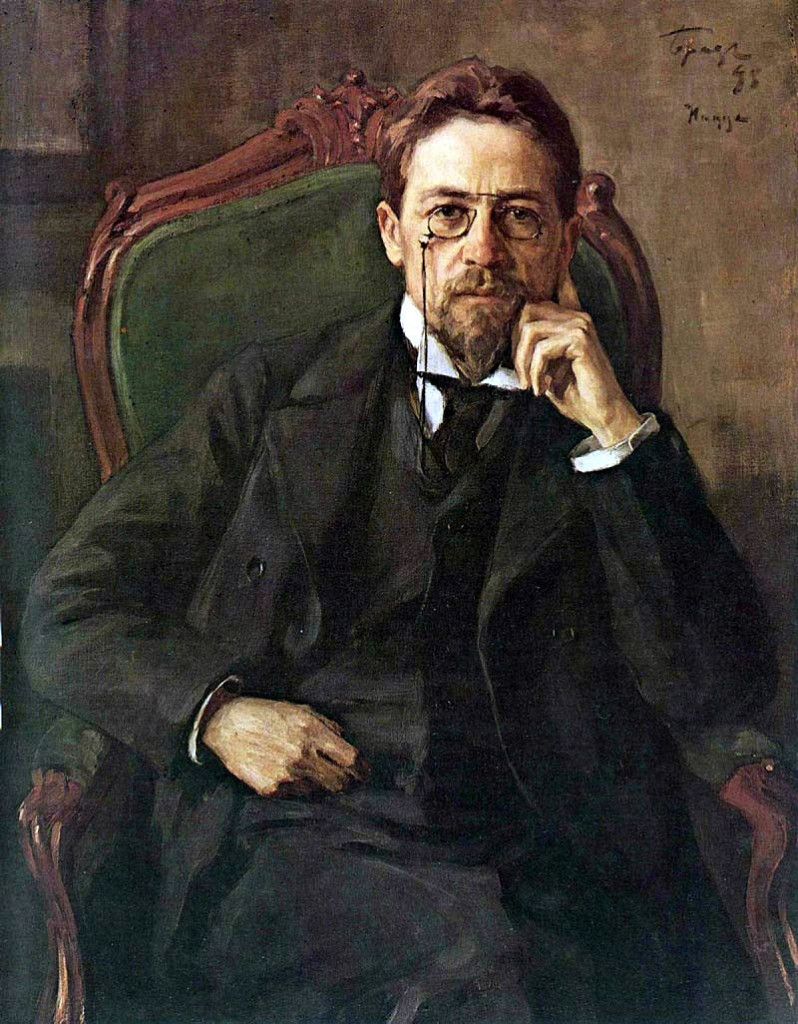
1898_by_Osip_Braz

He looked the part. (Osip Braz portrait, 1898)

“Oh! certainly,” cried his faithful assistant, “no one can be really esteemed accomplished who does not greatly surpass what is usually met with. A woman must have a thorough knowledge of music, singing, drawing, dancing, and the modern languages, to deserve the word; and besides all this, she must possess a certain something in her air and manner of walking, the tone of her voice, her address and expressions, or the word will be but half-deserved.”

“All this she must possess,” added Darcy, “and to all this she must yet add something more substantial, in the improvement of her mind by extensive reading.”

“I am no longer surprised at your knowing only six accomplished women. I rather wonder now at your knowing any.”

Well, then. That’s almost as long as Chekhov’s letter from Moscow. He begins with the good news: “You have often complained to me that people “don’t understand you”! Goethe and Newton did not complain of that…. Only Christ complained of it, but He was speaking of His doctrine and not of Himself…. People understand you perfectly well. And if you do not understand yourself, it is not their fault.

“I assure you as a brother and as a friend I understand you and feel for you with all my heart. I know your good qualities as I know my five fingers; I value and deeply respect them. If you like, to prove that I understand you, I can enumerate those qualities. I think you are kind to the point of softness, magnanimous, unselfish, ready to share your last farthing; you have no envy nor hatred; you are simple-hearted, you pity men and beasts; you are trustful, without spite or guile, and do not remember evil…. You have a gift from above such as other people have not: you have talent. This talent places you above millions of men, for on earth only one out of two millions is an artist. Your talent sets you apart: if you were a toad or a tarantula, even then, people would respect you, for to talent all things are forgiven.”

Then the bad news: “You have only one failing, and the falseness of your position, and your unhappiness and your catarrh of the bowels are all due to it. That is your utter lack of culture. Forgive me, please, but veritas magis amicitiae…. You see, life has its conditions. In order to feel comfortable among educated people, to be at home and happy with them, one must be cultured to a certain extent. Talent has brought you into such a circle, you belong to it, but … you are drawn away from it, and you vacillate between cultured people and the lodgers vis-a-vis.”

Then the list:

Chekhovs

Anton and his artist brother in 1882.

Cultured people must, in my opinion, satisfy the following conditions:

  1. They respect human personality, and therefore they are always kind, gentle, polite, and ready to give in to others. They do not make a row because of a hammer or a lost piece of india-rubber; if they live with anyone they do not regard it as a favour and, going away, they do not say “nobody can live with you.” They forgive noise and cold and dried-up meat and witticisms and the presence of strangers in their homes.
  2. They have sympathy not for beggars and cats alone. Their heart aches for what the eye does not see…. They sit up at night in order to help P…. [here a mediocre poet is named], to pay for brothers at the University, and to buy clothes for their mother.
  3. They respect the property of others, and therefor pay their debts.
  4. They are sincere, and dread lying like fire. They don’t lie even in small things. A lie is insulting to the listener and puts him in a lower position in the eyes of the speaker. They do not pose, they behave in the street as they do at home, they do not show off before their humbler comrades. They are not given to babbling and forcing their uninvited confidences on others. Out of respect for other people’s ears they more often keep silent than talk.
  5. They do not disparage themselves to rouse compassion. They do not play on the strings of other people’s hearts so that they may sigh and make much of them. They do not say “I am misunderstood,” or “I have become second-rate,” because all this is striving after cheap effect, is vulgar, stale, false….
  6. They have no shallow vanity. They do not care for such false diamonds as knowing celebrities, shaking hands with the drunken P., [Translator’s Note: Probably Palmin, a minor poet.] listening to the raptures of a stray spectator in a picture show, being renowned in the taverns…. If they do a pennyworth they do not strut about as though they had done a hundred roubles’ worth, and do not brag of having the entry where others are not admitted…. The truly talented always keep in obscurity among the crowd, as far as possible from advertisement…. Even Krylov has said that an empty barrel echoes more loudly than a full one.
  7. If they have a talent they respect it. They sacrifice to it rest, women, wine, vanity…. They are proud of their talent…. Besides, they are fastidious.
  8. They develop the aesthetic feeling in themselves. They cannot go to sleep in their clothes, see cracks full of bugs on the walls, breathe bad air, walk on a floor that has been spat upon, cook their meals over an oil stove. They seek as far as possible to restrain and ennoble the sexual instinct…. What they want in a woman is not a bed-fellow … They do not ask for the cleverness which shows itself in continual lying. They want especially, if they are artists, freshness, elegance, humanity, the capacity for motherhood…. They do not swill vodka at all hours of the day and night, do not sniff at cupboards, for they are not pigs and know they are not. They drink only when they are free, on occasion…. For they want mens sana in corpore sano [a healthy mind in a healthy body].

And so on. This is what cultured people are like. In order to be cultured and not to stand below the level of your surroundings it is not enough to have read The Pickwick Papers” and learnt a monologue from Faust. …

What is needed is constant work, day and night, constant reading, study, will…. Every hour is precious for it…. Come to us, smash the vodka bottle, lie down and read…. Turgenev, if you like, whom you have not read.

You must drop your vanity, you are not a child … you will soon be thirty.

It is time!

I expect you…. We all expect you.

Happy birthday to the bad boy of Roman poetry!

Saturday, March 19th, 2016
Share

tim120More birthday greetings from our correspondent, the Los Angeles poet (and Stanford alum) Timothy Steele. This time the occasion is the birthday of Ovid. Tim has offered occasional salutations to Virgil, Marcel Proust, Jane Austen, George Frideric Handel, Christina Rosetti, William Hogarth and Oliver Goldsmith. And we have written about Ovid here and here and here and here and here.

But the years roll round again relentlessly offering us another occasion to celebrate the author of Metamorphoses – and Tristia, too.

This Sunday marks the birthday of Ovid, the bad boy of Roman poetry. Born in 43 BCE, he reports in his Tristia that versing came naturally to him even as a child. His masterpiece, “Metamorphoses,” is a tour de force that knits together, by the recurring motif of transformation, myths and legends from the origin of the world up to the time of Julius Caesar. Though Ovid did not invent the stories, he recounted them with unforgettable psychological vividness and gave them their definitive form. No other poem has had a greater influence on subsequent art. Sculptors, painters, composers, novelists, and poets have drawn on it for centuries.

narcissusIn his own day, Ovid was immensely popular, but, unluckily, the emperor Augustus was not a fan. A libertine in youth, he metamorphosed as a ruler into a priggish defender of public morals, and he detested Ovid’s poems, which breezily treat sex and seduction and which parody conventional Roman pieties. In 8 CE he banned Ovid’s work from the state libraries and banished the poet himself to Tomis, an imperial outpost on the Black Sea notorious for its bandits and bad weather. Ovid died there in 17 CE.

Many anecdotes survive about Ovid’s genius and vanity. The Elder Seneca reports one of them in his Controversies (2.2.12): “[Ovid] was aware of his faults—and liked them. This is clear from an incident when he was asked by his friends to get rid of three of his verses; in exchange he asked that he should be allowed to make an exception of three verses which they could not touch. This seemed a fair condition. They wrote down privately the ones they wanted damned: he wrote down the ones he wanted saved. Both sheets contained the same verses. … From [this] it is clear that this talented man lacked the will rather than the taste to restrain the license of his poetry. He used sometimes to say that a face was all the more beautiful for a mole” (trans. Michael Winterbottom).

At right is a rendering of the Narcissus episode in Metamorphoses executed by the great bad boy of Italian painting, Michelangelo Merisi da Caravaggio.

catullus

Another bad boy

Postscript: A gentle reader wrote to ask … Isn’t Catullus the bad boy of Roman poetry? Tim replies:

“That’s a good question. Catullus is revolutionary in his sexual candor. However, his epigrams and lyrics are often bitterly realistic, and he is sometimes excruciating on the subject of his obsessive relationship with Clodia/Lesbia. His ultimate disillusionment with his passion for her is the opposite, it seems to me, of licentious. (Catullus was also very well-born and a friend of Caesar’s, who evidently admired his work.)

“Ovid, on the other hand, really is naughty. The Art of Love is virtually a vade mecum for adulterers. And in theMetamorphoses he presents (with great relish) the Greco-Roman gods and goddesses as pathologically vindictive, sensual, or deceptive. This isn’t to say Ovid can’t be poignant and moving, as in the tale of Baucis and Philemon or Pythagoras‘s powerful speech in favor or vegetarianism near the end of the poem.”

And then, courteous gentleman that he is, Tim thanked the reader for raising the point.

In search of gravitas and a sturdy pair of shoes

Thursday, March 17th, 2016
Share
patrick3

Author and archaeologist – and poet, too.

One of the pleasing byproducts of having poets for friends is occasionally having a poem written in your honor. Here’s one that was written by Stanford archaeologist and author Patrick Hunt, way back in 2010.

The year is significant. I spent much of that period in a wheelchair and on crutches, having walked across Vienna, Warsaw, Prague, and Kraków over the previous summer, ignoring pain as I crushed the bone structure of one foot into powder (or so it seemed). It required four hours of very specialized surgery, two titanium pins, a titanium plate, a tendon transfer, and cadaver bone to set it right. Not to mention a good deal of percocet.

The subject of the poem brought to mind Italo Calvino‘s encomium celebrating lightness, which the Italian author defined as the subtraction of weight. However, he added, “the idea of the world as composed of weightless atoms is striking just because we know the weight of things so well. So, too, we would be unable to appreciate the lightness of language if we could not appreciate language that has some weight to it.”

Patrick wrote these lines to me in consolation for my miseries. I believe it’s included in one of his collections. I’m rather fond of it. Hope you are, too:

.

Gravitas

for Cynthia

Gravity of truth weighs heavily on some
who hardly feel the pain until their feet break
from years of carrying bone crunching ennui.
Atlas had the shoulders for it but not the mind,
incapable of pondering paradox, to him it wasn’t
weight but tedium because he lacked gravitas.

Persephone too struggled with flowers,
whatever blossoms grew from her dreams
and just as quickly faded, futile hopes
like ripe pomegranates dropped by trees
where pale skin reveals red fruit underneath
and more than enough seeds to last eternity.

Thus weight is not weight but attraction
and some day earth steadily sucks us all in,
not that we find this irresistible, merely
inevitable like falling stars caught at night.
Surprised by darkness, we wait our turn
to fuel another sun blossoming elsewhere.

Patrick Hunt