Posts Tagged ‘Ellendea Proffer Teasley’

Joseph Brodsky’s 85th birthday today! Celebrate with three books – as he would have!

Saturday, May 24th, 2025
Share

Today is Nobel poet Joseph Brodsky’s 85th birthday. What better way to celebrate than by celebrating the books that have celebrated him. One is by my humble self, the book by Ellendea Proffer, who with her husband, the late Carl Proffer, brought the future Nobel poet to America. There’s lots more. Go here.

Oh, there’s another good way to celebrate, perhaps the best: return to his books, essay, and lectures. See more here. Thanks to Vladimir Maksakov for compiling a list. You can see the rest of his list here. (What? It’s in Russian, you complain? C’mon. It’s the 21st century. Google Translate is a thing. And you probably have an automatic translate button in the upper righthand corner of your Mac.)

Three of the books recommended by Vladimir Maksamov – from Russia with love:

Published by “Young Guard,” 2008

A biographical novel and memoirs written on principle and forced from an artistic point of view – Brodsky asked to close access to his diaries, letters and family documents for 50 years. It is all the more interesting to get into the space on the edge of fiction, where Losev reconstructs the main biographical myth of the poet. And this seems a convincing move, because such a biography in many ways continues poetry. Friendship with the hero of the book – and the fact that the author himself was a good poet – adds color to this largely unique text.

Corpus, 2022

Memories of Brodsky in the USA. From Joseph to Joseph, teaching, cultural bilingualism, finding a new poetic voice – and all this against the backdrop of Brodsky’s everyday life. It’s hard not to see in this an objectified metaphor: everyday life was still poeticized, and Brodsky, fortunately for world culture, very successfully fit into the new realities for himself. The book is read with nostalgia: the USA of those years was much more hospitable than today.

Translation: Svetlana Silakova
Published by Academic Studies Press, 2023; “New Literary Review”, 2024

Conversations of the first and in many ways the main translator of Brodsky into English. Meetings with Brodsky and the KGB, episodes of an almost spy story, the deepest level of work with texts – all this against the backdrop of a huge love for Russia. But in addition, these conversations are also an attempt to talk about the possibility of dialogue and the willingness to come to the aid of a person who found himself in exile. It seems that both the Soviet and American sides in the realities of the Cold War knew how to value culture much more than we think.

READ ABOUT THE REST OF THE VLADIMIR MAKSAKOV’S SELECTIONS HERE

And light a candle for the poet’s birthday. A good 85th to you, Joseph, wherever you are.

Nobel poet Joseph Brodsky to Russia’s leader: “A language is a much more ancient and inevitable thing than a state.”

Monday, February 21st, 2022
Share

When American tourists visiting Soviet Moscow asked Russian Nobel poet Joseph Brodsky where they could get the best view of the Kremlin, he responded gleefully: “from the cockpit of an American bomber.”

He left more quietly, however, on a when he was famously expelled from his homeland in 1972 – but not without sending a letter to the head of the U.S.S.R.: Leonid Ilyich Brezhnev, who held that position longer than anyone except Stalin. The poet told Brezhnev he was “leaving Russia against my will, which you may know something about.” Then he made a job plea: “I want to ask you to give me an opportunity to preserve my presence and my existence in the Russian literary world, at least as a translator, which is what I have been until now…” He was denied this modest role.

“We all face the same sentence.”

His letter of June 4, 1972, begins:

“Dear Leonid Ilich . . . A language is a much more ancient and inevitable thing than a state. I belong to the Russian language. As to the state, from my point of view, the measure of a writer’s patriotism is not oaths from a high platform, but how he writes in the language of the people among whom he lives . . . Although I am losing my Soviet citizenship, I do not cease to be a Russian poet. I believe that I will return. Poets always return in flesh or on paper.”

“From evil, anger, hate – even if justified – we none of us profit. We all face the same sentence. Death. I who write these lines will die; you who read them will, too. Only our deeds will remain, but even they will suffer destruction. It’s hard enough to exist in this world – there’s no need to make it any harder.”

He never published the letter. When asked if he should, he replied, “No, it was a matter between Brezhnev and me.” “And if you published it, then it’s not to Brezhnev?” And the poet replied yes, precisely. Ellendea Proffer Teasley recalled in Brodsky Among Us, “Joseph was bold when he approached the famous and the accomplished. It was not that he was egotistical – although he had a strong ego – it was that he took his calling seriously. This is why he felt he had a right to address Brezhnev – he was a poet and therefore equal to any leader.”

Brezhnev never answered. Why would he answer a letter from an impertinent nobody? And Russia never learned. We mourn the catastrophic decisions today to roll back the clock to the 1980s. As Anne Applebaum wrote today in The Atlantic: “Despite everything that was said, everything that was promised, and everything that was discussed, Ukraine will fight alone. At a dinner last night, a Ukrainian woman whom I first met in 2014—she began her career as an anti-corruption activist—stood up and told the room that not only was she returning to Kyiv, so was her husband, a British citizen. He had recently flown to London on family business, but if there was going to be a war, he wanted to be in Ukraine. The other Ukrainians in the room nodded: They were all scrambling to find flights back too. The rest of us— American, Polish, Danish, British—said nothing. Because we knew that we would not be joining them.”

“All tyrannies rule through fraud and force, but when the fraud is exposed they must rely exclusively on force.” ~ George Orwell.

Brodsky Among Us in English, and “the only form of moral insurance that a society has.”

Wednesday, August 30th, 2017
Share

Marat Grinberg writes about Ellendea Proffer Teasley’Brodsky Among Us over at Commentary. The article was published in June, but it was easy to overlook during this eventful summer. Also easy to overlook: Brodsky Among Us, which I wrote about for The Nationis now in English, published by Academic Studies Press (on Amazon here).

“The publisher Ellendea Proffer Teasley’s memoir of the poet, which became a sensation when it was first published in Russian three years ago, provides a penetrating and at times deeply moving account of both the myth and the man behind the work,” writes Grinberg. “She renders the Brodsky she knew not just as a great poet and deeply imperfect human being, but also as a political thinker who was uncompromising and unforgiving in his beliefs.”

“Proffer writes of Brodsky’s ‘determination to live as if he were free in the eleven-time-zone prison that is the Soviet Union.’ She emphasizes that his opposition to the Soviet power was presented in starkly moral terms: ‘A man who does not think for himself,’ she writes, ‘a man who goes along with the group, is part of the evil structure himself.’”

The Commentary article, in a magazine founded by the American Jewish Committee in 1945, takes on the Nobel poet’s Jewishness, a subject he himself didn’t dwell on, to put it mildly. An excerpt:

Proffer and the poet in Petersburg.

Proffer implicitly links Brodsky’s Jewishness to this resistance to the “evil structure.” It is a primary subject of their first encounter, which she describes thus: “Joseph is voluble and vulnerable. He brings up his Jewish accent almost immediately; when he was a child, his mother took him to speech therapy to get rid of it, he says, but he refused to go back after one lesson.” The “Jewish accent” had to do with Brodsky’s inability to roll his “r”s, which, while by no means unique to Jews, was a mark of the Jew in the largely anti-Semitic Soviet environment. Brodsky bought into the prejudice and at the same time wore it with pride, making it his own.

Jewishness is an ongoing theme in Brodsky’s early poetry of the 1960s, in which he speaks of a Jewish cemetery on the outskirts of Leningrad and imagines his future “Jewish gravestone.” His “Isaac and Abraham” is a beautiful, tortured and complex midrash on the binding of Isaac. Brodsky transplants the biblical patriarchs onto the Soviet landscape, making the relationship between Abraham and Isaac symbolic of the rift between Russian-Jewish fathers and sons, who are burdened by the loss of Judaism as well as historical traumas both near and distant. The poem reveals Brodsky’s familiarity with Hebrew scripture as well as the kabbalah. In his later poetry, the explicit Jewishness all but disappears in accordance with his goal to become the greatest Russian poet of his era and instead becomes a powerful undercurrent.

The article makes a less persuasive case for Brodsky-as-conservative. He couldn’t be packaged that readily into any “isms.” Grinberg concludes: “A paradoxical thinker, Joseph Brodsky could combine an understanding that ‘man is a little bit corrupt, almost by definition’ with a wholehearted belief in American exceptionalism. Literature, and especially poetry, was for him both ‘the greatest… teacher of human subtlety’ and ‘the only form of moral insurance that a society has.’”
 .
Read the whole thing here.
.

Joseph Brodsky celebrated in Russia via his friends, Carl and Ellendea Proffer

Tuesday, May 23rd, 2017
Share


Carl, Ellendea, Brodsky copy

Carl and Ellendea Proffer with Joseph Brodsky in Ann Arbor, circa 1974.

Today would have been Nobel poet Joseph Brodsky‘s 77th birthday. We’ll celebrate with a note from his friend, Ellendea Proffer Teasley, co-founder of Ardis Books with her late husband, Prof. Carl Proffer of University of Michigan. Ellendea has just returned from another triumphant tour of Russia, where she is being treated like a goddess. The Proffers ran a publishing house that published the best of Russian literature when the Soviet houses did not. Now Russians are turning to her to learn a chunk of their own literary history. She is speaking to standing-room-only gatherings.

brodsky-teasley

Ellendea speaking at the Hermitage in Saint Petersburg.

A few months ago she made a tour for Brodsky Among Us, newly published by Corpus. Now she is on tour for the publication of Carl Proffer‘s 1983 Widows of Russianewly translated and published in Russia – and selling very, very well. The book describes the Proffers’ meetings in Soviet-era Russia with the great literary widows of Russia, including Lily Brik and Nadezhda Mandelstam. It also includes Carl’s unfinished memoir of Joseph Brodsky (he died of cancer in 1984). His book being widely quoted on the internet. While others have written about Madame Mandelstam and Madame Brik and others since Carl’s memoir, she tells them, “Read it, to see the character of the man who was so important to your culure.”

Her message: “Do not make idols of people.” In today’s Russia, she told me, Joseph Brodsky is providing a model in how to resist censorship, and even outright oppression. Of course she speaks Russian fluently.

Here’s another bit of good news: Ellendea’s Brodsky Among Usa runaway bestseller in Russia, is in English at last. Here is a blurb on the back cover from an excellent article in The Nation“Ellendea Proffer Teasley, in her short new memoir [Brodsky Among Us] offers a different view of the poet. It’s an iconoclastic and spellbinding portrait, some of it revelatory. Teasley’s Brodsky is both darker and brighter than the one we thought we knew, and he is the stronger for it, as a poet and a person. . . Brodsky Among Us appears to have been written in a single exhalation of memory; it is frank, personal, loving, and addictive: a minor masterpiece of memoir, and an important world-historical record.”  (Let me dissemble no more, gentle reader, it is Humble Moi who wrote the Nation article. You can read the whole thing here.)

I opened the English edition at random, and ran across this passage:

On Joseph Brodsky’s first morning in the United States I came downstairs to find a bewildered poet. He held his head with both hands and said: “Everything is surreal.”

It was surreal for me as well. Here he was in our little townhouse decorated in seventies style—wall-to-wall carpet, a “Mediterranean” couch, and my mother-in-law’s dining set, now used as a conference table.
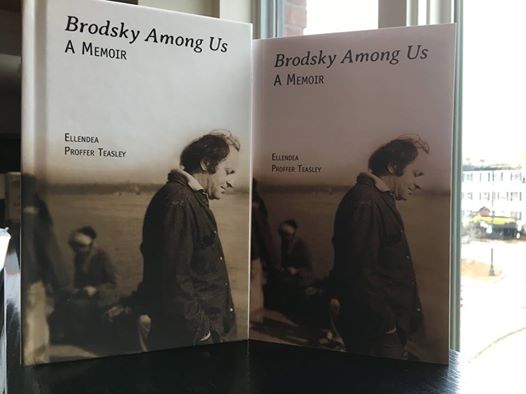
brodsky-among-us“I got up this morning,” he said, humor mixing with alienation, “and I see Ian sitting on the kitchen counter. He puts bread in a metal box. Then the toast pops up by itself. I don’t understand anything.”

He had arrived at Detroit airport the day before, straight from London and his first meetings with famous British poets. And now he was here in Ann Arbor, which in no way corresponded to his imaginings; he really was like that literary frog who woke up and found he was in the Gobi Desert. Like many émigrés, he had imagined this country to be like his minus all the bad things. Nothing could have prepared him for the strangeness of this town, and the place he would occupy in it.

He later said, he came to be glad that his start was in Ann Arbor rather than New York, because he had time to adapt and get his English up to speed. Nonetheless, the early days were difficult for him, his eye could not get used to the scale of a university town of 100,000 (30,000 of them students at the University of Michigan). Soviet Russia was a centralized universe, with only two cities that mattered. America had many centers of power, and some of them looked like this town. He was intelligent enough to understand that he had entered a culture of low-context. The only thing unifying the diverse world of Americans was popular culture, and even that was weaker than centrally-controlled Soviet propaganda.

Ann Arbor would be Joseph’s home base until 1981; he would come back often even after moving away, always warmly welcomed. Joseph complained to Russian friends in the beginning that Ann Arbor was a desert, but actually it was something far, far worse: it was where he was forced to learn many new things, sometimes against his own inclinations. We taught him how to live independently in America—opening a bank account, writing checks, buying food, driving—and it was hard for him, he had no wife or mother to see to these things. All he had was us, and we were both working full-time, so he had to learn quickly.

brodsky-teasley3

Ellendea interviewed at Moscow art museum.

Teaching Joseph how to drive was a Pninian experience, full of risk and comedy. An epic could be written about the number of people who took him for the driving exam (I think he failed the written test five times); he wanted to cheat but Carl wouldn’t let him—then he was ashamed he had wanted to. He had some spectacular accidents (once he jumped a median strip and ended up facing the wrong way), but he managed not to hurt himself or others.

Ann Arbor was the place he came to the full realization that he would not see his country again. Joseph had left his parents behind and now they were hostages, one of the many reasons he indulged in no direct political activity. (His two children—Andrei Basmanov and Anastasia Kuznetsova, the daughter of the ballerina Maria Kuznetsova)—did not have his last name, so they were somewhat safer.) Joseph missed his family, he was used to living in that tiny room carved off from theirs. On the other hand, he felt freer than he ever had in his life. (I recognized him in Bellow’s comment that only in America did the Jewish sons get to leave their parents’ houses.)

brodskyamongusHe was not cut off from his world in Leningrad: friends and scholars ferried letters, money and presents to them and information and letters back. There was always someone going or coming, including us, and there were many friends in Leningrad checking up on his parents and reporting to Joseph by letter and telephone.

It took Joseph about six months to people his Michigan world—Russians found him, American poets found him, interested graduate students and other professors found him; he found the girls himself.

He was almost never alone, but he experienced the loneliness of a man surrounded by people yet aware that the context has changed. That loneliness had a special flavor made up of longing and disgust, and can be seen most prominently in his “Lullabye of Cape Cod.” I know that Joseph had experienced this sort of loneliness before emigration, but the change sharpened the experience.

The fear that loneliness forced up from his subconscious is most searingly expressed in “The Hawk’s Cry in Autumn”; when I read this poem from 1975, I understood that the poet was the hawk who dies because has flown too high for survival: “what am I doing at such a height?” he asks himself.

Later Joseph gave interviews in which he talked about the years in Michigan as the only childhood he ever had.

birthday cakeIt returned me to his own words on the experience, at a commencement address in 1988: “I’m no gypsy; I can’t divine your future, but it’s pretty obvious to any naked eye that you have a lot going for you. …  you’ve been educated at the University of Michigan, in my view the best school in the nation, if only because sixteen years ago it gave a badly needed break to the laziest man on earth, who, on top of that, spoke practically no English – to yours truly. I taught here for some eight years; the language in which I address you today I learned here; some of my former colleagues are still on the payroll, others retired, and still others sleep the eternal sleep int he earth of Ann Arbor that now carries you. Clearly this place is of extraordinary sentimental value for me; and so it will become, in a dozen years or so, for you.”

Happy birthday, Joseph.

Brodsky&ProffersSan Francisco_1972 copy

The Proffers with the future Nobel poet, San Francisco, 1972.

Joseph Brodsky: darker and brighter in Ellendea Proffer Teasley’s new memoir

Thursday, March 24th, 2016
Share

Carl, Ellendea, Brodsky copy

Carl Proffer, Ellendea Proffer Teasley, and Joseph Brodsky – freedom at last. (Photo: Casa Dana)

From my article, “Joseph Brodsky: Darker and Lighter” in The Nation today:

brodskyamongus

In Russian, but in English? Not nyet.

In June 1972, a young poet from Leningrad stepped off a plane in Detroit and into a new life. His expulsion from the Soviet Union had won him international fame; yet he didn’t know how to drive, how to open a bank account or write a check, or how to use a toaster. His English, largely self-taught, was almost incomprehensible. He had dropped out of school at 15. Nevertheless, at age 32, he would soon start his first real job, and at a world-class institution: He was the new poet in residence at the University of Michigan in Ann Arbor. Within a few years, Joseph Brodsky would be a colossus on the New York literary scene. Within 15, he would be awarded a Nobel Prize.

At the moment the plane landed, however, Brodsky became the poster boy for Soviet persecution: a “victim,” in other words, and therefore a cliché. He wasn’t the cliché, but publicity would grant him instant power and prestige in his adopted land. The American voices suddenly clamoring around him could not fathom the forces that had shaped him: KGB arrest, prison, psychiatric hospitals, a courtroom trial, and a sentence of hard labor and internal exile near the Arctic Circle. It was the stuff of legend and contributed to a barrage of media coverage. A Cold War Stations of the Cross was easier to package for mass consumption than an accounting of the musicality, metaphorical ingenuity, compression, and raw intelligence of Brodsky’s verse, which had barely appeared in English at all, and only in the most select publications.

Ellendea Proffer Teasley, in her short new memoir, Brodskij sredi nas (Brodsky Among Us), offers a different view of the poet. It’s an iconoclastic and spellbinding portrait, some of it revelatory. Teasley’s Brodsky is both darker and brighter than the one we thought we knew, and he is the stronger for it, as a poet and a person.

Brings to mind a favorite passage from the Russian poet:“For darkness restores what light cannot repair.” Read the rest here.

“No place in the world for me”: Brodsky’s birthday fêted with an unpublished interview and more

Sunday, May 24th, 2015
Share

Josef_Brodsky

The poet in Ann Arbor, a year after emigration.

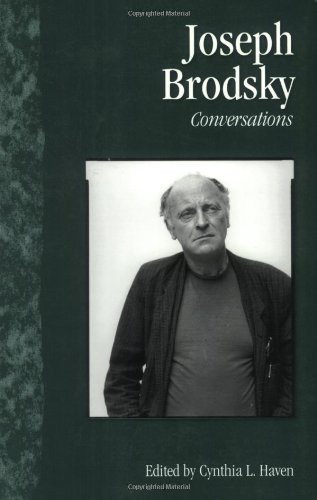
Today would have been Nobel poet Joseph Brodsky‘s 75th birthday. This weekend, there’s a celebratory conference in Saint Petersburg. Some of the presents arrived early – for example, Elisabeth Markstein‘s interview with the poet in The BafflerMarkstein died in 2013, and although the interview was published in Russian in Colta shortly  afterwards, this is its first appearance in English.

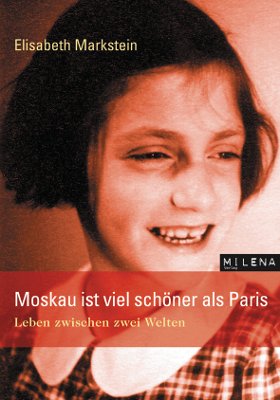
In her book, Moscow Is Much More Beautiful than Paris: Life Between Two Worlds (and thanks to Kurt Leutgeb for bringing the book to my attention), the award-winning translator and author describes how news of the emigration began with a phone call while she was getting her hair done: “I sat, my head with curlers sticking out all over, under the dryer hood with dear Mrs. Luise. ‘Telephone for you!’ I crept out from under the hood. ‘Hi, Markstein?’ The voice spoke Russian. ‘It’s Joseph Brodsky here.’ He has had to emigrate, he says. Could we pick him up from the airport today right away? It was the 4th of June, 1972. ‘Of course. We will be there.’” Markstein recalls their first meeting at the home of scholar Efim Etkind:

marksteinI had met Joseph Brodsky a few years before at the Etkinds’ place in Leningrad. I was there with our daughter Mirli; she must have been three years old. I had put her to sleep on a couch in the living room. (No one would expect that a Soviet university professor had a guest room!) So: Brodsky came in, beaming with happiness because on this day his son was born. We all congratulated him. Mirli could not think of sleep after this and flirted with Joseph. He, in a good-natured way, flirted back.
The trip to the airport was unnecessary. Brodsky’s publisher [Carl Proffer] came from the States to meet him. We didn’t connect with Joseph until that evening. He was confused, despairing, full of longing for his homeland. He had left his country, because even after his trial and the resulting banishment, the KGB was after him tirelessly. While still in Leningrad, before the flight, he had written a letter to Brezhnev, then the Soviet arbiter over the fate of men. Many people criticized Brodsky for this, accusing him of being craven and servile. But me, I was so moved by the letter, which had been published in a newspaper—a proud and at the same time helpless pleading. A significant poet begged for mercy from an completely senile Kremlin lord. For that reason, I’d like to quote a few sentences from it: “It is bitter for me, to leave Russia. I was born and grew up here, I lived here and am indebted to this country for everything that is in my heart. All the bad things that have happened to me, my country generously compensated me with good things, and I never felt myself to be disadvantaged. Not even now. I ask you to give me the chance to continue my existence on the Russian soil and in Russian literature.” To be published in Russia—Brodsky’s only wish. A pure fantasy. The few things of his that had appeared in print would be removed from the Soviet libraries, like the books and translations of all other involuntary emigrants.

The late Carl Proffer, who founded the Russian publishing house Ardis with his wife Ellendea Proffer, shared his own memories in her indispensable Brodsky Among Usrecently published in Russia, where it skyrocketed to #2 on the bestseller list (we wrote about its debut here): “It was Sunday, June 4, and the flight arrived more or less on time at 5:35. As the bus approached from the plane I saw Joseph in the window, and he saw me. He gave a V-for-victory finger flash. Downstairs at the window there was a ten-minute delay when one of his two bags was lost, the first of a series of mechanical details that would slow everything down for days. As Joseph emerged and we embraced, I discovered that a Viennese with strong ties to Russia, Elisabeth Markstein, and her husband were also there to meet him. He and I took a cab together; his repeated reactions were one of nervousness, saying, ‘strange, no feelings, nothing,’ a bit like Gogol‘s madman. The number of signs made his head spin, he said; he was puzzled by the vast variety of cars of different makes. He said there was so much to see that he couldn’t see (he repeated this for several days).” brodskyamongusBrodsky and Proffer had dinner with Heinz and Elisabeth Markstein that evening, and they discussed the Brezhnev letter. Carl Proffer’s memories: “Markstein said he should publish the letter, but Joseph said ‘No, it was a matter between Brezhnev and me.’ Markstein asked, ‘And if you publish it, then it’s not to Brezhnev?’ And Joseph said, yes, precisely. The Marksteins were very kind, and they offered the services of their young daughters to show us both around Vienna. But for the most part we were on our own, and since for the first time we were spending a great deal of time together alone, we talked a lot, especially at night.” (The Brezhnev letter, or one version of it, is included in the new Stanford collection – I wrote about that here.) Ellendea continues the story: “The shock of arrival converted to anger in Joseph: as the two men walked around Vienna, Joseph began spontaneously condemning entire groups of writers (especially Evtushenko and Voznesensky) and dissidents in general. These were things he had said before, but now it was with a kind of hysterical intensity and much more profanity.” In the Baffler interview, he attacks some of his closest friends and colleagues left behind in Petersburg. This then, was the context for his remarks. Several readers have commented on his surprising hostility – it may be one reason why the interview remained unpublished. But this interview is fascinating for many other reasons – really, almost all the Russian poets interviews are worth reading and rereading (that’s why I recommend my Joseph Brodsky: Conversations – it’s terrific, and not because of me). From the Markstein interview:

EM: Do you consider yourself a Soviet poet?

JB: I object rather strongly to all definitions except Russian, because I write in Russian. Still, Soviet would be correct. Whatever its accomplishments and crimes, it exists, and in it I existed for thirty-two years. And it did not destroy me.

EM: I’m glad you brought this up. There are émigrés, and Soviet citizens too, who try to deny its existence, pretend it’s not there. But how can you? The Soviet Union is a historical and cultural fact.

JB: A cultural fact. Exactly. So many Soviet artists drew their inspiration not from divine intervention but from the idea of resistance. That is something to consider, with gratitude even. True, I unexpectedly found myself in the position where one can feel grateful. While you actually live there . . . I’m not sure what it is, what is wrong with my nervous constitution, but when I lived there, I couldn’t quite raise myself to anger or to hatred. Anger, yes, but never hatred. I always remembered, you see, that the regime and its manifestations were individual, ordinary people. I couldn’t give it a single face. For a resistance fighter, for a questing dissident, such emotion is death. Therefore, I’m not a fighter. An observer, perhaps.

brodsky7The Viennese Markstein spent her childhood in Switzerland, Moscow, and Prague. She was expelled from the Communist Party and barred from the Soviet Union in 1968 (according to German Wikipedia) when she was discovered smuggling letters of Alexander Solzhenitsyn out of Russia. She was appalled by the Soviet invasion and apparently said so. She continued that line of thought with the poet:

EM: In Czechoslovakia in 1968, in some cities during the first seven days of Soviet occupation, or maybe it was just one city, there was a slogan, “Remember that you are people of culture.”

JB: This is precisely what ruined their cause.

EM: How so? I believe they had won more ground than was expected.

JB: I really don’t think so. They behaved like schoolchildren. They decided that the principles they were defending, that somehow they had discovered a new way of defending those principles. But in fact, if you really want to enforce them, if you don’t want them to remain just empty words, bubbles in the air, then the only way to do it is by shedding blood. Otherwise, all you will get is a better or worse form of slavery. Once you start talking freedom, how you deserve it, how you want it, how it’s been denied you, how you refuse to remain a slave, you’ve got to take up arms. There is no other way to fight a slave-master. True, they did disgrace the Soviet Union, but pragmatically speaking . . .

EM: I used to think that death is preferable to life on one’s knees. But now I’m not so sure. I’m beginning to think that any life is better than death.

JB: True. But still, the question is, what should we remain alive for? Man is not a rock, he can’t exist just for his own sake. There’s always the “what for.” I understand that here, in the West, I won’t find the answer. Because when I look around, I don’t understand what people live for. My impression is that they live for the sake of shopping. That human life exists for the sake of shopping. The only solution is to stay on the margins, to not get too involved—in shopping, I mean. If I had grown up here, I don’t know what I would have become. This is a very disorienting feeling. I just don’t understand what it’s all for. It must be a very Russian, very totalitarian idea that something so good must come only as a reward, not as a given.

Read the rest here. In her memoir, Markstein notes: “Brodsky continued his flight to London. I never expected letters from him. At the end of 1972, we received a postcard from Venice with greetings for us and the girls for Christmas and the New Year. ‘Imagine: All washed up on these shores. Because there is no place in the world for me.’ I translate intentionally literally, because only then is the pain audible. Still, Venice soon became Brodsky’s favorite city – and where he, it so happened, wanted to be buried, on the Island San Michele. Years later Brodsky was again in Vienna, but didn’t call on us. What does that mean? It confirms for me once more that poets definitely must be egocentric.”

Brodsky&ProffersSan Francisco_1972 copy

The Proffers with Brodsky in San Francisco, 1972 (Photo courtesy Casa Dana)