Archive for September, 2016

Why Rudolf Nureyev never learned French.

Wednesday, September 28th, 2016
Share
fonteyn-nureyev

With Margot Fonteyn in 1963. Freedom at last.

Last Christmas, a dear friend gave me Elena Tchernichova‘s Dancing on Water: A Life in Ballet, from the Kirov to the ABT. I’ve finally gotten round to reading it, and the book is a fine antidote to this dispiriting election season. What better way to pass the time than to read about a young girl mastering her developpé on eight counts, or the differences in technique between the leading Soviet dancers of the twentieth century, or the distinctive styles of its choreographers? Tchernichova eventually defected to the West, where she became ballet mistress for the American Ballet Theater from 1978 to 1990, and “the most important behind-the-scenes force for change in ballet today,” according to Vogue magazine.

I’m about halfway through, and am enjoying her memories of the insolent and magnetic young dancer at the Vaganova Institute, Rudolf Nureyev, the son of Tatar Muslims who was born on the trans-Siberian railway in Irkutsk. He defected to the West in 1961, despite KGB efforts to stop him.

tchernichovaI have my own memories of the rebellious Tatar artiste. The reading brought me back to a moment some decades earlier, when I first saw Nureyev onstage in 1978 in London, performing the lead role in his own choreography for Prokofiev‘s Romeo and Juliet. I was absolutely enthralled, and despite my penury, went to see the production a second time.

But here’s the anecdote Tchernichova related that stayed with me, explaining the reason he never learned French,  although he lived in France for years:

In adulthood, Rudi Nureyev was fond of recalling how, soon after graduating from Vaganova, he had found someone to teach him English. He made rapid progress, and so he decided to try French as well. He located an old lady who agreed to instruct him on a quid pro quo basis in which he would clean her room in a rambling communal apartment. She didn’t have a bathroom in her own small room, and one of his duties would have been emptying her chamber pot. “I was already a ballerina,” Rudi recalled, “and I thought, No way do I pick up somebody else’s shit! And you know what?” he said to me, decades later in his Paris apartment, overlooking the Louvre, “I still don’t know French. If you want to learn something, you have to eat shit.

A film clip from that production that captivated me so fully decades ago in London – but filmed a few years later, in Milan.

The aphorisms of Leonidas Donskis (1962-2016): a few words that go a long way

Monday, September 26th, 2016
Share
donskis2

From silence and pauses…

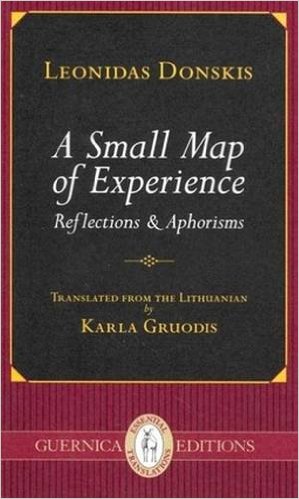
Friends at World Literature Today pointed me to one of the smaller and lesser-known works of philosopher and political theorist Leonidas Donskis, one of Europe’s leading intellectuals, who died unexpectedly last week at 54: his short, 114-page A Small Map of Experience: Reflections and Aphorisms (Guernica Editions, 2013; translated from the Lithuanian by Karla Gruodis). I bought a copy tout de suite and got it in the mail over the weekend.

“Aphorisms cannot be conceived theoretically, and one cannot learn how to write them from a manual,” he writes in his foreword. “They rise up out of authentic experience—from silence and pauses, from stopping oneself so that a thought is not drowned by the flood of words and pretentious expressions.” But they’re not complete, in a sense, until they have a reader: “An aphorism is also a space for dialogue: it is an open and unfinished thought, which always requires that we, as readers, go back and attempt to develop the ellipses and silences which the author has left for us like an invitation.”

The Polish sociologist Zygmunt Bauman, Donskis’s co-author for Moral Blindness: The Loss of Sensitivity in Liquid Modernity (Cambridge, 2013), noted, “A successful aphorism, true to its mission, allows a small step to go a long, perhaps an infinitely long, way.” He thinks A Small Map fits the bill: “a perfect match to the vertiginous pace of our life, and bringing that art up to the gravity and grandiosity of the challenge we confront.”

My love of aphorisms is known to Book Haven readers (see here and here), so this was just the ticket. I quickly found with my very unsystematic reading that the book was littered with my little book was littered with sticky flags.

A sampling from the pages:

donskisbook2“Academics are paid for what they say. Politicians and diplomats – for what they do not say.”

“Provincialism is the lack of language and criteria for evaluating yourself and your environment. It is an inability to assess your own worth – a desperate plea for others to identify and assess you.”

“Great art dissolves our illusions about the importance and truth of the present.”

“Two solitudes do not beget a wholeness.”

“Love is the refusal to see oneself as the only reality, and the transcendence of fear and hatred.”

“Hatred is an unbearable dichotomy in which we imagine another’s demise while secretly hoping that he or she will survive to deliver us from meaninglessness.”

“Conscience is an intuition – that wherever two meet, a third is always present.”

There’s a reason his title includes “reflections” in addition to “aphorisms.” Aphorisms are defined by their brevity, but some push the envelope. A few of his reflections, then:

  • “According to the logic of the twentieth century, wars were historically won by those who were left standing. The wars of the future will be different. No one will really win them or have the goal of winning them. They will be needed primarily to test and improve the military industrial machine, to undermine rising foreign economies, and to shape public opinion. War will become a vehicle for maintaining the balance of economic and political forces; the boundaries between it and peace will likely be erased.”
    .
  • “The twentieth century media universe profoundly transformed the public figure. In the eighteenth century, public intellectuals lived their societies’ concerns, raising them to the level of philosophical and political discourse. But, while they saw private problems in public terms and engaged private persons with public concerns and interests, they themselves avoided the social noice of public life. It was once considered a sign of good taste and correct attitude to avoid the press. A Victorian Englishwoman was expected to appear in it only three times in her life: on the very special occasions of birth, marriage, and death. In our era, to appear in the media a mere three times would be the equivalent to not having existed at all.”
    .
  • “Non-Jews usually don’t possess the sensitivity or language to speak about Jews, just as most men can’t legitimately speak about women. This leads to extremes: either Jews are so admired that they are barely considered a normal people (one that includes the wise as well as the villainous), or they are blamed for the lack of security in the Western world and for all of the sins of humanity. Is this thesis valid if we substitute Gentiles and Jews with men and women? In a sense. Seeking rights and recognition, women had to gain access to a world of culture and politics created by men, just as Jews had to find niches in a world dominated by Gentiles. In both cases only one side conformed and adapted – hence the asymmetry of sensibilities.”

And here’s one for Donskis himself: “We love only those things whose fragile and temporary nature we are acutely aware of.” Au revoir, sir. From the overwhelming number of hits on my modest obituary attracted a few days ago, it’s evident you are already much missed.

Putting the “bel” in “bel canto”: last call for a stunning “Lucia di Lammermoor” at Opera San José!

Saturday, September 24th, 2016
Share
lucia

Tenor Kirk Dougherty and soprano Sylvia Lee cuddle in “Lucia di Lammermoor.”

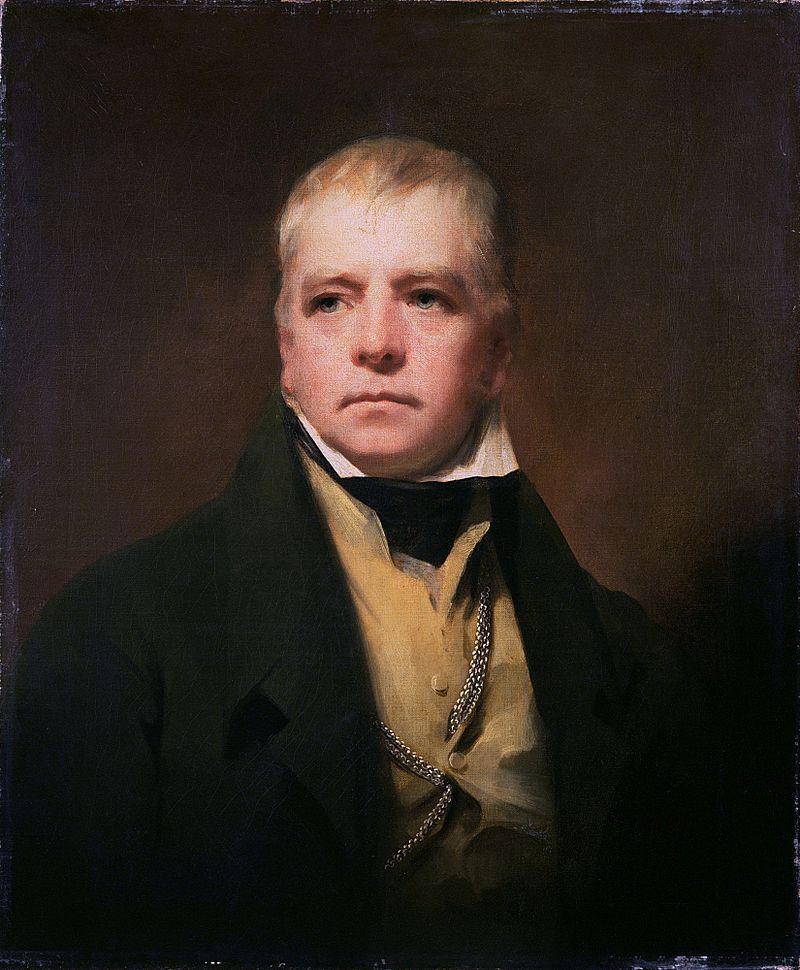
Who was the first novelist to enjoy truly international fame? If you guessed Charles Dickens, you would be wrong. His success was preceded by the author who is little read today, Sir Walter Scott. The Scottish author is certainly remembered in the world of opera, with his story The Bride of Lammermoor, a far-fetched tale of mayhem, madness, and bloodshed that is nevertheless based on a true story, told by Scott’s mother, Anne Rutherford, about an ill-fated romance set within a larger feud between the Dalrymples and the Rutherfords.

scott

He told the story.

However, it’s not the plot that draws us into Gaetano Donizetti‘s 1835 Lucia di Lammermoor, a gory little tale of tribal vengeance in the highlands, but the glorious music, from beginning to end. How sad for my readers, then, that I’ve taken so long to write about this wonder of a production at Opera San José – since it closes tomorrow, with a Sunday, September 5, matinee at 3 p.m.! My excuse: I only saw the opera myself Friday night.

Soprano Sylvia Lee‘s perfect coloratura performance in the title role is a big reason for the excitement. Lucia has become her signature role, performed in Hong Kong, Tel Aviv, and her native South Korea before she began her residency at Opera San José this season. General Director Larry Hancock, in a talk before the performance, compared her to late, legendary Lily Pons, who was also associated with the role.

donizetti

He set it to music.

Charlise Tiee, writing in San Francisco Classical Voice, “Her acting was completely engrossing, her sweetness which is crushed into derangement, was utterly convincing. … Her voice is resonant from top to bottom and without a hard edge or a hint of shrillness. She attacked the coloratura passages with clarity and ease, yet was expressive. Her voice alone is well worth the trip to the South Bay and what a pleasure it is to see such an impeccable performance of an iconic role.”

“The show breathes with wonderful musicality, simple and direct acting, and plenty of vocal fireworks that underline the ‘bel’ in bel canto.”

Elijah Ho, writing in the San Jose Mercury was also enthusiastic: “To put it bluntly, it was a thing well-conceived and brilliantly executed. … Get in your car, or take the bus or the train. There is magnificent vocalism and so much more.”

By the time she had sung her final notes as Lucia on Saturday evening, it was apparent soprano Sylvia Lee had left us with something special.

sylvia_lee

A matchless Lucia

The singing actor, a winner of the 2007 Metropolitan Opera National Council Auditions, conveyed meaning seamlessly throughout the evening. We marveled at how she handled the delicate cantilena of “Regnava nel silenzio”, the way she took the delicate roulades in “Quando, rapito in estasi” with ease and elegance. When she was in her element, there was incredible evenness of tone. Pitches, no matter the distance, were hit squarely in the middle, and her legato flowed the Mozart-prescribed way: “like oil.”

Lucia’s mental collapse, culminating in the much-anticipated mad scene, was both subtle and gradual. Lee’s facial expressions, beginning with wide, crazy eyes, evolved from “Il pallor funesto” to “Soffriva nel pianto.” By the end, I couldn’t help but be disturbed by the contrast between her blood-soaked white dress, the forlorn, exhausted expressions of her face and the emanating beauty of her coloratura in response to the flute.

The opera is set in the 17th century, but Larry Hancock, thinking of the enormous plumed hats of the era and the silly breeches with their “nests of ribbons” (I loved that phrase), vowed “not on my stage.” He preferred a more medieval look to the opera, and recast Lucia in the 15th century. This required him to adjust political woes that beset the characters, suggested in the single line in the original: “William is dead; we will see Mary mount the throne” – referring to the joint rule of Mary, daughter of James II, and her husband William of Orange. Never happened, of course – Mary died first. Hancock rewrote the line, setting the action after the Battle of Bosworth Field in 1485, when Henry Tudor (i.e., Henry VII) defeated Richard III. Since England and Scotland were not united until 1707, during the reign of Queen Anne, Mary’s sister, I couldn’t understand why the Scots would much concerned with either death.

No matter, the 15th-century costumes were sumptuous, recalling the rough land where the elegant French Mary Stuart‘s life would be tormented by feudal clashes and turf battles less than a century later.

lammermoor_header

Baritone Matthew Hanscom puts the pressure on Lee and Dougherty in “Lucia di Lammermoor.”


Farewell to one of Europe’s leading thinkers, Leonidas Donskis (1962-2016)

Thursday, September 22nd, 2016
Share
donskis2

“Erudite, ambitious, and prolific as an ethicist.”

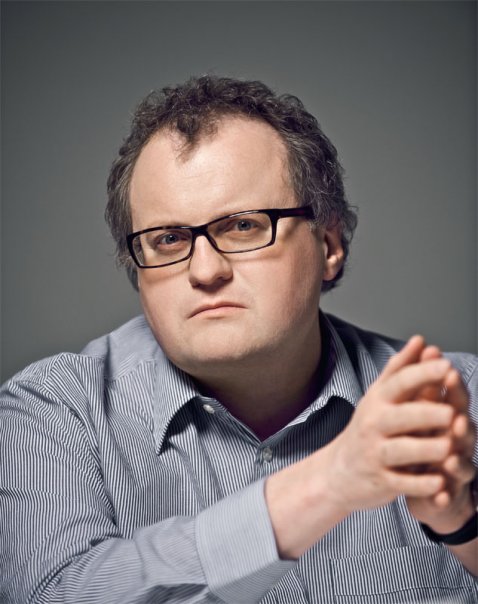
Leonidas Donskis died yesterday from an apparent heart attack. He was 54. The Lithuanian Jewish philosopher and public intellectual – he was a political theorist, historian of ideas, social analyst, political commentator, and professor –was little known in the West, but is a major figure in Eastern European thought. He was also a member of the European Parliament from 2009 to 2014.

One of Europe’s leading poets, Tomas Venclova (his correspondence with Donskis was published last year), wrote to the Book Haven: “Leonidas Donskis was the only one Lithuanian philosopher (mainly historian of ideas) who merited the title. I would say he was on a par with, say, Konrad, Krastev, or even Havel. His sudden and untimely death is a terrible loss.” Tomas Venclova and Donskis were both born in Klaipėda, and both attended the University of Vilnius.

Donskis recently coauthored a book with a man he considered of the greatest thinkers of our times, Zygmunt Bauman. The book Moral Blindness: The Loss of Sensitivity in Liquid Modernity (Cambridge, 2013) was “a high point of my life,” Donskis had said. “Such an opportunity can occur only once in a lifetime.”

"Above all, love language" (Photo: Dylan Vaughan)

Correspondent Venclova

At a discussion at the Central European Form in Bratislava last November, he spoke on the role of the intellectual in today’s world: “The sociologist Zygmunt Bauman said that if you want to be a star in your society you need to invent yourself either as celebrity or as victim. But I think there is also a third way out for the intellectuals, who way too often become fear-mongers. This is in my opinion their sin against societies. At the same time, we still have many sober voices resisting this temptation. The principle of intellectual or journalistic work is not to scare or paralyze people. The best thing to do now is to encourage audiences to live their lives without fear, in dignity.”

“The great paradox of modernity is that everything is very close to its polarity, to its own antidote. For instance, in terms of political existence, I am afraid Europe will become even more securitized and surveilled. But the crucial thing is to defend the humanistic legacy of Europe. First and foremost, our task is not to become paranoid or fear-ridden. The challenge for the 21st century is to protect democratic Europe with respect to our humanistic sensibilities, and respect to human rights and civic liberties. This will be quite difficult, but we must stand together for it, especially given the rise of violent political extremism.”

A few words on Donskis from some important voices on my Facebook feed:

marci-shoreMarci Shore, author of The Taste of Ashes: The Afterlife of Totalitarianism in Eastern Europe and Caviar and Ashes: A Warsaw Generation’s Life and Death in Marxism, 1918-1968: I’m writing from Belgrade, in shock at the news of the death of our friend Leonidas Donskis. I had just seen Leonidas in Krasnogruda, at Fundacja Pogranicze on the Polish-Lithuanian border, at our seminar “Second reading: Tony Judt on Arendt, Camus, Miłosz, Kołakowski.” In Krasnogruda, he spoke about Bulgakov‘s Master and Margarita as a novel about the devil as superfluous in modern politics: we are in the age of do-it-yourself. He spoke about the death of the Left in Lithuania and about “ontological junk food” – quick, ready-made theories for easy consumption here and now. “I’m afraid there is just a void,” Leonidas said. But he never stopped trying to fill the void with a passionate insistence on truth and ethics. We were meant to meet in Vienna two weeks from now at this year’s Leszek Kołakowski symposium devoted to the topic “Paradises Lost: Entzauberung, Utopia, and their Afterlives.” I never imagined “afterlives” taking on this additional meaning. Now of all times our world could not afford to lose Leonidas.

TimSnyderTimothy Snyder, author of Black Earth:The Holocaust as History and Warning and Bloodlands: Between Hitler and Stalin: Erudite, ambitious, and prolific as an ethicist; liberal in his politics, generosity and individuality; trilingual in Lithuanian, Russian, and English. A rapid wanderer in our best traditions, a loyal companion with expansive ideas of friendship; a European link to much of what was admirable his Soviet generation and the ones that came before; an eager interlocutor who wanted to bring out the best in those he admired (such as Zygmunt Bauman and Tomas Venclova with whom he wrote books); a patient teacher whom I last saw among grateful students, filling my notebook with the connections I never would have seen without him.

iosselMikhail Iossel, author of Every Hunter Wants to Know: A Leningrad Life and contributor to The New Yorker: I am absolutely devastated. I loved him dearly. He was one of the most brilliant, altogether remarkable people I have ever met, one of Europe’s leading public intellectuals, one of world’s most interesting philosophers and social thinkers, an enormously erudite and prolific scholar and a passionate patriot of his country, son of Holocaust survivors and member of the European Parliament – and also one of the kindest, gentlest, and most decent and honest people I’ve ever known. In point of fact, I have never known anyone quite like him, in all of my long life: he was absolutely unique, unrepeatable and, to my mind, a perfect human being. I cherished each and every one of our conversations: in Lithuania, in New York, and, most frequently, online – about politics, Europe, Lithuania, Jewish history, Russia, art… It is impossible to believe he is gone. The world was so much better with him in it. There are no words….

Postscript on 9/23: We received this message from Beatriz Miranda in Mexico City, and thought we’d share it (it’s also in the combox below): “With great sadness we have received the news about the death of our beloved friend, Leonidas. I met him in Amsterdam. The University of Amsterdam asked me to invite Prof. Bauman to present their book Moral Blindness in Amsterdam. The invitation was accepted by Prof. Bauman with a condition: to bring Leonidas too. It was the beginning of real friendship. Later on, he came to Mexico invited by the 17, Institute of Critical Studies and helped us to think critically about the role of universities and academics. I will never forget the way he conducted himself, with humility and sweetness. He even travelled with me around Mexico City by metro. He ate at the Coyoacan Market and enjoyed visiting the pyramids of Teotihuacan. During that visit and taken by his passion for jazz he proposed to the Institute to give the doctorate Honoris Causa to the great jazz musician Vyacheslav Ganelin. We did it last January but unfortunately, Leonidas could not come. We will keep his words alive in our Institute. This is important especially in this violent time. Leonida’s call for peace and understanding will be missed but kept immortal through his work and publications. 17, Institute will keep the promise to translate some of his work into Spanish. Gracias querido, Amigo Leonidas! You will be missed.”

Postscript on 9/26: Read a few of his reflections and aphorisms here.

Andrew Sullivan on living-in-the-web: “It broke me. It might break you, too.”

Tuesday, September 20th, 2016
Share
andrew_sullivan_cropped

Getting off the grid. (Photo: Trey Ratcliff)

Author, journalist, blogger Andrew Sullivan has been a kind friend to the Book Haven over the years, picking up our posts in The Atlantic, The Daily Beast, and in his blog “The Daily Dish” – we’ve written about it here and here and here. Then last year he discontinued his blog – burned out, needed to get off the grid, he said.

I understood. Being online, all the time, had affected my own ability to read, think, and focus. Nowadays, I find it requires discipline to read a few pages without compulsively leaping up to google an unfamiliar word or doublecheck a random fact. But I’d never escalated to the hepped-up scale he did.

He tells his story in New York Magazineand it’s a riveting read, and a black warning. Here’s an excerpt:

For a decade and a half, I’d been a web obsessive, publishing blog posts multiple times a day, seven days a week, and ultimately corralling a team that curated the web every 20 minutes during peak hours. Each morning began with a full immersion in the stream of internet consciousness and news, jumping from site to site, tweet to tweet, breaking news story to hottest take, scanning countless images and videos, catching up with multiple memes. Throughout the day, I’d cough up an insight or an argument or a joke about what had just occurred or what was happening right now. And at times, as events took over, I’d spend weeks manically grabbing every tiny scrap of a developing story in order to fuse them into a narrative in real time. I was in an unending dialogue with readers who were caviling, praising, booing, correcting. My brain had never been so occupied so insistently by so many different subjects and in so public a way for so long.

I was, in other words, a very early adopter of what we might now call living-in-the-web. And as the years wentby, I realized I was no longer alone. Facebook soon gave everyone the equivalent of their own blog and their own audience. More and more people got a smartphone — connecting them instantly to a deluge of febrile content, forcing them to cull and absorb and assimilate the online torrent as relentlessly as I had once. Twitter emerged as a form of instant blogging of microthoughts. Users were as addicted to the feedback as I had long been — and even more prolific. Then the apps descended, like the rain, to inundate what was left of our free time. It was ubiquitous now, this virtual living, this never-stopping, this always-updating. I remember when I decided to raise the ante on my blog in 2007 and update every half-hour or so, and my editor looked at me as if I were insane. But the insanity was now banality; the once-unimaginable pace of the professional blogger was now the default for everyone.

If the internet killed you, I used to joke, then I would be the first to find out. Years later, the joke was running thin. In the last year of my blogging life, my health began to give out. Four bronchial infections in 12 months had become progressively harder to kick. Vacations, such as they were, had become mere opportunities for sleep. My dreams were filled with the snippets of code I used each day to update the site. My friendships had atrophied as my time away from the web dwindled. My doctor, dispensing one more course of antibiotics, finally laid it on the line: “Did you really survive HIV to die of the web?”

But the rewards were many: an audience of up to 100,000 people a day; a new-media business that was actually profitable; a constant stream of things to annoy, enlighten, or infuriate me; a niche in the nerve center of the exploding global conversation; and a way to measure success — in big and beautiful data — that was a constant dopamine bath for the writerly ego. If you had to reinvent yourself as a writer in the internet age, I reassured myself, then I was ahead of the curve. The problem was that I hadn’t been able to reinvent myself as a human being.

invisibleAnd that, of course, is the point, isn’t it? As I wrote in the introduction to An Invisible Rope: Portraits of Czesław Miłosz

Few can deny the dizzying rate of social and technological upheaval in the information age, where we communicate in real time with Peru and tweet back what we hear, yet human greed, cowardice, and power-lust remains essentially the same. That acceleration, juxtaposed with man’s fallibility, is very much to the point.

One metric for measuring the chasm pertains to what Miłosz called être and devenir. (Or, to put a Thomist slant on it, heuses the Latin esse elsewhere.) When I interviewed him at his legendary Grizzly Peak home a decade ago, I asked him about être and devenir. He dodged the question: “My goodness. A big problem,” he said.

Saint_Thomas_Aquinas

Esse.

After some hesitation, however, he elaborated. “We are in a flux, of change. We live in the world of devenir. We look at the world of être with nostalgia. The world of essences is the world of the Middle Ages, of Thomas Aquinas. In my opinion, it is deadly to be completely dissolved in movement, in becoming. You have to have some basis in being.

In general, the whole philosophy of the present moment is post-Nietzsche, the complete undoing of essences, of eternal truths. Postmodernism consists in denying any attempt at truth.

Read Andrew Sullivan’s piece here. As he writes: “An endless bombardment of news and gossip and images has rendered us manic information addicts. It broke me. It might break you, too.”


Timothy Garton Ash: “Universities should be safe spaces – safe spaces for free speech.”

Sunday, September 18th, 2016
Share
Contributor Tim Garton Ash of st Antony s college Oxford Pic Rob Judges

Man of the hour.

I had lunch on the Stanford campus with historian, author, and Guardian columnist Timothy Garton Ash a week or so ago. We had passed each other in Kraków and at Stanford, so I thought it was high time we actually sat down together to talk.

He was having a short spell in Palo Alto before resuming the on-the-road lectures, readings, interviews connected with the promotion of his new book, Free Speech: Ten Principles for a Connected World (Yale University Press) – and eventually he’ll return to Oxford, where he spends most of the year. Edmund Fawcett, writing in The New York Times Book Review called the book: “Admirably clear, . . . wise, up-to-the-minute and wide-ranging. . . . Free Speech encourages us to take a breath, look hard at the facts, and see how well-tried liberal principles can be applied and defended in daunting new circumstances.”

Naturally, our conversation revolved around issues about free speech and the social media –  for example, what exactly, are the obligations of Facebook or Twitter when it comes to tweets or posting that are violent? We also spoke about George Orwellbecause by curious coincidence I had been reading his renowned essay, “Orwell’s List,” in his previous book, Facts Are Subversive: Political Writing from the Decade Without a Namethe day before.

His new book is winging its way to my house, but meanwhile, you can get a taste of the direction of his current lines of thought in this weekend article in The Guardian, “Safe Spaces Are Not the Only Threat to Free Speech. An excerpt about the cultural debate surrounding free speech today [British spelling retained]:

gartonashbookOne trouble with this debate is that the important and sometimes difficult balancing judgments that should be its focus are obscured by the silliness, hyperbole and hysteria that accompany it like the raucous camp followers of a medieval army. It also comes with a whole new jargon: trigger warnings, safe spaces, no-platformingmicroaggressions.

And it is highly politicised. At this year’s Republican convention in Ohio, speaker after speaker garnered a surefire round of applause by attacking “political correctness”. No one had to explain what they meant: just spit out the two words and trigger the Pavlovian response.

But what might loosely be called the other side is often its own worst enemy. The New York Times recently reported a presentation to new students by the chief diversity officer at Clark University. Among her examples of microaggressions to be avoided, she included saying “you guys”, since the phrase could be interpreted as excluding women. One female Hispanic student, who had repeatedly committed this heinous error, commented gratefully: “This helped me see that I’m a microaggressor too.” What a dreary, anxious, puritanical kindergarten a campus would become if students were constantly worrying whether this or that word might cause offence to someone or other.

Maybe what we need is a “safe space.”  Maybe the whole campus must be a “safe space.” He objects:

gartonash2subversiveHere, anyone who believes that free speech is vital to a university must draw the line. For what these student activists are claiming when they insist that, for example, Germaine Greer may not speak on a particular campus (because of her view that a woman is not “a man without a cock”), is that one group of students has the right to prevent another group of students hearing a speaker whom the second group actually wants to hear. Such no-platforming is, in effect, student-on-student censorship. It is an abuse of language to suggest that anyone can seriously be “unsafe” because someone whose views they find offensive or upsetting is speaking in a room on the other side of campus.

In fact, one underexamined question is precisely this: what kind of space is a university? And the answer, which also explains some of the confusion, must be: several different kinds of space, which should have different standards.

 Overall, Garton Ash isn’t staying awake at night, worrying about all this: “I think it’s fair to say that the erosion of free speech is still only at the margins in major western universities, and mainly concerns a few particular subjects. But we must always watch out for the thin end of the wedge, whether it is being pushed by student activists or government.”

Read the whole article here. Or come to his talk at at 7 p.m., Wednesday, October 5, in Cubberley Auditorium, here.