Archive for September, 2018

A.E. Stallings remembers a Turkish violinist, drowned at sea

Sunday, September 30th, 2018
Share

We wrote some months ago about the American poet A.E. Stallings who is based in Athens, at the forefront of the refugee crisis – you can read about that here. She has been chauffeuring refugees, teaching traumatized children, leading poetry classes for the adults, gathering supplies for the impoverished, and even showing kids how to play baseball.

But she is doing most of all what a poet does best: writing poems. 

Here is the latest, which has been making the rounds in the social media. From the most recent issue of The New York Review of Books:

Romance on the rails in New York City…

Friday, September 28th, 2018
Share


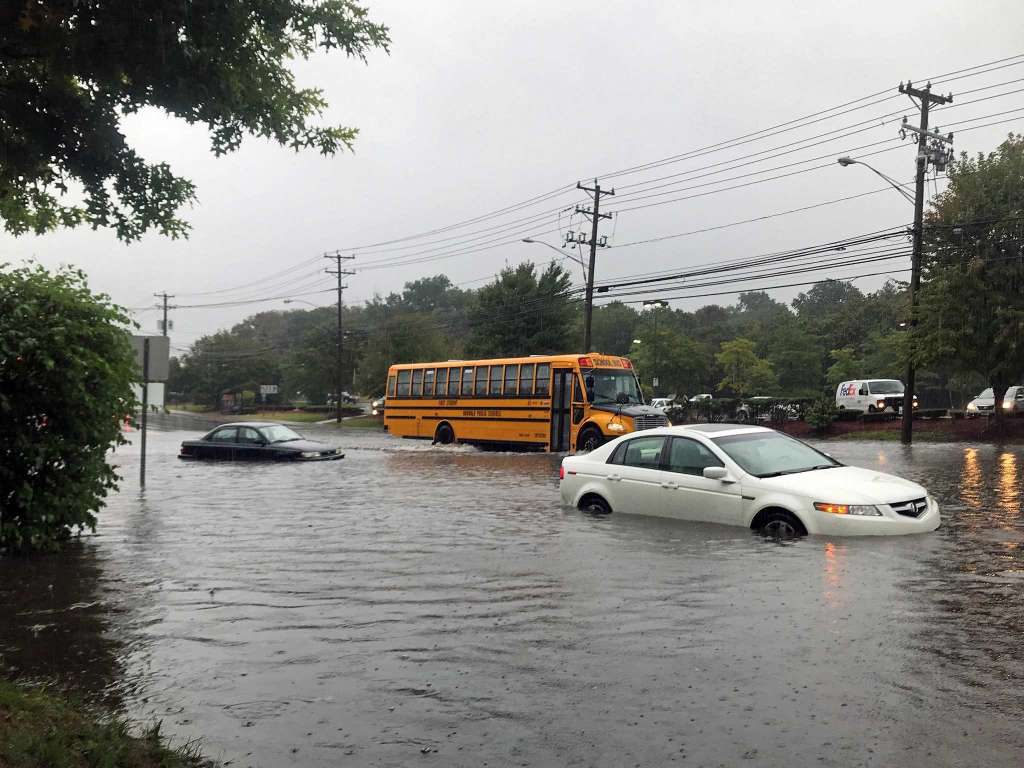
The train tracks weren’t the only thing that was flooded. (Photo: Meira Rosenberg)

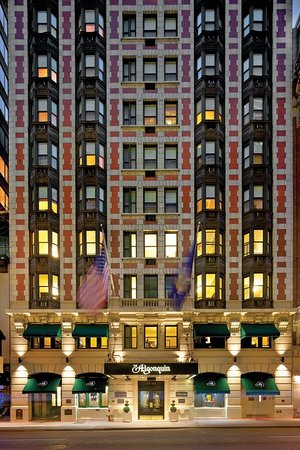
On my way to New York City to meet a friend for a drink at the legendary Algonquin Hotel on Wednesday night. I was vaguely aware that my cellphone had oinked a flash flood warning a few hours earlier while I was at Beinecke Archives. And of course I was aware that the copious amounts of rain had poured on the region all day. Nevertheless, I persisted. I boarded the North Metro Line at New Haven, bound for Grand Central station.

A postponed pleasure…

We got as far as Fairfield, a half-a-dozen stops down the line. The train halted. The tracks were flooded. The conductor made the announcement that people disembarking at Fairfield should move to the front of the train, which had reached the platform, while the rest was trapped. Otherwise, the passengers would have to wait. A man and a woman at the doors in our car debated whether they should continuing waiting for the train to pull forward. He asked her if she was Irish, because she had an Irish accent. She was clearly flattered, but announced she was born and bred in the U.S.A. They began to chat, discussing Tolstoy, Austen (“way ahead of her time,” she said), guessing each others’ ages (he is 25; she guessed it “on the nose,” he said). She wanted to make it clear that she was thoroughly modern and up to date. He said he was Catholic. Was she? No, she would never be such a thing. At least he wasn’t the kind who thought all those backwards things, was he? Yes, he said, he rather was. They continued chatting. She kept tossing her mane of red-gold hair, and swinging her hips. He was smiling. She said he was “sassy.” He said he’d never been called that before, but he thought she was sassy. And she was.

The train wasn’t moving. The loudspeaker updated us on the delays, the need to contact headquarters in New York to find out what to do. Eventually, it was announced, they had gotten clearance for an elaborate plan to back up the train, and run it along another track that wasn’t flooded. The train staff seemed agitated by this maneuver. Would I be at Grand Central by 8 p.m. at least? The staff predicted not.

I am a Californian. I’ve been in national emergencies with earthquakes, floods, wildfires. When people begin acting like this, it’s often a prelude to hours of delays, overcrowded bathrooms, emergency phone calls, unexpected plans to stay overnight somewhere you hadn’t planned, and sometimes a prime spot on the evening news.

I had a feeling all that predicament would suit this young man and woman at the doors just fine. I said a little prayer for them, headed for the front of the train, hopped off, and onto a train headed in the opposite direction, that was just closing its doors to go back to New Haven.

Celebrating “Evolution of Desire: A Life of René Girard” in NYC

Tuesday, September 25th, 2018
Share

Gathered for a discussion of books, poetry, literature, and culture…

The Book Haven has lapsed into an unaccustomed silence. That’s because we’ve been on the road. We’ve reconnected with friends and allies in New York, based at the hospitable Westchester home of Izabella Barry, who hosted a celebration for Evolution of Desire: A Life of René Girard on Sunday. Old friends were in attendance – the Polish poet and professor Anna Frajlich and the Russian poet and screenwriter Helga Landauer, and the photographer Zygmunt Malinowski who has guest posted on the Book Haven. New friends were there, too: the poet Kathryn Levy.

With poet Anna Frajlich…

Irena Grudzińska Gross was the moderator for my interview– I lucky on that on that score, the author of Czeslaw Milosz and Joseph Brodsky: Fellowship of Poets is a matchless scholar and human being. We ended the interview with a discussion of my forthcoming ‘The Spirit of the Place’: Czesław Miłosz in CaliforniaAs Sunday afternoon crawled into evening, we flicked on the lights, poured more wine, and continued to discuss literature, poetry, culture.

Now I’m hunkered in Yale’s Beinecke Library. I’m finding some gems among the archives, like this one, from Czesław Miłosz, which seems appropriate for the times: “Textbooks of history tell us about crusades, about burning heretics and religious wars. All that pales in comparison with what the twentieth century demonstrated. Uncounted millions of human beings were killed not in the name of religion but in the name of lay fanaticisms and politics, that is, in a struggle for power. By the same token a belief in the moral progress of humanity was undermined, that belief so dear to our ancestors of the nineteenth century when it strangely, against logic, coexisted with the theory of evolution advanced by biologists. Technological progress did not make man a better being, on the contrary; and now we must admit that we know nothing as to where our species drifts, for goodness and purity of heart are as proper to it as the worst monstrosity.”

Should we trust Amazon to create our future?

Saturday, September 22nd, 2018
Share

Its power is troubling, she says.

ry Afraid.

Amazon now employs more than half a million people and earlier this month briefly became second company to be worth a trillion dollars. It powers much of the internet through its cloud computing division. “As consumers, as users, we love these tech companies,” says lawyer Lina Khan. “But as citizens, as workers, and as entrepreneurs, we recognize that their power is troubling. We need a new framework, a new vocabulary for how to assess and address their dominance.”

An excerpt from the article:

If competitors tremble at Amazon’s ambitions, consumers are mostly delighted by its speedy delivery and low prices. They stream its Oscar-winning movies and clamor for the company to build a second headquarters in their hometowns. Few of Amazon’s customers, it is safe to say, spend much time thinking they need to be protected from it.

But then, until recently, no one worried about Facebook, Google or Twitter either. Now politicians, the media, academics and regulators are kicking around ideas that would, metaphorically or literally, cut them down to size. Members of Congress grilled social media executives on Wednesday in yet another round of hearings on Capitol Hill. Not since the Department of Justice took on Microsoft in the mid-1990s has Big Tech been scrutinized like this.

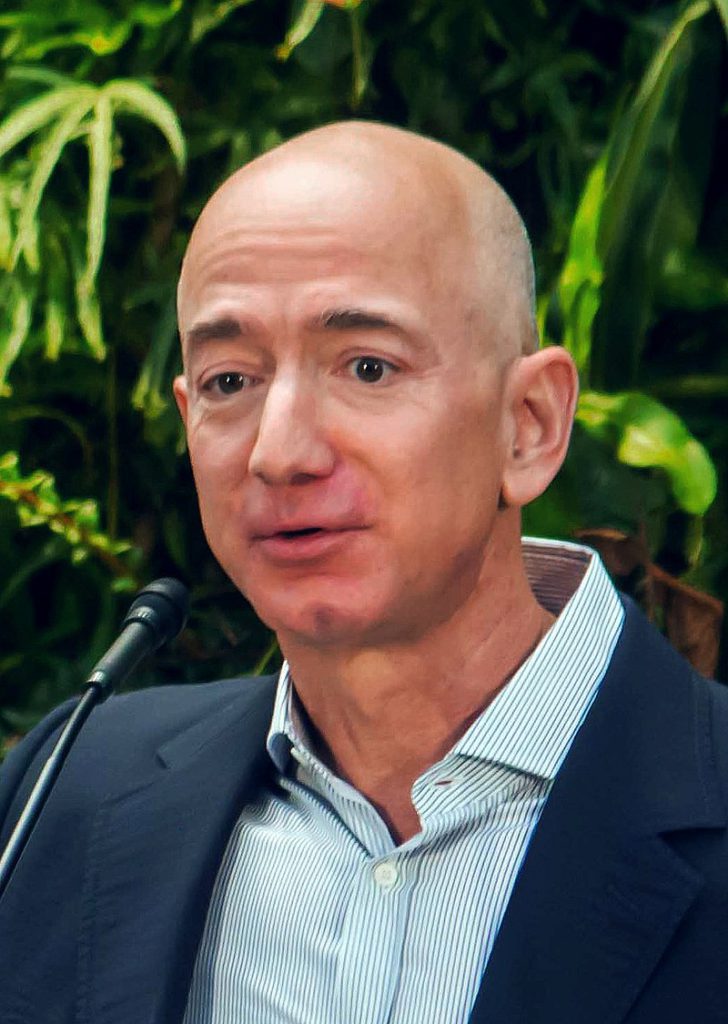
Power man (Photo: Seattle City Council)

Amazon has more revenue than Facebook, Google and Twitter put together, but it has largely escaped sustained examination. That is beginning to change, and one significant reason is Ms. Khan.

Many think it should be exempt from federal intervention.  She disagrees, arguing in a Yale Law Journal article that that “the company should not get a pass on anticompetitive behavior just because it makes customers happy. Once-robust monopoly laws have been marginalized, Ms. Khan wrote, and consequently Amazon is amassing structural power that lets it exert increasing control over many parts of the economy.”

Amazon has so much data on so many customers, it is so willing to forgo profits, it is so aggressive and has so many advantages from its shipping and warehouse infrastructure that it exerts an influence much broader than its market share. It resembles the all-powerful railroads of the Progressive Era, Ms. Khan wrote: “The thousands of retailers and independent businesses that must ride Amazon’s rails to reach market are increasingly dependent on their biggest competitor.”

The paper got 146,255 hits, a runaway best-seller in the world of legal treatises. That popularity has rocked the antitrust establishment, and is making an unlikely celebrity of Ms. Khan in the corridors of Washington.

She’s a woman to watch. Politico just named her one of the Politico 50, “its annual list of the people driving the ideas driving politics.”

Read the whole thing here.

Hilbert remembers Donald Hall: “Always beginning again. Always knowing he’d fail. Always beginning again.”

Thursday, September 20th, 2018
Share

Sometimes the best comes last. A lyrical and moving retrospective of the poet Donald Hall, who died last June, by his friend and fellow poet Ernest Hilbert, writing in the pages of The New Criterion: “It is a commonplace to claim that we will not see the like of one poet or another again. In the case of Hall, it may almost be said that he stood in for an enormous span of history and a way of life that has become almost impossible. The literary realm he inhabited, and in which he toiled so hard for so long, no longer really exists.”

Hilbert writes of America’s eloquent bard of old age, scouting out the territory for the rest of us:

In his celebrated essay “Poetry and Ambition,” Hall explained that when striving to create durable poems, poets are “certain of two things: that in all likelihood we will fail, and, if we succeed, we may never know it.” His tireless ambition resulted in memorable poems of the natural world, the contours of family life, the joys of love and sex, and, perhaps most compellingly, the pains of irremediable loss. Though always determined to succeed, Hall knew to avoid the kind of ambition that proves baleful. In a 1991 Paris Review interview—accompanied by a photograph of a full-bearded Hall tilting back to pitch a baseball—he relates a story about playing softball with Robert Frost in 1945, when that particular titan was seventy-one years old: “He fought hard for his team to win and he was willing to change the rules. He had to win at everything. Including poetry.” Hall learned a lesson and handled his own career more graciously.

It was a career unusually long-lived and rewarding for a poet of any era. It is nearly impossible to overstate the profound changes that affected the discipline of poetry between 1952—when Hall’s poetry first landed in print, in an installment of Fantasy Poets at Oxford—and 2018, when A Carnival of Losses: Notes Nearing Ninety, his last collection of essays, appeared, not long before his death. Over that span Hall remained popular with readers and critics alike. He was a regular on radio and television, most notably Bill Moyers’s documentary A Life Together in 1993, which invited viewers into Hall’s life with his wife Jane Kenyon as they traveled to poetry festivals and spent their days writing at Eagle Pond Farm.

He concludes with some very sage advice – indispensable, really:

Friend and fellow poet Hilbert

In what amounts almost to an aside, Hall observed in one of his last essays that “anyone ambitious, who lives to be old or even old, endures the inevitable loss of ambition’s fulfillment.” As a young man, Hall learned about patience and the art of happiness from the English modernist sculptor Henry Moore, whom he interviewed for a New Yorker profile, later published as a book. Moore instructed that “the most important thing about . . . desire is that it must be incapable of fulfillment.” Hall adds to this advice that “life should be lived toward moments when you lose yourself in what you are doing. You have to have something you really want to do.” Hall showed us how a life may be fulfilled when devoted to the work one loves, even as one strives always to improve, and when spent with those one loves, even knowing they will one day be lost. His philosophy may be summed in a further remark he made about the sculptor—that he would wake each day “with the same ambition in his mind, with total absorbedness. Always beginning again. Always knowing he’d fail. Always beginning again. Amen.”

Read the whole thing here.

Best American Poetry: the movie and a launch on Thursday, Sept. 20!

Tuesday, September 18th, 2018
Share

We’re on the road (in New York City, in fact), but wanted to let you know about the “Best American Poetry Reading 2018” on Thursday, September 20, at 7 p.m.

The event will take place at the New School’s auditorium (Room A106), the Alvin Johnson/J.M. Kaplan Hall. Series editor David Lehman and Dana Gioia,  guest editor for the Best American Poetry 2018 volume, will headline an all-star cast of poets to launch the volume. I’m told this is an annual rite of fall in New York.

Dana is also former chairman of the National Endowment of the Arts and now California’s poet laureate (and always, always a cherished friend). In the video below, he calls his guest editorship  “a privilege and a challenge.”

The book includes poets we’ve written about before – A.E. Stallings, Kay Ryan, Dick Davis, David Mason, Tracy K. Smith, Robin Coste Lewis and more.

We’ve run an excerpt from his introduction, “A Poet Today is more Likely to be a Barista than a Professor,”  here.

Below a sampler of the Thursday event. It was filmed by Dana’s son, Michael Gioia.