Lithuania’s Tomas Venclova: A poet of “metaphysical and political overlap”

March 28th, 2018

Share

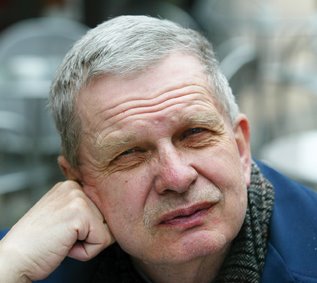
“Above all, love language” (Photo: Dylan Vaughan)

Last week, a friend told me that Lithuanian poet Tomas Venclova was in the current issue of The Spectator – and of course, London was the perfect place to find an old-fashioned “hard copy.” I stopped in a shop or two in London – no luck. I stopped in a shop in Chalfont St. Giles – nada.

Fortunately, there is such a thing as the worldwide web. Here’s an excerpt from the article about the leading European poet:

He describes Nineteen Eighty-Four as ‘a very important book in my life, and the one that taught me the most about the Soviet system’. A passage he says made ‘a very strong impression on me’ comes in an exchange between Winston Smith and his interrogator O’Brien. Winston asks O’Brien: ‘Does Big Brother exist?’ ‘Of course he exists. The Party exists. Big Brother is the embodiment of the Party.’ Winston presses: ‘Does he exist in the same way as I exist?’ O’Brien replies: ‘You do not exist.’

The story chimes with a sense of erasure in many of Venclova’s poems. ‘Henkus Hapenckus, In Memoriam’, for instance — a poem inspired by the memorial notice to an imaginary person, attached to impossible birth and death dates, in the window of a funeral parlour in the Lithuanian city of Kaunas — opens in the English translation: ‘Only a true nobody can manage/ to shoulder the weight of non-existence.’

‘I invented this person, Henkus Hapenckus, who never existed, and an entire universe for him,’ Venclova says. ‘He could be anybody. Because almost every kind of existence in the Soviet Union amounted to non-existence.’

Venclova’s artful, frequently formal verse plays in that area where the metaphysical and political overlap — the nothings of Wallace Stevens’s ‘The Snow Man’, perhaps, meeting the nothings of O’Brien. ‘Those things — those kinds of non-existence — they are in a sense overlaying each other and having something in common,’ he says. ‘More than one of my poems is about those overlapping sorts of non-existence.’

The role of poetry: East vs. West: “Poetry always means more in eastern Europe or Russia than it means in England or France. I wrote once that in the West, poetry mainly survives on the university campus, and in our countries it survives mainly in the prison camps. This is the difference. They managed to establish such an unshakeable system that every living word — not only but especially the poetical word — worked against it. Everything else was false.”

And of course the interview mentions his important new Q&A memoir, Magnetic North. I wrote about that book for the Times Literary Supplement here (excerpt here).  Read the whole Spectator piece online here.

“When rivalry becomes obsession”: René Girard, plus a few tweets, and a kind of anniversary

March 26th, 2018
Share

On Sunday, The Los Angeles Review of Books ran an excerpt from Chapter 6 of Evolution of Desire: A Life of René Girard. It’s also been generating some nice buzz on Twitter since then (see a couple of the tweets below), and one comment from James Winchell: “Cynthia Haven’s new biography focuses so clearly on the stakes implied by Girard’s work, instead of the ‘critical’ distractions generated by so many of his detractors – and his acolytes. She reminds us that his books constitute a primary source in twentieth-century philosophical, anthropological and spiritual history, one still unsurpassed in its burgeoning promise.”

Here’s an excerpt of the excerpt, “The Genius to Glue Them Together”: On René Girard and His Ideas”:

The “Romantic lie” Girard attempts to dismantle is the myth of personal autonomy, the “authentic self” so dear to thinkers from Rousseau onward. The hero wants something, and it is really “he” who wants it — unaffected by others, as if he were not also a slave to public opinion and the approbation of friends and family. Girard saw an inevitable third in these transactions — the one who modeled the desire, who taught us to have it.

Central to the novels he examined is the protagonist who aspires to freedom but is not free at all, since he (or she) worships the “mediator,” living or dead, whose desires the heroes adopts as their own. “The object is to the mediator what the relic is to a saint,” Girard wrote. Julien Sorel adores Napoleon, and keeps the emperor’s memoirs hidden under his mattress; Emma Bovary worships the fashionable ladies in Paris, and takes lovers in imitation of them.

“Even the most passionate among us never feel they truly are the persons they want to be,” he explained later in a Stanford essay. “To them, the most wonderful being, the only semi-god, always is someone else whom they emulate and from whom they borrow their desires, thus ensuring for themselves lives of perpetual strife and rivalry with those whom they simultaneously hate and admire.” We want the object because we believe it will make us akin to the admired rival, a false god we come to fear and hate as well as revere and emulate. Rivalry becomes obsession, enduring even after the objet du désir has been knocked out of the tennis court.

Wagner’s Ring Cycle provides one example: “The gold is nothing, clearly, since it’s the ray of sunshine that alights on it and transfigures it. And yet the gold is everything, since it’s what everyone is fighting over; it’s the fact of fighting over it that gives it its value, and its terror,” Girard explained in an interview.

Read the whole excerpt here. (And previous excerpts here and here.) Meanwhile, a kind of anniversary. I was reading a chapter from one of René Girard‘s books on the British Airways flight back from London, and I noticed he had inscribed the book to me – ten years ago to the day! It wasn’t on the occasion of the first meeting, but one of the early occasions of our working together, about the time we made the film used in the book-launch video here. The promised tweets below that, and the title page of the book below that.


How John Milton wound up blind and in disgrace in Chalfont St. Giles (and how he was inspired to start Paradise Regained).

March 24th, 2018
Share

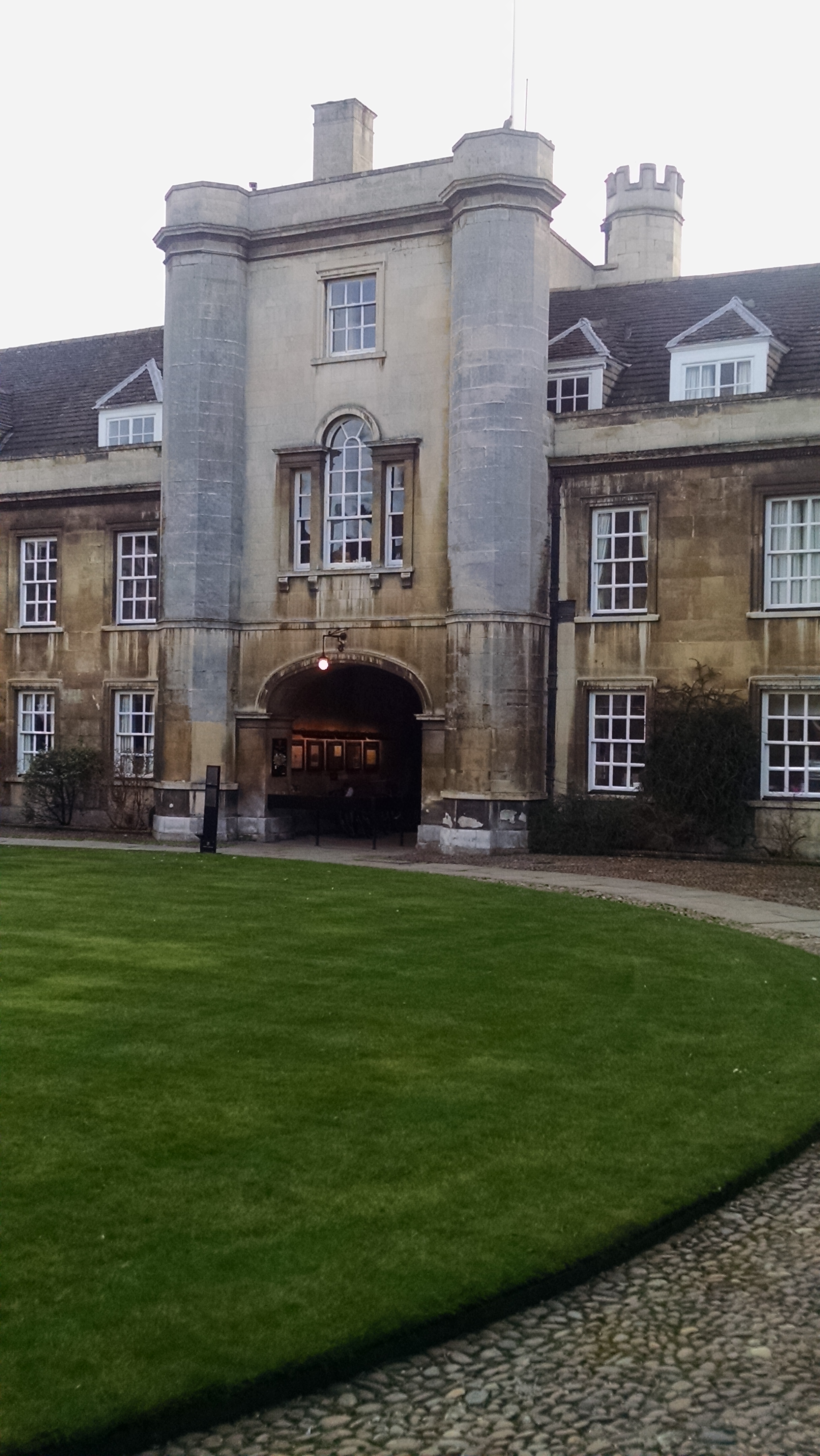
The “First Court” at Christ’s College, Cambridge. Milton would have walked it every day that he was here as a student.

Today I made my sad farewell to John Milton at his cottage in Chalfont St. Giles, but I expect it is an au revoir and not an adieu. Tonight, I am staying a few blocks away on the night before I head for Heathrow – with John Dugdale Bradley and his gracious wife Jan, who will comfort me in my sorrow. 

In my previous post, I mentioned how Milton’s Quaker friend, Thomas Ellwood, meant to greet the poet on his arrival here, as he fled the London plague and royal disfavor, but the government blocked Ellwood’s plans. Here’s the story in Ellwood’s words:

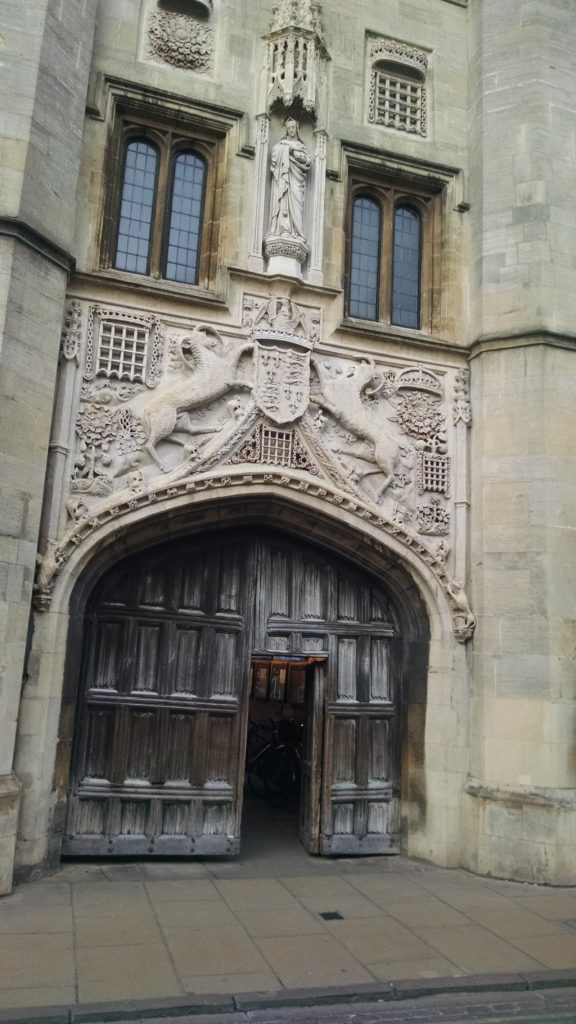
The “Great Gate” at Christ’s College, Cambridge.

Some little time before I went to Aylesbury Prison, I was desired by my quondam Master Milton to take a House for him, in the Neighbourhood where I dwelt, that he might go out of the City, for the Safety of himself and his Family, the Pestilence then growing hot in London. I took a pretty Box for him in Giles-Chalfont, a Mile from me; of which I gave him notice: and intended to have waited on him and seen him well settled in it; but was prevented by that Imprisonment.

But now being released and returned Home I soon made a Visit to him, to welcome him into the Country.

After some common Discourses had passed between us, he called for a Manuscript of his which being brought he delivered to me, bidding me take it home with me, and read it at my Leisure, and when I had so done, return to him, with my Judgment thereupon.

When I came home, and had set myself to read it, I found it was that Excellent POEM which he entitled PARADISE LOST. After I had, with the best Attention, read it through, I made him another Visit, and returned him his Book, with due Acknowledgement of the Favour he had done me, in Communicating it to me. He asked me how I liked it, and what I thought of it; which I modestly but freely told him: and after some further Discourse about it, I pleasantly said to him, Thou hast said much here of Paradise Lost; but what hast thou to say of Paradise Found? He made me no Answer, but sate some time in a Muse: then brake off that Discourse, and fell upon another Subject.

After the Sickness was over, and the City well cleansed and become safely habitable again, he returned thither. And when afterwards I went to wait on him there (which I seldom fail|d of doing, whenever my Occasions drew me to London) he shewed me his Second POEM, called PARADISE REGAINED; and in a pleasant Tone said to me, This is owing to you: for you put it into my Head, by the Question you put to me at Chalfont; which before I had not thought of.

If you want to see the “pretty box,” I refer you to an earlier blogpost here. The photos here revisit Milton’s student days at Christ’s College, Cambridge. John and I visited yesterday with Cambridge graduate student and Stanford alum Michael Gioia (our first visit to Cambridge as a guest of Girton College here) – all the images make a splendid finale to this U.K. visit. All photos by John Dugdale Bradley, a Cambridge (and Stanford) alum himself.

From the First Court towards the Great Gate…

I sleep where Milton slept: my first night at the poet’s cottage in Chalfont St. Giles

March 22nd, 2018
Share

Milton meets MacBook. In this room he slept and wrote.

I slept in John Milton‘s room last night. I’m told I was likely the first person to do so in hundreds of years. The sense of incongruity gave an unreality to the event, as I sat in the 17th century chair and worked at the desk next to the fireplace, first plugging in my Apple MacBook Pro with its adapter, and hooking up my cellphone to recharge. The sense of immodesty, too, as I pulled off my earrings, sweater, trousers, for the night, in the room where the Puritan poet spent his days, in royal disfavor after the fall of the Cromwell regime – though the poet was blind when he lived here, so my discomfort was meaningless on more than one scale. A hot water bottle generously provided by my real-life hosts kept me warm in bed, as well as mittens and heavy socks.

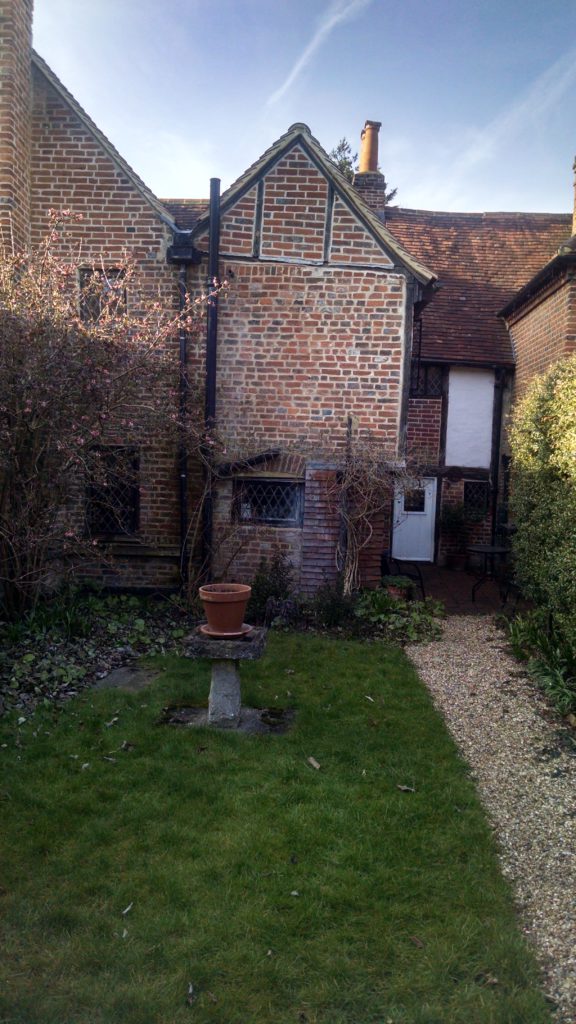
The view from the back, where the Milton Garden features the flowers that he loved.

To clarify, Milton’s bedroom doubled as his study, or rather vice versa. In 1665, he fled the plague in London to this refuge in Chalfont St. Giles, in Buckinghamshire, about 25 miles from the city.  His friend Thomas Ellwood had rented a residence for the poet now known as Milton’s Cottage, but he was arrested and jailed when he when he attended a Quaker funeral, and so wasn’t on hand to welcome him. Milton took on the place for a little over a year, a period that was bookended by the plague at the beginning, and the Great Fire that burned half London at the ending in 1666.

He completed Paradise Lost here, in Chalfont St. Giles. But it’s unclear how much work was done in this cottage, with its inexplicable layout of 8 or so rooms, cupboards, and many nooks and crannies. He had already given a draft to Ellwood, but Milton was an endless tinkerer and reviser. Certainly the final draft was finished here, and he began the inevitable sequel, Paradise Regained. He couldn’t leave his tale at this, at the end of Paradise Lost:

The World was all before them, where to choose
Their place of rest, and Providence their guide:
They hand in hand with wandering steps and slow,
Through Eden took their solitary way.

Blind, crippled with gout, he pretty much remained in this one room, with the parlor where he may have received guests. He slept in his study, next to the kitchen, where the challenging stairs wouldn’t torture him. He wouldn’t have seen the huge fireplace, about five feet high (parliament could meet in it), or the window that looks out onto the street, but I hope he could at least sense the sunlight, as I did, as it streamed through the small latticed eastern-facing window at the back of the room in the morning.

But perhaps there’s another reason why he slept here – one that captures the imagination more. Maybe he wanted to be close to ink and paper. He claimed he woke up with lines of poetry rolling through his head, and was anxious to take up his quill and write them all down – or rather, to have one of his daughters take up the pen and paper, as he dictated to her.

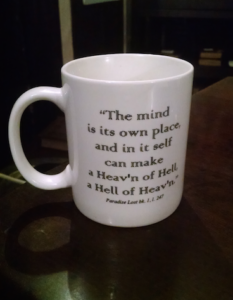
My Milton cup

Perhaps he fine-tuned lines like these:

More safe I sing with mortal voice, unchanged
To hoarse or mute, though fallen on evil days,
On evil days though fallen, and evil tongues,
In darkness, and with dangers compassed round,
And solitude; yet not alone, while thou
Visit’st my slumbers nightly, or when Morn
Purples the East. Still govern thou my song,
Urania, and fit audience find, though few.


Joseph Brodsky a second Pushkin? “Prove it!” he said. And she did.

March 20th, 2018
Share


Men attended, but only women and guest author lined up for photographer Jakob Margolis.

Valentina Polukhina was one of the women being honored during Mark Yakovlev‘s presentation of his book Joseph Brodsky and The Fate of Three Women. Valentina spoke at the Russian Cultural Center on Kensington High Street in London. She is one of the world’s leading scholars of the Russian Nobel poet Joseph Brodsky.

She proved it.

During her talk, she retold a story that she told me sometime earlier, so I’ll share it here. During her early days with the poet, she told him he was a second Pushkin. Not the first time he had been compared with the ur-Russian poet of all time, the author of the justly renowned Eugene Onegin.

But his reaction was skeptical. “Prove it!” he said.

Her response: to interview his fellow Russian poets, writers, and other colleagues. That was volume 1 of the remarkably insightful Brodsky Through the Eyes of His ContemporariesThen she followed up by interviewing his colleagues in other countries. That was volume 2. Then she interviewed still others for a third volume. (The series has been slightly abbreviated for the two-volume English-language series by Academic Studies Press.)

Humble Moi also spoke at the Russian Cultural Centre that evening, but my topic was George L. Kline, the pivotal scholar who smuggled his poems out of the Soviet Union and translated his Selected Poems. My words:
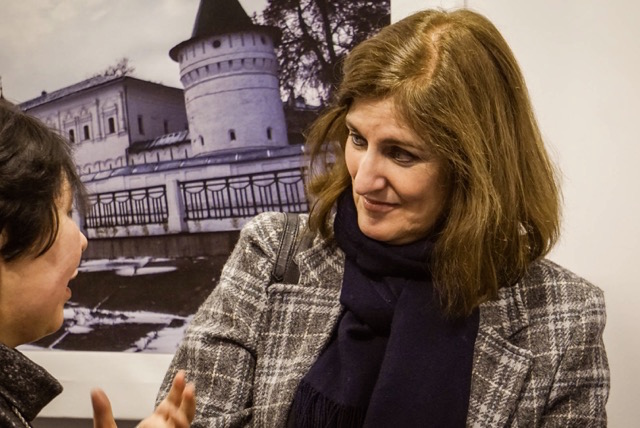
“George Kline was a modest and retiring man, but on occasion he could be as forthright and adamant as Nobel poet Joseph Brodsky himself. In a 1994 letter, he wrote: ‘Akhamatova discovered Brodsky for Russia, but I discovered him for the West.’ And in 1987, ‘I was the first in the West to recognize him as a major poet, and the first to translate his work in extenso.’

“And it was true. What’s lesser known is how greatly this quiet Bryn Mawr professor supported scholars around the world who were working with Russian poetry and Brodsky in particular.

“Though we had never met face to face, George Kline was a regular presence in my life. My publication fifteen years ago of Joseph Brodsky: Conversations was my carte d’entree to this world, decades after I had studied with Brodsky at the University of Michigan. Some months after publication George sent me a multi-page letter noting the errata in my text. I later learned that anyone in the world who wrote or published something about Joseph Brodsky could expect such a letter, delineating the errors in the text. He did the same for his own works, carefully setting out the mistakes.

Answering a question or two. (Photo: Jakob Margolis)

“He was thorough, neutral, scholarly. Nevertheless, I persisted, and I don’t think I could have made whatever scholarly contribution I have in the Brodsky world without George’s encouragement, advice, and occasional recommendation. And in 2012, we decided to create a long written record of his work with Brodsky, in the form of a conversation.

“I didn’t know then what I would learn. That he had been a World War II pilot, for which he was awarded the Distinguished Flying Cross. That he was the founder and acknowledged dean of the Russian philosophy in the United States as a scholarly specialty. And that he’d translated Akhmatova, Tsvetaeva, Pasternak, Tomas Venclova, and others. Even so, he’s mostly he’s remembered today as the man who brought Joseph Brodsky into English, and the poems into America itself by bootlegging manuscripts out of the Soviet Union.”

Yes, one person asked me, but did George translate the poet to replicate the meter and rhyme of the original? Yes, I said, he did. “But did he succeed?” queried a second. “Read for yourself! ‘The Butterfly’ is a masterpiece!”

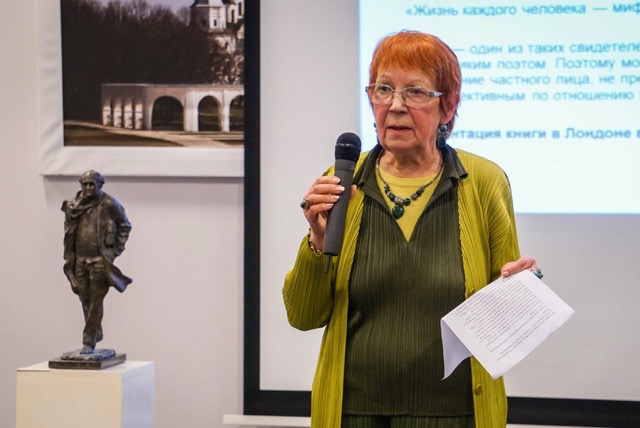
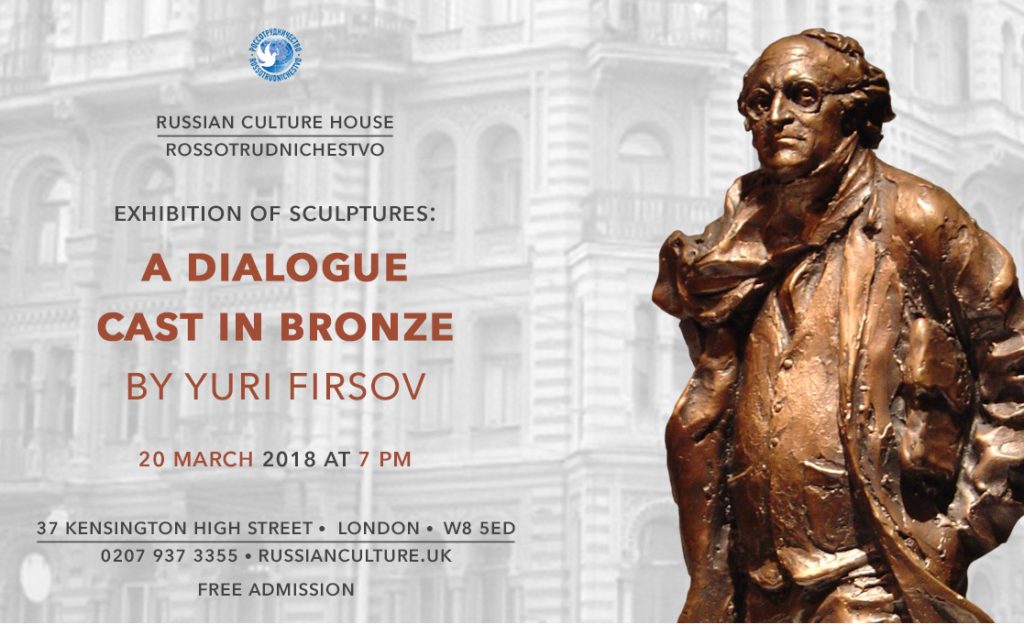
Oh, and the bronze sculpture of the poet in the corner next to Valentina? It was also honored. But then, Yuri Firsov‘s creation had an event of its own, tonight:

Schiller’s Mary Stuart: a play of mighty opposites for two great actresses

March 18th, 2018
Share

Up for grabs: the nightly coin toss determine who plays the Queen and who plays her vicitm. (Photo: Manuel Harlan)

A coin toss … or rather a mesmerizing coin spin, with an actor whirling the coin in a shallow golden bowl. That highly symbolic event launches the performance of Friedrich Schiller‘s Mary Stuart every evening. The two lead actresses –  identically dressed Lia Williams and Juliet Stevenson – are as inevitably paired as the two beats of an iamb. They await the result at opposite sides of the circular stage. When the verdict, heads or tails, is called out, the 15-or-so performers assembled onstage turn and offer a sweeping bow to one of the two women. The other has her black velvet jacket pulled from her back and is hustled to the offstage jail. Fitting, because Mary Stuart, retelling the confrontation between Queen Elizabeth I of England and the Frenchwoman popularly known as Mary Queen of Scots is a play “constructed around doubles, mirrors, equivalences, differences and mighty opposites,” according to the program notes. “It has also allowed the first word of the evening to anticipate its ending: ‘Heads’.”

Juliet Stevenson as Mary consoles her women. (Photo: Manuel Harlan)

My dozen days in England this month are whizzing by like a spinning coin, but I wanted to make sure I crammed in at least one night in the West End. The Duke of York Theatre’s production was the chosen destination. I read the great German playwright’s 1800 recounting of the fatal pas de deux for the first time a few years ago, and so I shoveled my two-buck Dover Thrift edition (unabridged) to the theater with me. To say Robert Icke‘s adaptation takes liberties somewhat understates the case (I splurged and bought that version of the play as well, which was sold in the cloakroom like contraband), but his script, in a loose blank verse, makes for a stunning evening. (And surprisingly, I don’t think any of the reviews noted that this is a verse play – which my ear could pick up before my mind knew.)

Icke’s words on the subject:

“The heartbeat of an iamb closely echoes the human heartbeat. A continuing rhythm, like the baseline in a piece of jazz, and one that gives life. It gives no instruction to the actor. It is not to be counted or observed – though also not to be ignored. Hamlet warns us that – like all great art – it’s a matter of balance: discretion and also wildness (‘too tame’ is deadly).

The verse is the structure of the pipe. The words are the water. The pressure of the jet of water is a combination of the two things. The sound and the sense are two sides of the same coin. Inseparable, neither could exist without the other; ad mutually enriching.”

Goethe’s buddy: Well done!

Take the queen’s short speech to the French ambassador, as he tries to seal the deal on a betrothal between the French prince and the English monarch:

A little ring. A little circled gold.
This ring means different things in different places.
It’s duty – but it’s also slavery:
two rings can start a marriage – or a chain.
You may take this – and give it to His Highness
it’s – well – non-binding. It’s not yet a chain
but it could grow – and bind me to a king.

On the evening I sat in the balcony, the coin toss decided Stevenson for the role of Mary, and Williams as the sleek, sinewy, suited-up English queen. I would have liked a chance to see the roles reversed. I suspect everyone who attended one night or another wished the same. Too bad there’s only a few more days before the production ends.

I’ve been working too hard on another project to add much to a production about which there is much to say. So let me refer you to the The Financial Times review here, or this one from The Times here.

Lia Williams, Juliet Stevenson in matched roles. (Photo: Manuel Harlan)


<<< Previous Series of PostssepNext Series of Posts >>>