Happy birthday to the bad boy of Roman poetry!

March 19th, 2016

Share

tim120More birthday greetings from our correspondent, the Los Angeles poet (and Stanford alum) Timothy Steele. This time the occasion is the birthday of Ovid. Tim has offered occasional salutations to Virgil, Marcel Proust, Jane Austen, George Frideric Handel, Christina Rosetti, William Hogarth and Oliver Goldsmith. And we have written about Ovid here and here and here and here and here.

But the years roll round again relentlessly offering us another occasion to celebrate the author of Metamorphoses – and Tristia, too.

This Sunday marks the birthday of Ovid, the bad boy of Roman poetry. Born in 43 BCE, he reports in his Tristia that versing came naturally to him even as a child. His masterpiece, “Metamorphoses,” is a tour de force that knits together, by the recurring motif of transformation, myths and legends from the origin of the world up to the time of Julius Caesar. Though Ovid did not invent the stories, he recounted them with unforgettable psychological vividness and gave them their definitive form. No other poem has had a greater influence on subsequent art. Sculptors, painters, composers, novelists, and poets have drawn on it for centuries.

narcissusIn his own day, Ovid was immensely popular, but, unluckily, the emperor Augustus was not a fan. A libertine in youth, he metamorphosed as a ruler into a priggish defender of public morals, and he detested Ovid’s poems, which breezily treat sex and seduction and which parody conventional Roman pieties. In 8 CE he banned Ovid’s work from the state libraries and banished the poet himself to Tomis, an imperial outpost on the Black Sea notorious for its bandits and bad weather. Ovid died there in 17 CE.

Many anecdotes survive about Ovid’s genius and vanity. The Elder Seneca reports one of them in his Controversies (2.2.12): “[Ovid] was aware of his faults—and liked them. This is clear from an incident when he was asked by his friends to get rid of three of his verses; in exchange he asked that he should be allowed to make an exception of three verses which they could not touch. This seemed a fair condition. They wrote down privately the ones they wanted damned: he wrote down the ones he wanted saved. Both sheets contained the same verses. … From [this] it is clear that this talented man lacked the will rather than the taste to restrain the license of his poetry. He used sometimes to say that a face was all the more beautiful for a mole” (trans. Michael Winterbottom).

At right is a rendering of the Narcissus episode in Metamorphoses executed by the great bad boy of Italian painting, Michelangelo Merisi da Caravaggio.

catullus

Another bad boy

Postscript: A gentle reader wrote to ask … Isn’t Catullus the bad boy of Roman poetry? Tim replies:

“That’s a good question. Catullus is revolutionary in his sexual candor. However, his epigrams and lyrics are often bitterly realistic, and he is sometimes excruciating on the subject of his obsessive relationship with Clodia/Lesbia. His ultimate disillusionment with his passion for her is the opposite, it seems to me, of licentious. (Catullus was also very well-born and a friend of Caesar’s, who evidently admired his work.)

“Ovid, on the other hand, really is naughty. The Art of Love is virtually a vade mecum for adulterers. And in theMetamorphoses he presents (with great relish) the Greco-Roman gods and goddesses as pathologically vindictive, sensual, or deceptive. This isn’t to say Ovid can’t be poignant and moving, as in the tale of Baucis and Philemon or Pythagoras‘s powerful speech in favor or vegetarianism near the end of the poem.”

And then, courteous gentleman that he is, Tim thanked the reader for raising the point.

In search of gravitas and a sturdy pair of shoes

March 17th, 2016
Share
patrick3

Author and archaeologist – and poet, too.

One of the pleasing byproducts of having poets for friends is occasionally having a poem written in your honor. Here’s one that was written by Stanford archaeologist and author Patrick Hunt, way back in 2010.

The year is significant. I spent much of that period in a wheelchair and on crutches, having walked across Vienna, Warsaw, Prague, and Kraków over the previous summer, ignoring pain as I crushed the bone structure of one foot into powder (or so it seemed). It required four hours of very specialized surgery, two titanium pins, a titanium plate, a tendon transfer, and cadaver bone to set it right. Not to mention a good deal of percocet.

The subject of the poem brought to mind Italo Calvino‘s encomium celebrating lightness, which the Italian author defined as the subtraction of weight. However, he added, “the idea of the world as composed of weightless atoms is striking just because we know the weight of things so well. So, too, we would be unable to appreciate the lightness of language if we could not appreciate language that has some weight to it.”

Patrick wrote these lines to me in consolation for my miseries. I believe it’s included in one of his collections. I’m rather fond of it. Hope you are, too:

.

Gravitas

for Cynthia

Gravity of truth weighs heavily on some
who hardly feel the pain until their feet break
from years of carrying bone crunching ennui.
Atlas had the shoulders for it but not the mind,
incapable of pondering paradox, to him it wasn’t
weight but tedium because he lacked gravitas.

Persephone too struggled with flowers,
whatever blossoms grew from her dreams
and just as quickly faded, futile hopes
like ripe pomegranates dropped by trees
where pale skin reveals red fruit underneath
and more than enough seeds to last eternity.

Thus weight is not weight but attraction
and some day earth steadily sucks us all in,
not that we find this irresistible, merely
inevitable like falling stars caught at night.
Surprised by darkness, we wait our turn
to fuel another sun blossoming elsewhere.

Patrick Hunt

Robert Alter on translating the Old Testament, Hebrew, and “the greatest poetry in the whole ancient world”

March 13th, 2016
Share
????????????????????????????????????

Translator extraordinaire

I’ve long been a fan of Robert Alter’s Old Testament translations, ever since the 1990s. Frank Kermode is another apparently. He concluded in the New York Review of Books: “I cannot say that this is the best translation since 1611, only because I have not read the great mass of those that intervened; but I can say that in my opinion it is certainly a great translation, to be honorably compared with the admired Homeric translations of recent years.” John Updike waxed lyrical in The New Yorker:  “The ferocity of this tribal God measures the ferocity of tribal existence. … The miracle of the Pentateuch is that, unlike the numerous other tribes and gods that vitally figure in it, the Jews and their God have survived three millennia. The Israelites’ effort to claim and maintain their Promised Land fuels a contemporary crisis and occupies today’s painful headlines.” 

I was pleased that the Chicago Manual of Style blog “Shop Talk” recently interviewed the Berkeley translator. A few excerpts:


genesisCMOS:
 You have now translated a large portion of the Hebrew Bible into English. What motivated you to take on such an enormous, high-profile, high-stakes project?

RA: I have to say that it really sneaked up on me. That is, I was dissatisfied with the existing translations, and I thought, well, I’ll give a whirl at translating Genesis and see if I can do something about the English that would make it exhibit more of the stylistic power of the Hebrew. I was rather unsure that this was going to work, but I figured it was worth a try. And it turned out to work better than I thought it would. Not that I ever think that my translations are perfect, but it got some very good responses: a rave review in the New York Times and that kind of thing. So I thought I’d do one other book that I like, and I translated Samuel, basically the David story, and that also got a nice response, and then I was kind of talked into doing the Five Books of Moses by my editor at Norton. And then because it was perceived as a fundamental building block of the whole Bible, it got reviewed all over in places I’d never been reviewed before like the New Yorker and the New York Review of Books. So there I was. Up until a certain point I wasn’t thinking of doing the whole Bible, but then I looked back and said, “Hey, I’ve done about two-thirds of it, so I might as well go on and do the whole.”

songofsongsCMOS: Are there passages in your translations that you’re particularly proud of?

RA: I’m quite happy with my translation of Job, which I think is among the greatest poetry in the whole ancient world. I’m really happy with the way Job’s death-wish poem turned out, and I feel good about my rendering of the Voice from the Whirlwind. The very beginning of Genesis—which is the grand, stately prose of the writer identified by scholars as the “priestly writer”—I think that I’ve gotten something of the rhythms of that writer. And I think Jonathan Lear mentioned in his introduction the sound-play of the Hebrew phrase for chaos: Tohu Wabohu. And I’m happy with the alliteration of welter and waste.

CMOS: Are there any other translators whom you particularly admire? Do you ever find yourself emulating aspects of their work?

israelRA: The only English translation I honestly admire is the King James Version. You can’t directly adopt it, because the language is four hundred years old and there are lots of errors in understanding the Hebrew in the King James Version. Sometimes the seventeenth-century translators did wonderful things with the Hebrew because they had a great sense of the English language, but there are lots of lines that are clunky, where they seem not to have paid attention to how the Hebrew sounds. So there’s my qualified admiration of the King James Version. The various modern English versions I really don’t like at all. I think they have a very shaky sense of English style, and they don’t pay attention to things they ought to in the Hebrew. My one exception to this sweeping objection is that sometimes on the level of a single word, if I’m struggling to find a good English equivalent, I’ll look at a couple of other translations and say—oh, that word works better than the word I had come up with. (I never look at the other translations until I finish a draft of a section.) But that’s not exactly emulation.
Read the whole thing here.

Nadia Savchenko continues her hunger strike: “They will sentence me posthumously.”

March 9th, 2016
Share
Nadiya_Savchenko

Nadia in better days. (Creative Commons)

The 34-year-old Ukrainian politician and military pilot Nadia Savchenko was abducted and illegally taken across the Russian border in 2014, during the Russian invasion of southeastern Ukraine. She has been held in Russian jail ever since. While in prison, she was elected to the Ukrainian parliament in November 2014. She serves in absentia. The Ukrainian people consider her a hero; it remains to be seen whether she will be a martyr as well.

She is charged with killing two Russian journalists: Igor Kornelyuk and Anton Voloshin, two employees of Russia’s state-owned television, who died while covering the war in Ukraine last year. Her lawyers note that she was captured a full hour before the mortar strike that killed them, and that she was transported across the border against her will by Russian intelligence officers.

She began a hunger strike on March 4, refusing food and water, after Russian prosecutors asked for a 23 year prison sentence. According to a March 10 article by Radio Free Europe/Radio Liberty, the court postponed a verdict till later this month, on March 21 or 22. Her response? “Here’s my final word!” she shouted in Ukrainian. Then she flipped them the bird.

A defiant Savchenko declared that she would recognize neither the court nor its verdict, before she stood on a bench inside the cage for defendants and raised her middle finger in the direction of the judge.

Savchenko emphasized that she is willing to continue the no-food, no-water hunger strike no matter what happens, saying, “You must understand that we are playing with my life; the stakes are high and I have nothing to lose.”

She also said a popular uprising similar to Ukraine’s Euromaidan movement is inevitable in Russia, adding that Russian President Vladimir Putin “cannot hold on to power by means of people’s blood.”

Savchenko, 34, wore her trademark T-shirt with the Ukrainian trident symbol at the March 9 hearing in the court in the southern Russian city of Donetsk [actually, it’s a Ukrainian city, recently swallowed by Russia – ED], near the border with the home country she has vowed to return to “dead or alive.”

In a recent statement, she spoke defiantly of her “fabricated ‘case’ – 23 volumes of gibberish”:

I’ll speak in Russian to save on a translator, a translator which, as I quite well understand, would be at my own expense. That said, according to human rights law, an interpreter ought to be provided free of charge.

Well, firstly, I want to apologize to the audience for my emotional behavior. The fact is, it’s very difficult to listen to the same lies over and over again for six months and then hear them repeated all day long. Therefore, I couldn’t help reacting to the prosecutor’s speech like I did. …

I am the only person the court failed to find guilty. I am an officer of the Ukrainian Armed Forces. I had every right to defend my land, I was fulfilling my duty. You do not judge veterans of World War II, and for the same reason you do not judge your own troops – but they also killed many people while defending their country. …

I do not know how long this ‘performance’ will take, but I want to say: if, again, the verdict debate take three weeks (as prosecutors requested once), I will immediately resort to defense tools. If the court takes more than two weeks to issue a verdict (which has already been dictated from above and recorded), I will go on a ‘dry’ hunger strike from tomorrow, and they will sentence me posthumously, ‘in absentia’.

I think it is pointless waiting for a POW exchange. … I’m not a bargaining chip, I am an innocent person, and my guilt has not been and cannot be proven. Therefore, I will stand no POW exchange, no bargaining deal, and no procrastination.

And here is the most crucial thing. Let prosecutors sentence me to as many years in prison, as they wish. Not a day longer, not a day shorter. All 23 years. Do not issue a longer or shorter jail sentence for me – so they won’t make any further appeals or delay the procedure. You have proved that you are utterly impotent. You have already proved that Russia can disgrace itself, as exemplified in my case.

You have never defeated me and will never do it! Well, let’s finish it all as soon as possible, I will not wait any longer. It was not you who have given me life, so you can’t own it – and you can’t decide upon my fate. If the verdict takes more than two weeks, I will not wait for it. That’s all I want to say.

Read the whole speech here. Video below.

Brodsky/Baryshnikov: “I’m trying to remember his voice, his mannerisms.”

March 6th, 2016
Share

Brodsky:Baryshnikov

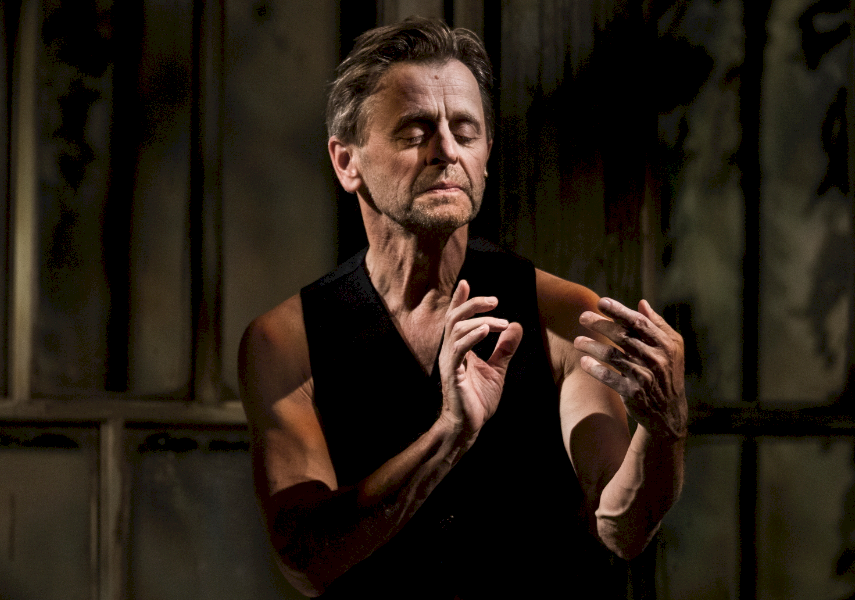
I have followed the travels of Mikhail Baryshnikov‘s Brodsky/Baryshnikov since its debut last fall in Riga, Latvia. Like the production itself, the choice of venue unites the two friends, now separated by death: The dancer and choreographer Baryshnikov was born in Riga, and began ballet lessons there at the age of nine; the Nobel poet Joseph Brodsky‘s mother was of Latvian heritage. Baryshnikov teamed with Latvian director Alvis Hermanis, director of New Riga Theater, to create a one-man show in memory of the Russian poet, who died in 1996.

Brodsky:Baryshnikov2The director explained the concept to the New York Times via Skype: “I said to Misha, you have to imagine you are not alone onstage. There are two people, and there’s something going on between them, some secret.”

From the Paris Review:

“Those who expect the typical Baryshnikov pirouettes and splits … are likely to be disappointed,” Latvian critic Undine Adamaite wrote in Diena, a Latvian daily.

Indeed, Brodsky / Baryshnikov, which begins its international tour in Tel Aviv this winter before debuting in New York, in spring 2016, is far closer to theater than ballet, a meditation, in part, on aging and death. “It’s anti-ballet, it’s anti-choreography,” Hermanis said. “What Misha does with the body … it’s just like spontaneous electricity.” Hermanis and Baryshnikov did not hire a choreographer for the performance, which relies on improvisation. “These things are not fixed—each evening they’re slightly different … It’s not the possibility of dance, but the impossibility of dance.” There’s even a script, a departure from the ballets of Baryshnikov’s youth. This one is composed entirely of the poetry of Joseph Brodsky, Baryshnikov’s good friend, who died in 1996. The two could be said to star together in Brodsky / Baryshnikov, even if only one man enters the theater.

Brodsky:Baryshnikov3The audience took a collective breath when Baryshnikov first appeared on stage. He looks not the athlete he once was but a gaunt, bedraggled traveler, suitcase in hand, seated on a wooden bench below the broken fuse of a dilapidated Art Deco apartment with large, dusty window panes. He doesn’t speak. He makes the audience wait, Jim Wilson’s operatic “God’s Chorus of Crickets” playing in the background. Baryshnikov opens his suitcase, pulls out an alarm clock, some poetry books, and a bottle of Jameson (Brodsky’s favorite). He picks up a book, starts flipping through, whispering to himself, as if trying to pick one to read aloud. He finds one, and takes a swig.

Brodsky/Baryshnikov sold out in Latvia, traveled to Tel Aviv, and arrived, inevitably, in New York City, where it will debut next week at the Baryshnikov Art Center. From the “edited excerpts” of the New York Times interview:

Alvis Hermanis has said that the evening is almost like a séance with Brodsky.

It’s a little bit that. I almost never directly connect to the audience. It is like someone reciting poetry for his own enjoyment, like people sing in the shower. I’m trying to remember his voice, his mannerisms. Sometimes I imitate him. And suddenly the tape starts with Joseph’s own voice. His presence is what those poems are about.

NewRigaTheater

Image via New Riga Theater

It has been said that, in part because of his sophisticated use of meter and rhyme, Brodsky’s poetry is untranslatable.

Joseph would argue with that. He used to translate himself with Richard Wilbur and others. But he would also argue that the best pleasure is you alone in the evening with the book in your hands. His idea was that only poets should read poems out loud. Mortals should read them quietly to themselves.

What would he have thought of the show?

I don’t know, I don’t know, I don’t know. He was very skeptical in general about the theater. He felt that the theater lacked truth. He wrote two plays himself but was always very clear that these works were intended for the reader, not to be performed in the theater. He always felt that it was a much more profound experience to read a play while lying on one’s couch.

You talked to him every day?

Almost every day, even when I was traveling. We talked about mundane things. He liked to walk. From Morton Street where he lived up the Hudson or East River, the Brooklyn Bridge, the East Village. He was fascinated by the light and proximity to the water.

Read the whole Q&A here.

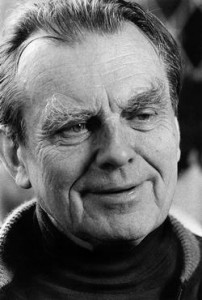
Czesław Miłosz and the “soft pollution” of the mind

March 5th, 2016
Share
IMG_20160303_121232

A thousand pages of Milosz.

When I drove to the Stanford post office and collected the heavy parcel with thick brown-paper packaging, I knew by its heft what it was, even before I saw the Polish stamps.

Miłosz i Miłosz was published two years ago by Kraków’s Księgarnia Akademicka, but I didn’t quite believe it until I finally had it in my hands. The volume, nearly a thousand pages edited by Aleksandr Fiut, Artur Grabowski, and Łukasz Tischner, includes the talks given on the centenary for the Nobel poet Czesław Miłosz in 2011. (I wrote about the occasion here and here and here.)

And there, on page 109, is my own “Miłosz in Purgatory” – or “Miłosz w czyśćcu.” An excerpt (in English):

At Queens College in New York City, someone in the audience asked [poet Robert] Hass what it was like spending decades translating Miłosz. He responded in a heartbeat: “Like being alive twice.”

Clearly, Hass is more attuned to the Pacific mystic who was struggling to come to terms with the fierce surf, the sea-worn cliffs, and a fate that would have been unimaginable to the younger self who wrote “Dedication” in Warsaw. As Miłosz wrote in “Magic Mountain,” a poem that has inevitable resonances for Californians:

So I won’t have power, won’t save the world?
Fame will pass me by, no tiara, no crown?
Did I then train myself, myself the Unique,
To compose stanzas for gulls and sea haze,
To listen to the foghorns blaring down below?
Until it passed. What passed? Life.

IMAG0010

Jagiellonian University: an intimidating venue.

Miłosz survived into the age of globalization—an era that has seen the collapse of time and space. Or, as Russian scholar Valentina Polukhina describes it, “a period in which our long history has been put into single storage.” As a cause and effect of that storage, “Today’s world is not monolithic: discrete events, fragmented thinking and perceptions, ideas of good and evil are so confused that the only proper response is apocalypse.”

The more commonplace response is instead an enormous loss of inwardness. Miłosz also was alarmed by it. During the Berkeley centenary event last March, a woman mentioned a talk Miłosz gave to a graduating class in New Mexico in 1989. I located a copy. While his comments might not be surprising today, it’s important to remember they were made more than two decades ago, and prefigure Michel Serres’s very recent writings about “soft pollution”:

“Pollution of the environment is today at the center of universal attention. There is, though, another kind of pollution which does not seem to be anybody’s concern … I speak of the pollution of the mind by the image of the world imposed upon citizens by advertisements, television, cinema, newspapers, radio and imposed in such a manner that their victims do not realize to what extent they are conditioned. As today there are no clear criteria for forbidding anything, the freedom of the market is the supreme law.”

A happenstance Californian.

A champion for “second space.”

We forbid nothing. We have an endless array of choices at all points of life but very few criteria on which to base those choices. Hence, we are unable to make our choices “meaningful,” and this breeds the nihilism that afflicts us. Believing in “progress,” we are unable to get our utopias up and running. We sense a diminution of our cosmos. Miłosz replied by crying out for “Second Space.” Yet today many seem tone deaf to the rhythms of his life, and can only transpose his nuances into the key of doubt – even more frequently, we project our current moral chaos onto Miłosz, and so misunderstand him.

Have we become allergic to the medicine he offers? It’s an antidote more needed in America, where he spent four decades of his life, than perhaps anywhere else – and it is from that perspective that I speak, a perspective that is both foreign and familiar to those in Poland.

Order your own here, if you’re a Polish speaker. Worth your złoty.


<<< Previous Series of PostssepNext Series of Posts >>>