The Great Kvetch, or, why kids are turned off by literature

July 8th, 2015

Share
harrison

“Why can’t a woman be more like a man?” Read Anna Karenina for answer.

We’ve had some tremendous defenses of literature in the Book Haven pages over the years: Susan Sontag, in an interview with James Marcus, said (here): “Reading should be an education of the heart … Literature is what keeps us from shriveling into something completely superficial. … It keeps you–well, I don’t want to say honest, but something that’s almost the equivalent. It reminds you of standards: standards of elegance, of feeling, of seriousness, of sarcasm, or whatever. It reminds you that there is more than you, better than you.”
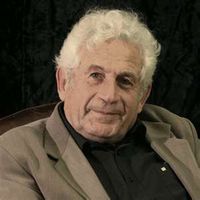
morson

There are better photos of him online. Really.

Joseph Brodsky went even further in his Nobel lecture (here), famously saying, “There is no doubt in my mind that, had we been choosing our leaders on the basis of their reading experience and not their political programs, there would be much less grief on earth. It seems to me that a potential master of our fates should be asked, first of all, not about how he imagines the course of his foreign policy, but about his attitude toward Stendhal, Dickens, Dostoevsky. … As a form of moral insurance, at least, literature is much more dependable than a system of beliefs or a philosophical doctrine.”

Lots of selling. Buying? Not so much. I haven’t read that much about why kids don’t read, why lit classes are dwindling. By gum, this is the best thing I’ve read on the topic. Gary Saul Morson writing in Commentary calls the problem the “Great Kvetch” among university professors. Slavist Morson is something of an expert on the topic: he teaches the largest class at Northwestern University – on Russian lit, of all things – for 500 kids. Nor does he teach the easy stuff: Dostoevsky’s The Brothers Karamazov and Tolstoy’s Anna Karenina are on the syllabus, and he devotes another course entirely to War and Peace, attended by 300.

Here are three reasons he gives. Reason #1 is the Wikipedia Delusion. Excerpt:

“I once delivered a paper in Norway on Anna Karenina, and a prominent scholar replied: ‘All my career I have been telling students not to do what you have done, that is, treat characters as real people with real problems and real human psychology. Characters in a novel are nothing more than words on a page. It is primitive to treat fictional people as real, as primitive as the spectator who rushed on stage to save Jesus from crucifixion.’ Here is the crux of it: Characters in a novel are neither words on a page nor real people. Characters in a novel are possible people. When we think of their ethical dilemmas, we do not need to imagine that such people actually exist, only that such people and such dilemmas could exist.”
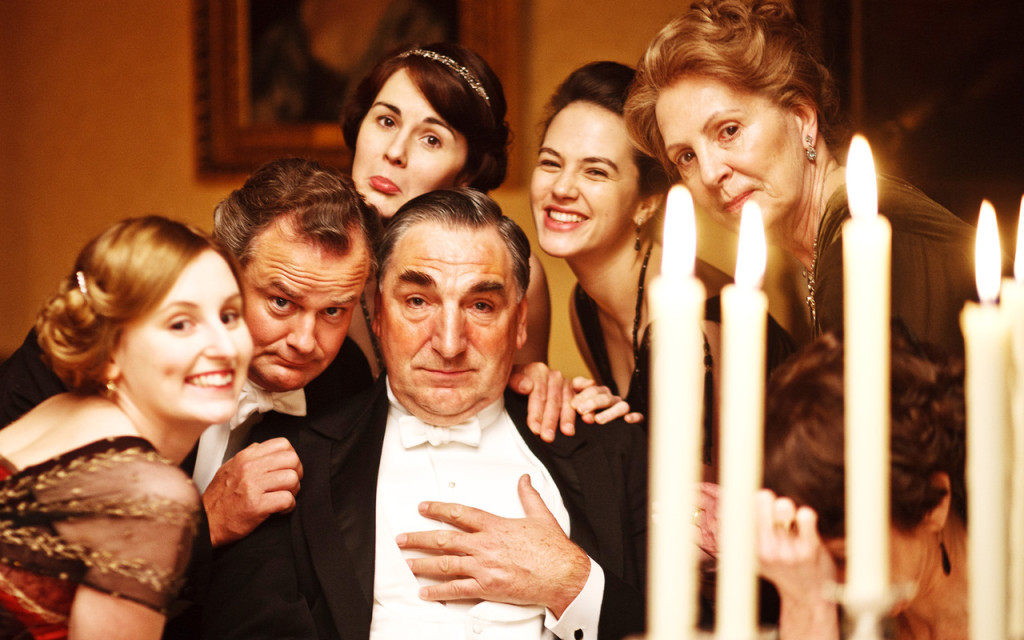
downton2

The heartburn wasn’t just his.

Reason #2, or … why I hated Downton Abbey. Or, “Why don’t the women in Sense and Sensibility just go out and get jobs?” Excerpt:

“In this approach, the more that authors and characters shared our beliefs, the more enlightened they were. This is simply a form of ahistorical flattery; it makes us the wisest people who ever lived, much more advanced than that Shakespeare guy. Of course, numerous critical schools that judge literary works are more sophisticated than that class on Huckleberry Finn, but they all still presume the correctness of their own views and then measure others against them. That stance makes it impossible to do anything but verify what one already believes. Why not instead imagine what valid criticisms these authors would advance if they could see us?”

Reason #3, and here’s Exhibit One: The Norton Anthology of Theory and Criticism, in which the editors “paraphrase a key tenet of the dominant movement called ‘cultural studies,’ which has set the critical agenda”:

“Literary texts, like other artworks, are neither more nor less important than any other cultural artifact or practice. Keeping the emphasis on how cultural meanings are produced, circulated, and consumed, the investigator will focus on art or literature insofar as such works connect with broader social factors, not because they possess some intrinsic interest or special aesthetic values.”
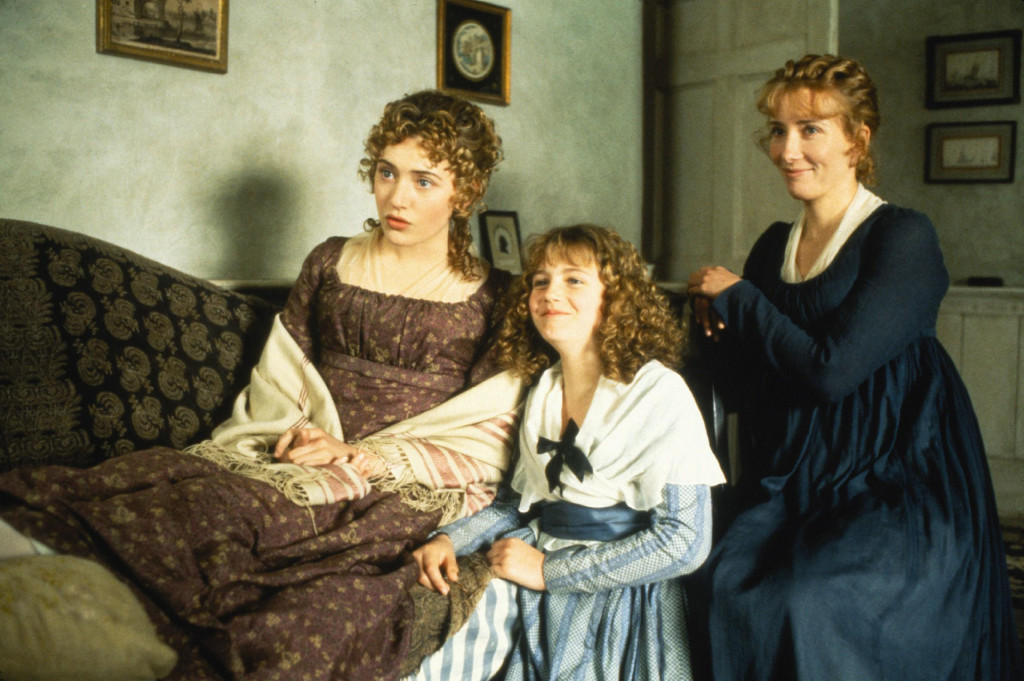
austen

Why don’t they all just get jobs?

I don’t know about you, but they deserve jail time for making “artwork” plural. Morson politely overlooks that, and summarizes the argument this way: “If elements of popular entertainment illustrate social forces better than Pope or Proust do, then they should (and sometimes do) constitute the curriculum. The language of ‘production, circulation, and consumption’ is designed to remind us that art is an industrial product like any other and supports the rule of capital no less, and perhaps more insidiously, than the futures market.”

In short, “When you read a great novel, you put yourself in the place of the hero or heroine, feel her difficulties from within, regret her bad choices. Momentarily, they become your bad choices. You wince, you suffer, you have to put the book down for a while. When Anna Karenina does the wrong thing, you may see what is wrong and yet recognize that you might well have made the same mistake. And so, page by page, you constantly verify the old maxim: There but for the grace of God go I. No set of doctrines is as important for ethical behavior as that direct sensation of being in the other person’s place. … Empathy is not all of morality, but it is where it begins. … It is really quite remarkable what happens when reading a great novel: By identifying with a character, you learn from within what it feels like to be someone else.” Sounds like a recommendation for Tolstoy‘s Resurrection to me.
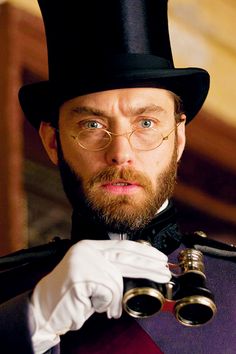
judelaw

Can’t wait.

Why is all it important? If you aren’t sold so far, try this:

“The more our culture presumes its own perspective, the more our academic disciplines presume their own rectitude, and the more professors restrict students to their own way of looking at things, the less students will be able to escape from habitual, self-centered, self-reinforcing judgments. We grow wiser, and we understand ourselves better, if we can put ourselves in the position of those who think differently.

Democracy depends on having a strong sense of the value of diverse opinions. If one imagines (as the Soviets did) that one already has the final truth, and that everyone who disagrees is mad, immoral, or stupid, then why allow opposing opinions to be expressed or permit another party to exist at all? The Soviets insisted they had complete freedom of speech, they just did not allow people to lie.”

Read the whole thing here. He’s currently working on a study of The Brothers Karamazov. Can’t wait.
MOOCs be damned! Antoine Raybaud, and how the best learning takes place.

July 5th, 2015
Share
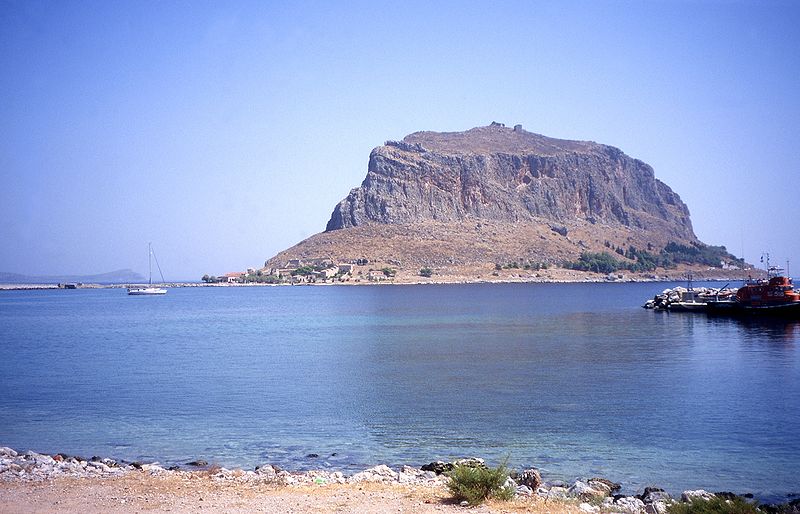
Monemvasia

Room for three, please. (Photo: Ingo Mehlng)

Online learning and MOOCs are all the rage. Pardon me if I restrain my enthusiasm. Though I have dear friends that swear by the merits of taking classes in front of an Apple screen, for me, that’s not how the best learning takes place.

edelstein(2)

Don’t worry. He has better vacations now.

You can learn from books, you can learn from great poetry – those can be done in silence, in one’s own room.  We learn from experience – that’s where what we learned from books burns in; or doesn’t. But a vital catalyst for learning is knowing learned people. The “Aha!” that comes when we realize, “I want to be like that.” Not necessarily that. But something like that. More like that than what I was. It’s a direction rather than goal. That “Aha!” comes from classroom discussions, office hours, reading all the recommended reading and casually mentioned reading. These teachers or mentors model better ways of thinking, better ways of feeling, better ways of being in the world. Sometimes it comes from a grade-school teacher, or an aunt or uncle, or it can happen at any point in one’s life. Poet Dana Gioia has told me about the influence of Elizabeth Bishop when he was at Harvard. Steve Wasserman has written of the influence of Susan Sontag‘s friendship on on him as a young man. I was fortunate to have Joseph Brodsky as a student in Ann Arbor, and much, much later Czeslaw Milosz – and very late in life, René Girard, too. I consider myself very lucky in that regard – but so do the others; anyone, really, would know the difference. Like having a great dinner at Chez Panisse versus looking at photos of food in Gourmet magazine.

That brings me to my friend Dan Edelstein‘s most recent essay in Inside Higher Education. He knows the process of initiation well:

raybaud

“Beaked nose, broad smile”

“In the summer of 1996, I spent two weeks driving around Greece with my girlfriend and my undergraduate adviser. We argued all the time: me and my girlfriend; me and my adviser; my girlfriend and my adviser. One stop was particularly memorable for its unenjoyableness. We spent a day and a night at Monemvasia, a fortified Crusader town on a massive rock off the coast. The whole time, my adviser berated me to learn more about the extensive history of the place and turned his nose up at my girlfriend, who wanted to find a nightclub on the island.

“To be fair, my adviser was not actually on the trip. He was in my head, or rather, I had internalized him. I couldn’t have a conversation without hearing him remark on the substance (or lack thereof) of my comments. He haunted my relationships and my thoughts. I carried him everywhere, like Anchises on my shoulders.”

The third party had a name – Antoine Raybaud, 1934-2012. Dan studied with him in Geneva.

brodsky2I didn’t have to take his classes. Still, a tiny group of us kept on coming back. Despite the hardships, Raybaud’s classes were mesmerizing. He interpreted texts like a magician, making meaning appear where we could only see words. The seminars became less painful, as Raybaud slowly warmed to us. But he never relented in his expectations. Every single paper I submitted to him, from my first essay to my final thesis, he made me rewrite. Once, on my way to his office, I bumped into him in the hallway; he glanced at the first few paragraphs of my assignment, then handed it back, saying, “Allez, refaites-moi ça.” (“Do it over.”) I went home and spent hours trying to figure out what I had done wrong. Eventually I rewrote the entire paper; even I could tell that it turned out much better.

Natacha, Bernard and I were his last students; he retired the year we graduated. His last seminars were luxurious: we spent six months, just the four of us, reading “Un Coup de Dés.” During that last seminar, it became clear we were initiates. We had come close to being broken, but had broken through.

This was akin to what the Russian Nobel laureate told his Columbia class, including Harper’s editor James Marcus: assigning a short paper for class, he warned them “Assume that this may be the last thing you write. … Don’t forget, you could get hit by a car after you hand it in. Keep that thought in mind.” While it would have been “grandiose nuttiness” from anyone else, he concluded that Brodsky was extending his own “high seriousness about writing to his students,” few of whom deserved it. (I tell the story in the introduction to my Joseph Brodsky: Conversations.)

You can read about Antoine Raybaud in Geneva, and Dan’s ill-fated trip to the Greek island here.

Eavan Boland, the Bella Mabury and Eloise Mabury Knapp Professor in Humanities

Online hero

Postscript on 7/6: One regular reader has chimed in already, and reminded us to temper our language, especially when posting at the end of a long day. From Margaret Watson: “Living in a small town off the coast of Maine, my opportunity for educational experience is minimal. But happily for ten weeks this spring I was involved in a very active group with Eavan Boland and Ten Pre-Modern Women Poets from Stanford (your “place”). I learned an enormous amount not only from her guidance and knowledge but also from the Stegner Fellows at Stanford who introduced us to the “modern” approach to poets as it is happening today. Then we could participate with either an essay or a poem written in the way of the poet of that particular week. Being introduced to these poets of the past is fodder now for a long time to come. No, I couldn’t be there, but in my heart and mind, I was.”

Mikhail Shishkin, and what life does to us

July 3rd, 2015
Share
MichaelShishkin

Still “gulping in life,” but in Zurich.

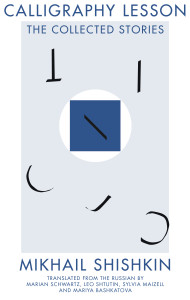
Often, I am often so bogged down in various deadlines that you would have to thwack me with a rolled-up magazine to get my attention. So I’m grateful that my friend and colleague Scott Esposito did precisely that, in a metaphorical, cyberspace sort of way, with Mikhail Shishkin‘s superb collection, Calligraphy Lesson: The Collected Stories, published by Deep Vellum.

I know, I know. I appear to be the last person in the Western world who hadn’t read Shishkin, who won the 2000 Booker Prize for his The Taking of Izmail and the 2005 National Bestseller Prize and the 2006 National “Big Book” Prize for Maidenhair (Open Letter, 2012). I still don’t know Shishkin, if it comes to that, since I haven’t read his novels, nor have I had the chance to do more than sample this new collection short stories, memoirs, and studies. Until I put a few more deadlines behind me, it will be one of my many postponed pleasures.

As happens with many Russian writers today, Western journalists tend to situate Shishkin in the middle of Russia’s traumatic present, and interviews tend to focus on news rather than literature, even though Shishkin has been based in faraway Zurich for years. The tendency is reinforced because he is an articulate spokesman for a free Russia, as he shows in this 2013 interview:

“In Russia, before the revolution, after the revolution, the most popular writers were forbidden—it was impossible to buy or sell these books. But these were the most popular writings, so the ideal of writing was not to entertain, was not to sell. The idea of writing was to ask some questions that were very important for the writer himself, with the understanding that his book might never reach a reader.

“But all these questions are very important for everyone: How to live a humiliating situation under the dictatorship, but still preserve human dignity? And this is the question of questions. Russian literature of every generation has to answer it. Every writer has to answer this question, and we are a very strange country. Every generation needs its war and needs its dictatorship.”

calligraphy3

The book.

The word “genius” has been used, and the Times Literary Supplement had this to say: “Shishkin’s language is wonderfully lucid and concise. Without sounding archaic, it reaches over the heads of Tolstoy and Dostoevsky (whose relationship with the Russian language was often uneasy) to the tradition of Pushkin.”

Nothing I read about him, however, quite prepared me for the desperate urgency of Calligraphy Lesson, as if its lyricism were only a last match struck against the darkness. His prose breathes life – doesn’t breathe it, gasps it, aware of the perishability of words, of worlds dying in each instant, and us dying with them, as life is beaten out of us second by second. (“And I heard myself breathing, heard my lungs gulping in life.”)

“The Half-Belt Overcoat,” he recalls his “Mum,” a dedicated headmistress humiliated, dismissed, and broken during the Andropov era, and then dying inch-by-inch of cancer. After her death, he discovers among her things a long-ago “ordinary girl’s diary” that gives no traces of the terror that was gripping the Soviet Union during the Stalin years: “Its pages are awash with the unthinking youthful confidence that life will give you more than you asked of it.” The diary and family photographs are stashed away in Moscow after he emigrates, and turn to ashes in a fire, but the persona she left in her youthful diary stays with him: “That girl was born into a prison nation, into darkness, yet she still looked upon her life as a gift, as an opportunity to realize herself in love, to give love, to share her happiness with the world.”

“The world around is cold and dark, but into it has been sent a girl so that, candle-like, she might illuminate the all-pervasive human darkness with her need for love.” It’s the hopeless forever task of life breeding life: “this was not the naïveté and folly of a silly young girl who had failed to understand what was going on around her, this was the wisdom of the one who has sent, does send and always shall send girls into the world, no matter what hell we’ve turned it into.”

kochetkova-brupbacher

Six thousand letters and postcards between them.

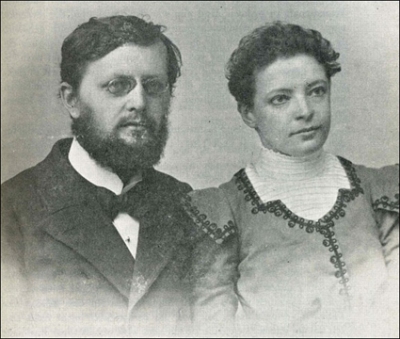
And what a hell it is – not only  in the Soviet Union. The twentieth century is one of ideologies making a beeline to genocide. Even in peaceful Switzerland offered no refuge from extreme thoughts and incalculable grief. In “The Bell Tower of San Marco,” Shishkin traces the letters of Russian revolutionary Lydia Kochetkova, who writes incessantly to her future husband, Swiss anarchist Fritz Brupbacher – obscure historical figures, but oddly universal. Six thousand letters are preserved in Amsterdam, to give you an idea of the volume of the correspondence. In words that breathe the same infinite hope and aspiration that his Soviet-era Mum had had – before the illness, before the grinding poverty, before the political slap down – Lydia writes at the beginning of her new love in 1898: “‘Be fruitful and multiply!’ Can that really be all that’s bequeathed to us? Why even the mice and Koch’s microbes honor this behest. But man is infinitely greater than his physical self. And how can you reduce all of me, all my untapped resources, the yearning to accomplish something important, essential, that serves mankind, my people, my country – to propagation!”

After the marriage was over, she continued writing letter after unanswered letter to him. We know nothing of her death, presumably around 1915. Alone, alienated, or abandoned by family and friends, her last written words are a muffled cry that will likely meet many of us at life’s end, as lost and frantic as Desdemona’s desperate cry for one more hour: “My darling! Do you know what I regret most of all? I could have given you all the fullness of my love, but I gave you nothing but pain. Forgive me, if you can. And my heart cries out at the thought that my highest calling was just that – to give you affection and tenderness, but instead I squandered my worthless life on phantoms.”

On his birthday: Czesław Miłosz on time, truth, and the “quest for reality”

June 30th, 2015
Share
A happenstance Californian.

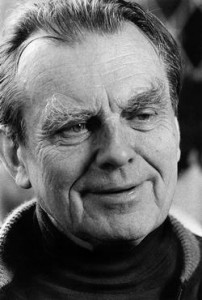
Birthday boy.

Today is Czesław Miłosz‘s birthday – his 104th. To celebrate the occasion, I revisited his Nobel lecture. Oh, and I baked him a little white cake; see below. And also, a photo at bottom from where it all began, at his birthplace in Šeteniai.

In 1980, Miłosz gave one of the all-time great Nobel addresses. A few excerpts to prove it:

“Every poet depends upon generations who wrote in his native tongue; he inherits styles and forms elaborated by those who lived before him. At the same time, though, he feels that those old means of expression are not adequate to his own experience. When adapting himself, he hears an internal voice that warns him against mask and disguise. But when rebelling, he falls in turn into dependence upon his contemporaries, various movements of the avant-garde. Alas, it is enough for him to publish his first volume of poems, to find himself entrapped. For hardly has the print dried, when that work, which seemed to him the most personal, appears to be enmeshed in the style of another. The only way to counter an obscure remorse is to continue searching and to publish a new book, but then everything repeats itself, so there is no end to that chase. And it may happen that leaving books behind as if they were dry snake skins, in a constant escape forward from what has been done in the past, he receives the Nobel Prize.”

“What is this enigmatic impulse that does not allow one to settle down in the achieved, the finished? I think it is a quest for reality. I give to this word its naive and solemn meaning, a meaning having nothing to do with philosophical debates of the last few centuries. It is the Earth as seen by Nils from the back of the gander and by the author of the Latin ode from the back of Pegasus. Undoubtedly, that Earth is and her riches cannot be exhausted by any description. To make such an assertion means to reject in advance a question we often hear today: ‘What is reality?’, for it is the same as the question of Pontius Pilate: ‘What is truth?’ If among pairs of opposites which we use every day, the opposition of life and death has such an importance, no less importance should be ascribed to the oppositions of truth and falsehood, of reality and illusion.”

***

His alma mater, Vilnius University (Photo: C.L. Haven)

“The thick walls of our ancient university.”  (Photo: C.L. Haven)

“It is good to be born in a small country where Nature was on a human scale, where various languages and religions cohabited for centuries. I have in mind Lithuania, a country of myths and of poetry. My family already in the Sixteenth Century spoke Polish, just as many families in Finland spoke Swedish and in Ireland – English; so I am a Polish, not a Lithuanian, poet. But the landscapes and perhaps the spirits of Lithuania have never abandoned me. It is good in childhood to hear words of Latin liturgy, to translate Ovid in high school, to receive a good training in Roman Catholic dogmatics and apologetics. It is a blessing if one receives from fate school and university studies in such a city as Vilno. A bizarre city of baroque architecture transplanted to northern forests and of history fixed in every stone, a city of forty Roman Catholic churches and of numerous synagogues. In those days the Jews called it a Jerusalem of the North. Only when teaching in America did I fully realize how much I had absorbed from the thick walls of our ancient university, from formulas of Roman law learned by heart, from history and literature of old Poland, both of which surprise young Americans by their specific features: an indulgent anarchy, a humor disarming fierce quarrels, a sense of organic community, a mistrust of any centralized authority.”

***

“Our planet that gets smaller every year, with its fantastic proliferation of mass media, is witnessing a process that escapes definition, characterized by a refusal to remember. Certainly, the illiterates of past centuries, then an enormous majority of mankind, knew little of the history of their respective countries and of their civilization. In the minds of modern illiterates, however, who know how to read and write and even teach in schools and at universities, history is present but blurred, in a state of strange confusion; Molière becomes a contemporary of Napoleon, Voltaire, a contemporary of Lenin. Also, events of the last decades, of such primary importance that knowledge or ignorance of them will be decisive for the future of mankind, move away, grow pale, lose all consistency as if Frederic Nietzsche‘s prediction of European nihilism found a literal fulfillment. ‘The eye of a nihilist,’ he wrote in 1887, ‘is unfaithful to his memories: it allows them to drop, to lose their leaves;… And what he does not do for himself, he also does not do for the whole past of mankind: he lets it drop’ We are surrounded today by fictions about the past, contrary to common sense and to an elementary perception of good and evil. As The Los Angeles Times recently stated, the number of books in various languages which deny that the Holocaust ever took place, that it was invented by Jewish propaganda, has exceeded one hundred. If such an insanity is possible, is a complete loss of memory as a permanent state of mind improbable? And would it not present a danger more grave than genetic engineering or poisoning of the natural environment?”

birthday cake“For the poet of the ‘other Europe’ the events embraced by the name of the Holocaust are a reality, so close in time that he cannot hope to liberate himself from their remembrance unless, perhaps, by translating the Psalms of David. He feels anxiety, though, when the meaning of the word Holocaust undergoes gradual modifications, so that the word begins to belong to the history of the Jews exclusively, as if among the victims there were not also millions of Poles, Russians, Ukrainians and prisoners of other nationalities. He feels anxiety, for he senses in this a foreboding of a not distant future when history will be reduced to what appears on television, while the truth, as it is too complicated, will be buried in the archives, if not totally annihilated.”

***

 “Complaints of peoples, pacts more treacherous than those we read about in Thucydides, the shape of a maple leaf, sunrises and sunsets over the ocean, the whole fabric of causes and effects, whether we call it Nature or History, points towards, I believe, another hidden reality, impenetrable, though exerting a powerful attraction that is the central driving force of all art and science.”

“Our century draws to its close, and largely thanks to those influences I would not dare to curse it, for it has also been a century of faith and hope. A profound transformation, of which we are hardly aware, because we are a part of it, has been taking place, coming to the surface from time to time in phenomena that provoke general astonishment.”

***

You can read the whole thing here. Regarding the photograph below: I had the great good fortune in 2011 to visit Miłosz’s birthplace in the rural Lithuanian village of Šeteniai. And yes, it is as idyllic as he said it was – it reminded me of the woods and deep green colors of Michigan. I took this photo on the former Miłosz family estate, overlooking the river. The fishers called out to ask if we had permission to photograph them. Yes, one of us shouted back, there was a journalist in the group. They laughed, thinking it was a joke.

IMAG0161

The perfect place to be born. (Photo: C.L. Haven)

Late reflections on Wolf Hall: will the real Thomas More please stand up?

June 27th, 2015
Share
wulfhall1

Is this the real Thomas More? Maybe… (Mark Rylance in “Wolf Hall”)

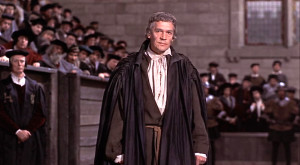
I fell in love with Thomas More as a girl, when my mother took me to see A Man for All Seasons. Whether I fell in love with More or actor Paul Scofield, I’m not entirely sure. Perhaps I fell in love with playwright and screenwriter Robert Bolt, more than either of them.

scofield2

The actor who refused a knighthood, here as Thomas More.

Much ink has been spilled over the defamation of More in the BBC television series Wolf Hall, based on Dame Hilary Mantel‘s Man Booker award-winning novel by that name (and now available as a boxed set). Clearly, she had a bone to pick with the English icon, as a national hero as well as saint. But she is punching the wrong man. For her quarrel is not with More, but with Bolt, a fellow atheist, who recreated More to be, as he put it in his introduction to the play, “a hero of selfhood.”

From Bolt’s introduction:

“Thomas More, as I wrote about him, became for me a man with an adamantine sense of his own self. He knew where he began and left off, what area of himself he could yield to the encroachments of his enemies, and what to the encroachments of those he loved. It was a substantial area in both cases for he had a proper sense of fear and was a busy lover. Since he was a clever man and a great lawyer he was able to retire from those areas in wonderfully good order, but at length he was asked to retreat from that final area where he located his self. And there this supple, humorous, unassuming and sophisticated person set like metal, was overtaken by an absolutely primitive rigor, and could no more be budged than a cliff.”

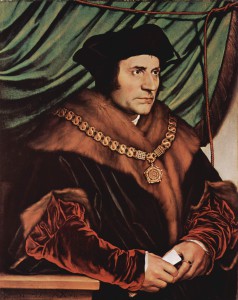
more

Holbein’s Thomas More

The reason … well, one reason … I have delayed so long in posting my reaction to Wolf Hall is I wanted to watch the 1966 film again, and see how it holds up today, at the other end of a life. When it was made, the lauded film received best film, best actor, and best director Academy awards. Scofield said it was his toughest role ever.

So I watched the film again with two young people. (Well … young-ish … compared to me, anyway.) The low-budget film often adheres to polished stage conventions rather than modern film conventions (Scofield won a Tony as well as an Oscar for the role), and the actors wore far too much make-up. That’s not what bugged my companions, however – not the main thing, anyway. They couldn’t imagine any principle worth dying for, when a simple lie could get you off the hook. That divide proved more unbreachable even than pancake makeup. I’ve since learned that this mindset is usual among Millennials.

Bolt, too, dealt with that issue directly: “why do I take as my hero a man who brings about his own death because he can’t put his hand on an old black book and tell an ordinary lie?” he asked. The answer is bound up with his earlier discussion of selfhood:

thomas-more

Lesser’s More as a sadist

“For this reason: A man takes an oath only when he wants to commit himself quite exceptionally to the statement, when he wants to make an identity between the truth of it and his own virtue; he offers himself as guarantee. And it works. There is a special kind of shrug for a perjurer; we feel that the man has no self to commit, no guarantee to offer. Of course it’s much less effective now that for most of us the actual words of the oath are not much more than the impressive mumbo-jumbo than it was when they made obvious sense; we would prefer most men to guarantee their statements with, say, cash rather than with themselves. We feel – we know – the self to be an equivocal commodity. There are fewer and fewer things which, as they say, we ‘cannot bring ourselves’ to do.”

Bolt recreated More as a modern hero, just as Mantel has given us a postmodern one, a “recreation” untethered to anything we might consider a fact. (For a little factual history, try Gregory Wolfe‘s WaPo story here.) Hence, I didn’t care for Anton Lesser‘s performance – he portrays More as a waspish eccentric and sadist. That doesn’t fit the man described by Robert Whittington this way: “More is a man of angel’s wit and singular learning; I know not of his fellow. For where is the man of that gentleness, lowliness, and affability? And as time requireth, a man of marvellous mirth and pastimes; and sometimes of as sad gravity: a man for all seasons.” And, famously, by Samuel Johnson: “He was the person of the greatest virtue these islands ever produced.” Yet this singularly fortunate man was drawn against his will to depart from the family he loved and the society he enjoyed. Why? According to Bolt:

For More the answer to this question would be perfectly simple (though again it may not be easy); the English Kingdom, his immediate society, was subservient to the larger society of the Church of Christ, founded by Christ, extending over Past and Future, ruled from Heaven. There are still some for whom that is perfectly simple, but for most it can only be a metaphor. I took it as a metaphor for that larger context which we all inhabit, the terrifying cosmos. Terrifying because no laws, no sanction, no mores obtain there; it is either empty or occupied by God and Devil nakedly at war. The sensible man will seek to live his life without dealings with this larger environment, treating it as a fine spectacle on a clear night, or a subject for innocent curiosity. At the most he will allow himself an agreeable frisson when he contemplates his own relation to the cosmos, but he will not try to live in it; he will gratefully accept the shelter of his society. This was certainly More’s intention.

cromwell

Holbein’s Cromwell

But here’s the thing: neither Bolt nor Mantel portrayed the real Thomas More, because the real Thomas More was a medieval man, not a modern one at all. He was not a solitary figure occasionally flanked not by a wife and daughter, but also by a son, two additional daughters, a stepdaughter, and a ward or two, along with a jester, servants, and uncounted hangers-on. He was not a modern lawyer, in the sense that we usually mean that – with professional restraint and carefully parsed words. Medieval lawyers let fly. Consider his attack on Martin Luther, as described by More’s biographer Peter Ackroyd in The Life of Thomas More:

“Furfuris! Pestillentissimum scurram! Pediculosus fraterculus! Asinus! Potista! Simium! Improbe mendax! Martin Luther is an ape, an arse, a drunkard, a lousy little friar, a piece of scurf, a pestilential buffoon, a dishonest liar. ‘HA. HA. he, facete, laute, lepide Luthere, nihil supra … Hui.’  The unmediated demotic speech here will be of interest to anyone who wishes to know how the educated inhabitants of early sixteenth-century London actually sounded when they spoke in Latin, but More’s grasp of colloquialism went much further. Someone should shit (‘incacere‘) into Luther’s mouth, he is a shit-devil (‘cacodemon‘), he is filled with shit (‘merda‘), dung (‘stercus‘), filth (‘lutum‘) and excrement (‘coenum‘); look, my own fingers are covered with shit (‘digitos concacatos‘) when I try to clean his filthy mouth. This is not, perhaps, the normal language of a saint; but More’s scatological obsessions are shared by Luther himself. ‘I am like ripe shit,’ he once said, ‘and the world is a gigantic arse-hole. We probably will let go of each other soon.’ ‘A Christian should and could be gay,’ he said on another occasion, ‘but then the devil shits on him.'”

scofield1

The terrifying cosmos

Put that in your historical pipe and smoke it. Certainly it’s closer to Mantel’s More than Bolt’s, but her More lacks all generosity of spirit, another attribute of the “real” more. Here’s Mantel’s neat sleight-of-hand, however: she took Bolt’s trick of turning a More into a modern hero, and turned his nemesis, Thomas Cromwell, into a modern hero instead. Both Scofield’s More and Mark Rylance‘s Cromwell are serious, humane men, both are fair, industrious, and unostentatious. Both are given to long, meditative silences; both are steely and unflinching. Both are family men, and both have humble origins. As Bolt’s play reminded us, More is the son of a lawyer. Mantel goes one up: Cromwell is continually reminded that he is the son of a blacksmith.

I was riveted to Wolf Hall for weeks, but I fell in love with Thomas Cromwell after the first episode, not More. As I realized later, as one of my TV companions this week also pointed out to me … I nevertheless fell in love with the same man.

Watch the film clips below, and see if you agree. (Don’t worry … my heart belongs to Scofield forever.)


Another honor for poet Tomas Venclova – keep ’em coming.

June 24th, 2015
Share
t.venclova

Terrific poet in a little-known tongue.

One of our favorite people has bagged another honor: earlier this month, one of Europe’s most eminent poets, Tomas Venclova, was awarded for “creative fidelity to the values which comprise the foundation of European civilization.”  The ceremony took place at the Ossoliński National Institute, one of Poland’s oldest scientific libraries and research centers.

In his talk, the Lithuanian poet praised the previous prize laureates: “I have followed in the footsteps of people much greater than myself, such as Tadeusz Mazowiecki, Stanisław Szuszkiewicz, Sergei Kovalev, Václav Havel, Lithuanian president Valdas Adamkus and Zbigniew Brzeziński,” he said. (Personally, I’m not so sure about the “greater than himself” part.)

He also paid homage to the prize’s namesake, Jan Nowak-Jeziorański, a Polish journalist and war-time resistance fighter who was an emissary between the Home Army and the Polish Government in Exile in London. After the war in Communist Poland, Nowak-Jeziorański headed the Polish Section of Radio Free Europe. “Unfortunately I never met Jan Nowak-Jeziorański, although I know he was an emblematic figure in the history of Eastern Europe and global society,” said Venclova. “A politician and solider, journalist and social worker, a diplomat who was a paradigm of fidelity to his beliefs.”

Venclova himself is one of the five founding members of the Lithuanian Helsinki group, whose poetry in the disfavored Lithuanian language could be circulated only in samizdat. His dissident activities attracted the perilous attention of the Soviet authorities, and in 1977 he was forced to emigrate. He taught for many years at Yale University. His poetry has been translated by Czesław Miłosz into Polish, and by Joseph Brodsky into Russian. A selection of his poetry, translated into English by Ellen Hinsey, is at the Poetry Foundation here.

His previous honors include the Gloria Artis and Order of Merit Polish honours, as well as honorary doctorates from universities in Kraków, Gdańsk, Toruń, Lublin and the Lithuanian centres of Klaipeda and Kaunas. All that said, he is too little recognized in the West. So we think there should be more honors, west of the Danube. We have written about him here and here and here and here and here and here and here.

Congratulations, Tomas!


<<< Previous Series of PostssepNext Series of Posts >>>