A Pulitzer for Duke Ellington! Ted Gioia champions the cause. Will he win? Sign the petition.

July 21st, 2022

Share
Portrait of the young Ted Gioia at the piano, before early arthritis ended his performing career.

It takes 5,000 signatures on a change.org petition to get media attention. And it worked like a charm for musician and jazz scholar Ted Gioia. He’s now doubled that with more than 10,300 signatures. (You can sign, too, here or on the link at the bottom of the page.)

His campaign: A posthumous Pulitzer for Duke Ellington, who was denied the honor way back in 1965. As I write, “Duke Ellington” is trending on Twitter.

Here’s what happened:

“In 1965, the jury for the Pulitzer Prize in Music recommended that jazz composer Duke Ellington receive the award in honor of his lifetime legacy of excellence. The Pulitzer Board denied the request, and decided to give no award in music that year rather than honor an African-American jazz composer. In the aftermath, two of the three jury members resigned in protest.

Duke Ellington in India (Creative Commons)

“The time has come to rectify this unfortunate decision, and name Duke Ellington as the winner of the 1965 Pulitzer Prize in Music. The recent precedent of Jim Thorpe‘s reinstatement as sole winner of the 1912 Olympic gold medals, taken from him 110 years ago, makes clear that even after many decades these wrongs can still be righted. Ellington was a deserving candidate back in 1965, and the significance of his legacy has become all the clearer with the passage of time. Giving him the 1965 prize is the right thing for Duke Ellington, the right thing for the Pulitzer, and the right thing for American music.”

John McWhorter of the New York Timesagrees: “I’m hoping it stimulates a big, beautiful noise that undoes this wrong.” He finds it unlikely that racism wasn’t involved in the Pulitzer decision-making.

He continues: “We assume that Pulitzers are awarded to work that qualifies as for the ages, that pushes the envelope, that suggests not just cleverness but genius. There can be no doubt that Ellington’s corpus fits that definition.”

“I’ll never forget deciding, in my early 20s, that I wanted to know what the big deal was about Ellington and popping in a CD with a recording of 1927’s ‘Black and Tan Fantasy.’ Just the opening, in all of its blue, narrative and outright odd soaring, made the proverbial hairs on the back of my neck stand up. It was one of those “What is this?” moments. I remember marveling about it with my father, a lifelong jazz fan, with him smiling and saying, “John, you got it!’ Indeed, Ellington was something one ‘got.’ Like James Joyce, the Coen brothers or Charles Mingus, you might not quite get what the hubbub is about at first, but when you do, watch out. ‘Mood Indigo’ opens with muted trombone on melody playing up high, then clarinet playing down low, then muted trumpet playing somewhere in the middle — deliciously weird! The result is a gentle astringence that results in an uncommon kind of tenderness.” (Read the whole thing at the NYT here.)

As of yesterday, Ted wrote in his Substack column, “The Honest Broker”: “There has been no response from the Pulitzer board. Zero. Nada. Zilch. But the media has just started paying attention to this initiative.”

You can read the whole back story here. Says Ted: “Revisiting the matter today would simply require the Board voting to accept the original jury recommendation. 

“A dozen other Pulitzer winners have already expressed their support.” And a number of American composers have also signed: John Adams, John Luther Adams, William Bolcom, Philip Glass, David Lang, Tania León, Steve Reich, Terry Riley, Caroline Shaw.

I love the evocative photo of a young Ted above, before arthritis at a young age ended his career as a performer and composer. Want to hear one of Ted’s musical compositions? Check out here. And check out the story about it here.

https://www.change.org/p/give-duke-ellington-the-pulitzer-prize-he-was-denied-in-1965

Postscript from Ted Gioia:

I am now awaiting a response from the Pulitzer board.

I want to express my heartfelt thanks to the many of you who have supported this worthy cause. This is out of our hands, but we’ve made a historic effort, and my hope is that Duke Ellington will get the Pulitzer Prize he was denied in 1965.

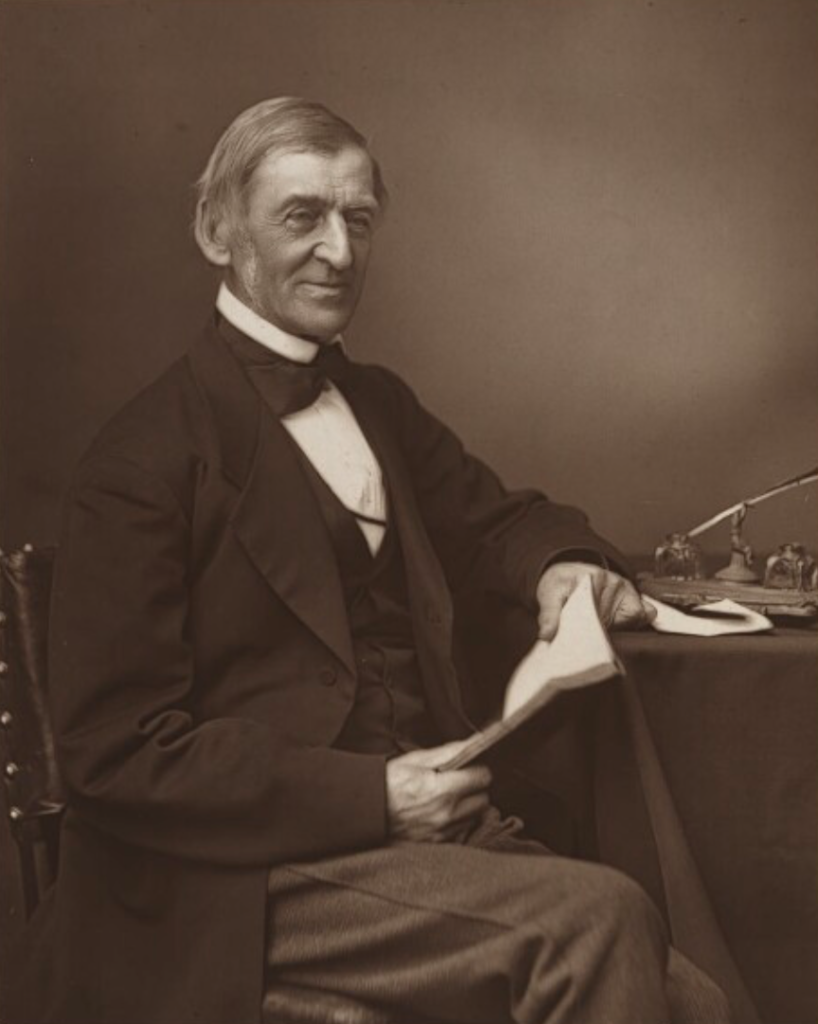
“Give All to Love”: New film spotlights Emerson as a deeply original, a radical thinker – and features James Marcus, too

July 19th, 2022
Share
A screenshot of James Marcus during our recent zoom conversation at legendary City Lights Books

James Marcus, former editor of Harper’s Magazine and author of Amazonia: Five Years at the Epicenter of the Dot-Com Juggernaut, has been laboring for years on a book about Ralph Waldo Emerson, and we can’t wait for it to come out. Now he’s going to be in an Emerson film, too. Here’s more from Globe Newswire:

“Ralph Waldo Emerson is undoubtedly not only the father of American literature and the guiding spirit of that flinty idea called ‘Transcendentalism,'” commented Michael Maglaras, “but he is also the father of our American conscience.”

Emerson (1803-1882), through his journals, essays, lectures, and poetry, guided the development of American thought, spiritual expansion, and adherence to moral principles. Emerson’s approach to living and to life was dynamic, forceful, and radical in its conception and fulfillment. 

Bringing an iconic figure to life again

ASHFORD, Conn., July 06, 2022 (GLOBE NEWSWIRE) — Connecticut-based independent filmmakers Michael Maglaras and Terri Templeton of 217 Films announce that their new film project will be a full-length documentary on America’s greatest philosopher and thinker, Ralph Waldo Emerson. “Ralph Waldo Emerson: Give All to Love” will be their ninth film in 18 years and the eighth “essay in film” by writer/director Michael Maglaras.

“Without Emerson’s legacy,” said Maglaras, “it would be difficult to imagine American cultural life and impossible to imagine the development of America as a society. Emerson is the spiritual father of the poetry of Walt Whitman, the music of Charles Ives, the teachings of Martin Luther King, Jr.”

Currently being shot on location in and around Concord, Massachusetts, this film will have as its focal point and backdrop “Bush”: the wonderful Emerson home where the poet and his wife Lidian reared their children and where Emerson, the great “Sage of Concord,” resided as a simple but revered citizen of America until his death.

Emerson scholar and writer James Marcus will be featured in the film. “I’m delighted to be collaborating with director Michael Maglaras on this important project that will bring Ralph Waldo Emerson to life. Emerson speaks to our time with tremendous urgency…touching on the entirety of the American experience.”

Bay Emerson Bancroft, President of the Ralph Waldo Emerson Memorial Association, has said of this film project, “We are so pleased to endorse this new documentary film on Emerson…really the first of its kind…and to cooperate with the filmmakers on its production. As we approach the 220th anniversary of Emerson’s birth, this film will introduce him to an entirely new audience.”

“What’s important for me as a filmmaker is not only what Emerson wrote and said,” added Michael Maglaras, “but also that he surrounded himself with people of brilliance, such as Margaret Fuller, Henry David Thoreau, and Louisa May and Bronson AlcottTo be yourself in a world that is constantly trying to make you something else is the greatest accomplishment… wrote Emerson. This film will capture the essence of Emerson as the deeply original and radical thinker he was.”

James told me on Twitter: “I think it’s going to be a classy, smart, artful film, and the first Emerson documentary in a really long time.”

James Marcus on PBS

Czesław Miłosz’s final resting place and the church that gave Robert Hass “the creeps.”

July 16th, 2022
Share
Miłosz’s burial place: “Not liking the fact that it is,/Perhaps, what he would have wanted.”

Long ago, in 2008, I wrote a Los Angeles Times article about the death of Nobel poet Czesław Miłosz and its aftermath, called: Czeslaw Milosz: a poet’s long passage back home.

It begins like this:

During a late night in Krakow, nonagenarian Nobel laureate Czeslaw Milosz was tipping back the vodka with
Jerzy Illg, editor in chief at his Polish publishing house, Znak. Late in the evening, a touchy topic dropped on the table: Where would Milosz like to be buried?

Should his final resting place be with his mother, in a city near Gdańsk? Illg dismissed the notion outright. “Who will light a candle for you there?” he asked.

Should he be buried instead in his beloved homeland, Lithuania – perhaps in Vilnius, the city of his youth?

Illg proposed the famous cemetery in the Salwator district of Krakow. Many poets and critics were buried on the hilltop graveyard. It would provide “good company and a good view.”

When, sometime later, Illg told Bronislaw Maj about this conversation, the younger poet chided him. Milosz had been fishing for the obvious answer, the mollifying answer: Wawel, the ancient castle/cathedral complex at the very heart of Krakow. Poland’s leading poets are honored there – Norwid, Slowacki and, of course, the nation’s ur-poet, Adam Mickiewicz, another Polish-speaking Lithuanian. “Of course it was a joke,” Illg recalls, “but it has a deep truth.”

You can revisit the fuss over the funeral towards the end of my article here, from the University of Notre Dame’s eminent journal.

I remember what his foremost translator and close friend, the poet Robert Hass told me, as recounted in An Invisible Rope: Portraits of Czesław Miłosz: “I was walking with Adam Zagajewski and Seamus Heaney down the middle of this jammed medieval street, following the casket from St. Mary’s in the Square to the Church of St. Peter on the Rock, where he was going to be buried in this crypt—it gives me the creeps to think he’s buried in the basement of the church.”

Well, “basement of a church” has certain limited connotations, of potluck dinners and bingo games, for example. He wrote about the church that gave him “the creeps” many years later, in his magnificent poem in his award-winning collection, Summer Snow, entitled “An Argument about Poetics Imagined at Squaw Valley after a Night Walk under the Mountain.” An excerpt:

Czesław was buried in a crypt – in the Krakovian church
Of St. Peter of the Rock – among other Polish notables.
I hated the idea of it and still do, that his particular body
Is lying there in a cellar of cold marble and old bones
Under the weight of two thousand years of the Catholic Church.
(Thinking about this still years later, imagining this dialogue
In the Sierra dark under the shadowy mass of the mountain
And the glittering stars.) Not liking the fact that it is,
Perhaps, what he would have wanted. You should
Have been buried – I’m still talking to him – on a grassy hillside
Open to the sun (the Lithuanian sun the peasants
Carved on crosses in the churchyard in your childhood)
And what you called in one poem “the frail light of birches.”
And he might have said no. He might have said,
I choose marble and the Catholic Church because
They say no, to natural beauty that lures us and kills us. …

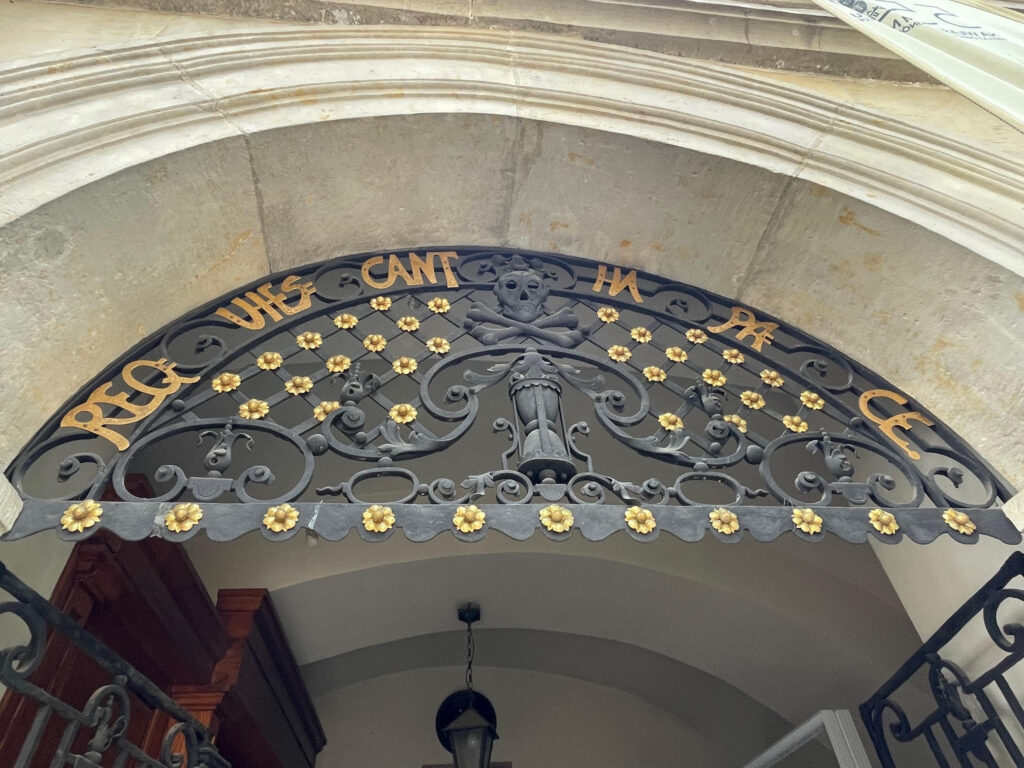
So here are some photos of the famous church, which the Poles call Na Skałka. It’s not Wawel, nor does it have the cosy familiarity of the Salwator district, but it has charms of its own. Photos courtesy of Alex E. Lessard, who sent them after a recent visit to beloved Kraków.

Good grief: on death, mourning, and unpredictability

July 12th, 2022
Share
“We do not ultimately recover from grief; if lucky, we merely at best are able to adjust to it.”

Grief is painful. We all know that. But Is there a “good grief”? Eminent essayist and man of letters Joseph Epstein discusses grief, theoretically and from personal experience, including the devastating loss of his son by opioid overdose, as well as departed relatives and friends in his essay, “Good Grief” in Commentary. Like him, I haven’t experienced the legendary “five states of grief,” which I see as an attempt to organize and manage grief, which is by its nature tormenting, chaotic, unpredictable.

Socrates argued that we should keep death foremost in our minds, and that our inevitable deaths will goad us to live better lives. “But no one has told us how to deal with the deaths of those we love or found important to our own lives. Or at least no one has done so convincingly,” he writes. A few excerpts:

Keepin’ it real.

Like death itself, grief is too manifold; it comes in too many forms to be satisfactorily captured by philosophy or psychology. How does one grieve a slow death by, say, cancer, ALS, Alzheimer’s, Parkinson’s; a quick death by heart attack, stroke, choking on food, car accident; death at the hands of a criminal, which in our day is often a random death; death at a person’s own hands by suicide; death in old age, middle age, childhood; death in war; yes, death by medicine tragically misapplied. Grief can take the form of anger, even rage, deep sorrow, confusion, relief; it can be long-lived, short-term, almost but never quite successfully avoided. The nature of grief is quite as highly variegated as its causes.

Grief, like the devil, is in the details. I have a good friend whose son committed suicide at age 41. A young man devoted to good works, he ended his life working for an international agency in central Africa. At his suicide, the only note he left was about what he called “this event” having nothing to do with his work. To this day, then, his father and other relatives do not know the reason for his taking his own life, which adds puzzlement to my friend’s grief, a puzzlement perhaps never to be solved.

***

But no one has told us how to deal with the deaths of those we love or found important to our own lives. Or at least no one has done so convincingly. The best-known attempt has been that of Elisabeth Kübler-Ross, a Swiss psychiatrist, in her 1969 book On Death and Dying and in her later book, written with David Kessler, On Grief and Grieving (2005). Kübler-Ross set out a five-stage model for grief: denial, anger, bargaining, depression, acceptance. Yet in my own experience of grieving, I went through none of these stages, which leads me to believe there is more to it than is dreamt of in any psychology yet devised.

Or, one might add, in any philosophy. In Grief, Michael Cholbi, who holds the chair in philosophy at the University of Edinburgh, informs us that philosophy has never taken up the subject of grieving in an earnest way. He attempts to make the positive case for grief: “The good in grief, I propose, is self-knowledge.” Cholbi defines grief as “an emotionally driven process of attention whose object is the relationship transformed by the death of another in whom one has invested one’s practical identity.” As for the term “practical identity,” it was coined by the American philosopher Christine Korsgaard, who writes that it is “a description under which you value yourself, a description under which you find your life to be worth living and your actions to be worth undertaking.” The value of grief, then, according to Cholbi, is that “it brings the vulnerability, and ultimate contingencies of our practical identities into stark relief” and, ideally, “culminates in our knowing better what we are doing with our lives.”

Did she get it right?

***

More recently Midge Decter, a dear friend, died at age 94. One cannot be shocked, or even surprised, by the death of someone who has attained her nineties, yet one can nonetheless feel the subtraction created by her absence. I loved to invoke her intelligent laughter, and it would never occur to me to attempt in any way to dupe her full-court-press savvy. One of the sad things about growing older is that one runs out of people to admire, as I admired Midge, for her good sense, her wit, her intellectual courage.

***

Cholbi, while allowing that grief is “perhaps the greatest stressor in life,” finds it neither a form of madness nor worthy of being medicalized, grief being neither a disease nor a disorder. He finds it instead part of “the human predicament,” a part that eludes even philosophical understanding. “We can grieve smarter,” he writes. “But ultimately, we cannot outsmart grief. Nor should we want to.” We do not ultimately recover from grief; if lucky, we merely at best are able to adjust to it.

Read the whole thing here.

Czesław Miłosz: A California Life: “Less a biography than an occasion for the deepest engagement with art and life. We need more books like this!”

July 2nd, 2022
Share

Scott Beauchamp weighed in on Czesław Miłosz: A California Life over the spring, and we couldn’t be more delighted, though we’re a bit late posting the excerpt. Scott Beauchamp is an editor for Landmarks, the journal of the Simone Weil Center for Political Philosophy. He’s interviewed me before, for Johns Hopkins University’s The Hub. We wrote about that here. From the Washington Examiner:

As one of Don DeLillo’s displaced East Coast professors says in the novel White Noise, “California deserves whatever it gets. Californians invented the concept of life-style. This alone warrants their doom.” California has always been a screen for America to project its feelings onto. Even its staggering natural violence, from mudslides to fires, earthquakes, and droughts, counterpoints to its reputation for perfect climate, are themselves incorporated into the larger narrative of acquisitive dreaming and libertine utopianism.

These are the basic components to the fantasy of California: the implacable otherness of nature mingling with the dreaming human mind at the edge of the continent. Within this melange, nature always seems to have the upper hand. Far from reducing art to frivolity, this relationship liberates it in some sense, like a small fish riding the wake of much larger and completely oblivious sharks. And so, while there may not be one single “California style” in literature and poetry, surely there’s a unifying spirit that relishes proximity to the serrated edge of things.

Cynthia Haven, celebrated author of 2018’s Evolution of Desire: A Life of Rene Girard as well as two previous books about Czesław Miłosz, brings this energy to bear in her latest work, A California Life: Czesław Miłosz. More daring and more rewarding than a straightforward biography of the self-exiled Polish poet, A California Life channels the tensions between Miłosz and his adoptive home and lets that friction energize the project. In other words, this is less about a poet and his life and more about how a brilliant artist and thinker steeped in Old World culture learned to exist in the amnesiac fog of California. …

Understanding this, though, is only the beginning of appreciating what a triumph A California Life really is. Haven gives us Miłosz in all of his specific granularity: the way he dotes on the deer visiting his home on Grizzly Peak in Berkeley, his relationships with students and other poets, his relationships with his children. But as the philosopher Jose Ortega y Gasset said, we are ourselves plus our circumstances. And in this book, Haven gives the circumstances a life equal to the human subject. There are too many beautiful passages to mention, but one that particularly stands out is when California wildfires are placed beside the destruction of Warsaw:

“We are choking on the air, which is filled with particles of everything that has burned so far. We inhale not only the blazing houses and stores and garages but also what’s in them, all this is toxic when airborne — asbestos in roofs and siding, car batteries, cadmium in television sets and mercury from old thermometers, detergents and cleaners, the contest of medicine cabinets, nail polish remover, paint thinner, light bulbs and electronics — all go up in the smoke plumes and fumes. We inhale the dead, too, with every breath we draw.”

This parallels, or perhaps rhymes, with the annihilation of Warsaw by the German engineers who were used to ensure total destruction. But it also in some sense captures the effect that Miłosz’s experiences had on his poetry. He didn’t simply write about the vanished buildings and people. He inhaled the dead and exhaled poetry.

A California Life is ultimately a book about relationships. Miłosz with California. Haven with Miłosz. Haven with California. California with the world. However, the sum is greater than the parts of this rich, knotted matrix. Some biographies succeeded by the biographed becoming translucent, by allowing us almost voyeuristic access to the subject. But in A California Life, Haven the biographer herself is intensely present, and necessarily so. When she includes her own experiences with Miłosz or moving to and living in California, it feels less like an intrusive aside and more like a quorum has finally been achieved. This book is less a biography than an occasion for the deepest engagement with art and life. We need more books like this.

Read the whole thing here.

My conscience is not your talking point.

June 26th, 2022
Share

None of your beeswax (Wikimedia)

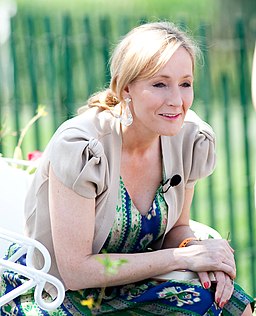
Of late, Twitter has become even more of a cesspool than usual. This morning, I noted that J.K. Rowlings, a children’s author, is obligated to explain herself and make announcements about her p.o.v. on Twitter. Twitter pundits say she “owes” that to us. In short, she “owes” us her opinion on any daily subject the mob chooses. She is not entitled to the privacy of her own thoughts.

We see it all the time, of course: famous people are asked to comment about matters far beyond their ken or even interest. Someone whose job is to imitate fictitious people onscreen is somehow expected to be a sagacious expert on the war in Ukraine, inflation, Constitutional law, or electoral politics.

Hence, Luke Burgis’s column, “Don’t Feed Your Conscience to the Dogs,” over at his website Anti-Mimetic, is vital reading: “We live in a society where people are forced to manifest their conscience on issues ranging from sexuality to geo-politics to abortion—even on whether or not they agree with someone else’s tweet—in real-time, and practically at gunpoint. The threat of ostracization, job loss, or public ridicule lurks behind the slightest deviation from the mimetic moral norm of the day.”

Luke is the author of Wanting: The Power of Mimetic Desire in Everyday Life, recently out with St. Martin’s Press. We wrote about it here.

His first job was an eye-opener

Luke learned the hard way, at his first job after college “when I dipped my toe into the investment banking waters (for what turned out to be less than a year, before moving to California and launching a company.) In our little investment banking ‘group’, the politics were particularly nasty. The junior people realized very quickly that senior bankers were trying to sniff out our degree of orthodoxy about everything from the president to clean energy (and this was 2004-5), and that there were professional consequences for saying the wrong thing.”

“As young and overly ambitious junior people, none of us wanted to be penalized for coming down on the wrong side of an issue just as we were starting our careers; we simply wanted to be evaluated based on our glorified-secretarial-duty merits.”

His time spent in a monastery formed much of his thinking, and he talks about that, too, in his column. However, he raises important questions, whatever your religious, political, or social persuasion.

He continues: “Learning to say ‘no’ can be difficult; learning to not reveal one’s conscience on every single issue that hits the news can be even harder, especially in a society where it is seen as good and noble to have a ‘take’ or a strong moral stance on practically everything…

“I developed responses ranging from ‘I don’t have anything to say about that’ to ‘no comment’ to much more ‘strongly’ worded statements that would help make boundaries clear. Why? Because in these situations, there was nothing to be gained by sharing my moral convictions about things that had absolutely nothing to do with my job. There was an asymmetry of outcome that would have made it idiotic to do so, and I realized right then that learning the skill of maintaining my silence at the appropriate times was a mark of maturity, not timidity or moral agnosticism. It simply means: ‘I choose not to share my conscience with you’ — period. Usually, that’s because I don’t trust the person to honor it and engage with me respectfully.

“I think back to those days because today I see a similar situation playing out in our culture. People are baited and coaxed into revealing things to people who have no goodwill toward them at all, and who may even seek to harm them. Yet most people will have never heard anything resembling the norms developed around ‘manifesting one’s conscience’ that I found buried in those monastic rules, and I think that is a tragedy.”

In conclusion:

“We should not let our monoculture to become a monoconscience; we should fight to erect healthy boundaries around our conscience while also respecting the boundaries of others. And we must understand that nobody should be forced, or ever expected, to manifest their innermost thoughts. These moral convictions are often the fruit of hours, if not years, of careful consideration and grappling—so why throw them to the proverbial dogs who will make our innermost beliefs into memes and soundbites that scarcely represent them at all, and may even deliberately misrepresent them?”

Read the whole thing here. Please.


<<< Previous Series of PostssepNext Series of Posts >>>