What’s wrong with the humanities today? Ask Yvor Winters.

August 16th, 2013
Share
yvor-winters-1

Disciplined.

For Yvor Winters, literature was not mystical indulgence, but a spiritual discipline.  He insisted that “hedonism” was the death of literature and the human being.

James Matthew Wilson offers an interesting introduction to Stanford’s poet-critic (hat tip to Frank Wilson over at Books Inq).

What’s wrong with the humanities?  Winters thought we might start with some of the professors:

A poet and literature critic, Winters ordered his moral and intellectual life to accord with the spiritual discipline of literature. “It behooves us to discover the nature of artistic literature, what it does, how it does it, and how one may evaluate it. It is one of the facts of life, and quite as important a fact as atomic fission,” he writes in the foreword to his greatest prose book, In Defense of Reason.  One will get no help in making this discovery from the typical literature professor, he warned, for they are all hedonists and romantics, “with the result that the professors of literature, who for the most part are genteel but mediocre men, can make but a poor defense of their profession.”

A doctoral student and then professor of English at Stanford, Winters knew and loathed these men. Against their insouciant relativism, which took for granted that one could enjoy pernicious and self-destructive ideas without being affected by them, Winters held up the suicide of the poet Hart Crane as one of many instances where someone died precisely because he had attempted to live according to bad ideas—in Crane’s case, the irrational romantic mysticism of Emerson and Whitman. Winters’s writing gives voice to a theory of literature that cultivates reason and cordons off the soul from the disintegrating effects of emotion, thereby enabling one to live well in the world.

According to Wilson, “Winters defended the liberal arts against the shoddy emotionalism and politicization of his age, and he provides a model for how to do so in ours.”

Read the whole thing here.

Gunfire and tear gas in Alexandria: Remembering a Greek poet in old city

August 15th, 2013
Share
alexandria3

2011: civilization, in a nutshell.

Once again, the news from Egypt is alarming and violent.  The disorder has approached a city dear to me, Alexandria, thus extending the violence that has already killed hundreds in Cairo. The past has been kinder to Alexandria than the present; it’s not clear that a city that survived centuries will be able to survive modern weaponry and warfare.  Two years ago, a human chain protected the rebuilt Library of Alexandria from mayhem – I wrote about it here and here.  I wonder if the future will prove this ambitious and visionary effort to be Babel-like.

I love the old capital, not only the heart of an empire and the center of world learning, but also home to Constantine Cavafy.  As I wrote a dozen years ago for the Los Angeles Times:

I had occasion recently to visit Cavafy’s Alexandria, to wander the western side of the city, past street side hawkers, vegetable and fruit carts drawn by donkeys, heaps of garbage that filled gutters and potholes and strings of the faded laundry hanging over the chipped and peeling 19th century facades. Ducking into an unpromising doorway in a dirty side street, I came to 4 Sharm el Sheikh, formerly Rue Lepsius, Cavafy’s home for the last 25 years of his life, now a museum.

Cavafy nicknamed this street “Rue Clapsius”: In his time, a brothel occupied the lowest floor of this four-story building. Step outside on his tiny balcony, into the sudden sunlight from the dark interior of his apartment, and you will see the same sight that greeted Cavafy daily: the rooftop of white St. Sabia, surmounted by a cross, perhaps a block or two away to the right; and, apparently equidistant to the left, the grim rectangular lines of the Greek hospital. Cavafy was hospitalized in the latter during his final months; his funeral was held in the former. Cavafy called them “Temple of the Body” and “Temple of the Soul” and called the nearby bordellos of the Attarin district, the third apex of his Trinity, “Temple of the Flesh.”

Thermopyles

“Honor to those who in the life they lead define and guard a Thermopylae…”

“Where could I live better?” he asked. It was a small world, a claustrophobic life.

Even this small world has been rendered more precarious by the unpleasant tug-of-war that has enveloped the museum’s history of the Greek community, whose roots go back to the city’s founding by Alexander the Great. About 132,000 Greeks lived here in Cavafy’s time; that number has dwindled to a tenacious 500. Thanks to Nasser’s program of land reform and the nationalization of banks and industries, the majority “returned” to Greece, abandoning this once-European city.

You can read the rest here.  I had only a week in Egypt, and most of it was closer to Cairo.  My brief stay in Alexandria was made memorable – and really, possible – by an elderly Egyptian friend Mohsen, who had fought the British occupation for independence.  He guided me through both cities, showing me the chic restaurant with its forgotten hiding places for the Egyptian patriots, negotiating the streets and public transportation with me, and arguing with the museum guardians to make sure Cavafy’s home would be open to us (it seems to be keeping more regular hours at present, according to its  website).

I wonder what will happen to the tiny museum now, the home of the greatest Egyptian poet of modern times – he wrote in Greek, in an Arabic-speaking country, he was Orthodox in a Muslim nation, and wildly, guiltily gay.  Demonstrators are already torching the churches. What happens when a people do not value their own civilization?

What I remember about Alexandria now, most of all,  is the ever-present and eternal Mediterranean, the raison d’etre for this remarkable city.  It will remain even if the city is burned to the ground.

You will find no new lands, you will find no other seas.
The city will follow you. You will roam the same
streets. And you will age in the same neighborhoods;
and you will grow gray in these same houses. …

Alexandria3

What I remember most … (Photo by Moushira)

Seth Abramson dons “Kick me!” sign; makes list of top 200 advocates for poetry.

August 14th, 2013
Share
Jane-Hirshfield

Jane made the cut.

Seth Abramson is an intrepid man in a country that publishes 20,000 books of poetry each decade, among 75,000 poets (who counts them, and how?) Here’s why: he has issued a list of “The Top 200 Advocates for Poetry (2013)” in the Huffington Post – it’s here, as well as on dartboards across the U.S.  We all love lists, of course, and everyone has an opinion on how they should be done – this one, particularly.  Two hundred is long enough to give the impression that everyone ought to be included, but short enough that not everyone can be. So Abramson’s gesture is akin to wearing a “Kick me!” sign on your back. He begins by almost apologizing: “The poets favored by one reader will invariably not be the poets favored by another; in fact, it’s getting harder and harder to find two readers whose reading interests or even reading lists exhibit much overlap at all. Too many such lists, such as the widely- and justly-panned one recently published by Flavorwire, exhibit obvious age, race, ethnicity, and (particularly) geographic biases.”  We would like to fault him, first of all, for hyphening an adverb that ends in “ly,” which is never done – moreover, it’s dangerous to begin a list by dissing someone else’s. In that way, you’ve made your first enemy already.

Wilbur2

Lifetime achievement, for sure.

He continues for some paragraphs in the same vein: “As a contemporary poetry reviewer who publishes his review-essays in The Huffington Post, I have no special access to knowledge of who is or isn’t doing the most to be an advocate for American poetry (a term I define very broadly) on a national or global scale. While I’m lucky to have access to many more published poetry collections than most poets or poetry readers do, as like any reviewer I regularly receive poetry collections in the mail from U.S. and international publishers, because the list below isn’t intended to detail who’s presently writing the best poetry, but is rather simply a list of who’s doing the best to advocate for American poetry by any and all means (including by writing it, but by no means limited to the authorial function), I’m not in a much better position than others are to generate a list of the most influential poetry advocates in America and beyond.”

Well, sure, I guess.  That said, we were pleased to see a number of friends and colleagues on the list – Kay Ryan, Jane Hirshfield,  W.S. Merwin, Don Share, Ron Silliman, Helen Vendler, Heather McHugh, Allison Joseph, Eavan Boland, Mark McGurl – and nonagenarian Richard Wilbur, a lifetime achievement award, for sure.

hirsch

Where’s Ed?

Abramson qualifies that “the list below is neither exhaustive nor authoritative nor superlative. I have no doubt that I’ve missed a number of important names, due either to forgetfulness or an unconscious bias or simply (and most likely) sheer ignorance of who’s doing what across the vast landscape of American literature. … Those poets and allies of poetry offering contributions to American poetry commensurate with the contributions of the individuals listed below should therefore consider themselves honorary members of the ‘Top 200 Advocates for American Poetry” list as well.’

RSGWYNNThen he issued this invitation: “I strongly encourage readers of this list to contribute their own names to the comment section below the article.”  Needless to say, there were a number of people ready to take him up on the offer, including other friends’ names.  What?  No Edward Hirsch?  What?  No Robert Hass?  And no mention of Dana Gioia, whose work at the NEA was tireless?

Naturally, Humble Moi didn’t make the list – but to my surprise, I did make it in the first few comments in the section afterward, for which I’m grateful to R.S. Gwynn, another friend, who did make the list:

“I’m happy to be listed here (even though I’d like to be known as ‘poet and critic’) but I miss the presence of such names as Alfred Corn, the late Tom Disch, Dana Gioia, Cynthia Haven, X. J. Kennedy, and David Mason, all of whom are (or were in Tom’s case) great advocates.

As a small plug, I’d like to mention that I edited a book of the works of modernist poet-critics some years ago. Its title?  The Advocates of Poetry.

Just for that, here’s a picture of Sam Gwynn’s book, which discusses John Crowe Ransom, Randall Jarrell, Allen Tate, John Ciardi, and Robert Penn Warren – great advocates of poetry all.


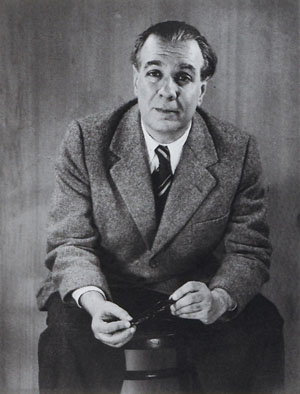
Borges in the classroom – from Beowulf to Blake

August 12th, 2013
Share

borges

When Jorge Luis Borges taught English at the University of Buenos Aires, he delivered his lectures off the cuff.   It was a “you had to be there” situation – until now.  Students have offered their tapes of the lectures, and editors reconstructed the course. Voilà! Twenty-five lectures, all from 1966, have been published in Professor Borges: A Course on English Literature.

According to Publishers Weekly:

“This mesmerizing volume preserves the eclectic, erudite, and charismatic style of Argentine writer Borges … Borges moves effortlessly between subjects, almost overloading the senses with facts, digressions, and interpretations. While the lectures are not all equally compelling, there is enough here to keep the reader moving forward, and Borges’s delight and passion for every author shines brightly. As the afterword explains: ‘What Borges tries to do as a professor, more than prepare his students for exams, is excite and entice them to read the works and discover the authors.’ Over 40 years later, he is still achieving that goal.”

Here’s Borges speaking on “the Wolf” and William Blake:

Borges2

No notes, no teleprompter, no nuthin.

On Beowulf –

The name in itself is a metaphor that means “bee-wolf,” in other words “bear.” It is truly a long poem: it contains a little fewer than 3,200 lines, all of which follow the law of Germanic versification: alliteration. Its language is intricate; it makes constant use of what is called “hyper-baton,” that is, the alteration of the logical sequence of words in a sentence…. It was previously believed that the style of Beowulf belonged to a primitive, barbaric stage of poetic creation. Subsequently, however, a Germanist discovered that lines from the Aeneid were woven into the poem, and that elsewhere, passages from that epic poem were brought in, then interspersed in the text. Hence, we have realized that we are not dealing with a barbaric poem, but rather with the erudite, baroque experiment of a priest, that is, someone who had access to Latin texts, and who studied them…. The Germanist [Neil] Ker has criticized Beowulf, for he considers the plot to be childish.4 The idea of the hero who kills an ogre, that ogre’s mother, and then a dragon, belongs to a children’s tale. But these elements are, in fact, inevitable; they are there because they must be. Once he chose that legend, the author could not possibly omit the ogre, the witch, or the dragon. The public expected them, because it knew the legend. Moreover, these monsters were symbols of the powers of evil; they were taken very seriously by that audience.

On William Blake – 

William_Blake_by_1804

A Swedenborg fan, for sure.

William Blake, on the contrary, remains not only outside the pseudo-classic school (to use the most elevated term), and that is the school represented by [Alexander] Pope, but he also remains outside the romantic movement. He is an individual poet, and if there is anything we can connect him to—for, as Rubén Darío said, there is no literary Adam—we would have to connect him to much more ancient traditions: to the Cathar heretics in the south of France, the Gnostics in Asia Minor and Alexandria in the first century after Christ, and of course to the great and visionary Swedish thinker, Emmanuel Swedenborg. Because Blake was an isolated individual, his contemporaries considered him a bit mad, and perhaps he was. He was a visionary—as Swedenborg had been, of course—and his works circulated very little during his lifetime. Moreover, he was better known as an engraver and a draftsman than as a writer…. Blake’s work is extraordinarily difficult to read because he created a theological system. In order to express it, he had the idea of inventing a mythology, and critics don’t agree on what it means. There is a poem by Blake—it is included in all the anthologies—where this problem is expressed, but of course is not resolved…. In Songs of Experience, Blake deals directly with the problem of evil, and he symbolizes it, in the manner of the bestiaries of the Middle Ages, as a tiger. The poem, which consists of five or six stanzas, is called “The Tyger,” and was illustrated by the author.

Read more excerpts here.

Revisiting Yalta with Milan Kundera, Czesław Miłosz: “We are living in the era of propaganda.”

August 11th, 2013
Share

miloszEvery time I pick up Czesław Miłosz: Conversations I run into something terrific I’d swear I hadn’t read before.  I have performed a great service in the world – let me pat myself on the back.  (There, I’m done now).

A week or so ago, I wrote about Yalta, where the major postwar powers divvied up Europe, forking over the east to the tender care of Joseph Stalin. Then I ran across this passage while looking for another for something I was writing.  As so often happens, Miłosz throws a new light on an old matter.  So does Kundera.

From 1986 New Perspectives Quarterly, later excerpted and republished in the New York Review of Books:

Nathan Gardels:  Many Latin American writers argue that there is a great similarity between the U.S. war on Nicaragua and the Soviet war on the people of Afghanistan.  Eastern European writers, Milan Kundera, for example, seem to have a different view.  “When it comes to the misfortunes of nations,” Kundera has written, “we must not forget the dimension of time. In a fascist dictatorial state, everyone knows that it will end one day. Everyone looks to the end of the tunnel.  In the empire to the East, the tunnel is without end, at least from the point of view of human life. This is why I don’t like it when people compare Poland with, say, Chile.  Yes, the torture and the suffering are the same, but the tunnels are of very different lengths. And this changes everything.”

Do you agree with Kundera? Is this also your perspective?

lemonCzesław Miłosz: Yes, yet I feel there is more to be said. Correct reasoning and realistic appraisal are very important. Moral issues are, of course, largely the result of sentimental propaganda. We are living in the era of propaganda.  A basic difference between the various social structures shouldn’t be underestimated. You shouldn’t put on the same scale of balance organisms which are completely different.  You cannot compare a lemon and a triangle.  They don’t belong to the same realm.

In Western thinking, parallelism has a very long tradition. I believe that the plan of division of the world between American and the Soviet Union, of which Europe is a victim today because Europe as a unit is destroyed by division, was due to a large extent to this parallel thinking.

triangleThe problem should be put in terms of certain acquisitions of civilization which risk being lost. For instance, I feel that a division of powers into legislative, executive, and judiciary is a basic acquisition of civilization. There is no reason to be ashamed of such an acquisition which some call “bourgeois democracy”; the worst can be withstood if this division is maintained.

So, the onslaught of the totalitarian state is just a kind of illness.  Of course, whether one cooperates and coexists with illness is a practical consideration. But to compare the two systems on a purely moral basis, that is completely wrong!

Yalta_summit_1945_with_Churchill,_Roosevelt,_Stalin

“When it comes to the misfortunes of nations, we must not forget the dimension of time.”

“Brave choices” for Japanese women: megastar Agnes Chan speaks at Stanford

August 10th, 2013
Share
chan5

She won.

Marissa Mayer at Yahoo? Sheryl Sandberg at Facebook? It’s nothing compared to what women face in Japan, trying to juggle home and family.  Ask Agnes Chan.

I’ve known the Asian powerhouse for a quarter-century now (I’ve written about her here and here and here, among other places).  I usually describe her to my friends as a Chinese rock star from Tokyo, but she’s much more than that – for example, she’s Japan’s very successful UNICEF ambassador, in addition to a singer-songwriter, a television personality and host, a newspaper and magazine columnist, a lecturer, a professor, and the author of sixty-or-so  books (I lose count).  More recently, she’s been battling international child pornography and trafficking as she continues her worldwide charity missions.  She began as a refugee from mainland China, and has known charity from both sides: her large family accepted powdered milk and rice from the missions. While still a schoolgirl at the Maryknoll Convent School in Hong Kong, she was picked out for pop star fame at 14.  She relocated to Japan a few years later, and married her manager.  As I wrote some years ago:

It was her starring role in the “Agnes controversy,” though, that earned her the most fame—and a measure of infamy. The episode erupted in February 1988, about three months after the birth of her first child. Chan, by then a celebrity with a half-dozen regular TV gigs, began bringing her son and a nanny to the television studio so she could nurse the baby in her dressing room. The arrangement enraged Japanese conservatives, who thought Chan should stay at home with her son. Feminists turned on her, too, accusing her of presuming to speak for working women who didn’t have the same economic advantages.

The outcry, which sparked a national debate about work and family, was the 32-year-old Chan’s first taste of public disapproval. Devastated, she found herself re-evaluating her life and career. “Normally, public figures who are women would not be so public about having children so they could avoid damaging their ‘image,’ ” Chan says in her soft, slightly lilting English. “I was very open about it.” A compilation of news accounts about the episode, Reading the Agnes Controversy, sold 100,000 copies in its first three months.

Chan decided the best way to cope with the crisis would be to learn more about the job-family conflicts working mothers faced. Her brother-in-law, a Hong Kong cardiologist, called a colleague at Stanford to ask if his friend knew anyone on campus studying such issues. That’s how Chan ended up having a half-hour transpacific telephone chat in January 1989 with [Stanford economist Myra]  Strober, who had recently published her findings on the work and family choices of members of Stanford’s Class of ’81.

chan3

Half of Myra, half of Agnes…

That’s where we met.  She revisited Stanford last month for the annual conference of the International Association of Feminist Economics, and recalled the kerfuffle of the 1980s, before she came for a PhD from Stanford.  “The pebble I threw into the pond rippled throughout Japan and facilitated the passing of the Equal Chance employment law for men and women and later the right to take time off after childbirth for parents.”

Despite Japan’s crashing demographics, not many women are taking advantage of the new opportunities.  Agnes said that more than 70 percent of women with jobs continue to work after marriage, but with the birth of their first child, only about a third continue to work. After the second child, slightly less than a quarter, and among women with three children, only about 13 percent.  Women do about 84.3 percent of the housework, including child rearing, cooking, and cleaning. That’s less then men in any other developed country.  Japan ranks 101st in gender equality among 135 countries surveyed by the World Economic Forum’s Global Gender Gap Report last year.  When women view having children as the end of their careers, as well as an economic hit on their household, not having children at all becomes a more appealing option.

Japan’s Prime Minister Abe has made women’s increased participation in society a pillar in Japan’s economic recovery plan – however, says Agnes, “Political will by itself will not be sufficient … There will need to be affirmative action, with goals and timetables, and penalties for failure.” Any success on the horizon?  Yes, says Agnes, “a growing realization that Japan cannot survive without women working at the work place and giving birth to children.”

.
“So that brings me back to the ‘Agnes Controversy.’ I raised three children and stayed working. When my eldest son turned 20 years old, coming of age in Japan, a prominent journalist in Japan publicly apologized to me for being anti-Agnes during the controversy.  Continuing to work and also giving birth are now seen more as brave choices rather than selfish acts.  After 26 years, more people believe that successful and powerful women with children should not be seen as intimidating, but as inspiration.

The “Agnes Controversy” was made more immediate to those in the room by the Agnes’ tech assistant for the morning – none other than the former baby-in-question, Arthur Kaneko, now working in the world of finance.  Arthur towers over his elegantly delicate mother, and clearly out-maneuvers her in technology.  But he’ll never out-maneuver her in fashion. Agnes’s trendy, whimsical white suit with transparent sleeves, a rhinestone watch fob, and a ruffled tuxedo-like shirt was a showstopper.   He confided to me that it was “among the more muted choices” in the Shibuya emporium where she shops in Tokyo.


<<< Previous Series of PostssepNext Series of Posts >>>