Eth, thorn, and ash: they flunked the screen test for our alphabet

August 27th, 2013

Share

Clapboard (clapperboard) isolatedEver wonder why we use the same letters “th” for the “this” and “thin”?  It is not always so in foreign languages – and didn’t have to be in ours. The answer is in the “eth”:

 eth“Originating from Irish, it was meant to represent a slightly different pronunciation of the “th” sound, more like that in ‘thought’ or ‘thing’ as opposed to the one found in ‘this’ or ‘them.’ (The first is the voiceless dental fricative, the second is the voiced dental fricative).

“Note that, depending on your regional accent, there may not be much of a difference (or any at all) in the two pronunciations anyway, but that’s Modern English. Back in the old days, the difference was much more distinct. As such, you’d often see texts with both eth and thorn depending on the required pronunciation. Before too long, however, people just began using thorn for both (and later ‘th’) and so eth slowly became unnecessary.”

The sad story is that this most useful letter didn’t make it into the final cut for our 26-letter alphabet.  The other far-flung rejects come from Iceland, Rome, and elsewhere.  A must-read over at mental floss features a few more.

Here are a couple favorites:

thornHave you ever seen a place that calls itself “ye olde whatever”? As it happens, that’s not a “y”, or, at least, it wasn’t supposed to be. Originally, it was an entirely different letter called thorn, which derived from the Old English runic alphabet, Futhark.

Thorn, which was pronounced exactly like the “th” in its name, is actually still around today in Icelandic. We replaced it with “th” over time—thorn fell out of use because Gothic-style scripting made the letters y and thorn look practically identical. And, since French printing presses didn’t have thorn anyway, it just became common to replace it with a y. Hence naming things like, “Ye Olde Magazine of Interesting Facts” (just as an example, of course).

And here’s the old familiar “ash,” as in Cæsar.

ashYou’re probably familiar with this guy from old-fashioned Greek or Roman style text, especially the kind found in churches. It’s even still used stylistically in words today, like æther and æon.

What you may not know, however, is that at one time the ae grapheme (as it’s now known) was an honorary English letter back in the days of Old English. It still had the same pronunciation and everything, it was just considered to be part of the alphabet and called “æsc” or “ash”after the ash Futhark rune, for which it was used as a substitute when transcribing into Latin

Read the rest over at mentalfloss here.  Anyone up for a revival?

A useful update from the University of Michigan’s John Lawler:
lawlerEth/Edh (ð) and ash (æ) are letters in the International Phonetic Alphabet, and also frequently-used phonemic symbols for English. Thorn never made it, however — the IPA and English phonemic symbol for voiceless interdental fricative is Greek theta (θ); ð is voiced, θ is voiceless. In most Middle English dialects, there was little or no phonemic distinction between voiced and voiceless TH; this was true of fricatives in general. But a multitude of changes brought distinctions between /s/ and /z/, /f/ and /v/, and inevitably /θ/ and /ð/. Though there are only two known minimal pairs for the /θ/-/ð/ distinction: ether (θ) vs either (ð), and thigh θ) vs thy (ð). This means that there’s very little “functional load” in the distinction, and that’s why we can get away with spelling them both the same way. Most people don’t even notice such differences until they collide with something.

For Beckett, this is what a “happy” play looks like…

August 24th, 2013
Share
courtney

Courtney Walsh as Winnie … I’d go into a tunnel, too.

After Samuel Beckett wrote his play KrappMaureen Cusack, wife of the leading actor Cyril Cusack, suggested that he “write a  happy play.”  Happy Days is the Irish playwright’s idea of a happy play.  “But what is the play about?” Stanford Summer Theater Artistic Director Rush Rehm asks.  “A marriage?  The onslaught of old age and physical limitation? The strength of a female psyche in the face of the inevitable?  The humor (and hell) of habit?”

cluchey

“Krapp” … definitely not a happy play

Come to the Nitery for the final performance tomorrow afternoon.  Or rather don’t come, because the tickets are gone.  Or rather do come, and take your chances – doors shut promptly at 2 p.m., and no latecomers are seated, so that provides a few unexpected opportunities.  There were a few empty seats around me today.

In any case, here’s the story, in Rush’s words: “Winnie finds herself buried to her waist in a mound of earth, but she carries on with irrepressible energy, winning zest, and that ‘deriding smile’ for which Beckett is famous.”  Spoiler:  By Act II, she’s up to her neck. Her husband Willie grunts, hacks, harrumphs, and eventually emerges (in Act II) from behind the mound of sand.  Not much to go on, yes?  Here’s what Beckett thought it was about, as related by Brenda Bruce, the first Winnie in 1962:

He said: “Well I thought that the most dreadful thing that could happen to anybody, would be not to be allowed to sleep so that just as you’re dropping off there’s be a ‘Dong’ and you’d have to keep awake; you’re sinking into the ground alive and it’s full of ants; and the sun is shining endlessly day and night and there is not a tree … there’s no shade, nothing, and that bell wakes you up all the time and all you’ve got is a little parcel of things to see you through life.” He was referring to the life of the modern woman. Then he said: “And I thought who would cope with that and go down singing, only a woman.”

When the play was performed in 1962, critic Kenneth Tynan wrote that it was “a metaphor extended beyond its capacity” – then urged his readers to buy tickets.

Courtney Walsh‘s 80-minute uninterrupted monologue – uninterrupted except for a few brief interruptions from Don DeMico’s “Willie” – is a tour-de-force, a restless, chirpy show of indefatigable brightness that would drive just about any thoughtful, introspective soul into a tunnel.  Rush rightly calls it “the Mt. Everest of female roles,” so it’s perhaps the most impressive achievement of her long association with Stanford Summer Theater.

UPDATE:  For the official wait list go here.

Cyril_Cusack

Maureen’s hubby

UPDATE on 4/2/2014:  Sometimes an error produces interesting mail.  We received this email from Paul Cusack:

Firstly, I suspect that S. Beckett would have been amused by the mis-conjugation, my mother was not his wife! My father Cyril was my mother’s wife. I was there, in Paris in 1960, aged 14, when my father played Krapp at the Theatre des Nations and won Critics Award Best Actor. I was not allowed to see it. It was then, that my mum said, ‘Sam, would you ever write a happy play?’.

I am told, that around about the same time, Sam asked my father what he thought of Krapp, and he said, ‘I think it is a load of Protestant guilt’, to which (I imagine after a ‘significant’ pause) Sam responded, ‘I think you’re probably right!’

Thanks for the correction.

Marilyn Yalom is having a good year – and so is How the French Invented Love

August 23rd, 2013
Share

yalomMarilyn Yalom, author of How the French Invented Love, dropped me a line to tell me her book has been noticed in high places (read more about it here and here and here).

She’s just been nominated for a Phi Beta Kappa Society Christian Gauss Award, which carries a $10,000 prize.  The prize is offered for literary scholarship or criticism.

The other nominated books are are:  Charles Dickens and ‘Boz’: The Birth of the Industrial-Age Author, by Robert L. Patten; Jane Austen’s Cults and Cultures, by Claudia L. Johnson; The Long and Short of it: From Aphorism to Novel, by Gary Saul Morson; and The Worlds of Langston Hughes: Modernism and the Translation in the Americas, by Vera M. Kutzinski.

how-the-french-invented-lovePrevious award winners have included books written by eminent authors such as Harold Bloom, Christopher Benfey, and Marjorie Garber.

That’s in addition to the earlier news that she’s been nominated for the American Library in Paris Book Award, given to the best book of the year in English about France or the French-American encounter.  The 2013 book award jury is high-powered:  Diane Johnson, Adam Gopnik, and Julian Barnes.

The winner of the award receives a prize of $5,000. But this may be the best part: the winner is invited to Paris, with air travel and accommodation at the Library’s expense, for an award ceremony on and a public reading.

Both awards will be announced in October.  It will be an interesting month.  Stay tuned.

Krzysztof Michalski: “without death – there is no me.”

August 22nd, 2013
Share
Fan of the Andrews Sisters

We miss him.

I finally bought a copy of Krzysztof Michalski‘s The Flame of Eternity: An Interpretation of Nietzsche’s Thought.  I carefully re-marked, lightly in pencil, the passages I had noted in my borrowed library book.  Michalski was a leading European thinker and founder of the Institut für die Wissenschaften vom Menschen, where I was a fellow (I wrote about him here).  He died in February, at 64.  His reflections on death provide some stunning passages in the book:

Death touches me differently, more radically and imperceptibly, than any other relation or relationship: it touches me not as a specimen of my species, nor as a member of my society, nor as a representative of some profession, but me as me alone, the me who this time cannot be replaced by anyone else, for no one else can die in my place.  Death is closer to me than any character trait or any momentary characterization, it is more mine than the person I love most or my most important task.  Without it – without death – there is no me.  Death defines me: me, an unrepeatable individual, and not merely a particular case of something.  It is only this prospect of death that makes the life I am living my own. …

michalski2If the confrontation with death characterizes my life every day and not just on occasion, then every moment of that life – and not just the very last one – contains some trace of it.  Death is not merely one of many – the most important – moments in my life, merely one of many events.  No moment, no instant of my life, is comprehensible without the relation to death concealed within it, without the relation to the nothingness of the world, without the negation of everything that is familiar, of everything comprehensible.  The possibility of the end of the world, the Apocalypse, is inscribed in every moment, in each individual instant of my life.  This possibility severs the continuity of my time; time is no longer the diligent accumulation of meaning, the gradual construction of identity, morning to night, Sunday to Saturday.  Between morning and night, today and tomorrow, between ‘now’ and ‘in a minute,’ the bottomless abyss of nothingness opens wide, the end of everything I know, of everything I can know, of everything I can rely on. …

simone-weil

Miss her, too

Reading every moment of my life with the possibility of nothingness, thereby introducing a radical, irreparable discontinuity, the prospect of death, by the same token, opens my life to something entirely new, to the possibility of an entirely new form of life…. On the other side of the fissure my identity up to now is just ashes, and the ‘I’ that I know becomes a dead letter.

Thus the prayer of Simone Weil: ‘Father, tear this body and this soul away from me, to make of them your things, and let nothing remain of me eternally but that tearing-away itself.’

Leopardi’s notebooks and his “ongoing conversation with the dead.”

August 19th, 2013
Share
harrison

Robert Harrison as DJ (Photo: L.A. Cicero)

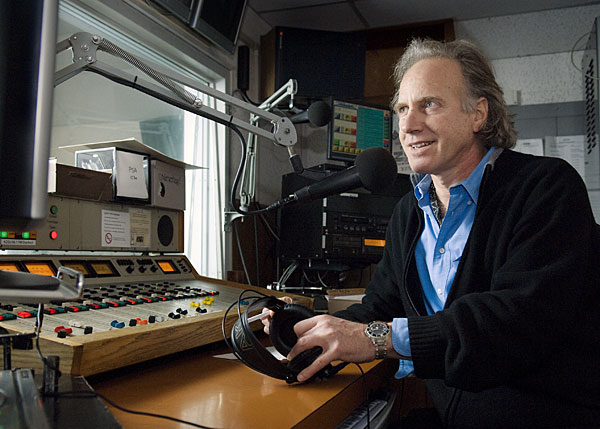
Poet Giacomo Leopardi (1798-1837) is too little known in the U.S., so I read with pleasure about the Farrar, Straus & Giroux publication of Zibaldone: The Notebooks of Leopardi, the 2,600-page edition of his complete notebooks.   It will be some time before I can get around to the work itself, so I have to content myself with Robert Pogue Harrison‘s review over at the Financial Times here.  We’ve written about Robert, the radio host for Entitled Opinions, here and here, among other places.  He’s one of the most interesting writers at Stanford.

In his words, Zibaldone “is as important as the Notebooks of Coleridge, the Journals of Emerson, the Diaries of Kierkegaard, and the posthumous notes of Friedrich Nietzsche, first made available to the public under the title The Will to Power.”  It’s not hard to see why.  He continues:

“Almost all of the 4,500 handwritten pages that make up the Zibaldone were scribbled in Recanati, a small hill town in the provincial Papal state of Le Marche, far from the intellectual centres of Italy and Europe. Here Giacomo – the prodigiously gifted but sickly son of Count Monaldo Leopardi – spent his youth and early adulthood poring over books in many languages, ancient and modern, in his father’s immense library, one of the largest private libraries in Europe. Friendless, starved for affection, forbidden to leave the family castle without his tutor, Giacomo developed a large hunch in his back and by 21 gave up any hope of personal happiness. (He finally managed to leave home in his late twenties, eventually moving to Naples, where he died during a cholera epidemic at age 38.)

In his darkest and most desolate years in Recanati, above all between 1819 and 1823, Leopardi held on to his sanity by filling his notebooks with carefully considered entries on a wide range of topics. The Zibaldone is not a personal diary. One does not find in its pages a howling heart, nor an outpouring of pain, grief and despair (Leopardi reserved that for his poetry). One finds instead a lucid mind thinking aloud by way of an ongoing conversation with the dead, above all the many ancient authors who stacked the family library.”

Leopardi

Not a happy camper.

One quarrel I’d pick with both Leopardi and Robert: “Except for moments of childhood wonder, a modern person does not possess the ancients’ natural sentiments, their capacity to believe in deities, their embrace of illusions, or their devotion to heroic ideals. Leopardi considered the triumph of reason in the modern age something of a disaster, not because he was a Romantic who exalted spontaneity, intuition and passion, but because he believed that ‘man can only live by religion or by illusions’, which reason makes it difficult, if not impossible, to believe in. If science and reason ‘force us to give up all our illusions’, he writes, ‘and have constantly before our eyes, with no escape, the pure, naked truth, there will be nothing left of the human race but the bones.’”  Well, maybe.  But it seems to me science brings in a lot of illusions of its own – the first being that science can and will provide us with all the answers. I’ve seen as many people superstitious about science (the phobia about germs, for example) as any medieval villager, and as trusting of the expertise of fallible scientists as an aborigine with local shamans.

Robert writes, “He believed furthermore that the modern age, despite its self-deception on this score, has only one veritable religion, namely the pursuit of truth at all costs, regardless of the consequences. The consequences are grave indeed, for the pursuit of truth dispels our life-enhancing illusions and destroys every higher ‘value’ that makes life worth living. The will-to-truth ends up casting humankind into a universe with no overseeing God, no ultimate purpose, and no concern whatsoever for the unspeakable suffering to which it condemns its inhabitants, ‘not only individuals, but species, genera, realms, spheres, systems, worlds’, as Leopardi puts it in one of his entries.” But this is rather loading the dice.  It presupposes what the end of “truth” will be, and that it will confirm our fashionable nihilism.  I’ll throw my money on the opposite bet.  I’ll vote with old Thomas Aquinas who wrote that “All the efforts of the human mind cannot exhaust the essence of a single fly.”

Leopardi wrote, “What is certain and no laughing matter is that existence is an evil for all the parts which make up the universe.”  But evil as defined by … what?  From what vantage point or intelligence?

Robert returns to a theme he articulated at a 2010 conference at Stanford when he writes, “Thinking may be a solitary activity, yet as Hannah Arendt claimed, it begins with the dialogue I hold with myself, inside my own head. If I cannot dialogue with myself, I will not be able to engage thoughtfully with others, either in speech or in writing. The reader of the Zibaldone often gets a sense that Leopardi is addressing him or her directly, yet in truth, when a thinker is in dialogue with himself, he is in dialogue with the world at large.”

flyHere’s what he said at the conference on the German-Jewish thinker, from my article at the time:

Stanford professor Robert Harrison, chair of the Department of French and Italian, made the conference’s most spirited address in a talk on “passionate thinking.” He considered Arendt’s notion of friendship and thought as rooted in solitude and the ability to commune with oneself – that “plurality begins with the individual.”

The “overwhelming question” in the humanities, he said, is “How do we negotiate the necessity of solitude as a precondition for thought?”

“What do we do to foster the regeneration of thinking? Nothing. At least not institutionally,” he said. “Not only in the university, but in society at large, everything conspires to invade the solitude of thought. It has as much to do with technology as it does with ideology. There is a not a place we go where we are not connected to the collective.

“Every place of silence is invaded by noise. Everywhere we see the ravages of this on our thinking. The ability for sustained, coherent, consistent thought is becoming rare” in the “thoughtlessness of the age.”

Well, you can read the rest of that here.

Traveling in good company …

August 18th, 2013
Share

adamsbookI just returned at 12.30 a.m. from a memorial service in the Sierra Nevada foothills – four hours hard driving each way, in a single day.  On the way out of  the house, I grabbed a stack of CDs… I know, I know. Old technology.  Now you have to spray the sound directly into your brain, or something.

In case I arrived at my destination early,  I packed a few books into my World Literature Today totebag – Adam Zagajewski‘s Without End: New and Collected Poems, Jacques Derrida‘s On Forgiveness, and Czesław Miłosz‘s New and Collected.

Whoops!  Once I was on the road, I found out the CD player had been removed from my car, long before it was passed on to me.  All that was left was the tape player – and my tapes are somewhere buried in the garage.  You see? Even the most avant-garde technology is useless if you don’t have all the parts.

But the book?  This technology never gets old.  I thought of the story of how it was invented.  Watch the youtube video below, if you haven’t seen it already.  Classic.


<<< Previous Series of PostssepNext Series of Posts >>>