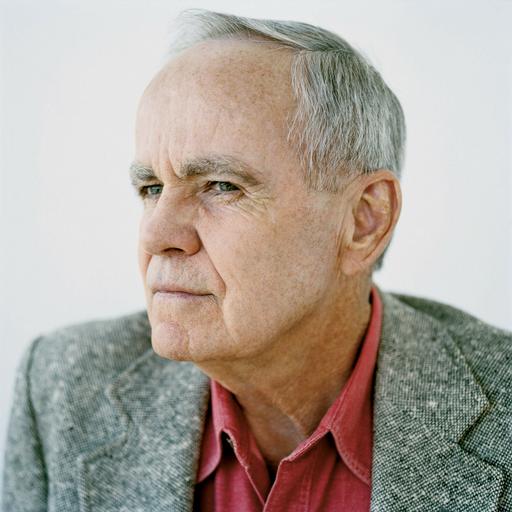
Nabokov biographer Brian Boyd replies – and offers a pretty good sales pitch

July 24th, 2012
Share

Sold!

Yesterday, we wrote about the new edition of Vladimir Nabokov‘s  “Pale Fire” poem, liberated from the pages of the the Pale Fire book and published as a stand-alone work.  We also mentioned Stephen Gertz’s reservation about the Gingko Press’ effort – principally that this book is not the first time “Pale Fire” was published all by its lonesome; Arion Press published the poem in 1994.

We received a charming reply today from the eminent Nabokov biographer Brian Boyd, who edited the small volume and wrote a commentary (in another letter below, R.S. Gwynn writes that Boyd’s “close reading of the poem is masterly”). It’s so much fun we thought we would publish the note as a separate post. Boyd writes:

999-line poem on file cards, as the author intended.

“I was also an adviser on the 1994 Arion Press edition of “Pale Fire,” which is an exquisite thing, with a moiré cloth box and cover that manage to capture the interplay of sun and moon in the passage of “Timon of Athens” from which Nabokov and Shade pick the phrase “pale fire.” But that was a limited fine edition of the whole novel (at $600 on release), including the poem of course, but also with a separate booklet for the poem (also in a moiré cloth cover), as part of the same boxed set, typeset as if typed on index cards and bound into booklet form.

What makes the Gingko edition so unprecedented–and here the credit belongs, if first to Vladimir Nabokov, then next to artist Jean Holabird, who proposed the project, is:

a) that it is of the poem alone;

A poet as well as novelist, and perhaps a pugilist, too


b) that the poem appears as if handwritten on index cards (just as Kinbote describes it), with the last 50 lines as if in first draft rather than fair copy (and with the twelve cards of legitimate variants kept by Shade also downloadable from Ginkgo), as if the reader has direct access to what Shade wrote, without the intervention of Kinbote;

c) that the poem is also presented as a booklet, for easier reading, almost as if it might have been published had Shade been real, and Kinbote had not intervened (with a brief note About the Author and a page listing Other Books by the Author), and with Jean Holabird’s delicate art work, as it were, belatedly launching Shade’s last poetry volume;

d) that there is also a booklet with two essays, by R.S. Gwynn and myself, that focus only on the poem. The focus on the poem, in design and detail, the play throughout with the fiction that readers are for the first time allowed immediate access to a major American poem of 1959, is unique to the Gingko edition, and the result of an admiration for the poem, and a sense of regret that it has been overshadowed by the novel as a whole, however much we might like it (it’s my favorite novel in the world), that is shared by Jean Holabird, Mo Cohen of Gingko Press (and those at the press who became entranced by the project), and Sam Gwynn and myself.

And the Gingko “Pale Fire” pack is not a fine limited edition, but both a literary intervention–very successful, indeed, in inviting people to read and discuss the poem as poem–and “an almost ridiculously lovely package” selling for only $35!

Nabokov’s “Pale Fire” on its own: Does it work? The jury deliberates…

July 23rd, 2012
Share

Some time ago we wrote about Sam Gwynn (a.k.a. the poet R.S. Gwynn) and his newest venture:

Ron Rosenbaum, writing in Slateannounces the next hot Nabokov controversy, and the story is making the rounds in the blogosphere.  The poem “Pale Fire” is about to be liberated from Pale Fire. The 900-line poem at the center of what many call Vladimir Nabokov‘s finest novel, written presumably by the murdered John Shade, will be published separately by Ginkgo Press:  “Nabokov wrote it, and the question of why he wrote it and who he modeled Shade on is the subject of what will be an equally controversial essay accompanying the edition, by poet and poetry professor R.S. Gwynn.”

David Orr‘s New York Times review writes that the the long poems comes in “an almost ridiculously lovely package”: “the poem itself is printed in a small booklet, the note cards upon which Shade ‘wrote’ the poem are recreated (complete with faux ink stains), and an accompanying critical text contains helpful essays from the Nabokov scholar Brian Boyd and the poetry critic R. S. Gwynn (who makes a smart case for Nabokov having used couplets partly as a response to Robert Lowell’s early work).”

“But does it work? Can the poem ‘Pale Fire’ exist without the novel Pale Fire? [You see, contra Josh Landy, here is where the Chicago Manual comes in handy. The finky New York Times style italicizes “Pale Fire” both as poem and novel. I have corrected the ugliness. – ED.]
There are reasons to think it cannot. In a New Yorker blog post last year, Paul Muldoon conceded that ‘Pale Fire’ is ‘a quite wonderful poem,’ but he asked, ‘Isn’t it like one of those tall buildings which incorporates in its core the very crane that raised it?'”

Sam at the helm

What can I say.  I wanted to reach out across the continent, shake them both, and cry out:  ” Dr. Zhivago!  What of the poems of Yuri Zhivago in Doctor Zhivago?” They’ve been published separately for years and years and years.

“I’m very fond of Pasternak’s poems from Doctor Zhivago,” Nobel laureate Joseph Brodsky told Solomon Volkov. “They’re remarkable poems, especially ‘Christmas Star.’ I think of them often.”  No talk of buildings and cranes here.

However, Orr continues:  “This is beautifully put, but there is another way to look at things. When authors write ‘as’ a character, particularly in a third-person novel, we usually understand that the text created by that character is subordinate to the world in which the character exists. In Persuasion, for example, Jane Austen brings the novel to its emotional peak with a letter written by Frederick Wentworth — which we understand is really written by Austen and dependent for its resonance on the world of Anne Elliot, the Musgroves, Lady Russell and the rest. It’s hard to imagine anyone reading the letters of Frederick Wentworth for their own sake … In general, the writing of fictional characters is dependent on the larger work, and it is the larger work that reflects the author’s worldview.”

Orr makes a bigger point, about the lyrical “I,” which is a mask and the poet at once.  “There is obviously great potential for confusion as to who is saying what in this arrangement,” he writes.  I’m not quite sure why it matters at all.  In the end, he rather concludes the same: “No poem is ever on its own. And the poem is not Nabokov’s any more than it is John Shade’s. ‘Pale Fire’ is a voice within a voice — a mirrored and thoroughly modern sensibility. And that sensibility, whatever name we give it, is one hell of a poet.”

On the other hand, Booktryst’s Stephen Gertz has a two-year-old bone to pick with Rosenbaum and Gingko Press, publisher of the new “stand-alone” edition of the poem “Pale Fire”:

There’s just one problem. The poem ‘Pale Fire’ was “freed from the shackles..free at last to be a poem on its own,” extracted from the novel and published in its first separate edition in 1994, by Arion Press in San Francisco.

Like the Gingko edition, it’s reproduced just as Nabokov described it in the novel – on file cards.  Read the rest here.

“Beauty is not a luxury”: Dana Gioia on the antidotes to power

July 21st, 2012
Share

Dana Gioia‘s new volume of poems, Pity the Beautiful, is getting some early buzz (including a Philadelphia Inquirer review here).  The poet (and former chairman of the NEA) recently sent me the latest issue of Gregory Wolfe‘s Image Journal which includes a satisfyingly long interview – even better than a review.  None of it’s online, so I’ll include a few excerpts from the interview with Erika Koss.  Besides, it meshes nicely with some of the Book Haven’s earlier posts, so I couldn’t resist.

The Book Haven was pleased to include his long poem “Special Treatments Ward” in its entirety, in an earlier post here.  Here’s what he said about the poem in the new interview:

“This was the most difficult poem I’ve ever written. It began when my second son had a serious injury that required an extended stay in a children’s neurological ward where nearly every other child was dying of a brain or spinal tumor. Having lost my first son, I was entirely vulnerable to the pain and confusion of the sick children and their desperate parents. I began to write a poem about how unprepared everyone in the ward was for what they had to face. But the poem kept growing and changing. It took me sixteen years to finish. I didn’t want to finish it. I wanted to forget it, but the poem demanded to be finished.  So the poem is not simply about my first son or my second son, though they are both mentioned. It is about the children who died.”

We also had a post describing “Haunted,” Dana’s ghost story – it’s here.  From the interview:

“Actually, this poem began with the first two lines:'”I don’t believe in ghosts,” he said. “Such nonsense./But years ago I actually saw one.”‘  As soon as I heard those two lines, the whole poem started to unfold, though it took an immense amount of work to create the narrative tone and the musical qualities I wanted. The odd thing about poems is that when the good ones come we often realize that we have been writing them in the back of our mind for years. A single line brings them into existence almost fully formed.”

‘Haunted’ is a ghost story that turns into a love story about a mutually destructive couple, but then at the end the reader realizes that the whole tale was really about something else entirely. The real theme is quite the opposite of what it initially seems. I wanted the poem to have the narrative drive of a great short story but also rise to moments of intense lyricality …”

And the winner is...

He lists among the influential philosophers of his life Søren Kierkegaard, Friedrich Nietzsche, Miguel de Unamuno, Mircea Eliade, Dietrich Bonhoeffer, George Orwell, Marshall McLuhan, Jacques Maritain, and recently René Girard.  What odd bedfellows that crew would be.

But who was the most important philosopher of all?  Surprise.

“One book that has exercised a lifelong influence on me is Saint Augustine‘s City of God, which I first read as a Stanford undergraduate. It has probably shaped my adult life more than any other book except the Gospels. Augustine helped me understand the danger of letting the institutions of power – be they business, government, or academia – in which we spend our daily lives shape our values. We need to understand what it is we give to the City of Man and what we do not. I couldn’t have survived my years in business as a writer had I not resisted the hunger for wealth, power, and status that pervades the world. The same was true for my years in power-mad Washington. Another writer who helped me understand these things was the Marxist philosopher and literary critic Georg Lukács – not a name one usually sees linked with Augustine’s, but he was another compelling analyst of the intellectual and moral corruptions of institutional power.”

Here’s a kind of egalitarianism that goes well beyond Marx: “Beauty is not a luxury,” he insists. “It is humanity’s natural response to the splendor and mystery of creation. To assume that some group doesn’t need beauty is to deny their humanity.”

W.H. Auden in film, a remembered poem, and a forgotten murder

July 20th, 2012
Share

The Making of the film "U S" – triumph and tragedy rolled into one

Some time ago we wrote about W.H. Auden on stage, in a new Broadway musical.  But how many know of his work on film?

David Collard writes in England’s Literary Reviewabout Auden’s lifelong fascination with film.  For six months from 1935 to 1936, Auden worked for the General Post Office Film Unit (GPO), which included the time that it produced  Night Mail, the Citizen Kane, Coal FaceNegroes (released as God’s Chillun), and The Way to the Sea – “all four films featuring brilliant modernist scores by the young Benjamin Britten,” according to Collard. “No artists of comparable stature had collaborated so closely since 1691, when John Dryden and Henry Purcell worked together on the ‘dramatick opera’ King Arthur.”

From "Runner"

Collard also writes that GPO, “despite its prosaic-sounding title, was for five years the most exciting, innovative and progressive cultural project in Britain, staffed by a dazzling cohort of international talents. In a short-lived flurry of commitment to the cause, Auden also lectured on film, wrote reviews, provided subtitle renderings of Russian peasant folk songs for Dziga Vertov‘s Three Songs of Lenin, and collaborated on various other projects, even appearing in front of the camera (disguised as a department store Father Christmas in Evelyn Spice‘s spirited Calendar of the Year).”

But all was not well:

Naturally insubordinate, however, Auden soon began to question what he saw as the compromise and hypocrisy implicit in a state-sponsored organisation that purported to criticise the state’s shortcomings. He resigned from the Unit following publication of a Listener article in which he attacked the documentary movement, before Night Mail became the Unit’s one great critical and popular success. The film has since tended to overshadow his other documentary achievements.

His favorite films...

Auden later seemed indifferent to films.  During a talk at Cambridge, his student host Paul McQuail recalled, “We sat and talked for an hour in a relaxed way, much of it about films: Auden’s most memorable remark, though we didn’t know how to take it, was that the films he liked most were the ones where animals talk with human voices. He mentioned Francis the Talking Mule as an example.”

The story has a happy ending, and then a sad one.  Auden returned to films with 1962’s  Runner, where he wrote a “verse commentary” for the documentary about the young Canadian distance runner Bruce Kidd.  A few years later, he participated in U S, a film about the U.S. and, well, us. It begins with breathtaking clouds and panoramic vistas, but didn’t pull back from the plight of Native Americans, slaves imported from West Africa, and America’s underclass.  The last caused problems.

***

From what Collard has cited, it appears that celluloid did not elicit Auden’s best poetic efforts.  I should know.  The rhythms of Auden are in my blood, thanks to Joseph Brodsky, who made us memorize hundreds of lines of poetry, many of them Wystan’s. It was not a popular activity then, and even less now.

So I was intrigued to learn that I have unexpected company as I champion the loving labor of memorization.  Over at poetryfoundation.org, Josh Warn (any relation to the ezine’s founding editor Emily Warn?) recalled reciting Auden’s “Shield of Achilles” while dragging welding cables on a construction site, as a response to his companion wittily recounting Eminem’s rap lyrics.  Wrote Warn,  “the poem’s sixty-seven lines you restrain yourself from the familiar flurries of contemporary mediaspeak and follow phrasings that come from a deeper place.”  On the whole, it sounds more like he was showing off, especially since the floor grinders began whirring away and drowned out both of them.

He writes: “A good solid poem in your cortex can be almost like ballast in a ship’s hold. If turbulent mental activity surges, speaking a poem to oneself can be a way to even out the waves. I first learned this through my practice of memorizing Psalms. But even nominally secular poems recited aloud soothe, and not merely by providing a distraction from disturbing matters, but by the steady rhythm of their sound, and their effects on the breath.”

Beyond that, “The intense familiarity of a work known by heart allows happy moments of sensing the poem as a whole and in details. This pleasure is not simply the kick of solving a puzzle, nor my ironworker affinity for structure. There is also pleasure in sounds and rhythms, even the mouth pleasure of ‘unintelligible multitude’ [from Auden’s “Shield of Achilles”]. But at its best the experience of a good poem has to do with trying to apprehend a deeply known truth that another person could communicate only with a precise set of words.”

***

O'Connor

Ison

Auden’s film U S , on America ended the American way, with a murder. While filming in Appalachian Kentucky, Scottish-Canadian documentary filmmaker Hugh O’Connor was shot dead by a local landlord, Hobart Ison, who was infuriated by the filmmakers on his property, and enraged at the media images that he felt exploited and stigmatized Appalachia during Lyndon Johnson‘s War on Poverty.  Some of the jurors agreed.

“Following a hung jury at the end of his first trial, Ison pleaded guilty to voluntary manslaughter. He was sentenced to ten years and paroled after just one.”

How the French invented love… and a few dating tips from the experts

July 19th, 2012
Share

A confessed Proustian

I had a pleasant visit with Marilyn Yalom the other day, on the sun-drenched patio of her Palo Alto home.  According to the Publishers Weekly, the “avowed feminist, confessed Proustian, admitted Simone de Beauvoir groupie, the erudite and charming Yalom is the perfect companion.”  And so she is.  She talked about French literature, she talked about her time as a doctoral student under René Girard, and she talked about love.

Her new book, How the French Invented Love, will be out this fall.  From a June Q&A interview in Publishers Weekly:  “The French believe that love is embedded in the flesh. They have little tolerance for ethereal ideas of nonconsummated love.”  But… but… but… what about all those troubadours?  Isn’t France the home of amour lointain?

Too much time on their hands

She talks about that, too.  From her book:

In the north, minstrels known as trouvères took up troubadour themes, though the music itself was heavily influenced by the Parisian school of Notre Dame, which was devoted to the cult of the Virgin Mary.  When you listen to this music from the twelfth and thirteenth centuries, you discover that sacred and profane songs sound much alike, even if the words are different.  Enough manuscripts still exist to give us a sense of the music, which was sung to the accompaniment of a small harp. Love in the north of France appears to have become more and more idealized, and the beloved lady more and more inaccessible, with the poet-minstrel downplaying his expectation of a physical reward.  Unlike their southern counterparts, northern minstrels emphasized a love of longing rather than fulfillment.

Clearly, however, consummated love is more to her liking. In a frivolous mood, I recently sent her a link to an article on  “How to Love Like a French Woman.”  Did she agree with statements like this?

American women (and Americans in general) tend to be very goal-oriented when it comes to love, sex, and dating. Rather than setting things in motion and embracing the unknown, Americans generally prefer to set things in stone with a list of clear objectives, goals and outcomes: Is he/she my soul mate or my future spouse? Where, exactly, is this relationship going? Does he/she love me, or not? From the time we’re little girls, we grow up thinking about love in terms of total love or absolute rejection — unlike the French.  …

When relationships don’t pan out, we tend to interpret that as the failure of the whole experience instead of doing what the French do — which is to say, they consider that the emotional integrity of a relationship might lie solely in the experience of it and not necessarily in its outcome or ultimate resolution.

Or this:

The American woman’s approach to dating is heavily influenced by the extent to which sex has either been sensationalized or pathologized in her mind. People are either having mind-blowing encounters — and women’s magazines are cluttered with tips/techniques on how to achieve it — or their libidos have gone into permanent retirement and need to be “fixed.” There’s always a notion that things can be bigger or better. Ditto for whom we are in general, given our culture that expects constant self-improvement and self-transformation.

” I agree with her on almost everything she says,” Marilyn dashed back in a emailed note.  Almost? I forgot to ask her about her reservations.

Here’s mine: Why are these columns almost always directed to women?  I don’t see men curling themselves into pretzels trying to analyze their women or shopping for exotic underwear.


Josh Landy’s lonely fight against “The Chicago Way”

July 17th, 2012
Share
"Has he not read his Bakhtin? Has he not read, well, anything?" (Photo: L.A. Cicero"

“Who is this Mr. Chicago?” (Photo: L.A. Cicero)

Unemployment remains above 8 percent.  Foreclosures continue to devastate cities.  There’s persistent talk of a double dip recession.  And all President Obama and Mitt Romney do is whack at each other.

It’s time to get serious.

So what about the Oxford comma? I have had an ongoing argument with an editor of my acquaintance over this issue. Wars have been fought over less.

Josh Landy has some good and certainly witty points on these and other subjects in his Arcade essay entitled, “Who is this Mr. Chicago, and what does he have against the English language?

Chicago ManualHe is, of course, railing against the tyrannical Chicago Manual of Style.  I think of myself as somewhat of a style agnostic, having been brought up on the AP Stylebook since I was knee-high to a pica rule.  I’ve even adhered to the esoteric MLA Stylebook, on occasion.

But I applaud the Mr. Chicago on most of his choices,  with the most powerful exception being the prohibition against starting sentences with numerals. “Nine hundred and ninety-eight people responded to the survey” seems a bit cumbersome to me.  So does writing out numbers up to 100.  Like Mr. Chicago, I still prefer the old-fashioned abbreviations for states over the ugly postal codes that have become ubiquitous (I favor Mich. instead of MI, Wisc. instead of WI).

Josh takes exception to Mr. Chicago’s avoidance of hyphenated words, rolling them into one:  “I sometimes think he has a secret desire to turn English into German.  An Englishintogermanconvertingdesire.” I side with Mr. Chicago. I think the excessive use of hyphens is aesthetically squalid.

Josh deplores Mr. Chicago’s putative habit of wrenching hyphenated terms apart, but he blows his argument when he uses “finely tuned” as an example.  Surely he knows adverbs ending in “ly” are never hyphenated?  Wait a minute, that’s the AP Stylebook…

“You better watch where you put those commas, Mr. Landy. We wouldn’t want anything to happen to you.”

It is time for me to out Mr. Landy.  He is an Englishman.  And, as someone once wrote, an Englishman lecturing Americans on punctuation is akin to an American lecturing the French on sauces.  I am irritated by English texts that seem to be on a unending comma diet.  The elimination of commas after clauses like these: “In May Churchill gave his address to the…”  Who is May Churchill?

Josh continues:

No, Mr. Chicago won’t let us say “consider for example the prologue to Shakespeare’s Henry V,” or “thus for instance I may acknowledge,” or “fiction too is a requirement.”  Instead he insists on commas around “for example” and “for instance” and “too,” and also after “namely” and “now.”  In fact, Mr. Chicago would not have allowed my first sentence in this paragraph; he would have insisted on a comma after “say.”  But all these commas slow things down.

As they say in Chicago, “What’s the hurry, Bub?”

To show how desperate things can get, Helen DeWitt, who can only be described as a punctuation libertarian (she hyphenates copy editor, for example), rants in a 2007 post over at Paperpools about her trauma in publishing a book involving a number of texts with different kinds of punctuation.  She cites an Oprah Winfrey interview with  author Cormac McCarthy: “He doesn’t like semi-colons, never uses them. He uses periods, commas, capitalisation. Occasionally a colon, before a list of things.”

Style libertarian (Photo: Aileen Son)

Now, I like 18th-century punctuation; I like 17th-century punctuation; I like 16th-century punctuation; one of the things I love about Peter Ackroyd is the way he gets the punctuation right when he writes a text that is from another century. The punctuation is part of the texture of the text, and when I read that a text has been repunctuated for modern readers I go away and find another edition of the text. I like McCarthy’s punctuation in McCarthy’s texts, but I would rather not have it imported into the work of Jonathan Swift. The assumption that one has the right to repunctuate a writer’s texts is in fact a very dangerous one, since it leaves modern writers open to all kinds of abuse.

Hence she was at odds with her publisher when a manic copy editor decided to have a go at her text, making thousands and thousands of punctuation corrections.  DeWitt describes one of the opening rounds:

The editor came back to the office; I assumed we would now have a discussion involving someone with a wider knowledge of literature. My editor has an undergraduate degree from Oxford in French and Italian; he has an M.Litt. for a thesis on Music and Montale; presumably someone who has read Montale &c. &c. The office was on the 55th floor of a building looking down Manhattan; it was so high you could see the East River and the West River and the end of the island, it was the office of a Master of the Universe.

He hates semicolons.

In this office we have a stupid, petty little conversation. The editor explains that if one does not italicise the titles of books it looks like carelessness. He explains that there are rules. The production manager explains that there are rules. I explain that the Chicago Manual of Style has only whatever authority we choose to give it. I explain: Look, these are two characters obsessed with numbers. The Chicago Manual of Style does not have a rule for using numerals in texts about characters obsessed with numbers because THIS BOOK HAD NOT BEEN WRITTEN when they last drew up the Chicago Manual of Style. They could not ANTICIPATE the need for a rule because the book did not then exist. I WROTE THE BOOK so I am obviously in a better position to decide what usage is correct for its characters than a group of people in Chicago who have NEVER SEEN IT.

It gets worse.  In America, land of the free, she argues, we should be free to punctuate as inventively, as creatively as we wish.  She dashes to a bookshop to buy The Autobiography of Alice B. Toklas, and shows it to her publisher.  Her manuscript nevertheless slips through to the “advanced reading copy” stage with her persistent “stets” disregarded.  She mulls suicide: “If I kill myself now, though, the book will go out looking like this, so I have to try not to kill myself before it is fixed.”

Even Tatum O’Neal is involved. Read the rest here.

Postscript on 7/20:  The incomparable Dave Lull retrieved the following passages, from Jacques Barzun‘s  essay “Dialogue in C-Sharp,” in response to a younger editor who cited the Chicago Manual whenever he could:

“. . . run words together and make the reader puzzle out the result. See here: antiintellectual in one word. What is the point? What has been gained?”

“Never mind the Manual – it isn’t holy scripture; I haven’t joined a religious sect and taken an oath to be ruled by a book. My creed is that I put my name only to what I write; I write as I like; and I like hyphens – especially when they make reading easier.”

Postscript on 1/8/2013:  You see what it’s all come to?  “4 Copy Editors Killed In Ongoing AP Style, Chicago Manual Gang Violence,” from The Onion, here.

“Law enforcement officials confirmed Friday that four more copy editors were killed this week amid ongoing violence between two rival gangs divided by their loyalties to the The Associated Press Stylebook and The Chicago Manual Of Style. ‘At this time we have reason to believe the killings were gang-related and carried out by adherents of both the AP and Chicago styles, part of a vicious, bloody feud to establish control over the grammar and usage guidelines governing American English,’ said FBI spokesman Paul Holstein, showing reporters graffiti tags in which the word ‘anti-social’ had been corrected to read ‘antisocial.’”


<<< Previous Series of PostssepNext Series of Posts >>>