Adam Zagajewski is dead.

March 21st, 2021

Share
No one can replace him. No one will.

Adam Zagajewski is dead. Poland’s leading poet, who achieved worldwide renown, was 75. He died in his beloved Kraków “after serious illness,” says the Polish press. That’s it. Few of my Polish acquaintance seem to know he was ill. They are universally shocked.

He is perhaps best known for the poem that was tacked to office bulletin boards and pinned to refrigerators with magnets after the 2001 World Trade Center attacks –”Try to Praise the Crippled World” translated by Claire Cavanagh. But that poem’s deserved reputation almost did a disservice to his corpus by overwhelming a fine and enduring legacy of poems and essays over many volumes and many years.

I’ve written about him here and here and here and here, among other places. And I wrote a profile of him for the Poetry Foundation here.

I last saw him a few years ago. We had a short rendezvous over espresso at the lovely Bona Street bookstore and café on Kanonicza. It was a tumultuous and confusing trip for a number of reasons, but meeting with Adam was a point of sanity and stillness. Well, because he always was.

According to Gazeta Wyborcza: “The only thing missing from all the awards, titles and distinctions he received throughout his life was the Nobel Prize for Literature. His name has appeared among the candidates for this award every year. In 2013, he was awarded the Zhongkun Chinese Literary Award, commonly known as the Chinese Nobel Prize. He was also a laureate of such awards as the Neustadt Prize for Literature (2004), the Heinrich Mann Prize (2015), the Griffin Prize (2016) and the Princess of Asturias Award (2017). He has been a finalist of the Nike Awards several times. He was awarded the Gold Medal for Merit to Culture – Gloria Artis and the Order of the Legion of Honor.”

He should have gotten the Nobel. I could not think of anyone more deserving. But two Poles had already won Nobels in the previous half-century – Czesław Miłosz and Wisława Szymborska – and he was passed over. Now there will be no chance to make amends.

Unassuming grace

In recent years, he has been active in the cause for a truly free Poland. But always with a sense of proportion and insight. Zagajewski wanted to “avoid the reduction of freedom to the political dimension.” He continued: “Perhaps it is worth remembering that in every community that has not yet been dominated by illiterate people, there is also a different conversation, much calmer, quieter, attracting less attention, but not necessarily less important: about God, about the meaning of life, about art, about literature, music, the nature of civilization, the relationship between modernity and tradition, and death. And also about Miłosz, about Stanisław Brzozowski, about Plato and Wagner, about Bacon the philosopher and about Bacon the painter, about Chopin and Lutosławski.”

He is survived by his wife, actress and psychologist Maja Wodecka.

This is a major blow. Yet how fitting that this quiet unassuming man should die so quietly, without fanfare. He was a class act … but so much more than that. So much more. No one can replace him. No one will.

More soon.

Postscript: a few words from Ukrainian poet Ilya Kaminsky (we’ve written about him here):
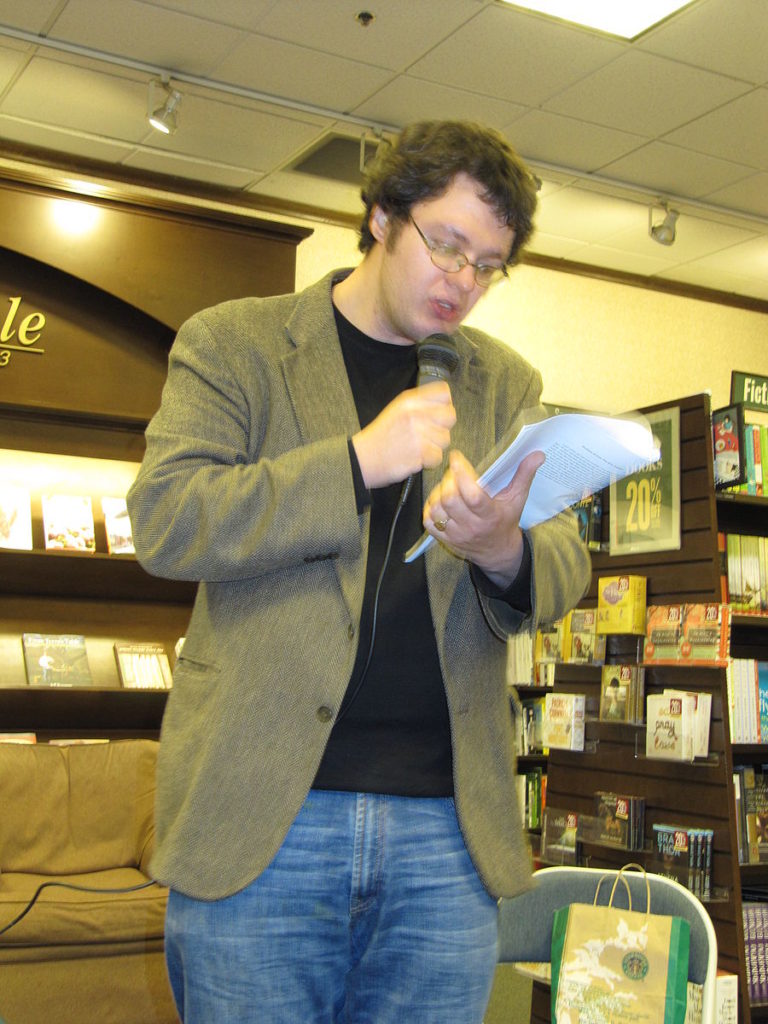
Kaminsky at book signing

One of the most beautiful things about Adam Zagajewski is that he didn’t have any of Bloomian anxiety-of-influence. He would pour the drink and welcome the conversation about poems he was influenced by, or poets he echoed, or how other poets echoed other poets (from the likes of Montale to Gottfried Benn to Vladimir Holan, lesser known Wiktor Woroszylski etc). He loved poets, chuckled (in that wonderful wry chuckle) with and about poets, recited lines (he recited some Russian poems by heart to me), told stories about them, smiled and shared the lines that influenced him, without any hesitation, or false reticence, and one time he wore a jacket that he proudly told me was the jacket that Joseph Brodsky gave him. He said “on my first trip to America, I was a skinny man who complimented Joseph on a jacket, and Joseph took this jacket off and simply gave it to me.” Adam was generous like that, too. Somewhere in my notes I have lists of poets and essayists he would recommend when we met once a month in Chicago. And then he would email next day and recommend some more.

He has many students, from Houston and Chicago, who will probably say much more about his teaching. I wasn’t one of them. I was just someone who benefited from his kindness and the generosity of his conversation. I will miss him, and miss the wide world of poetry he carried with him—a kind of person who could agree to drop you off at your hotel after a poetry reading, and then stop the car, midway, on the side of the road, and just keep talking about poetry. None of this was done with the over the top exuberance: he was a very shy person, gracious, precise. And he always told the truth about poetry. He believed in the soul; the soul must live in lyric poems. That, most of all.

His poem, “To Go To Lvov”– an elegy to the gone world but also a kind of a hymn to life — became password for many immigrants and refugee poets of my generation. If you love that poem, you are one of us. I love it for all those reasons, yes, but also because it allowed–in the last two decades of a bloody century–a kind of reprieve. It allowed a way for praise to enter poetry long after “Deathfugue” or “Howl” were written; it had all the force of those monumental works, and yet it allowed tenderness in.That is how I will always remember you, Adam. A poet who allowed tenderness in.

Postscript on 3/22, from poet Dan Rifenburgh (I’ve written about him here and here): I first met Adam when the poet Ed Hirsch arranged for Adam to come teach with him at the University of Houston, where I was a grad student.  Adam was a seemingly shy person, very calm and very gentle, yet there was no doubt he could lead a troupe of would-be poets through the labors of exegesis, critique and theory, as well as deal with all the interpersonal scrimmages that tend to break out under the pressures of the workshop setting. In fact, he was an excellent writing workshop leader, always keeping us out of the muck of competitive jealousies and personal digs. His commentaries on the poems under discussion showed the depth and breadth of his reading, his life experiences and his humanity. I recall I had submitted a rather bleak, dirge-like lyric on the loneliness of divorce that ended with a scene including the lines, “Across the street is a cafe/Still open at this hour./ A woman sits there, nibbling pastry.” Adam’s response was simply, “Edward Hopper?” and I had to laugh. He was deadly accurate that way. In fact, one wonders how so smart an individual could be so gracious and seemingly, well, good. Or was it all an act? What was behind this gentleness, his air of quietude, which could sometimes mimic a mystical complacency? Adam came naturally to his role of a cat lover. He was more feline than canine and he appeared to have nine lives. Certainly he had navigated through vast political upheavals. He witnessed the residue of fascism, the bleakness of totalitarian communism, the rise of Solidarity and then, after the fall of the Soviets, a Polish kind of populist revanchism. In such situations perhaps reticence is a survival skill? You can search his work for political comments and you’ll come up quite empty. Was he a gentle tabby or a sphinx? The answer lies in his rejection of rhetoric, that is to say, public speech designed to persuade, or move the polis to action. The 20th century tied rhetoric to propaganda to ideology to various forms of centralized power, and always to war, suffering and death. Adam was scampering away from all this on cat’s feet. What he found was not philosophy, science nor religion, but a way of being in the moment, a way of beholding the world as transitory and eternal all at once, even as it is both brutal and beautiful. In this he saw the arts and artists as his surest guides: the painters, musicians, poets, novelists and even diarists. He would sooner salute a kettle drummer than a commissar, or bow to a painter than a pope. He joined the ranks of artists by presenting his own unique relationship with this mysterious place where we all live. He refused to categorize or analyze it, yet by his gentle notations, and through his humility, he holds the world before us in its luminous, shimmering mystery.

Thom Gunn – an Elizabethan wannabe? Letters reveal a complicated poet.

March 20th, 2021
Share

San Francisco Poet Thom Gunns letters have been published at last. Andrew McMillan discusses the collection, edited by Michael Nott, August Kleinzahler, and Clive Wilmer, over at The Literary Review. (I’ve written the transplanted Englishman here and here, among other places.)

The review mentions Gunn’s involvement with the “Movement” poets, a group that included Philip Larkin, Kingsley Amis, and Robert Conquest, among others, but I hope a few of the letters trace the sway of Stanford’s Yvor Winters upon Gunn’s thinking and writing. While not as widely recognized as the Movement, the circle of poets and writers taught or influenced by Winters is prominent and traceable – including Robert Pinsky, Robert Hass, Helen Pinkerton, J.V. Cunningham, Turner Cassity, and others.

The review also mentions Gunn’s desire to be among the Elizabethans (read more about that here). From the review:

Ben Jonson, an edition of whose poems Gunn once edited, is an important figure here: Nott quotes Gunn saying that people have ‘difficulty with my poetry … in locating the central voice or central personality. But I’m not aiming for central voice and I’m not aiming for central personality. I want to be an Elizabethan poet. I want to write with the same anonymity you get in the Elizabethans.’ Nott suggests that we get a ‘staging’ of Gunn’s personality in these letters, a tailoring of voice to recipient. That certainly feels right, though it feels too as though the life and personality come through in the letters in a way they don’t in his poetry, particularly the earlier work.

“Some of the rawest moments come in early letters to Mike Kitay, Gunn’s lifelong partner, whom he met in 1952 when they were both undergraduates at Cambridge and whom he followed to the USA when Kitay returned there in 1954, after which Gunn felt able to come out. ‘We can lead rich lives together if we allow each other to, my beloved,’ Gunn writes to him in 1961. ‘Oh baby, please settle for me. I’ll never be your ideal, but you’ll never find your ideal on earth.’ It’s a letter written over the course of a week, with headings marking out the different days; it ends, ‘I can’t go on like this much longer. Please, my darling Mike.’ Gunn was largely a writer of tight, syllabic poetry who aimed for a lack of ‘central personality’; the directness and freedom of expression in letters such as these offer us a side of him we rarely, if ever, have seen before. By contrast, a letter written a few months later to the Faber editor Charles Monteith sees Gunn retreating behind a mask of business, discussing what would become a well-known combined edition of his work and that of Ted Hughes, eventually published in 1962 …”

Read the rest here.

Was Milton embarrassed? “He doesn’t say which poems make him squirm.”

March 13th, 2021
Share

At an early hour on a Saturday, January 9, I tumbled out of bed to listen to poet and classicist A.M. Juster talk about his translation of John Milton‘s short Book of Elegies, published by the Paideia Institute. (We wrote about his translations of Maximianus here.) Mike Juster has the chops for it: long ago, he graduated magna cum laude from Roxbury Latin School. He was only a few years younger then as the Milton who wrote the elegies.

These Latin elegies were youthful efforts, and most poets dismiss what they later consider juvenilia. Milton was no exception. You can tell because the older Milton writes a postscripted poem to the collection that begins with an apology for the younger self who wrote the poems. “He doesn’t say which poems make him squirm,” Juster said. “You can see from his use of the word ‘nequitiae’ — which I’ve translated as vileness — that he’s making some pretty harsh judgments about his own work. It’s definitely a kind of defensive preemptive strike.”

Translator of Maximianus, too.

“These are primarily poems that were written while he was an undergraduate, and by the time that he’s pulling the poemata together, he’s probably 36. Now most of us have some embarrassment in middle age about our teenage poetry, but I think that this sort of half vague apology may be a little bit more complicated.”

His “apology” from the untitled postscript:

From a perverse persistence and contrariness,

I once made pointless trophies to my vileness.

At the time of the elegies, he’d been kicked out or “sent down” from Christ’s College, Cambridge. We don’t know exactly why. As Juster explains in the introduction, Milton’s strict tutor, the bishop-to-be William Chappell, may have beaten him for an infraction. Milton was overjoyed to be sent home.

To bear a callous master’s threats and other things

Repugnant to my nature does not please me.

If this is “exile” – back again with household gods

And seeking welcome leisure free of care –

I have not shunned the label, nor protest my lot,

And gladly celebrate my exiled state.

“Then it gets more interesting. Elegies 1 and 6 are epistolary poems to the great love of John Milton’s life: Charles Diodati.” Was the bard gay? Don’t jump to conclusions. Juster continues: “I think he was just a lonely young man who had one strong friendship that started in grammar school, and that he never formed such a bond again with other men or his three wives. In these two elegies, you see a warm even wryly funny Milton. The formal prose adopted in almost all his other work is dropped, and you see him I think fairly clearly as he was at the time.”

“This Milton surprises even scholars. He tells Diodati about his many trips to the theater, but most scholarly opinion until fairly recently discounted this observation and assumed that they were secondhand based on the older Milton’s contempt for theater. Only with the discovery that Milton’s father was a part owner of London’s Blackfriars Theater plus the discovery of Milton’s heavily annotated first folio of Shakespeare did most scholars accept the truth was more complicated than they had believed.” [Curiously, I attended last month the Milton’s Cottage Annual lecture, “Re-reading Milton Re-reading Shakespeare” on precisely that topic. Let’s hope the zoom discussion goes online soon. – CH]

“Milton clearly had extensive firsthand knowledge of the theater, just as he told us in this elegy. The language of these elegies should also knock some comfortable assumptions about Milton.”

“Too often we see Milton as inevitably destined to be an epic poet, but there’s in fact really nothing in the Book of Elegies that would reinforce that view. Not only did he use Ovid‘s elegiac couplets instead of Virgil‘s dactylic hexameter, he compares the two great poets and comes down — perhaps jokingly, but still — on the side of Ovid as the greater of the two. Well, pursuit of poetic greatness in Latin poetry necessitated an eventual epic, and of course Milton knew that. The young Milton clearly reveled in the language and imagination of its mythology and romance to a greater extent than the battle scenes from the Aeneid. Milton also repeatedly looks to Ovid by adopting and adapting imagery from Tristia and presenting himself as an exile.”

You can get the short bilingual Book of Elegies, published by the Paideia Institute here.


“How difficult it is to remain just one person”: a sculptor remembers poet Czesław Miłosz

March 8th, 2021
Share
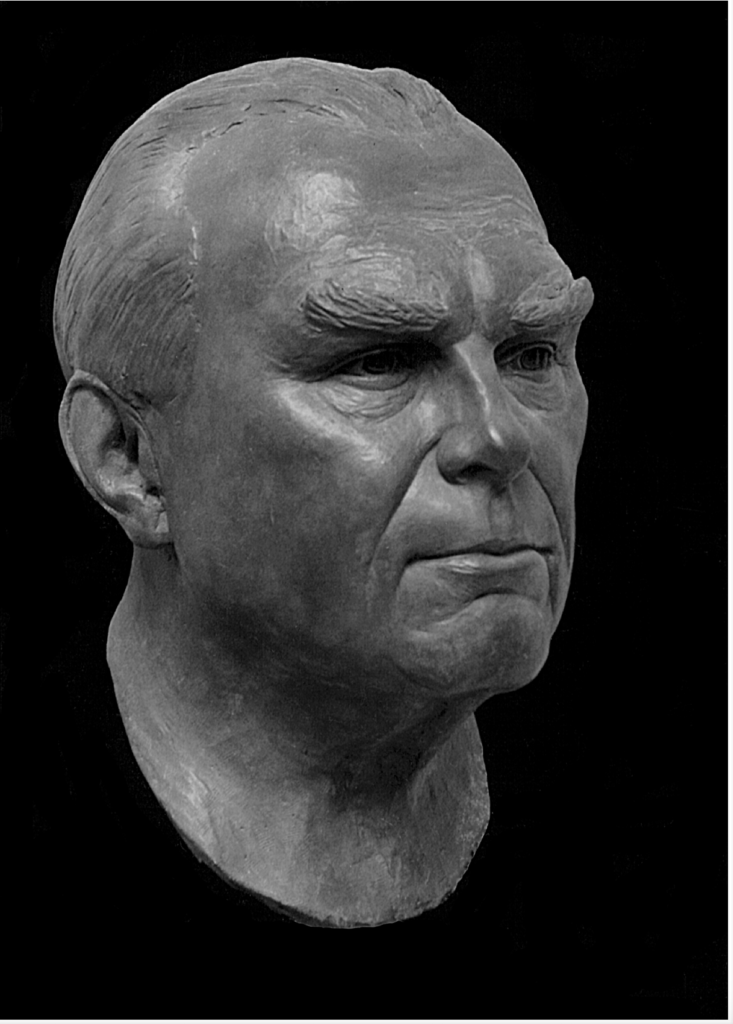
The Berkeley portrait, “the weight of the jaw, the extreme particularity of each feature.”

His large, wide face, with its strong planes, forceful jaw, and unforgettable brows, recalled a medieval wood carved saint.”

Nobel poet Czesław Miłosz had a magnificent visage, and it got even better as he aged. I haven’t seen many sculptures that quite capture it, and I don’t think many will – the opportunity died with him in 2004, and it’s not an art that can take place long distance, at least not entirely.  

Ironic that the image of the poet who wrote of the struggle against oblivion –  with oblivion having the upper hand – has himself disappeared. Or has he?  Jonathan E. Hirschfeld has taken on the struggle to keep that visage alive – in clay and word.

The sculptor, who divides his time between Paris and Venice, California, tells the story in Britain’s PN Review: “I have now read about many encounters with Miłosz and many descriptions of his manner. About his remoteness, his warmth, his humour, even his shyness, his impatience, his anger, his resilience, his complexity, his doubts, the force of his words, written when no words were thought possible, his presence. My goal was a synthesis, a kind of summing up, not any one moment, and certainly nothing that one pose could possibly contain.”

He decided to make the portrait of Miłosz after attending a UCLA reading  in 1982. “The room was packed and worshipful,”  he recalled. “I recall sensing the paradox of a soft melodious voice that could create a feeling of great closeness while preserving a palpable distance. I knew some of his poetry and a number of his essays and recognised the unmistakable rhythm of his language. Robert Hass, his principle collaborator and translator, has described his ‘fierce, hawkish, standoffish formality’. Even allowing for the animated eyes and mischievous smile, he seemed the incarnation of gravity and dignity. His large, wide face, with its strong planes, forceful jaw, and unforgettable brows, recalled a medieval wood carved saint.”

But would the poet cooperate with the sculptor? He did. Miłosz made time for hours and hours of sittings. And for many photographs, too, to help the sculptor when he was hours away, in southern California or France.

Hirschfeld remembers: “During my time with him I watched as intently as I could, scrutinising every detail, absorbing every shifting mood, reaching for something as unachievable, as metaphysically impossible, as the quest that he himself had defined as the poet’s relationship to reality. However, one must earn one’s discontent. One first must notice the weight of the jaw, the extreme particularity of each feature, the breadth and slope of the forehead, the curl of the lips and the swelling of the planes, the folds around the eyes, the quality of the hair, the telling asymmetries that convey the complexity of the emotions and intellect; one must travel again and again this unique terrain until in the mind’s eye, at night while the clay sleeps, one can feel the entire head as one complex mass, with a structure and a thrust, and tilt belonging to this person alone. When you have done that, you have earned the right to say that something is still missing.”

Still, something was still missing. He made the version above in Berkeley, but … he wanted to try again. They continued with a second portrait in Paris.

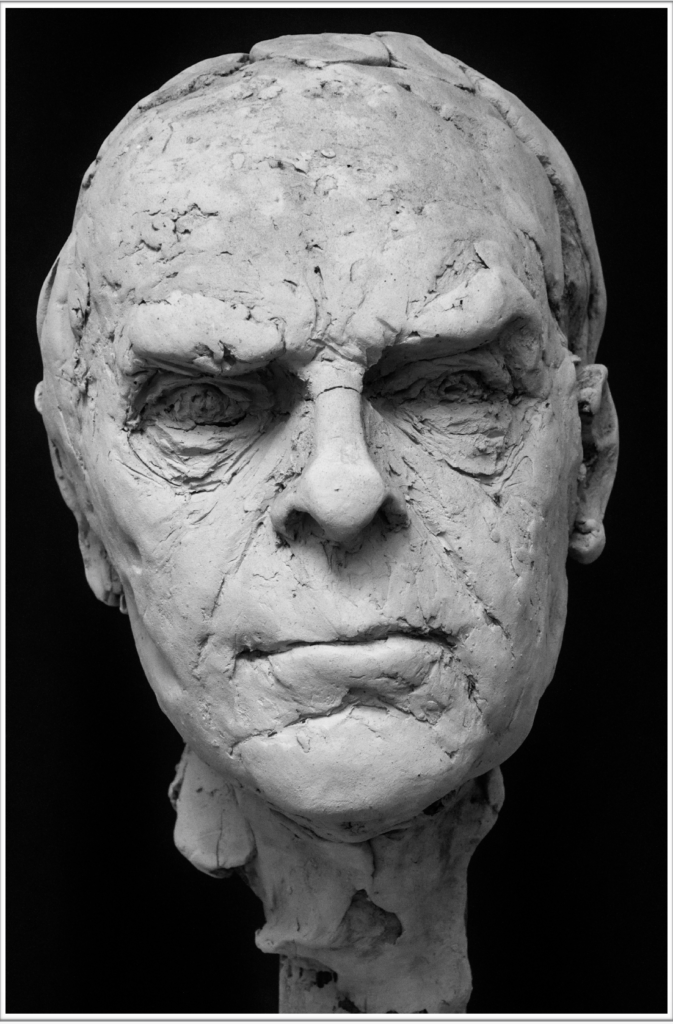
“The version of Miłosz I made in Paris was more than a sketch, and less than a finished work. It is filled with knotted intensity, rough, unfinished forms and the traces of accident. In ‘Ars Poetica’ (Bells In Winter) Miłosz wrote – ‘The purpose of poetry is to remind us how difficult it is to remain just one person, for our house is open, there are no keys in the doors, and invisible guests come in and out at will.’ – By his own account he was ‘neither noble nor simple’. He had cautioned an interviewer ‘Art is not a sufficient substitute for the problem of leading a moral life. I am afraid of wearing a cloak that is too big for me’ (Czesław Miłosz, 1994, Interviewed by Robert Faggen). I knew there was truth in the dry, raw clay of the second version, and it felt right that it should remain just this way.”

Read the whole thing in the PN Review here. (And stay tuned for some updates on my own forthcoming: Czesław Miłosz: A California Life.)

(Photos copyright Jonathan Hirschfeld.)

The Paris portrait: “knotted intensity, rough, unfinished forms and the traces of accident.”

“A Happy Contrarian”: Praise for Conversations with René Girard… and Evolution of Desire, too!

March 2nd, 2021
Share

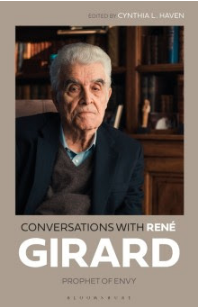
Conversations with René Girard and Evolution of Desire: A Life of René Girard are featured in the current edition of Commonweal. An excerpt from the lively article by Costica Bradatan, a Professor of Humanities in the Honors College at Texas Tech University. It’s a great read and making the rounds – in 3quarksdaily and Arts & Letters Daily, among other venues:

René Girard’s best-known books, such as Violence and the Sacred and The Scapegoat, leave the distinct impression of an intellectual project plotted and forged in solitude. Serious strategy seems to be at work here: the books are both dense and lucid, their arguments not only tightly knit but also elegantly presented. One imagines the long hours of hard, lonely labor behind each of these titles. And yet Girard (1923–2015) was a rather social person and a compulsive conversationalist; he needed to be with others as much as he needed his solitude. Someone who knew Girard well observed that he was “doggedly dialogic”; he liked “working with people on things.” There is in fact a whole series of books—above all, the groundbreaking Things Hidden Since the Foundation of the World (1987)—in which he involved other scholars as interlocutors. Girard was aware that much of what he was proposing was too new and too unusual (and sometimes too idiosyncratic) to go unchallenged. Always the strategist, he often invited people to challenge his arguments before he published them. Beyond the sheer human need to be with others, Girard needed the opposition and counterarguments of his conversation partners to test his ideas and push them to their breaking point.

And not only that. Dialogue itself can be a singularly creative process: something new is often born in your mind in the very process of addressing the person in front of you. You didn’t know that thing existed until you opened your mouth. Now that it has come out, you may be as surprised as your dialogue partner. Girard the conversationalist must have known a thing or two about this process.

Another excerpt:

In When These Things Begin: Conversations with Michel Treguer, Girard tells Treguer, “I’m not concealing my biography, but I don’t want to fall victim to the narcissism to which we’re all inclined.” For Girard, interviews served the same purpose as his “books of conversation”: to challenge and test his ideas while discovering new things in the company of others. Cynthia L. Haven, the author of a remarkably insightful biography of Girard, Evolution of Desire: A Life of René Girard, has now put together a selection of these interviews. They give us a good picture not only of the complexity and multifacetedness of Girard’s ideas, but also of the process through which a young professor of French literature originally operating in a rather narrow field turned into a visionary thinker of global renown, as revered as he was contested. As Haven puts it in her introduction, in “these interviews, over years and decades, Girard gradually becomes Girard, like an image slowly appearing in the developer of an old darkroom.”

Read the whole thing here. It’s fun.

“Get in the dumpster with the hat and the dog.” And Ferlinghetti did.

February 25th, 2021
Share

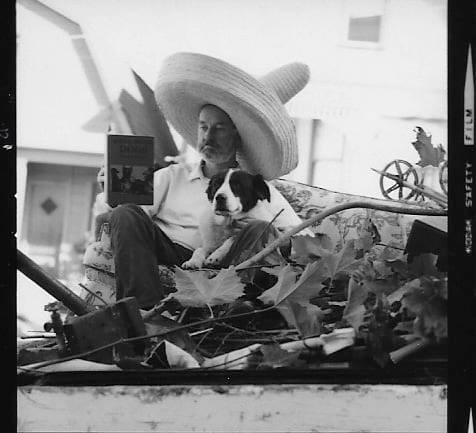
Photographer Margo Davis and the late poet-activist Lawrence Ferlinghetti, who died on Monday, Feb 22, at 101, go back a long way. From about 1969 to 1970, she rented a downstairs apartment at the City Lights founder’s “classic red” house on Wisconsin Street, in the Potrero Hills district of San Francisco.

She was building her career as a photographer. The local celebrity was a natural subject. She wanted him to use the sombrero that was hanging in his house for a photo. Ferlinghetti told her he wanted the picture to include his dog Homer. “Get into the dumpster with the hat and the dog!” said the photographer. And so he did. This is the result.

Eventually, he sold the house, but she remembered one more story about him from those long-ago days. Davis’s then-husband, Professor Gregson Davis, taught Latin and classics at Stanford. One day Ferlinghetti burst in with a magnifying glass and a dollar bill. “Can you translate this dollar?” he asked. What did he want translated? E Pluribus Unum. What else?

Postscript: Margo Davis reminds me that there is also Latin on the other side of the dollar bill, around the pyramid with the eye. If I had a dollar bill in the house I’d run and check.

And another postscript, this time from Gregson Davis, Andrew W. Mellon Distinguished Professor Emeritus in the Humanities, Duke University: On the reverse of the dollar bill there are two Latin citations above and below the pyramid: annuit coeptis (top) and novus ordo seclorum (below).  The latter is an allusion (not an exact quote) to Vergil’s 4th Eclogue: “A new order/cycle  of ages”.  I put Lawrence on to the Eclogues, which he had never read, and he immediately began composing a poem, originally called “The Nixon Eclogues,” but later published as “Tyrannus Nix.”  By the way, the top citation (which is loosely translated as “he favors our beginnings”) is inscribed in very large letters on the dome of the Capitol.  In one of the vivid mages that captured moments of the insurrection, an intruder can be seen hanging by one hand from the architrave directly under the large letters: ANNUIT COEPTIS. Ironies galore!


<<< Previous Series of PostssepNext Series of Posts >>>