Walter Tevis’s The Queen’s Gambit: you read the book, here’s the podcast of the Another Look discussion!

February 22nd, 2019
Share

Walter Tevis is best known for his three novels that were turned into major films: The Hustler, The Color of Money, and The Man Who Fell to Earth. But on January 29, Stanford took another look at his overlooked masterpiece, The Queen’s Gambit, a book about chess, and the teenage girl who masters it. The lively discussion was headed by Another Look’s founding director, the eminent author Tobias Wolff. He was joined by Robert Pogue Harrison, a regular contributor to The New York Review of Books, and former Stanford fellow Inga Pierson. Some considered it our best event ever! Judge for yourself: the podcast of the discussion is here.

Tevis was born in San Francisco and grew up in the Sunset District. While his parents relocated to Kentucky, he spent a year in the Stanford Children’s Convalescent Home (which later became Stanford’s Lucile Salter Packard Children’s Hospital). Hence, Another Look’s winter event will be a homecoming for the author, who died in 1984.

Photos below by Another Look friend David Schwartz.

“The force field of deep time”: Birkerts’s The Gutenberg Elegies turns 25

February 18th, 2019
Share

“Resonance—there is no wisdom without it.”

Sven Birkerts‘s The Gutenberg Elegies: The Fate of Reading in an Electronic Age, turns 25 this year. Never heard of it? A sign of our times, when everything goes blip, blip, blip under the tumultuous seas of tweets, texts, posts, and emoticons. Even a book that ponders what we need most today to fight the tide of memes, spammers, taunts, and triviality: “time of the self… deep time, duration time, time that is essentially characterized by our obliviousness to it.”

You may not have read Mairead Small Staid’s thoughtful consideration of Birkerts’s fifteen essays “on reading, the self, the convergence of the two, and the ways both are threatened by the encroachment of modern technology” over at Paris Review‘s blog. After all, few things disappear faster under the surface of public consciousness than a blogpost – like this one.

Staid writes: “As the culture around him underwent the sea change of the internet’s arrival, Birkerts feared that qualities long safeguarded and elevated by print were in danger of erosion: among them privacy, the valuation of individual consciousness, and an awareness of history—not merely the facts of it, but a sense of its continuity, of our place among the centuries and cosmos. ‘Literature holds meaning not as a content that can be abstracted and summarized, but as experience,’ he wrote. ‘It is a participatory arena. Through the process of reading we slip out of our customary time orientation, marked by distractedness and superficiality, into the realm of duration.’”

Two excerpts:

Early in The Gutenberg Elegies, Birkerts summarizes historian Rolf Engelsing’s definition of reading “intensively” as the common practice of most readers before the nineteenth century, when books, which were scarce and expensive, were often read aloud and many times over. As reading materials—not just books, but newspapers, magazines, and ephemera—proliferated, more recent centuries saw the rise of reading “extensively”: we read these materials once, often quickly, and move on. Birkerts coins his own terms: the deep, devotional practice of “vertical” reading has been supplanted by “horizontal” reading, skimming along the surface. This shift has only accelerated dizzyingly in the time since Engelsing wrote in 1974, since Birkerts wrote in 1994, and since I wrote, yesterday, the paragraph above.

Horizontal reading rules the day. What I do when I look at Twitter is less akin to reading a book than to the encounter I have with a recipe’s instructions or the fine print of a receipt: I’m taking in information, not enlightenment. It’s a way to pass the time, not to live in it. Reading—real reading, the kind Birkerts makes his impassioned case for—draws on our vertical sensibility, however latent, and “where it does not assume depth, it creates it.”

***

“But perhaps when the need is strong enough we will seek out the word on the page, and the work that puts us back into the force field of deep time,” says Birkerts. “The book—and my optimism, you may sense, is not unwavering—will be seen as a haven, as a way of going off-line and into a space sanctified by subjectivity.” Oddly enough, here in the dawning days of 2019, my own optimism is strong. It seems clear to me that the need is strong enough—is as strong as it always has been and always will be—for the blossoming, bodily pleasure of reading something remarkable, the way it takes the top of my head off and shows me—palms open, an offering—what’s been churning away in there, all along.

“Resonance—there is no wisdom without it,” Birkerts writes. “Resonance is a natural phenomenon, the shadow of import alongside the body of fact, and it cannot flourish except in deep time.” But time feels especially shallow these days, as the wave of one horror barely crests before it’s devoured by the next, as every morning’s shocking headline is old news by the afternoon. Weeks go by, and we might see friends only through the funhouse mirrors of Snapchat and Instagram and their so-called stories, designed to disappear. Not even the pretense of permanence remains: we refresh and refresh every tab, and are not sated. What are we waiting for? What are we hoping to find?

We know perfectly well—we remember, even if dimly, the inward state that satisfies more than our itching, clicking fingers—and we know it isn’t here. Here, on the internet, is a nowhere space, a shallow time. It is a flat and impenetrable surface. But with a book, we dive in; we are sucked in; we are immersed, body and soul. “We hold in our hands a way to cut against the momentum of the times,” Birkerts assures. “We can resist the skimming tendency and delve; we can restore, if only for a time, the vanishing assumption of coherence. The beauty of the vertical engagement is that it does not have to argue for itself. It is self-contained, a fulfillment.”

Read the whole essay here. Or better yet, by the whole book here. I will, too … when I have time. I’m on deadline. Oddly enough, I am finishing an essay about  … the social media.

Bergen holds its first-ever international literary festival – and we’re in Norway for it!

February 14th, 2019
Share

Bryggen Hanseatic Wharf. Norway 2012 (Photo: Zygmunt Malinowski)

The Book Haven has just arrived in Norway for the first-ever Bergen Literary Festival – tired and hungry and footsore and jetlagged, but delighted with the lovely city. For example, the Bryggen Hanseatic Wharf pictured above which dates back to Middle Ages is on UNESCO world heritage list.

We just returned from listening to a riveting onstage conversation between award-winning Juan Gabriel Vásquez, author of The Sound of Things Falling (2011), about the Colombian drug wars, and now The Shape of the Ruins (2018), about two defining political murders in Bogotá’s past, and Spanish writer Edurne Portela. “Memory is a moral act,” said the Columbian author who spoke about the way we manipulate memory and history so we can go on. “History lies.”

“The truth of the novel is that there is no truth,” he said.

There will be more news on the inaugural festival, but meanwhile – Happy Valentine’s Day!

Bergen, the view from Mount Floyen (Photo: Zygmunt Malinowski)

Talking Shakespeare with Albert Finney

February 11th, 2019
Share

They met at the Old Vic (Youtube screenshot)

Actor Albert Finney is dead. Writer David Kirby on Facebook shared this memory, of a long-ago meeting in London:

.

In 1976, I saw Ian McKellen and Judi Dench in Macbeth at the Young Vic. When it was over, I felt as though I’d been electrocuted. I rose in a daze and turned to the man in the row behind me. It was Albert Finney, who died Thursday at the age of 82. He looked much as he did in this photo, impossibly handsome and seemingly unaware of it. He also appeared as stunned by what he had just seen as I was. I told him my name and held out my hand, and as he took it, he inclined his head toward me politely and said, ”Mr. Kirby.”

I don’t recall a word of our conversation, but I do remember that his voice flowed like warm syrup. People shuffled past us as we talked, but nobody made anything of him. We were just a couple of guys talking about Shakespeare. The articles that have appeared since his death say that he didn’t care that much about celebrity (he refused to attend the Oscars and turned down a knighthood), and he certainly came across that way to me. What a night: seeing McKellen and Dench throw themselves around the stage was a life changer already, and then I’d talked to Albert Finney the way you do when you run into somebody at the grocery store. “Macbeth shall sleep no more,” says the would-be king in Act 2, Scene 2, and that night I walked the streets of London for hours.

Evolution of Desire: “as absorbing as a very good novel – I could not put it down.”

February 10th, 2019
Share

Bill Cain at Wellesley

A lovely letter from William Cain, Mary Jewett Gaiser Professor of English at Wellesley College, who has just finished reading Evolution of Desire: A Life of René Girard: “I am writing to congratulate you, and to thank you, for your brilliant and beautiful biography of René Girard. It is so interesting and enlightening about his life and career. You did a wonderful piece of work from start to finish: it was as absorbing to me as a very good novel – I could not put it down.

“You did a great job on this book … Thank you again for this superb biography.”

He had some firsthand experience with the subject: he knew René Girard when he was a grad student in the English department at Johns Hopkins University, 1974-1978. “I especially remember his great enthusiasm about Shakespeare,” he writes.

Below, that’s one of my tribe of bros, posting on Facebook from Barnes & Noble in Rochester Hills: “Look what’s on the shelves in southeastern Michigan!” There’s Aristotle, and there’s me … or rather there’s René Girard and Evolution of Desire.

Postscript on February 18Evolution of Desire: A Life of René Girard in Ann Arbor, too!

On being cool, or, “I Hope You Don’t Know That I Hope You Care That I Don’t Care What You Think About Me”

February 8th, 2019
Share

The Doors … does cool stay cool?

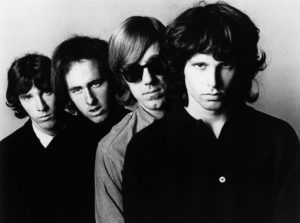
“Hot is momentary. It quickly turns to ashes. But cool stays cool,” said Robert Pogue Harrison, discussing Jim Morrison, the Doors, and the “ethos of cool” last year. He saw it as the triumph of Apollo over Dionysus.

Former Stanford fellow Chris Fleming has undertaken a study of  “Theoretical Cool,” in the current Sydney Review of Books. As an associate professor of philosophy at the Western Sydney University, he had “a dawning realization that would take many years to coalesce: cool in the humanities isn’t that different from cool in other areas of cultural life, like planking, hotdog-legs photography, mason jar rehabilitation, and novels whose main character is a city.” It’s funny … and deadly serious, too, and surfaced in my Facebook feed. As he explained, “I wrote this, using only words.”

As for the photos below from his Facebook page, the author takes a shot at “cool” himself, in its various guises, some we might recognize.

In his words, then:

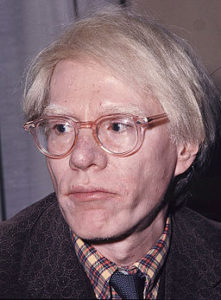
“The great Romantic injunction offered by the Aspiring Cool of Instagram to their potential audience is watch me not caring about whether or not you watch me (but please do watch me). The double imperative isn’t just a product of social media; the mating call of almost every VCP (Very Cool Person) – and every aspiring rebel – walking the street is: Look at me – I’m amazing! / Don’t you look at me – I don’t fucking care what you think! Which brings us necessarily to Andy Warhol, that erstwhile king of Union Square Weltschmerz, who gave us one of the clearest renderings of this double injunction. As far as I can recall, the only time Warhol ever looked like he had an elevated heartrate was when an interviewer suggested that he courted attention. In 1980 Warhol toured Miami Beach for his exhibition ‘Jews of the 20th Century’ at the Lowe Art Museum, when a reporter makes this statement:

Interviewer: Your work tends to be … I don’t want to use the word ‘sensational,’ because that connotes something bad, but you want attention…

WarholOh noNo, that’s not true! I just work most of the time and … well, they make me do this … so …

The story of “Maurice Wu” demonstrates the perils and micromeasurements of cool. The lad  arrived in Sydney via Hong Kong and was introduced to Fleming’s high school class. In the parochial school, “Brother Anianus put his arm around the new boy and announced to all of us: ‘This is Maurice Wu – and I bet he can breakdance better than any of you!'”

“The problem was that breakdancing had been very popular at our school, like that groovy Saturday Night Fever dancing before it (or so my older brother swears, although one can never tell with him), but that time had passed and breakdancing was now something of a joke. Unaware, Brother Anianus pushed on: ‘Go on, Maurice, show them your moves!’ Maurice stepped to the side of the podium and proceeded to chainwave, robot, and donkey – all a capella – for about a minute. At the conclusion there was just the creak and whoosh of the fans above our heads – and then the whole year erupted in hysterical, ironic cheers, clapping, whooping, screaming ersatz approval. The year meeting ended. Unaware, Brother Anianus and Maurice Wu thought they’d done very well. It was, in fact, catastrophic (which is why I’ve used the pseudonym ‘Maurice Wu’).”

“Brother Anianus was really saying to us ‘Hey, listen up, funky town inhabitants – this guy is cool to the max.’ But it could only have the opposite effect – for a number of reasons. One is temporal. The historical miss here was very small; it had probably only been about one or two years since break dancing was at peak cool, at least at my Sydney suburban Catholic (ie. uncool) school. But something having-been-recently-cool is often not a mere approximation of being cool, only slightly less so. Despite the resurgence of vinyl, cool’s movement is often digital, not analogue. Although there are gradations of cool, at its peak, a near miss of cool is not like a near miss of a hole in golf or a near miss in a game of darts, where points decrease relative to the distance of the miss. No. In certain very delicate situations, trying to hit cool and missing it by a little is like hitting the wrong note on piano by a semi-tone: the smallest error will affect the biggest dissonance. (It didn’t help in this instance, of course, that the advocate here was a middle-aged man in a long white robe with a huge crucifix hanging from his neck – and whose name was pronounced, at least by us, as ‘any anus.’)”

Fleming describes “normcore” as “a cyborg word combining ‘normal’ and ‘hardcore.’” He continues, “Apart from being It, what exactly was normcore? To the outsider, normcore basically looks like what your uncle might wear to an engagement party at Sizzler: white Reeboks, a polo shirt, and Lowes sourced, bad-fitting jeans. Except, of course, it’s not like that at all; that’s just your uncle. Normcore only looks like that to, well, almost everyone. But ‘radical’ culture is often just like that.”

As he explains, “a music video director wearing Hush Puppies and mum jeans in a Manhattan bar isn’t the same as … someone who isn’t a music video director wearing Hush Puppies and mum jeans in … a bar somewhere else. Again, normcore only looks like a loaned collection from Jerry Seinfeld’s wardrobe. To those in the know, it’s nothing of the sort. Just as an airport beagle can tell the difference between bowel cancer, a land mine, and MDMA residue at 100 metres, the truly cool can tell the difference between, say, K-Mart’s ‘Active’ running shoe line and Cristóbal Balenciaga’s Triple S trainers. (Apparently such a distinction exists, although it is lost on me.)”
King of Cool … for awhile.

He concludes: “Cool, of course, is one of taste’s dynamics, a silent, unavowable face of fashion. We can’t reliably predict its path because it never announces its itinerary. Its minimal requirement is simply to not be where it has just been; as such, the only rigorous science we can apply to it is hindsight. As Walter Benjamin reminded us many years ago, fashion more generally, articulates ‘the eternal recurrence of the new’.  Cool is one antidote to the tendency for people’s taste to reify at a particular historical moment. We are familiar enough with the opposite: we see a person sitting on a train wrapped in a stonewash denim jacket, fluorescent parachute pants, and a hairspray-frozen bouffant which looks like a half-deflated basketball, and think quietly to ourselves ‘1983 was a pretty big year for you, huh?’ The idea is that at some point in our lives, for whatever reason, we became incredibly sensitive to the world around us; we might have had – to paraphrase lyrics from Dirty Dancing – the time of our lives – and as a result, we were dropped into a kind of temporal amber which preserved us like some insect from the Cretaceous period. 1983 passed but the uniform remained. This isn’t cool; the only amber the truly cool person is interested in is craft beer. They will not be frozen. (Of course, if the person on the train is 23, then all bets are off; along with the stonewash, this person is also sporting invisible inverted commas: they are quoting the 80s. To confuse this with the genuinely uncool is like believing, on the basis of her name and plethora of crucifixes, that Madonna was a nun.)”

Read the whole thing here.


<<< Previous Series of PostssepNext Series of Posts >>>
