Reading the “Inferno” in Ukraine: “a millennium-long class in surviving hell with poetry”

January 20th, 2024

Share

How is the shelling of Kyiv akin to Dante’s Inferno? Ukrainian Poet Ilya Kaminsky (we’ve written about him here and here and here) calls it “a millennium-long class in surviving hell with poetry, through music, imagery, and poetry’s willingness to look without flinching at the details of both terror and wonder: in a strange way, this book is a call to courage.” He adds: “The poem is outside of history, like snow and rain and wind.”

An excerpt or two from his piece in
Asymptote Journal:

I have a friend who, before she ran from Kyiv as Russia bombarded the city in early 2022, spent weeks shivering in the bomb shelters as the city was shelled.

Ilya Kaminsky explains why poetry matters. (Photo by Slowking)

At first, she first recited poems by heart, and then she began to translate the poems she remembered.

That is how she got through the hours.

Who is to tell me after this that poetry doesn’t matter?

***

Somewhere in Ukraine right now, my friend who publishes books orders printers in the bombed out city of Kharkiv to produce thousands of copies of Inferno. The trucks deliver weapons into Kharkiv. And, going back, empty, they decide to pick up thousands of copies of Dante’s Inferno.

This is an image of war that happens as I write it: cars are bringing weapons into the besieged city that’s bombed daily, and they leave full of books.

***

Opening Dante’s Inferno enrolls the reader in a millennium-long class in surviving hell with poetry, through music, imagery, and poetry’s willingness to look without flinching at the details of both terror and wonder: in a strange way, this book is a call to courage.

***
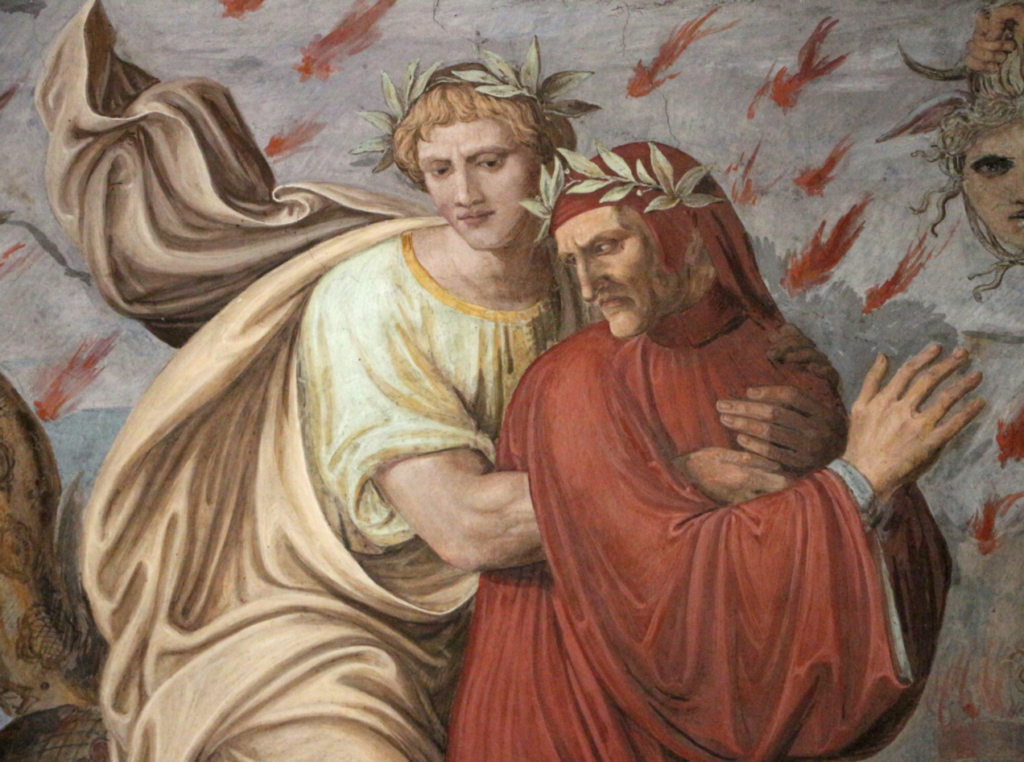
In the underworld Dante meets his enemies and heroes—great thinkers, murderers, poets, politicians—but no one is too monumental. They are all trying to stay relevant to a living man, all too human, fragile, grotesque, not unlike ourselves, trying to say something that still matters.

Read the whole thing here.

Meanwhile, the journal reminds us: as support for Ukraine wavers in the US, we at Asymptote have kept up our coverage of the region also through Elina Sventsytska’s devastating poetry, a review of Oksana Lutsyshyna’s latest award-winning novel in English translation, and a dispatch about the chilling aftermath of a Russian dissident’s self-immolation.

Czesław Miłosz and the “wonder eclipse”

January 9th, 2024
Share
His constant regret: that human experience eludes description.

In 2022, Tikkun published an article by the writer Lucien Zell, “The Wonder Eclipse: Scaling the Cliffs of Milosz,” in which he discusses his six-week Community of Writers” master class led by Pulitzer-prizewinning poet Robert Hass. The inevitable subject was Czesław Miłosz, since Hass’s life was transfigured by his contact with the Polish Nobelist. Hass became his foremost translator into English. Well, so many lives were changed by Miłosz. Mine too.

Zell discusses an interesting translation imbroglio with Miłosz’s 1936 poem “Encounter” in which the poet recalls a wagon ride through frozen Lithuanian fields at dawn. The final lines are famous:

A pupil of wonder, too.

O my love, where are they, where are they going
The flash of a hand, streak of movement, rustle of pebbles.
I ask not out of sorrow, but in wonder.
(Trans. by the poet and Lillian Vallee)

However, on a trip to Poland, another Polish poet told Hass that the poem’s final word (in Polish: zamyślenia) meant, not ‘wonder’, but, rather, ‘pensive contemplation’. “In class, Hass’s sharp scowl well-described his shock and dismay at his ‘poor’ translation . . . till, upon returning to Berkeley and rechecking his notes, he confirmed, breaking into a relieved chuckle, that Milosz himself had suggested ‘wonder’ as the appropriate English rendering of the term. In one of my course’s break-out rooms, we discussed the possibility that Milosz’s perspective had shifted enough to revise his initial poetic impulse, to the extent that by the time he found himself exiled to California (circa 1960s-70s-80s), his own ‘pensive contemplation’ had transmuted to ‘wonder.’”

Hass also described a moment when a colleague, recalling Milosz’s experiences of war and displacement, diagnosed Miłosz with ‘survivor’s guilt.’ Hass corrected him: “No, not guilt—wonder.” As Miłosz wrote in Witness of Poetry: “What surrounds us, here and now, is not guaranteed. It could just as well not exist—and so man constructs poetry out of the remnants found in ruins.” And so, I suspect, we construct our lives, too.

Joseph Brodsky thinks one basic mark of my poetry,” Milosz remarked, in an interview with Renata Gorczyńska, “is the constant regret that human experience eludes description.” Zell recalled what Milosz wrote in a passage from his poem “Notes”: “CONSOLATION: Calm down. Both your sins and your good deeds will be lost in oblivion.”

Read the rest here. And read the whole poem “Encounter” here.

Postscript: Meanwhile, don’t forget to read my own take on the great poet of California, who happened to write in Polish in Czesław Miłosz: A California Life. (Articles about that here.)

According to Cory Oldweiler writing about Czesław Miłosz: A California Life (Berkeley: Heyday Books, 2021) in The Los Angeles Review of Books, “Haven lets us into her thought processes, even when she is questioning them, and lovingly recreates conversations — in the relative present, at a café with Robert Hass as they thumb through Miłosz’s 2001 volume New and Collected Poems; and in the recent past, at Miłosz’s Grizzly Peak home as the poet drinks bourbon and chats with friends into the wee hours.”

Said Ilya Kaminsky, author of Deaf Republic
: Czesław Miłosz: A California Life asks about the meaning of exile, about the possibilities of a new home, about the transformation of a poetic perspective, about alienation and the building of literary bridges. But in the end, the book asks one big, nearly impossible question: How did the great Polish exile Miłosz change his newfound home—and how did California, after so many years, transform Miłosz’s own metaphysics? For it is a metaphysical question, after all: How does a place change the poet, and what does a poet do to shift our perspective on the place? On this unending journey, Cynthia L. Haven is an illuminating guide, one who brings knowledge, precision, and grace. There is much to learn from this book about Miłosz and California, yes, but also about poetry and the world.”

Eminent critic Leon Wieseltier had the final word: “Cynthia Haven’s book is delicious. She evokes so much so vividly and so intelligently; for me her pages were a restoration of a richer and less lonely time. And her intuition is right: Czeslaw Milosz and California are indeed a chapter in each other’s history.” 

Accept no imitations!

Can metaphysical ugliness promote beauty?

January 1st, 2024
Share
Proust lover Trevor Cribben Merrill

How do authors get away with shallow, shabby, venal, morally deficient characters who appall us … but nevertheless, we read on? Trevor Cribben Merrill, author of Minor Indignities, explains: “the ‘spirit of the author’ shields the reader from the characters, ‘drawing the poison’ from their negative qualities of arrogant stupidity, shallowness, and triviality.” He writes about it on Genealogies of Modernity, a project supported by the National Endowment for the Humanities to explain “how we became modern.”

Trevor writes: “This essay is about as close as I have come to articulating an artistic credo.” Excerpt from “Three Lessons in Beauty” below:

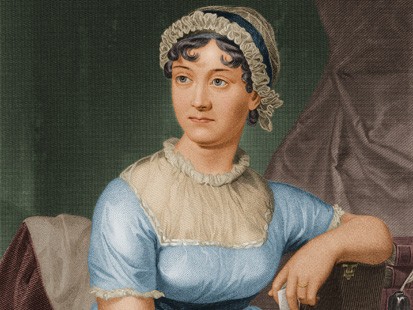
We would not want to spend time with Proust’s snobs. In their most honest moments, even his characters describe the fancy dinner parties they attend as boring and stifling. But to read about these soirées, and the people at them, is another matter. Similarly, if we were to encounter him in real life, Jane Austen’s Mr. Collins would be a bore; on the page, he is at once a bore, and, with his absurd boasts about the size of the chimney-piece at Rosings Park, a pure delight. In both cases the authors make us enjoy the sort of people we would try to flee at a cocktail party. It is not only that Proust’s prose and metaphors are exquisite, but that he turns the wretched maneuverings and deceit of his snobs into poetry. Out of pretense, dullness, and even malice, Austen, too, makes art.

The formal innovations of the great masters always have a certain discreetness about them,” he writes. [italics his]

His characters disgust us, and yet…

Recently while sick in bed I listened to Beethoven’s Piano Sonata 31, Op. 110 performed first by Rudolf Serkin and then by Glenn Gould. Composed in 1821, Op. 110 is the next to last of the composer’s piano sonatas, and falls squarely in his “late” period, during which he created many of his most beautiful and formally adventurous works. Beethoven is known for bridging classical and romantic styles. In his late years, however, he was also drawn to the contrapuntal music of the earlier baroque period.

The Op. 110 sonata is especially notable for its third movement, which employs musical structures from different moments in the history of music: classical homophony (a melody played by the right hand unfolding over chords played gently by the left); a more impassioned, stormy section expressing romantic emotion; and a fugue divided into two parts. In Serkin’s interpretation, and even more so in Gould’s, this fugue, built on a short, ascending theme, sounds very much like Bach. By paying reverent homage to the polyphony of Bach and Handel, Beethoven, as if by accident, created a novelty in the homophonic form par excellence, the sonata.

Can’t catch her in the act.

In one of his essays Milan Kundera praises this third movement of the Op. 110 sonata for “its extraordinary heterogeneity of emotion and form.” And yet, he adds, “the listener does not realize this, because the complexity seems so natural and simple.” From this beguiling naturalness Kundera draws the following lesson: “the formal innovations of the great masters always have a certain discreetness about them; such is true perfection; only among the small masters [petits maîtres] does novelty seek to call attention to itself.”

This observation calls to mind Virginia Woolf’s comment about Jane Austen: “of all the great writers,” she is “the most difficult to catch in the act.” One of Austen’s formal innovations occurs in Northanger Abbey, where she makes her “defense of the novel” as an art that gives “unaffected pleasure” while truthfully representing human nature in beautiful language. Austen admired Henry Fielding, who included mini-essays on the novel at the beginning of each of the eighteen books of Tom Jones.

When she shares her own thoughts on fiction half a century after Fielding, however, she makes them emerge seamlessly from her characters’ obsession with Gothic fiction, and—with the discretion of a great master—tucks them in at the end of chapter five. What in Fielding comes across as theoretical reflection added on to the fictional narrative is in Austen woven into the work’s fabric. In this way she keeps one foot in the aesthetic of the eighteenth-century novel, with its obtrusively playful authorial interventions, while bringing a new level of unity and polish to her chosen form.

To what other artists or works of art might Kundera’s insight apply? Because the kinds of formal innovations he singles out avoid drawing attention to themselves, it takes a certain amount of knowledge about a given art form to come up with good examples. And conversely, attempting to catch a glimpse of such shy novelties promotes a deeper appreciation for the habits of great artists as well as for the inner workings of artistic tradition. 

Read the whole thing here.

Poet Helen Pinkerton on the “gentle preference” of Bartleby

December 28th, 2023
Share
Melville

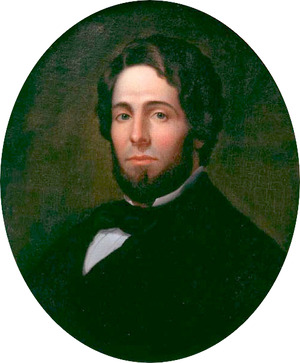
We wrote some time ago about Stanford’s upcoming “Another Look” event on Herman Melville‘s long short story Bartleby, the Scrivener: A Story of Wall Street. It’s coming up fast on Monday, January 8 at 7 p.m. (PST) in the Stanford Humanities Center’s Levinthal Hall (This is a hybrid event, so you can come in person or via zoom, but we encourage you to register either way here).

Panelists will include Stanford Prof. Robert Pogue Harrison, author, director of Another Look, host of the radio talk show and podcast series Entitled Opinions, and a regular contributor to the New York Review of Books, and Stanford Prof. Tobias Wolff, one of America’s leading writers and the founding director of Another Look, as well as a recipient of the National Medal of Arts. Two special guests will round out the high-powered panel out to four: Robert’s brother Thomas Harrison, professor of European Languages and Transcultural Studies at the University of California, Los Angeles, and Katie Peterson, an award-winning poet and Stanford alum. 

The upcoming events brought to mind the late Helen Pinkerton, Stanford’s Melville scholar and poet, who wrote Melville’s Confidence Men and American Politics in the 1850s. Los Angeles poet and friend Timothy Steele wrote an excellent and eloquent appreciation here.

Helen died on this day six years ago, December 28, at the age of 90, but her friend and longtime correspondent (I introduced them) was Patrick Kurp. Many of you will know him from his superb and indefatigable blogging over at Anecdotal Evidence. I wrote him to ask if she had written anything about Melville’s 1853 short wonder of a tale.

Poets Helen Pinkerton and Turner Cassity with me at a Stanford reading.

He responded by email:

“Thanks for reminding me of Helen. I don’t remember Bartleby coming up in conversation. Most of our Melville talk was devoted to his Civil War poetry and, of course, Moby-Dick.

“Perhaps you’ve already thought of this, but see her suite of five poems titled ‘Melvilleana’ (p. 38 in Taken in Faith; p. 55 in A Journey of the Mind). The second in the series is Bartleby the Scrivener, which comes with the obvious epigraph: ‘I prefer not to.’ Here it is:

His gentle preference endures,
In some of us as a bitter indignation,
In some as willfulness or whim,
Or new philosophy.

History’s strict demand ensures
Survival only of the strict creation:
Our anger’s cause exposed in him,
Our longing not to be.

Patrick added, “Naturally, Helen turns even Melville into a Thomistic thinker.” And so she does.

(Read more about Helen Pinkerton here. And please register for the Jan. 8 discussion of Bartleby here.)

Christmas cards from faraway friends

December 24th, 2023
Share

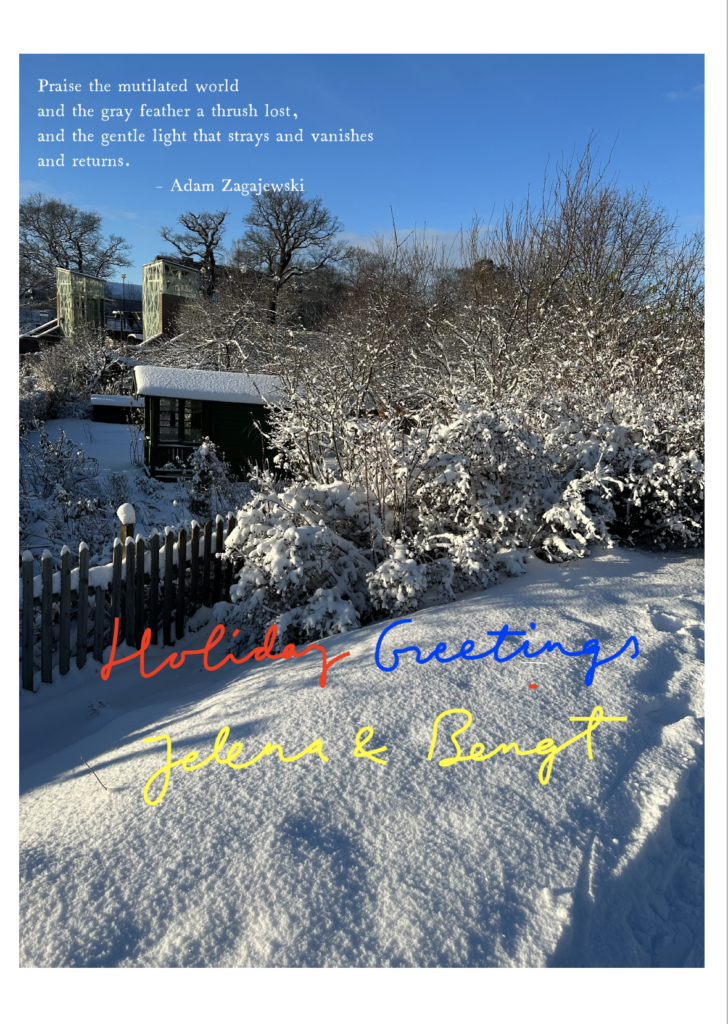
Couldn’t resist a last-minute Christmas post with two seasonal holiday cards from from faraway friends. The first is from award-winning author (and translator) Bengt Jangfeldt, writing from Stockholm. He cites the words of our mutual friend, the Polish poet and friend Adam Zagajewski, who died in 2021 (still hard to write those words), whose lines from “Try to Praise the Mutilated World,” translated by the matchless Clare Cavanagh, were never more timely, never more urgent.

The second is from Oslo-based Swedish poet and translator Håkan Sandell, and features a more traditional
winter image, a young girl braving the northern winter weather and Arctic darkness with a candle.

Wherever you are, I hope the holiday brings peace, love, and healing for our mutilated world.

Angels Herald the NYC Holiday Season – and Paris and Avignon celebrate, too!

December 23rd, 2023
Share

A post from our New York City-based (but frequently world travelling) photographer Zygmunt Malinowski. We’ve written about him here and here and here, among other places.

“Right across the Rockefeller center Christmas tree at Promenade angels herald the holiday season overlooking Christian Dior colorful display – several stories high, on the Saks 5th Ave building facade. In the evening this magical display comes alive with dazzling lights when the astrology clock spins accompanied by holiday music. On hand are two girls – they could be Rockettes – decked out in holiday best. They give out fliers inviting visitors to see Christmas Spectacular /Starring the Radio City Rockettes at ‘iconic’ Radio City Music Hall.

Zygmunt is a pro, but he wasn’t the only one taking photos of the season. Farther afield in France, Maria Adle Besson, who heads Think Tank Ivy Plus European Leaders in Paris, celebrated the season at the Hôtel National des Invalides, a prominent Paris landmark, with its famous gilded Dome. (Her friend is Kerry Halferty Hardy.) Visitors can explore the history of France, through the Musée de l’Armée’s collections and the Tomb of Napoleon I in particular, though right now, its theme is Christmas.

And a few quick shots from an overcast Christmas in Avignon…


<<< Previous Series of PostssepNext Series of Posts >>>