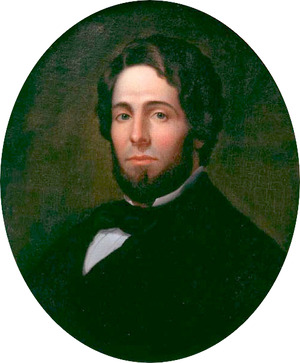
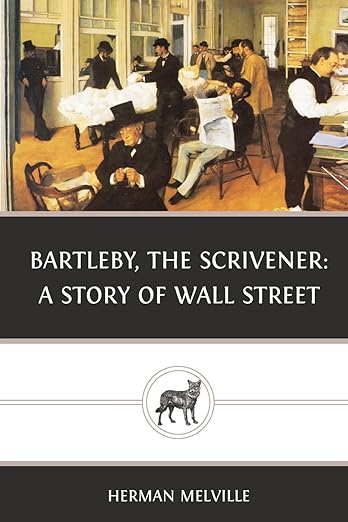
Please join us for a discussion of Herman Melville‘s classic short story Bartleby, the Scrivener: A Story of Wall Street at 7 p.m. (PST) on Monday, January 8, at Levinthal Hall in the Stanford Humanities Center at 424 Santa Teresa Street on the Stanford campus. This is a hybrid event, so you can come in person or via zoom, but we encourage you to register either way (link below).
Panelists will include Stanford Prof. Robert Pogue Harrison, author, director of Another Look, host of the radio talk show and podcast series Entitled Opinions, and a regular contributor to the New York Review of Books, and Stanford Prof. Tobias Wolff, one of America’s leading writers and the founding director of Another Look, as well as a recipient of the National Medal of Arts. Two special guests will round out the high-powered panel out to four: Robert’s brother Thomas Harrison, professor of European Languages and Transcultural Studies at the University of California, Los Angeles, and Katie Peterson, an award-winning poet, professor of English at UC-Davis, and a Stanford alum.
Melville is most famous for his masterpiece Moby Dick, but his 1853 Bartleby is a short wonder, and his protagonist’s repeated “I prefer not to” is one of the most famous lines in American literature. Novelist Sophie Hannah, writing in The Independent, called it “a flawless and ambiguous work of art.” She writes, “Bartleby, blank in character, tests the characters of others. … Bartleby is pure enigma.”
The short story is famous and widely available – buy a copy on amazon or abebooks.com, in local libraries and in bookstores. It’s also widely available online – google for links.
This event is sponsored by the Stanford Division of Literatures, Cultures, and Languages, the Stanford Humanities Center, and the Continuing Studies Program at Stanford.
For some perspectives on the twentieth century take on the long short story, you might check out the 1970 cult classic of the same name, starring Paul Scofield and John McEnery, here. You can see a short clip over the 2001 remake here. Better yet, read Melville. His long short story (it’s about 30 pages) will surprise you.
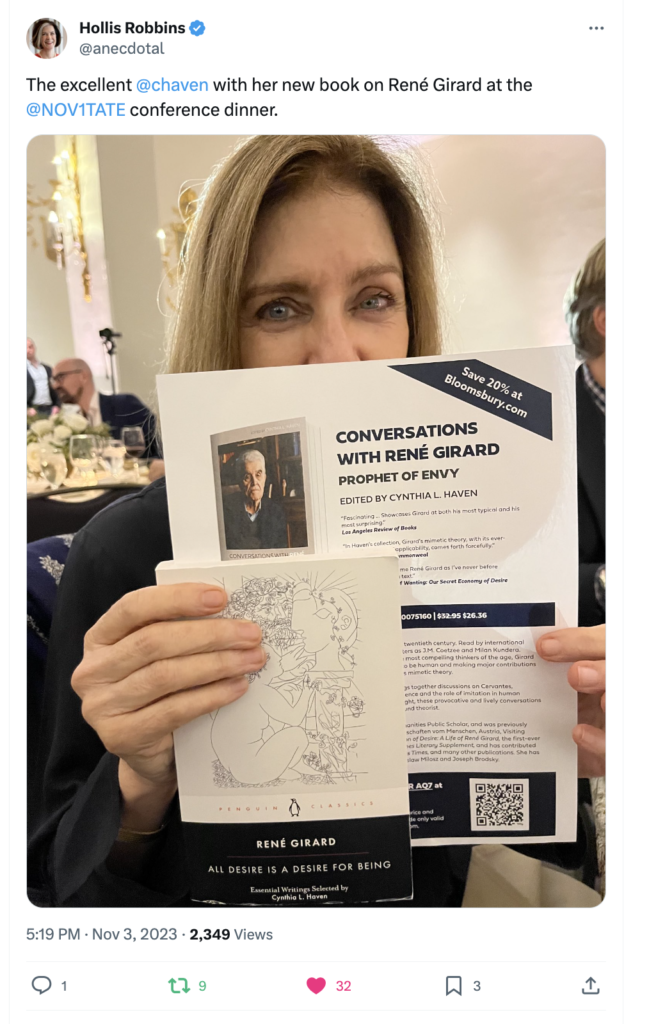
I’m late telling Book Haven readers about my most recent honor: From Luke Burgis’s remarks at the inaugural NOVITĀTE conference earlier this month, in presenting me with the inaugural Novitāte Award:
This first ever NOVITĀTE award goes to someone whose work embodies “New Models of Thought and Desire”, which this gathering is all about. She has carved her own (anti-mimetic) path inside and outside the world of academia, oftentimes while standing at the periphery—which is where the misunderstood, and sometimes even the scapegoats, lie.
Cynthia’s work has been not only intellectually illuminating for me personally—I couldn’t have written my own book, Wanting, without it—but also edifying.
This award may not be prestigious—yet!—and it comes with a relatively paltry cash prize of $1,000 (we’ll work on that, too!)—but you are the first recipient, and the most worthy that I could think of. I’d like to invite you to the stage to accept this First Annual NOVITĀTE Award for making an outstanding contribution to this year’s theme. Please join me honoring the 2023 award winner: Cynthia Haven.
Cynthia, you are a special person who I’m proud to call a friend. This event would not have been the same without you. You’ve done so much good work for so many years. Nearly every time we talk you remind me of what it’s all truly about. Our time on this earth is very short. As René Girard reminded us ( and as you often remind me), we don’t know how much time we have left. None of us do. You’ve inspired me with a sense of urgency—with a quickening of heart and spirit. And for that I want to thank you.
Postscript: I almost forgot to include my own brief comments on acceptance of the award: “When Luke first told me about his idea for a conference, I didn’t connect its title, Novitāte, to Paul’s Letter to the Romans: “And be not conformed to this world: but be transformed by the renewing of your mind.” These words have been a touchstone for me over the years. What I came to understand is this: We can’t change the past, we can’t change our height or our parentage. We can’t change our emotions, at least not directly, because they happen at lightning speed and shapeshift as they move. We certainly can’t change other people – we’ve all tried that. But the one thing we can change the way we think about things – that is in our power. We can rewire our brains a little, and interrupt cycles of envy or resentment or retaliation by shifting our perspective, unsettling our mind a bit. It’s something that can begin now, tonight, and continue for the rest of our days. This week has given us a toolkit for doing so – we can begin renewing our minds now. That may be the best way to commemorate René’s centenary year. I’m deeply honored by this award. Thank you, Luke. Thank you everyone. And most of all, thank you René, and happy birthday.”
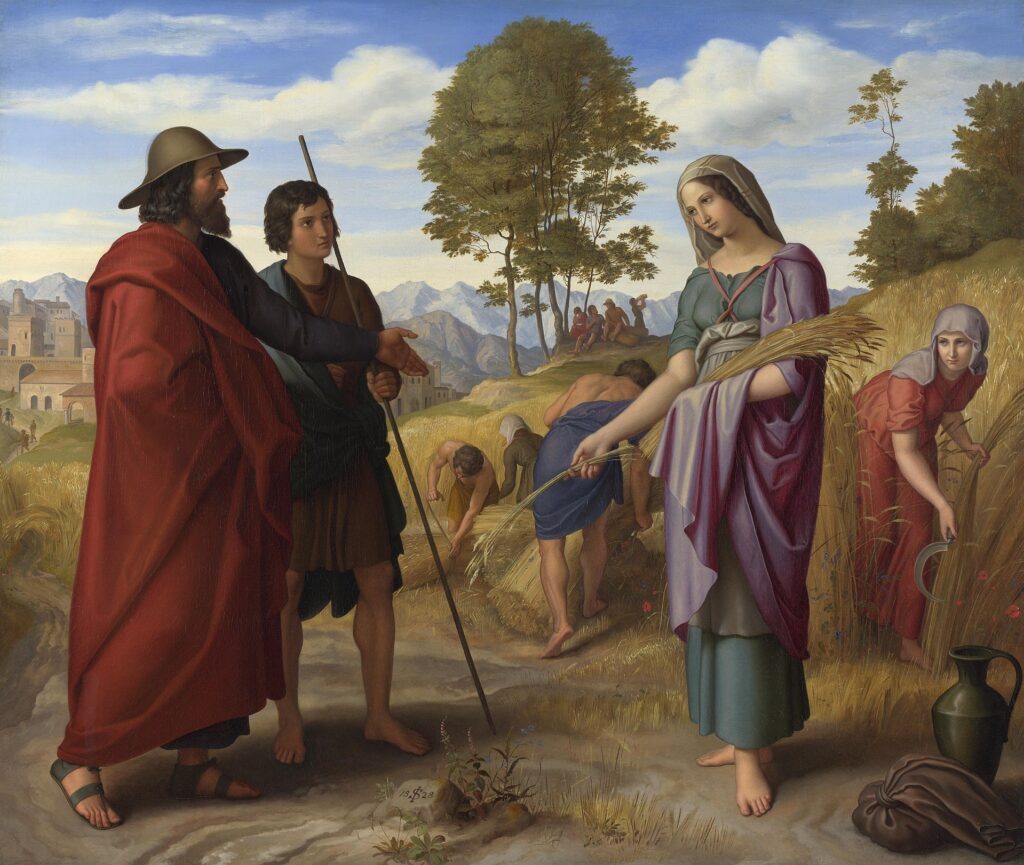
“Wherever you go, I will go…your people will be my people.” Ruth converts, as does Ali, not because Naomi convinces her that Judaism is doctrinally right, but because she is impressed by Naomi’s character and wants to join her culture.” ~ Zohar Atkins
Much ink has already been spilled on Ayaan Hirsi Ali‘s conversion to Christianity, which she announced in the online journal Unherd a week ago. It was less of a surprise to me, perhaps. During my interview with the Somali-born activist six years ago, published in Stanford Magazine as “To Change People’s Minds”, she made an offhand, slightly dismissive remark about Christianity in passing, and I told her I was one of “them.” She was momentarily off balance, startled, apologetic – and for a brief instant we were both wide awake and open. And then it passed.
My first encounter with her was a dozen years ago, as I attended an onstage interview in Palo Alto with writer Susanne Pari as interlocutor. The two women were discussing terrorism, and Pari brought up the case of Faisal Shahzad, an apparently assimilated Muslim who turned to jihad and attempted to bomb Times Square. But Hirsi Ali interrupted Pari’s comments about his job loss as a possible motive for his actions.
“I have a problem with that,” she said. “If we even remotely entertain’the notion that foreclosure and health care and normal adversity is an excuse to take away the life of another, then,“ she said, “we are really going down.”
Podcaster, substacker, rabbi Zohar Atkins
“He has a freaking MBA!” she exploded. “I know people who can’t read!” Hirsi Ali denied that “the only therapy is to get an SUV and fill it with explosives.” Nor did she excuse Nidal Malik Hasan, who “got to be a major in a voluntary army.”
“Why don’t we take these people at their word? ” she asked. “Why don’t we examine their convictions?”
Pari noted that, in her Iran-American childhood, there was only one mosque in the nation, in Washington D.C., and now there are thousands (“1150,” corrected Hirsi Ali). She took Hirsi Ali, a fellow atheist, to task for the conclusion of her book Infidel, in which she suggests that the love and tolerance exhibited in much of Christianity might be a force to subdue Islam. “I was very naughty!” Hirsi Ali admitted with a chuckle.
Pari said the very idea “was disturbing to me, frankly…What were you thinking?”
Ayaan Hirsi Ali – who lives under a fatwa, still – responded in a beat: “The superficial answer is, if every Muslim became Christian, I would live without bodyguards.”
Back to the present. Over at Zohar Atkins‘s substack, What Is Called Thinking, the rabbi, poet, and theologian argues that “Religion is Social,” and that in fact Ayaan converted to Christianity … via Judaism. (You can catch my podcast with him, “From Envy to Forgiveness,”here.)
He begins:
Outspoken New Atheist Aayan Hirsi Ali has converted to Christianity, but her arguments are more psychological and consequentialist than fundamentalist—she makes no mention of Christian dogma or creed. Instead, she focuses on her own need for meaning and her appreciation for the legacy of Christian culture and civilization when compared to other alternatives. Her conversion story thus bothered Christians and atheists alike. The former, because they felt she had failed to address the question of the truth of Christian doctrine; the latter because they felt she had failed to address the untruth of it. Ross Douthat wrote a compelling piece on her conversion that points to a lacuna in her conversion story, aside from the truth question: “the weirdness of religious experience.” She didn’t just convert because religion is a source of meaning, he says, but because the strangeness of religious experience provokes a recognition that the world itself is strange.
Speaking from a Jewish perspective, the hardline distinction between the truth of a religion, its practical civilizational value, and its psychological import falls away. Both Ali’s Christian critics and atheist critics take too shallow (though possibly an appropriately Protestant) view of religion. In the story of Ruth’s conversion to Judaism, now the paradigmatic script for all Jewish converts, we note that her motivations are primarily social and relational. “Wherever you go, I will go…your people will be my people.” Ruth converts, as does Ali, not because Naomi convinces her that Judaism is doctrinally right, but because she is impressed by Naomi’s character and wants to join her culture.
Jews read the story of Ruth on Shavuot, the Holiday that celebrates the Revelation at Sinai, because the distinction between divine revelation and interdependent communal formation are two sides of the same coin. Some people join because of supernatural experience, per Douthat’s point. But some join because they like the people who have supernatural experience. Or better yet, sitting at the table of deeply kind, deeply thoughtful, deeply inspiring people can itself be a kind of supernatural experience — even if it requires no belief in virgin births or split seas. In the middle ages, Maimonides pushed to shore up Jewish theology along 13 principles of faith, but historically Judaism has drawn friends and converts not because people agreed with these logical and abstract principles but because it has impressed them as a way of life.
Read the whole thing here. It’s wonderful and worth it.
Words of wisdom:Think you’re past it at 70, 80, or 90? Here’s a cheering thought. I recently found this sentence somewhere on the internet: “In case you’re worried that you’re too old to pursue your dreams … Frank Lloyd Wright completed a third of his life’s work between the ages of 80 and 92.” Was it his best work? I don’t know. Does it really matter?
Another story in a similar vein, from a different part of the world: Swedish film director and theater Ingmar Bergman turned 70 on July 14, 1988. On that occasion, he received a letter of advice from the Japanese filmmaker and painter Akira Kurosawa. Here is the letter he sent, posted on Facebook … and, inevitably, elsewhere on the internet. Kurosawa contends: “A Human Is Not Really Capable of Creating Really Good Works Until He Reaches 80.”
He concludes: “Let us hold together for the sake of movies.”
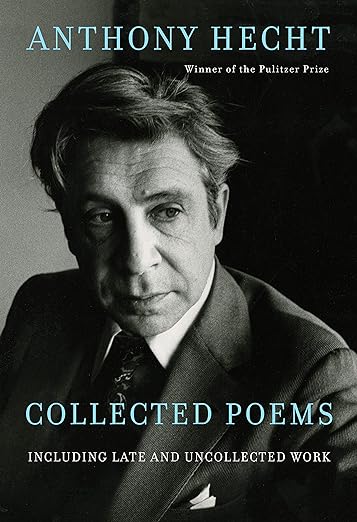
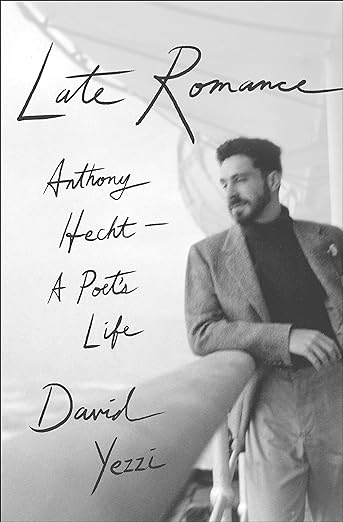
Poet David Mason writes about friend and fellow poet Anthony Hecht in The Wall Street Journal. Two books mark Hecht’s 100th birthday this year – a biography and a new collected. Mason writes:
“The poet and critic David Yezzi’s Late Romance (St. Martin’s) is a first-rate literary biography, graceful, thorough and moving, without the bloat commonly found in such endeavors. And the English publisher and editor Philip Hoy has given us a superb Collected Poems: Including Late and Uncollected Work (Knopf), including not only work from Hecht’s previous collections but also seven beautiful ‘Late Poems From Liguria’ and a worthwhile selection of uncollected work. Since Hecht is among the most erudite of modern poets, steeped in the Bible as well as Shakespeare, readers may be pleased to find nearly 50 pages of textual notes, plus a brief chronology.”
Mason writes: “Born to a family of nonobservant Jews in New York City, Hecht grew up with privilege but also a sense of life’s precariousness. His father frequently failed in business and thrice attempted suicide. His mother’s social pretensions eventually got on Hecht’s nerves. At the age of 6 he saw one result of the 1929 market crash—the blanket-covered bodies of suicides lying on the sidewalks.”
Hecht served in the U.S. Army during World War II, and served as a translator from French and German at ‘the liberation of Flossenbürg Concentration Camp . . . an hour’s drive from his Jewish great-grandfather’s hometown of Buttenheim,’ Yezzi writes. “What he saw in that camp and in combat ruined his sleep.”
His marriage was unhappy. Patricia Harris, a fashion model whom Sylvia Plath called as “pleasant as razor blades,” eventually moved to Brussels. His second marriage iin 1971, to Helen D’Alessandro, celebrated in his marvelous book Millions of Strange Shadows (1977).
Mason’s review concludes: “Readers will differ in their own responses to individual works, but no other recent poet in English has left us such an abundant display of what a certain kind of talent—ironic, formal, elegant—can do. He was my teacher and friend, which leaves me echoing what he said of his friend Joseph Brodsky: ‘Reader, dwell with his poems.’”
Read the whole thing over at the Wall Street Journalhere.
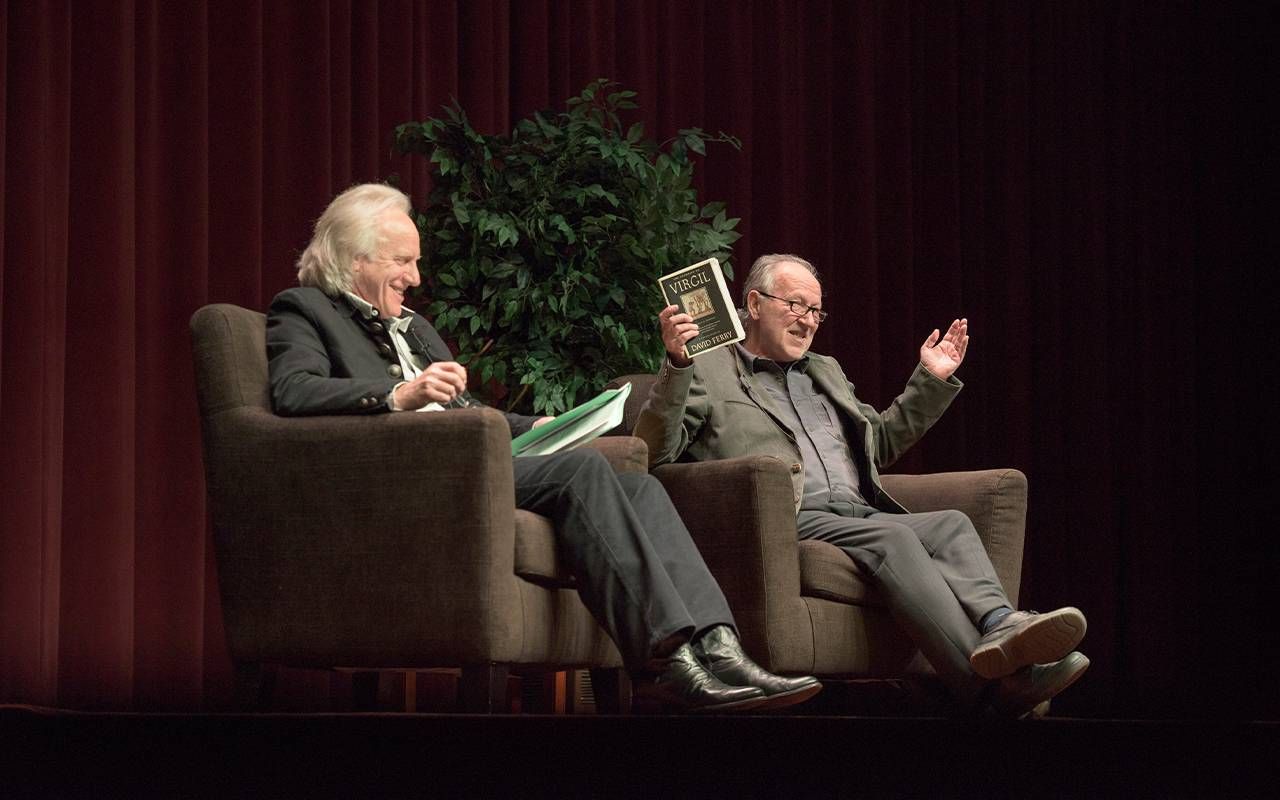
Werner Herzog, on right, with Robert Harrison | Credit: L.A. Cicero/Stanford News Service
Stanford’s “Another Look” club has gotten a lot of praise in the years since it was founded in 2012 by novelist Tobias Wolff (and now under the directorship of Robert Pogue Harrison) – among other surprises, we werefeatured in The Guardian. We’ve bragged about Another Look’s triumphs here and here and here.
Someone else has taken up the banner. Journalist Sharon McDonnell wrote an article in Next Avenue about books clubs generally, but with special attention to Stanford’s Another Look. Next Avenue, a digital journalism publication produced by Twin Cities PBS. The PBS site has served over 80 million people, and millions more through its platforms and partnerships.
Her article begins:
The Continuing Studies Program of Stanford University was stunned when 961 people attended its book club’s free talk about A Room of One’s Own, Virginia Woolf‘s 1929 classic, in April 2023, in person or via Zoom.
But then, it’s not just any book club. German filmmaker Werner Herzog has been a speaker. Philip Roth agreed to an interview. The club always features panelists who are scholars or writers, who discuss a book before opening to audience questions. Ostensibly for the Stanford community, the club is in reality for anyone who wants to listen, since its talks are posted on the Another Look Book Club website and on YouTube.
Woolf on Zoom
This club shines a spotlight on books that are forgotten or merit more attention, some plucked from obscurity, others read decades ago, that are short (200 pages or so) and in print. Almost entirely fiction, book choices span almost 400 years and three continents, from The Queen’s Gambit, which became a Netflix series, to The Princesse de Clèves, a 1678 book most people are unfamiliar with. (Unless you’re a public sector worker in France, whose entrance exams include questions on it. After Nicolas Sarkozy, then President of France, denounced the book in 2009, sales doubled in a year.)
Ask the Dust, a 1939 novel set in Depression-era Los Angeles, The Lover, a novel about Vietnam in French Colonial days and The Strange Case of Dr. Jekyll and Mr. Hyde show the club’s range.
Why so much fiction?
Read the rest of the story here. And join our mailing list here.