Posts Tagged ‘Friedrich Nietzsche’

Playwright Matthew Gasda: “We are all Girardians now—whether we know it or not.”

Tuesday, July 30th, 2024

Share
René Girard on the Stanford campus.

Interest in René Girard from an unexpected source: the current issue of Air Mail, which describes itself as a “mobile-first digital weekly that unfolds like the better weekend editions of your favorite newspapers.” Dramatist, novelist, and poet Matthew Gasda writes: “We are all Girardians now—whether we know it or not. The concepts minted in the early 1960s by the late French literary critic and philosopher René Girard explain the pathologies of the smartphone age as elegantly as Freud’s explained bourgeois neuroses at the turn of the last century.”
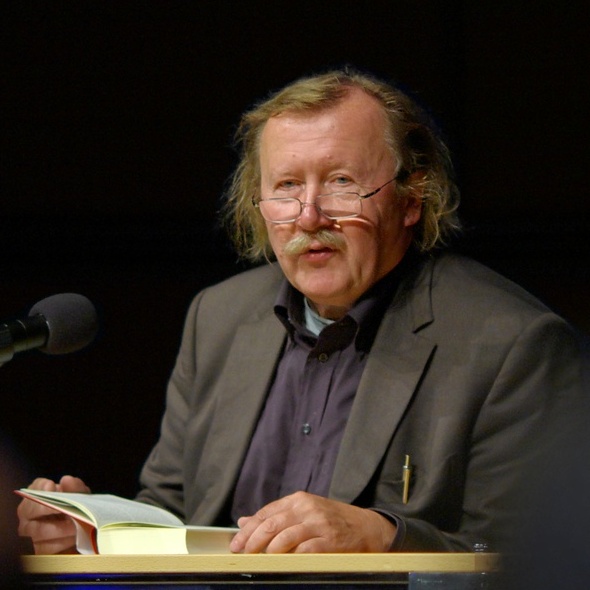
Gaspa is a voice worth listening to. Two years ago, the New York Times noted: “Matthew Gasda spent years writing plays on his electric typewriter, and almost no one seemed to care. With Dimes Square, his depiction of a downtown crowd, he has an underground hit.” And so he’s been a voice worth listening to ever since.

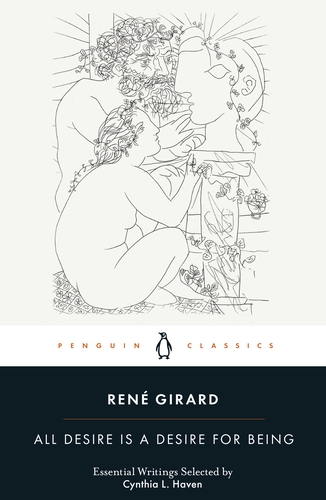
Which is especially good for All Desire is a Desire for Being, just out with Penguin Classics U.S. (The U.K. edition was published last year.) You can buy the book here. Meanwhile, read Gasda’s review of the book.

He continues: “While Freud was renowned in his own time, Girard, who died in 2015, is still far from a household name. A distinguished scholar and the author of nearly 30 books, he never broke through to a mass audience like his contemporary Harold Bloom, who transitioned from high theory to cultural critiques in the 1990s. Girard was not a public intellectual; he was a quietly influential, if recondite, academic: the Velvet Underground, not the Beatles.”

“Just as you don’t need to be a Marxist or a Freudian to find class struggle or the Oedipus complex useful, you do not need to be a Girardian, or a Catholic, to find Girard useful. Girard’s dogged attention to what he calls, echoing Nietzsche, the ‘eternal return’ of the scapegoat mechanism (the cruelty and stupidity of the mob) deserves our attention. Girard warns us, with moving pathos, that we are always on the verge of reprising the horrors of history; we are still prone, especially in times of crisis and change, to retribution and revenge (digital or physical).”

He continues: “All Desire Is a Desire for Being is not a reissue but a new collection of essential essays and aphorisms selected by [Cynthia] Haven. It’s the ideal way to read Girard, who only ever had one big idea. He was the kind of thinker Isaiah Berlin would have called a hedgehog, not a fox. But what an idea. Mimetic rivalry is a profound and disturbing discovery, and Girard dedicated his long and distinguished career to its explication. If he is right, we have to question whether the world we are actively creating—or perhaps passively re-creating—is not very, very wrong.”

Read the whole thing here. The bad news: it’s behind a sort of a paywall. The good news: all you have to do is include your email address at the bottom of the page to get access. Enjoy.

Man on the rise: Matthew Gaspa (Photo: Air Mail)

René Girard in Penguin Classics – now out! “This is a big deal, so buckle up.”

Sunday, June 25th, 2023
Share

Finally! All Desire is a Desire for Being, a Penguin Classics anthology of Stanford Prof. René Girard‘s “essential writings,” is officially out this week! To my knowledge, the French theorist is the first Stanford faculty to be celebrated in the eminent series. I was honored that Penguin invited me to create this collection of Girard’s finest essays.

Prof. William Johnsen, who directs the publication of a series of books on René Girard and his mimetic theory at the Michigan State University Press, spoke about All Desire is a Desire for Being at the Paris centenary conference for Girard’s 100th birthday, at the Institut Catholique de Paris last week. Here are Bill Johnsen’s words on that occasion:

Since All Desire is a Desire for Being is 95 percent pure Girard, it would seem that only the editor’s preface, selections and apparatus would be left to discuss. That’s all fine, I love what is in it, I am really happy to see especially the piece on Nietzsche from Paul Dumouchel‘s collection which shows the high-flying, often joyful colloques that Jean-Pierrre Dupuy and Dumouchel organized to integrate Girard with his intellectual peers in the Eighties, but I want to emphasize where Girard now appears (Penguin) and what that means: as my President says, this is a big deal.

In his interviews with Nadine Dormoy in 1988, René Girard attributes the 20,000 dependable French readers of serious books to the Écoles, and the smaller American audience to the silos of academic specialization. I have heard the same figure of 20,000 assured readers from Benoît Chantre so I assume that French readership is steady.

In 2006 I was invited by Girard and Robert Hamerton-Kelly to be Publications Chair of Imitatio, a project funded by The Thiel Foundation. One of the earliest projects was the public launch of Achever Clausewitz and Imitatio in Paris in 2007.

Imitatio had begun supporting production costs for books on mimetic theory at Michigan State University Press to find this readership. (We all should be grateful for their more than ten years of support, the slowest startup in Thiel’s stable). When Lindy Fishburne of The Thiel Foundation later assumed the directorship of Imitatio, she urged us to follow our core mission, to develop Girard’s ideas, to find them a greater recognition and circulation worldwide but also in the English-speaking world to catch up with the breadth of his readership in France and Europe.

I have spent my entire adult life in universities. As the editor of the series, I had some plans for how to spread ideas from the university to that outer world by influencing teachers who would influence their students who leave when they graduate, but I had no idea on how to approach the public directly, or whether America, despite its number of educated readers (my university alone granted 9,500 degrees this last spring), had any number approaching 20,000 dependable readers of serious books.

If Girard was besieged by reporters in Paris after Achever Clausewitz was published in 2007, nothing like that happened in America in 2009 when we published it in English as Battling to the End. In 2011, at a conference on Mimetic Theory and World Religions at Berkeley, I suggested to Cynthia Haven that she write a book about René Girard, something personal and accessible enough to help find him a wider audience in English. Girard had told me in appreciation that Haven had written specifically about the Clausewitz book in The San Francisco Chronicle, as well as other public venues in her one-person publicity campaign.

Evolution of Desire (2018) is informative both about Girard and his ideas, placing him effectively in a historical context by reference to his life and work and interviewing many people who knew him. She is both respectful and warm to her subject. It would be impossible to disentangle the circumstances that have made her book so popular: Girard himself, this century’s recognition of him with honorary degrees and awards, his election to the L’Académie Française, several organisations worldwide devoted to his work. But Haven has played a key role with her book and her reputation – she is a well-known and respected serious author for serious readers who bridges the academic and the public book world. She has her sights always on the dependable core readership of serious books in English.

My field is British Studies, I could go on and on about Penguin so I need to just summarize here. Penguin books has been the most successful venture in gaining a wide audience for serious books in English for the last one hundred years. Nothing else even comes close. So congratulations to Cynthia on publishing All Desire is a Desire for Being at Penguin, and to everyone else working in mimetic theory: this is a big deal, so buckle up.

Morgan Meis’s “The Drunken Silenus” and the way the mind works – and sometimes doesn’t

Monday, July 20th, 2020
Share

To understand Silenus, Rubens first had to make a moral of him.

A review of Morgan Meis‘s The Drunken Silenus appeared in Art in America, and it’s so much fun – lively and insulting and laudatory at once (in the spirit of the book) – that I thought it would be a great way to wind up a very long Monday. Here’s how Jackson Arn’s piece ends, by comparing Morgan Meis with Nietzsche: 

If there’s a progenitor for this kind of writing, it’s Nietzsche. This is a strange thing to point out, since Meis spends much of The Drunken Silenus insulting Nietzsche. He says The Birth of Tragedy was the only totally worthwhile book Nietzsche ever wrote. He says Nietzsche was full of shit. Mostly, he says Nietzsche was crazy. He calls Nietzsche crazy, or insane, or stark-raving mad at least a dozen times in the book, until it becomes a kind of gangster nickname, like Fat Tony or One-Ball Riley, at once a put-down and a term of endearment.

Name-calling, of course, was a Nietzsche trademark, and Meis is never more Nietzschean than when he’s slinging mud at a dead man. He has Nietzsche’s skepticism of progress, on both a historical and an expository level, as well as Nietzsche’s gift for making arguments in brief, brilliant flashes. His ideal form is the compressed, Nietzschean aphorism. Some of these will change your perception of Rubens so utterly that they are likely to seem perfectly obvious in hindsight, like Meis’s observation that in order to understand Silenus, Rubens first had to make a mortal out of him. Other aphorisms work the opposite way, flirting with obviousness from the outset—for instance, “A terrible father can produce a great son or daughter. A great father will produce terrible offspring just as often as not.” To borrow from the comedian John Mulaney, someone else who tells stories in spirals, “Well . . . yeah, that’s how all of life works.”

He specialized in name-calling.

Loose, strange, essayistic books live or die on a single question: are their various parts connected because they actually have something to say to each other, or because the author has forced them together? The clutter of ideas and subjects doesn’t necessarily have to cohere into a thesis, but at some point it should gain enough momentum to turn of its own accord, suggesting something more than what the author uses it to show. Meis achieves this tricky feat, and does so in large part because his book is really about, per Mulaney, how all of life works.

How humiliating, to write that last sentence—how pretentious, how arrogant! I can’t even imagine writing a whole book like The Drunken Silenus, but I’m glad Meis did. He’s willing to risk redundancy and pretentiousness, because he knows he has something worth risking them for. For all his casual displays of brilliance, his goal isn’t to introduce readers to stunning new ideas but to remind them of a depressing old idea: existence is long, painful, and pointless, and while art can do a lot to lessen the load, it can’t carry all of it. An unsexy point, which he makes very sexily.

Read the whole thing here. It’s fun.

Greek tragedy is a nasty, bawdy business

Thursday, June 4th, 2020
Share

The paunchy Silenus, “part hostage, part acolyte” of Dionysus, in Rubens’s painting

Peter Paul Rubens had a minor obsession with Silenus, and plucked him from a bit player in Titian’s painting and made him a sordid star in his own right. Now Morgan Meis (we’ve written about him here and here) has just published The Drunken Silenus: On Gods, Goats, and the Cracks in Reality with Slant Books. The book’s genesis: Morgan, a contributor to The New Yorker, found himself living in Antwerp, Rubens’s town. He had absolutely no interest in him at all. “I didn’t even care about him enough to dislike him. My next thought was, ‘I’ll write a book about Rubens.'” From there he spirals into a meditation on Silenus (“part hostage, part acolyte” of Dionysus), Nietzsche, God, life and death.

An excerpt from Chapter 5:

Nietzsche did something very simple when he wrote The Birth of Tragedy. He asked himself a clear question, “What is the Dionysian?” and then he attempted to answer that question. His answer was that the Dionysian is a feeling of ecstatic oneness with the surrounding universe. That is why it is drunken and orgiastic. It is a losing of oneself. With Dionysus, you merge with the one pure life force. This is ecstasy. It is also a source of profound depression when you come back. You realize, after an orgiastic ecstasy, that your particular individuality does not matter. You would rather be erased in the complete cosmic overabundance. That’s what happened with Silenus. He had a taste of this drunken dissolution in the One. It made him stop caring. It made him say to King Midas that the best thing for any man is not to have been born at all. The second best thing would be to die quickly. Never living at at all means never facing the profound disappointment of being. It means never experiencing the pain of being an individual when all that matters is the whole.

Titian gave Silenus a bit part (at left, with ass)

The Greeks gave an entire art form to that thought, to that feeling of root despair that comes along with the embrace of real life. That’s the way Nietzsche saw it. Tragedy – the particular form of Greek tragedy – starts with the bleating of the goats and the wild shit going on in the Dionysian forest.

It’s all there in the satyr plays. Jaunty numbers, the satyr plays were like festival entertainment. People would dress up like goats and tell dirty stories and run around the stage making lewd jokes. These festivals go back to the beginning, the harvest, the celebrations around another season of life. The Greek tragedies go back there. The satyr plays were part of the overall entertainment. The Greeks would set up scenarios where everybody was screwing everybody else and the whole lot of them would be very drunk.

There’s no point putting a fine veneer on any of this. It was rough and it was nasty. It all came from the secret rites and the cultic behavior around Dionysus. These were harvest celebrations and they smelled of the earth. If you want to get a sense of what the satyr plays were all about the first thing you should do is take off all your clothes and then go outside into the country somewhere and roll around in the dirt screaming and crying. Then you’ll be getting into the proper mood. Drink a liter of rot-gut whisky, foul stuff, the stuff that comes in plastic containers and has the word “OI” in its brand name. Drink a liter of that while you are rolling around in the dirt and then get a few of your friends to punch you in the face while everyone chants the same phrase, whatever phrase you like, over and over again for about an hour. Then drink some more whisky and piss on yourself. Now you are ready to to fuck the bare earth. Just hump away in the dirt. Try to fuck the actual earth, the core of her.

Now you’re in the mood to understand a satyr play. Now you’re in the mood to hang around with Silenus. Indeed, if you actually go through with this whole plan he may show up. If anything could actually bring Silenus, today, out of his hiding and into the fields of Pennsylvania, or wherever you are going to do this, it would be the above-described behavior. I do believe you’d have a chance at meeting the man/demigod in the flesh, the illustrious and wretched Silenus.

Read more here.

Author Morgan Meis was footloose in Antwerp … this book is what happened.


Who is the last man? Peter Sloterdijk on Nietzsche

Tuesday, July 16th, 2019
Share

Peter Sloterdijk is one of the most controversial thinkers in the world. In many ways, he is the heir of Friedrich Nietzsche, who is sometimes said to have inaugurated the 20th century. A year ago, the Book Haven published a summary of Sloterdijk’s Entitled Opinions conversation with radio host Robert Harrison. The podcast and summary was also posted at the Los Angeles Review of Books here. In December, we published a full transcript in German at Berlin’s Die Welt. You can read it here. Last week, the Los Angeles Review of Books published the full transcript, in English, here

A few excerpts below:

Harrison: I find that when it comes to Nietzsche being a prophet, in some ways he was blind about what would be the most dominant feature of the coming century, though many people consider him the inaugurator of the 20th century. He has almost nothing to say about the dominance of modern technology in the era to come. Okay, you can say that this was a blind spot in his thinking. In Zarathustra, especially in part four, however, he has a prophetic vision that has to do with our own time. He thinks of the last men. Who is the last man? In what way are the parameters of that last man contained within … for example, the consumerist of our own society, who is complacent?

We’re no longer dealing with the petite bourgeoisie or those 19th-century categories. It’s very much the contemporary citizen as a global citizen, a kind of capitalist of consumerism who does not think beyond the creaturely comforts of this day and the next day. There’s something in his thinking that promises to show us a way to transcend this fatality. European civilization after all these centuries and millennia cannot end in the last men. Or will it?

Sloterdijk: Here, in Nietzsche, appears a major problem that will occupy humanity in the centuries to come: the question of how to maintain what I call the vertical tension inside the human being. For everything that has to do with verticality, Nietzsche is the specialist coming from the tradition. He discovered this new type of problem — how to maintain the vertical tension if the higher region has been removed. As if Jacob’s Ladder, over which the angel can march up and down should still stand upright without having the support on the upper level. So there is still height, but no support from above. Everything has to be erected from below. The vertical tension has a rocket-like dynamic, a will to growth, and that can be easily expressed in biological terms. You can go back to Goethe, who said that all life is movement and extension, and from here you get to a less megalomaniac conception of growth.

World’s most controversial thinker? (Photo: Rainer Lück)

Harrison: Well, in fact, in Nietzsche Apostle, you speak about his extraordinary genius as a marketer of his own brand. You don’t merely invent a brand that then takes off in the market. What you do is create the market for the very brand that you’re promoting. And Nietzsche created a market for a brand of … I think it’s related to what you’re talking about, the ladder of having realized that — in the regime of the last man, a regime of egalitarianism — there will always be a drive for distinction. He marketed his philosophy as a promise, as a way to understand a need before it even became apparent to the world itself, that there was going to be a need for distinction in this world.

But you also say, somewhat prophetically, that he was promising losers a formula by which they could be on the side of winners. This was also part of his brand. Can you say something about this? When you speak about verticality, are you speaking about this need for distinction in this particular regime?

Sloterdijk: I think Nietzsche was among the very rare thinkers who had a feeling for the deep connection between moral philosophy and public relations. This can be shown by the subtitle of Zarathustra: Ein Buch für Alle und Keinen — “A Book for All and Nobody.” And I’m convinced that this is Nietzsche’s genius. This subtitle betrays something of his innermost drive. His way of polemics, as Heidegger would put it, was not really polemics. It was teaching, and so it was a kind of “action teaching” — action teaching like Joseph Beuys would call his performances. Nietzsche was a kind of action teacher writing a book for all and nobody, and discovering in so doing the very structure of higher morality.

PR man?

This kind of morality creates a field of behavior that is not applicable to living populations but traces the horizon for new generations to inhabit. This necessarily has to be a challenge, just as Buddhism was before it was brought out as an Indian form of gospel, as a way of salvation, just as the Christian Gospel was a pure challenge to the pagan environment of the former world. And so Nietzsche designs a horizon for those who in the morality markets of the future will distinguish themselves as individuals who show how the path of humanity can be continued. And in that context, you read this most provocative sentence from the introduction, the so-called prologue to Zarathustra: “Man is a rope between the animal and the Superman,” and you decide if you want to be a successful rope-walker or not. And if you are not successful as a rope-walker — you have nevertheless tried it.

That is the meaning of this philosophical pantomime that concludes the prologue of Zarathustra. He sees the rope-walker who has fallen down, and he says, “You made the danger. Out of danger you made your profession. There is nothing to despise in that, and for that reason I am going to bury you with my own hands.” That is Zarathustra’s message. It’s not success that decides everything. It is the will to remain within the movement and to walk on the rope, if you do not want to remain a part of the masses that are looking up and admiring people doing crazy things.

Read the whole thing here.

Dropping acid with Michel Foucault

Tuesday, June 18th, 2019
Share

What is it like to drop acid with Michel Foucault? Now there’s a whole book to tell you about the renowned French theorist’s rendezvous with LSD in 1975. From Los Angeles Review of Books‘ review of Simeon Wade’s Foucault in California (Heyday). The location, of all places, is Death Valley:

After picking up Foucault at the airport, Wade drives to his house, where the philosopher is treated to Tequila Sunrises and a small bowl of hashish. After a light dinner, [Wade’s friend Michael] Stoneman “sat down at the Yamaha grand and gave us a spirited reading of Scriabin’s Tenth Sonata, a work of pure sorcery.” The evening’s activities break the ice, making the French guest feel at home. After a few hours of slumber, the trio rise at dawn in order to reach the high desert before midday.

Wade, who has not yet mentioned the idea of taking LSD, finally decides to broach the delicate subject during the drive: “[W]e brought a powerful elixir, a kind of philosopher’s stone Michael happened upon. We thought you might enjoy a visionary quest in Death Valley.” Given that Foucault was not fluent in English, it is unclear if he really knew what Wade was talking about. Wade’s account of the events leading up to the trip has the air of a “kiss and tell” memoir, but in this case the act described is not sex with a celebrity but taking psychedelic drugs in an exotic locale. Every moment leading up to the hallucinogenic climax is described in lavish detail.

Author and subject.

When the trio finally reach Death Valley, they hike down to the Artists’ Palette, an alluvial fan at the base of a canyon. The moment of truth occurs when Stoneman produces the LSD and Foucault uncharacteristically freaks out: “Foucault appeared troubled and with grim countenance […] walked away.” Wade is forced to admit that his elaborate plan might be ruined; the last thing he and Stoneman wanted was a bad trip under the hot Death Valley sun. “We both knew that the potion taken under any kind of duress can discompose the unwilling. We certainly would not wish to force anything upon Michel.” When Foucault finally returns, he declares “with quizzical eyes that he wishe[s] to take only half as much, since this is his first experience with a potion so powerful.”

This was the response that Wade had feared the most: although Foucault had described the effects of LSD in one of his essays, he had never actually taken the drug. Wade and Stoneman were surprised because Foucault was a follower of Nietzsche who had always expressed a keen interest in all things Dionysian. Perhaps to save face, the philosopher, after a lengthy bout of indecision, asks Stoneman about the proper way of ingesting it. Much to Wade’s delight, the LSD plot is on again.

Read the whole thing here.