Archive for July, 2016

Nine ways to end lies. From Solzhenitsyn with love.

Saturday, July 30th, 2016

Share
Aleksandr_Solzhenitsyn

Nyet.

A few days ago we wrote about lies and totalitarianism. Then I revisited Nobel writer Alexander Solzhenitsyn‘s essay on the subject in The Washington Post. It was dated February 12, 1974, the day he was arrested and deported. It was published nearly a week later on February 18. The article a useful reminder that sometimes the Soviet society had a lot in common with our own – perhaps because both are predicated on human nature, which is pretty much the same anywhere.

“At one time we dared not even to whisper. Now we write and read samizdat, and sometimes when we gather in the smoking room at the Science Institute we complain frankly to one another: What kind of tricks are they playing on us, and where are they dragging us? Gratuitous boasting of cosmic achievements while there is poverty and destruction at home. Propping up remote, uncivilized regimes. Fanning up civil war. And we recklessly fostered Mao Tse-tung at our expense – and it will be we who are sent to war against him, and will have to go. Is there any way out? And they put on trial anybody they want, and they put sane people in asylums – always they, and we are powerless.”

Well, we’ve fanned wars, too. And propped up remote regimes. And we’ve sponsored monsters and then turned against them. This election year has convinced me that lies are a bi-partisan, non-partisan, international issue, throughout all ages.

Solzhenitsyn declared war – the only war within his power: the personal non-participation in lies. “This opens a breach in the imaginary encirclement caused by our inaction. It is the easiest thing to do for us, but the most devastating for the lies,” he wrote. “Because when people renounce lies it simply cuts short their existence. Like an infection, they can exist only in a living organism.”

Solzhenitsyn2

Solzhenitsyn in Cologne, 1974

It will be dangerous. “For young people who want to live with truth, this will, in the beginning, complicate their young lives very much, because the required recitations are stuffed with lies, and it is necessary to make a choice. But there are no loopholes for anybody who wants to be honest: On any given day any one of us will be confronted with at least one of the above-mentioned choices [actually, below-mentioned here – ED] even in the most secure of the technical sciences.”

“Either truth or falsehood: Toward spiritual independence, or toward spiritual servitude.”

You say it is still not easy? It is easier than self-immolation or a hunger strike, he writes. “And he who is not sufficiently courageous even to defend his soul – don’t let him be proud of his ‘progressive’ views, and don’t let him boast that he is an academician or a people’s artist, a merited figure, or a general – let him say to himself: I am in the herd, and a coward. It’s all the same to me as long as I’m fed and warm.”

His 9-point pledge, that he invites everyone to join, wherein you:

  • Will not henceforth write, sign, or print in any way a single phrase which in his opinion distorts the truth.
  • Will utter such a phrase neither in private conversation nor in the presence of many people, neither on his own behalf nor at the prompting of someone else, neither in the role of agitator, teacher, educator, nor in a theatrical role.
  • Will not depict, foster or broadcast a single idea which he can see is false or a distortion of the truth, whether it be in painting, sculpture, photography, technical science or music.
  • Will not cite out of context, either orally or written, a single quotation so as to please someone, to feather his own nest, to achieve success in his work, if he does not share completely the idea which is quoted, or if it does not accurately reflect the matter at issue.
  • Will not allow himself to be compelled to attend demonstrations or meetings if they are contrary to his desire or will, will neither take into hand nor raise into the air a poster or slogan which he does not completely accept.
  • Will not raise his hand to vote for a proposal with which he does not sincerely sympathize, will vote neither openly nor secretly for a person whom he considers unworthy or of doubtful abilities.
  • Will not allow himself to be dragged to a meeting where there can be expected a forced or distorted discussion of a question.
  • Will immediately walk out of a meeting, session, lecture, performance or film showing if he hears a speaker tell lies, or purvey ideological nonsense or shameless propaganda.
  • Will not subscribe to or buy a newspaper or magazine in which information is distorted and primary facts are concealed.

How the cult of personality turns everyone into a liar

Wednesday, July 27th, 2016
Share
Not a dictator, but a scholar. (Photo: Rachel Moltz)

Not a dictator, but a scholar. (Photo: Rachel Moltz)

When Mao Zedong died on September 9, 1976, hundreds of thousands of people poured into the streets, weeping over the dictator who is responsible for at least 50 million deaths.

According to Frank Dikötter of the University of Hong Kong, the cult of personality turns everyone into liars. “These are not true tears,” he told an audience at the Hoover Institution last week. “It’s not really clear who is really crying. Everyone knows there is lying. Not everyone knows who is lying.”

Dikötter is the author of Mao’s Great Famine: The History of China’s Most Devastating Catastrophe, which won the 2011 Samuel Johnson Prize, Britain’s most prestigious book award for non-fiction. He spoke at Hoover about “The Making of the Cult of Personality in the Twentieth Century.” He is working on a “global history of the cult of personality,” focusing on prominent dictators of the 20th century.

“Millions were led to the death as they cheered their master,” said Dikötter of Mao. “The cult of personality obliged everyone to become a sycophant, destroying their dignity in the process.”

The Dutch author quoted Dostoevsky‘s Grand Inquisitor in The Brothers Karamazovsaying the ruler has two tools at his disposal: on one hand magic and mystery, on the other, the sword. Yet “the cult of personality” is born of the age of democracy. “Dictators depend on popular support,” he said. A totalitarian ruler needs at least the illusion of a mandate at the ballot box.

ceausescu

Romania’s man about town.

“The rise and fall of dictatorships is often determined by the cult of personality,” Dikötter said. The creation of the cult is far from a solo effort; a dictator needs plenty of support. “There is, at least, a ministry of propaganda, an army of photographers, bureaucracy, whole sections of industry, the army.” Mao, for example, had a whole industry to produce cult objects. Under Pol Pot, who caused the death of millions, a whole prison was dedicated to printing images of the leader and developing cult objects. Dikötter said the regime failed precisely because Pol Pot was unable to establish himself as a cult personality.

 Dikötter noted that there were some excellent studies on the cult of personality, although in many cases scholarly efforts remain scattered. In the case of Germany, for instance, the first exhibition of cult objects about Hitler took place only five years ago. “It seems almost obscene to look at the shiny surfaces the state produces rather than at the horror it hides,” he said.

The shiny surfaces also have a practical purpose: “In a dictatorship, you develop the image and the cult so that you will not have to turn to force. That’s the point.”

mao

Forever young.

The ministry of propaganda, photographers and others have plenty of work to do. For example, Romania’s Nicolae Ceaușescu traveled the country so much that he seemed to be everywhere at once. He made a record 147 whistle-stop tours of the entire country between 1965 and 1973. Some regimes rubbed out the images of fallen aides and sidekicks from photos (Milan Kundera famously describes how Vladimír Clementis was erased in a 1948 photo when he fell from favor).  Ceaușescu went one step further: he had himself inserted himself into photos of meetings he never attended, sometimes meetings that occurred at the same time miles away from each other, suggesting a sort of bilocation. After his fall, the cult images came down very rapidly.

Adolf Hitler, author of the Holocaust, buffed his image throughout the 1930s. Popular images portrayed him as a vegetarian, non-drinking, non-smoking, hard-working, modest man – and not just in Germany. “You can read it in the New York Times,” said Dikötter – dictators make a point of courting the foreign press and journalists, and the favor is apparently returned. The Hitler Nobody Knows (1933) was almost a companion volume to Mein Kampf. Hitler is always seen without his glasses.

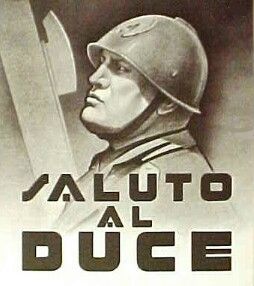
Propaganda presented Benito Mussolini as “good family man, a far-seeing statesman, a stern dictator,” said Dikötter. The voice of the leader is an important tool in the legend, and Mussolini used it for maximum effect in his balcony speeches – ““a metallic voice with sentences delivered like the blows of a hammer.” While many of Italy’s poor did not have ready access to the radio, loudspeakers suddenly appeared in the public square, to make sure they got the message.

mussolini2By contrast, genocidaire Joseph Stalin hardly speaks at all, but that’s just as important. He appears before millions of the Red Guards and says nothing. “By not speaking he becomes the center of gravity,” said Dikötter.

Ceaușescu, like the other dictators Dikötter studied, drew his inspiration from others. In his travels, “he was smitten by what he sees in China and Korea – he takes it quite seriously,” said Dikötter. “Dictators don’t do this on their own.”

They draw their lessons not only from other lands, but other histories. They must present themselves in an imaginative line of succession rather than as illegitimate upstarts who grabbed power. Thus, Stalin presides over the canonizing of Lenin. The Ethiopian genocidaire Mengistu Haile Mariam, responsible for killing 500,000 to 2,000,000 people, adopted the symbols and trappings of the Emperor Haile Selassie, whom he had killed and buried beneath the palace, before turning to Marxism-Leninism. Mussolini presented himself as the reincarnation of Caesar Augustus.

papadoc

Kim Il-sung presented himself as the tradition of thousands of years embodied in his very own person. “It’s difficult to pull it off, unless you have a hermetically sealed state, like North Korea,” said Dikötter.

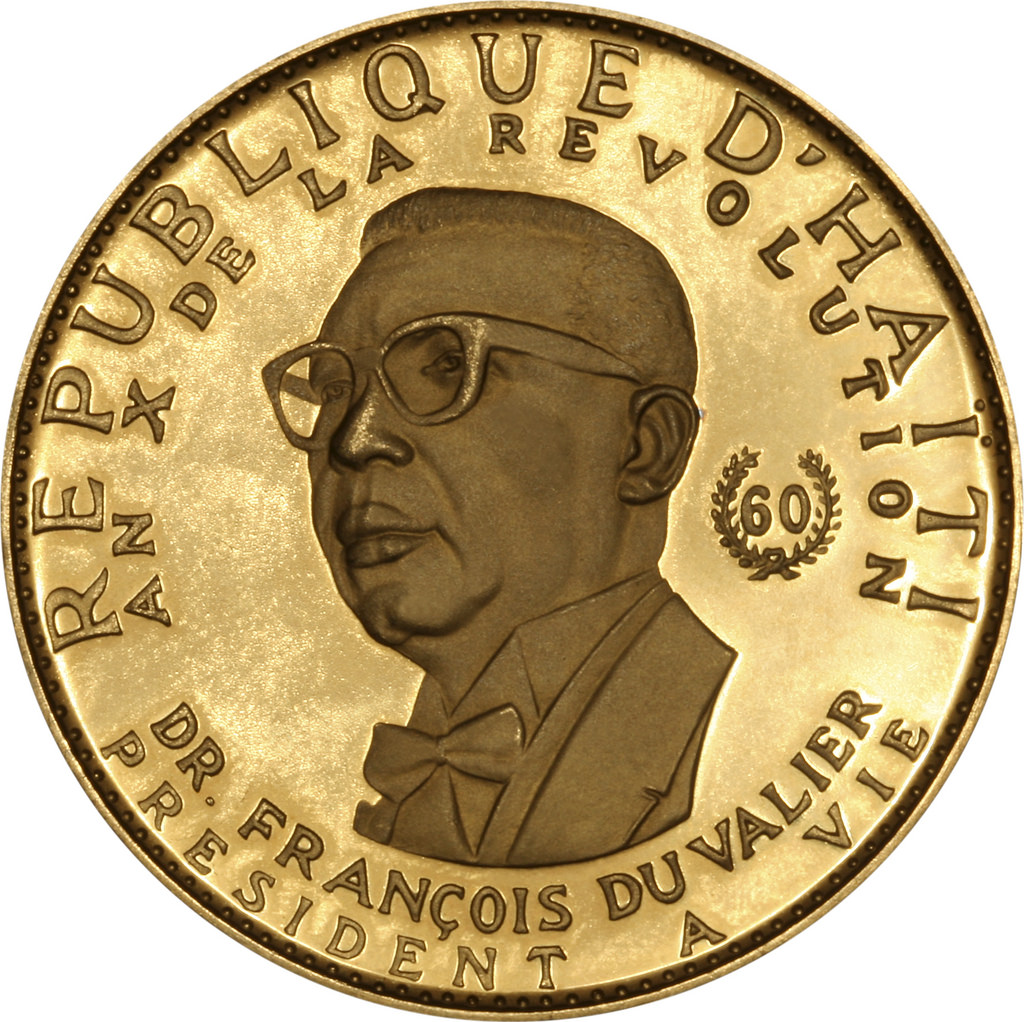
“Papa Doc” Duvalier in Haiti, who killed 30,000 to 60,000 of his countrymen, was the only one who reached into another world for his authority. He used voodoo as a prop to develop his cult of personality, and he took it very seriously. He came across to his minions as a gentle person in dark glasses, half-mumbling as if he were casting spells.

Yes, someone asked, but what happens when the dictator becomes sleek and very fat. Surely the starving and impoverished workers are no longer bedazzled by the ugly frog that waddles before them?

“Once the image develops, it tends to stay fixed,”said Dikötter. “It stays fixed and ever youthful, even though Mao in his last years looked pretty ghastly,” with black teeth, Lou Gehrig’s disease and, yes, very overweight.


The funeral of Mao: faking it.

A neurosurgeon’s road to compassion: “They need each other – the brain and the heart.”

Sunday, July 24th, 2016
Share
7B7812D2-72C1-413C-8D73-9846E9C4C8DA

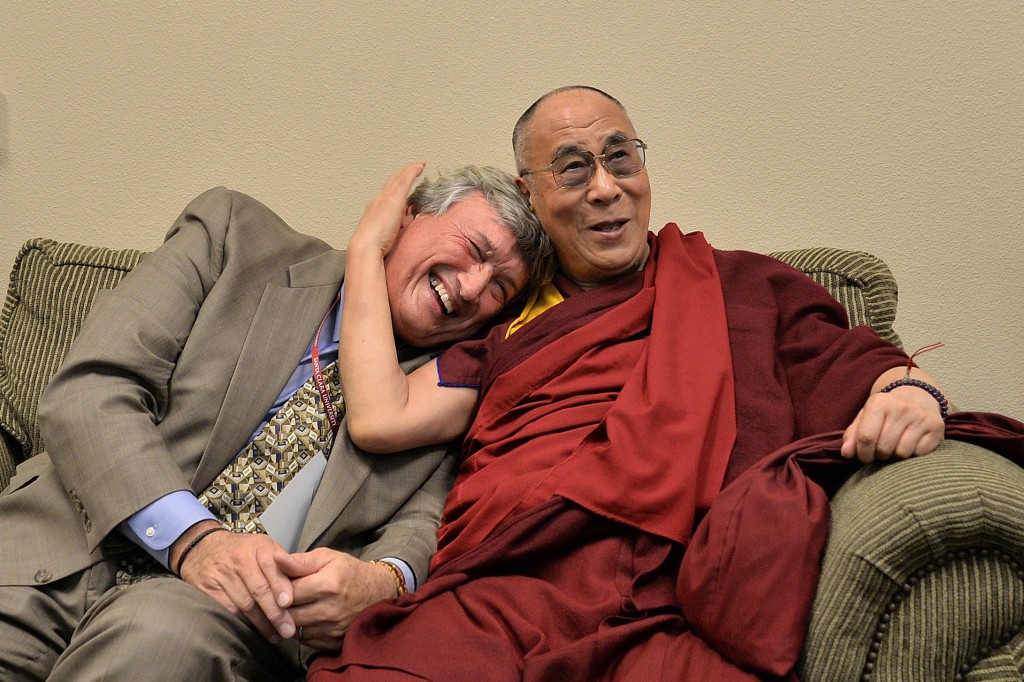
The good doctor with the Dalai Lama. (Photo: Firdaus Dhabhar)

Dr. James Doty is one of the more fascinating people I know – I’ve written about him here and here. He is the founder and director of Stanford’s Center for Compassion and Altruism Research and Education (CCARE, pronounced “see care”), which is at the forefront of a growing movement to bring the tools of psychology and neuroscience to the study of empathy, compassion and altruism. His friend, the Dalai Lama, is one of its benefactors.

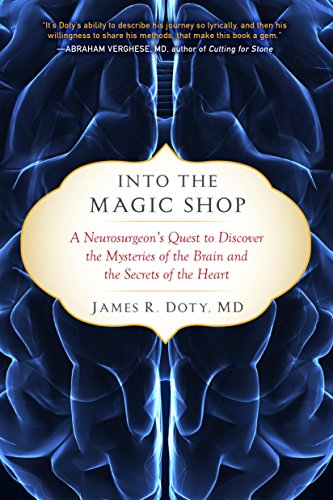
I visited him last week at his office to discuss his brand new book Into the Magic Shop: A Neurosurgeon’s Quest to Discover the Mysteries of the Brain and the Secrets of the Heart, which has quickly climbed the New York Times bestseller list. It’s terrific tale – and he assures me it’s all true. The book begins with his impoverished childhood on the edge of the Mojave Desert, the son of an alcoholic father and clinically depressed and suicidal mother. He describes his struggles to go through medical school, eventually becoming a distinguished neurosurgeon. But most of all, it tells of the important lessons he learned in a magic shop in a rundown strip mall when he was twelve years old.

A video clip of my 2010 interview with him is below. And here’s an excerpt from the introduction:

There’s a certain sound the scalp makes when it’s being ripped of of a skull – like a large piece of Velcro tearing away from it’s source. The sound is loud and angry and just a little bit sad. In medical school they don’t have a class that teaches you the sounds and smells of brain surgery. They should. The drone of the heavy drill as it bores through the skull. The bone saw that fills the operating room with the smell of summer sawdust as it carves a line connecting the burr holes made from the drill. The reluctant popping sound the skull makes as it is lifted away from the dura, the thick sac that covers the brain and serves as its last line of defense against the outside world. The scissors slowly slicing through the dura. When the brain is exposed you can see it move in rhythm with every heartbeat, and sometimes it seems that you can year it moan in protest at its own nakedness and vulnerability – its secrets exposed for all to see under the harsh lights of the operating room.

magic-shopThe boy looks small in the hospital gown and is almost swallowed up by the bed as he’s waiting to enter surgery.

“My nana prayed for me. And she prayed for you too.”

I hear the boy’s mother inhale and exhale loudly at this information, and I know she’s trying to be brave for her son. For herself. Maybe even for me. I run my hand through his hair. It is brown and long and fine – still more baby than boy. He tells me he just had a birthday.

“Do you want me to explain again what’s going to happen today, Champ, or are you ready?” He likes it when I call him Champ or Buddy.

“I’m going to sleep. You’re going to take the Ugly Thing out of my head so it doesn’t hurt anymore. Then I see my mommy and nana.”

The “Ugly Thing” is a medulloblastoma, the most common malignant brain tumor in children, and is located in the posterior fossa (the base of the skull). Medulloblastoma isn’t an easy word for an adult to pronounce, much less a four-year-old, no matter how precocious. Pediatric brain tumors really are ugly things, so I’m OK with the term. Medulloblastomas are misshapen and often grotesque invaders in the exquisite symmetry of the brain. They begin between the two lobes of the cerebellum and grow, ultimately compressing not only the cerebellum but also the brainstem, until finally blocking the pathways that allow the fluid in the brain to circulate. The brain is one of the most beautiful things I have ever seen, and to explore its mysteries and find ways to heal it is a privilege I have never taken for granted. …

I know both Mom and Grandma are scared. I hold each of their hands in turn, trying to reassure them and offer comfort. It’s never easy. A little boy’s morning headaches have become every parent’s worst nightmare. Mom trusts me. Grandma trusts God. I trust my team.

Together we will all try to save this boy’s life.

***

dalailama_news

Benefactor. (Photo: L.A. Cicero)

The surgeon assisting me is a senior resident in training and new to the team, but he is just as focused on the blood vessels, and brain tissue, and minutiae of removing this tumor as I am. We can’t think about our plans for the next day, or hospital politics, or our children, or our relationship trouble at home. It’s a form of hypervigilance, a single-pointed concentration almost like meditation. We train the mind and the mind trains the body. There’s an amazing rhythm and flow when you have a good team – everyone is in sync. Our minds and bodies work together as one coordinated intelligence.

I am removing the last piece of the tumor, which is attached to one of the major draining veins deep in the brain. The posterior fossa venous system is incredibly complex, and my assistant is suctioning fluids as I carefully resect the final remnant of the tumor. He lets his attention wander for a second, and in that second his suction tears the vein, and for the briefest moment everything stops.

Then all hell breaks loose.

The blood from the ripped vein fills the resection cavity, and blood begins to pour out of the wound of this beautiful little boy’s head. The anesthesiologist starts yelling that the child’s blood pressure is rapidly dropping and he can’t keep up with the blood loss. I need to clamp the vein and stop the bleeding, but it has retracted into a pool of blood, and I can’t see it. My suction alone can’t control the bleeding and my assistant’s hand is shaking too much to be of any help.

“He’s in full arrest!” the anesthesiologist screams. He has to scramble under the table because this little boy’s head is locked in a head frame, prone, with the back of his head opened up. The anesthesiologist starts compressing the boy’s chest while holding his other hand on his back, trying desperately to get his heart to start pumping. Fluids are being poured into the large IV lines. The heart’s first and most important job is to pump blood, and this magical pump that makes everything in the body possible has stopped. This four-year-old boy is bleeding to death on the table in front of me. As the anesthesiologist pumps on his chest, the wound continues to fill with blood. We have to stop the bleeding or he will die. The brain consumes 15 percent of the outflow of the hear and can survive only minutes after the heart stops. It needs blood and, more important, the oxygen that is in the blood. We are running out of time before the brain dies – they need each other – the brain and the heart.

(What happens? Read the rest of the story below…)

(more…)

Happy firthday to the mixed-up guy who invented Spoonerisms!

Friday, July 22nd, 2016
Share

tim120Another birthday tribute from Los Angeles poet, scholar, and friend Timothy Steele. Collect the whole set here and here and here and here, among other places. Meanwhile, today’s birthday boy:

Born on this day in 1844, William Spooner was for many years Dean and Warden of New College, Oxford. He became so famous for transposing the initial sounds of words that we now refer to such slips of the tongue as “Spoonerisms.” Errors attributed to him include an offer of assistance to a foot-weary acquaintance (“May I sew you to a sheet?”); a reproach of a lackadaisical student (“You have tasted a whole worm!”); a description of his favorite means of transportation (“a well-boiled icicle”); directions from Oxford to London (“Leave by the town drain”); and reassuring words about Providence (“Our Lord is a shoving leopard”).

spoonerThough some gems associated with Spooner are doubtless apocryphal, he does seem to have been almost congenitally disposed to mixing things up. He once spilled salt on a tablecloth and immediately poured claret over it. Giving guests a tour of his college, he warned them that a staircase they were about to descend was badly lit, then switched off the weak lighting, and led them down into total darkness. Also, he suffered from albinism, so his eyesight was poor. Reading lectures was a challenge, and he naturally mangled the text from time to time. It was reportedly during a formal address to farmers that he called them “noble tons of soil,” and it was during a speech before Queen Victoria that he said, “Which of us has not felt in his heart a half-warmed fish.”
When he died in 1930, Spooner was remembered not only for his eccentricities but also for his long and fruitful marriage (depending which account you read, he and his wife produced five or seven children), for his able administration of New College, and for his devotion to his students. Among the latter, Leonard Woolley (“Woolly of Ur”) recalled how, when he was young and clueless, Spooner convinced him to become an archeologist. Spooner had long been aware of his reputation, and his friends sometimes detected a subversive wit in his odd expressions, as in his remark to a colleague: “Your book fills a much needed gap.”

So hail, Dr. Spooner! It’s your Firthday on Basebook! (At right, is Leslie Ward’s 1898 caricature of Spooner for Vanity Fair.)

F. Scott Fitzgerald to wannabe writers: “Nothing any good isn’t hard.”

Monday, July 18th, 2016
Share
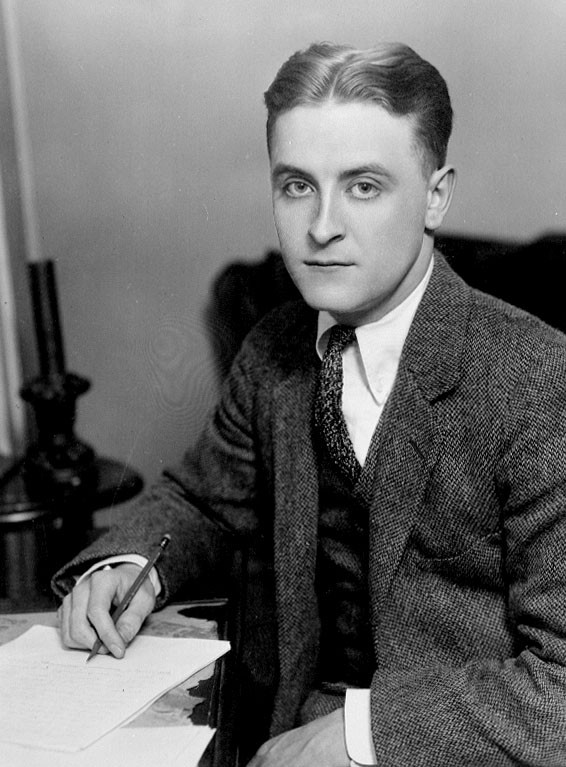
fitzgerald-1921

“You’ve got to sell your heart”: the author at 25.

It is a strange thing to write for a living. I’ve never really done anything else, since I was a teenager. And because I do it for a living, I write whether I feel like it or not. It has its good days and it has its bad. The last few weeks have been particularly grinding. So I found the blunt advice of F. Scott Fitzgerald, author of The Great Gatsbyto two young women writers of his acquaintance oddly bracing. “It is an awfully lonesome business,” he writes. And also, “Nothing any good isn’t hard.”

Letter #1 is to his to the daughter of a family friend, Frances Turnbull, a Radcliffe sophomore, who had sent the author a short story she had written. (You can read about the Turnbull home where famous writers visited, in an interview with her years later, here.) Letter #2 is to his own 15-year-old daughter, Frances Scott Fitzgerald. (She went on to write for The Washington Post and The New Yorker.)

The letters are from F. Scott Fitzgerald: A Life in Letters. (And thanks to Maria Popova at Brain Pickings for finding them three-and-a-half  years ago.)

LETTER #1

November 9, 1938

Dear Frances:

I’ve read the story carefully and, Frances, I’m afraid the price for doing professional work is a good deal higher than you are prepared to pay at present. You’ve got to sell your heart, your strongest reactions, not the little minor things that only touch you lightly, the little experiences that you might tell at dinner. This is especially true when you begin to write, when you have not yet developed the tricks of interesting people on paper, when you have none of the technique which it takes time to learn. When, in short, you have only your emotions to sell.

This is the experience of all writers. It was necessary for Dickens to put into Oliver Twist the child’s passionate resentment at being abused and starved that had haunted his whole childhood. Ernest Hemingway’s first stories ‘In Our Time’ went right down to the bottom of all that he had ever felt and known. In ‘This Side of Paradise’ I wrote about a love affair that was still bleeding as fresh as the skin wound on a haemophile.

The amateur, seeing how the professional having learned all that he’ll ever learn about writing can take a trivial thing such as the most superficial reactions of three uncharacterized girls and make it witty and charming—the amateur thinks he or she can do the same. But the amateur can only realize his ability to transfer his emotions to another person by some such desperate and radical expedient as tearing your first tragic love story out of your heart and putting it on pages for people to see.

That, anyhow, is the price of admission. Whether you are prepared to pay it or, whether it coincides or conflicts with your attitude on what is ‘nice’ is something for you to decide. But literature, even light literature, will accept nothing less from the neophyte. It is one of those professions that wants the ‘works.’ You wouldn’t be interested in a soldier who was only a little brave.

In the light of this, it doesn’t seem worth while to analyze why this story isn’t saleable but I am too fond of you to kid you along about it, as one tends to do at my age. If you ever decide to tell your stories, no one would be more interested than,

Your old friend,

F. Scott Fitzgerald

P.S. I might say that the writing is smooth and agreeable and some of the pages very apt and charming. You have talent—which is the equivalent of a soldier having the right physical qualifications for entering West Point.

LETTER #2

Grove Park Inn
Asheville, N.C.
October 20, 1936

Dearest Scottina:

… Don’t be a bit discouraged about your story not being tops. At the same time, I am not going to encourage you about it, because, after all, if you want to get into the big time, you have to have your own fences to jump and learn from experience. Nobody ever became a writer just by wanting to be one. If you have anything to say, anything you feel nobody has ever said before, you have got to feel it so desperately that you will find some way to say it that nobody has ever found before, so that the thing you have to say and the way of saying it blend as one matter—as indissolubly as if they were conceived together.

Let me preach again for one moment: I mean that what you have felt and thought will by itself invent a new style so that when people talk about style they are always a little astonished at the newness of it, because they think that is only style that they are talking about, when what they are talking about is the attempt to express a new idea with such force that it will have the originality of the thought. It is an awfully lonesome business, and as you know, I never wanted you to go into it, but if you are going into it at all I want you to go into it knowing the sort of things that took me years to learn. …

Nothing any good isn’t hard, and you know you have never been brought up soft, or are you quitting on me suddenly? Darling, you know I love you, and I expect you to live up absolutely to what I laid out for you in the beginning.

Scott

With love from Warsaw: Julia Fiedorczuk and a message from the mist

Friday, July 15th, 2016
Share

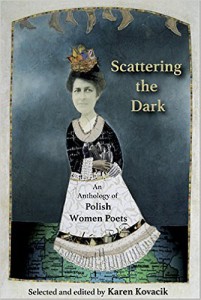
scatteringJulia Fiedorczuk, the young Warsaw poet, has written some beautiful verse – well, we wrote about that here, after a magical April night in Berkeley that ended at Chez Panisse. Most of the poems that were read that evening came from a new anthology Scattering the DarkBut one, inspired by Czesław Miłosz, was not. I was not able to use print it at the time, since it was under consideration for publication by the Poetry Foundation, and Julia kindly gave us Psalm 2 instead. We’re pleased to say that Julia’s “Psalm 31,” was not selected (Psalm V was, and is published online here). So here is Psalm 31, all these months later, below. “The whole cycle rhythmically and poetically alludes to Miłosz’s translation of the Hebrew Psalms,” the poet said. We think so, too. Tell us which of the three psalms you like the best (all translated by Bill Johnston). I still think this one has the most Miłoszian bent. She sent it with her love from beautiful Warsaw:

Psalm XXXI

chickadeesfor R. K.

a chickadee had perched on the window-sill like a message
generated by the mist, October
was turning into November in the birches oaks alders,
in the frost-resistant flowers, in the cemeteries
where our fathers wrote no memoirs,
where they would not recognise our children, our
poems, ourselves. The television was showing Poland
that had perished, and then had not perished, and then
again had perished, and then not, and then the sun
flung up a mesh of branches, all at once
the chickadee was absorbed by sky before I could say
remember, remember me.