Archive for April, 2020

Ted Gioia on music journalism: “Every editor who has tried to get me to dumb down an article is now out of a job.”

Wednesday, April 29th, 2020

Share

He wanted to be a jazz pianist. While studying at Stanford and Oxford, he practiced three to four hours every day to make it happen, as well as writing a review column every week in the Stanford Daily. But arthritis hit Ted Gioia in his early thirties, and his plans changed. Music journalism and scholarship is all the better for it. He’s just published Music: A Subversive Historywhich he calls a culmination of his life’s work.

Now has an interview with Todd L. Burns at the Music Journalism Insider. For the next ten days, you can read the whole thing here. After that, it will disappear behind a paywall.  An excerpt:

Where do you see music journalism headed?

Terri Dien

From a financial perspective, music journalism is in a state of crisis—it’s very hard to earn a living doing it. From a non-financial perspective, music journalism operates in a blissful utopian state, where you can do whatever you want and publish it online without having to worry about gatekeepers such as editors and agents. The challenge now is to take advantage of the freedoms of the digital age without capsizing on the financial hazards. How do you live in this utopia and still pay the bills? This is not easy, but it can be done—at least by those who are the most determined and have a high threshold for pain.

What would you like to see more of in music journalism right now?

I’d like to see more investigative reporting. The music industry is famous for its dirty tricks and low ethical standards. But I see very little interest among the “entertainment” media in investigating these. Perhaps it has some connection with the fact that the companies they might need to investigate are buying ads in their periodicals.

What would you like to see less of in music journalism right now?

I’d like to see less posing and preening—critics writing to impress other critics or (even worse) editors and literary agents, or (worst of all) the tenure committee or some other career power broker. The goal should be to serve the reader.

That may seem obvious, but just consider how often the reader is cast aside in pursuit of some other false idol. Let’s be blunt, some music writers just want to hang out with the celebrities they are supposed to critique, or use their positions to secure some other, even more craven end. I could share horror stories, but I’m sure you’ve heard them yourself. There are literally dozens of ways the reader can be shortchanged. Frankly, the pay is so bad in music writing that you can’t really blame writers for seeking out other compensations, but doing that will hurt the quality of their work and limit their ability to improve and develop.

I say all this as someone who has had to discover a way to keep vital and engaged as a music writer for more than 40 years. I’ve found it very helpful for me to think constantly about my reader, and also to assume that my reader is smart, discerning and hard to please. That has kept me on the right path when I might have strayed. True, it has often gotten me into battles with editors, literary agents and other influential parties. But in the long run, it proved right to engage in those battles, even if I took some wounds in the short term.

What’s one tip that you’d give a music journalist starting out right now?

Work constantly to expand your knowledge of music and musicians, and to improve your writing. The goal should be to develop into an expert who knows things other music writers don’t. You should take music writing as seriously as a doctor takes the study of medicine or a judge takes the study of law. These people devote many years of their lives to learning their craft even before they start practicing their vocation. Just because no one requires you to do this in music journalism doesn’t mean you shouldn’t impose this type of discipline on yourself.

What’s one thing you’d like to see more of from editors, in general?

I encourage editors to fight against the click-chasing mindset and the pressure to dumb down articles. I urge them to champion smart work over hot takes, and make it possible for writers to do their best work, even in the face of metrics that might suggest a more formula-driven approach.

I’ve watched this game long enough to see that dumbing down is the start of a death spiral that ends in a periodical going out of business. I note that 2,000 newspapers have disappeared in the last 15 years, but the two that have thrived—the New York Times and the Wall Street Journal—are the ones that resisted most strenuously the dumbing-down mandate. That should be a lesson. Believe me, readers want to rise to a higher level, but they need the editor (and, of course, the writer) to make it possible. If editors look down on the reader, they will merely ensure their own irrelevancy.

Here’s an intriguing fact. Every editor who has tried to get me to dumb down an article is now out of a job. Editors who want to take the low road to success ought to mull that over.
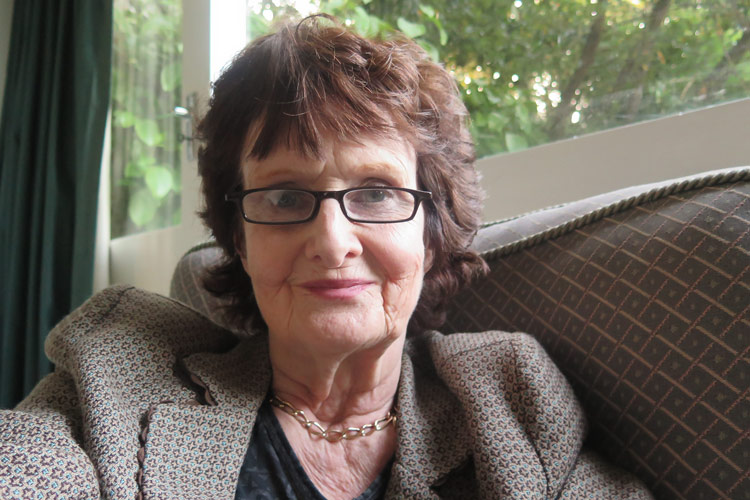
Irish poet Eavan Boland is dead. From her NYRB essay on literature, religion, the communal imagination, and the summer of ’85 in West Cork

Monday, April 27th, 2020
Share

One of Ireland’s leading poets, Eavan Boland, died this morning of a stroke, at her home in Dublin. She was 75. I knew her, and yet was at a loss about what to say, so instead I reposted a her poem about Ireland’s Great Famine, which I published a month ago on these cyber-pages, including the thoughts she shared with me. It’s here,

Eavan spent half the year in Ireland and the other half as a professor at Stanford. Occasionally when I’d be driving a car on campus, I’d see her trudging back to her campus home along Campus Drive or Lagunita, wearing an capacious calf-length skirt and jacket in earth tones, carrying a satchel full of papers. A sign that all was right with the world. I’d think to honk and wave … but you don’t honk at Eavan Boland. You just … don’t…

From poet Alfred Corn on his Facebook page:

Depending…

The last time I spoke to Eavan was in 1994 during a literary conference at Washington University in St. Louis, organized by William Gass, the topic being “The Writer and Religion.” Apart from Gass (writer against religion), the participants were William Gaddis (against), Grace Mojtabai (for), me (for, depending), Amitav Ghosh (neutral), and Eavan (respectful but dubious). She spoke of the miraculous BVMs [i.e., Blessed Virgin Marys – ED] that sometimes appear in Ireland, attracting large crowds of believers. Which puzzled me because I regard such things as epiphenomena, not as exemplifying religion per se. But then I’m not Irish.

I wondered what Eavan had said on that occasion, and by chance today I found that she had discussed that very conference in a remarkable 1995 essay in The New York Review of Books“As the Spirit Moves” is being made available without subscription for awhile on the occasion of her death. It’s here

It begins with a fine summer in 1985, West Cork, along the seaboard. “In the town of Kinsale, which is a summer resort on that coast, there were more tourists than usual. This is one of the beautiful parts of Ireland and indeed, without being tribal, one of the beautiful parts of Europe. Surrounding it are small towns, villages, and farms. The terrain is fairly flat, without some of the Gulf Stream warmth which produces the dramatic palms and tropical branches of certain parts of Kerry further west.”

This is what happened there. And this is how it stirred almost the whole of Ireland during that summer. Traveling back by car on one of those fine evenings, a woman stopped at a grotto which contained a statue of Our Lady. Ireland, which in the Republic at least has sustained a largely Catholic culture, had celebrated what was called a Marian year in 1950: a year, that is, in which Our Lady was honored as the Mother of Christ. The result of the celebrations was that hundreds of small grottoes and statues and shrines to Our Lady remained scattered around the countryside as continuing places of worship. This one was just outside the village of Ballinspittle, perhaps ten miles from Kinsale. It was eloquently set in the recess of a hillside, about thirty feet above the road. And on one of those sunny evenings, in late July, when travel in a car, or a visit to the places which contained such a grotto, must have seemed like a pleasant and appropriate summer diversion, a woman saw that statue of the Virgin Mary move.

Within not weeks, but days, someone reported a similar phenomenon. Then another. Then another. Then more and at different shrines. Sub-headlines of the Irish Times, second leaders on the evening news, whole radio programs, and finally television documentaries were devoted to the phenomenon. A woman had seen a statue move in a city church. Another had seen the Virgin reach out her hand. Another saw her move as if to step down from her shrine.

Then the headlines gave way, at least in the urban press, to analysis. Sociologists, psychologists, psychiatrists began to be featured on television. They explained that this was not unusual, that in times of stress, of hardship and recession, this sort of thing had been observed widely. By this time the summer evenings were getting shorter but the clear, warm hours before dark, and just after it, were filled with literally hundreds of cars, visitors, couples, and whole families converging on any place along the seaboard, but especially near Kinsale, where this had been observed. In an outpouring of insistence and longing, men and women with accents which were not so often features of the urban Dublin news programs described what they had seen, and they could not be shaken from their stories.

Then the explanations grew less frequent. The outrage and suspicion of the Catholic clergy, disowning and warning against these visions, became less emphatic. The journalistic silly season passed. The evenings grew colder. The rain returned. Suddenly, as quickly as it had come, the phenomenon was over. No statues moved. No sociologists talked. Normality returned.

I remember that summer clearly. I remember driving down the Dublin roads, where the luburnum and lilac filled the verges with yellow and violet, and listening to my car radio. Something seemed to have happened that was not faith, and could not be called religion; that was short of hysteria and yet by no means rational. From the safety of a cosmopolitan city, which Dublin has finally become—with fast cars and fast food and a limited concentration span—I could hear, to use Joyce’s phrase, “the batsqueak” of another Ireland. Through the statistics of debt and unemployment, and Northern violence, I could hear the elegy and anger break out one last time, lamenting a simpler time and a surer one.

I did not believe that the statues had moved. But I did not believe the sociologists either. I knew enough about the unreason of Irish history to respect and even be in some awe of what had taken place on those fierce and unaccountable evenings, in the long light hours, in small towns and farmlands where television cameras hardly ever reached, and where political scientists usually never went, except briefly at election time. And I was troubled.

As I listened to disc jockeys and radio broadcasters speaking jovially or contemptuously, whichever way you viewed it, of the faith and hallucination of those who saw those statues move … Since I lived in Dublin, I heard more of the skepticism and muted contempt which a place of purported sophistication has for a simpler region than anything which might indicate sympathy with what had happened.

And yet I was moved. I could not completely share in the cynicism of a capital city.

Second Space.

What follows afterwards is a discussion that’s hard to summarize, about the communal imagination and the role of literature, and the “monstrous” development of  “the religion of poetry” – the attempt of poets to become priests, and losing their poetry, too.

“In their attempt to make sacred a time and a country that were resolutely being defined as secular, they were testifying to an enormous loss and a true deprivation,” she writes. Well, Czesław Miłosz said the same thing. He mourned our loss of “Second Space,” which is also the title of the last collection he published before his death in 2004. Well, that’s another story for another article.

Requiescat in pace, Eavan Boland. You can read her whole essay here, while it’s still available.

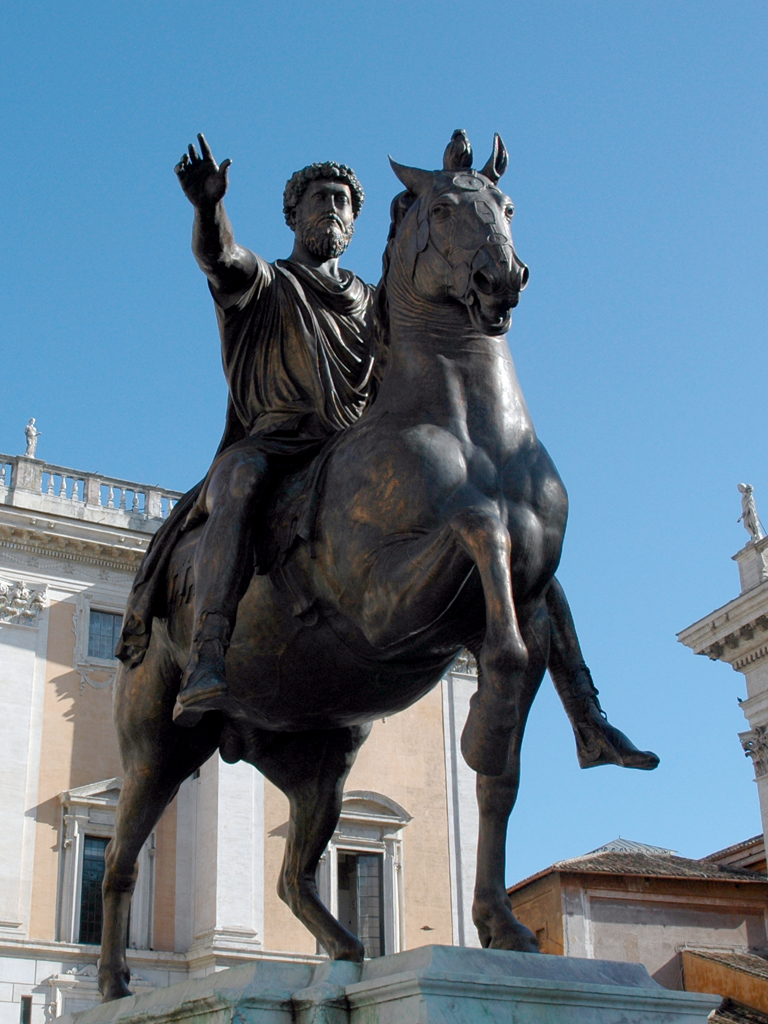
Happy birthday to Marcus Aurelius! Let him be your guide for the pandemic.

Sunday, April 26th, 2020
Share

I had a long rendezvous with the Stoics – or at least two of them – many years ago. Emperor Marcus Aurelius was one; Greek slave Epictetus was the other. But only the Roman ruler has a birthday today.

To celebrate, I blew the dust off my 1877 volume of his Meditations, which I read over and over years ago. (Translated Jeremy Collier, published by Walter Scott on Paternoster Row.)

The emperor still informs my thinking and behavior, though my success at his maxims is uneven and I better understand the limits of his philosophy than I once did. In any case, I appreciate the book’s extolling the virtue of stoical temperance, which did not come easily to a quick and impulsive nature. Nor his, apparently.

“The example of my grandfather Verus gave me a good disposition, not prone to anger. By the recollection of my father’s character, I learned to be both modest and manly.

“As for my mother, she taught me to have regard for religion, to be generous and open-handed, and not only to forbear from doing anybody an ill turn, but not so much as to endure the thought of it. By her likewise I was bred to a plain, inexpensive way of living, very different from the common luxury of the rich.” (Book I, i, from the rather Victorian translation of Jeremy Collier)

An introduction to him by Donald Robertson in The Guardian this week:

The Roman emperor Marcus Aurelius Antoninus was the last famous Stoic philosopher of antiquity. During the last 14 years of his life he faced one of the worst plagues in European history. The Antonine Plague, named after him, was probably caused by a strain of the smallpox virus. It’s estimated to have killed up to 5 million people, possibly including Marcus himself.

From AD 166 to around AD 180, repeated outbreaks occurred throughout the known world. Roman historians describe the legions being devastated, and entire towns and villages being depopulated and going to ruin. Rome itself was particularly badly affected, carts leaving the city each day piled high with dead bodies.

In the middle of this plague, Marcus wrote a book, known as The Meditations, which records the moral and psychological advice he gave himself at this time. He frequently applies Stoic philosophy to the challenges of coping with pain, illness, anxiety and loss. It’s no stretch of the imagination to view The Meditations as a manual for developing precisely the mental resilience skills required to cope with a pandemic.

First of all, because Stoics believe that our true good resides in our own character and actions, they would frequently remind themselves to distinguish between what’s “up to us” and what isn’t. Modern Stoics tend to call this “the dichotomy of control” and many people find this distinction alone helpful in alleviating stress. What happens to me is never directly under my control, never completely up to me, but my own thoughts and actions are – at least the voluntary ones. The pandemic isn’t really under my control but the way I behave in response to it is.

Much, if not all, of our thinking is also up to us. Hence, “It’s not events that upset us but rather our opinions about them.” More specifically, our judgment that something is really bad, awful or even catastrophic, causes our distress.

“Remember to put yourself in mind every morning, that before night it will be your luck to meet with some busy-body, with some ungrateful, abusive fellow, with some knavish, envious, or unsociable churl or other. Now all this perverseness in them proceeds from their ignorance of good and evil; and since it has fallen to my share to understand the natural beauty of a good action, and the deformity of an ill one – since I am satisfied the person disobliging is of kin to me, and though we are not just of the same flesh and blood, yet our minds are nearly related, being both extracted from the Deity – I am likewise convinced that no man can force me to misbehave myself, nor can I find it in my heart to hate or to be angry with one of my own nature and family.” Book II, i.

Robertson concludes:

With all of this in mind, it’s easier to understand another common slogan of Stoicism: fear does us more harm than the things of which we’re afraid. This applies to unhealthy emotions in general, which the Stoics term “passions” – from pathos, the source of our word “pathological”. It’s true, first of all, in a superficial sense. Even if you have a 99% chance, or more, of surviving the pandemic, worry and anxiety may be ruining your life and driving you crazy. In extreme cases some people may even take their own lives.

In that respect, it’s easy to see how fear can do us more harm than the things of which we’re afraid because it can impinge on our physical health and quality of life. However, this saying also has a deeper meaning for Stoics. The virus can only harm your body – the worst it can do is kill you. However, fear penetrates into the moral core of our being. It can destroy your humanity if you let it. For the Stoics that’s a fate worse than death.

Postscript 4/27: Leave it to a modern to put it all in a chart. We received this from Kenton Self – on his birthday no less! Here you have it: Marcus Aurelius in a Venn diagram.

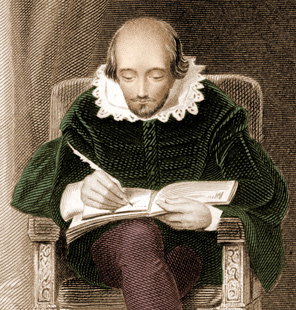
Happy birthday, William Shakespeare! The bard on freedom, imitation, and coronavirus

Thursday, April 23rd, 2020
Share

On thinking? He had a lot to say about it.

It’s Shakespeare’s birthday, so it only seems appropriate that we baked him a little cake. There’s an even better way to celebrate, however, and that’s to bring our readers’ attention to Scott Newstok‘s How to Think Like Shakespeare, just published by Princeton University Press.

Newstok’s thing is education, and contrary to all-too-commonly held views, Shakespeare got a top-notch one. Newstok outlines the basic principles Shakespeare learned in a Chronicle of Higher Education essay:  a grounding in rhetoric (which has gotten a rather bad name in our time), imitation, inventio, traditio. (Well, honestly, they’ve all gotten a bad name.)

On rhetoric:

Antonio Gramsci described education in this way: “One has to inculcate certain habits of diligence, precision, poise (even physical poise), ability to concentrate on specific subjects, which cannot be acquired without the mechanical repetition of disciplined and methodical acts.” You take it for granted that Olympic athletes and professional musicians must practice relentlessly to perfect their craft. Why should you expect the craft of thought to require anything less disciplined? Fierce attention to clear and precise writing is the essential tool for you to foster independent judgment. That is rhetoric.

On imitatio:

As Michel de Montaigne put it: “The bees steal from this flower and that, but afterward turn their pilferings into honey, which is their own. … So the pupil will transform and fuse together the passages that he borrows from others, to make of them something entirely his own; that is to say, his own judgment. His education, his labor, and his study have no other aim but to form this.”

To add to our little mini-celebration, here’s an excerpt from Newstok’s interview with Scott Jaschik‘s over at the current Inside Higher Education:

Q: And on freedom?

A: When Caliban cries out for freedom, he falls for a drunk Stephano, who sings, “Thought is free.” Yet at this moment, Caliban’s not free — he’s just transferred his bondage to “a new master.” Real freedom would demand not only being slave to no one, but being his own master.

I’ve come to believe that a better translation of the emancipatory artes liberales would be the “crafts of freedom.” These practices cultivate a thinking citizen — the bane of every despot. Such an educational program presumes that freedom is fragile, demanding endless exertion: “there is nothing more arduous than the apprenticeship of liberty.”

I end the book with the fantastic James Baldwin essay “Why I Stopped Hating Shakespeare,” which concludes, “My relationship, then, to the language of Shakespeare revealed itself as nothing less than my relationship to myself and my past.” At first, Baldwin sought freedom from having to read Shakespeare, yet he came to relish the freedom to make Shakespeare his own. In doing so, Baldwin achieved a mutual recognition in Shakespeare that few of us ever reach – “an inner freedom which cannot be attained in any other way” than by inhabiting other minds through art.

“I feel like the crisis has given us a kind of X-ray into everyone’s souls”

Q: What do you think your book can offer today, when we are focused on the coronavirus?

A: That’s kind of an up-to-the-minute version of the utility question, isn’t it? We quickly exhausted the “What Shakespeare Did During the Plague” takes. The plaintive cry of Sonnet 65 comes to mind:

How with this rage shall beauty hold a plea,
Whose action is no stronger than a flower?

I’m starting to feel like the crisis has given us a kind of X-ray into everyone’s souls. To cite one of countless examples I’d never thought I’d see laid so bare: Do you think the postal service should be privatized, or are you grateful for its countless daily decencies? In terms of education, would you cheer if half of all universities went bankrupt, or do you cherish close learning? Should we only read contemporary prose, or might poets from the past have something to offer us?

On a more mundane level: my chapters are mercifully short, well suited to “this distracted globe”! And the book’s packed with apt quotations. At the least, they might provide a momentary stay against confusion; at best, an inspiration to seek out “the treasures that prevail,” a handbook for what matters once we emerge from the wreckage.

Oh yes, the cake… we just pulled it out of the oven!

Dana Gioia’s archives go to Huntington, Stanford – including “tens of thousands” of letters!

Monday, April 20th, 2020
Share

Dana Gioia’s books, manuscripts, libretti are now at the Huntington Library.

Dana Gioia is a man of letters in the time-honored sense of the term, influencing our culture as a poet and essayist, but also as a translator, editor, anthologist, librettist, teacher, literary critic, and advocate for the arts. His correspondence was extensive, and it went on for decades. Hence, his archive is a treasure trove, and though he has had offers from other institutions to acquire it, he wanted his papers to stay in California. Now they will. He has donated his substantial archive to the Huntington Library, Art Museum, and Botanical Gardens, which announced today it had acquired the papers of the poet and writer who served as the chair of the National Endowment for the Arts from 2003–09 and as the California Poet Laureate from 2015–19.

Dana Gioia in L.A. with friend, Doctor Gatsby (Photo: Starr Black)

It is the second large donation he has made in the last year. Last August, he gave to Stanford the large archive of Story Line Press, which he co-founded. The papers are the central archive for the New Formalism movement. The archive includes a number of people who have spent time at Stanford, including Donald Justice, Donald Hall, Christian Wiman, Paul Lake, Annie Finch, and of course Dana himself, among others. Stanford Libraries already holds the archive for The Reaper, so this is a natural pairing with that irreverent journal.

The larger Huntington archive includes correspondence with many of the major poets and writers for the last several decades, including Elizabeth Bishop, Anthony Hecht, Richard Wilbur, Ray Bradbury, Rachel Hadas, Jane Hirshfield, William Maxwell, Thom Gunn, Edgar BowersKay Ryan, Robert Conquest, Julia Alvarez, Thomas Disch, Cynthia Ozick,  Donald Davie, Anthony Burgess, John Cheever, J.V. Cunningham, and even some musicians, such as Dave Brubeck. It also includes his own books, manuscripts, and libretti. “Even after I pruned my correspondence, there is a lot of letters – in the tens of thousands,” said Dana.

“When I told my brother Ted that I had made the donation, he commented that I wanted my papers to be at the Huntington because our mother took us there as children. ‘You’re probably right,’ I said. I  still remember seeing the elegant manuscript of Poe’s ‘Annabel Lee’ there nearly sixty years ago. It was my first glimpse into that enchanted kingdom by the sea called poetry.”

The Huntington picked up 71 archival boxes last December – the first part of his donation. Then Dana Gioia had a more urgent task: the next day he flew back to northern California home, which sustained fire damage during last year’s Kincade wildfire.

From the Huntington release:

The archive documents Gioia’s work as a poet through fastidiously maintained drafts of poems and essays from his books, which include five books of poetry and three books of critical essays. He is one of the most prominent writers of the “New Formalist” school of poetry, a movement that promoted the return of meter and rhyme, although his arts advocacy work situates him in a broader frame.

The archive en dishabillé, as Mary Gioia helps organize.

“In his correspondence, you see a writer who has been willing to engage the young and old, the esteemed and emergent—anyone who wants to critically discuss poetic form, contemporary audiences for poetry, and the importance of literary reading during decades when popular culture has become increasingly visual and attention spans have fractured,” said Karla Nielsen, curator of literary collections at The Huntington. “We are delighted that Dana has entrusted his papers to The Huntington, where his collection fits perfectly. He is a local author—he grew up in a Mexican/Sicilian American household in Hawthorne—and even as he attained international recognition as a poet and assumed the chairmanship of the NEA, he remained loyal to the region and invested in Los Angeles’ unique literary communities.”

“I’m delighted to have my papers preserved in my hometown of Los Angeles, especially at The Huntington, a place I have loved since the dreamy days of my childhood,” said Gioia.

While the range of correspondents in the collection is broad and eclectic, the sustained letter writing with poets Donald Justice, David Mason, and Ted Kooser is particularly significant.

Gioia’s work co-editing a popular poetry anthology textbook with the poet X. J. Kennedy from the 1990s to the present will interest scholars working on canon formation during those decades when the “culture wars” were a politically charged issue.

A portion of the materials represent Gioia’s work as an advocate for poetry and the arts at the NEA and as the California Poet Laureate. This work is integral to his career and will be important to scholars interested in the place of poetry and the role of reading for pleasure within greater debates about literacy and literary reading at the beginning of the 20th century. … At The Huntington, Gioia’s archive joins that of another businessman poet, Wallace Stevens; that of a very different but also quintessentially Los Angeles poet, Charles Bukowski; and those of two other New Formalist poets, Henri Coulette and Robert Mezey.

Tens of thousands of letters and much more – now at the library his mother Dorothy Ortiz took Ted and Dana Gioia to visit as children. Dana remembers the Poe manuscript of “Annabel Lee.”

Jane Austen: Is “Mansfield Park” her most daring book?

Saturday, April 18th, 2020
Share

Henry Crawford leads Fanny Price to the dance.

Is  Mansfield Park  Jane Austen’s “most daring book”? Janet Todd thinks so, and argues in The Times Literary Supplement that the 1814 book “provokes the reader to address the difficult truth of stubborn integrity.” I, too, balked at the priggishness of Fanny Price. I, too, was repelled by her moralizing. On the other hand, I kind of wish I had listened. As for making “astonishingly foolish life-choices” under the influence of some those other great writers of the nineteenth century – oh, ’tis true, tis true. 

One of my earliest memories of literary embarrassment is being asked by a bookish neighbour if I’d read Jane Austen. I was eleven. “Yes”, I replied. But I was mistaken. I had in mind the fantastic Classic Comics version of Jane Eyre with its alluring panel of Mr Rochester.

By nineteen, at Cambridge in the 1960s, I’d uncoupled Jane Austen from Jane Eyre. I read the six novels which F. R. Leavis, the then guru, instructed us to find “great”. I couldn’t oblige. I was startled, then offended, by Fanny Price of Mansfield Park. Why would an author who’d made the robust, witty and self-assured Elizabeth Bennet then create so limp and teary a heroine as Fanny, a creeping killjoy who suffers sunstroke from cutting roses in temperate England and fears the “wilderness” of a tame country estate? Until the ending, I assumed her rival Mary Crawford would get the hero – if, bizarrely, she really wanted him.

Over the decades I became acutely aware that Elizabeth Bennet (in the later chapters) and Fanny Price were more appropriate, self-controlling, guides to life for a young girl than my chosen heroines from Tolstoy and Dostoevsky, the Grushenkas, and Natashas, under whose influence I made some astonishingly foolish life-choices. It wasn’t all the fault of the Russians, of course. It was also the exciting period of Second Wave Feminism, when the stress was on self-fulfilment and self-expression, on being authentic and free from constraining standards of “patriarchy”. Present-day Feminism – I’ve lost touch with what Wave we are now riding – has had half a century to grow more nuanced and diverse, but its emphasis on the individual self and authentic experience remains. So we still try to adjust Jane Austen to our way of thinking – unless we are in the cinema watching her novels as romance and costume drama.

Read the rest at the TLS here.