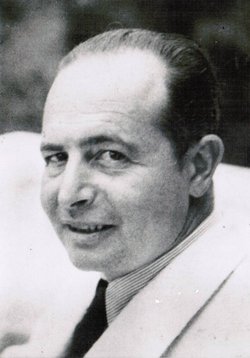
Adam Zagajewski and “the battle to imbue life with maximal meaning”

February 20th, 2018

Share

A distinctive, insistent, civilized stance.

Adam Zagajewski is an absolutely foundational figure for many of us – not only because of his own poems and essays, but for his quietly insistent, civilized stance towards a world that teeters on the edge of chaos – we’ve written about him here and here and here and here. I once asked him, in an email interview a dozen years ago, what do we do in a world that seems to be averting its face from the non-consumerist values of reading, literature, poetry, philosophy? His reply: “We’ll be living in small ghettos, far from where celebrities dwell, and yet in every generation there will be a new delivery of minds that will love long and slow thoughts and books and poetry and music, so that these rather pleasant ghettos will never perish — and one day may even stir more excitement than we’re used to now.” It’s starting to sound like a good idea. Yet he remains in Kraków, and I stay put in Palo Alto.

So it was a privilege to review Slight Exaggeration, his book-length essay on… oh, just about everything. It’s up today at The Weekly Standard (and on the home page, too, no less). Read the whole thing here.

Meanwhile, an excerpt:

Gone, but still with us…

Zagajewski’s conversational style is distinctive, and the cadence is recognizable in his poems and essays. (Translator Clare Cavanagh conveys it well.) I was introduced to it a decade ago, an afternoon conversation that stretched into early evening, as we walked along the Planty, the public park that encircles Kraków. His words are tentative, unassertive, provisional, yet self-assured. The slight tonal “uptalk” lift at the end of his sentences as he turns a problem round, exploring its different angles, cannot ruffle his considerable authority. Czesław Miłosz, Zbigniew Herbert, Wisława Szymborska are dead: Zagajewski has survived the generation of greats, and matched it with a greatness of his own, a postwar brand of metaphysical heft and gravity that shoulders the singular legacy of Polish literature into the 21st century.

The recurring Romanian…

Slight Exaggeration patiently picks up where the poet left off a dozen years ago with A Defense of Ardor, extending his line of thought on painters, poems, composers, and history. Initially, the observations seem disconnected and a little unpruned, until certain names begin recurring (French-Romanian writer E. M. Cioran, for example, or composer Gustav Mahler, poet Rainer Maria Rilke, novelist Robert Musil)—and each time he repeats, the impression on the reader is richer. Clearly, he is weaving on a very large loom, and the shuttle that disappears out of sight swings back to pull the threads tighter. The disparate reflections weave into a long thought, the result of years, decades, a lifetime. And occasionally his trademark associative musings open into seminal mini-essays.

The battle for clear vision…

Zagajewski wonders why the wartime letters of the lawyer Helmuth James Graf von Moltke, who resisted Hitler’s abuses nonviolently, move him so much with their impeccable moral brilliance; those of a favorite poet, the wily and self-protecting Gottfried Benn, so little. He also admires artist and writer Józef Czapskis integrity, too: “Czapski sometimes speaks of himself—but always in terms of the ceaseless battle he wages for clear vision, for full use of his gifts, the battle to imbue his life with maximal meaning.” And Simone Weil? “Weil tortured Czapski, and she still tortures us.” What does it mean that we celebrate the birthday of Mozart and the “liberation” of Auschwitz on the same day? (He hesitates to use the word “liberation,” which implies a certain energy and esprit, for the Allied soldiers’ entry into hell.)

Time teaches tolerance for what cannot be changed. And in the course of his telling, time overlaps and leaves traces on the present. For example, he observes that the Gestapo occupied his Kraków apartment during the occupation: “A Gestapo officer no doubt occupied the room in which I now write.”

Read the whole thing here.
Want some “alone” time? Try the Inferno, says Rachel Jacoff.

February 18th, 2018
Share

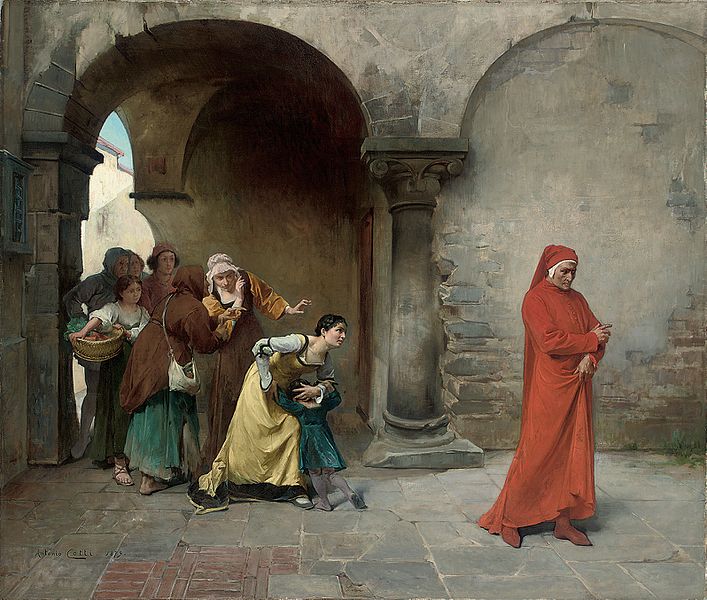
Are other people hell? Artist Antonio Maria Cotti seemed to think so.

“FOR DANTE, SIN IS A VIOLATION OF COMMUNITY. THERE ARE NO SINS THAT DO NOT HAVE SOCIAL CONSEQUENCES.” – RACHEL JACOFF

Rachel Jacoff is one of the leading lights in the small, close-knit world of Dante scholarship. In this Entitled Opinions episode on The Divine Comedy, she continues her conversation on The Inferno with her former student, our Entitled Opinions host Robert Harrison, himself a major Dante scholar. (Go to the podcast at the Los Angeles Review of Books here.)

Harrison begins by quoting Homer’s Iliad:

As the generation of leaves, so is that of humanity.
The wind scatters the leaves on the ground, but the live timber
burgeons with leaves again in the season of spring returning.
So one generation of men will grow while another dies.

Virgil and Dante … together at last.

Virgil picks up this evocative metaphor in The Aeneid, but its tone is more ominous and rueful among the dead of the underworld. No surprise, then, that Dante continues the figure of speech in Canto 3, as a nod to Virgil — but with an important difference. Dante emphasizes the singularity of each of the sinners, rather than their anonymity. Each resident of Dante’s infernal world chooses, rather than simply suffers, his or her individual fate. The damned not only make choices, but they reenact those choices and their rationalizations in their soliloquies. And Dante the Pilgrim is drawn into each of their vices as he speaks to them.

Eventually, Dante and Virgil hit bottom: “You think that the climax of The Inferno is going to be encounter with Satan – especially if you come to Dante from Milton,” says Harrison. “But Dante’s Satan is really a very uninteresting encounter. There’s no dialogue. Satan is just this horrible, slobbering, three-mouthed figure. So the real terror does not come from this canto, but from the canto before, where Dante meets the figure of Ugolino.”

Jacoff and Harrison discuss how the sins of the Inferno have social consequences, and are a violation of community – hence, hell is a lonely place, even when the characters are paired. Other people are part of their torture.

This is the second of three Entitled Opinions episodes on Jacoff and Dante. (Part 1 is here. Podcast for this episode is here. And yes, you really can watch them out of sequence. It’s okay. It works.)

“AN EYE FOR AN EYE IS ONE THING, BUT AN EYE FOR AN EYE FOR ETERNITY BECOMES REALLY PROBLEMATIC. … WE WANT A WORLD OF MERCY, WE WANT A WORLD OF GRACE.”  – ROBERT HARRISON

Here are some more quotes from the episode:

“For most of the characters in the Inferno, their sins are dispositions that inform every stance they take – the way they relate to Dante, the way they relate to other sinners in their group.” – Rachel Jacoff

“Part of the reason that The Inferno is full of solitaries is that sinners have cut themselves off.” – Rachel Jacoff

“In a horrible way, people are grouped together, but they’re so alone. The presence of other people is part of the torture.” – Rachel Jacoff

“In Dante, Ulysses does not go home at all. He’s the figure of the explorer, the man who lives for knowledge. He’s a forerunner of the figure of the great age of discovery in the Renaissance, the discovery of the New World, the scientific spirit. Everything that Dante called male curiosità, bad curiosity, within a century would be exalted as one of the premiere virtues of the humanism of the Renaissance.” – Robert Harrison

“Each canticle ends on the stars. They come out of The Inferno seeing the stars again, and they come out of Purgatory ready to go to the stars. And then … The Paradiso.” – Robert Harrison

Public intellectuals, private intellectuals, and a professor of football

February 17th, 2018
Share

Preach it, Miguel!

Public intellectual? The word gets bandied about a good deal, but generally the standards are low. Most wannabes fall on one side or the other. The celebrities who are merely public loudmouths flatter themselves with the tag “intellectual.” The hermits squirreled away in the PF-PN stacks of the graduate library call themselves “public” because they appear occasionally at conferences and “read” (yawn) papers.

I wasn’t around for all two days of the Sepp Fest last weekend. But one of the best-received talks during my long Saturday at the Stanford Humanities Center was given by a literary theorist from the University of Lisbon. He was praising Hans Ulrich Gumbrecht (a.k.a. Sepp), who really is a public intellectual, and who shows how high the standard can be. And here’s the bad news: they’ve been disappearing from academia for quite some time. And with Sepp’s retirement, we’re short one at Stanford now, too. (We wrote about him a few days ago here, too.)

“What is disquieting is that many of the people whom we may recognize as our intellectual heroes would not be offered the sorts of jobs, thanks to which they once came to be recognized as such,” said Miguel Tamen of the University of Lisbon, who gave the keynote lecture. “Very few if any of the greatest literary scholars of the 20th century would now stand a chance at the merest MLA.”

“We know that what follows from what we write, on either side of the Atlantic, is very little,” he continued. “As little indeed as if we were in Pyongyang – and a few of us are even glad for that.”

Then there’s Sepp Gumbrecht. He’s given countless lectures, and published books galore. “Sepp has literally published many hundreds of articles, essays and reviews, at least one a week, in dozens of newspapers: in Germany, in Switzerland, in France, in Brazil, only to name a few countries. To these one would have to add the interviews. Given that most of these also have online versions, it is possible to say without exaggeration that Sepp is read every week by tens of thousands of people.”

An excerpt from Tamen’s talk:

“Let me provide you with a sampler. I began timidly thinking about this paper in mid-December. Since then I only managed to come up with a paltry under-4,000 word middlebrow keynote, whereas Sepp has published at least:

  • Installments # 266, 267, 268, 269 and 270 of his bimonthly blog column in the FAZ, respectively on the survival of humankind, on anti-Semitism in contemporary Germany, on happiness rankings, on Mr. Trump, and on long books
  • An article on the future of culture or on whether Bildung is still to be saved
  • A piece in Die Zeit on a fictional football player
  • An obituary of a Brazilian colleague
  • A 5,000 word response to a number of interview questions by Brazilian and European colleagues
  • An article on temporality for the Neue Zürcher Zeitung

Professor of Football

Sepp has often praised what he calls riskful, risky thinking. The concept had long eluded me, but now I believe I understand it at last. What is really risky about risky thinking is not that by such thinking you put yourself in any life-threatening situations; it is instead that our friends from the schools would no longer recognize what we do as thinking at all. Nowhere is thinking more risky that when it becomes something else.

If so, there is a likely connection between risky thinking and something that Sepp has been doing for the past twenty years. Take for instance Sepp’s open interest in sports, most prominently football (Engl.) and football (U.S.). As such his interest would be unremarkable. Many of us have comparable interests. However there is no in-principle reason why our private interests should be declared; we mostly assume they would not be interesting enough; and do so mostly with good reason. In the case of Sepp the test is how interesting his interests have become to people who otherwise care little about Heidegger, Niklas Luhmann, and Diderot. In Europe and South America, at least, the group includes most sports journalists. None that I know of would contemplate sampling out the first part of Sein und Zeit, let alone the second. And yet they merrily devour Sein und Sepp.

Football? We think not.

In an interview to the otherwise obscure Westfälische Nachrichten (November 2015), in the World Sports section, Sepp is matter-of-factly introduced as “the football expert Hans Ulrich Gumbrecht.” To get a sense of the situation consider the unattested phrase “*the football expert Erich Auerbach.” Granted, Sepp has also written about “the existential beauty of football.” This sounds philosophical enough, and perhaps even Heideggerian. It appeared in one of his columns, in the opinion pages of the Neue Zürcher Zeitung. And yet his series was presented there as “Gumbrecht on the ball” (pun intended). A third example: the page of the German Football Museum, mostly not known for its contributions to philosophy, has recently reported on a public debate between Sepp and the Borussia Dortmund former football coach Thomas Tuchel. Tuchel is a remarkable coach and clearly a very clever man. The headlines however do not suggest Hegel, Husserl or Hölderlin: “Football-talk: Tuchel and Gumbrecht shine.” “The German Football league debate,” they add, “went on for 2 x 45 minutes and was as exciting as any top game.” …

I suppose that what I mean is that Sepp is listened to by people who wouldn’t dream setting foot on conferences such as this one. And this raises the question: could Sepp be both one of us and one of them? Could this be a case of intellectual schizophrenia? I don’t think so. There are, to be sure, many connections between what Sepp does in class and what he does outside. He always remained and after all is the same person. However, the attempt to engage vast unknown audiences is something that after all defines his difference vis-à-vis most of us. It is a difference that many of us would quickly grant is a measure of Sepp’s trademark as an intellectual, both public and private, and intellectual for whom the private/public distinction does not obtain. In claiming that Sepp is an intellectual public and private I am thus claiming that he is unlike most of us. …  This is very high compliment indeed.
Patti Smith in Camus’s Lourmarin: “This is the decisive power of a singular work: a call to action.”

February 15th, 2018
Share

Author and performer Patti Smith and I don’t have much in common, except for two mutual friends – Robert Pogue Harrison, a lover (and performer) of rock music, and publisher Steve Wasserman. Oh! Patti and I share one more common trait: a devotion to visiting the places of writers, whether homes, graves, or the settings they wrote about.

We’ve written about this before, when we published Steve’s remarks at a Writers’ Conference on the topic “A Writer’s Space.”

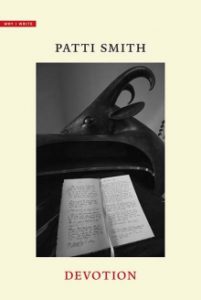
Patti Smith’s new book Devotion (Yale University Press) is dedicated to that topic. She describes her visits to the grave of Simone Weil, the garden of the great publisher Gallimard, and the Parisian streets of Patrick Modiano’s novels.

But perhaps the most moving passages are in the final chapter. She visits Albert Camus‘s daughter Catherine in the family home in Lourmarin, an hour outside Aix-en-Provence. It is the home he built with his Nobel money, as a family refuge from Paris. She writes: “His room was his sanctuary. It was here that he labored over his unfinished masterwork The First Man, unearthing his ancestors, reclaiming his personal genesis. He wrote undisturbed, behind the heavy wooden door, carved with twin griffins supporting a crown.”

Then she goes to his downstairs office:

Last words from “First Man”

Camus’s daughter entered, placing the manuscript of Le Premier Homme, The First Man, on the desk before me and went and sat in a chair giving us distance enough so that I could feel alone with it. For the next hour I was privileged to examine the entire manuscript page by page. It was in his hand, each page suggesting a sense of unflinching unity with his subject. One could not help but thank the gods for apportioning Camus with a righteous and judicious pen.

I turned each page carefully, marveling at the aesthetic beauty of each leaf. The first hundred watermarked sheets had Albert Camus engraved on the left-hand side; the remaining were not personalized, as though he had wearied of seeing his own name. Several pages were augmented with his confident marking, lines carefully revised and sections firmly crossed out. One could feel a sense of a focused mission and the racing heart propelling the last words of the final paragraph, the last he was to write. …

This is the decisive power of a singular work: a call to action. And I, time and again, am overcome with the hubris to believe I can answer that call.

The words before me were elegant, blistering. My hands vibrated. Infused with confidence, I had the urge to bolt, mount the stairs, close the heavy door that had been his, sit before my own stack of foolscap, and begin at my own beginning. An act of guiltless sacrilege.

I rested my fingertips on the edge of the last page. Catherine and I looked at one another, not saying a word.

“My weight is my love”: on Augustine, Calvino, and Sepp Gumbrecht

February 12th, 2018
Share


One of the weightiest minds at Stanford.

Over the weekend, more than forty speakers from Europe, Latin America, and the United States addressed the state of literary studies after 1967, its methods and moods. The reason for the fête: Hans Ulrich Gumbrecht, a.k.a. “Sepp.” At Stanford, he is also known as the “Albert Guérard Professor in Literature in the Departments of Comparative Literature and of French & Italian and by courtesy, he is affiliated with the Department of Iberian and Latin American Cultures, the Department of German Studies, and the Program in Modern Thought & Literature.” The reason for the fête: we were celebrating 50 years of his life as a thinker, mentor, and indefatigable writer. It doubled as a splendid retirement party.

Heavy, man.

All that gives you an idea of his weight – but not of his lightness. He is one of the gentlest and pleasantest personalities at the whole university – as well as one of the most brilliant. And he also possesses one of the most memorable and remarkable faces on campus. (See photo.)

One of the most impressive and moving talks was given by Robert Pogue Harrison, who discussed “Pondus Amoris,” taken from Augustine‘s “my weight is my love [pondus meum amor meus].” Robert has often spoken of Italo Calvino‘s Six Memos for the Next Millennium, published in 1986, which identified six literary qualities, or values, that he believed would enable literature to survive into the next millennium – “that is to say, our millennium,” he added. Those qualities are lightness, quickness, exactitude, visibility, and multiplicity. (He died before he finished describing his final one – consistency.) 

But because he often references the Six Memos (and I have come to, as well) I assumed  that Robert was on the side of lightness. Not so. From Robert’s talk:

I admire Calvino greatly, yet here too, as with Augustine, my sensibilities lean in another direction. If I had to choose, I would opt for slowness, heaviness, and vagueness over quickness, lightness and exactitude in literature. Be that as it may, in his lightness memo Calvino claims that we live in a leaden age, an age that would petrify us with its Medusa head:

Petrifying.

“At certain moments I felt that the entire world was turning into stone: a slow petrification, more or less advanced depending on people and places but one that spared no aspect of life. It was as if no one could escape the inexorable stare of Medusa. The only hero able to cut off Medusa’s head is Perseus, who flies with winged sandals…. To cut off Medusa’s head without being turned to stone, Perseus supports himself on the very lightest of things, the winds and the clouds, and fixes his gaze upon what can be revealed only by indirect vision, an image caught in a mirror.”

I’m sorry to be so contrarian today, but I don’t agree with Calvino on this score. I believe that our age is in fact determined by free-floating bits and bites of information, and by the aerial vectors of telecommunications. The massive mainframe computers that Atlas himself couldn’t lift a few decades ago have become so light and fast that nowadays we carry them around in our shirt pockets. Modernity is an ongoing striving for lightness, and our world today is threatened not so much by the petrifying weight of reality but by the photoelectric pulsations of the virtual. Our Medusa head is the cell phone screen. We need a new kind of shield to protect us against the miniaturization of reality – a heavy, non-reflective Realometer, to borrow a term from Thoreau, to counter the increasing rarefaction of lived experience.

Did Augustine get it right?

In his memo, Calvino exalts Shakespeare’s character Mercutio, from Romeo and Juliet, as a hero of lightness.  … I would also like Mercutio’s dancing gait to come along with us across the threshold of the new millennium.

Calvino quotes only five lines from Mercutio’s long speech in Act One of Romeo and Juliet. It’s the scene when a group of Montague youngsters are heading toward the Capulet’s costume ball, where Romeo and Juliette will meet for the first time. What Calvino doesn’t mention is that Mercutio’s speech is over ninety lines long. By the end of it, the metaphors and conceits are spinning out of control, and his rave comes dangerously close to leaving the earth’s orbit altogether. It takes Romeo to bring Mercutio back down to earth: “Peace, peace, Mercutio, peace!” Romeo says as he grabs hold of his friend. “Peace, peace, Mercutio, thou talkst of nothing.”

That’s the trouble with lightness, it can easily wisp away into nothing.

More in the coming days from Stanford’s celebration for one of its most eminent professors.

Wondering why it’s taking you so long to crank out that novel? Check out the competition.

February 10th, 2018
Share

This ought to cheer you up. Think you’re taking forever on your novel? Take heart: J.R.R. Tolkien spent 16 years writing the Lord of the Rings trilogy. On the other hand, maybe you can dash off something this weekend. John Boyne wrote The Boy in the Striped Pajamas in two-and-a-half days. For more details on the work of art above, go here.

In the meantime, here’s a list that will help you no matter how long you take: 681 clichés to avoid in your writing. Indeed, if you can manage to avoid all these, it will be a wonder if you can manage to say anything at all. Let’s start with:

  1. a chip off the old block
  2. a clean slate
  3. a dark and stormy night
  4. a far cry
  5. a fine kettle of fish
  6. a good/kind soul
  7. a loose cannon
  8. a pain in the neck/butt
  9. a penny saved is a penny earned
  10. a tough row to hoe
  11. a word to the wise
  12. ace in the hole
  13. ace up his sleeve
  14. add insult to injury

Read the rest here.

It’s been a busy weekend – we hope to be sharing some more in the coming days on the Stanford talks, lectures, fêtes, and other occasions we’ve attended. Meanwhile gaze at the chart, study the list. Mark, learn, and inwardly digest. The Book Haven is watching.


<<< Previous Series of PostssepNext Series of Posts >>>