
One of the best books of the 20th century? Werner Herzog is coming to Stanford to talk about J.A. Baker’s The Peregrine
January 15th, 2016
J.A. Baker wrote The Peregrine at a precarious moment in environmental history: By the 1960s, the falcons had almost vanished entirely from the English countryside, thanks to aggressive use of pesticides. Baker’s response, an ecstatic panegyric to peregrines, stunned critics with its originality, power and beauty.
The little-known 1967 masterpiece will be the subject of an onstage conversation with legendary film director Werner Herzog, who has said that The Peregrine is one of his favorite books.

The young J.A. Baker, author of “The Peregrine.” (Photo courtesy Albert Sloman Library, University of Essex)
The Another Look book club event will take place at 7:30 p.m. Tuesday, Feb. 2. Free tickets have sold out; registration for the waiting list is offered through the Another Look book club’s website. The Peregrine is available at Stanford Bookstore and at Kepler’s in Menlo Park.
Herzog’s interlocutor will be Robert Harrison, an acclaimed author and Stanford’s Rosina Pierotti Professor of Italian Literature, who writes regularly for the New York Review of Books and hosts the popular radio talk show Entitled Opinions.
‘One of the finest pieces of prose’
Herzog has made edgy films about grizzly bears, prehistoric cave drawings in southern France, Rajput festivals, and more – but he also prides himself on his role as an author and screenwriter. The Peregrine is required reading in Herzog’s Rogue Film School, and he has called it one of the greatest books of the 20th century, praising “an intensity and beauty of prose that is unprecedented, it is one of the finest pieces of prose you can ever see anywhere.” [Read more here about what he’s said about the book. – ED]
The Peregrine, which received England’s prestigious Duff Cooper Prize, has no plot and no characters. Instead, Baker distills 10 years of observations into a single autumn-to-spring period, written as a diary. Baker’s passionate, unsparing descriptions of peregrine falcons in the fenlands of Essex convey the urgency of the historical moment:
“Before it is too late, I have tried to … convey the wonder of … a land to me as profuse and glorious as Africa,” he wrote. By the spring of 1961, tens of thousands of birds were found littering the countryside, dead or dying in agony, along with other animals.
 The ecology movement has moved on to more global issues, but The Peregrine marks a point in history when the dangers were local and immediate. In that sense, it can be seen as a companion volume to Rachel Carson‘s book Silent Spring.
Some critics have attributed the elegiac tone to Baker’s own history. He had just been diagnosed with rheumatoid arthritis, and by 1969, when his second and last book was published, he was seriously incapacitated – just as Carson was mortally ill when she wrote Silent Spring.
Both Baker and his birds got a reprieve: The most lethal chemicals have been banned, and the peregrine population, once considered at risk of global extinction, has returned to levels not seen for centuries.
And Baker himself would live quietly until 1987, finally succumbing to the cancer that had resulted from the drugs prescribed for his condition.
‘Persist, endure, follow, watch’
In the days before Facebook, Twitter, selfies and Google searches, it was possible for a man to be little known outside his circle of friends. Privacy suited Baker, who was described as very reluctant to disclose anything about himself or his private views. In the years since his death, his trail has vaporized, leaving behind only his startling classic. A few details have become known in recent years.
Baker was born in Chelmsford in 1923, a son of the lower middle classes. His formal schooling ended at 16. He had no literary connections before the publication of his book. While initially said to be a librarian, he was in fact a manager of the local automobile association (though he couldn’t drive), and later a manager at a local depot of Britvic, a beverage company. He had a long and happy marriage.
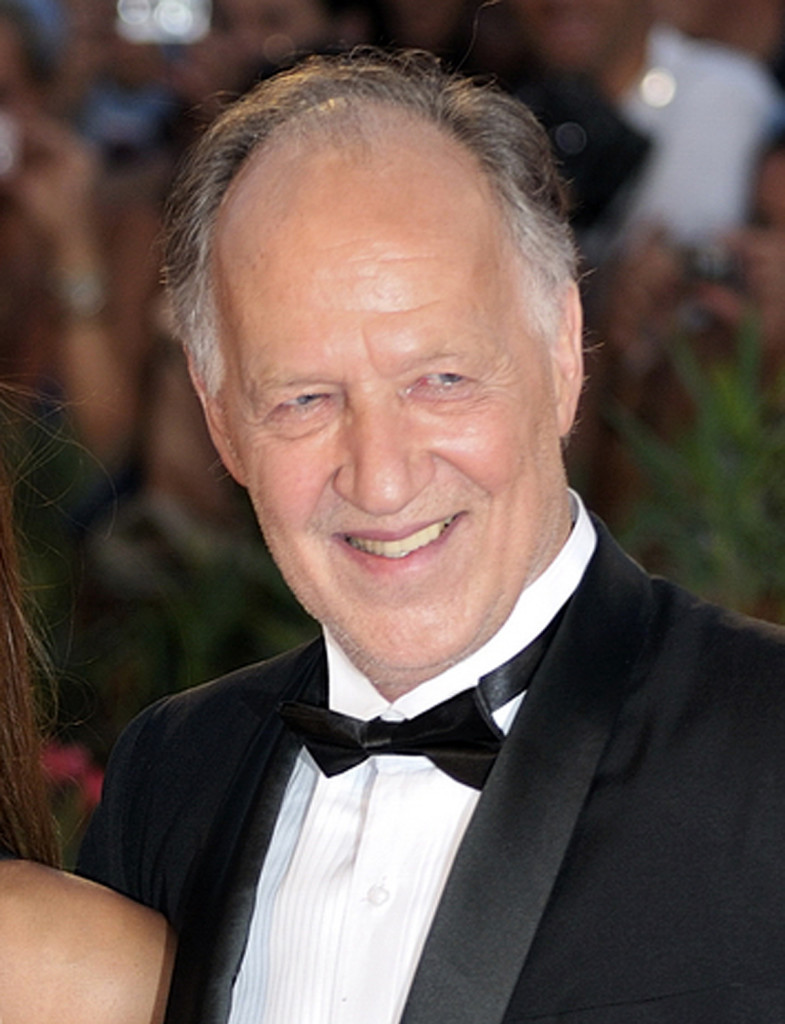
At the 2009 Venice Film Festival. (Photo: Nicolas Genin)
Sometime in his daily schedule, he found time to bike or hike to the Essex countryside, recording his observations in passages such as this one: “They had no song. Their calls were harsh and ugly. But their soaring was like an endless silent singing.” Baker became one of the most important nature writers of the last century.
“Baker’s legacy is real and lasting, evidenced in the fact that we’re still talking about it 50 years on, and cases like me are still trying to get inside his head,” wrote author and conservationist Conor Mark Jameson, who called the book “a love story of sorts.”
He noted that Baker “showed us how to relay feelings as well as bald records, how to write up notes, how to look, how to listen.”
Experts then and now have challenged the accuracy of Baker’s observations, and a small controversy has erupted around the book – underscoring that this is an imaginative work as well as a personal record. But none challenge the mesmerizing beauty of his prose, which captures his despairing view of man and his own single-minded pursuit of the bird that obsessed him.
According to British naturalist and author Mark Cocker, “he drills down into the moment to haul back to the surface a prose that is astonishing for its inventiveness, yet also for its clarity and precision.”
Cocker added, “In fact if there is any criticism, it arises because there is so little down-time in the prose.”
Some have commented that The Peregrine is not so much about watching a bird, but is about becoming one: “Shun the furtive oddity of man, cringe from the hostile eyes of farms,” Baker wrote. “Learn to fear. To share fear is the greatest bond of all. The hunter must become the thing he hunts. What is, is now, must have the quivering intensity of an arrow thudding into a tree. Yesterday is dim and monochrome. A week ago you were not born. Persist, endure, follow, watch.”
***
Another Look is a seasonal book club that draws together Stanford’s top writers and scholars with distinguished figures from the Bay Area and beyond. The books selected have been Stanford’s picks for short masterpieces that people may not have read before. Visit the anotherlook.stanford.edu website for more details.


 When he died, I called Isaiah Berlin and said I’d like to talk to him about Joseph, and especially to hear what he was like when he first arrived in the West. Isaiah said that he, too, wanted to talk with me, not about that, but about what he was like ‘then, in the Akhmatova years, because everything was sown and came to fruition at that time, and the emigration years were merely the reaping of the harvest’.
 But for the late poet
  According to Alexander, who spoke with Ågren, the first ten cats were imported to Sweden directly from Russia in 2000. Now the total population of Siberian cats in Sweden is around 5,000. “The society is quite active in marketing and promoting their cats. Their ‘pupils’ participate in national and international exhibitions and cat shows every year,” he said. And so it will be for the little show-cat, Regina Derieva.


 Winston Churchill
 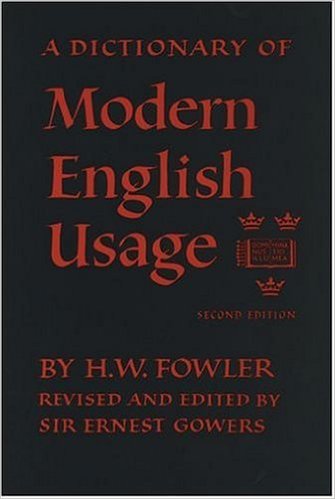 “John Martin believed that the P.M.’s ‘interest in basic English was inspired by politics rather than linguistics: it was a means of promoting “the English-speaking club.”‘ Certainly that was one reason. He believed that all countries where English was spoken, including America, should merge. Here lay a profound contrast with the foreign policies of his predecessors at Downing Street. They had focused upon the Continent and the various combinations of the great powers there. Neville Chamberlain had referred to the United States with amusement and contempt, and called Americans ‘creatures.’ But Churchill, though a European patriot, looked westward, and not only because he knew Hitler could not be crushed without American troops. British to the bone, he was nevertheless the son of an American mother, and long before the war, he had envisaged a union of the world’s English-speaking peoples: the United Kingdom, the United States, Canada, Australia, South Africa, and the far-flung colonies of the British Empire.”

 One Milton scholar,