Happy birthday, Aleksandr Solzhenitsyn!

December 11th, 2015
Share

solzhenitsyn4Aleksandr Solzhenitsyn was born today, December 11, in 1918.

“If only there were evil people somewhere insidiously committing evil deeds, and it were necessary only to separate them from the rest of us and destroy them. But the line dividing good and evil cuts through the heart of every human being. And who is willing to destroy a piece of his own heart?”

From The Gulag Archipelago

– Aleksandr Isayevich Solzhenitsyn (Dec. 11, 1918 – Aug. 3, 2008)

Svetlana Alexievich’s Nobel lecture: “Evil kept a watchful eye on us.”

December 8th, 2015
Share

Svetlana Alexievich gave her Nobel lecture yesterday in Stockholm. Excerpts from “On the Battle Lost”:

Flaubert called himself a human pen; I would say that I am a human ear. When I walk down the street and catch words, phrases, and exclamations, I always think – how many novels disappear without a trace! Disappear into darkness. We haven’t been able to capture the conversational side of human life for literature. We don’t appreciate it, we aren’t surprised or delighted by it. But it fascinates me, and has made me its captive. I love how humans talk … I love the lone human voice. It is my greatest love and passion.

alexievich

“I am a human ear.” (Photo: Elke Wetzig)

The road to this podium has been long – almost forty years, going from person to person, from voice to voice. I can’t say that I have always been up to following this path. Many times I have been shocked and frightened by human beings. I have experienced delight and revulsion. I have sometimes wanted to forget what I heard, to return to a time when I lived in ignorance. More than once, however, I have seen the sublime in people, and wanted to cry.

I lived in a country where dying was taught to us from childhood. We were taught death. We were told that human beings exist in order to give everything they have, to burn out, to sacrifice themselves. We were taught to love people with weapons. Had I grown up in a different country, I couldn’t have traveled this path. Evil is cruel, you have to be inoculated against it. We grew up among executioners and victims. Even if our parents lived in fear and didn’t tell us everything – and more often than not they told us nothing – the very air of our life was poisoned. Evil kept a watchful eye on us.

I have written five books, but I feel that they are all one book. A book about the history of a utopia …

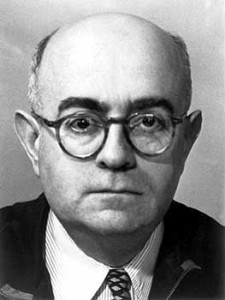
Theodor W. Adorno

In shock.

Varlam Shalamov once wrote: “I was a participant in the colossal battle, a battle that was lost, for the genuine renewal of humanity.” I reconstruct the history of that battle, its victories and its defeats. The history of how people wanted to build the Heavenly Kingdom on earth. Paradise! The City of the Sun! In the end, all that remained was a sea of blood, millions of ruined human lives. There was a time, however, when no political idea of the 20th century was comparable to communism (or the October Revolution as its symbol), a time when nothing attracted Western intellectuals and people all around the world more powerfully or emotionally. Raymond Aron called the Russian Revolution the “opium of intellectuals.” But the idea of communism is at least two thousand years old. We can find it in Plato‘s teachings about an ideal, correct state; in Aristophanes’ dreams about a time when “everything will belong to everyone.” … In Thomas More and Tommaso Campanella … Later in Saint-Simon, Fourier and Robert Owen. There is something in the Russian spirit that compels it to try to turn these dreams into reality.

***

Right after the war, Theodor Adorno wrote, in shock: “Writing poetry after Auschwitz is barbaric.” My teacher, Ales Adamovich, whose name I mention today with gratitude, felt that writing prose about the nightmares of the 20th century was sacrilege. Nothing may be invented. You must give the truth as it is. A “super-literature” is required. The witness must speak. Nietzsche‘s words come to mind – no artist can live up to reality. He can’t lift it.

Logo_of_the_Nobel_prizeIt always troubled me that the truth doesn’t fit into one heart, into one mind, that truth is somehow splintered. There’s a lot of it, it is varied, and it is strewn about the world. Dostoevsky thought that humanity knows much, much more about itself than it has recorded in literature. So what is it that I do? I collect the everyday life of feelings, thoughts, and words. I collect the life of my time. I’m interested in the history of the soul. The everyday life of the soul, the things that the big picture of history usually omits, or disdains. I work with missing history. I am often told, even now, that what I write isn’t literature, it’s a document. What is literature today? Who can answer that question? We live faster than ever before. Content ruptures form. Breaks and changes it. Everything overflows its banks: music, painting – even words in documents escape the boundaries of the document. There are no borders between fact and fabrication, one flows into the other. Witnessеs are not impartial. In telling a story, humans create, they wrestle time like a sculptor does marble. They are actors and creators.

Dostoevskij_1872I’m interested in little people. The little, great people, is how I would put it, because suffering expands people. In my books these people tell their own, little histories, and big history is told along the way. We haven’t had time to comprehend what already has and is still happening to us, we just need to say it. To begin with, we must at least articulate what happened. We are afraid of doing that, we’re not up to coping with our past. In Dostoevsky‘s Demons, Shatov says to Stavrogin at the beginning of their conversation: “We are two creatures who have met in boundless infinity … for the last time in the world. So drop that tone and speak like a human being. At least once, speak with a human voice.”

That is more or less how my conversations with my protagonists begin. People speak from their own time, of course, they can’t speak out of a void. But it is difficult to reach the human soul, the path is littered with television and newspapers, and the superstitions of the century, its biases, its deceptions.

Read the whole thing here.

Best Christmas carol ever? Christina Rosetti’s “In the Bleak Midwinter”

December 6th, 2015
Share

A guest post from Los Angeles poet (and Stanford alum) Timothy Steele, on a Christmas theme:

tim120

Tim Steele

When in 2008 the BBC asked choirmasters in the United Kingdom and United States to name their favorite Christmas carol, Harold Darke’s setting of Christina Rossetti’s “In the Bleak Midwinter” topped their list. The poem first appeared in 1872 in a holiday issue of Scribner’s Monthly, which had asked Rossetti for a contribution appropriate to the season. Though she never collected the poem in a book, her brother William included it in the edition of her Poetical Works that he published in 1904, ten years after her death. The poetry-loving Gustav Holst recognized the poem’s choral possibilities and in 1906 did a setting of it that some prefer to Darke’s, which dates from 1911.

rosetti1

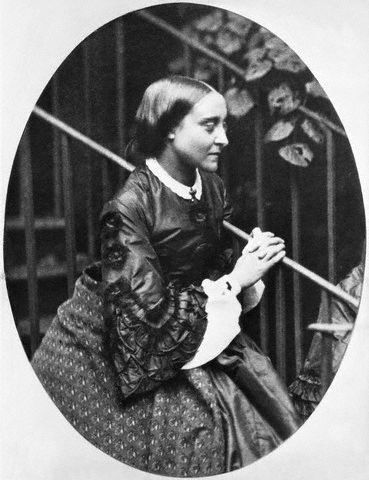
She was troubled. (Photo: Lewis Carroll)

For all its lovely directness, “In the Bleak Midwinter” reflects Rossetti’s troubled religious faith. An Anglo-Catholic influenced by Calvinism and Adventism, she found God the Father terrifying and remote but identified with the humanity and suffering of Jesus. In describing the nativity, she mentions the attendant celestial spirits but stresses the earthier elements of the scene—the tangible milk and love that Mary gives her child and the comforting companionship of the animals in the stable. This attraction to natural manifestations of divinity may remind us of Emily Dickinson, who was Rossetti’s nearly exact contemporary and of whose work Rossetti was an early champion. (Both poets were born in the bleak, midwintery December of 1830—Rossetti on the 5th, Dickinson on the 10th—though Dickinson died in 1886, eight years before Rossetti.)

Below is the text of Rossetti’s carol, plus a performance of it in Darke’s setting.

“A Christmas Carol”

In the bleak mid-winter
Frosty wind made moan,
Earth stood hard as iron,
Water like a stone;
Snow has fallen, snow on snow,
Snow on snow,
In the bleak mid-winter
Long ago.

Our God, Heaven cannot hold Him
Nor earth sustain;
Heaven and earth shall flee away
When He comes to reign:
In the bleak mid-winter,
A stable-place sufficed
The Lord God Almighty
Jesus Christ.

Enough for Him whom cherubim
Worship night and day,
A breastful of milk
And a mangerful of hay;
Enough for Him whom angels
Fall down before,
The ox and ass and camel
Which adore.

Angels and archangels
May have gathered there,
Cherubim and seraphim
Throng’d the air,
But only His mother
In her maiden bliss,
Worshipped the Beloved
With a kiss.

What can I give Him,
Poor as I am?
If I were a shepherd
I would bring a lamb,
If I were a wise man
I would do my part,—
Yet what I can I give Him,
Give my heart.

– Christina Rossetti (1830 – 1894)

BREAKING NEWS! California’s new poet laureate is Dana Gioia, former NEA chair!

December 4th, 2015
Share


Dana-Gioia-with-cat

Happy about the new job: Dana with Doctor Gatsby. (Photo: Star Black)

I’ve wondered why Dana Gioia has never been California’s poet laureate. After all, he is a genuine California native, born in Hawthorne, a gritty little burg outside L.A. As former National Endowment for the Arts chair from 2003 to 2009, as a leading poet who has won a number of awards, as a provocative critic, and as a champion of poetry (and indeed all the arts), who could better serve in the role?

Wonder no more: Gov. Jerry Brown today announced the appointment of Dana, who is the Judge Widney Professor of Poetry and Public Culture at the University of Southern California.

poetry-outloud6

Champion of Poetry Out Loud

Dana just sent me an email to let me know of his appointment. His statement to the Book Haven:  “I’m honored by this appointment. It’s hard for me to describe how much I love California. My life has taken me to many other places – Boston, New York, Washington – but in every case there came a point when I decided to quit and come back home. I can’t imagine anything more meaningful than to represent my art in my place.”

The office of the California poet laureate was created in 2001 to inspire an appreciation for the art of poetry throughout the state. During his two-year term, Gioia will provide public readings in classrooms, board rooms and other places. What else does he plan to do? I asked him: “It would be very easy to spend my time as laureate in a few big cities such as Los Angeles and San Francisco. But California is a big and diverse state. Most of it is rural. I want to visit as much of the state as possible. I especially want to focus on the high schools and public libraries. Those are the great civic institutions of literacy.”

gioia

Stanford’s 2007 commencement speaker (Photo: L.A. Cicero)

We’ve written about Dana before: read about his last collection of poems, Pity the Beautiful here, and on his recent essay about poet Dunstan Thompson here, and on whether America is getting dumber here, and a few words on his mentor Elizabeth Bishop here, and on receiving the Laetare Medal here, among other places.

“Dana will bring the voice of a native son of California to his new role,” Craig Watson, director of the California Arts Council, said in a statement. “And he’ll also help our state’s young people learn to explore and develop their own voices — just as he did when he created the Poetry Out Loud high school recitation program while at the NEA — a program which has greatly impacted California’s young people for ten years.”  (We wrote about Dana and Poetry Out Loud here.)

His newest collection of poetry, 99 Poems: New & Selected will be out in March.

He two-year appointment succeeds Juan Felipe Herrera, who is now the U.S. Poet Laureate. Now, I’ve always wondered why Dana Gioia wasn’t made the U.S. poet laureate…

Fishkin’s Writing America tells a nation’s story through its literature – and its forgotten voices

December 2nd, 2015
Share

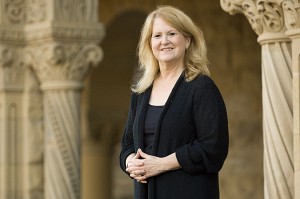
fishkinbookShelley Fisher Fishkin presented her new book Writing America: Literary Landmarks from Walden Pond to Wounded Knee (Rutgers) yesterday evening at Stanford’s Green Library, opening with a few words from E.L. Doctorow. Literature, the author observed, “endows places with meaning” by connecting “the visible and invisible” and finding “the hidden life in the observable life.”

No surprise, then, that her book focuses on a range of historical sites, and ones we might not anticipate: streets, theaters, a factory, a body of water, graveyards, a pump house.

She told her story from many overlooked perspectives – of the Latino farmworkers, of Jewish emigrants crammed in tenements, of Native Americans hunted and killed, of the workers at the Triangle Shirtwaist Factory.

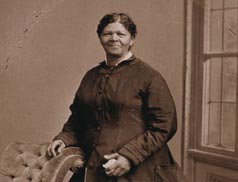
But perhaps the one that moved me the most was the story of Mary Ann Cord, the cook in the household of Mark Twain‘s in-laws Theodore and Susan Crane in Elmira, New York, where the Clemenses spent their summers. She was born into slavery in Maryland, and had lost her husband and seven children when the family was broken up and sold around 1852. She was reunited with her youngest son, Henry, thirteen years later, when he was a soldier in the Union army.

Twain had no idea when he casually asked her about her life. “He wrote down her words before they were cold,” said Shelley. He published the account, “A True Story, Repeated Word for Word as I Heard It,” in The Atlantic Monthly in 1874. Knowing Twain’s short stories, readers waited for the joke, but there was no joke. The story revealed “the agony of slavery, the enigma of cruelty,” Shelley said. “America would never be the same.” Twain would never be the same, either; he published The Adventures of Huckleberry Finn a decade later.

I looked the story up online. It begins this way:
cord

An unsung heroine: Mary Ann Cord

It was summer time, and twilight. We were sitting on the porch of the farm-house, on the summit of the hill, and “Aunt Rachel” was sitting respectfully below our level, on the steps, – for she was our servant, and colored. She was of mighty frame and stature; she was sixty years old, but her eye was undimmed and her strength unabated. She was a cheerful, hearty soul, and it was no more trouble for her to laugh than it is for a bird to sing. She was under fire, now, as usual when the day was done. That is to say, she was being chaffed without mercy, and was enjoying it. She would let off peal after peal of laughter, and then sit with her face in her hands and shake with throes of enjoyment which she could no longer get breath enough to express. At such a moment as this a thought occurred to me, and I said:

“Aunt Rachel, how is it that you’ve lived sixty years and never had any trouble?”

She stopped quaking. She paused, and there was a moment of silence. She turned her face over her shoulder toward me, and said, without even a smile in her voice: –

mark-twain

It changed his life.

“Misto C –, is you in ‘arnest?”

It surprised me a good deal; and it sobered my manner and my speech, too. I said: –

“Why, I thought – that is, I meant – why, you can’t have had any trouble. I’ve never heard you sigh, and never seen your eye when there wasn’t a laugh in it.”

She faced fairly around, now, and was full of earnestness.

“Has I had any trouble? Misto C –, I’s gwyne to tell you, den I leave it to you. I was bawn down ‘mongst de slaves; I knows all ‘bout slavery, ‘cause I been one of ‘em my own se’f. Well, sah, my ole man – dat’s my husban’ – he was lovin’ an’ kind to me, jist as kind as you is to yo’ own wife. An’ we had chil’en – seven chil’en – an’ we loved dem chil’en jist de same as you loves you’ chil’en. Dey was black, but de Lord can’t make no chil’en so black but what dey mother loves ’em an’ wouldn’t give ‘em up, no, not for anything dat’s in dis whole world.

You can read the whole thing here.

From Writing America: 
fisherfishkin

Author, author! (Photo: L.A. Cicero)

“At a time when the speech of African Americans was widely ridiculed in the nation at large, Twain recognized that African American vernacular speech and storytelling manifested a literary potential that was rich, powerful, and largely untapped in print. He went on to change the course of American literature by infusing it with lessons he had learned from African American speakers. And at a time when African Americans themselves were classified as inferior specimens of humanity by pseudoscientists and so-called educators, Mark Twain’s awareness of black individuals of courage and talent impelled him to challenge this characterization in fiction, nonfiction, quips, quotes, and unpublished meditations that he wrote from the 1870s until his death.”

And don’t forget to buy Shelley’s book here.

Life in people, life in things: Tadeusz Kantor exhibit in São Paulo

November 28th, 2015
Share
4.0

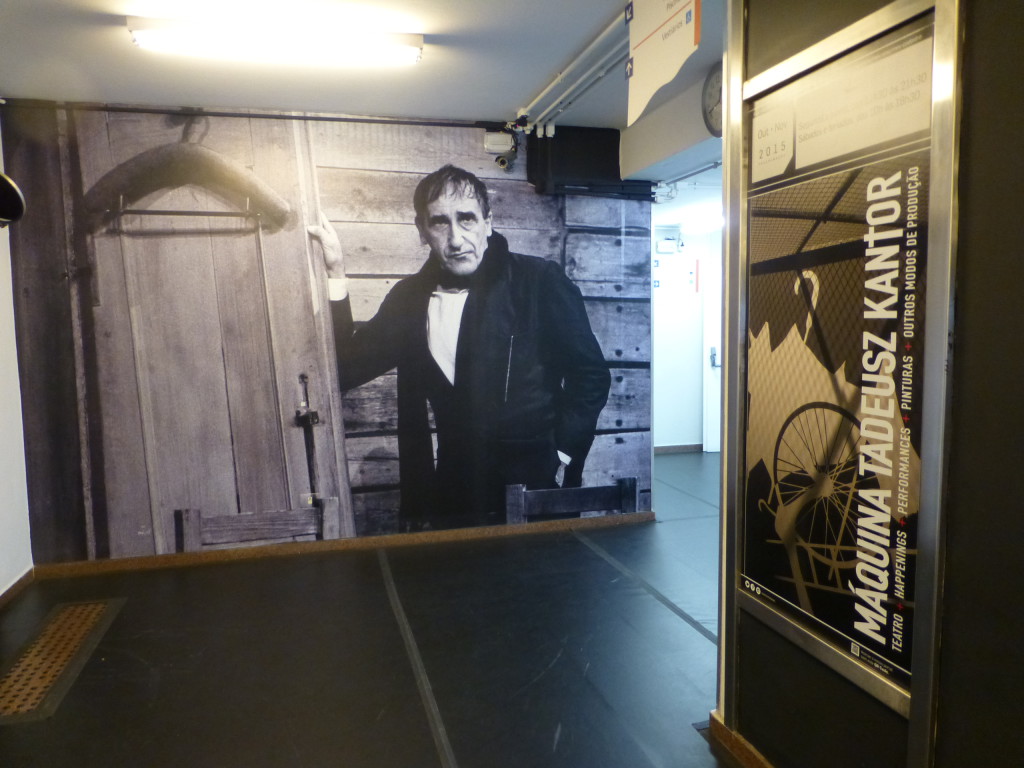
“Tadeusz Kantor Machine”: The biggest exhibition of Kantor’s artistic work in Americas.

From our correspondent Zbigniew Stańczyk, a former Stanford curator who has just returned from a centenary celebration for Tadeusz Kantor (1915-1990), considered one of Poland’s most important twentieth century artists, held in sunny Brazil:

One of the biggest Polish cultural events of 2015 took place in São Paulo, Brazil, and thanks to the Cinema Theater, I had the opportunity to participate in it. São Paulo hosted retrospective exhibition devoted to the full scope of the career of Tadeusz Kantor, widely considered to be among the most important and prolific painters and playwrights of the twentieth century. The audience reception was astounding, and certainly will be the subject of more than one analysis.

6.04

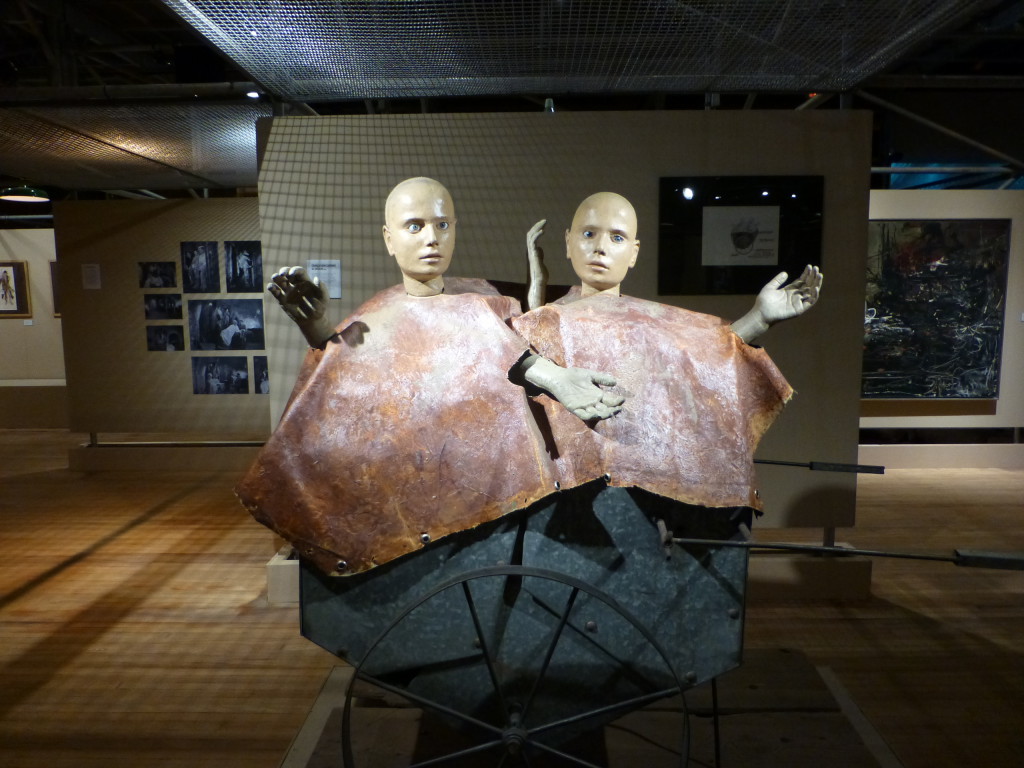
Children in the rubbish cart, from the play “In a Little Manor House” by Witkiewicz.

According to Jaroslaw Suchan, one of the curators of Kantor’s exhibit, “Kantor is to Polish art what Andy Warhol was to American art. He created a unique strain of theatre and was an active participant in the revolutions of the neo-avant-garde; he was a highly original theoretician, an innovator strongly grounded in tradition, an anti-painterly painter, a happener-heretic and an ironic conceptualist. His pioneering work remains powerful and influential today, challenging conventional boundaries between installation, performance and stage.”

All three floors of the SESC Cultural Center were turned into one great laboratory for actors’ workshops, film presentations, and of course the exhibit. The entire building was reconstructed, a thousand square meters of interior were repainted. Exhibit space was turned into a living theater. Mingling with the visitors, the actors of the Antropofagica Theater performed characters from Kantor’s plays. His face, recorded on film, appeared on a large-format, 6-meter screen, and dominated the entire exposition. He always loved being on the stage, in the middle of the action – and once again, he was given a chance to participate.

Kantor was constantly on a real or imaginary trip. Another curator, Ricardo Muñiz Fernandez, responded to this inclination by putting exhibited objects among the crates in which they were brought from Poland. Kantor liked to include packages on his canvases. He liked to immortalize them so they wouldn’t suffer the humiliation of losing their utility. In so doing, he restored the dignity of the things that were doomed to oblivion. Hence, a work of art appeared in a place where it didn’t have right to exist.

9

A scene from “The Review of Fire”

He rejected the formalism of museum exhibitions and curators. He went his own way by building an “anti-exhibition,” devoid of chronology. At the entrance to the 2015 exhibition, the organizers placed a large photograph of postwar Warsaw in all its devastation, serving as an introduction to the artist’s intellectual context: war destroying everything and everyone, degrading people to passive objects. The pulsating streets of São Paulo outside the building stood in marked contrast to this shocking accent.

Although Kantor never visited Brazil, he received one of the most important prizes of his life at the São Paulo Biennale in 1967. From the beginning, his name was associated here more with the theater than with the visual arts. The founder of the Center for Theatrical Research, who attended one of Kantor’s performances of The Dead Class during his visit to Italy in the 70’s, and Filho included the play in the actors’ training program and the word got out. That’s why the São Paulo exhibit devotes much attention to Kantor as a set designer, creator of para-theatrical activities, and a theater-theorist.

To illustrate Kantor’s presence in today’s performing arts, Brazilians invited Teatr Cinema from  Michałowice. The founder and director Zbigniew Szumski had followed an artistic path similar to Kantor’s. He graduated from the Academy of Fine Arts in Gdańsk and painted for years until he had exhausted its possibilities. He began doing theater. He appeared on the cultural stage in the 1990’s precisely at the time when Kantor departed from it. He continues the tradition of the Polish avant-garde with astonishing results. His vision goes far beyond the kind of work that took critics decades to accept in Kantor’s oeuvre. Szumski experiments in each performance. He has perfected his instrument: a group of actors who have worked with him for over twenty years. They brought River of Fire, a play that attempts to resolve the trauma of war experiences, to São Paulo. The title refers to the original meaning of the word Holocaust: “annihilation in flames.” The play depicts behavior of people cut off from the world, which had passed the death sentence on them.

000001

Outside the SESC culture center in São Paulo.

Szumski makes frequent references to war as a last resort and gives a second chance to people who disappeared into the depths of darkness, denied the right to exist. Bringing  them back to life becomes  a conversation with the conscience of the artists and the entire community.

Few of us are aware of the importance of São Paulo as one of the most influential cultural centers in the world. This cosmopolitan city of 20 million has dozens of  theaters and museums on the highest level. The exhibition received excellent reception and is considered by the local critics as most important event of the year.

Cinema Theatre, a follower of Kantor’s ideas, tours internationally and makes frequent appearances at many important festivals. I was curious how the theater’s avant-garde repertoire would resonate with the Brazilian audience. Each performance ended with a standing ovation, which lasted for minutes. We met the leading Brazilian actors, directors, and artists. Wrocław, European Capital of Culture in 2016, has to include performances of this unique theater in the next year program. I can’t imagine it any other way.

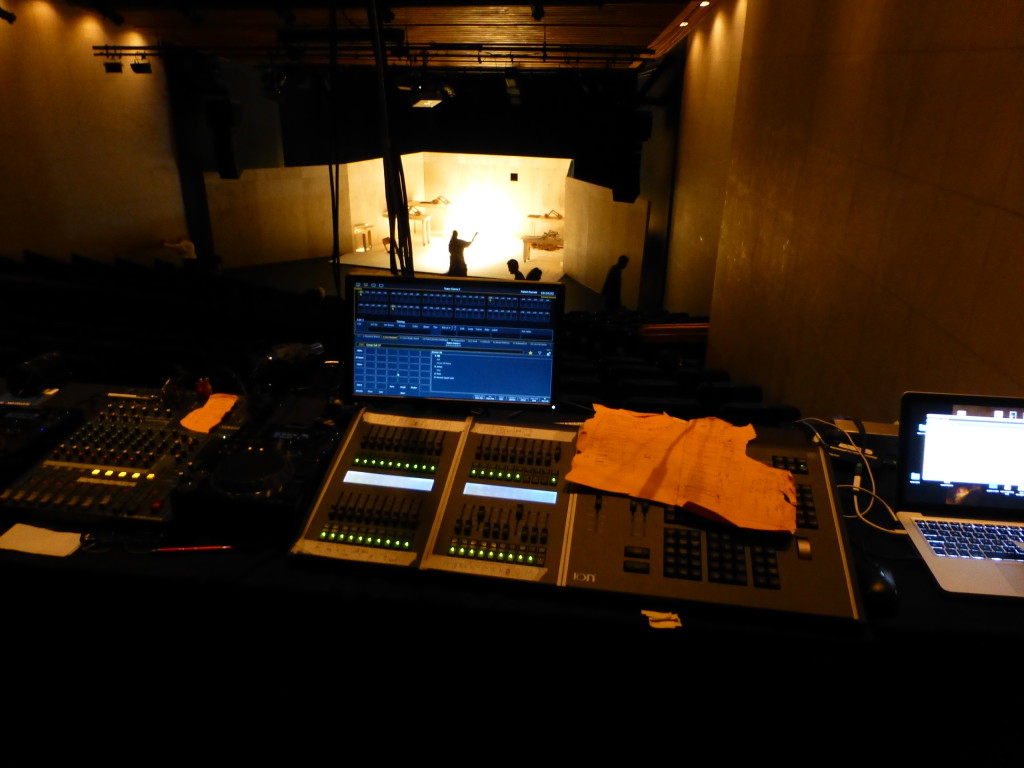
All photos by Zbigniew Stańczyk. Read more about the three-month exhibit, which ended earlier this month, here

6.020

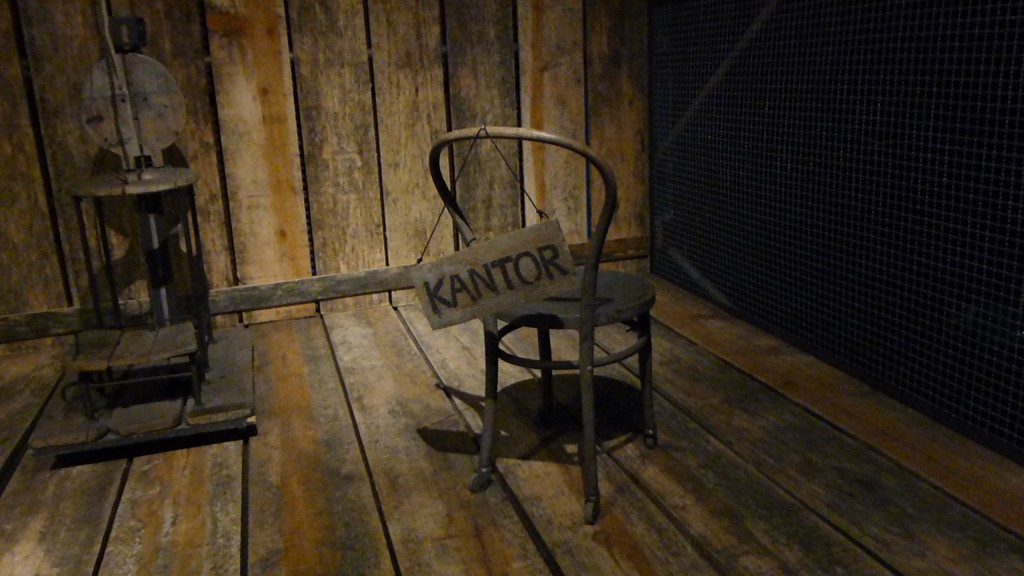
In 1970, Kantor created an 8 meter high folding chair made of concrete which was placed in Wroclaw among street traffic. It was to make an impression of something abandoned. He explained: “This artistic condition existed not in the chair, not in the form but in the surrounding. The existence of this chair caused all of the surroundings to become artistic.” Below, a smaller chair.

6.08


<<< Previous Series of PostssepNext Series of Posts >>>