New short biography of Hannah Arendt: “Her hope for the world lay in ‘natality.'”

August 22nd, 2015

Share
Hannah_Arendt1

A photo from before the dark times.

I don’t follow publishing news very closely (I know I should), but I was disappointed when the Penguin Lives series, edited by James Atlas, disappeared shortly after I became aware of it. In the olden days, before I became a blogger, I used to gulp down biographies like dark chocolate, and the short format (about 200 pages) made these books bite-sized. According to the Observer:

The Penguin Lives boutique biography series – a collaboration between Viking publishing, former New York Times Magazine editor James Atlas and former deputy mayor and financier Kenneth Lipper – is kaput.

Mr. Atlas, the general editor for Penguin Lives, told Off the Record that after publishing 22 of the diminutive, handsomely designed hardcover books pairing noted authors with an eclectic range of subjects ranging from Napoleon to Rosa Parks, Viking – a division of Penguin-Putnam – has decided to pull out of the venture.

“They’re closing it down. No real explanation was given,” Mr. Atlas said. “It was a question of its place in the corporate structure. It fit well, but it didn’t always fit well.”

Well, there you have it. That was a dozen years ago. Shows how up-to-date I am. Cut away to a few weeks ago when I received a notice of a package at the Stanford Post office. I tore open the package on my way to a meeting. A book by Hannah Arendt about “dark times.” I assumed it was a fancy new reissue of her Men in Dark Times – I wrote about that here, and assumed it would return me to that time “when there was only wrong and no outrage.” I figured my earlier post and been flagged by some ‘bot for a publishers’ mailing list. So I added the book to a tall pile for future perusal.

Wrong! The book is a short (134 pages) new biography of the philosopher by Anne C. HellerA Life in Dark TimesIt’s one of the short biographies issued in a new Amazon Publishing series called “Icons” (more here.) Seven of the eleven “inaugural” titles have already been published. Next on the list: Karen Armstrong takes on St. Paul, and Brooke Allen writes about Benazir Bhutto. What a good idea this is! It is still a good idea! And the Arendt book had a release date of only four days ago, so I’m just in time!

According to Adam Kirsch (we’ve written about him here and here), “Hannah Arendt was one of the most compelling and provocative thinkers of her time, and she remains indispensable today. In this lucid, accessible biography, Anne Heller shows how Arendt’s eventful life – shaped by war and exile, love and friendship – gave rise to her most important insights into politics and the nature of evil.”

I found this passage in the last chapter, at the end of her life. It is not about dark times – I hear enough about those already in the news – but rather about miracles. And couldn’t we all use one about now?

Arendt-KellerHer hope for the world lay in “natality,” “the miracle that saves the world,” she wrote, by which she meant the unimaginable possibilities that attend every human birth and must be safeguarded until they can reach full flower. “The beginning is also a god; so long as he dwells among men, he saves all things,” she noted, quoting Plato in her 1971 tribute to Martin Heidegger upon his eightieth birthday. And as she would write poignantly in her last book, The Life of the Mind, published after her death in 1978:

In this world which we enter, appearing from a nowhere, and from which we disappear into a nowhere, Being and Appearing coincide. … Seen from the viewpoint of the spectators to whom [a human life] appears and from whose view it finally disappears, each individual life, its growth and decline, is a developmental process in which an entity unfolds itself in an upward movement until all its properties are fully exposed; this phase is followed by a period of standstill – its bloom or epiphany, as it were – which in turn is succeeded by the downward movement of disintegration that is terminated by complete disappearance.

The human soul is born to make an appearance on a public stage, Arendt seemed to have concluded in her later years, and to become most vibrantly itself in a shared world. For her, authenticity did not require withdrawal from noisy modernity into the solitude of Being, as it did for Heidegger, but neither did it permit taking action without standing back and thinking about “what is.” And in her later years what is always encompassed the point of view of people different, even alien, from oneself.

Poet William Jay Smith, 1918-2015: “the truest and purest poems an American has written”

August 20th, 2015
Share
williamsmith

A most gentle warrior.

A few days ago, I wrote about poems as memorable speech, and the kind of poem that lodges in your brain and won’t leave. William Jay Smith wrote a dark and magical one, and it’s carved in my memory. It’s his enduring gift to me now.

Smith died on Tuesday, August 18, at the age of 97. From the New York Times obituary yesterday:

Mr. Smith’s poems for adults were praised for diction that was at once unfussy and lyrical; for thematic variety (they ranged over the natural world, erotic love, the experience of war, his Choctaw ancestry and many other subjects); for their ability to see minutely into everyday experience; and for a deceptive simplicity that belied the rigorous formal architecture beneath.

He embraced poetic devices, like rhyme and carefully calibrated meter, that many 20th-century colleagues considered passé — a self-imposed set of strictures that, critics said, gave his best work the sheen of something meticulously constructed, buffed and polished.

I met him at a West Chester Poetry Conference a dozen or so years ago. Too briefly to make much of an impression, except that he was courteous, gentle, and humble. He didn’t make much of his Native American ancestry, though it was patterned on his face. As I recall, he read from his poems on the Trail of Tears during the conference, and I bought one of his books as a result. Luckily, I was able to find it on my shelf this morning. As I thumbed through, I found this one, “The Eagle Warrior: An Invocation” from his 1997 collection The Cherokee Lottery, about a life-size ceramic man costumed as an eagle, thrown into a lake by the conquistadors and for that reason, and only that reason, it survived. This is how the invocation concludes:

O Eagle-warrior, surrogate of the sun,
.     fly off in my mind now
to circle the sun, that “ascending eagle,”
and with your penetrating eye
and your calligraphic wing-span
.     printed high upon the air,
follow the westward movement
.     of every vanquished tribe.
O Eagle-warrior, quick-eyed, fierce-beaked,
.     tense-taloned,
be their emblem, be their witness, be their scribe.

smithbookRichard Wilbur called him “a most gifted and original poet … One of the very few who cannot be confused with anybody else.” Dana Gioia wrote that his best poems “are unlike anything else in contemporary American literature … Although often based on realistic situations, Smith’s compressed, formal lyrics develop language musically in a way which summons an intricate, dreamlike set of images and associations.” And X.J. Kennedy said that he “has given us many of the truest and purest poems an American has written: the most resonantly musical, the most magical.” 

Smith authored over fifty books of poetry, children’s verse, literary criticism, and translation. Noted for his prodigious career, which spanned the fields of creative writing, translation, academia, and politics, Smith served a two-year term in the Vermont House of Representative, from 1960 to 1962, and also served as a poetry consultant to the Library of Congress (the position now known as the U.S. poet laureate) from 1968 to 1970. Smith was also a member of the Academy of Arts and Letters since 1975, as well as a former vice president for literature.

As noted over at poets.org, Smith’s honors include the Henry Bellamann Major Award, the Russell Loines Award from the National Institute of the Arts and Letters, a grant from the National Endowment for the Arts, and fellowships from the National Endowment for the Arts and the National Endowment for the Humanities. In 2002, he received a lifetime achievement award from the Louisiana Center for the Book. He also received honors from the French Academy, the Swedish Academy, and the government of Hungary for his translations.

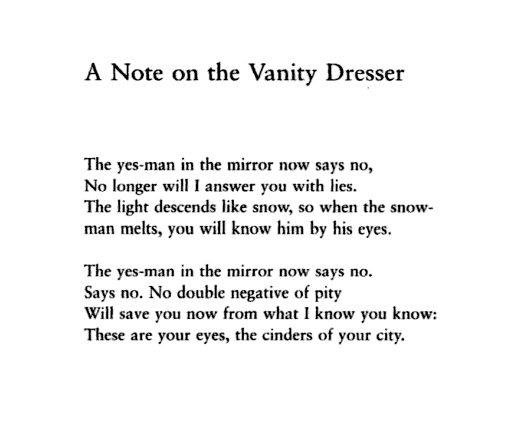
Ah yes, the poem that lodged in my brain:

vanity

Band of brothers: the Inklings at Oxford

August 18th, 2015
Share
magdalen

Where the parties happened. (Photo: Wikipedia)

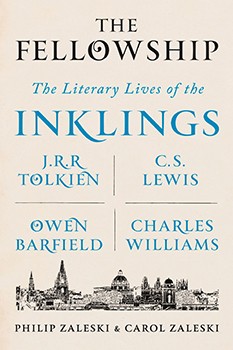
Everywhere I go, I seem to find something about the new book, The Fellowship: The Literary Lives of the Inklings: J. R. R. Tolkien, C. S. Lewis, Owen Barfield, Charles Williams by Carol and Philip Zaleski (and published by Farrar, Straus & Giroux, no less). Now I see the story in The Atlantic, too, in an article (here) by James Parker.

I’ve always loved the Inklings, not only for their writing, but also because they represent a period in England that I love:

zeleskiIn this nearly magical room, amid fire-crackle and clink of glass, you can hear them talking. Pipe smoke is in the air, and a certain boisterous chauvinism, and the wet-dog smell of recently rained-on tweed. You can hear the donnish mumbles of J. R. R. Tolkien as the slow coils of The Silmarillion glint and shift in his back-brain. Now he’s reading aloud from an interminable marmalade-stained manuscript, and his fellow academic Hugo Dyson, prone on the couch, is heckling him: “Oh God, not another fucking elf!” You can hear the challenging train-conductor baritone of C. S. Lewis, familiar to millions from his wartime radio broadcasts; hear the unstoppable spiel of the writer/hierophant Charles Williams, with his twitchy limbs and angel-monkey face; hear the silver stream of ideas and argumentation that is the philosopher Owen Barfield. They are intellectually bent upon one another, these men, but flesh-and-blood is the thing: conviviality is, for them, a kind of passion. The chairs are deep; the fire glows gold and extra fiery in the grate. Lewis’s brother, Warnie, rosy with booze and fellow feeling, serves the drinks. And the walls drop away, and the scene extends itself backwards and forward in time …

Is it the famous Eagle & Child, my favorite Oxford pub with its cramped dark-wood interiors and nooks and crannies? No! It’s Lewis’s rooms at Magdalen College, Oxford – I have to admit, it is perhaps the most beautiful college at the University (although I’m also partial to Christ Church, W.H. Auden‘s college, since I stayed across the street from it and got to look out over its marvelous gardens leading down to the ducks and the boats on Cherwell).

More from the review:

And so it began, and so it went on, with additions and diminutions, until the late ’40s. Reading aloud and commenting upon unfinished work was the group’s primary activity. Lewis’s The Great Divorce, Williams’s All Hallows’ Eve, and—most resonantly for us—Tolkien’s The Lord of the Rings all made their debut in this context. Tolkien, like Lewis, was part of the fabric of Oxford University, a philologist and a professor of Anglo-Saxon, teaching Beowulf by day while tinkering at night, at home, with his own made-up languages. Tinkering is of course quite the wrong word: Tolkien was plunging, spelunking, delving, excavating, as pickax-happy as a dwarf in the Mines of Moria, because in the roots of language—the glowing word-cores, the namings—he had found the roots of story. “For perfect construction of an art-language,” he explained in a talk delivered in 1931, “it is found necessary to construct at least in outline a mythology.” And there it is: the DNA of The Lord of the Rings. It was at this level of thinking that Tolkien met the way-ahead-of-the-curve Barfield, for whom language contained “the inner, living history of man’s soul.” Barfield’s brilliant 1926 book, History in English Words, is a work of philosophical archaeology, tracking and illuminating, via the changing meanings of words, the development of Western mental reality. And for Barfield, all reality was mental reality. “When we study long-term changes in consciousness,” he stated unequivocally, “we are studying changes in the world itself … Consciousness is not a tiny bit of the world stuck on the rest of it. It is the inside of the whole world.” (In Barfield’s old age, his theories would gain him a notable acolyte in Saul Bellow.)

 Well, as mentioned, read the whole thing here.  And read my Polish friend Artur Sebastian Rosman’s interview with the Zaleskis here.

cherwell3

Ducks and boats on the Cherwell. (Photo: Humble Moi)

August 18th, 2015
Share
magdalen

Where the parties happened. (Photo: Wikipedia)

Everywhere I go, I seem to find something about the new book, The Fellowship: The Literary Lives of the Inklings: J. R. R. Tolkien, C. S. Lewis, Owen Barfield, Charles Williams by Carol and Philip Zaleski (and published by Farrar, Straus & Giroux, no less). Now I see the story in The Atlantic, too, in an article (here) by James Parker.

I’ve always loved the Inklings, not only for their writing, but also because they represent a period in England that I love:

zeleskiIn this nearly magical room, amid fire-crackle and clink of glass, you can hear them talking. Pipe smoke is in the air, and a certain boisterous chauvinism, and the wet-dog smell of recently rained-on tweed. You can hear the donnish mumbles of J. R. R. Tolkien as the slow coils of The Silmarillion glint and shift in his back-brain. Now he’s reading aloud from an interminable marmalade-stained manuscript, and his fellow academic Hugo Dyson, prone on the couch, is heckling him: “Oh God, not another fucking elf!” You can hear the challenging train-conductor baritone of C. S. Lewis, familiar to millions from his wartime radio broadcasts; hear the unstoppable spiel of the writer/hierophant Charles Williams, with his twitchy limbs and angel-monkey face; hear the silver stream of ideas and argumentation that is the philosopher Owen Barfield. They are intellectually bent upon one another, these men, but flesh-and-blood is the thing: conviviality is, for them, a kind of passion. The chairs are deep; the fire glows gold and extra fiery in the grate. Lewis’s brother, Warnie, rosy with booze and fellow feeling, serves the drinks. And the walls drop away, and the scene extends itself backwards and forward in time …

Is it the famous Eagle & Child, my favorite Oxford pub with its cramped dark-wood interiors and nooks and crannies? No! It’s Lewis’s rooms at Magdalen College, Oxford – I have to admit, it is perhaps the most beautiful college at the University (although I’m partial to Christ Church, W.H. Auden‘s college, since I stayed across the street from it and got to look out over its marvelous gardens leading down to the ducks and the boats on Cherwell).

More from the review:

And so it began, and so it went on, with additions and diminutions, until the late ’40s. Reading aloud and commenting upon unfinished work was the group’s primary activity. Lewis’s The Great Divorce, Williams’s All Hallows’ Eve, and—most resonantly for us—Tolkien’s The Lord of the Rings all made their debut in this context. Tolkien, like Lewis, was part of the fabric of Oxford University, a philologist and a professor of Anglo-Saxon, teaching Beowulf by day while tinkering at night, at home, with his own made-up languages. Tinkering is of course quite the wrong word: Tolkien was plunging, spelunking, delving, excavating, as pickax-happy as a dwarf in the Mines of Moria, because in the roots of language—the glowing word-cores, the namings—he had found the roots of story. “For perfect construction of an art-language,” he explained in a talk delivered in 1931, “it is found necessary to construct at least in outline a mythology.” And there it is: the DNA of The Lord of the Rings. It was at this level of thinking that Tolkien met the way-ahead-of-the-curve Barfield, for whom language contained “the inner, living history of man’s soul.” Barfield’s brilliant 1926 book, History in English Words, is a work of philosophical archaeology, tracking and illuminating, via the changing meanings of words, the development of Western mental reality. And for Barfield, all reality was mental reality. “When we study long-term changes in consciousness,” he stated unequivocally, “we are studying changes in the world itself … Consciousness is not a tiny bit of the world stuck on the rest of it. It is the inside of the whole world.” (In Barfield’s old age, his theories would gain him a notable acolyte in Saul Bellow.)

 Well, as mentioned, read the whole thing here.  And read my Polish friend Artur Sebastian Rosman’s interview with the Zaleskis here.

cherwell3

Ducks and boats on the Cherwell. (Photo: Humble Moi)

Poetry as pleasure – have we forgotten the fun?

August 15th, 2015
Share
stairs

He hasn’t left, either.

Yesterday, upon the stair,
I met a man who wasn’t there.
He wasn’t there again today,
I wish, I wish he’d go away…

When I came home last night at three,
The man was waiting there for me
But when I looked around the hall,
I couldn’t see him there at all!
Go away, go away, don’t you come back any more!
Go away, go away, and please don’t slam the door…

Last night I saw upon the stair,
A little man who wasn’t there,
He wasn’t there again today
Oh, how I wish he’d go away…

I read this poem to my daughter at least two decades ago when she was a very young girl, and she was silent for a long time afterwards, thinking long and carefully. “But he wasn’t there!” she finally exclaimed. “That’s right,” I said. And then she lapsed into silence again, and pondered some more. “But then, how … ? Why did he …?”

I didn’t tell her anything about the poem. I didn’t tell her that it was written by a young man at Harvard in 1899, describing a purportedly haunted house in Antigonish, Nova Scotia. Its author, Hughes Mearns, would go on to be an educator. His notions about encouraging the natural creativity of children, particularly for ages 3-8, were apparently novel at the time. According to a 1940 Current Biography: “He typed notes of their conversations; he learned how to make them forget there was an adult around; never asked them questions and never showed surprise no matter what they did or said.”

I ran across these verses by chance today and, now that my daughter is a woman of twenty-something, I emailed the poem to her and asked her if she remembered it. “Wow! Yeah! I do remember that poem!” Without analysis or explanation, the poem had lodged in her memory, undisturbed for the last two decades. The poem may not qualify for the immortals sweepstakes, and yet it was, clearly, “memorable speech.”

blakeWhich brings me to Dana Gioia‘s major essay, “Poetry as Enchantment,” in the current issue of Dark Horse. (It’s online, here.)

“In the western tradition, it has generally been assumed that the purpose of poetry is to delight, instruct, console, and commemorate. But it might be more accurate to say that poems instruct, console, and commemorate through the pleasures of enchantment. The power of poetry is to affect the emotions, touch the memory, and incite the imagination with unusual force. Mostly through the particular exhilaration and heightened sensitivity of rhythmic trance can poetry reach deeply enough into the psyche to have such impact. (How visual forms of prosody strive to achieve this mental state requires a separate inquiry.) When poetry loses its ability to enchant, it shrinks into what is just an elaborate form of argumentation. When verse casts its particular spell, it becomes the most evocative form of language. ‘Poetry,’ writes Greg Orr, ‘is the rapture of rhythmical language.’”

I doubt he had a poem like “Antigonish” in mind, and yet I think we would be unwise to dismiss a poem that lodges so securely in a child’s imagination. In the absence of religion today, it may be the closest they come to mystery. Again from Dana:

Academic critics often dismiss the responses of average readers to poetry as naïve and vague, and there is some justification for this assumption. The reactions of most readers are undisciplined, haphazard, incoherent, and hopelessly subjective. Worse yet, amateurs often read only part of a poem because a word or image sends them stumbling backwards into memory or spinning forward into the imagination. But the amateur who reads poetry from love or curiosity does have at least one advantage over the trained specialist who reads it from professional obligation. Amateurs have not learned to shut off parts of their consciousness to focus on only the appropriate elements of a literary text. They respond to poems in the sloppy fullness of their humanity. Their emotions and memories emerge entangled with half-formed thoughts and physical sensations. As any thinking person can see, such subjectivity is an intellectual mess of the highest order. But aren’t average readers simply approaching poetry more or less the way human beings experience the world itself?

Life is experienced holistically with sensations pouring in through every physical and mental organ of perception. Art exists embodied in physical elements—especially meticulously calibrated aspects of sight and sound—which scholarly explication can illuminate but never fully replace. However conceptually incoherent and subjectively emotional, the amateur response to poetry comes closer to the larger human purposes of the art—which is to awaken, amplify, and refine the sense of being alive—than does critical commentary.

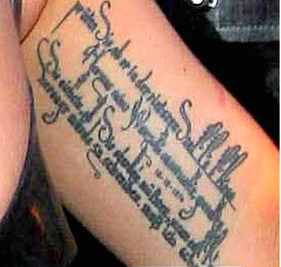
As Rainer Maria Rilke pointed out in his “Sonnets to Orpheus”:  “Gesang ist Dasein,” or “Life is singing.” His words meant enough to Lady Gaga to that she had them tattooed on her arm, a distinctly modern kind of tribute. Dana points out that William Blake‘s “The Tyger” is the most anthologized poem in the English language – children love it, love its rhythm and its images, even though they have no idea what it means. Probably nobody does.

gaga-rilke

Gaga over Rilke. Who knew?

It is significant that the Latin word for poetry, carmen, is also the word the Romans used for a song, a magic spell, a religious incantation, or a prophecy—all verbal constructions whose auditory powers can produce a magical effect on the listener. Ancient cultures believed in the power of speech. To curse or bless someone had profound meaning. A spoken oath was binding. A spell or prophecy had potency. The term carmen still survives in modern English (via Norman French) as the word charm, and it still carries the multiple meanings of a magic spell, a spoken poem, and the power to enthrall. Even today charms survive in oral culture. Looking at a stormy sky, surely a few children still recite the spell:

Rain, rain
go away.
Come again
some other day.

Or staring at the evening sky, they whisper to Venus, the evening star:

Star light, star bright,
First star I see tonight,
I wish I may, I wish I might
Have the wish I wish tonight.

A rational adult understands that neither the star nor the spell has any physical power to transform reality in accordance with the child’s wish. But the poet knows that by articulating a wish, by giving it tangible form, the child can potentially awaken the forces of imagination and desire that animate the future. As André Breton proposed, ‘The imaginary tends to become real.’

ramandsitaEvery time I hear the first schoolyard rhyme, I remember the version I heard in India, where the children sing:

Rain, rain
go away.
Ram and Sita
Want to play.

It’s just as effective in that hemisphere. The same carmen.

I have many thoughts about Dana’s essay – I’ve barely scraped the surface. I hope to explore it in the coming days, after I’ve met a few deadlines. Meanwhile, you can catch up by reading Dana Gioia’s whole essay here.

“Magpiety”: getting to the bottom of it.

August 12th, 2015
Share

magpie2“Magpiety.” I had thought the title came from Nobel poet Czesław Miłosz and his poem by that name – his translator Peter Dale Scott has assured me that he himself invented the word, though I thought Miłosz had made the same claim. Anyway, I wrote all about the word Magpiety here. I thought the subject had exhausted itself and I had become the world expert.

Then I received in the mail the galley proofs for a collection of Melissa Green‘s poems, which will be out later this year: Magpiety, published by Arrowsmith Press in Medford, Massachusetts. When I scanned the table of contents, I expected to find a poem in tribute to the late great Polish poet – along the lines of Philip Levine‘s poem “Magpiety.” Nope.

My OED dates the usage of the word to 1845 (“Not pious in its proper sense/But chattering like a bird…”). Long before either Miłosz or Peter Dale Scott were born. The mystery deepened. Arrowsmith publisher Askold Melnyczuk sent me the author’s note that is to go at the beginning of the volume. In it, the poet writes: “Magpiety arose directly from the anonymous Renaissance poem ‘Tom O’Bedlam’s Song’ and with the call and response of the lesser known—and probably later—’Mad Maud’s Song.’ In order to write my version, I searched for language that had fallen out of English in order to invent a dialect for Maud’s voice as she struggled with delusions, her dread of madness, of the loss of Tom, and of Bedlam.”

Had the OED been bested by several centuries?

So I wrote the poet for an explanation, and this is what she said:

For a while, even I thought I’d invented the word Magpiety!

I hadn’t remembered it from the Miłosz – in fact, if pressed, I would have said I had yanked from one of Mark Strand‘s poems, but I must have been thinking of Philip Levine.

I have bushel baskets full of words with the same kind of frisson, that sit in the cellar year after year, ripening, until I need them, until the source of the word has been forgotten. I didn’t actually find any evidence for its use anywhere as early as the Elizabethans; rather when the time came to write the Mad Maud poems, I remembered the word ‘magpiety’ and employed it like a valise to pack in all the meanings I could in the manner of Humpty Dumpty.

green-melissa

She likes the twinkly bits.

ORIGIN late 16th cent.: probably shortening of dialect maggot the pie, maggoty-pie, from Magot (Middle English nickname for the given name Marguerite) + pie (Old French from Latin pica)

‘Mag’ came to mean a woman, an idle chatterer, whose daylong running monologue, I imagined, expected no reply – so I saw Maud’s poems as full of a mad self-talk, with the world not responding. (The Corvidae are loud and raucous talkers). My confirmation name is Margaret, which made ‘Mag’ appropriate. It was easy to extend ‘pie’ to ‘piety’ (though I do remember your OED reference mid-1800 as the opposite of true piety; Pierus claimed his nine daughters sang as beautifully as the Muses and they were turned into magpies for that hubris/impiety). I am a magpie-ish kind of writer – drawn to the shiny, twinkly bits – but this magpie is full of reverence for the world. The rhyme in my head went ‘mag/hag/bag lady’ which is how I am convinced I’ll end up.

She ended with an apology: “Sorry I have no legitimate trail of breadcrumbs for you to take this word back into linguistic history. You see I just used it to suit myself.”

Connection with Miłosz?  Coincidence. Who would have guessed it?


<<< Previous Series of PostssepNext Series of Posts >>>