What are the odds that this is the grave of Cervantes?

January 28th, 2015

Share

What are the odds that we’ve found the grave of Miguel de Cervantes? Pretty good, I’d say. The author of Don Quixote (1547-1616) asked to be buried at this Trinitarian convent, and sure enough, with ground-penetrating radar, the researchers have found a crumbling wooden coffin with the initials “M.C.” spelled out in metal tacks. It’s one of the half-dozen graves identified in the graveyard of the brick-walled convent in the heart of Madrid, which is a pretty nice city to be lost in.

IND119216

Maybe Cervantes, maybe not.

It’s not his first wandering, by a longshot. In 1569, he traveled to Rome where he was the chamber assistant to a cardinal. By 1570, Cervantes had enlisted as a soldier in the Spanish Navy Marines, and the following year participated in the pivotal Battle of Lepanto, in which the Holy League defeated the Ottoman Empire. Though taken with a fever, he insisted on taking part, saying he would rather die for his God and his king than keep under cover. He almost did: he received three gunshot wounds, one which rendered his left arm useless. In Journey to Parnassus he was to say that he “had lost the movement of the left hand for the glory of the right” (thinking of his career as a right-handed author). And that’s how we may be able to identify him.

According to The Guardian:

Experts said his bones should be easy to identify as they would bear the marks of wounds suffered during the naval battle of Lepanto in 1571.

Cervantes received wounds to his chest and arms during a battle which saw a Spanish-led fleet defeat their Ottoman enemies in the Gulf of Patras off western Greece.

“He received a blast from a harquebus in the chest and another wound that left him unable to use one hand,” [historian Fernando] Prado said. “Those two things will have left some imprint on his bones.”

Cervantes was buried in the convent after dying at his home nearby in 1616. … Cervantes’ bones went missing in 1673 when building work was done at the convent. They are known to have been taken to a different convent and were returned later.

So what are the chances? The Book Haven puts down its bet for “yes,” although the experts are advising caution. And who knows? Scientists may be able to tell whether he did indeed die of complications from cirrhosis of the liver, and so was the tippler he was rumored to be. I’m more interested in whether his DNA will show whether he was a converso, that is, of Jewish descent. Just about everybody brilliant in Spain seemed to be, including the leading Spanish poet (and mystic) of all time, his contemporary Juan de la Cruz. Forensic archaeologists may even be able to reconstruct the face of a man only known from a picture painted by artist Juan de Jáuregui a couple decades after his death (see above).  Current scholarship does not accept this, or any other graphic representation of Cervantes, to be authentic.

Susan Sontag, Berlin, 10 years later: “Thinking is a form of feeling, feeling is a form of thinking”

January 25th, 2015
Share

Sontag_06The Institute for Cultural Literacy in Berlin is having a retrospective on cultural icon and author Susan Sontag ten years after her death, to discuss the continuing relevance of her work. The reason I know about this distant event: my former editor at the Los Angeles Times Book Review, Steve Wasserman, will be giving the keynote address. Steve, a friend of the late author and cultural critic, is now editor-at-large for Yale University Press, which under his guidance recently released Jonathan Cott‘s Complete Rolling Stone InterviewSontag was also one of the contributors of the late lamented LATBR, so I was in good company.

“Susan Sontag Revisited” will take place January 29-30 at Christinenstrasse 18/19. Apparently, the organizers are apparently expecting a crowd, for the website warns: “For safety reasons, venue doors will be closed when capacity limits are reached. We apologize for any inconvenience.” Get there early, or you will be pushed away by gendarmes.

In addition to Steve, other speakers include: Andrea Braidt, Carolin Emcke, Jörn Glasenapp, Erika and Ulrich Gregor, E. Ann Kaplan, Nihad Kresevljakovic, Michael Krüger, Juliane Lorenz, Christina Pareigis, Anne Ratte-Polle, Laurence Rickels, Hanna Schygulla, with Christina Tilmann moderating the proceedings, in English and German.

An excerpt from Steve’s blogpost about his friendship with Sontag:

I would repair, at her invitation, to Sontag’s penthouse, Jasper Johns’ former studio, located on the Upper West Side at 340 Riverside Drive.

sontagI remember the apartment well.  Flooded with sunlight, surrounded by a generous terrace overlooking the Hudson, it was spartan: hardwood floors, white walls, high ceilings; in the living room a single Eames chair, an original Andy Warhol of Chairman Mao, and in the dining room a long monk’s table made of oak with a brace of long benches on either side; in the kitchen’s cupboards a stack of plates, a few glasses, and row after row of back issues of Partisan Review; leaning against one wall of Susan’s bedroom a curious stained-glass window from Italy of a spooky Death’s Head, a kind of memento mori and, perhaps most impressive, by her bedside a 24-hour clock featuring time zones spanning the globe.  Most important, of course, were the walls which bore the weight of her 8,000 books, a library which Susan would later call her “personal retrieval system.”

I spent the summer nearly getting a crick in my neck from perusing the books and I remember thinking that, while I had just finished four years of college, my real education was only beginning.  I discovered scores of writers I had never heard of as well as writers I distantly knew but had never read.  For reasons wholly mysterious I found myself drawn to four blue-backed volumes: the journals of André Gide.  These, like others in Susan’s library, were filled with her pencil underlinings and marginal notes.  One such passage by Gide made a deep impression: “When I cease getting angry, I shall have already begun my old age.”

I think Gide is wrong on that one – but I think Sontag is right when she declares, according to Steve, “what amounts to a credo, asserting that ‘thinking is a form of feeling and that feeling is a form of thinking.’” Check out Steve’s post and voice recording of Sontag here.

René Girard on terrorism: “We have to radically change the way we think.” Have we?

January 22nd, 2015
Share
Charlie-Hebdo-2015-11

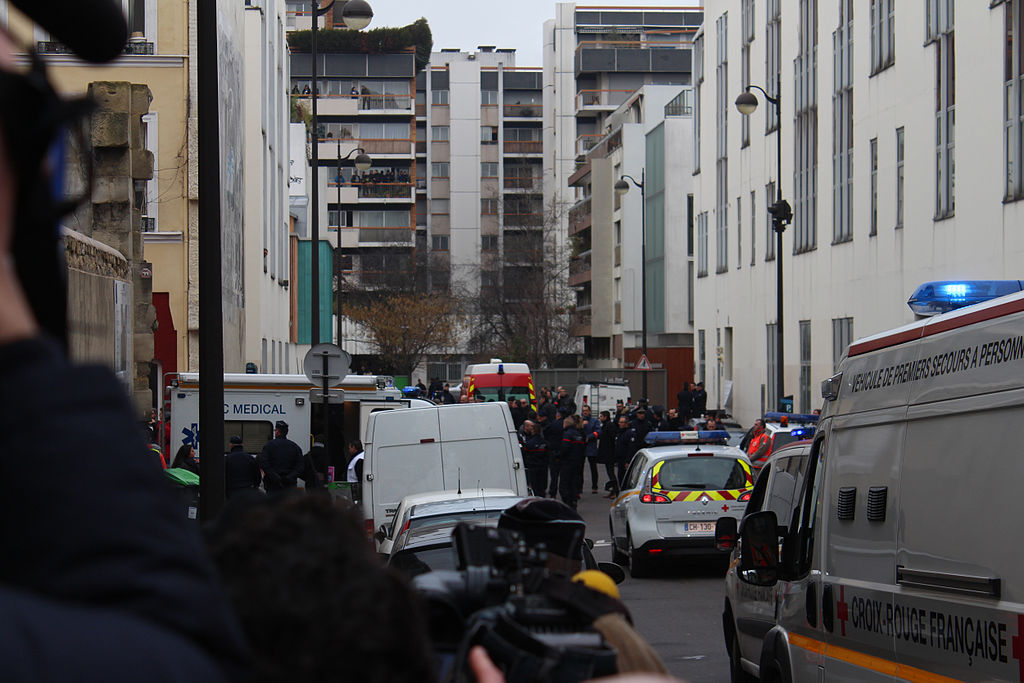
Police at the Charlie Hebdo offices, January 7, 2015. (Photo Thierry Caro)

The events in Paris and elsewhere have brought René Girard‘s prescient Battling to the End front and center, at least for me. Keep in mind this book was first published in Paris in 2007, long before the current cycle of events. Hence, he reflected on the devastation of September 11, 2001, but his suggestions are even more pertinent today, “as history has accelerated and politics has lost importance.” He called for a deeper understanding and a radical rethinking of our current assumptions, understandings, and strategies. “The work to be done is immense,” he wrote. Has that happened? I don’t think so. I reviewed this book for the San Francisco Chronicle here, and wrote an article about him here – which included part of the excerpt below:

rene-girard

Work to be done.

Atta, the leader of the September 11 group who piloted one of the two airplanes, was the son of a middle class Egyptian family. It is staggering to think that during the three last days before the attack, he spent his nights in bars with his accomplices. There is something mysterious and intriguing in this. Who asks about the souls of those men? Who were they and what were their motivations? What did Islam mean to them? What does it mean to kill themselves for the cause? The growing number of attacks in Iraq is impressive. I think it is strange that there is so little interest in the logic of these events, which dominate the world just as the Cold War once did. Since when? We are not really sure. No one could have imagined that we would be in this situation barely 20 years after the Berlin Wall fell. This disturbs our vision of history as it has been written since the American and French revolutions. Our vision of history does not take into account the fact that the entire West is challenged and threatened by this. We have to say “this” because we do not know what it is. …

september11

“People were shaken, but they quickly calmed down.”

On September 11, people were shaken, but they quickly calmed down. There was a flash of awareness, which lasted a few fractions of a second. People could feel that something was happening. Then a blanket of silence covered up the crack in our certainty of safety. Western rationalism operates like a myth: we always work harder to avoid seeing the catastrophe. We neither can nor want to see violence as it is. The only way we will be able to meet the terrorist challenge is by radically changing the way we think. Yet the clearer it is what is happening, the stronger our refusal to acknowledge it. This historical configuration is so new that we do not know how to deal with it. It is precisely a modality of what Pascal saw: the war between violence and truth. Think about the inadequacy of our recent avant-gardes that preached the non-existence of the real. …

If we had said in the 1980s that Islamism would play the role it plays today, people would have thought we were crazy. Yet the ideology promoted by Stalin already contained para-religious components that foreshadowed the increasingly radical contamination that has occurred over time. Europe was less malleable in Napoleons time. After Communism, its vulnerability has returned to that of a medieval village facing the Vikings. The Arab conquest was a shock, while the French Revolution was slowed by the nationalism that it provoked across Europe. In its first historical deployment, Islam conquered religiously. This was its strength and it also explains the solidity of its roots. The revolutionary impetus accelerated by the Napoleonic era was checked by the equilibrium among nations. However, nations became inflamed in turn, and destroyed the only possible means of stopping revolutions from happening.

We therefore have to radically change the way we think, and try to understand the situation without any presuppositions and using all the resources available from the study of Islam. The work to be done is immense. …

battling to end_webOf course, there is resentment in its attitude to Judeo-Christianity and the West, but it is also a new religion. This cannot be denied. Historians of religion, and even anthropologists, have to show how and why it emerged. Indeed, some aspects of this religion contain a relationship to violence that we do not understand and that are all the more worrying for that reason. For us, it makes no sense to be ready to pay with one’s life for the pleasure of seeing the other die. We do not know whether such phenomena belong to a special psychology or not. We are thus facing complete failure; we cannot talk about it and also we cannot document the situation because terrorism is something new that exploits Islamic codes, but does not at all belong to classical Islamic theory. Today’s terrorism is new, even from an Islamic point of view. It is a modern effort to counter the most powerful and refined tool of the Western world: technology. It counters technology in a way that we do not understand, and that classical Islam may not understand either.

Thus, it is not enough to simply condemn the attacks. The defensive thought by which we oppose the phenomenon does not necessarily embody a desire to understand. Often it even reveals a desire to not understand, or an intention to comfort oneself. Clausewitz is easier to integrate into a historical development. He gives us the intellectual tools to understand the violent escalation. However, where do we find such ideas in Islam? Modern resentment never leads all the way to suicide. Thus we do not have the analogical structures that could help us to understand. I am not saying that they are not possible, that they will not appear, but I admit my inability to grasp them. This is why our explanations often belong to the province of fraudulent propaganda against Muslims.

Vico: “Man becomes all things by not understanding them.”

January 20th, 2015
Share

GiambattistaVicoI ran across this quotation from the Neapolitan philosopher Giambattista Vico (1668 – 1744) in Robert Pogue Harrison‘s new book Juvenescence – and I have been thinking about it ever since. I hope to give the book a fuller discussion later (although we included it briefly in a discussion here). Meanwhile, consider these provocative words from Vico a sort of down payment in a busy week:

So that, as rational metaphysics teaches that man becomes all things by understanding them … this imaginative metaphysics [of early humans] shows that man becomes all things by not understanding them … and perhaps the latter proposition is truer than the former, for when man understands he extends his mind and takes in the things, but when he does not understand he makes the things out of himself and becomes them by transforming himself into them.

.

.

Translating Orhan Pamuk: “I was, without knowing it, putting myself into a trance.”

January 18th, 2015
Share
iwatakerie006

Cahier’s illustrations by Rie Iwatake.

“Translators, like editors, are the lieutenants of culture,” my friend and former publisher David Sanders recently reminded me. I wrote about one of these lieutenants in my most recent post here. Perhaps that’s what inspired me to finally open Angry in Piraeus, the most recent offering from the Cahiers Series (we’ve written about it here and here, among other places). It had long languished in a pile of books and periodicals waiting for my attention. The excellent Cahiers Series is a project of the Center for Writers and Translators at the American University of Paris, and despite the international kudos, is still too little known.

Museum-of-InnocenceMaureen Freely, the author of this 37-page essay, is known for her translations of the Turkish Nobel laureate Orhan Pamuk, but she is also a novelist in her own right. Her family moved to Turkey when she was a child, and Pamuk was a school chum – hence, the second career in translation. According to the Sylph Editions website, which publishes the Cahiers Series: “Angry in Piraeus is the story of the creation of a translator. In this cahier, Maureen Freely explores what it was in her childhood that led her to become a traveler across the spaces that exist between countries, languages, and forms. She offers rich descriptions of her itinerant upbringing in America, Turkey, and Greece, vividly evoking what it means to be constantly commuting between worlds – geographical, conceptual, linguistic, and literary – in search of a home, or a self, that is proving elusive.”

In Angry in Piraeus, she writes the delicate tightrope act between her stories and the stories of others, and the different worlds translation creates.”When I am questioned about my ‘fidelity’ to the text I live to serve, what I can never quite manage to explain is this: if I am to be faithful to anything in the opening passage of a novel, or a short story, or a memoir, it will be to its mood. It will be to the trance it sets up, the sız sız sız, the magic trick that takes the reader through the page and into the secret realm beyond.”

Orhan_Pamuk

Author under fire.

Translation, she writes, is the “slowest, deepest, and most intimate form of reading.” Her relationship with her the childhood friend becomes strained as she translates from his Istanbul and into her own, and then back again – and as he becomes a controversial figure, widely hated in Turkey for his outspoken remarks about the Armenian genocide.

An Excerpt:

By the time I embarked on our fifth and last collaboration. The Museum of Innocence, I had been wandering through the labyrinths of his mind long enough to know their every twist and turn. I had come to accept that everything he wrote had to be anchored in some way in the streets of his childhood. I had also come to understand that, as good as he was at capturing voices, his stories came to him in images. In The Museum of Innocence these images are highly detailed, and meticulously positioned. That order is reflected, and at times even replicated, in his Turkish sentences. I can only imagine the delight he found in creating a text that embedded the conceits of the narrative at the molecular level. At a time in his life when the newspapers printed a new lie about him almost every day, narrative might also have offered some semblance of order. He was not, I think, surprised when I told him he could not exert the same sort of control over a translation. That did not stop him from trying. By that time, he had a lot of clout. I do not think I could have made it through that hellish year, had it not been for the daydream that was always waiting for me, every time I came up for air.

This was the Istanbul that I was slowly beginning to see again, if only to keep breathing. It wasn’t drained of colour, like Orhan’s city. It was golden, and the troubled bourgeoisie that I’d been translating for seven years was nowhere in sight. There were only the wild and beautiful bohemians who had brought me up. Their real-world counterparts were mostly dead and gone, or sacrificed to their bad habits, but in the 1962 of my daydream, they were still living recklessly and getting away with it, beautifully.

When at last I had sent Orhan’s museum off to the publisher, I went back into my own head for what felt at first like a luxury vacation. Little by little, I translated myself out of Orhan’s Istanbul and back into my own. And when I look back on what happened next, I can only think that I must have been using words differently after all those years in translation. I was no longer using the clipped, cut-glass language I had always trusted most. I was letting myself loop and curve across the page. I was, without knowing it, putting myself into a trance. Word by word, I conjured up Istanbul circa 1962. And when I had succeeded in putting myself back there, it turned out not to be the paradise I remembered: the gold was laced with jealousy, confusion, and terror.

 Do yourself a favor and order it here. You’ll even find out what the sız sız sız is.

Slavic scholar and translator George Kline (1921-2014): memorial reading in NYC on Saturday

January 15th, 2015
Share
In 1974...

In 1974…

His death was as quiet and unassuming as his life. I learned within a few days that preeminent Slavic scholar George Kline of Bryn Mawr died on October 21 in Anderson, South Carolina, but was hesitant to say anything, not wanting to be the one to break the news to common friends and colleagues, and wishing to defer to the family to make the first announcement. Perhaps everyone else felt the same, for the news seemed to spread very slowly. I sensed, perhaps mistakenly, that he wouldn’t have wanted to make a fuss.

I had known of George for many years – his translation of Joseph Brodsky‘s Selected Poems, with its distinctively artsy purple-and-green portrait on Penguin’s “Modern European Poets” cover, was the book that made the Russian poet’s reputation in English. George was among those early champions who had smuggled his poems out of the U.S.S.R., and helped bring the future Nobel prizewinner to the West after the Soviet Union booted the poet out in 1972.

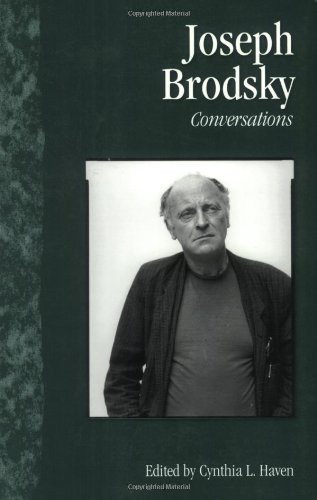
I met George sometime during my work on Joseph Brodsky: Conversations. George was ruthlessly meticulous and ceaselessly patient and helpful. And when my book came out, I received congratulations, praise, and a precise list of minor errors and typos in the final volume, for correction in a second edition. I learned that anyone who wrote about Joseph Brodsky anywhere in the world could expect a such a letter. It was George’s trademark, and I don’t recall a time when he wasn’t right.

brodskybookI spoke with him a few weeks before his death, and suspected he hadn’t long to live – his beloved wife Ginny had died in April, and he seemed unenthusiastic about the task of living without her. We had some work to finish together, but both of us had other pressing deadlines – after his death, I learned how extensive his commitments, at 93, were. I knew him primarily in his work as translator, but he is, perhaps, better known as the patriarch of Russian philosophy scholarship in the U.S., and widely published on Spinoza and Hegel as well. He continued his encyclopedia entries, his revisions, his collaborations, his articles, his mentoring. Many speak of his generosity, kindness, and fundamental decency – I had a chance to experience all firsthand.

He had frequently mentioned Irina Mashinski as a colleague and friend. After his death I was pleased to find her on Facebook, and she told me of the welter of projects they were working on together that, like mine, would be interrupted by his passing. Everyone seems to have a similar story – he was working tirelessly until the last few weeks. What will we do without him?

brodsky7Anyway, here’s one show that will go on, thanks to Irina and others: at 4 p.m. on Saturday, Jan. 17, the fourth annual Compass Award Ceremony, as well as the launch of the Volume 4 of the Cardinal Points Journal, will take place at the the Elizabeth Kray Hall of Poets’ House in New York City (10 River Terrace in New York City – fond memories of the Zbigniew Herbert evening there four years ago).  The evening will be dedicated to to the memory of George and also poet Nina Cassian (1924-2014), both “esteemed Cardinal Points friends and authors.” George is still listed on the panel of judges for the Compass Translation Award website here.

StoSvet Literary Project, MadHat Press and Russian-American Cultural Center are sponsoring the evening, which will be hosted by Irina, as well as Alexander Veytsman and Alex Cigale. The readings will include Polina Barskova, Alexander Cigale, Sibelan Forrester, Andrey Gritsman, Betsy Hulick, Slava Polishchuk, Larissa Shmailo, Alla Steinber, Alexei Tsvetkov, and Alexander Veytsman.

cardinalThe winners of the 4th Competition – the last competition in which George was a judge – include Laurence Bogoslaw (Minnesota, 1st Prize); Igor Mazin (Virginia, 3rd Prize); and Eugene Serebryany (Cambridge, Massachusetts) and Misha Semenov (Princeton, New Jersey), sharing honorable mention.

Before the degrees from Columbia, the years at Bryn Mawr, before the hundreds of articles and reviews, George served in the U.S. Army Air Corps during World War II as a navigator and bombardier in B-24s, receiving the Distinguished Flying Cross. Below is the photo of the young couple, looking forward to their lives together after the war – George sent it to me a few weeks after Ginny’s death. The wartime hero was one aspect of George’s otherwise scholarly life that fascinated Joseph Brodsky, who had been an infant during the terrible Siege of Leningrad. So he asked George about his wartime experiences and liked to wear his air corps hat, for fun. …

Even now I wonder, what would George think of what I am writing right here, at this moment? Part of me will wait for the letter that will never come, the prompt correspondence in the tight, cramped handwriting, offering thanks, praise, and errata.

Klines


<<< Previous Series of PostssepNext Series of Posts >>>