Twelfth Night, or Ain’t Karma a Bitch?

January 5th, 2014


Share
Henry IV Part 1

Age to youth: “Listen up.” Jeremy Irons and Tom Hiddleston


We don’t know quite what went wrong with Henry IV – scholars have suggested a skin leprosy, or epilepsy, or congenital syphilis, or a series of strokes – but it begins at the end of Henry IV, Part I, in the recent BBC production of William Shakespeare‘s Henriad tetralogy, The Hollow Crown, and continues through all of Henry IV, part 2.  He was 46 at his death.

We discussed this and other subjects, en famille, during our Twelfth Night celebrations last night, which included viewings of Richard II and Henry IV, Part 1.  Then Shakespeare exhaustion set in before we could soldier on to Henry IV, Part 2 and Henry V.

bolingbroke

Kinnear as the brash young Henry

I still cling to my original judgments about Ben Whishaw‘s interpretation of Richard II as a whiny, self-indulgent drama queen.  As a result, he’s a bore when he should soar. All the critics disagreed with me, but fortunately my family didn’t. That’s what family is for, after all.  As I’ve written before, I think both the Henry IVs – Rory Kinnear in Richard II, and Jeremy Irons in Henry IV, Parts 1 and 2 – turn in masterful, unforgettable, and  largely underrated performances.  Someone on my Facebook page today described Irons’s Henry IV as “world weary,” but that’s only a small part of it; he’s haunted, and trying desperately to rectify the terrible mistakes he’s made as health and force seep from him, as the dynamism and initiative is inevitably passing to younger, more able players, who are destined to make many of the same blind mistakes. Honestly, when you run down the annals of English history – any history, really – it’s amazing how short a span some of the great kings and conquerors held sway.  Whether terrifying tyrants or benign despots, they come, they conquer, and then hold power for maybe a decade or two before they are buried; they spend most of their active years defending their turf. In the meantime, by middle age, all of us have seen the Hotspurs who have burst forth, and burned brightly before they exploded, leaving only a brief trace in the sky.  It all repeats.

When I studied Carl Jung decades ago, I remember reading something to the effect that the first half of life is action and ego, the second half is reflection and digestion. It sounded like middle age would be awfully dull at the time I was reading – not so much now. The quest for understanding, reconciliation, and mercy are largely second-half endeavors, when one begins to grasp the heartbreaking fragility of the whole human enterprise. (I know, I know… it’s not hard to find exceptions. But it’s hard to envision a middle-aged Hotspur.) The paradigm plays out in these dramas, where the men who wield the swords and make the calls spend their later lives in remorse, trying to remedy what they did when their blood ran hot and consequences seemed far away.  The patterns of fate and choice are sealed and the rest is detail – impossible to wholly rescind the terrible chain of causes and effects already unleashed.  For Henry IV, his destruction of an anointed king opens a floodgate of dynastic challengers and new wars invited by his choices. In a pre-democratic age, he’s ushered in a parody of democracy: whoever has the most votes wins the crown, but the figurative votes are cast by a small claque of nobles with clubs.  The losers meet the ax or exile.  Hence, the ageing king is desperate to convince his young son, Prince Hal, of the potential consequences of folly and dereliction – not only for him personally, but for the lives of his family, the stability of the country, and hundreds of nobodies who will be buried in battlefields during unpleasant uprisings.

It’s a shame that this magnificent production passes over the  Jerusalem theme. Henry IV plans a pilgrimage to Jerusalem as penance for the death of Richard II, but it’s akin to those New Year resolutions that one keeps putting off until, in this case, age and death stake their claims. A prophecy says Henry IV will die in Jerusalem, and he longs for the journey east – instead, he dies in the Jerusalem Chamber of Westminster.  And so the torch passes, to the seventh son of the seventh son. The night before the Battle of Agincourt, Henry V prays (and I believe this, too, was cut from the new production, though I’ll have to doublecheck):

12thnight3

“Uneasy lies the head that wears the crown”: Champers and gâteau des Rois for 12th Night.

… Not to-day, O Lord,
O, not to-day, think not upon the fault
My father made in compassing the crown!
I Richard’s body have interred anew;
And on it have bestow’d more contrite tears
Than from it issued forced drops of blood:
Five hundred poor I have in yearly pay,
Who twice a-day their wither’d hands hold up
Toward heaven, to pardon blood; and I have built
Two chantries, where the sad and solemn priests
Sing still for Richard’s soul. More will I do;
Though all that I can do is nothing worth,
Since that my penitence comes after all,
Imploring pardon.

In other words, is it “real” repentance if you get to keep the stuff?  Good intentions don’t seem to count for much.  I like T.S. Eliot‘s lines in “Little Gidding”:

the rending pain of re-enactment
.  Of all that you have done, and been; the shame
.  Of motives late revealed, and the awareness
Of things ill done and done to others’ harm
.  Which once you took for exercise of virtue.

Henry IV knows this in his bones. As he slides towards the grave he reaches back with increasing anger and urgency, trying to right the ship he himself has unsteadied with his actions.

I didn’t care all that much for Simon Russell Beale‘s Falstaff.  Mark Lawson at The Guardian called him “a portrait of ambition and intelligence chiselled away by appetite.” That sounds about right, but I have to agree with the anonymous comment over at The Telegraph: “The problem with this adaptation is that without a charismatic Falstaff, nothing in the rest of the cycle makes sense. You need to be able to see why Falstaff commands these ruffians as their magnetic centre, why Hal is drawn to him.” Otherwise, his fall from Hal’s grace is poignant but not profound.  In Tom Hiddleston‘s performance, I think the scales fall from Hal’s eyes after the death of Hotspur, when Falstaff’s lies take on a macabre, unsettling, and potentially perilous direction. By the end of Henry IV, Part 2, with the drawn-out death of his father, the new king Henry V “gets it.” But then, of course, he, too dies a few years later of dysentery after the Siege of Meaux. The Lancaster dynasty would end with the son he never saw, an infant when the new father died at 35.

.

New Year’s Day and the “gift outright”

January 1st, 2014
Share
brodsky3

More nights than candles in the bitter Arkhangelsk region.

Nobel poet Joseph Brodsky made a habit of writing a Christmas poem every year, and “1 January 1965” was among the earliest, penned while he while he was serving time in internal exile in Norenskaya, in the Arkhangelsk region of northern Russia.  In the old Soviet Union, gifts were exchanged on New Year’s Day, and in the Russian Orthodox calendar, Christmas falls on January 6 – hence the date of the poem.

This translation was found among his papers after his death, and later published in the marvelous collection, Nativity Poems:

nativityThe kings will lose your old address.
No star will flare up to impress.
The ear may yield, under duress,
to blizzards’ nagging roar.
The shadows falling off your back,
you’d snuff the candle, hit the sack,
for calendars more nights can pack
than there are candles for.

Remarkably, the English hews very closely to the original rhyme scheme in Russian.  The poet famously favored translations that preserved the original metrical and rhyme scheme. Given his genius for inventive rhymes and complex metrical patterns, it was a maddening task for his translators. He did compromise, however: he was usually willing to change the meaning of a line to preserve the metrics.  You can see how much he’s played with meaning with this earlier, more literal translation by George Kline:

The Wise Men will unlearn your name.
Above your head no star will flame.
One weary sound will be the same –
the hoarse roar of the gale.
The shadows fall from your tired eyes
as your lone bedside candle dies,
for here the calendar breeds nights
till stores of candles fail.

Read the whole poem here – with it’s tip-of-the-hat homage to Robert Frost‘s “The Gift Outright” at the end. Think of it as a New Year’s present to yourself.

Feliz 2014! “All is calm, all is bright” on some sides of town…

December 31st, 2013
Share

Tonight is “Silent Night” in some quarters of town.  I doubt many bookstores will be open.  I was reminded of this when Philip Fried of the Manhattan Review sent me an electronic holiday card, illustrated with this excellent photo by his wife, Lynn Saville (check out her website here). Of course, we’d expect the Green Hand Book Store in Portland, Maine, to be a quieter place than the couple’s native Manhattan, but it’s good to be reminded that some places in the nation and the world will be mercifully subdued on a noisy night – bright beacons in a mad world.  Meanwhile, lift a glass of bubbly, celebrate the inevitable passing of time, and drive home safely.  And, as my electronic holiday card from Livraria Cultura in São Paulo says, “Feliz 2014!”

The Green Hand_Portland, Maine holiday 2014


(Photo copyright Lynn Saville)

Two heavyweight champions in the book world

December 30th, 2013
Share
forklift

How I got the books home.

Tuesday, November 19, was a dreary day – the first rain of the season. I hurried around the Stanford campus collecting my mail from various locations just as the weather was thinking about getting serious. Then, at the Division of Literatures, Cultures, and Languages, I found a USPS postcard for an undelivered parcel. The card, too, had staggered about campus, from one address to another, before finding me. The last day for collection, before the package would be returned to the sender, was that very day. I was annoyed to see that it was an unsolicited book from a warehouse, and the parcel was being held for ransom at at a post office at the uttermost reaches of Menlo Park. As raindrops began falling on my head, I headed back to the car, and threaded my way through the awful rush-hour traffic, snarled by the miserable weather in the fast-falling dark, wending my way past the car accidents and the flashing police lights.

glossaryIt was worth the trip.  The heavy package that awaited me was a book by a friend – Edward Hirsch‘s A Poet’s Glossary, 707 pages of it.  I rented a fork-lift to get it home in the traffic, where I’ll put it on a well-supported shelf next to Roland Greene‘s Princeton Encylopedia of Poetry & Poetics, weighing in at an unbeatable 1,639 pages.  How are they different?  Roland’s encyclopedia, the fourth edition by Princeton University Press, is authoritative and scholarly – “as essential for any working poet as a good dictionary,” according to Writer’s Digest.  Ed’s volume is clearly personal and somewhat whimsical.  “I believe its purpose is to deepen the reader’s initiation into the mysteries of poetic practice. It is a repertoire of poetic secrets, a vocabulary, which proposes a greater pleasure in the text, deeper levels of enchantment,” he said of the project, which was ten years in the making.

greeneAccording to the Houghton Mifflin Harcourt release, “With terms ranging from abecedarian to zeugma, Hirsch brings us along on a journey across the world, introducing us to Bedouin women’s ghinnawa (highly stylized verses conveying some hidden emotion – while leaving the excuse that “it was just a song”) and picong, the style of gentle banter that originated as a sung verbal duel in the West Indies, reminding us along the way of terms that have stayed with us since elementary school (remember acrostic poems?).”

Roland’s book doesn’t have ghinnawa, but it does have glossolalia, “the gift of tongues.” Both have ghazal, of course. Ed has maqāma, an Arabic term for picaresque stories in rhymed prose.  But he doesn’t have Marathi Poetry, a poetic commentary on the Bhagavad Gitā in Marathi rather than the usual Sanskrit, a radical move that started a trend. Roland’s book nailed that one.

Moreover, at a Company of Authors last spring, Roland made an unmatchable offer: if anyone purchased his tome, he offered to help the buyer carry it to the parking lot.  I say, buy them both!  I’ll loan you the fork-lift to get them home.  Many end-of-the-year columns are rating the best books of the year – but who is weighing the heaviest?  (Hirsch won’t be able to enter till next year, with an official 2014 publication date – but Roland’s labor of love is in the running.)

Now more than ever, “white on white”: Regina Derieva (1949-2013)

December 27th, 2013
Share
Klt_Derieva R 21r

Far from home: a Russian in Sweden (Photo: Jurek Holzer / Svenska)

It’s exhilarating to discover a outstanding poet.  It’s also poignant when you first hear about the poet too late. I learned of the existence of Regina Derieva and her death on the same day, when I received a note from her husband, Alexander Deriev, telling me that the poet had passed away on December 11, in Sweden, her lasting home after emigration. She was two months shy of her 65th birthday.  A requiem mass for this prolific writer was celebrated at Katolska Kyrkogården Kapell earlier this week, on December 23; she was buried at Norra Begravningsplatsen, where this very Russian poet joined Sweden’s elite, including Alfred Nobel, playwright August Strindberg, Prime Minister Per Albin Hansson, and Nobel poet Nelly Sachs.  A tribute page for Derieva is here.

Young poet

Young poet

She is the author of twenty books of poems, prose, and essays. Her books in English include Inland Sea and Other PoemsIn Commemoration of MonumentInstructions for SilenceThe Last Island, and Alien Matter. Her work has also appeared in PoetryQuadrantModern Poetry in TranslationSalt, and St. Petersburg Review as well as many Russian magazines. Her work was championed and translated by Daniel Weissbort, another recent death (we wrote about him here and here and here). Said Valentina Polukhina, Weissbort’s widow, “Regina Derieva’s relationship with the world was severe and tender, truthful and tragic; it reflects her own tragic life as well as the tragedies of the country she was born in.”

She was born in Odessa on the Black Sea, in Ukraine now, part of the Soviet Union then. From 1965 until 1990 she lived and worked in Karaganda, Kazakhstan – I understand it’s the back end of the world, a tough little city of labor camps, coal mining, and now, in the post-Soviet era, industrial pollution. She graduated from university with majors in music and Russian philology and literature. Her poetry was not approved by the state, and she was denied publication and guaranteed KGB oversight.  Her work came to the attention of Joseph Brodsky, who first encouraged her to leave the Soviet Union.

The Swedish author Bengt Janfeldt (we wrote about him here and here) gave the eulogy this week – I don’t yet have an English translation. However, Bengt once said this of her: “Like BrodskyTsvetaeva, she is a very bitter poet. She took every thought to its logical conclusion.” He added, “I believe that Regina is quite an exceptional poet, an unexpected poet. Even though it is not a popular thing to say, she is a masculine poet in her style, her philosophical thought.”

Drawing by Dennis Creffield

Drawing by Dennis Creffield

I bought Alien Matter online – the last copy in stock, and a bargain at four bucks.  Les Murray has a blurb on the back cover:  “Science teaches that eighty percent of the universe consists of dark matter, so called. Regina Derieva learned this same fact in a very hard school. She does not consent to it, though. She knows that the hurt truth in us points to a dimension whee, for example, victory is cleansed of battle. Her strict, economical poems never waver from that orientation.”

I’ve never met Les Murray, but in my background reading it appears the poet and I have many common friends. One of them, the Lithuanian poet Tomas Venclova, reviewed Alien Matter in The New Criterion:

Derieva is, first and foremost, a Christian poet, a worthy heir to the long line of metaphysical poets, be they English, French, or Russian. Without inflated rhetoric or didacticism, her poems reach the very core of the Christian experience—a serious and fearless attitude towards life, suffering, and death. The imagery and syntax of the Gospels and the Prophets is, for her, a natural element—just as apocalyptic presentiments and mystical hope form the axis of her world outlook. She perceives atheism as a foreign language. Still, the religious vocabulary in Derieva’s writing is often juxtaposed with everyday slang and the intonations of prisoners’ songs. This is particularly true of her early poems which might be described as a metaphysics of the totalitarian world, with their constant symbolism of walls, barbed wire, lead poisoning, and torture. They describe a region where “war is forever going on.” The poetic word (and the divine Word) in this inferno “annoys the powers that be because it lives.” One discerns here an echo of Akhmatova’s “Requiem” and of Brodsky’s poetry. Looking for her kin, a reader may also think of Eliot. …  Derieva’s later poetry strives for the inexpressible (“writing white on white”) even more strongly.

Buried in Sweden, here. (Photo Holger Ellgaard)

Buried in Sweden, here. (Photo Holger Ellgaard)

In a 1990 letter to her that Alexander Deriev shared with me, Joseph Brodsky wrote:

“There is a point – literally the point of view – which makes it all the same how one’s life  is going, whether it is happy or nightmarish (for a life has a very few options).  This point is over the life itself, over the literature, and it becomes accessible by a ladder, which has only sixteen steps (as in your poem titled “I Don’t Feel at Home Where I Am”).  For a poem is composed of other things than life, and the making of verses offers more choices than life does. And the closer one is to this point, the greater poet he, or she, is.

You, Regina, are indeed this case – a great poet.  For the poem titled “I Don’t Feel at Home…” is yours only by name, by excellence.  Authentic authorship of this poem is that of poetry itself, of freedom itself. This freedom is closer to you than your pen is to paper.  For a long time, I have not seen anything on a par with your poetry either among our fellow countrymen or among the English-speaking poets.  And I can guess more or less – I can hear – what it cost you to reach this point, the point over the life and over yourself. This is why the joy of reading your poetry is also heartbreaking.  In this poem, you exist in the plane where no one else exists, where no one else can help:  there are no kin and, a fortiori, there are no equal to you.”

Here’s the poem  he praised:

I don’t feel at home where I am,
or where I spend time, only where,
beyond counting, there’s freedom and calm,
that is, waves, that is, space where, when there,
you consist of pure freedom, which, seen,
turns the crowd, like a Gorgon, to stone,
to pebbles and sand…where life’s mean-
ing lies buried, that never let one
come within cannon shot yet.
From cloud-covered wells untold
pour color and light, a fête
of cupids and Ledas in gold.
That is, silk and honey and sheen.
that is, boon and quiver and call.
that is, all that lives to be free,
needing no words at all.

– Translated by Alan Shaw

Daniel Weissbort has a handful of them hereand the Poetry Foundation has his translation of “Days and the Transit System Grind Their Teeth” here.  An interesting post on a Russian literature blog here.

derieva4

Christmas, Clive Wilmer, and the “world that was before it was”

December 25th, 2013
Share

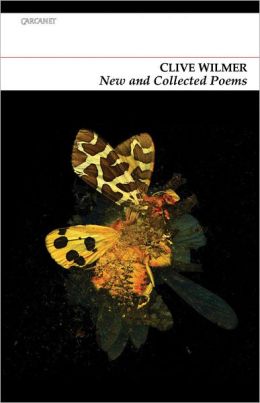
wilmer3Merry Christmas! Here’s our final poem from Clive Wilmer to celebrate the season.  It’s included in his New and Collected (Carcanet), which he sent me shortly after it was published last year.  I picked this poem out for a possible Christmas inclusion, so here we are.  Like the Sidney Carol yesterday, this one also evokes “that feeling of absence, dark and cold, but also of anticipation before some great, as-yet-unknown event.”

Here’s what Francis O’Gorman wrote about the New and Collected: “Clive Wilmer has a remarkable eye for places: for the living nature of a historical past; for hidden spiritual meanings; for the testimony of building … Here is the established voice of an exceptional writer, for whom language is the supplest tool in the creation of verbal mosaics, of patterned and precious – and also fragile – meanings. The religious dimension of Wilmer’s poetry is unmissable. This is writing that demnstrates a continual return to hopes, scrupulous sense that spiritual meanings might be present in places, things, events, people.”

wilmer4We should also add that he’s one of the leading translators of Hungarian poetry, for which he has received Pro Cultura Hungarica Medal for translation from the Hungarian Ministry of Culture. Included among his translations from that difficult tongue are poems by  János Pilinszky, Jenő Dsida, Miklós Radnóti, and Anna T. Szabó. (You can read an interview with him on that subject here.)  He collaborates with another friend, George Gömöri.

Meanwhile, remember: this is only the first day of Christmas!  You have eleven more days to celebrate. Enjoy the rest of the season.


The Advent Carols

Aspiciens a longe

I look from afar. We stand in darkness.
A people in exile, shall we hear good news,
Who toward midnight, in mid-winter, sing?

Sing words to call a light out of the darkness
To thaw dulled earth, to unfold her fairest bud;
Our song holds faith that the Word will be made flesh.

Now we bear candles eastward, bear them into
Inviolate dark the Word should occupy:
Light disembodied swells the sanctuary

Where an old dream is mimed, without conviction,
Over again. I look from afar. Our sung words
Are herald angels, and they announce his name,

But lay no fleshly mantle on the King,
The one Word. And yet, in the song’s rising
Is rapture, and dayspring in the mind’s dark:

For the one sanctuary, now, is the word not
Made flesh – though it is big with child, invaded
By the dumb world that was before it was.


<<< Previous Series of PostssepNext Series of Posts >>>