No more billets-doux, no more epistolary novels, no more Collected Letters

October 4th, 2011

Share

Write a letter lately?  I haven’t either.

According to a story in the Associated Press, nobody else is, either:

For the typical American household these days, nearly two months will pass before a personal letter shows up.

The avalanche of advertising still arrives, of course, along with magazines and catalogs. But personal letters — as well as the majority of bill payments — have largely been replaced by email, Twitter, Facebook and the like.

“In the future old ‘love letters’ may not be found in boxes in the attic but rather circulating through the Internet, if people care to look for them,” said Webster Newbold, a professor of English at Ball State University in Muncie, Ind.

Well, not so.  We’re not likely to be able to retrieve them.  Such missives are likely to be harbored in defunct email systems on old computers.  I save a bunch seven-inch floppies with interviews on them, in hopes I’ll find a computer that can decode them.  Nothing like hard copies, even if I can’t lay my hands on them readily.

Voltaire wrote about 15,000 letters during his 83-year life.  In more recent times, C.S. Lewis is the patron saint of pen pals. His Collected Letters amount to thousands and thousands of pages. I reviewed the 1,800+ page third volume for the Washington Post here.

Lewis wrote everyone, including T.S. Eliot, the sci-fi maestro Arthur C. Clarke, and the American writer Robert Penn Warren.  “Other letters were from cranks, whiners and down-and-out charity cases; he answered them all,” I wrote.

"...the oar to a galley slave..."

“The pen has become to me what the oar is to a galley slave,” he wrote of the disciplined torture of writing letters for hours every day. He complained about the deterioration of his handwriting, the rheumatism in his right hand and the winter cold numbing his fingers. In the era of the ballpoint, he used a nib pen dipped in ink every four or five words.

Who, in the future, will have volumes of Collected that will be thicker than a slim paperback?

Beyond the prospect of no Collecteds, whole novels have been held together by letters – Laclos‘s Liaisons Dangereuses, for example, or, since we’ve mentioned Lewis, his  Screwtape Letters, or his Letters to Malcolm.  Or his friend Dorothy L. Sayers‘ mystery novel-in-letters Documents in the Case.  Or  Johann Wolfgang von Goethe‘s Sorrows of Young Werther and Friedrich Hölderlin‘s Hyperion.

Beyond even that, letters provide pivotal revelations in Jane Austen‘s Pride and Prejudice.  Or in almost anything by Henry James.  The sudden realization, the catharsis, the flushed cheek…

Vladimir Nabokov‘s Lolita begins with a letter – the letter that tells of the death, in childbirth, of the title character at age 16.  If people read it more carefully, they would have a different view of the “sexy” novel.  (Also if they read between the lines of Humbert Humbert’s self-serving pronouncements.  But without early training on all those day-after-Christmas letters and learning to write the evasive “thank yous,” how would we learn the most subtle nuances of writing at all?)

The very act of letter-writing consumed hours and hours of people’s time.  At Stanford, a whole project, Mapping the Republic of Letters, has evolved from the effort to track the to-and-fro correspondence during the time of the Enlightenment.  It turns out that we can map coteries, friendships, cultural epicenters, and famous journeys through letters.

AP again:

The loss to what people in the future know about us today may be incalculable.

In earlier times the “art” of letter writing was formally taught, explained Newbold.

“Letters were the prime medium of communication among individuals and even important in communities as letters were shared, read aloud and published,” he said. “Letters did the cultural work that academic journals, book reviews, magazines, legal documents, business memos, diplomatic cables, etc. do now. They were also obviously important in more intimate senses, among family, close friends, lovers, and suitors in initiating and preserving personal relationships and holding things together when distance was a real and unsurmountable obstacle.” …

But Aaron Sachs, a professor of American Studies and History at Cornell University, said, “One of the ironies for me is that everyone talks about electronic media bringing people closer together, and I think this is a way we wind up more separate. We don’t have the intimacy that we have when we go to the attic and read grandma’s letters.”

“Part of the reason I like being a historian is the sensory experience we have when dealing with old documents” and letters, he said. “Sometimes, when people ask me what I do, I say I read other people’s mail.”

What about all those books that describes when a pile of a love letters are ceremoniously burned?  Or returned to the beloved in a ribbon-tied packet after a break-up?  Not quite the same as pressing a “delete” button, is it?  However, that sort of rite-of-passage has been on the downswing since the invention of the xerox machine.

“Letters mingle souls,” as John Donne wrote, but in a wholly different way than what is commonplace on the worldwide web.  Despite my sentimentality, however, I, for one, am not sure I’d trade pages on cream-colored vellum for the zip and brevity and immediacy of quickly typed “Sure. Will do.” on my Mac.


This year’s first Nobel winner, John Perry – 15 years late!

October 2nd, 2011
Share

John Perry on "Philosophy Talk" (Photo: Steve Fyffe)

In a few hours it begins: Nobel week.  In the wee hours, the Nobel Committee in Stockholm will announce the first of the science recipients this year.

Too late!  It’s been upstaged by the 2011 Ig Nobel Prizes, which were awarded last Thursday at Harvard, by seven “real” Nobel winners.  The awards are sponsored by the  Annals of Improbable Research, a science-humor magazine, which each year salutes “achievements that first make people laugh, and then make them think.”

This year’s Ig Nobel for Literature goes to Stanford philosopher John Perry (with Ken Taylor, he hosts the syndicated radio show “Philosophy Talk“).  The award, too, is late – about 15 years late – but that’s altogether fitting for the achievement itself, an essay on procrastination that appeared in The Chronicle of Higher Education in 1996.

“All my fantastic contributions to understanding the human condition as a philosopher seem to have had minimal impact compared to this thing,” he told the Chronicle of Higher Ed.  He admitted he still receives a couple of guilty e-mails each week from fellow shirkers.

More from the Chron:

Mr. Perry, who spoke to The Chronicle this week in advance of the ceremony, deemed the tardiness of his award “quite appropriate” given the nature of his essay, which grew from an experience in 1995.

“One day I was deeply depressed about procrastinating, and I thought, It’s kind of funny because everybody at Stanford thinks I’m somebody who gets a lot of stuff done,” he said. “How can that be?”

He realized that in the course of avoiding seemingly important duties that he’d laid out for himself, he had diverted his energy to any number of other tasks and had inadvertently become quite productive.

The key, he said, is self-deception: find some worthy task that you’re going to avoid, and put it at the top of the list.  Think of Tibetan irregular verbs.  Or thank-you letters from last Christmas.  Or, in my case, cleaning the kitchen floor, or any other room of the house.

Bingo!  You’ll find you’re finally tackling that long-postponed essay, or book review, or letter to your creditors.

Somewhere along the way, no doubt while avoiding some more pressing matter, Mr. Perry set to work expanding his essay into a book. “But of course I never finished it,” he said.

Evidently it rose to the top of his “to do” list, and there it remains.

This is the art of “structured procrastination.” He calls it in the essay “an amazing strategy I have discovered that converts procrastinators into effective human beings, respected and admired for all that they can accomplish and the good use they make of time.”

Other winners this year include:

For the peace prize, Arturas Zuokas, mayor of Vilnius, Lithuania, for demonstrating that the problem of illegally parked luxury cars can be solved by running them over with an armored tank.

And in mathematics (Ig Nobels don’t correspond entirely to the categories of the mainstream Nobels), Dorothy Martin, who predicted the world would end in 1954; Pat Robertson, who predicted the world would end in 1982; Elizabeth Clare Prophet, who predicted the world would end in 1990; Harold Camping, who predicted the world would end on September 6, 1994, and later predicted that the world will end on October 21, 2011; South Korea’s Lee Jang Rim, who predicted the world would end in 1992; and Uganda’s Credonia Mwerinde,  who predicted the world would end in 1999.

Meanwhile, see this year’s peace prize winner below:

Carl Djerassi at 88: hitting the road – with champagne, too

October 1st, 2011
Share

Not slowing down ... not much, anyway (Photo: Isabella Gregor)

Stanford celebrated its 120th anniversary last Thursday in Paris, at the Hôtel de Talleyrand overlooking the Place de la Concorde.  The 18th century hotel, purchased by the U.S. after the war, was the site of the administration of the Marshall Plan.

Normally, I wouldn’t know or note such an occasion – except that the weekend gala featured champagne (always a topic of interest), but more importantly, it spotlighted noted chemist and writer Carl Djerassi, one of my correspondents.

The man known as “the father of the pill” (isn’t that a contradiction in terms?) participated on a panel, “At the Cutting Edge of Thinking.”  Following that – a champagne tasting from the latest crus of my favorite Veuve Clicquot.  The artist Kristin Eager Killion was scheduled to speak on “What are the links between Art, Sustainability and Champagne?”

Home of the Marshall Plan

That’s to the point:  the evening hosted a reading of Carl’s newest play, Insufficiency – on the subject of (you guessed it) champagne.  Or rather the chemical makeup of champagne and its bubbles, with a few digs along the way at the foibles of academic publishing, academic snobbery, and academic tenure.  A pleasant coincidence for Carl that the subject of his “play in nine scenes” matched the bubbly theme of the event.  (Karol Berger and Laurence Yansouni were slated to be the actors for the reading.)

Carl has been in the news lately, for several other reasons.  Le Monde wrote a lengthy profile last month, opening him with these words:

Sufficiency

“A shoe with a luminous red heel, bright as desire or a flash of wit, holds open the door to the living room in Carl Djerassi’s Vienna apartment. This is not the kind of thing one would expect to find in the home of an internationally renowned chemist, the author of 1,245 articles in scientific journals, and one of the world’s leading experts on steroids, who synthesized the cortisone and progesterone, thus contributing to a crucial invention for women: the contraceptive pill.”

“But Djerassi isn’t a chemist like others. Little known in France, except by his scientific peers, the naturalized American is the incarnation of the cultured man who once was the European ideal from the Renaissance to the twentieth century: scientist, musician and music lover, collector and arts patron, sports enthusiast. Finally he is a writer, the ultimate self-conquest in a workaholic who admitted that ‘the pressure of ambition can be a poison.’ He nevertheless manages, at 87 years old, a cosmopolitan existence between San Francisco, Vienna and London, at a pace that would exhaust many people in their forties.”

Les Lavoisiers (par Jacques-Louis David)

The article explains that Carl has renewed the tradition of Wednesday soirees in his apartment, as Sigmund Freud once did in his own apartment in the Berggasse (now a museum – we wrote about that here).  The controversial theme of one of Carl’s evening discussions: Can literary self-analysis replace psychoanalysis?

The evening was, of course, a pretext to bring in a reading of another of his plays, Foreplay, based on the letters of chemist Gretel Adorno, her husband, philosopher Theodore Adorno, and writer Walter Benjamin, who committed suicide in 1940 while fleeing the Nazis.

Recent events picked up scenes from Carl’s own life:  he attended the same high school as Freud, and also fled the Nazis with his mother, arriving nearly penniless in New York City in 1939.

Kind of a classmate

Foreplay continues an earlier theme, in his play Oxygen, which described the role of women in the history of science through the prickly personality of chemist Madame Lavoisier.

It’s true that Carl is still going strong – when I saw him at the dedication of the Diane Middlebrook Memorial Writers’ Residence last month, he had just arrived back from somewhere in Europe – London, perhaps.  He was using a cane to walk – he assured me that it was the result of a sports injury, not infirmity.

In any case, he’s off next week to the 14th century University of Heidelberg, Germany’s oldest university, for an honorary doctorate, and an encore of his Insufficiency, which he will read with the president of the Humboldt Foundation.  The week after that he heads for the University of Porto, which is celebrating its 100th birthday.  The university is giving Carl an honorary doctorate, and premiering his play, Phallacy, in Portuguese.  It will be just in time for Carl’s 88th, too, on October 29.


Kudos to Ian Morris, Father Gregory Boyle, from P.E.N.

September 30th, 2011
Share

We’ve written about Ian Morris‘s Why the West Rules – for Now (Farrar, Straus & Giroux) here and here and here.

Now he has a new honor:  he’s just bagged P.E.N. USA’s award for “research nonfiction.”  The Economist said  Why the West Rules – for Now is a “remarkable book” that “uses history and an overarching theory to address the anxieties of the present.” The New York Times called Morris “a lucid thinker and a fine writer,” covering disease, famine, migration, agriculture, industry, and climate change “with the humor and detail of a sportscaster.”

The “creative nonfiction” award went to Father Gregory Boyle for Tattoos on the Heart: The Power of Boundless Compassion (Free Press) his recollection of his work, for over two decades, reforming gang youth in Los Angeles county. The Jesuit priest’s Homeboy Industries is the largest gang intervention program in the country, offering job training, tattoo removal, and employment to members of enemy gangs. The Los Angeles Times predicted the book is “destined to become a classic of both urban reportage and contemporary spirituality.”

Meanwhile, a video of Ian talking about his book below.


Let the Nobel Follies begin!

September 28th, 2011
Share

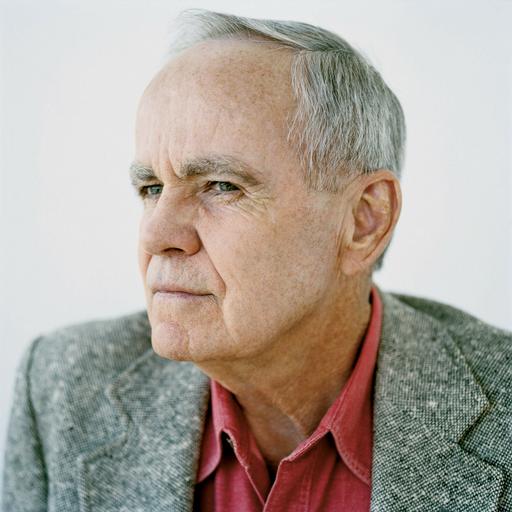
Not obscure enough for the prize

Welcome to this year’s Nobel Literature Prize.  Pretty much like last year’s Nobel Literature Prize.

It’s hard to beat the Literary Saloon to the draw:  They led the guessing with a July 1 column, “Nobel Prize speculation (already?!?).”  The site admitted: “Not surprisingly, most of the odds resemble the closing odds for the 2010 prize, but there are big differences, so punters are advised to compare odds before placing their bets.”  Cormac McCarthy (9/2) was just ahead of Ngũgĩ wa Thiong’o (11/2) at Ladbrokes.  Huffington Post picked up the cry here.

We can recycle last year’s reasons why McCarthy won’t get the prize.  Blogger John Matthew Fox thinks he won’t get it because he’s too popular: “The trend over the last few years from the academy is to choose authors that leave a great deal of the world scratching their head and saying “who?” Le Clézio? Please.”

Number Two

Apparently, The Guardian agrees: It has declared Adonis the frontrunner – wasn’t he the frontrunner for awhile last year?

Ladbrokes has made the 81-year-old – who has been described as “the most important Arab poet of our time” – its 4/1 favorite. “Adonis has been a permanent fixture on the shortlist in the past and the odds suggest this could be his year,” said spokesman Alex Donohue.

He’s just ahead of Tomas Tranströmer. “After hitting the woodwork last year we think Tranströmer has a superb chance of atoning for defeat,” said Donohue.  That would certainly be nice. But the Swedish judges seem reluctant to award one of their own.

Tomas Venclova anyone?  He hasn’t surfaced on Ladbrokes long list yet.

Yesterday’s post at the Literary Saloon has all the sites to check as the countdown begins here.  Ladbrokes’ betting is here.


The Cahiers Series: “really, really beautiful” – and hand-stitched, even

September 26th, 2011
Share

In a world where everything is becoming faster, cheesier, and more functional – when books are no longer tactile, sensual objects, but characters on Kindle – it’s cheering to see anything swimming upstream.  Bonus points if it extols that most underrated of literary trades, translation.

Applause keeps mounting for the Cahiers Series, published by the Center for Writers & Translators at the American University of Paris and Sylph Editions. It’s hard to stay on top of it.  But Daniel Medin, one of my more charming correspondents, has been sending me updates from the American University.

The latest plug is in Friday’s New York Review of Books blog, where Colm Tóibín introduces László Krasznahorkai‘s Animalinside (with illustrations by Max Neumann):

The prose of Hungarian novelist László Krasznahorkai is full of menace, but it would be a mistake to read the menace either as political or as coming from nowhere. In novels such as The Melancholy of Resistance and War & War, his imagination feeds on real fear and real violence; he has a way of making fear and violence seem all the more real and present, however, by removing them from a familiar context.

Daniel, now an associate professor at the American University (after teaching at Stanford a year or two back), said this:

The allegorical tissue in that text [i.e., Animalinside] is very thick, the “animal inside” a literal and metaphorical thing at the same time – think Herbert‘s Report from the Besieged City, where “a rat became the unit of currency.” We’re in the realm of Kafka and Beckett here, and not just in approach: I believe that Krasznahorkai is a writer of nearly the same magnitude who has the mixed fortune of having been born Hungarian – mixed because of that country’s embarrassment of (literary, cultural) riches on one hand and its linguistic isolation on the other.

Quite a coup for a small series that lives more or less hand to mouth, on uncertain funding. Part of the problem is shipping, which makes U.S. distribution difficult, even for a downright modest price of, say, $15.  Distribution in France is a little problematic, too, since the language is English.  “Every penny goes toward quality of production and keeping down the price,” Daniel writes.

Via the Cahiers Series subscription page you can buy a boxed set of volumes 1-6 (or a boxed set of volumes 7-12) for £51 – “which is approximately $4,000, but like I said, these are really, really beautiful. (Kidding—£51 is only $75 and these are worth every dime),” according to the Three Percent blog.  (Sorry, the blogger got me going for a moment – so I had to try it on you.)

[New updated deal: In addition to having the option of ordering cahiers individually, readers can now select any 6 cahiers for £55 in Europe/£59.50 everywhere else. Check it out here.]

Last year Daniel  told the Three Percent blog: “There are two main justifications for the Cahiers Series. The first is that we publish material that cannot easily be published anywhere else; we can play with form in a way that commercial publishers cannot. The second justification is to make something where the parts, through their relation to each other, add up to more than just that.”

Much more.  Clearly, the project is gaining momentum and some very high-profile attention – for example, from James Wood in the New Yorker here.

Daniel – handsomer than this, really

Daniel also sent me a copy of George Craig‘s Writing Beckett’s Letters. Craig spent 15 years translating the thousands of letters Beckett wrote in French.  It’s chock full of impressive insights, and handsomely produced – hand-stitched, even. I haven’t had a chance to read it yet, but Rhys Tranter did, and said this in the Spectator Book Blog (it’s here and here):

Whilst George Craig’s book is neatly timed to anticipate the next volume of Beckett’s Letters, it is more than just a preview of things to come. To Beckett scholars and enthusiasts, the appeal of this book is obvious, tightly-woven with rare insight and beautiful reproductions. But it is also thoughtful and engaging introduction to the problems of translation, and a testament to the status of correspondence as a kind of art-form. To paraphrase Craig’s description of Beckett and Duthuit’s correspondence, this is a work that abounds in strange, unexpected things.

Prescient words. Daniel has been promoting literary translations in other ways: He’s proud that the first invitation he issued at the American University was to Adam Zagajewski, who read from his latest collection and chatted with his students about his first encounter with Kafka. “An incredibly lucky bunch, they were: Tomas Venclova dropped by the next week and shared his own stories about discovering The Metamorphosis – in Polish!”

We’ll be writing more on the exceptional Cahiers series in posts-to-come.


<<< Previous Series of PostssepNext Series of Posts >>>