Portrait of the artist as a young woman

August 14th, 2011
Share

One of the misfortunes of late-blooming fame is that people remember you old.

But the long body of time equally remembers the young Julia Hartwig, the Polish poet, essayist, and translator who celebrates her 90th birthday today.

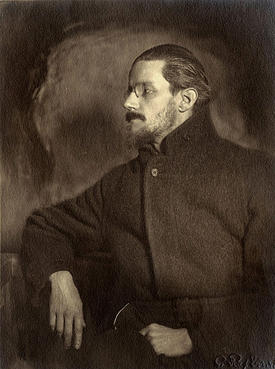
So let’s commemorate the day with his lovely portrait of the artist as a young woman.

Celebrations are being held in her native Lublin, and elsewhere in Poland as well.  Meanwhile, on this side of the ocean, you can catch up with my earlier post here, or catch my profile of her in the July/August World Literature Today, or catch a few video clips here.  Or go to the Web of Stories for more videos here.

Happy birthday, Julia.

because too may of those who distinguished
between what is permanent and ephemeral
have left

– from “Now”

What’s the worst great book you ever read?

August 13th, 2011
Share

Stick to "The Dubliners"

A cadre of leading authors and critics are on a roll over at Slate, dissing the great classics.  It’s over here.

Disses are always fun to read, so here’s a potpourri:

Poet and Yale Review editor J.D. McClatchy says he would put himself first on the list, if he were rated at all, but then he characterizes Virginia Woolf as “noxious smoke and dusty mirrors.”

“Not far behind, and for completely different reasons, William Carlos Williams: So little depends on stuff lying around. The absolute worst, the gassiest, most morally and aesthetically bankrupt, the most earnestly and emptily studied and worshipped … that’s an easy one. Ezra Pound.”

James Joyce takes a drubbing more than once.

Author Lee Siegel confesses “I just can’t do Finnegans Wake”:

“As a graduate student in literature, I was surrounded by people who claimed not just to have read Finnegans Wake but to have understood it and I took another futile stab at it. I realize now that they were all frauds who later went to work in the subprime mortgage industry.” He concludes: The adult realization that whatever sublime beauties of language and idea are in Joyce’s novel, I have to let them go. Just as there are sublime places—Antarctica—that I will never visit. As I learned from Joyce’s Ulysses, the mystery of everyday life is fathomless enough. There is still a world in a grain of sand.”

"Lame" himself

Daniel Mendelsohn, frequent contributor to the New York Review of Books, adds to the pile-on: “what spoils Ulysses for me, each time, is the oppressive allusiveness, the wearyingly overdetermined referentiality, the heavy constructedness of it all…it’s more like being on one of those Easter egg hunts you went on as a child—you constantly feel yourself being managed, being carefully steered in the direction of effortfully planted treats.”

J.D. Salinger?  Forget it.  Author Tom Perrotta recalls:

“On a recent episode of South Park, the kids got all excited about reading The Catcher in the Rye, the supposedly scandalous novel that’s been offending teachers and parents for generations. They were, of course, horribly disappointed: As Kyle says, it’s ‘just some whiny annoying teenager talking about how lame he is.'”

Not unsurprisingly, the most generous words come from Elif Batuman:

Generous spirit

Like many people, I enjoy learning which canonical books are unbeloved by which contemporary writers. However, I don’t think participants in such surveys ought to blame either themselves (“I’m so lazy/uneducated”) or the canonical books (“Ulysses is so overrated”). My view is that the right book has to reach you at the right time, and no person can be reached by every book. Literature is supposed to be beautiful and/or necessary—so if at a given time you don’t either enjoy or need a certain book, then you should read something else, and not feel guilty about it.

FYI on Elif:  Her The Possessed: Adventures With Russian Books and the People Who Read Them, was plugged by Imitatio here. (hat tip, Dave Lull). Why the a surprise?  Imitatio is the organization founded to study the ideas of René Girard, and some consider her book to be a spoof of those same ideas, with an obsessed  and charismatic graduate student so unable to break the chain of mimetic desire that he finds peace and happiness only in a monastery.  My own opinion:  she has done a lot to revive an interest in his ideas for a new generation.  The site links to the glowing Guardian review that notes the hit memoir’s “detailed engagement with René Girard’s theory of the novel and mimetic desire.”

René told me he hadn’t read it, but when I explained the plot story about the graduate student, he chuckled sagely.

The “Great Minds Think Alike” Dept.:  Patrick Kurp over at Anecdotal Evidence has written about the same Slate piece today, with his own nominations for the overrated – it’s here.

Meanwhile, in the comments section at Slate, Terrence Wentworth offered this: “Cool idea, but reading author after author being bashed got depressing by the end. It was surprising how many respondents were willing to pass judgment on books they hadn’t finished. Saying “I couldn’t finish it” is not a very powerful argument for a book’s inferiority. And I thought being well read entailed knowledge of books one didn’t like or find agreeable. I think a call for praise of un-PC works would have been much more daring. But how many contemporary critics are even willing to look for beauty in, say, Ezra Pound?

Wow. Oh wow. Slash-and-burn time at The Washington Post Book World

August 11th, 2011
Share

Bye bye.

A dozen days ago we reported on the ongoing demise of the L.A. Times Book Review.  Now there’s more bad news:  This time it’s slash-and-burn time again at the once-venerable Washington Post Book World.

Here’s a chunk of the memo from WaPo Executive Editor Marcus Brauchli, as leaked to Fishbowl DC:

Our books staff, ably led for the past two and a half years by Rachel Shea, will now report into the sections where their reviews run. Non-fiction editor Steve Levingston will report to Outlook, which publishes non-fiction reviews, and fiction editor Ron Charles, and the rest of Book World’s assistant editors, will report to Style, which hosts most fiction coverage and reviews. The assistant editors will support both fiction and non-fiction reviews and coverage. This approach will allow tighter and smarter integration of our books coverage with the host sections, in print and online. We’re not trimming coverage; we will publish the same number of reviews, in the same places where readers are accustomed to finding them.

While these changes are meant to enhance the quality, quantity and range of content we produce in these groups, they will affect a small number of newsroom jobs. We don’t make these decisions lightly; they are a necessary part of our continuing effort to create a lean newsroom structure capable of producing the high-quality journalism our readers expect from us. We remain firmly committed to deep, smart and relevant coverage of travel, food and books.

It’s not like they’ve been short on cost-cutting measures.  This from 2009, when the paper dissolved one of the last surviving stand-alone book sections in the nation:

“Of course it’s disappointing,” Rachel Shea, the editor who will oversee The Post‘s coverage, said of yesterday’s announcement. “It’s nice to have a separate section with big display and a big shout-out to what the most important book is. But it’s not worth gnashing our teeth about too much.”   In dropping one of the few remaining stand-alone book sections in American newspapers, Executive Editor Marcus Brauchli said that the coverage will be shifted to the Style section and a revamped Outlook section. Shea said that The Post would publish about three-quarters of the roughly 900 reviews it has carried each year. The change will take effect Feb. 22.

Mascot for book editors everywhere

“Disappointing” doesn’t begin to cover it.

I used to write for Rachel and, before her, Marie Arana and Jabari Asim. Some time ago, friendly emails were routinely unanswered and phone calls dumped into some voicemail bucket.  I sensed that the section was under water – and the few bubbles that came up to the surface reinforced that impression.

While WaPo insists that it’s “not trimming coverage,” of course books will lose their chief advocate – an editor – and someone who has an overall vision of where they’d like to go.

Nobel prizewinner Albert Camus – snuffed by the KGB?

August 10th, 2011
Share

On the verge of a breakthrough? (Photo: NY World-Telegram/Sun Newspaper Photograph Collection)

There is a danger, of course, in being exposed to literature too young.  So when  I read Albert Camus‘s L’Etranger in high school, in French and in English, it was like being punished twice.  I thought it a squalid little book.  I never returned to it, so I’ve never reconsidered my youthful impression.

But I have changed my mind several times in recent years about the author.

Camus himself seems to have been a remarkable man.  Czeslaw Milosz, for example, praised Camus as the only man in postwar Paris who remained friendly to him after the Polish poet’s 1951 defection.  The entire French intellectual class, which was entirely left-wing, turned against him for abandoning the communist dream.  Pablo Neruda denounced him in an essay as “The Man Who Ran Away” (and if anyone has ever seen the article, I’d love to get a copy).  And recently, I’ve been reading René Girard, who praised La Chute as an “admirable and liberating book” in Deceit, Desire, and the Novel.

Now we hear that the Soviet authorities hated him enough to have the KGB snuff him in 1960 – at least according to a new report in Corriere della Sera, which was reported in The Guardian.  Another point in his favor:

The theory is based on remarks by Giovanni Catelli, an Italian academic and poet, who noted that a passage in a diary written by the celebrated Czech poet and translator Jan Zábrana, and published as a book entitled Celý život, was missing from the Italian translation. In the missing paragraph, Zábrana writes: “I heard something very strange from the mouth of a man who knew lots of things and had very informed sources. According to him, the accident that had cost Albert Camus his life in 1960 was organised by Soviet spies. They damaged a tyre on the car using a sophisticated piece of equipment that cut or made a hole in the wheel at speed.

“The order was given personally by [Dmitri Trofimovic] Shepilov [the Soviet foreign minister] as a reaction to an article published in Franc-tireur [a French magazine] in March 1957, in which Camus attacked [Shepilov], naming him explicitly in the events in Hungary.” In his piece, Camus had denounced the “Shepilov Massacres” – Moscow’s decision to send troops to crush the Hungarian uprising of 1956.

Camus, who won the 1957 Nobel Prize in literature, angered the Soviets even more when he publicly supported Boris Pasternak, the author of Doctor Zhivago, nominating the clandestine novel for a Nobel. I tell the astonishing story of its Cold War publication here and a little bit here.

Pasternak: The final straw (Courtesy of Hoover Institution Archives)

Pasternak: The final straw (Courtesy of Hoover Institution Archives)

Oliver Todd, author of Albert Camus: Une Vie, doesn’t necessarily believe the new assassination theory:

“My first reaction is that nothing about the activities of the KGB and its successors would surprise me, but this claim has left me flabbergasted. You have to ask yourself who would benefit from this coming out and why.”He added: “It’s interesting and amusing and it is certainly true that KGB documentation is full of accounts of how the Soviets used the Czechs to do their dirty work. But while I wouldn’t put it past the KGB to do such a thing, I don’t believe the story is true.”

But I have to admit that, whether it’s true or not, the fact that the story is plausible enough to publish makes me almost ready to take on La Chute, though I’m still creeped out by L’Etranger‘s  Meursault.

But the fatal car accident en route to the René Girard’s own native Provence was a different kind of tragedy.  His final published novel,  La Chute, René said, marked a turning a point:  “Albert Camus died at the moment when a whole new career was probably opening up for him.”

Read the whole story here.

No! No! Say it ain’t so! Is the life of the semicolon coming to a full stop? ;*(

August 9th, 2011
Share

Everyone today seems to be talking about the appointment of Philip Levine as the next U.S. Poet Laureate (you can read about that here), but I have more important things on my mind.

According to an article in The Australian:

For centuries, the semicolon has carved out a tenuous – but precious – place for itself between the comma and the colon.Without the humble semicolon, some of the greatest achievements of English prose – the looping, qualified sentences of Henry James; the elaborate, ironic juxtapositions of Evelyn Waugh – would not have been possible. It has endured; it has persisted; it has even thrived.

But now – under the various pressures of texting, email, journalese, “plain English” and PowerPoint – the career of the semicolon appears rapidly to be approaching a full-stop.

The rare, and usually middle-aged, journalists [Ahem! – ED.] who still revere the semicolon will discover it is no favourite of sub-editors, who will nowadays allow the comma to do much of the semi’s previous work of co-ordinating ideas inside a sentence. And as sentences get shorter, there is less of that work to do.

Is THIS what you want? Huh? huh? huh?

In short (literally), texting, email, tweets – all have given rise to the impatient, minimalist sentence.  The semicolon, it appears, has become an endangered species.

Even technical and legal documents – the bread-and-butter of semicolons everywhere – are dumping their hardworking employees: the middle-aged semicolon is giving way to younger, fancy bulleted points that think they are hot stuff.

Still, the humble punctuation mark has its champions:  Author David Malouf argues for its continued employment:  “If you want longer sentences and still allow readers to find their way through, then the semicolon is very good,” he says.  “I tend to write longer sentences and use the semicolon so as not to have to break the longer sentences into shorter ones that would suggest things are not connected that I want people to see as connected.

“Short sentences make for fast reading; often you want slow reading.”  Like wanting slow food, cooked for hours, over something quick you can grab at a fast food joint.  Like “dining” versus “having something to eat.”

In a vulgar age, however, good things must be put to vulgar uses, and Pavlova‘s pirouettes must make way for pole dancing:

If this most subtle of punctuation marks is to survive, it may well be inside one of the most vulgar: the emoticon.

To which the only fitting response must be: ;*(

Orwell Watch #16 – Bye, bye Che, Einstein, and the Simpsons: “icons” past their expiration dates

August 8th, 2011
Share

I think I'll give it a miss.

Several weeks ago, Eric Felten decried “the endless recycling of images, whether from film, photos or art, that have become—and here’s that dreaded word again—iconic.  What is an icon these days but a cliché on stilts?” His Wall Street Journal article is here.

The occasion at hand was the installation of J. Seward Johnson‘s 26-foot rendering of Marilyn Monroe in Seven Year Itch. He didn’t “make it new,” according to Tom Durham:  “J. Seward Johnson’s sculptures have always been bad clichés that have infuriated good sculptors.”

I’ve thought some time about this article, hoping to find some penetrating thought to add to his – how do visual clichés affect the way we write, what is the path from eye to pen?

So I raided the comments section. According to Bill Melater:

“I believe the word you’re looking for is ‘trite’. Trite art has been around forever and it’s getting more common all the time. It gets laughable and is usually driven by dollars. It eventually goes away…

“…but then it comes back! There’s usually a 20- to 30-year lag before some artist while perusing some old clip art sees the image; becomes inspired, and back it comes. You see this in all the 50’s and 60’s clip art that shows up today (e.g., line art of the quintessential 50s housewife, or the pipe-smoking man in a suit). It happens a lot in the world of type. The Indiana Jones-like display type that said Raiders of the Lost Ark was 40s and 50s vintage postcard art repurposed.”

I have to agree with James Domingo:  “To take something and simply amplify it in size 100 or 1000 times requires zero creative thought. Anyone can do it. It takes no imagination, hence the ubiquity.”

No... just, no.

It brought to mind other images past their expiration date: While in Poland, one of the nation’s leading literati wore this Warhol image on a t-shirt with a sportcoat (see right).  What, exactly, is it supposed to mean, other than a social signal that one is on the inside of the inside of an unfunny joke?  That one is, in fact, one of the world’s wrinkled potheads?

Felton offers this handy rule of thumb: “If an image has found its way into a Simpsons episode, you know it is past exhaustion.”

He adds:

“Iconic images end up, like other recyclables, empty. Is the halter-dressed Marilyn supposed to signify anything? Perhaps she is meant to be an emblem of carefree sexuality. If so, it’s a message rather at odds with the unpleasant circumstances of the image’s creation. When director Billy Wilder shot that scene one night in 1954 at Lexington Avenue and 52nd Street, a thousand Manhattan gawkers stood around leering at Ms. Monroe’s unmentionables. Her husband at the time, Joe DiMaggio, was there, seething. His rage led Ms. Monroe to end their marriage. I rather doubt this ugly backstory is what the spokeswoman for the Chicago site’s property manager had in mind when she described the giant Marilyn as ‘art that makes people think.'”

Retire it.

Nyet.

Hmmmmm… As Chris Knop pointed out:  “Anything blown up large and put in a prominent place will make us think. Frankly, the artist in charge of putting this up was just doing the old ‘counter culture’ routine. ‘Look at yourselves, people’ it says, ‘look at our collective media history and where we came from.’  The author correctly points to the use of these symbols as tacky. They are.”

Speaking of thinking, Felton adds:

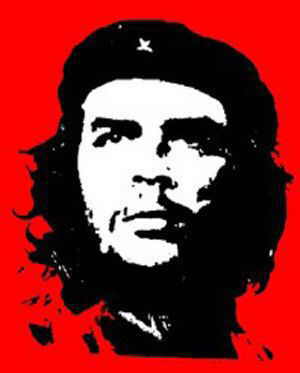
“And just as the picture of old Ernesto has become a tired trademark for Revolution, pictures of crazy-haired Albert Einstein have become the universal visual shorthand for Genius. May I suggest that crazy-hair-signals-a-supercharged-brain-pan be added to the list of shopworn conventions best retired? Malcolm Gladwell, call your barber.”

What is the link between mysterious eye and pen?  Jack Worthington, zen-like, didn’t explain it, but demonstrated it instead:

This is as American as it gets. It may as well be a fiberglass dinosaur on Route 66. … The bottom line is some images just bring us all together. Nighthawks was about living, Marilyn Monroe was about living, the VJ Day Embrace was about living, Che Guevara was about living, all of these images scream Live! And that’s what being an American is all about. …

How does that make Americans different from anyone else?  Hmmmm… It’s that thinking thing again.


<<< Previous Series of PostssepNext Series of Posts >>>