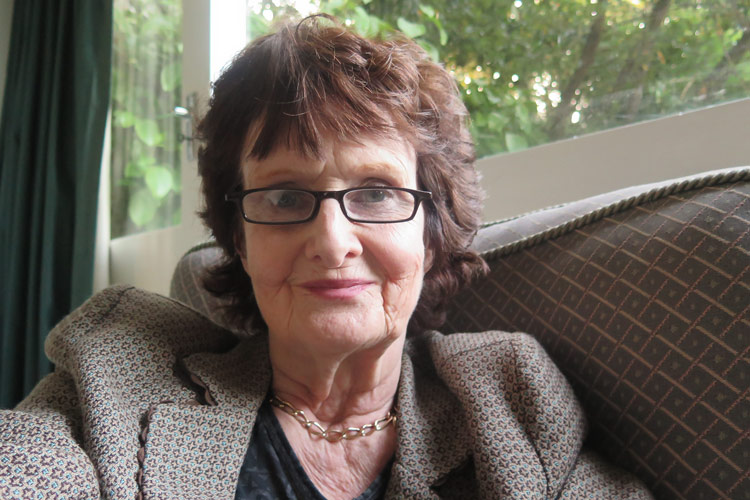
Poet Robert Mezey remembered: “he looked me dead in the eye from across our round table, smiled a little, and said: ‘You don’t feel much, do you?’”

May 10th, 2020

Share
Comfort and solace? Fuggedaboutit. KeysPhotography.com

Poet Robert Mezey has died at 85 – we wrote about that here. His legacy as a poet lives on. So does his legacy as a teacher at Pomona College. One of his students, John Darnielle, founder, writer, composer, guitarist, pianist, and vocalist for the Mountain Goats, and also author of the novels Wolf in White Van (2014)and Universal Harvester (2017), has a tribute, “He Brought Me Here,” over at the Los Angeles Review of BooksIt ends with a great anecdote, and a few observations:

His patience for others was great, but his tolerance for cheap sentiment was not.

So it was that one day I arrived to class with a new poem. Watching the news, there’d been a ghastly story about a father killing his children. Did the young poet think himself up to the task of conveying this horror in quatrains of iambic tetrameter? He did.

In Bob’s class, we’d hand in new poems during the week; he’d print them up so everyone in class could have copies when we next met to read them aloud and discuss them. Proud, I read my poem that attempted to decry the ugliness of the story I’d seen on the news.

He’s grateful “every single day.”

Nobody ever wants to be the first to comment in class, right? So Bob cocked his head, looked me dead in the eye from across our round table, smiled a little, and said: “You don’t feel much, do you?”

Some people want support and encouragement from their teachers, and I get that. I wouldn’t recommend Bob’s approach as a general pedagogical method. But he’d known me since childhood. He knew I’d already had great teachers who’d nurtured my dreams, and he knew I was serious about wanting to write: to make things that reached people, to share the rare air that the greats breathe. By giving it to me straight, he was letting me know: This ain’t it, bud. You know enough about it to be told that this right here ain’t it.

Every single day of my life I am grateful to the poet Robert Mezey, who took my verse seriously enough to hold it to a high standard (and who, per spies in his camp — remember, I grew up with his children — spoke fairly warmly of my work when I wasn’t around to hear it). Every single day. He is gone now, but in any line of metered verse I write — if it’s any good, if its numbers do their job, if the miracle happens and I’m able, through the numbers, to communicate with another person: he’s there. If you know my work and not his, you still know him. He brought me here.

I make bold to borrow from one of the greatest elegies ever penned in saying goodbye to my teacher, without whom I am not nothing — he taught me that, too — but without whom I would be much, much less than I am: Earth, receive an honored guest. (Photo at right: John Darnielle, lead singer of The Mountain Goats)

Read the whole thing here.

Dostoevsky’s dream of a worldwide plague

May 5th, 2020
Share

The great poet Anna Akhmatova wrote of Fyodor Dostoevsky, “The prisoner of Omsk understood everything and gave up on everything.” But did he see our future, too? In Crime and Punishment, René Girard notes: “Raskolnikov has a dream during a grave illness that occurs just before his final change of heart, at the end of the novel. He dreams of a worldwide plague that affects people’s relationship with each other. No specifically medical symptoms are mentioned. It is human interaction that breaks down, and the entire society gradually collapses.” 

From Crime and Punishment (trans. Constance Garnett):

He dreamt that the whole world was condemned to a terrible new strange plague that had come to Europe from the depths of Asia. All were to be destroyed except a very few chosen. Some new sorts of microbes were attacking the bodies of men, but these microbes were endowed with intelligence and will. Men attacked by them became at once mad and furious. But never had men considered themselves so intellectual and so completely in possession of the truth as these sufferers, never had they considered their decisions, their scientific conclusions, their moral convictions so infallible. Whole villages, whole towns and peoples went mad from the infection. All were excited and did not understand one another. Each thought that he alone had the truth and was wretched looking at the others, beat himself on the breast, wept, and wrung his hands. They did not know how to judge and could not agree what to consider evil and what good; they did not know whom to blame, whom to justify. Men killed each other in a sort of senseless spite. They gathered together in armies against one another, but even on the march the armies would begin attacking each other, the ranks would be broken and the soldiers would fall on each other, stabbing and cutting, biting and devouring each other. The alarm bell was ringing all day long in the towns; men rushed together, but why they were summoned and who was summoning them no one knew. The most ordinary trades were abandoned, because everyone proposed his own ideas, his own improvements, and they could not agree. The land too was abandoned. Men met in groups, agreed on something, swore to keep together, but at once began on something quite different from what they had proposed. They accused one another, fought and killed each other. There were conflagrations and famine. All men and all things were involved in destruction. The plague spread and moved further and further. Only a few men could be saved in the whole world. They were a pure chosen people, destined to found a new race and a new life, to renew and purify the earth, but no one had seen these men, no one had heard their words and their voices.

Remembering poet Robert Mezey (1935-2020): “brilliant, mercurial and often rebellious” – with a “great tragedy,” too.

May 2nd, 2020
Share

He encouraged students to burn their draft cards. (Photo courtesy the Mezey family)

The poet Robert Mezey is dead. According to his daughter Naomi Mezey, the former Stanford Wallace Stegner fellow died on April 25 of pneumonia in Maryland. The award-winning poet, anthologist, and Pomona College professor was 85. “Brilliant, mercurial and often rebellious, Mezey came to artistic maturity in the 1960s. His footloose early career embodied the challenges and changes of that dramatic period in American letters,” former California poet laureate Dana Gioia writes in the Los Angeles Times. The obituary offers an excellent and punchy summary of his rather unconventional life. Read it here.

Mezey entered Kenyon College at 16, where he studied with poet-critic John Crowe Ransom, but dropped out after two years. He was in the U.S. Army, but discharged as a “subversive.”

Former state poet laureate & Stanford alum. (Photo: Starr Black)

From the L.A. Times: “Encouraged by poet Donald Justice, who became a lifelong friend, Mezey began graduate studies at the Iowa Writers’ Workshop. Once again, he dropped out — but for a happier reason. His first book, “The Lovemaker” (1960) had won the Lamont Poetry Prize.

“On the basis of that debut volume, Mezey received the Stegner Fellowship at Stanford, but the start of the fall semester found him in Mexico rather than Palo Alto. His new mentor, the rigorously formalist poet Yvor Winters, had to send him money to travel back to the U.S. Their relationship soon soured,” Dana wrote.

Poet and Stanford Professor Ken Fields recalled in an email: “”He and Winters did not like each other, though Bob may have changed later in a delightful clerihew on him.” He knew him later in his career, through his friends Don Justice and Henri Coulette. “Bob eulogized Henri (Hank) and my first teacher, Edgar Bowers.”

From the Los Angeles Times:

Although he still lacked a graduate degree — a situation that would not change until Kenyon awarded him an honorary doctorate in 2009 — Mezey taught briefly at several universities. His departures were sometimes abrupt.

At Franklin and Marshall College in Pennsylvania, Mezey urged his students to burn their draft cards. Offered his full year’s salary, he made an early exit.

Meanwhile Mezey’s poetic style changed; he followed the zeitgeist into free verse. “When I was quite young,” he wrote, “I came under unhealthy influences — Yvor Winters, for example, and America, and my mother, though not in that order.”

He eventually returned to metrical forms and translation towards the century’s end.

He sent the money.

“Anyone searching out his Collected Poems 1952-1999 ought to be impressed by the breadth and depth of a modern poet they probably have never heard of, wrote Ken. “‘Terezín’ is a great and moving poem on a watercolor by thirteen-year old Nely Sílvinová in a German concentration camp for children headed for Auschwitz. Among many others, I think of ‘To a Friend on the Day of Atonement’ (the phrase, ‘Jewless in Gaza’) and ‘The Wandering Jew.'”

“He could also be funny and small, as in his praise of minor poets, among whom, I think, he would include himself.” Then Ken cited this one:

To My Friends in the Art

Flyweight champions, may you live
The proverbial thousand years
To whatever smiles and cheers
Flyweight audiences may give.
Ounce for ounce as good as any,
Modest few among the many,
Swift, precise, diminutive,
Flyweight champions, may you live.

Dana Gioia describes “his greatest tragedy” as the unpublished Borges translations, but this misfortune that still can be amended (we hope):

Meanwhile Mezey had been drawn to poetic translation. His Selected Translations (1981) contained compelling versions of Spanish, French, and Yiddish authors. His greatest undertaking, however, was to prove a disaster.

With his Pomona College colleague Dick Barnes, Mezey undertook a translation of the poems of Jorge Luis Borges. After some initial encouragement from the Argentinean author’s widow, the two poets spent years crafting suave translations that replicated Borges’s original metrical forms.

Then the pair discovered they could not obtain the English-language rights. Mezey’s finest translations remained unpublished except in a few copy-shop collations circulated among friends.

He has the translations.

Ken says he has a copy of the “wonderful” translations somewhere; let’s hope others do, too. “We do have the great ‘A Rose and Milton,’ and a couple of others. Somewhere I have the manuscript.”

Dana notes that Mezey was a religious skeptic, who did not believe in the afterlife. “Instead he offered a gentle vision of death”:

Blessed oblivion, infinitely forgiving,
Perpetual peace and silence and complete
Absence of pain. Now that’s what I call living.

Ken Fields remembered another Mezey anecdote (I expect there are many floating in the world at large): “A few years before my time, Mezey was awarded a Stegner Fellowship. … In those days the fellows got all the money at once, and Bob absconded with the stipend. Phil Levine, his friend at the time, said he had no problem with Bob taking the money, but he also took the Levine’s babysitter, and that was a serious offense. When the Collected Poems came out, Bob sent me a copy, with the understanding that I would send him twenty dollars. I neglected to do it, not deliberately, and it stayed on my mind on and off for years. Time to call it even.”

Ted Gioia on music journalism: “Every editor who has tried to get me to dumb down an article is now out of a job.”

April 29th, 2020
Share

He wanted to be a jazz pianist. While studying at Stanford and Oxford, he practiced three to four hours every day to make it happen, as well as writing a review column every week in the Stanford Daily. But arthritis hit Ted Gioia in his early thirties, and his plans changed. Music journalism and scholarship is all the better for it. He’s just published Music: A Subversive Historywhich he calls a culmination of his life’s work.

Now has an interview with Todd L. Burns at the Music Journalism Insider. For the next ten days, you can read the whole thing here. After that, it will disappear behind a paywall.  An excerpt:

Where do you see music journalism headed?

Terri Dien

From a financial perspective, music journalism is in a state of crisis—it’s very hard to earn a living doing it. From a non-financial perspective, music journalism operates in a blissful utopian state, where you can do whatever you want and publish it online without having to worry about gatekeepers such as editors and agents. The challenge now is to take advantage of the freedoms of the digital age without capsizing on the financial hazards. How do you live in this utopia and still pay the bills? This is not easy, but it can be done—at least by those who are the most determined and have a high threshold for pain.

What would you like to see more of in music journalism right now?

I’d like to see more investigative reporting. The music industry is famous for its dirty tricks and low ethical standards. But I see very little interest among the “entertainment” media in investigating these. Perhaps it has some connection with the fact that the companies they might need to investigate are buying ads in their periodicals.

What would you like to see less of in music journalism right now?

I’d like to see less posing and preening—critics writing to impress other critics or (even worse) editors and literary agents, or (worst of all) the tenure committee or some other career power broker. The goal should be to serve the reader.

That may seem obvious, but just consider how often the reader is cast aside in pursuit of some other false idol. Let’s be blunt, some music writers just want to hang out with the celebrities they are supposed to critique, or use their positions to secure some other, even more craven end. I could share horror stories, but I’m sure you’ve heard them yourself. There are literally dozens of ways the reader can be shortchanged. Frankly, the pay is so bad in music writing that you can’t really blame writers for seeking out other compensations, but doing that will hurt the quality of their work and limit their ability to improve and develop.

I say all this as someone who has had to discover a way to keep vital and engaged as a music writer for more than 40 years. I’ve found it very helpful for me to think constantly about my reader, and also to assume that my reader is smart, discerning and hard to please. That has kept me on the right path when I might have strayed. True, it has often gotten me into battles with editors, literary agents and other influential parties. But in the long run, it proved right to engage in those battles, even if I took some wounds in the short term.

What’s one tip that you’d give a music journalist starting out right now?

Work constantly to expand your knowledge of music and musicians, and to improve your writing. The goal should be to develop into an expert who knows things other music writers don’t. You should take music writing as seriously as a doctor takes the study of medicine or a judge takes the study of law. These people devote many years of their lives to learning their craft even before they start practicing their vocation. Just because no one requires you to do this in music journalism doesn’t mean you shouldn’t impose this type of discipline on yourself.

What’s one thing you’d like to see more of from editors, in general?

I encourage editors to fight against the click-chasing mindset and the pressure to dumb down articles. I urge them to champion smart work over hot takes, and make it possible for writers to do their best work, even in the face of metrics that might suggest a more formula-driven approach.

I’ve watched this game long enough to see that dumbing down is the start of a death spiral that ends in a periodical going out of business. I note that 2,000 newspapers have disappeared in the last 15 years, but the two that have thrived—the New York Times and the Wall Street Journal—are the ones that resisted most strenuously the dumbing-down mandate. That should be a lesson. Believe me, readers want to rise to a higher level, but they need the editor (and, of course, the writer) to make it possible. If editors look down on the reader, they will merely ensure their own irrelevancy.

Here’s an intriguing fact. Every editor who has tried to get me to dumb down an article is now out of a job. Editors who want to take the low road to success ought to mull that over.

Irish poet Eavan Boland is dead. From her NYRB essay on literature, religion, the communal imagination, and the summer of ’85 in West Cork

April 27th, 2020
Share

One of Ireland’s leading poets, Eavan Boland, died this morning of a stroke, at her home in Dublin. She was 75. I knew her, and yet was at a loss about what to say, so instead I reposted a her poem about Ireland’s Great Famine, which I published a month ago on these cyber-pages, including the thoughts she shared with me. It’s here,

Eavan spent half the year in Ireland and the other half as a professor at Stanford. Occasionally when I’d be driving a car on campus, I’d see her trudging back to her campus home along Campus Drive or Lagunita, wearing an capacious calf-length skirt and jacket in earth tones, carrying a satchel full of papers. A sign that all was right with the world. I’d think to honk and wave … but you don’t honk at Eavan Boland. You just … don’t…

From poet Alfred Corn on his Facebook page:

Depending…

The last time I spoke to Eavan was in 1994 during a literary conference at Washington University in St. Louis, organized by William Gass, the topic being “The Writer and Religion.” Apart from Gass (writer against religion), the participants were William Gaddis (against), Grace Mojtabai (for), me (for, depending), Amitav Ghosh (neutral), and Eavan (respectful but dubious). She spoke of the miraculous BVMs [i.e., Blessed Virgin Marys – ED] that sometimes appear in Ireland, attracting large crowds of believers. Which puzzled me because I regard such things as epiphenomena, not as exemplifying religion per se. But then I’m not Irish.

I wondered what Eavan had said on that occasion, and by chance today I found that she had discussed that very conference in a remarkable 1995 essay in The New York Review of Books“As the Spirit Moves” is being made available without subscription for awhile on the occasion of her death. It’s here

It begins with a fine summer in 1985, West Cork, along the seaboard. “In the town of Kinsale, which is a summer resort on that coast, there were more tourists than usual. This is one of the beautiful parts of Ireland and indeed, without being tribal, one of the beautiful parts of Europe. Surrounding it are small towns, villages, and farms. The terrain is fairly flat, without some of the Gulf Stream warmth which produces the dramatic palms and tropical branches of certain parts of Kerry further west.”

This is what happened there. And this is how it stirred almost the whole of Ireland during that summer. Traveling back by car on one of those fine evenings, a woman stopped at a grotto which contained a statue of Our Lady. Ireland, which in the Republic at least has sustained a largely Catholic culture, had celebrated what was called a Marian year in 1950: a year, that is, in which Our Lady was honored as the Mother of Christ. The result of the celebrations was that hundreds of small grottoes and statues and shrines to Our Lady remained scattered around the countryside as continuing places of worship. This one was just outside the village of Ballinspittle, perhaps ten miles from Kinsale. It was eloquently set in the recess of a hillside, about thirty feet above the road. And on one of those sunny evenings, in late July, when travel in a car, or a visit to the places which contained such a grotto, must have seemed like a pleasant and appropriate summer diversion, a woman saw that statue of the Virgin Mary move.

Within not weeks, but days, someone reported a similar phenomenon. Then another. Then another. Then more and at different shrines. Sub-headlines of the Irish Times, second leaders on the evening news, whole radio programs, and finally television documentaries were devoted to the phenomenon. A woman had seen a statue move in a city church. Another had seen the Virgin reach out her hand. Another saw her move as if to step down from her shrine.

Then the headlines gave way, at least in the urban press, to analysis. Sociologists, psychologists, psychiatrists began to be featured on television. They explained that this was not unusual, that in times of stress, of hardship and recession, this sort of thing had been observed widely. By this time the summer evenings were getting shorter but the clear, warm hours before dark, and just after it, were filled with literally hundreds of cars, visitors, couples, and whole families converging on any place along the seaboard, but especially near Kinsale, where this had been observed. In an outpouring of insistence and longing, men and women with accents which were not so often features of the urban Dublin news programs described what they had seen, and they could not be shaken from their stories.

Then the explanations grew less frequent. The outrage and suspicion of the Catholic clergy, disowning and warning against these visions, became less emphatic. The journalistic silly season passed. The evenings grew colder. The rain returned. Suddenly, as quickly as it had come, the phenomenon was over. No statues moved. No sociologists talked. Normality returned.

I remember that summer clearly. I remember driving down the Dublin roads, where the luburnum and lilac filled the verges with yellow and violet, and listening to my car radio. Something seemed to have happened that was not faith, and could not be called religion; that was short of hysteria and yet by no means rational. From the safety of a cosmopolitan city, which Dublin has finally become—with fast cars and fast food and a limited concentration span—I could hear, to use Joyce’s phrase, “the batsqueak” of another Ireland. Through the statistics of debt and unemployment, and Northern violence, I could hear the elegy and anger break out one last time, lamenting a simpler time and a surer one.

I did not believe that the statues had moved. But I did not believe the sociologists either. I knew enough about the unreason of Irish history to respect and even be in some awe of what had taken place on those fierce and unaccountable evenings, in the long light hours, in small towns and farmlands where television cameras hardly ever reached, and where political scientists usually never went, except briefly at election time. And I was troubled.

As I listened to disc jockeys and radio broadcasters speaking jovially or contemptuously, whichever way you viewed it, of the faith and hallucination of those who saw those statues move … Since I lived in Dublin, I heard more of the skepticism and muted contempt which a place of purported sophistication has for a simpler region than anything which might indicate sympathy with what had happened.

And yet I was moved. I could not completely share in the cynicism of a capital city.

Second Space.

What follows afterwards is a discussion that’s hard to summarize, about the communal imagination and the role of literature, and the “monstrous” development of  “the religion of poetry” – the attempt of poets to become priests, and losing their poetry, too.

“In their attempt to make sacred a time and a country that were resolutely being defined as secular, they were testifying to an enormous loss and a true deprivation,” she writes. Well, Czesław Miłosz said the same thing. He mourned our loss of “Second Space,” which is also the title of the last collection he published before his death in 2004. Well, that’s another story for another article.

Requiescat in pace, Eavan Boland. You can read her whole essay here, while it’s still available.

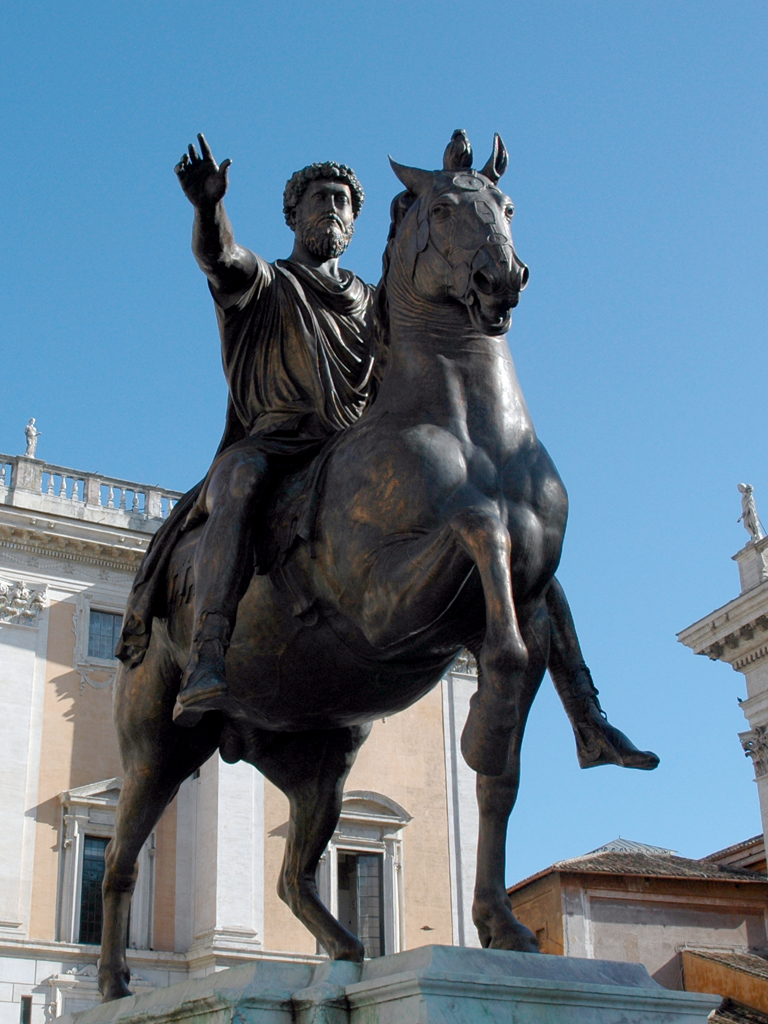
Happy birthday to Marcus Aurelius! Let him be your guide for the pandemic.

April 26th, 2020
Share

I had a long rendezvous with the Stoics – or at least two of them – many years ago. Emperor Marcus Aurelius was one; Greek slave Epictetus was the other. But only the Roman ruler has a birthday today.

To celebrate, I blew the dust off my 1877 volume of his Meditations, which I read over and over years ago. (Translated Jeremy Collier, published by Walter Scott on Paternoster Row.)

The emperor still informs my thinking and behavior, though my success at his maxims is uneven and I better understand the limits of his philosophy than I once did. In any case, I appreciate the book’s extolling the virtue of stoical temperance, which did not come easily to a quick and impulsive nature. Nor his, apparently.

“The example of my grandfather Verus gave me a good disposition, not prone to anger. By the recollection of my father’s character, I learned to be both modest and manly.

“As for my mother, she taught me to have regard for religion, to be generous and open-handed, and not only to forbear from doing anybody an ill turn, but not so much as to endure the thought of it. By her likewise I was bred to a plain, inexpensive way of living, very different from the common luxury of the rich.” (Book I, i, from the rather Victorian translation of Jeremy Collier)

An introduction to him by Donald Robertson in The Guardian this week:

The Roman emperor Marcus Aurelius Antoninus was the last famous Stoic philosopher of antiquity. During the last 14 years of his life he faced one of the worst plagues in European history. The Antonine Plague, named after him, was probably caused by a strain of the smallpox virus. It’s estimated to have killed up to 5 million people, possibly including Marcus himself.

From AD 166 to around AD 180, repeated outbreaks occurred throughout the known world. Roman historians describe the legions being devastated, and entire towns and villages being depopulated and going to ruin. Rome itself was particularly badly affected, carts leaving the city each day piled high with dead bodies.

In the middle of this plague, Marcus wrote a book, known as The Meditations, which records the moral and psychological advice he gave himself at this time. He frequently applies Stoic philosophy to the challenges of coping with pain, illness, anxiety and loss. It’s no stretch of the imagination to view The Meditations as a manual for developing precisely the mental resilience skills required to cope with a pandemic.

First of all, because Stoics believe that our true good resides in our own character and actions, they would frequently remind themselves to distinguish between what’s “up to us” and what isn’t. Modern Stoics tend to call this “the dichotomy of control” and many people find this distinction alone helpful in alleviating stress. What happens to me is never directly under my control, never completely up to me, but my own thoughts and actions are – at least the voluntary ones. The pandemic isn’t really under my control but the way I behave in response to it is.

Much, if not all, of our thinking is also up to us. Hence, “It’s not events that upset us but rather our opinions about them.” More specifically, our judgment that something is really bad, awful or even catastrophic, causes our distress.

“Remember to put yourself in mind every morning, that before night it will be your luck to meet with some busy-body, with some ungrateful, abusive fellow, with some knavish, envious, or unsociable churl or other. Now all this perverseness in them proceeds from their ignorance of good and evil; and since it has fallen to my share to understand the natural beauty of a good action, and the deformity of an ill one – since I am satisfied the person disobliging is of kin to me, and though we are not just of the same flesh and blood, yet our minds are nearly related, being both extracted from the Deity – I am likewise convinced that no man can force me to misbehave myself, nor can I find it in my heart to hate or to be angry with one of my own nature and family.” Book II, i.

Robertson concludes:

With all of this in mind, it’s easier to understand another common slogan of Stoicism: fear does us more harm than the things of which we’re afraid. This applies to unhealthy emotions in general, which the Stoics term “passions” – from pathos, the source of our word “pathological”. It’s true, first of all, in a superficial sense. Even if you have a 99% chance, or more, of surviving the pandemic, worry and anxiety may be ruining your life and driving you crazy. In extreme cases some people may even take their own lives.

In that respect, it’s easy to see how fear can do us more harm than the things of which we’re afraid because it can impinge on our physical health and quality of life. However, this saying also has a deeper meaning for Stoics. The virus can only harm your body – the worst it can do is kill you. However, fear penetrates into the moral core of our being. It can destroy your humanity if you let it. For the Stoics that’s a fate worse than death.

Postscript 4/27: Leave it to a modern to put it all in a chart. We received this from Kenton Self – on his birthday no less! Here you have it: Marcus Aurelius in a Venn diagram.


<<< Previous Series of PostssepNext Series of Posts >>>